Archive for June 2014

Video: Hassan Yousef Promised Hamas Terror in Judea and Samaria

June 16, 2014

Last week, Hamas leader Hassan Yousef promised to bring Hamas terror to Judea and Samaria,
The next phase which is coming soon.
We will respond soon.

By: Shalom Bear
Published: June 16th, 2014

via The Jewish Press » » Video: Hassan Yousef Promised Hamas Terror in Judea and Samaria.


Hamas founder Hassan Yousef spoke at Birzeit University in Ramallah where he promised that Hamas terror will soon arrive in Judea and Samaria.
 

Last week at Birzeit University near Ramallah, Hassan Yousef, one of the founders of Hamas, spoke to students and promised them that Hamas will soon and surprisingly bring the violence and terror of Gaza to Judea and Samaria.

Hamas won 20 seats on the Birzeit student council.

“Despite the reconciliation with the Palestinian Authority, the oganization will continue to fight Israel… we will bring the resistance [terror] to Judea and Samaria… They say that Hamas is not in Judea and Samaria… Everyone will be surprised… We are sprouting underground, and growing a resistance [terror] that no one can stop… You are our seedlings…You are the next phase which is coming soon. We will respond soon… Just like you won [the elections] we will see victory.”

In the background, the Ramallah students can be heard chanting “Ya Kassam”, the name of Hamas’s military wing.

Yousef was arrested last night by the IDF as part of the search to find Eyal Yifrach, Gil-ad Sha’ar and Naftali Frenkel, who were kidnapped in Gush Etzion by Hamas.


Will Netanyahu use boys’ rescue operation to finally thrash Hamas in Gaza too?

June 16, 2014

Will Netanyahu use boys’ rescue operation to finally thrash Hamas in Gaza too?.

DEBKAfile Exclusive Analysis June 16, 2014, 7:57 AM (IDT)

 Signs of an approaching IDF military operation against Hamas abounded this week as a possible outcome of the massive military-cum-intelligence effort to rescue the three Israeli boys Hamas is accused of abducting near Hebron on June 10.

Military strength constantly poured in to reinforce the siege around the Hebron, a West Bank city of 170,000 and is environs. Sunday night, June 15, Israeli forces surrounded and then stormed two houses for suspects, after detaining up to 100 Hamas operatives.

During the day, a limited call-up of reserves was announced.
All in all, it looked as though the fundamentalist Islamic organization was in for a major smack – and not only in Hebron. Opposite Hamas’ Gaza base, Israel deployed Iron Dome missile interceptors at important towns within range of Palestinian rockets – Ashdod, Beersheba and Rehovot as well as Ashkelon, where Sunday night, the battery caught two missiles incoming from the Gaza Strip.
Israel and Egypt had meanwhile shut down their border crossings to and from the Gaza Strip. The Egyptian army also beefed up its deployment along the Israeli border and posted an armored battalion at the Sinai terminal at Taba.
Hamas has avoided admitting to the abduction or making any demands. Pent-up Israeli fury against its constant menace and routine extortions is fueled by the anguish of the teenagers’ families. The government would find it hard in the current environment to bow to yet another demand to hand over Palestinian prisoners. Dealing with Hamas in military terms is backed across the political spectrum under popular pressure.

This confrontation may blow quickly from the West Bank to the Gaza sector. There, Hamas holds its vast missile arsenal and terrorist infrastructure, which it has refused to relinquish even for the sake of Palestinian reconciliation and a unity government, and will use it to the full to terrorize southern and central Israeli cities and villages.
There, too, Hamas could count on backup from the pro-Iranian Palestinian Jihad Islami, which has accumulated firepower that rivals that of Hamas as well as a strong foothold in West Bank refugee camps.
IDF Chief of Staff Lt. Gen. Benny Gantz, in his brief comment Saturday night, June 14, made an important point when he said: “While bending all our efforts to rescuing the three boys, we are keeping a watchful eye on the north and the south.”
He has clearly taken into account that in a conflagration with the Palestinians, Hizballah units in Lebanon and Syria, including the Golan border, may well open a second and third front against Israel to ease the pressure off its allies.

All these calculations weigh heavily on Prime Minister Binyamin Netanyahu, Defense Minister Moshe Ya’alon, Lt. Gen. Gantz and his deputy Maj. Gen. Gady Eisenkott in deciding on the scale and targets of military action against Hamas, which may have started rolling. It has been given a name: “Our Brothers Come Home.”

The Egyptian military concentrations on the Israeli and Gaza borders attest to a degree of coordination between Jerusalem and Cairo, under former army chief President Abdul Fattah El-Sisi.
On the one hand, El Sisi Israel’s leaders are of the same mind as Israel on the pressing need to keep Hamas and some of its Al Qaeda allies in Sinai from using the peninsula as their launching- pad for cross-border attacks on Israel.

On the other, the Egyptian president will not readily commit himself to supporting an Israeli military operation to destroy the military resources of the Muslim Brotherhood’s ally and offspring in Gaza, without first obtaining the nod of Saudi Arabia and the Gulf Emirates, which bankroll his regime and armed forces.
Netanyahu appears to be holding his fire in the hope of a positive reply from Cairo before approaching Washington for its blessing.

In the meantime, other punitive measures are to be broached, such as a proposal to declare null and void the much-criticized 2011 deal which traded a thousand convicted Palestinian terrorists, including mass murderers, for Gilead Shalit, the soldier held hostage by Hamas for five years..Another is to deport Hamas leaders from the West Bank to the Gaza Strip.

The Netanyahu government and Obama administration have attained a limited area of assent in recent months over Israel’s role in the Syrian civil war. It is based on the understanding that Jerusalem will give Washington advance notice of its military steps without the obligation to comply with the administration’s position.
Would this informal US-Israeli arrangement work for an operation against Hamas? Would the Obama administration abstain from supporting this Israeli initiative in the war on terror?

Israel is mulling its strategic options not too far away from the sights and sounds of ISIS (Islamic State for Iraq and the Levant) feats in conquering one city after another in Iraq’s Sunni heartland – and its backlash:  Although the Iraqi national army claims to be pushing back, it is in reality thousands of Iranian Al Qods Brigades troops who have take ISIS on.
If Tehran succeeds in stabilizing the Shiite Prime Minister Nuri al-Maliki’s government and saving his army from collapse, just as it did for Syria’s Bashar Assad, that success would consolidate Hizballah’s strength in Lebanon and Syria and that of Hamas and Jihad Islami in Gaza City and Ramallah.

The two terrorist organizations would rule the roost in the Palestinian governing administration.
Although this process may take some months to unfold, Netanyahu would be advised to act soon to nip it in the bud before radical rule in Hebron and Gaza is transposed to Ramallah.
In 2012, Netanyahu stepped back from finishing the IDF operation against Hamas’ rocket blitz without putting paid to the threat. Two years later, he vowed there would be “grave consequences” for the abduction of three teenage Israeli civilians. Will he make good this time on his strong words against Hamas?

U.S. preparing for dialogue with Iran on Iraq security – report

June 16, 2014

U.S. preparing for dialogue with Iran on Iraq security – report, Reuters via Yahoo News

U.S. officials said it was not certain which diplomatic channel the Obama administration would use to discuss Iraq, the Journal reported. One possibility was through Vienna, the paper said, where senior U.S. and Iranian officials were scheduled to meet with other world powers on Monday to negotiate limits on Iran’s nuclear capabilities.

WASHINGTON (Reuters) – The United States is preparing to open a direct dialogue with longtime adversary Iran on security in Iraq and ways to push back Sunni militants who have taken over large areas of the country, the Wall Street Journal reported on Sunday. Citing senior U.S. officials, the newspaper said the dialogue was expected to begin this week. It comes as the United States and other world powers strive for an agreement with Tehran to curb its nuclear program.

Militants from the Islamic State of Iraq and the Levant group have swept through towns in the Tigris valley north of Baghdad in recent days but appeared to have halted their advance outside the capital on Sunday as they tightened their grip on the north.

U.S. officials said it was not certain which diplomatic channel the Obama administration would use to discuss Iraq, the Journal reported. One possibility was through Vienna, the paper said, where senior U.S. and Iranian officials were scheduled to meet with other world powers on Monday to negotiate limits on Iran’s nuclear capabilities.

The State Department said on Sunday that the No. 2 U.S. diplomat, Deputy Secretary of State Bill Burns, would travel to Vienna this week to take part in the talks.

U.S. Senator Lindsey Graham said on Sunday that Washington needed Iran’s involvement to prevent a government collapse in Iraq and should open talks with Tehran.

“We are probably going to need their help to hold Baghdad,” Graham, a South Carolina Republican, said on CBS’ “Face the Nation.”

Iran’s uncertain intervention in Iraq

June 15, 2014

Iran’s uncertain intervention in Iraq, Al Monitor, Meir Javedanfar, June 15, 2014

(How adequately will untrained civilian volunteers stand up against the ISIS, from which an allegedly trained Iraqi military fled? Adequate training takes time and competent trainers. — DM)

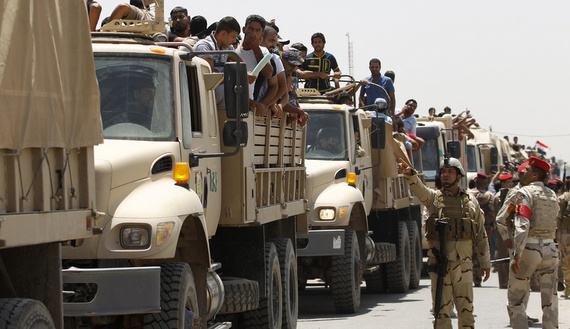
Volunteers who have joined the Iraqi Army to fight against the predominantly Sunni militants travel in army trucks in BaghdadVolunteers, who have joined the Iraqi army to fight against the predominantly Sunni militants who have taken over Mosul and other northern provinces, travel in army trucks in Baghdad, June 14, 2014. (photo by REUTERS/Thaier Al-Sudani)

The ISIS attack on Iraq presents many risks for Iranian President Hassan Rouhani and Iran’s Revolutionary Guard Corps.

In the short run, both groups in Iran can gain from the recent ISIS victories in Iraq. In the long run, both have much to lose.

Should the West decide to cooperate with Iran, this would boost Rouhani’s position domestically, as he could say his moderate approach toward the United States made the country dependent on Iran for help. Rouhani could then use such help as a bargaining chip in the P5+1 talks to extract further concessions.

The recent lightning victories in Iraq of the Sunni extremist group the Islamic State of Iraq and al-Sham (ISIS) have undoubtedly left many Middle Eastern leaders surprised, asking, “What does it mean for us?”

The same applies to Iraq’s powerful Shiite neighbor, Iran.

In Iran, when it comes to dealing with Iraq, there are two main bodies: first, the government headed by President Hassan Rouhani, which deals with Iraq through diplomatic and trade relations; and second, the security forces, chief among them the Iranian Revolutionary Guard Corps’ (IRGC) Quds Force, headed by Gen. Qasem Suleimani, referred to as the “shadow commander” by some in Iraq.

In the short run, both groups in Iran can gain from the recent ISIS victories in Iraq. In the long run, both have much to lose.

Let’s start with Quds Force chief Suleimani. In the immediate future, he will be viewed as the savior of Iraq’s Shiites. Panicked by the sudden victory and extreme cruelty of ISIS forces, an increasing number of Iraqi Shiites are likely to look upon him as the Iranian Shiite knight in shining armor, charging to their rescue. Some reports state the Quds Force is ready to become directly involved in the fighting against ISIS. Other reports say the Quds Force is planning the defense of Baghdad and training Iraq’s armed forces. Either scenario, if true, is likely to boost the IRGC’s popularity among Iraqi Shiites and win it new allies, especially among the civilian population.

In the short run, President Rouhani also has much to gain. The ISIS victories will make Iran look like an attractive partner to the United States in the fight against ISIS. Should the West decide to cooperate with Iran, this would boost Rouhani’s position domestically, as he could say his moderate approach toward the United States made the country dependent on Iran for help. Rouhani could then use such help as a bargaining chip in the P5+1 talks to extract further concessions.

Conversely, in the long run, both Rouhani and Suleimani could stand to lose from the possible long-term continuation of the ISIS crisis.

In the long term, the current crisis could ruin Iraq’s economy, which is a multibillion dollar export market for Iranian non-oil products. Further, Iran has plans to start exporting gas to Iraq this year, with Iran hoping to earn $3.7 billion a year.

There could also be domestic repercussions against Rouhani’s interests. The head of the Basij organization, Gen. Mohammad Reza Naghdi, has already accused the United States of being behind the ISIS attacks. The spokesman for parliament’s National Security Commission, Mohammad Hossein Naghavi Hosseini, has publicly accused the Saudis (as well as Israel and the United States) of being behind the ISIS attacks.

The longer the ISIS crisis continues, the more difficult it will be for Rouhani to create a diplomatic rapprochement with the United States, as this crisis could strengthen the hand of Iran’s conservatives, who are against such a scenario. The same applies to Rouhani’s aspirations to improve relations with the Saudis.

The prognosis of the continuation of the ISIS crisis is not positive for the Quds Force either. This is especially true if reports are true that the Quds Force is actively engaged against ISIS.

We should remember that ISIS consists of many battle-hardened and experienced terrorists, who are reportedly sitting on a fortune of $429 million. The Syrian civil war has already led to the highest number of deaths of Quds Force operatives since the end of the Iraq-Iran war. Iraq could turn into a similar situation, which could dent Iran’s deterrence posture.

As inevitable as supporting the Shiite majority in Iraq would be for the IRGC, after its support for Syrian President Bashar al-Assad, its involvement in Iraq will make the IRGC, and with it Iran, look even more like an exclusively pro-Shiite force. This is likely to damage years of hard work by politicians such as Akbar Hashemi Rafsanjani and Rouhani to repair relations with the Sunni world.

The longer the fighting with ISIS continues, the likelier the possibility that ISIS will target Iranian positions and towns along the Iraq border, creating new and unwelcome security challenges for Iran.

Last but not least is the question of Iraq’s political future. Iraqi Prime Minister Nouri al-Maliki, who is believed to be close to Iran, has created even more sectarian divisions in his country. This has, in turn, made Iraq more unstable, and consequently created more challenges for Maliki’s Iranian allies. If Iran is interested in the return of stability to Iraq, it has to find an alternative ally in Iraqi politics. This will not be an easy task.

For years, many Iranian analysts saw the US toppling of Saddam Hussein as a strategic victory for Iran. Recent events have shown such observations to be at least partly inaccurate. The toppling of Saddam has also come at a cost to Iran.

This is in addition to repeated Iranian calls since the beginning of the US invasion of Iraq for the US to leave immediately. Now that the United States is gone, Iran and its Shiite allies are left alone facing a deadly enemy. As the old saying goes, be careful what you wish for.


The world won’t reverse position on Palestinian unity

June 15, 2014

The world won’t reverse position on Palestinian unity, Times of IsraelRaphael Ahren, June 15, 2014

(Please see also US strongly condemns teens’ kidnapping, blames Hamas and Algemeiner Editor Dovid Efune: Palestinian Unity Deal Creates Opportunity for Hamas to Seize Control (VIDEO) — DM)

“My impression is that there will be the usual declarations from all government against kidnappings and terrorism, but they will certainly not connect it with the unity government,” said Avi Primor, a former Israeli ambassador in Europe and currently the president of the Israel Council on Foreign Relations. “Principally, all of them are in favor of the unity government as they see it as a positive development.”

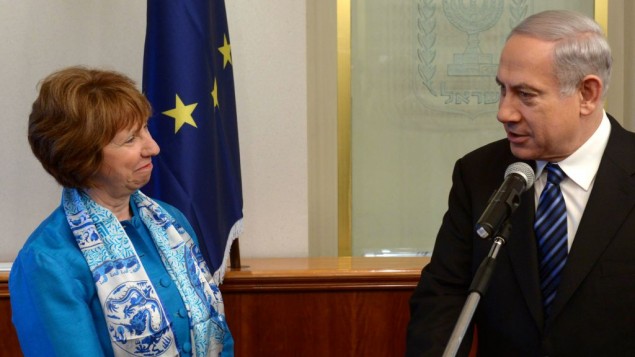
Ashton and NetanyahuEU Foreign Policy chief Catherine Ashton, left, and Benjamin Netanyahu at a press conference in June. (photo credit: Amos Ben Gershom/ GPO/Flash90)

Neither the United States nor the European Union is likely to fall into lockstep behind Prime Minister Benjamin Netanyahu’s call to withdraw support for the recently established Palestinian unity government in the wake of the allegedly Hamas-planned kidnapping of three Israeli teenagers.

The pressure Netanyahu is trying to exert might work best in Washington, where the administration is faced not only with increasingly bloody Islamist violence in Syria, Iraq and elsewhere, but also with a Congress that is very unhappy about the Fatah-Hamas pact. But even if the US temporarily cut ties with Ramallah — if and when Hamas’s culpability is proven — certainly the rest of the world is unlikely to change course on intra-Palestinian reconciliation.

The entire international community, including the US, has said it will continue to work with the new Palestinian government, with the EU and many countries across the globe praising the move as a step toward peace. This is unlikely to change, officials and analysts who spoke to The Times of Israel agreed.

“My impression is that there will be the usual declarations from all government against kidnappings and terrorism, but they will certainly not connect it with the unity government,” said Avi Primor, a former Israeli ambassador in Europe and currently the president of the Israel Council on Foreign Relations. “Principally, all of them are in favor of the unity government as they see it as a positive development.”

Beyond the official statements required by political correctness, the world cares very little about the Israelis’ fate, he suggested. “There will be no empathy for us in Europe, because they think we brought the situation upon ourselves, not only because of the occupation and settlements and so on, but also because in their eyes we’re responsible for the collapse of the peace negotiations.” Israel had it coming because it did not go ahead as planned with the last release of Palestinian prisoners during the recent peace talks, many in the international community feel, Primor said.

The EU’s ambassador to Israel, Lars Faaborg-Andersen, condemned the kidnapping “in the strongest possible terms. My thoughts are with the bereaved families of the three missing youths and my hope is that they will be found unharmed as quickly as possible,” he  told The Times of Israel on Sunday. And yet, he insisted, the current unity government cannot be blamed for something that Hamas, Islamic Jihad or any other terrorist groups might have done — because they aren’t part of the government.

“We don’t think this unacceptable kidnapping is something that the technocratic government can be held responsible for, because it consists of non-party-affiliated  personalities,” Faaborg-Andersen said. “We consider Hamas a terrorist organization and we have no dealings with it. But Hamas, Islamic Jihad and other terrorist groups do not have representatives sitting in this government.”

The EU urged the Palestinian security forces to cooperate with Israel in the manhunt, he stressed, adding that based on conversations with people on the ground he understands that this is actually happening to the satisfaction of the Israeli authorities.

Washington’s reaction to the incident, if Hamas’s culpability is confirmed, might differ in style from that of the Europeans, but the approach will essentially be the same, according to Itamar Rabinovich, a former Israeli ambassador to the US.

“The basic attitude of the EU and the US is that Israel needs to be out of the West Bank,” he said. “They believe that if you don’t want mosquitoes, you need to dry up the swamp, and the swamp is the occupation. They don’t always say that out loud, but they mean it.”

(Update: Secretary of State John Kerry strongly condemned the attack on Sunday evening and linked it to Hamas, but made no indication that the US would reconsider its stance on the Palestinians unity government.)

three-boys-305x172From L-R: Eyal Yifrach, 19, Naftali Frenkel, 16, and Gil-ad Shaar, 16. (photo credit: courtesy)

Netanyahu has been blaming the unity government for the kidnapping of Eyal Yifrach, 19, Gil-ad Shaar, 16, and Naftali Frenkel, 16, even before he announced that Hamas was behind it.

“Those same elements in the international community that said that the Palestinian agreement with Hamas would advance peace now see the true results of this union,” he said Saturday evening. Speaking to the foreign press on Sunday, he recalled that Israel had warned the international community about the dangers of endorsing the Fatah-Hamas unity pact. These dangers, he said, “now should be abundantly clear to all.”

Since PA President Mahmoud Abbas agreed to form a government with Hamas backing, Jerusalem holds him responsible for the fate of the missing teens, Netanyahu said. “The Palestinian claim that the Palestinian Authority cannot be held responsible for an attack that took place in an area under Israeli security control is patently absurd,” he said, arguing that the party in control of the area from which the terrorists departed is to be held responsible for the attack, regardless of where it occurred.

This argument, too, will likely fall on deaf ears in the international community, Israeli pundits predict. The alleged perpetrator of the Brussels Jewish museum shooting came from France. No one, they argue, ever thought of holding President Francois Hollande responsible for it.


Algemeiner Editor Dovid Efune: Palestinian Unity Deal Creates Opportunity for Hamas to Seize Control (VIDEO)

June 15, 2014

Algemeiner Editor Dovid Efune: Palestinian Unity Deal Creates Opportunity for Hamas to Seize Control (VIDEO), Algemeiner, June 15, 2014

(The dominance of Hamas in a unity government is far easier to understand than the Iraq and P 5 + 1 kerfuffles. Yet the Obama Administration does not seem to understand that problem either, or ignores it along with the other two. — DM)

Asked about the Obama Administration’s assertion that the new Palestinian government is run by technocrats who are not members of Hamas, Efune said, “The figureheads that are sitting in place are practically irrelevant.”

He added, “The first thing that is crucial to understand is that when you are dealing with a dictatorial theocracy . . . what is important to look at is; Who is behind? Where is the power? Who is appointing these people? Who do they have allegiance to?”

ALgemeiner editorAlgemeiner Editor Dovid Efune on Real News TV discussing the newly inked Palestinian unity deal. Photo: Screenshot

The newly inked Palestinian unity deal between former rivals Fatah and terror group Hamas will create an opportunity for Hamas to seize more power, Algemeiner Editor Dovid Efune said in a recent interview on Real News TV.

Citing sentiment on the street, and the 93% of Palestinians that harbor anti-Semitic views, Efune said, “This really is creating an opening for Hamas to seize control.”

“The question really is . . . if you are talking about bringing the Palestinian Authority and Hamas together who is going to end up on top?” he said. “It’s pretty clear that this is a power play whereby Hamas is going to have more access in the West Bank, more access to educate people, more access to the populace and to recruit people, and you are going to end up with a situation where Hamas becomes increasingly empowered and the Palestinian Authority is increasingly irrelevant.”

Asked about the Obama Administration’s assertion that the new Palestinian government is run by technocrats who are not members of Hamas, Efune said, “The figureheads that are sitting in place are practically irrelevant.”

He added, “The first thing that is crucial to understand is that when you are dealing with a dictatorial theocracy . . .  what is important to look at is; Who is behind? Where is the power? Who is appointing these people? Who do they have allegiance to?”

On a Facebook comment posted recently by former Hamas spokesperson Ihab al-Ghussein, in which he said that public conciliatory statements by PA Chairman Mahmoud Abbas were designed to “trick the Americans,” Efune said that “the posting itself unfortunately is not news.”

“It is just another symptom . . . of the duplicitousness that we have seen coming out of the Palestinian Authority and Hamas,” he said.

“Consistently, you have had this situation where they say one thing in Arabic, they say one thing to their own people . . . and a completely different script and a different tone when it comes to conversations with the West.”

Watch a video of Efune’s full interview below:


US strongly condemns teens’ kidnapping, blames Hamas

June 15, 2014

US strongly condemns teens’ kidnapping, blames Hamas | The Times of Israel.

Secretary of state says more details still needed on ‘despicable terrorist act,’ but indications point to Gaza-based group

June 15, 2014, 7:47 pm US Secretary of State John Kerry speaks during a press conference on June 13, 2014.  (photo credit: AFP/CARL COURT)

US Secretary of State John Kerry speaks during a press conference on June 13, 2014. (photo credit: AFP/CARL COURT)

US Secretary of State John Kerry Sunday condemned the kidnapping of three Israeli teenagers, and said “many indications” pointed to the involvement of Hamas.

“The United States strongly condemns the kidnapping of three Israeli teenagers and calls for their immediate release,” Kerry said in a statement. “Our thoughts and prayers are with their families. We hope for their quick and safe return home. We continue to offer our full support for Israel in its search for the missing teens, and we have encouraged full cooperation between the Israeli and Palestinian security services. We understand that cooperation is ongoing.

“We are still seeking details on the parties responsible for this despicable terrorist act, although many indications point to Hamas’ involvement,” he continued. “As we gather this information, we reiterate our position that Hamas is a terrorist organization known for its attacks on innocent civilians and which has used kidnapping in the past,” he said.

Prime Minister Benjamin Netanyahu directly accused Hamas of the kidnapping.

The teenagers, students at Jewish seminaries in the West Bank, were believed to have been kidnapped Thursday night while hitchhiking in an area between Bethlehem and Hebron.

Israeli soldiers man a checkpoint in the West Bank city of Hebron on Sunday, June 15, 2014, as Israel broadened the search for three teenagers believed kidnapped by terrorists (photo credit: AFP/MENAHEM KAHANA)

Their disappearance came 10 days after the establishment of a new Palestinian government of technocrats pieced together by PA President Mahmoud Abbas’s Fatah movement and Hamas following a unity agreement between rival leaders in the West Bank and Gaza.

The US, along with the rest of the international community, said it would work with the Palestinian unity government, despite the inclusion of Hamas, which it considers a terror organization.

On Sunday, a right-wing Israeli minister accused the Obama administration of facilitating the attack through its support for Palestinian unity.

The kidnapping of the yeshiva students — Eyal Yifrach, 19, Gil-ad Shaar, 16, and Naftali Frenkel, 16 — has prompted a huge search operation by Israeli security forces. On Sunday the IDF shut down all movement in and out of Hebron security forces continued to sweep the area.

Three kidnapped Israeli teens, from L-R: Eyal Yifrach, 19, Naftali Frenkel, 16, and Gil-ad Shaar, 16. (photo credit: courtesy)

A State Department official told The Times of Israel Sunday that the US was aware of reports that Frankel was a US citizen, but could not confirm them due to privacy considerations. US citizens must waive their right to privacy in certain cases in order for the State Department to be able to speak publically about their cases.

The official added that generally speaking, when a US citizen is reported missing or kidnapped, the State Department works closely with local authorities and cooperates fully in their search efforts.

Rebecca Shimoni Stoil contributed from Washington.

Netanyahu: We ‘know for a fact’ Hamas behind abduction

June 15, 2014

Netanyahu: We ‘know for a fact’ Hamas behind abduction | The Times of Israel.

( This is “big.”  Reserves called up.  Remember, the kidnap of 3 Israeli soldiers started the second Lebanon war.  Two rockets just fell near Ashdod.  May be a long night.  LONG LIVE ISRAEL ! – JW )

PM rejects denials from terror organization; Palestinian spokesman decries Hebron security measures as collective punishment

June 15, 2014, 5:02 pm

Prime Minister Benjamin Netanyahu on Sunday afternoon dismissed Hamas’s denial of involvement in the abduction of yeshiva students Eyal Yifrach, Naftali Frenkel, and Gil-ad Shaar, saying Israel knew “for a fact” that Hamas was responsible.

“Hamas denials do not change this fact. And this attack should surprise no one because Hamas makes no secret of its agenda. Hamas is committed to the destruction of Israel and to carrying out terrorist attacks against Israeli civilians – including children,” he said.

Netanyahu had announced Sunday morning that Hamas was behind the kidnapping of the three teenagers in the West Bank on Thursday night, allegations that were swiftly shot down by a spokesman for the Gaza-based organization as “stupid” and “designed to break Hamas.”

In a briefing to the foreign press Sunday afternoon, the prime minister rejected as “patently absurd” the argument that the Palestinian Authority could not be held accountable for the attack due to the fact that the Gush Etzion region, where the teens were abducted from, was under Israeli security control. The prime minister repeatedly insisted, both in an address Saturday night and in his remarks Sunday, that the PA bears full responsibility for the fate of the three teenagers.

“When an attack takes place in Tel Aviv or in London or in New York – all these places have been attacked by terrorists – the question is not where the attack takes place. The question is where it originated. The kidnappers in this case set out from territory controlled by the Palestinian Authority, and the PA cannot absolve itself of its responsibility,” Netanyahu said.

Three kidnapped Israeli teens, from L-R: Eyal Yifrach, 19, Naftali Frenkel, 16, and Gil-ad Shaar, 16. (photo credit: courtesy)

He added that Israel would spare no effort to bring the boys home.

The prime minister emphasized that Israel had warned the international community of the repercussions of the recent establishment of a Hamas-Fatah unity government of technocrats, and warned that just as Hamas had gained control in Gaza, it would advance terror in the West Bank.

Israel significantly increased its security presence in Hebron on Sunday afternoon as a closure was imposed on the city, where the IDF has concentrated its efforts to hunt down the terrorists. Over 80 Palestinians, including a number of senior Hamas officials, were taken into Israeli custody overnight Saturday.

With the mass arrests and closures in Hebron, Israel’s crackdown on the kidnappers is a “collective punishment against the entire Palestinian people,” a spokesman for the Palestinian unity government said Sunday, according to the Palestinian Ma’an News Agency.

IDF soldiers prepare to search for three kidnapped Jewish teenagers near Hebron, in the West Bank, Saturday, June 14, 2014 (photo credit: Yonatan Sindel/Flash90)

“The Israeli government cannot hold the Palestinians responsible for security in occupied territories which are not under Palestinian sovereignty and which house dozens of settlements and outposts,” Ehab Bessaiso said in a statement.

On Sunday afternoon, concrete blocks were brought to the outskirts of Hebron to block off roads, while bulldozers were deployed along other access routes, the Ynet news site reported. Palestinian sources said that the army was already preventing entry or exit from the city, which lies 30 kilometers (19 miles) south of Jerusalem.

The IDF was also deploying additional troops to the area, where the teens are believed to be held. An additional battalion of infantry forces was sent to Hebron to bolster forces already there and special units that operate observation balloons were also ordered to take up positions overlooking the city.

Hundreds of troops from the Shimshon battalion were reported to have interrupted their training exercises on the Golan Heights and were heading for the West Bank, where they may also be deployed around Hebron. By Sunday afternoon some 2,500 soldiers had been sent to the city, Ynet reported.

Defense Minister Moshe Ya’alon declared a full closure of the city Saturday night, preventing passage of Palestinians through its checkpoints aside from those in need of urgent medical care.

The working assumption by Palestinian intelligence was that Hamas is behind the kidnappings, a suspicion echoed up by Netanyahu’s assertions.

Israeli soldiers search for three Jewish teenagers near Hebron, in the West Bank,  Saturday, June 14, 2014 (photo credit: Yonatan Sindel/Flash90)

According to the Palestinian sources, Palestinian intelligence received notice of the kidnapping only 12 hours after the event, and since then has maintained communications with the Israeli side, with active coordination between the two security forces.

Bessaiso, the Palestinian spokesman, appealed to the “international community and all international human rights organizations to protect the Palestinian people against the Israeli escalation.”

Bassaiso condemned the Hebron closures and measures preventing visits to Palestinian political prisoners held in Israel, and “other oppressive procedures.”


ISIS Takeovers in Iraq: Biggest Islamist Victory Since 9/11

June 15, 2014

ISIS Takeovers in Iraq: Biggest Islamist Victory Since 9/11, The Clarion ProjectRran Mauro, June 15, 2014

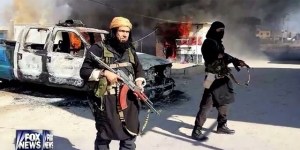
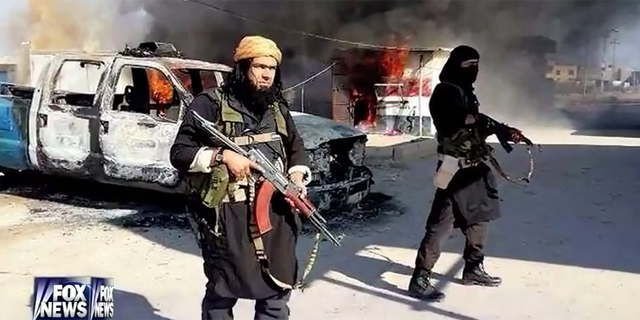
ISIS-Terrorists-HPISIS terrorists

ISIS directly controls about one-third of Iraq, a proportion that increases substantially if you include Sunni areas of western Iraq that ISIS has bypassed on its dash towards the capital.

The West needs to understand that ISIS’ motivation is explicitly ideological, Islamist and anti-democratic.

The ISIS offensive in Iraq is also about challenging the prestige of Al-Qaeda chief Ayman al-Zawahiri. ISIS leader Abu Bakr al-Baghdadi has been at odds with Zawahiri for about a year, and ISIS was officially excommunicated from Al-Qaeda in February.

Unlike Zawahiri, al-Baghdadi claims he is a descendant of the Prophet Mohammed, qualifying him as a possible caliph. ISIS’s latest successes are an embarrassing contrast for Zawahiri, who does not control territory; cannot claim to have created an Islamic state and cannot make a bid for the title of caliph. ISIS can argue that Zawahiri has become ineffective and Allah is blessing al-Baghdadi.

The takeover of about one-third of Iraq by the “Islamic State in Iraq and Syria” (ISIS) terrorist group is about more than establishing a miniature caliphate and base for jihad. It is a challenge to the prestige of Al-Qaeda chief Ayman al-Zawahiri by ISIL leader Abu Bakr al-Baghdadi, who claims to be a descendant of Islam’s holy prophet and ridicules Al-Qaeda for not enforcing sharia (Islamic) law strictly enough.

ISIS (also known as ISIL, the “Islamic State of Iraq and the Levant”) controls significant parts of northern and eastern Syria and northern and western Iraq, having taken Mosul and Tikrit. (It is now threatening Baghdad and Samarra.) This means that ISIS directly controls about one-third of Iraq, a proportion that increases substantially if you include Sunni areas of western Iraq that ISIS has bypassed on its dash towards the capital.

This is arguably the biggest victory for an Al-Qaeda-type group since the attacks of September 11, 2001 and the overall Islamist cause since the Muslim Brotherhood’s takeover of Egypt in 2012.

Over 500,000 Iraqis—Sunnis aware of ISIS’s brutality—fled the Mosul area as the security forces melted away. Another half-million civilians were displaced earlier due to fighting in the Anbar Province. Over 150,000 Iraqi security personnel abandoned their positions as the offensive began, leaving behind uniforms and weapons. This number includes about 30,000 that fled when challenged by only 800 ISIS terrorists.

The question lingers of why U.S.-trained and equipped Iraqi forces capitulated so quickly. Iraqi forces previously battled Al-Qaeda and even Iranian-backed militias successfully and U.S.-trained Afghan forces have also shown to be durable.

First, ISIS was able to creation of a safe haven for themselves in Syria from which they were able to build a formidable, organized base.

Next, ISIS allied themselves with terrorists that it would typically brand as “apostates.” This includes a network of fighters loyal to Iraq’s Baath Party, the political party of Saddam Hussein’s regime. One pivotal ally is Izzat Ibrahim al-Douri, a Vice President under Saddam. His son was reportedly just killed in an Iraqi airstrike. In Tikrit, Saddam’s hometown, posters of Al-Douri and Saddam werehoisted.

ISIS has announced that the territory it controls belongs to an Islamic state, even setting up banners to that effect. The group declared the beginning of the “era of the Islamic state” in which Muslims would reject secular governance.

ISIS has offered to spare the lives of soldiers and police who end their “apostasy,” meaning their service to the government. This does not apply to Shiites, whose very faith makes them an “apostate” deserving of death in the eyes of ISIS. The group says it has executed 1,700 Shiite soldiers already.

In addition to the weapons taken from deserted cops and soldiers, ISIS captured over 400,000 weapons from two stockpiles including artillery shells, mortars, RPGs and AK-47s. About one-fourth of the armory was sent to Syria. It also raided the Central Bank of Mosul, taking about $430 million in cash, making it the world’s richest terrorist group. That single bank heist gave ISIS revenue that is over a dozen times the $30 million annual budget of Al-Qaeda in 2001.

The group also released about 1,400 inmates—certainly including a large number of Islamist terrorists—from one prison in Mosul. ISIS says it has freed a total of 3,000 prisoners from three sites. It also controls a number of important facilities, including banks, police stations, military bases and two airports. Earlier reports that ISIS had taken Baiji, home to a critical oil refinery, were denied by the U.S. and Iraqi governments.

ISIS has also pledged to storm the Shiite holy cities of Najaf and Karbala. The Shiite populations there, as well as in Baghdad and Samarra, are well-aware of the doom they face if ISIS is able to seize these cities. The Iraqi security forces successfully repelled the ISIS assault on Samarra. The highest Shiite authority, Grand Ayatollah Al-Sistani, issued a fatwa mandating that Shiites take up arms. Thousands have complied.


ISIS Ideology

President Obama did not acknowledge the Islamist ideology of ISIS in his June 13 speech, instead attributing the violence to political malfeasance on the part of the Iraqi government and sectarian differences. He said:

“This is not solely, or even primarily, a military challenge. Over the past decade, American troops have made extraordinary sacrifices to give Iraqis an opportunity to claim their own future. Unfortunately, Iraqi leaders have been unable to overcome, too often, the mistrust and sectarian differences that have long been simmering there. And that’s created vulnerabilities within the Iraqi government, as well as their security forces.”

President Obama is correct in one way. The breakdown in the relationship between the Sunnis and the Shiite-led government did create an opening for ISIS to exploit. The Sunni tribes in the Anbar Province and elsewhere were pivotal in ousting Al-Qaeda from Iraq and their collaboration with the Shiite-led central government was equally important in preventing its return.

However, ISIS is not motivated by frustration with Sunni grievances with the Iraqi political process. Its motivation is explicitly ideological, Islamist and anti-democratic.

Both Al-Qaeda and ISIS fight for the re-establishment of the caliphate, but ISIS states this objective as its primary goal. The ISIS spokesman, in his declaration that the group will conquer the capital of Iraq, said, “Go to Caliphate Baghdad, we have to settle the score.” This is a reference to the Abbasid Caliphate that existed from the years 750 to 1258, which had Baghdad as its capital.

ISIS vs. Al-Qaeda

The ISIS offensive in Iraq is also about challenging the prestige of Al-Qaeda chief Ayman al-Zawahiri. ISIS leader Abu Bakr al-Baghdadi has been at odds with Zawahiri for about a year, and ISIS was officially excommunicated from Al-Qaeda in February.

The rivalry began in the summer of 2013 when two Al-Qaeda affiliates, ISIS (formerly Al-Qaeda in Iraq) and Jabhat al-Nusra, began operating in Syria and ISIS unilaterally announced that it had absorbed Jabhat al-Nusra. Zawahiri intervened on the side of Jabhat al-Nusra.

Eventually, the two groups in Syria began killing each other, and Zawahiri declared that ISIS is not part of his organization and condemned the group in February. Al-Qaeda spoke out against the “sedition” of ISIS and “the shedding of protected blood.”

On April 9, nine terrorist leaders in Afghanistan, Turkmenistan and Iran endorsed the “Khorasan Pledge” announcing their defection from Al-Qaeda to ISIS. The statement basically accused Al-Qaeda of being too moderate:

“[Al-Qaeda] did not have any courage to enforce judgments over those who disobey sharia, under the pretext of avoiding a clash with people due to their inability and incapacity, although they enforced in secret more than they did out in the open,” it said.

Al-Shabaab in Somalia and at least two other Al-Qaeda affiliates, the al-Murabitoon Brigade in West Africa and Al-Qaeda in Kurdistan, reiterated their loyalties to Zawahiri.

The State Department confirms that Zawahiri’s influence has fallen, with Al-Qaeda affiliates having “routinely disobeyed” his orders to avoid killing other Muslims over the past year. In terms of tactics, most of Al-Qaeda is more in line with al-Baghdadi than the group’s official leader.

Unlike Zawahiri, al-Baghdadi claims he is a descendant of the Prophet Mohammed, qualifying him as a possible caliph. ISIS’s latest successes are an embarrassing contrast for Zawahiri, who does not control territory; cannot claim to have created an Islamic state and cannot make a bid for the title of caliph. ISIS can argue that Zawahiri has become ineffective and Allah is blessing al-Baghdadi.

This may lead to a situation where we see jihadists—including Al-Qaeda loyalists—flocking to al-Baghdadi in light of his success in Iraq.


The Future

There are two scenarios for Iraq’s future.

The first is that Iraq becomes like Syria. The Sunni areas become captive to ISIS and are embroiled in Sunni-on-Sunni violence for the foreseeable future. The Kurds keep to themselves, deflecting any ISIS advance into Iraqi Kurdistan. The Shiite areas of Iraq are dominated by Iranian-backed militias like those of Moqtada al-Sadr and Iraqi Hezbollah. The Iranian regime has already dispatched two Revolutionary Guards battalions to Iraq.

The second is that the Iraqi government, with U.S. aerial support, stops ISIS’s advance and slowly begins forcing it into retreat. The speed and overall success of the effort to win back territory from ISIS is dependent upon local Sunni participation.

Both sides seem to acknowledge that a tight relationship between Sunni tribes and the central government is critical to stopping Al-Qaeda-type terrorists. In February, the Iraqi government announcedit would integrate the Sunni tribes in Anbar into the military and police and “respects the plans and initiatives which the Al-Anbar leadership and tribes have proposed.”

Sheikh Ahmed Abu Risha, a major tribal leader that has led Sunnis into battling Al-Qaeda, declared that he would collaborate with the Iraqi government in battling ISIS and requested U.S. air strikes. He attributed ISIS’s rise to the U.S. failure to develop the Iraqi air force and inadequate training.

“The main reason for the catastrophic situation in Iraq right now is the withdrawal of the U.S. forces from Iraq without setting an obvious plan to protect the country,” Abu Risha said.

Iraq is now at a fork in the road. It may descend into a permanent state of bloody chaos, trapping millions of innocents in a war between an Al-Qaeda-like caliphate and Iranian-backed militias, a scenario where terrorists inevitably use their bases to target the West.

Alternatively, Iraq could once again defy the odds by forming a U.S.-backed cross-sectarian alliance.

There is no way to separate the Iraq conflict from the security of the West. A base for Islamist terrorists anywhere is a threat to Western interests everywhere.


Iran ‘sends 2,000 troops’ to help Maliki in Iraq – Al Arabiya

June 15, 2014

Iran ‘sends 2,000 troops’ to help Maliki in Iraq – Al Arabiya News.

Iran sent 2,000 advance troops to Iraq to help fight an extreme jihadist insurgency effectively seizing control of major cities in the country, a senior Iraqi official told The Guardian on Saturday.

Around 1,500 basiji forces crossed the border into Khanaqin, a town in central Diyala province on Friday, while another 500 entered the Badra Jassan area in Wasat province overnight, according to the official, reported the British news website.

It confirmed Friday that Major General Qassem Suleimani, head of the Iranian Revolutionary Guards’ elite Quds Force, had arrived to Baghdad to oversee defense operations in the capital.

Iranian President Hassan Rowhani announced Saturday that his country was ready to help Iraq fight the al-Qaeda-inspired Islamic State of Iraq and Syria (ISIS), an extremist-sunni jihadist group effectively controlling major cities in the country.

Additionally, Rowhani declared that he would join forces with long-term enemy U.S. to defeat ISIS militants and local armed men fighting among their ranks.

“We can think about it if we see America starts confronting the terrorist groups in Iraq or elsewhere,” Rowhani said when asked if Tehran would collaborate with Washington, Reuters reported Saturday.

Arming civilians

Meanwhile, Iraqi Prime Minister Nuri al-Maliki called on Iraqi citizens to take up arms and defend their country against the insurgency. Other shiite leaders also urged civilians to stand up and defend.

Maliki said his cabinet “praises the willingness of the citizens and the sons of the tribes to volunteer and carry weapons … to defend the homeland and defeat terrorism,” he said in a statement broadcast on state television last Tuesday.

Grand Ayatollah Ali al-Sistani, the highest religious authority for Shiites, urged his followers on Friday to take up arms against Sunni militants advancing toward Baghdad.

Thousands of Shiites answered the call to fight on Saturday, and joined security forces to fight ISIS militants who are advancing in the country with an extreme religious rule.

(With AP and Reuters)