Archive for June 20, 2014

Iran rejects ‘excessive demands’ in nuclear talks with six powers

June 20, 2014

Iran rejects ‘excessive demands’ in nuclear talks with six powers, Reuters,  Parisa Hafezi and Justyna Pawlak, June 20, 2014
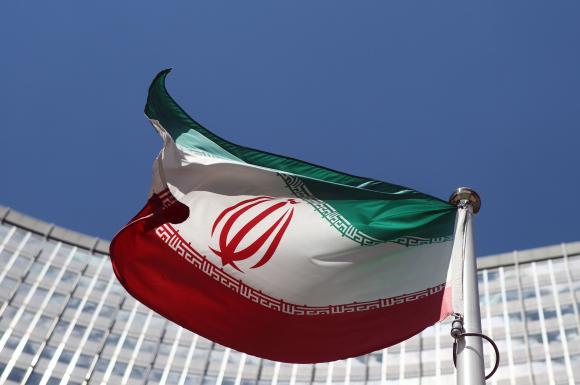
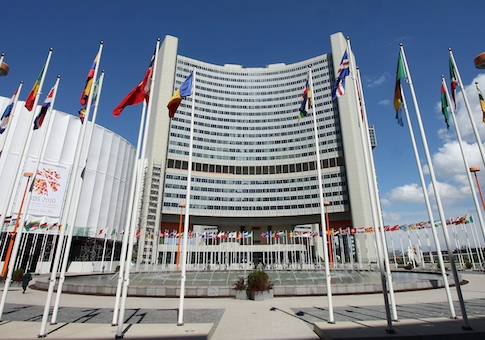
An Iranian flag flutters in front of the UN headquarters in ViennaAn Iranian flag flutters in front of the United Nations headquarters in Vienna June 17, 2014. CREDIT: REUTERS/HEINZ-PETER BADER

Diplomats from the six powers told Reuters earlier in the week that the most formidable dispute in the talks was over the number of centrifuges Tehran will be allowed to keep to enrich uranium under any deal.

There are other sticking points in addition to centrifuges. One official from the six told Reuters that the Western powers want the duration of any agreement to be two decades, while Tehran has said it would be willing to accept five years.

Still, senior officials close to the talks said both sides are keen for a deal.

(Reuters) – Iran told six big powers on Friday it would not accept their “excessive demands” after the latest talks on lifting sanctions against Tehran in exchange for curbs on its nuclear work yielded no breakthrough, with a deadline for a deal just a month away.

U.S. Under Secretary of State for Political Affairs Wendy Sherman said it was Iran that would need to shift its position: “What is still unclear is if Iran is really ready and willing to take all the necessary steps to assure the world that its nuclear programme is and will remain exclusively peaceful.”

The stakes are high in the Vienna talks, which will resume on July 2, as the powers seek a negotiated solution to a more-than-decade-long standoff with Iran that has raised fears of a new Middle East war and a regional nuclear arms race.

Sherman noted at the end of five days of negotiations in the Austrian capital that Tehran had always maintained that it wants only civilian nuclear energy. “If that is indeed the case, then a good agreement is obtainable,” the U.S. delegation chief said.

Iran and the United States, RussiaChinaFrance, Britain and Germany are striving for a comprehensive settlement by July 20, a deadline set as part of an interim deal struck last year.

A six-month extension of the talks is a possibility but could be politically difficult for the United States, since the administration of President Barack Obama would almost certainly seek the approval of Congress, where hawkish lawmakers are suspicious of Iran and dislike the idea of engagement with it.

Diplomats from the six powers told Reuters earlier in the week that the most formidable dispute in the talks was over the number of centrifuges Tehran will be allowed to keep to enrich uranium under any deal.

Western officials say that the six powers want this number to be in the low thousands, below the capacity that could allow Iran to quickly accumulate enough material for a nuclear bomb.

Iran insists on tens of thousands of centrifuges to churn out fuel for a future network of civilian nuclear power stations, although this would take many years to build.

Iranian Foreign Minister Mohammad Javad Zarif highlighted the wide gulf between the sides, urging the six nations to “abandon excessive demands which will not be accepted by Iran”.

“Still we have not overcome disputes about major issues,” he told reporters as five days of negotiations in Vienna wound up. “There has been progress, but major disputes remain.”

He made clear there was no agreement yet between Iran and the six on a draft text of an agreement. A senior Chinese official said the two sides had put together a “textual framework”, though gave no details.

“The fact that (we came up) with this text is progress … in procedural terms,” China’s Wang Qun told reporters.

Sherman described the text as a “working document” that is “heavily bracketed” due to remaining disagreements, making clear much work remains to reach an accord.

POWERS WANT 20-YEAR DEAL, IRAN WANTS 5 YEARS

So far, diplomats said, Russia and China – traditionally more accommodating of Iran’s nuclear stance – have backed up the U.S. and European demands on Tehran’s centrifuge capacity, though they support the idea of moving more swiftly to ease the sanctions that have crippled the oil-dependent Iranian economy.

A senior diplomat from one of the major powers said all six were united in their positions on the permissible scope of Iran’s enrichment programme and that they had presented “pretty detailed” proposals on that issue.

“There are very, very difficult decisions to be taken here by Iran,” said a senior U.S. official, asking for anonymity.

There are other sticking points in addition to centrifuges. One official from the six told Reuters that the Western powers want the duration of any agreement to be two decades, while Tehran has said it would be willing to accept five years.

Still, senior officials close to the talks said both sides are keen for a deal. Perhaps signalling its desire for a successful outcome, Iran has acted to eliminate virtually all of its most sensitive stockpile of enriched uranium gas, the U.N. nuclear watchdog reported on Friday.

That requirement was included in the interim deal reached in Geneva last November that bought time for the current negotiations on a long-term agreement.

A spokesman for European Union foreign policy chief Catherine Ashton, who coordinates the talks, said only that the two sides had begun drafting the text of a deal during their fifth round of negotiations this year.

“We have worked extremely hard all week to develop elements we can bring together when we meet for the next round in Vienna, beginning on July 2,” Michael Mann said in a statement.

Iran denies any nuclear arms ambitions and demands crippling economic sanctions, eased slightly in recent months, be removed fast under any settlement – something Western governments are loath to do too soon, believing Tehran will otherwise lose incentive to comply fully with terms of a final deal.

Other issues awaiting resolution include the breadth and depth of U.N. nuclear watchdog monitoring of Iranian nuclear sites and the future of Iran’s planned Arak research reactor, a potential source of plutonium for atomic bombs. Iran says the reactor will make isotopes for medical care and agriculture.

Israel’s government, which has vocally opposed diplomacy with its arch-enemy Iran, has suggested it could bomb Iranian atomic facilities if diplomacy fails to head off the risk of a nuclear-armed Iran. Tehran says it is Israel’s presumed nuclear arsenal that is the main threat to regional peace and stability.

Putin speaks to Iraqi PM, expresses support

June 20, 2014

Putin speaks to Iraqi PM, expresses support, Washington Post, June 20, 2014

RussiaPutin-0618aRussian President Vladimir Putin meets with Khanty-Mansiysk Governor Natalya Komarova in the Kremlin in Moscow, Russia, Friday, June 20, 2014. (RIA-Novosti, Alexei Nikolsky, Presidential Press Service/Associated Press)

Putin confirmed Russia’s “full support for the Iraqi government’s action to quickly free the territory of the republic from terrorists,” the Kremlin said, adding that Putin and al-Maliki also discussed bilateral cooperation.

MOSCOW — Russian President Vladimir Putin has spoken by phone to Iraqi Prime Minister Nouri al-Maliki, expressing Moscow’s support for his action against the militant offensive.

The Kremlin said in a statement that al-Maliki informed Putin on Friday about his government’s steps to combat the “terrorist groups in the north of the country.” It added that the insurgency threatens security of the entire region.

Putin confirmed Russia’s “full support for the Iraqi government’s action to quickly free the territory of the republic from terrorists,” the Kremlin said, adding that Putin and al-Maliki also discussed bilateral cooperation.

Putin’s expression of support for the embattled Iraqi prime minister comes as al-Maliki’s rivals have mounted a campaign to force him out of office, with some angling for support from Western backers and regional heavyweights.

Destabilizing the Middle East

June 20, 2014

Destabilizing the Middle East, Israel Hayom, Richard Baehr, June 20, 2014

(Please see also U.N. Promotes Iran to Top Post, Disputes Israel’s Legitimacy. — DM)

Outside of the Israeli-Palestinian arena . . . . the perception of a disappearance of American resolve in the region ‎has undoubtedly played a real destabilizing role. Would Sunni jihadists be in the ‎position they are now in Syria and Iraq had the Obama administration been ‎clearer on our goals and on whom we were supporting in the Syrian civil war, and ‎not wavered on enforcing our red lines? Had we left a small military force in Iraq ‎and applied more pressure on the Maliki government to be more inclusive, would ‎the country be in its current state of near collapse with the possibility of splitting ‎apart into religious/ethnic areas dominated by Kurds, Sunnis and Shiites?

The triviality of American foreign policy initiatives and the leadership vacuum we ‎have created abroad, which others are moving quickly to fill (in very destabilizing ‎fashion), appear to be deliberate — an attempt to reduce our American footprint ‎and avoid even the threat of military engagement.

The next shoe to drop will probably be with Iran and its nuclear program. What will be sold as a “victory” for the United States in the negotiations ‎will be a deal that culminates Obama’s five-year courtship of the mullahs, and has ‎led to “their rejoining the community of nations” and presumably behaving more ‎responsibly (as in our subcontracting to them the military effort to derail the ‎assault by the Islamic State of Iraq and the Levant as it approaches Baghdad). The nuclear deal if it is signed, will preserve ‎Iran’s ability to enrich uranium, maintain existing stockpiles of enriched uranium, ‎enable only those inspections Iran is comfortable with, and significantly reduce ‎current sanctions directed against the regime — a reward presumably for not ‎making a bomb this week, but only a bit later or whenever it chooses to. The fact ‎that American and European pressure on Iran will have been removed, will be ‎destabilizing. Iran will be freer to throw its weight around, with its economy on the ‎mend, and the “international community” moving on to worry about other things ‎than its nuclear program.‎

New York Times reporter Jody Rudoren accuses Israel of destabilizing both Israeli-‎Palestinian relations and the new “unity government ” of the Palestinians, and ‎sentencing the Palestinians to collective punishment as it seeks to find the three ‎boys kidnapped a week back, almost certainly by Hamas operatives. The three kidnap victims and their families are, ‎of course, only deserving of a modicum of international sympathy, since they supposedly ‎belong to “settler families” living on land “promised to,” and rightfully belonging to ‎the Palestinians. (In fact, only one of the three families lives in a settlement.) In pretty much every story on the three boys in European papers ‎or The New York Times, it is obligatory to mention the settler aspect, since this ‎suggests the families to some extent had it coming to them for their participation in ‎a colonial enterprise. Perhaps the only thing that could have muddied the waters ‎further would be if the three boys had been wearing Washington Redskins tee ‎shirts at the time of the kidnapping, which ‎would have conclusively demonstrated their lack of concern for all those less ‎privileged and more deserving of the world’s concern.‎

There are of course, plenty of destabilizing things going on in the Middle East, ‎though hitchhiking teenage boys, and the Israeli government’s interest in finding ‎them while they are still alive, hardly fall in that category. The unity agreement ‎between the Palestinian Authority and Hamas was a particularly destabilizing ‎event. With no change in any of the expressed objectives of Hamas, the unity ‎agreement was essentially a formal marriage between the PA and a terrorist entity ‎committed to the murder of Jews in Israel and anywhere else they could find them. ‎That agreement was bound to destabilize Israeli-Palestinian relations, as was the ‎kidnapping of three teenage boys by the new partner in the PA government. ‎

The Israeli search for the kidnappers and their victims is what governments in ‎civilized countries do to protect their people. Kidnapping children is what terrorist ‎regimes do and is designed to destabilize. Hamas clearly sees a path to power in ‎the West Bank, much as it has achieved power in Gaza. Forcing the PA on the ‎defensive — appearing to accede to Israeli demands to cooperate in the search for ‎the kidnappers, while Hamas remains resolute in supporting such attacks, is bound ‎to improve Hamas’ standing versus the PA among a population that loves to glorify ‎terrorist killings and kidnappings and prefers them over deals with the “Zionist ‎entity.”‎

The Hamas message of how Jews should be treated anywhere you can find them ‎seemed to have been well understood in Europe — in Paris and Brussels and ‎Antwerp in recent days. In Antwerp, it ‎appeared to be Jewish 5-year-olds that proved so unsettling and destabilizing to ‎the Muslim attackers. ‎

It is of course no surprise that the attacks in Europe are occurring now with such ‎increased frequency. The European governments, as evidenced by the latest ‎craven capitulation by their diplomats to Arab and Muslim demands in the ‎‎”Declaration Adopted at the Third European Union-League of Arab States Foreign ‎Affairs Ministerial Meeting” in Athens last week have ‎effectively become mouthpieces for the Palestinian Authority and the Arab League. ‎Since the Palestinian Authority now also means Hamas, it is no surprise that ‎European nations have been speaking with forked tongues about the kidnapping ‎and its aftermath. One might say that the attacks on Jews in European cities have ‎been destabilizing to the normal life that has been promised to all the citizens of ‎the social welfare paradises that presumably exist on the continent. But fear not, ‎since most of the attacks are characterized by these governments as actions by ‎‎”lone wolves,” and there can’t be too many of those types around among Europe’s ‎more than twenty million Muslims, a significant number of whom have clearly been ‎radicalized in recent decades. That very destabilizing radicalization process is one that the EU nations are afraid to confront due to their near total commitment to ‎the multicultural enterprise, despite its evident failure to produce any real ‎assimilation.‎

Outside of the Israeli-Palestinian arena, there have been plenty of destabilizing ‎events the past few years and days in the Middle East. Unfortunately for those who ‎claim that resolving the Israeli-Palestinian conflict is so central to calming the ‎region, the instability in Egypt, Syria, Libya, and now Iraq appear to be completely ‎unrelated to the flow and the ups and downs of the so-called peace process. On the ‎other hand, the perception of a disappearance of American resolve in the region ‎has undoubtedly played a real destabilizing role. Would Sunni jihadists be in the ‎position they are now in Syria and Iraq had the Obama administration been ‎clearer on our goals and on whom we were supporting in the Syrian civil war, and ‎not wavered on enforcing our red lines? Had we left a small military force in Iraq ‎and applied more pressure on the Maliki government to be more inclusive, would ‎the country be in its current state of near collapse with the possibility of splitting ‎apart into religious/ethnic areas dominated by Kurds, Sunnis and Shiites? ‎

To hear what comes out of the State Department these days, or for that matter from NASA, or the Veterans Affairs Department, American domestic and foreign policy objectives seem to focus on just a ‎few areas — climate change; lesbian, gay, bisexual and transgender initiatives, and a little further down the list, ‎celebrating Muslim achievements in space so as to lift their self-esteem. Of course, ‎also near the top of the agenda is insuring that the United States and other ‎countries have healthy school lunches.‎

The triviality of American foreign policy initiatives and the leadership vacuum we ‎have created abroad, which others are moving quickly to fill (in very destabilizing ‎fashion), appear to be deliberate — an attempt to reduce our American footprint ‎and avoid even the threat of military engagement. ‎

The next shoe to drop will probably be with Iran and its nuclear program. What will be sold as a “victory” for the United States in the negotiations ‎will be a deal that culminates Obama’s five-year courtship of the mullahs, and has ‎led to “their rejoining the community of nations” and presumably behaving more ‎responsibly (as in our subcontracting to them the military effort to derail the ‎assault by the Islamic State of Iraq and the Levant as it approaches Baghdad). The nuclear deal if it is signed, will preserve ‎Iran’s ability to enrich uranium, maintain existing stockpiles of enriched uranium, ‎enable only those inspections Iran is comfortable with, and significantly reduce ‎current sanctions directed against the regime — a reward presumably for not ‎making a bomb this week, but only a bit later or whenever it chooses to. The fact ‎that American and European pressure on Iran will have been removed, will be ‎destabilizing. Iran will be freer to throw its weight around, with its economy on the ‎mend, and the “international community” moving on to worry about other things ‎than its nuclear program.‎

The killing of Osama bin Laden was supposed to be the capstone to the president’s ‎foreign policy achievements — ending the wars abroad, and wrapping up our ‎business with al-Qaida, producing a new stable world order, with a more ‎comfortable, reduced American role as one among many. It seems more likely ‎today that what the administration views as its achievements are seen abroad as ‎neglect and negligence. Unfortunately, neglect and negligence are destabilizing.‎

Baghdad’s Sunni fighters: we are ready for zero hour

June 20, 2014

Baghdad’s Sunni fighters: we are ready for zero hour, The Guardian, June 20, 2014

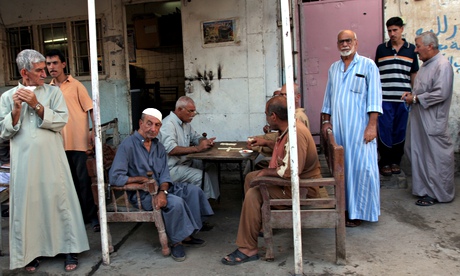
Baghdad Adhamiya district cafeMen play dominoes in the Adhamiya district of east Baghdad. Others in this Sunni area say they have sleeper cells waiting to take up arms. Photograph: Peter Beaumont

As tensions rise in the Iraq capital, Sunnis reveal concerns about Isis, and some say they are ready to rise up against Shia militia.

The Isis advance has been aided by Sunni factions disillusioned with the Shia leadership in Baghdad. Sunni tribal leaders, Ba’ath party members, old army officers and factions of the former insurgency all came together months ago to plan how to take the fight to Maliki.

A leading role was given to the former army officers and Ba’ath party members. “Many factions are all under the command of army officers,” said the commander. “Isis are not the only people fighting, but the Shia insist on seeing everyone as Isis and don’t want to see the difference.”

Patiently he laid out his plan in front of the other man, who appeared unconvinced. “We don’t do any move without taking orders and permissions from the leadership of the military council,” the commander said. “We start activating when the rebels enter the belt of Baghdad. The areas will fall one after the other. We are ready to start the fight now but we don’t act yet, each step we calculate long before.

“Isis will clear the path for us and we will take over. Our men are toppling provinces now and we wait for them.”

In a dilapidated cafe in north Baghdad under a TV set blasting patriotic songs in support of Iraq‘s embattled prime minister, a young man looked grave.

“Why did the revolutionaries stop?” he asked in a low voice, referring to the Sunni insurgents sweeping across northern Iraq. “Why did they reach Salaheddin [province] and stop? This will be very bad for us, the Sunnis in Baghdad, if they liberate the north and leave us here. We will be under the mercy of the militias. They have to push down, otherwise it will be the end of us.”

The man, a Sunni fighter in the last round of civil war, stole a concerned glance at the men around him, some playing cards or backgammon.

“There are many men willing to start the fight again but the problem is there is no fear,” he said. People were not sufficiently worried about the situation, he said, and did not realise there was no way back. “If we string two Shia on poles for everyone to see, the militias will retaliate and all the men in the area will be forced to carry arms. This is how we start bringing our men together.”

A broad-shouldered Sunni commander next to him leaned forward and assured his friend, saying insurgents had set up sleeping cells and were waiting for zero hour to take the war into the heart of the Iraqi capital. “At zero hour, we start our fight by assassinating all the spies and agents. Our neighbourhood, like every Sunni neighbourhood, has many spies and informers. When we assassinate the leaders, the ranks will collapse.”

Such are the deliberations and calculations of the some of the Sunni of Baghdad, marginalised for years under the Shia prime minister, Nouri al-Maliki, now suddenly galvanised by the startling advances of the Islamic State in Iraq and the Levant (Isis) to within an hour’s drive of the capital. For many ordinary Sunni Baghdadis, the advance of Isis is cause for alarm mixed with a vague hope that somehow Isis and Shia Muslims may severely damage each other, to the general benefit of moderate Sunnis. But for those who have fought for the cause in the past, it appears more like an opportunity.

The Isis advance has been aided by Sunni factions disillusioned with the Shia leadership in Baghdad. Sunni tribal leaders, Ba’ath party members, old army officers and factions of the former insurgency all came together months ago to plan how to take the fight to Maliki.

A leading role was given to the former army officers and Ba’ath party members. “Many factions are all under the command of army officers,” said the commander. “Isis are not the only people fighting, but the Shia insist on seeing everyone as Isis and don’t want to see the difference.”

Patiently he laid out his plan in front of the other man, who appeared unconvinced. “We don’t do any move without taking orders and permissions from the leadership of the military council,” the commander said. “We start activating when the rebels enter the belt of Baghdad. The areas will fall one after the other. We are ready to start the fight now but we don’t act yet, each step we calculate long before.

“Isis will clear the path for us and we will take over. Our men are toppling provinces now and we wait for them.”

That may prove optimistic in the extreme. This marriage of convenience has happened before, after the US invasion in 2003, and delivered disastrous consequences when the Iraqi Sunnis allied themselves with insurgents operating under the name al-Qaida in Iraq. Before long, disputes over military leadership, ideology and ways of life splintered the Sunni front. Tribal leaders turned to the Americans and the insurgency was sent packing.

A veteran Sunni politician and a member of the parliament warned that Sunnis were once again making a pact with the devil. “This will lead to a chaotic and fragmented Sunni war,” he said. “‘What is your programme?’ I ask the Sunnis. ‘Maliki is corrupt and his army is sectarian, fine, but what is the programme? A Sunni region? And who will lead it? Isis?’

“Whatever happens the Sunnis of Iraq are the biggest losers,” the MP added wearily. “In Syria the Sunnis can win if they clean their midst of foreign jihadis but in Iraq the Sunnis will lose whatever happens. They are a minority against the Shia and now they allowed the jihadis and Isis into their areas.

“The Sunnis will not be able to form any [structure] that can last and the moment they start forming it they will start with external fighting. They have lost the compass and they need Iraq but they can’t see an Iraq that they don’t rule. Yet at the same time no one can defeat them militarily, not Maliki and not Iran.”

Countryside standoffs

In the fertile farmlands north of Baghdad, the emir of an Iraqi jihadi group which first fought the Americans, then flipped sides and fought al-Qaida and now is back fighting against the Iraqi army, gave further details of the uneasy arrangements with Isis. In much of the countryside, the emir said, local factions and tribes had wrested control of their areas or just moved in to fill the gap after government forces withdrew. Sometimes this had created a tense standoff with Isis.

“There are many different factions here, and all are cooperating now but we fear that they [Isis] will impose there control, and they start treating everyone as subservient to them,” he said. “And we end up sandwiched between the rock and the hard place between the Shia government and Isis and go back to the same bad situation of years ago of internal fighting.”

The emir said that he and other factions were trying to contain Isis by using the tribes. “The tribes told them: welcome as our sons, you work under the framework of tribes but you can’t come here and tell us what to do.”

Much the same thing happened in the mid-2000s, during the last insurgency.

“At the moment they are behaving in an exceptional way,” the emir added. “Will they change or maintain this policy? I don’t know, and Syria is different from Iraq. We have been through this – we know the meaning of internal fighting. We made mistakes in 2006-07. It’s a dangerous fate that everyone fears.”

Sheepishly he added: “They will not allow anyone to carry weapons and we have to accept that. The reality is that I don’t have enough weapons now to fight them or even to resist. They are trying to reach the belt of Baghdad. This is where we want to reach. Things are heading to a sectarian war – of that I can assure you.”

Israel receives first ever oil shipment from Iraqi Kurdistan

June 20, 2014

Israel receives first ever oil shipment from Iraqi Kurdistan | JPost | Israel News.

( Israel supports a free Kurdistan ! – JW )

By REUTERS

06/20/2014 18:03

The SCF Altai tanker was anchored near Ashkelon port early on Friday morning, ship tracking and industry sources said.

Iraqi Kurdish oil

The SCF Altai tanker has anchored near Israel’s Ashkelon port, June 20, 2014. Photo: REUTERS

A tanker delivered a cargo of disputed crude oil from Iraqi Kurdistan’s new pipeline for the first time on Friday in Israel, despite threats by Baghdad to take legal action against any buyer.

The SCF Altai tanker arrived at Israel’s Ashkelon port early on Friday morning, ship tracking and industry sources said. By the evening, the tanker began unloading the Kurdish oil, a source at the port said.

The port authority at Ashkelon declined to comment.

Securing the first sale of oil from its independent pipeline is crucial for the Kurdish Regional Government (KRG) as it seeks greater financial independence from war-torn Iraq.

But the new export route to the Turkish port of Ceyhan, designed to bypass Baghdad’s federal pipeline system, has created a bitter dispute over oil sale rights between the central government and the Kurds.

Reuters was not able to confirm whether the KRG sold the oil directly to a buyer in Israel or to another party. Oil cargoes often change hands multiple times before reaching their final destination.

The United States, Israel’s closest ally, does not support independent oil sales by the Kurdish region and has warned possible buyers against accepting the cargoes.

Israeli leaders have been alarmed in recent months, however, by signs of a possible rapprochement between Washington and Iran.

Officials said Israel was keen to build good ties with the Kurds, hoping to expand its limited diplomatic network in the Middle East and broaden options for energy supplies.

It was not clear whether the crude in the SCF Altai has been sold to a local refiner or was slated to discharge into storage, potentially for another destination.

“We do not comment on the origin of crude oil being imported by the private refineries in Israel,” an Israeli energy ministry spokeswoman said.

The first tanker to carry Kurdish pipeline oil is still homeless after loading in May. After a false start sailing to the United States, the United Leadership tanker turned back towards Morocco, where it is anchored after local authorities refused to let it discharge for the Mohammedia refinery.

The SCF Altai did not arrive directly from Ceyhan.

The United Emblem was the second tanker to load crude at Ceyhan from the KRG pipeline at the start of last week. It then made a ship-to-ship transfer near Malta to the SCF Altai during June 14-16, several Maltese shipping and market sources said and ship tracking showed.

A third tanker was loading 1 million barrels of oil from the pipeline, a source at the Turkish ministry said on Friday.

Several market sources said the United Emblem tanker, which loaded the second batch, had gone back to Ceyhan to load the third cargo. Ship tracking showed the tanker berthed at one of the Ceyhan jetties on Friday.

Israeli refineries have taken Kurdish crude oil before but in small volumes, which were shipped to Turkish ports by truck. Some oil has also been stored there.

The KRG began exporting a small volume of its Taq Taq crude grade by truck to Turkey in early 2013 and then added another grade Shaikan at the start of this year.

Israel has less to lose than other US or European refiners, because it has no contract for Iraqi oil. Iraq participates in the boycott of Israel along with many other Arab states.

Italy has warned traders and refineries about the legal risks of importing the oil. Large companies with oilfield interests in southern Iraq have stayed clear, although a joint refining venture by Rosneft and BP used a cargo of trucked oil in May.

The KRG’s pipeline is currently pumping around 120,000 barrels per day to Ceyhan. The region’s natural resources minister is aiming to export 400,000 bpd by year-end.

Emboldened by its takeover of the major Kirkuk oilfield in northern Iraq, the KRG is also openly talking about the potential of exporting this oil through its pipeline as well after Kirkuk’s usual pipeline outlet was sabotaged.

U.N. Promotes Iran to Top Post, Disputes Israel’s Legitimacy

June 20, 2014

U.N. Promotes Iran to Top Post, Disputes Israel’s Legitimacy, Washington Free Beacon, June 20, 2014

(As the P5 + 1 negotiations plod along, Iran continues to garner international legitimacy and respect. The “moral inversion” noted in the article is more realistically a continuation of the “international community’s” approval of Iran and disparagement of Israel– DM)

Austria UN HeadquartersAustria UN Headquarters / AP

International body gripped by ‘scandalous’ ‘moral inversion’

The United Nations has elected Iran to be vice chair of the General Assembly’s (GA) legal committee, a high-level post that will permit Tehran’s envoy to preside over the GA, run meetings, and have a leading voice in the most important debates about the international body.

Iran’s envoy to the U.N., Hossein Qaribi, was elected by acclamation, or without a vote, on Wednesday to serve as the GA Legal Committee’s vice chair, making Qaribi the body’s second in command.

The legal committee is one of the U.N.’s top decision-making organs and is tasked with considering all legal issues faced by the GA. The vice chair spot is often tasked with running the committee when the chair is not present; he helps runs meetings, has control over who speaks, and is a key figure in dealing with the body’s most pressing issues.

Iran’s appointment to the key legal body comes less than two months after it was selected by U.N. members to key spots on several committee’s tasked with defending women’s rights and global human rights.

Experts warn that Iran’s ascension to one of the committee’s top legal spots is problematic and dangerous given Iran’s record of oppressing human rights, falsely imprisoning political opponents, and general abandonment of any rule of law.

Meanwhile, Israel was singled out for criticism by the General Assembly’s Arab states and became the only nation in the meeting that was not accepted to a GA committee by acclamation. Instead, Israel was forced to stand before the body for a full vote on its admittance into the GA’s Forth Committee, which is known for its anti-Israel bias.

“The moral inversion of today’s United Nations is scandalous,” Anne Bayefsky, a U.N. expert and director of the Touro Institute on Human Rights and the Holocaust (IHRH), told the Washington Free Beacon.

“Iran is chosen by acclamation—without a vote—to serve on the executive of the UN General Assembly committee charged with ensuring the rule of law. And Israel is the only country forced to stand for election on the General Assembly committee whose primary job is to condemn Israel,” Bayefsky said. “Iran can now add legal-beagle to its UN resume, right after women’s rights guru as a member of the UN Commission on the Status of Women.”

Appointment by acclamation is the norm at the U.N. and only Israel did not receive this treatment by the GA.

When Israel stood to receive its appointment to the GA’s Fourth Committee a delegation of Arab nations stood to reject the appointment.

“The Arab Group of states rejected the nomination of Israel by the Group of Western European and Other States (WEOG), for the vice-chair of the Special Political and Decolonization (Fourth) Committee,” according to a recounting of the vote by Human Rights Voices (HRV), a U.N. watchdog group created by Bayefsky.

The Fourth Committee is notorious for going after Israel, “and is the origin of the majority of anti-Israel resolutions adopted by the Assembly every year,” according to HRV.

During the most recent vote, Qatar spoke for the Arab delegation and opposed Israel’s admittance to the committee, stating that the Jewish state’s “track record was rife with murder.”

The Arab Group additionally “expressed regret that there had been no other candidate from the group of states to which Israel belonged,” according to HRV.

Israel’s U.N. representative lashed out at this move, calling “the vote an assault on the rules and norms of the United Nations” and “asking delegates whether it served the General Assembly’s interests or the ‘hate-filled politics of a small group of nations,’” according to an official accounting of the meeting published by the U.N.

The Arab Group presented “fictitious and unfounded” claims, according to Israel, and had set “a dangerous precedent” by allowing the U.N. “to be degraded and discredited,” according to the meeting record.

Israel ultimately won the vote, garnering 74 votes with 68 abstentions by the Arab states and their allies.

Meanwhile, Iran’s appointment was unequivocally approved without a vote.

Enigmatic Iranian military man at centre of U.N. nuclear investigation

June 20, 2014

Enigmatic Iranian military man at centre of U.N. nuclear investigation, Iran Focus, Fredrik Dahl, June 20, 2014

nuclear_iran_flag

“If the IAEA had a most-wanted list, Fakhrizadeh would head it,” Mark Fitzpatrick, director of the non-proliferation programme at the International Institute for Strategic Studies (IISS) think-tank in London, said.

He was also named in a 2007 U.N. resolution on Iran as a person involved in nuclear or ballistic missile activities.

“Dr Fakhrizadeh is considered to be the leader of Iran’s nuclear weaponisation programme that existed before 2003,” said Gary Samore, until last year the top nuclear proliferation expert on U.S. President Barack Obama’s national security staff.

VIENNA (Reuters) – He is believed to top the list of elusive Iranian officials the U.N. nuclear watchdog wants to query. Exiled foes of the Islamic state cite him as the mastermind of clandestine efforts to design an atomic bomb. Tehran is mum about him, while denying having any nuclear arms agenda.

Probably living under tight security, Mohsen Fakhrizadeh did not join this week’s talks in Vienna between Iran and six world powers directed at striking a deal by late July to end a decade-old dispute over Tehran’s nuclear aspirations.

But Western officials and experts think the shadowy military figure played a pivotal role in suspected Iranian work in the past to develop the means to assemble a nuclear warhead behind the facade of a declared civilian uranium enrichment programme.

They say shedding light on his alleged activities is critical for understanding how far Iran advanced and ensuring they are not continuing now, which the West wants any settlement with the Islamic Republic to guarantee.

But that will be easier said than done: an aura of deep mystique surrounds a man who rarely – if ever – seems to surface in public. Few outside Iran know with any certainty what he looks like, let alone have met him.

“If Iran ever chose to weaponise (enrichment), Fakhrizadeh would be known as the father of the Iranian bomb,” said a Western diplomat who is critical of Iran’s nuclear programme but is not from any of the powers now negotiating with Tehran.

Iran says it is refining uranium only for a planned network of nuclear power plants, not as fuel for nuclear bombs, and dismisses such allegations as fabrications by Western enemies.

The U.N. International Atomic Energy Agency (IAEA) has long wanted to meet Fakhrizadeh as part of a protracted investigation into whether Iran carried out illicit nuclear weapons research.

Showing no sign it will heed the request, Iran several years ago acknowledged Fakhrizadeh’s existence but said he was an army officer not involved in the nuclear programme, a diplomatic source with knowledge of the matter said.

There was no immediate comment from Iran or the IAEA.

MULTIPLE PASSPORTS, SUPPORT OF KHAMENEI

A high-ranking Iranian source, however, described Fakhrizadeh as “an asset and an expert” dedicated to Iran’s technological progress and enjoying the full support of its most powerful man, clerical Supreme Leader Ayatollah Ali Khamenei.

The source added that Fakhrizadeh had three passports and travelled a lot, including in Asia, to obtain “the latest information” from abroad, but would not elaborate. Western security sources say Iran has been adept in obtaining nuclear materials and know-how from the international black market.

The assassinations of four Iranian scientists associated with the nuclear programme between 2010 and 2012 may have stiffened Tehran’s unwillingness to give the IAEA access to Fakhrizadeh – for fear this could lead to information about him and his whereabouts leaking. Iran accused its arch-adversaries the United States and Israel of being behind the killings.

A landmark IAEA report in 2011 identified Fakhrizadeh as a central figure in suspected Iranian work to develop technology and skills needed for atomic bombs, and suggested he may still have a role in such activity.

Believed to be a senior officer in the elite Revolutionary Guards, Fakhrizadeh was the only Iranian the report identified.

“MOST-WANTED LIST”

“If the IAEA had a most-wanted list, Fakhrizadeh would head it,” Mark Fitzpatrick, director of the non-proliferation programme at the International Institute for Strategic Studies (IISS) think-tank in London, said.

He was also named in a 2007 U.N. resolution on Iran as a person involved in nuclear or ballistic missile activities.

“Dr Fakhrizadeh is considered to be the leader of Iran’s nuclear weaponisation programme that existed before 2003,” said Gary Samore, until last year the top nuclear proliferation expert on U.S. President Barack Obama’s national security staff.

“The IAEA would like to interview him about his past and current activities,” he said.

A senior Western official said the possibility that Iran may be continuing secret work related to atomic bomb research while negotiating with the powers was hardly a surprise.

Pressing ahead with the talks was all the more important, the official said, because Tehran must end any bomb-related activity to get the sanctions relief it seeks. “They want something and we need something in return.”

One intelligence source from an IAEA member state said Fakhrizadeh seemed to be a “very qualified manager” inspiring loyalty among those working for him.

The Iranian official commented: “He is a very modest person who supports the team working for him.”

An exiled Iranian opposition group, the National Council of Resistance of Iran (NCRI), in May issued a report with what it said was a photograph of Fakhrizadeh, with dark hair and the customary beard stubble sported by backers of Iran’s Islamic leadership. It was not possible to independently verify it. A NCRI spokesman said it was “not very recent” but gave no detail.

The NCRI said Fakhrizadeh was born in 1958 in the holy Shi’ite Muslim city of Qom, is a deputy defence minister and a Revolutionary Guards brigadier-general, holds a nuclear engineering doctorate and teaches at Iran’s University of Imam Hussein. It said he was the head of a secretive body which it called “the command centre” behind atomic bomb-related activity.

“The information is consistent with the mainstream view that Fakhrizadeh ran and may still be running some kind of programme, where the parts look related to nuclear weaponisation development,” nuclear expert David Albright said.

TRANSPARENCY KEY ISSUE IN TALKS

The NCRI exposed Iran’s uranium enrichment plant at Natanz and a heavy-water facility at Arak in 2002. But analysts say it has a mixed track record and an agenda of regime change in Iran.

Tariq Rauf, a former senior IAEA official who is critical of the U.N. agency’s inquiry, said the NCRI might be trying to stymie the negotiations between Iran and the powers.

“I would doubt that nuclear weapon-related work is still going on,” Rauf, now at the Stockholm International Peace Research Institute (SIPRI), said in an email to Reuters.

The IAEA has for years been investigating what it calls the possible military dimensions to Iran’s nuclear programme. Iran says the allegations are false but has offered to help clarify them since pragmatist Hassan Rouhani became president last year.

However, Western officials say Iran should step up the pace of cooperation with the Vienna-based U.N. agency and that this is crucial for the chances of a successful outcome of the separate negotiations between Iran and the global powers on curbing the nuclear programme and lifting sanctions on Tehran, a deal that would head off the risk of a new Middle East war.

“Interviewing Fakhrizadeh is critical. If not, there will always remain strong suspicions that Iran is hiding a capability to build nuclear weapons,” Albright said.

NUCLEAR YIELDS, NUCLEAR TRIGGERS

Citing information from member states and other sources, the IAEA’s 2011 document painted a picture of a concerted weapons programme that was halted in 2003 – when Iran came under increased Western pressure – but some activities later resumed.

They included alleged computer studies regarding nuclear yield calculations and a nuclear trigger – activities that may have been carried out after 2003, some as late as 2009.

Around 2002-03, the IAEA said, Fakhrizadeh was the executive officer of the so-called AMAD Plan, which according to its information conducted studies related to uranium, high explosives and the revamping of a missile cone to accommodate a nuclear warhead.

More recently, he became head of a body called the Organisation of Defensive Innovation and Research, according to intelligence from one unidentified country cited by the report.

“The Agency is concerned because some of the activities undertaken after 2003 would be highly relevant to a nuclear weapon programme,” added the IAEA document.

A source familiar with intelligence information on the issue said Fakhrizadeh appeared to have objected to the decision by the leadership to shelve bomb research over a decade ago, indicating that he was personally committed to the project.

“There is no chance that Iran will make him available. They will argue that it would expose him to danger, and he may well be on a real hit list,” Fitzpatrick said.

Baghdad turned upside down with fear the only certainty

June 20, 2014

Baghdad turned upside down with fear the only certainty, June 21, 2014

(In the Battle for Islam, none of the combatants are our friends. Please see also Guarding American Interests in the Sunni-Shiite War. — DM)

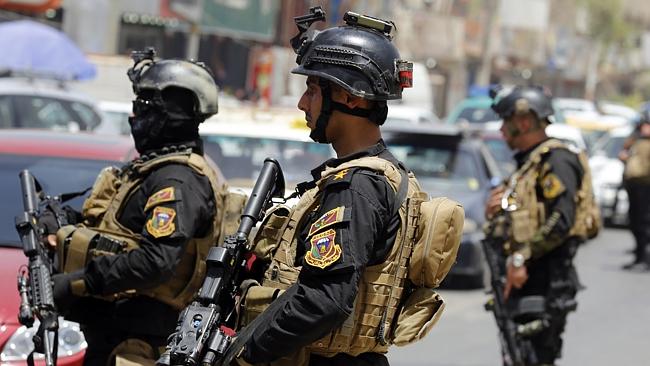
Iraqi special forcesIraqi special forces in West Baghdad.

The police are in fear. The Sunnis are in fear. The Shias are in fear. People with guns are in fear. People without guns are in fear. Baghdad, this cursed city, is descending yet again into chaos.

THE Battle for Islam is being waged in these blood-drenched streets. As the sun sets over Baghdad, this city swings into a grim night-time ritual based on fear.

Many shopkeepers have decided the night-time is too dangerous — they pull down the shutters and impose their own curfew.

The Islamic State of Iraq and al-Sham (ISIS) has changed the natural order of this place — in good times, summer nights in Baghdad are when people head out after the searing 45C heat of the day to walk or shop.

But not these days in this city of fear. Driving around Baghdad yesterday as night fell, I could see the reason for the fear.

In the up-market shopping area of Karrada the corner of one building had been ripped off by a car bomb; further along the road, a burnt-out car sat next to rubble where a restaurant had been bombed, killing three; every few blocks there is rubble, with soldiers manning nearby checkpoints.

These are instant graveyards in the Battle for Islam.

While ISIS, who are Sunni, have been beheading and executing in the north of the country, here in Baghdad — which is mainly Shia — it’s the Sunnis who are copping it.

Two days ago the residents of Ghazalia, in the west of the city, woke to find four bodies lying in the street. Sunnis, of course — blindfolded, with bullets through their heads. But part of the fear is that Shias cannot feel safe just because they’re in Baghdad.

Five days ago, at one of the main bus terminals in central Baghdad, a sniper with a silencer picked off people — perhaps hunting Sunnis, perhaps hunting Shias, or it could have been random.

People rushing to catch a bus saw a man in their midst suddenly drop to the ground — dead, shot in the head. A few minutes later another man dropped to the ground.

Where was the sniper? Which way could they run so they were out of his sights?

In Baghdad at the moment there’s nowhere to hide, nowhere to be completely safe.

“Everybody now wants to stay home,” says oil industry executive Saad Abdul Wahab.

“It’s not just the Sunnis in Baghdad who are scared — everybody is because nobody knows what could happen next.”

Part of the insanity of Baghdad is that even the greatest of hatreds — between Sunni and Shia — is being blurred.

It seems there are those who don’t care whether they shoot dead Sunni or Shia — they just want chaos. The battle within Islam that has been going on for hundreds of years has now broken out in all its horror.

The Sunni extremists, led by ISIS, smell blood, sensing a chance to topple the Shia government. They have seized vast sections of the north and now they want the capital.

A city drenched in blood for decades but which has had something of a respite in recent years has returned to the daily horror of car and suicide bombs.

“The mornings are the worst,” says cameraman Amar Murdan. “That’s when the army and the police who’ve been up through the night go home to sleep so ISIS know they can do more things.”

June — the height of summer — is normally a peak time for weddings here. But wedding operators report that the number has dropped dramatically over the past week.

Baghdad can be deceptive. As you drive through Karrada, if you look one way you see the burnt-out cars and rubble from recent explosions while if you look the other way you see the magnificent sunset over the historic Tigris river.

The army is everywhere — soldiers sit atop army trucks with machine guns at the ready.

The fact that ISIS this week brought the frontline to within 35km of Baghdad put fear into many in the city. As I drove around Baghdad suddenly there was some sort of drama, with police cars in front of us — they held up their hands to indicate to us and others to slow down so there was more room between them and us in case of a bomb.

The police are in fear. The Sunnis are in fear. The Shias are in fear. People with guns are in fear. People without guns are in fear. Baghdad, this cursed city, is descending yet again into chaos.

Guarding American Interests in the Sunni-Shiite War

June 20, 2014

Guarding American Interests in the Sunni-Shiite War, Gatestone InstituteShoshana Bryen, June 20, 2014

Either way, bottom line: no nuclear Iran. The U.S. retains a still-vast ability to meet its national defense priorities. The open questions are: the political skill to define them, and the will to ensure that that the greatest threat to regional and world stability — Iranian nuclear capability – is stopped for good.

The rapid (although not unpredicted) entry of radical Sunni jihadists into Mosul, Tikrit and other largely Sunni areas of Iraq, and their movement toward Baghdad, has prompted cries from left, right and center about the failure of U.S. policies in the region. And failure it is, although not of the “Bush should never have gone there,” or “Obama should never have withdrawn from there,” or – perhaps most oddly, “If Obama had only armed the ‘moderate, secular opposition’ in Syria, this never would have happened” sort.

It is a failure to look back, look forward and look around. It is a failure to ask the truly existential questions, “What can the United States tolerate in the world – what MUST we tolerate because we are not prepared to stop it?” and the corollary, “What can the United States simply not afford – not now, not later, not ever – and how are we going to keep truly intolerable things from happening?”

  • The United States can afford for Iraq not to be a “democracy.” In fact, we can afford for no truly democratic Arab governments to emerge in the Middle East. It would be a shame for the millions of Arabs and Muslims who aspire to better, but the scrabble of dictatorships, religious and secular, emerging and falling, are a running pattern that is much older and better entrenched than is the constitutional form of government with which we are familiar.
    • This should prompt a “reset” of U.S.-Egyptian relations. Sisi is doing no more than identifying the Muslim Brotherhood as an existential Islamist threat, like ISIS, and doing what dictators do to retain power; in this instance, power that has never threatened U.S. interests.
  • The United States can afford a cutoff of Middle Eastern oil. In fact, if it resulted in the return of Qatar and Saudi Arabia to sand dunes, perhaps so much the better – given that they have been the source of much of the funding of Sunni jihadists, until the jihadist groups figured out how to steal large sums themselves (including perhaps $1.5 billion in Mosul). The oil cutoff would devastate some countries and inconvenience others, but the United States is in a position not only better to weather the storm, but to profit.
    • It might also encourage those who rely on American naval power to ensure their supply of oil to consider the cost. Japan, South Korea and China import the majority of their oil through shipping lanes that we patrol on their behalf. China? Maybe they would like to build a pipeline to get that Iranian oil across Central Asia, through Uighur-controlled territory and on to their east coast.
  • The United States can afford for Iran to be the leader of the Shiite side of the post-Mohammad-Islamic war in which Sunnis and Shiites have been engaged since the Battle of Siffin (657 CE) and which intensified after the Battle of Karbala (680 CE).

If we can tolerate (because we cannot stop it) the ongoing Sunni-Shiite war, and if it does not require us to choose sides (because there is no side that is our side), what are the requirements for long-term American interests?

Look back. American successes in alliances are enormously important. NATO changed the pattern of behavior of Europe as well as collapsing the Soviet empire, and South Korea and Japan are democratic powerhouses – but they required our long-term physical presence and political will even, and especially, when they were failing. What if the Russian-sponsored “Zero Option” to prevent the installations of U.S. Pershing Missiles in Europe had prevailed?

Our failures come when we assume others can and will stand without us. “Vietnamization” should have been a clue. But the United States has continued to arm and train other people’s militaries in the hopes that they will do it our way without us.

The Palestinian army is a very expensive case in point. The U.S. provides nearly $115 million annually for security services, separate from “aid” to the Palestinian Authority [PA], in the hope that the PA military will a) cooperate with the Israel and b) fight Hamas. The first is not a steady proposition, and the new Palestinian unity government may preclude the second.

In Mali, we created an army, then pulled our political support from the government for its failure to meet “democratic norms”. This refusal to be involved precipitated the Tuareg/al Qaeda war that, without French intervention would have given al Qaeda a base in a new part of Africa.

In Iraq, Afghanistan, Libya, Lebanon, Pakistan, and Yemen, we armed, trained and spent larger and smaller fortunes for general failure. The Gulf States, at least, paid for their own equipment. Egypt, thus far, has proven to be among our best returns, although the current U.S. Administration doesn’t seem clear on the point.

Look around. Arming a rump opposition group in Syria and a) expecting it to have any impact on Assad’s military and b) expecting it THEN to turn away the well-armed, well-trained, professional forces of ISIS was always a pipe dream. The U.S. did ship weapons to the opposition – from stores in Libya, and to our dismay, we are still finding out what was in some of those shipments. There are now reports that ISIS has Stinger anti-aircraft missiles. Pentagon sources simply say, “The U.S. provided no such missiles to Iraqi military forces.” Well, maybe not, but they provided “such missiles” to the Libyan opposition.

Also, please notice who comes “home.” British security authorities say “volunteers” returning from fighting in Syria can be arrested and have their passports confiscated – a start to limiting the damage they can do at home.

Look ahead. Stick with your friends, including friends in this hemisphere, and make life as difficult as possible for those who get in your way, including Russians, Chinese, Nicaraguans, and Venezuelans. Or Saudis and Qataris. Put them on notice: the United States will not do everything – we cannot and do not want to – but we will protect our irreducible interests which are, in fact, quite narrow: a) the ability and will to punish egregious infractions of international norms, including the use of chemical weapons on civilian populations; and b) the utter unacceptability of nuclear weapons in the hands of radical Islamist factions.

The game-changer in the long religious war now wracking the region is the possible introduction of nuclear weapons by Iran. Conventional wisdom is that Iran wants nuclear weapons either to destroy Israel or to enhance its position as hegemon of the Persian Gulf to discomfit and oust the Americans. If conventional wisdom is right, Iran cannot be permitted to be a nuclear power. If conventional wisdom is wrong and Iran plans to use nuclear weapons, or threatens to, “only” to balance the “religious scales” (Shiites comprise only 11-12% of the world’s Muslim population), Iran still cannot be permitted to be a nuclear power.

game changer“The game-changer in the long religious war now wracking the region is the possible introduction of nuclear weapons by Iran.”

Either way, irreducible bottom line, no nuclear Iran. The U.S. retains a still-vast ability to meet its national defense priorities. The open questions are: the political skill to define them, and the political will to ensure that the greatest threat to regional and world stability — Iranian nuclear capability — is stopped for good.

▶ Why I Support Israel – Pat Condell – YouTube

June 20, 2014

▶ Why I Support Israel – Pat Condell – YouTube.

A succinct, honest, all-encompassing legitimization of Israel’s position visa vie the Arabs and the West.

The shortest and most powerful I’ve ever heard.

I salute and honor Pat Condell…

– JW
____________________________________

All anyone needs to know about the Middle East conflict is that the Jews want peace and the Arabs don’t, because the Arabs hate Jews for religious reasons and they want them dead.

 Politics, territory – these are just excuses. Whenever I make this point it always seems to annoy the right sort of people, so I thought I might as well do it again.

 If you’re one of these people, then you’ll likely be a supporter of the boycott, divestment and sanctions campaign that has been so comically ineffective because the world depends on Israeli technology, and that’s where the money is, not oranges and avocados.  If you support BDS, will you boycott the chip in your phone or computer, or is it just Israeli fruit and vegetables that you have a moral problem with?

 Maybe you’re one of the people who feel entitled to shout down Israeli speakers in universities, or to disrupt concerts and sports events that other people have paid money to enjoy. Or perhaps you campaign for the boycott of Israeli academics, to block the free exchange of information and understanding. All this is on the same moral level as book burning, and if you’re a part of this movement, you’re a part of that.

 Also, the relentless focus solely on Israel that ignores the world’s real human rights violators tells us that this is an anti-Semitic movement, and if you’re a part of it, you’re a part of that, too. If Israel was a Christian or a Buddhist country there wouldn’t be any BDS campaign, and everyone knows it, just as there isn’t any BDS for Tibet, a country invaded and culturally raped by the Chinese, but then the Chinese aren’t Jews. No BDS for Saudi Arabia treating women like livestock because the Saudis aren’t Jews, which is lucky for them because, if they were, they’d have to ban themselves from entering their own country. How inconvenient.

 Crude Islamic Jew hatred has permeated the Middle East conflict from day one, yet its influence is always carefully omitted from all political analysis. Any doctor who diagnosed an illness as ineptly and dishonestly would deserve to be struck off and prosecuted. Palestinian leaders have had several chances for a two state solution and they have always rejected it because they don’t want a two state solution, and they don’t care about the suffering of their people. They want all Jews out of there, or dead.

 The leader of Hezbollah is on record as saying that he won’t be happy until every Jew on earth is dead. Once you realise that this is the position then, whatever you think of Israeli security measures, your moral standpoint has to change. We know that if the Arabs were to lay down their weapons they could have peace and prosperity for all their people, and the Israelis wouldn’t need to build barriers or do anything else the world disapproved of. They could simply get on with what they do best, technological innovation, making life better for all of us, including Arabs. On the other hand, we know that if the Israelis were to lay down their weapons they would be massacred – men, women and children alike.

 The Arabs are even happy to put their own children in the firing line to attack Jews, they hate them so much. And this hatred comes directly from their religion. It isn’t politics or territory that causes a mother to celebrate the death of her child. Only religion can do that, and one religion in particular, the one that’s insisting on the right of return – to the 7th century.

 Just look at the mess they’ve made in Gaza, which is now a hardcore Islamic hell hole. The Israelis used to be in Gaza, but they gave it up for peace. They uprooted thousands of settlers and gave the land to the Arabs for peace. And what did they get? They got war, of course. Gaza immediately became a launching pad for hundreds of Iranian rockets aimed at Israeli women and children by people hiding behind their own women and children – a double war crime, ignored by the West, like all Arab war crimes. That’s what the Israelis got when they gave up Gaza, and it’s what they’ll get if they’re ever stupid enough to give up the West Bank.

 Israel needs to exist because there needs to be a Jewish state. Humanity has proven conclusively over many centuries that it cannot be trusted not to persecute Jews. Jew hatred seems to be written right into our DNA because it just keeps coming back. Any Jew who thinks the Holocaust could never happen again is a fool. There are plenty of people on this earth who would love to see it happen again, and many of them live in the countries around Israel. When Arab armies have attacked in the past they have bragged in advance about committing genocide, and they’ve still been bragging about it as they were getting their sorry arses deservedly kicked again and again.

 People who want to boycott Israel have no idea what it’s like to live on a thin strip of land surrounded by people who want to wipe out your entire population, who have repeatedly tried to do so in the past, and failed, and who will continue trying until they succeed, which is likely to happen, roughly, never, while we in the West keep paying for it.

 What would you do if you were the Israeli prime minister? How would you deal with people who want you and your entire population dead? I know what I would do, and I wouldn’t give a damn about world opinion.

 As for UN resolutions, I would use them to light my cigars. I don’t actually smoke cigars, but I would take it up for that reason, I think it’s just so important, because this is a war of crude religious hatred by Muslim Arabs against Jews, and the Jews have to win every time. The Arabs only have to win once for the world to see another Holocaust, and to stand by once again watching it happen.

 That’s why I support Israel, and that’s why, if you have an ounce of humanity, you, too, should support Israel, whatever your political persuasion.