Archive for June 17, 2014

Blowback! U.S. trained ISIS at secret Jordan base

June 17, 2014

Blowback! U.S. trained ISIS at secret Jordan baseDescribed as covert aid to insurgents targeting al-Assad

Published: 7 hours ago

via Blowback! U.S. trained ISIS at secret Jordan base.


Army trainers
 

JERUSALEM – Members of the Islamic State of Iraq and the Levant, or ISIS, were trained in 2012 by U.S. instructors working at a secret base in Jordan, according to informed Jordanian officials.

The officials said dozens of ISIS members were trained at the time as part of covert aid to the insurgents targeting the regime of Syrian President Bashar al-Assad in Syria. The officials said the training was not meant to be used for any future campaign in Iraq.

The Jordanian officials said all ISIS members who received U.S. training to fight in Syria were first vetted for any links to extremist groups like al-Qaida.

In February 2012, WND was first to report the U.S., Turkey and Jordan were running a training base for the Syrian rebels in the Jordanian town of Safawi in the country’s northern desert region.

That report has since been corroborated by numerous other media accounts.

Last March, the German weekly Der Spiegel reported Americans were training Syrian rebels in Jordan.

Quoting what it said were training participants and organizers, Der Spiegel reported it was not clear whether the Americans worked for private firms or were with the U.S. Army, but the magazine said some organizers wore uniforms. The training in Jordan reportedly focused on use of anti-tank weaponry.

The German magazine reported some 200 men received the training over the previous three months amid U.S. plans to train a total of 1,200 members of the Free Syrian Army in two camps in the south and the east of Jordan.

Britain’s Guardian newspaper also reported last March that U.S. trainers were aiding Syrian rebels in Jordan along with British and French instructors.

Reuters reported a spokesman for the U.S. Defense Department declined immediate comment on the German magazine’s report. The French foreign ministry and Britain’s foreign and defense ministries also would not comment to Reuters.

The Jordanian officials spoke to WND amid concern the sectarian violence in Iraq will spill over into their own country as well as into Syria.

ISIS previously posted a video on YouTube threatening to move on Jordan and “slaughter” King Abdullah, whom they view as an enemy of Islam.

WND reported last week that, according to Jordanian and Syrian regime sources, Saudi Arabia has been arming the ISIS and that the Saudis are a driving force in supporting the al-Qaida-linked group.

WND further reported that, according to a Shiite source in contact with a high official in the government of Iraqi Prime Minister Nouri al-Maliki, the Obama administration has been aware for two months that the al-Qaida-inspired group that has taken over two Iraqi cities and now is threatening Baghdad also was training fighters in Turkey.

The source told WND that at least one of the training camps of the group Iraq of the Islamic State of Iraq and the Syria, the ISIS, is in the vicinity of Incirlik Air Base near Adana, Turkey, where American personnel and equipment are located.

He called Obama “an accomplice” in the attacks that are threatening the Maliki government the U.S. helped establish through the Iraq war.

The source said that after training in Turkey, thousands of ISIS fighters went to Iraq by way of Syria to join the effort to establish an Islamic caliphate subject to strict Islamic law, or Shariah.

ISIS releases a variety of videos

June 17, 2014

ISIS releases a variety of videos, Long War Journal, Oren Adaki, June 17, 2014

Over the past few days, the following videos were disseminated on Twitter accounts affiliated with the Islamic State of Iraq and the Sham (ISIS). The three videos below represent three genres of videos produced by ISIS: the first is a video documenting an attack carried out by ISIS, the second illustrates ISIS’ achievement of one of its goals (freeing prisoners), and the third outlines ISIS’ core beliefs.

This video begins with an ISIS commander taking credit for an attack on a “secret” Iraqi police station in northern Baghdad. The commander says that the order to attack the police station came directly from the “ISIS military base,” and vows to continue carrying out attacks “in support of Ahl al Sunna [Sunni Muslims].” He says that the goals of such attacks are “liberation and the caliphate, with Allah’s permission.” The video goes on to show night footage from the attack on the police station, with a banner at the bottom reading “raiding a secret Savafid [Shi’ite] police headquarters – north Baghdad.” ISIS fighters are seen battling Iraqi police forces and then storming the headquarters and seizing weapons, ammunition, and other material from the station. Starting at 4:46, the video shows footage of “the Savafid [Shi’ite] army’s flight from their barracks fearing confrontation with the lions [of ISIS] – Ninewa.” The video concludes with shots of the “loot of the apostates [ghana’im al murtadeen],” more items seized by ISIS from Iraqi soldiers.

This video, titled “The Islamic State Wilayat Ninewa Freeing the Detainees From The Savafid Prisons,” purports to show a group of recently freed Iraqi prisoners who have joined or rejoined the ISIS ranks. A group of 30-50 prisoners is shown sitting in a mosque flanked by black ISIS flags. The banner at the bottom of the screen reads, “The freed prisoners from the rafida Savafid [Shi’ite] prisons.” The video concludes with images of freed prisoners taking up arms; a banner at the bottom of the screen reads, “The freed ISIS prisoners joining their brothers in the battlefield.”

This video is titled “The Doctrine of the Islamic State of Iraq and the Sham, may Allah keep it.” The video presents a rundown of 18 core ISIS tenets, ostensibly in order to “respond to some lies” about ISIS circulating in the media. The 18 core tenets outlined in the video are as follows:

1) The requirement to destroy and remove all manifestations of polytheism and to proscribe its means.
2) The rafida [Shi’ites] are a community of polytheism and apostasy who prevent the application of many obvious tenets of Islam.
3) The infidelity and apostasy of the sorcerer and the requirement to kill him and not accept his repentance.
4) We do not deem any Muslim commander/leader a kafir [infidel].
5) The requirement of adjudicating according to Allah’s law by way of bringing cases to Shar’iah courts.
6) The requirement to revere the Prophet, peace and blessings upon him.
7) Secularism, patriotism, nationalism, et cetera, are all outright infidelity that removes [a believer] from the religious community.
8) Aiding and assisting the occupier in any form is considered infidelity and apostasy.
9) Jihad in the cause of Allah is religious requirement since the fall of al Andalus [Southern Spain].
10) Civilians who have been defended by the “cannons of disbelief” and have triumphed are considered infidels.
11) The requirement to fight the police and military of the state of apostasy and idol-worship.
12) The jihadi groups working on the field are brothers to us in religion.
13) Any group or individual who enters into an agreement with the occupying invader is not seen as binding on us and instead [any such agreement] is seen as void.
14) The requirement to revere the pure clerics.
15) We recognize the right of those who preceded us in jihad, we take up their home and succeed them with goodness.
16) The requirement to rescue Muslim prisoners from the hands of the infidels and to take care of their families and the families of the martyrs.
17) The requirement that the ummah [Muslim nation] studies the issues of its religion as well as requiring that it learns what is necessary from “worldly knowledge.”
18) The proscription of everything that calls for obscenity and we require from women the religious requirement of covering her face and maintain her purity.


Satire: President Obama plans major fundraiser in Tehran

June 17, 2014

President Obama plans major fundraiser in Tehran, Dan Miller’s Blog, June 17, 2014

The gala event will take place following the successful conclusion of P5 + 1 Iranian nukes for peace process.

TOTUS Seal

This report is based on information provided by my confidential White House informant, the Really Honorable I. M. Totus, Teleprompter of the United States. He stated that President Obama will hold the fundraiser despite his (Mr. Totus’) expressions of concern that acceptance of traceable foreign contributions might be unlawful. President Obama responded to those petty quibbles as follows:

The greatest and most important security interest of My nation now lies in having My party strong and abundantly funded by rebates from sanctions relief. It’s the fair, common sense way to go.

He giggled simultaneously.

Obama laughs

Holding the fundraiser depends on a successful conclusion of the P5 + 1 negotiations permitting Iran to continue its moderate development and construction of nuclear weapons for self-defense against Israel and any other ridiculously aggressive nations. Accordingly, President Obama has been pushing the process with a degree of vigor normally reserved for attacks on climate change deniers and any remaining racist Republicans, KKK members Tea Party Terrorists all.

Hoping to entice numerous affluent Iranian civil servants and other prominent business celebrities to attend His fundraiser, President Obama will also soon commit His military to assisting Iranian anti-terrorist forces in Iraq. He resolved to do so upon learning of this statement by the Chief of Staff of the Iranian Armed Forces:

TEHRAN (Tasnim) – The Chief of Staff of the Iranian Armed Forces Major General Hassan Firuzabadi described the creation of ISIL terrorist group as an Israeli plot to make a safe zone for the Zionists and keep the revolutionary forces away from the occupied lands.

Expressing equally strong disapproval of all Zionist plots (except grave plots), whether in the occupied lands or elsewhere, President Obama told Mr. Totus of his great happiness upon learning of the perceptiveness and accuracy of General Firuzabadi’s remarks. He will henceforth place unbounded trust in whatever General Firuzabadi and other consistently knowledgeable Iranians may say — subject only to verification by His league of Experts stationed in His echo chamber. President Obama further observed that if He had a son he hoped that he would look a lot like General Firuzabadi.

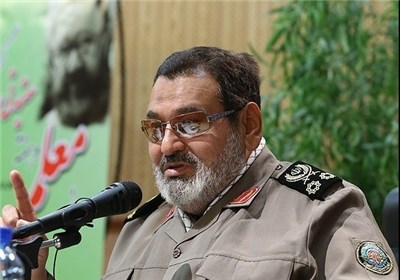
Iranian chief of staff

President Obama declined to comment on a report in the Daily Beast that

President Obama is repositioning military assets closer to Iraq, in case he wants to strike at the terrorists that are threatening to tear the country apart. The problem is, the U.S. doesn’t know who it’s supposed to hit. [Emphasis added.]

. . . .

[T]he American intelligence community is only now scrambling to draw up a potential target list in Iraq, and possibly Syria—even though the threat of ISIS has been visibly growing for years.

. . . .

Current and retired American defense and intelligence officials tell The Daily Beast that the CIA and the Pentagon are not certain who exactly makes up the forces that have taken so much of Iraq. [Emphasis added.]

Despite His understandable reluctance to comment, President Obama clearly faces such difficulties and needs to rely on His substantially better informed Iranian allies than on His own blinded U.S. military and other intelligence sources.

In related news President Obama, in His capacity as Commander in Chief of the United States of Obama, issued an Executive Decree modifying His Humanitarian Exceptionalism Rules of Engagement (HEROs) by exempting U.S. forces engaged in kinetic actions to assist Iranian forces from them and by requiring that, in rendering such help to Iran, they obey and enforce Iranian ROEs strictly.

Iran hangings by crane

President Obama explained to Mr. Totus,

In Iraq, We and Iran are a great team forced to confront really nasty people, unlike other situations elsewhere to which My HEROs applied. We must join with our Iranian brothers in opposing them with the same gentle respect universally shown by Iran in dealing with all of her vile enemies.

President Obama then visited a Common Corps classroom to tell students about a few of His most recent foreign policy successes.

Obama cartoon book about himself

Obama’s Favorite Think Tank: We Should Prepare to Bomb Iraq

June 17, 2014

Obama’s Favorite Think Tank: We Should Prepare to Bomb Iraq, Daily BeastJosh Rogin, June 17, 2014

new report by the Center for American Progress, the left-leaning policy organization that maintains close ties to the White House, says the U.S. should “prepare for limited counterterrorism operations against ISIS, including possible air strikes.” That is just one of the steps CAP is recommending to help keep Iraq from crumbling and fight the scourge of ISIS and other extremist groups festering in Iraq and Syria.

Several sources at Washington policy organizations told The Daily Beast that top administration officials have been calling around Washington think tanks for days to solicit advice and consultation on the substantive options for responding to the ever-deepening crisis in Iraq.

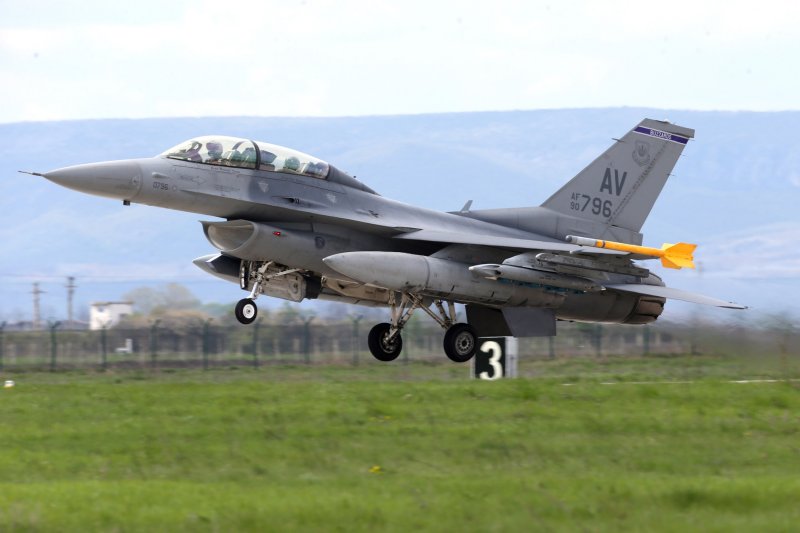
American fighter jetAn American F-16 fighter jet takes off. (Mircea Rosca/AFP/Getty)

Few think tanks are more closely aligned with the Obama administration than CAP. The think tank was founded by John Podesta, a top advisor to President Obama. Several former Obama administration officials—including Neera Tanden, a former top White House and campaign advisor, Vikram Singh, a former State Department and Pentagon official, and former Treasury Secretary Larry Summers—are now affiliated with CAP.

The CAP report presents elaborate arguments regarding the justifications for potential U.S. military action in Iraq, the conditions under which it should be considered, and the limits of such a mission. Such arguments could later be adopted by the Obama administration for defending a policy of using American military power inside Iraq, if that is the decision they ultimately make.

“Quite clearly this blitzkrieg by ISIS should be a wake up call for the Iraqi government, for the region, and for U.S. policy,” CAP Senior Fellow Brian Katulis, one of the report’s authors, told The Daily Beast. “The administration is very judiciously weighing a range of options in a dynamic situation. This is largely our own analysis. We tried to strike the right balance.”

The Obama administration wants to provide military aid to the Iraqi government, but only if they make progress towards Shia-Sunni reconciliation. Meanwhile, Iran is offering Iraq everything and anything they need to fight ISIS with no strings attached.

“Quite clearly this blitzkrieg by ISIS should be a wake up call for the Iraqi government, for the region, and for U.S. policy.”

The White House announced Monday the U.S. had moved 270 military personnel into Iraq, for missions focused on the protection of the U.S. embassy and personnel. Any future airstrikes would require reliable intelligence on the ground, therefore some prepositioning of forces is needed in advance, according to CAP.

But airstrikes would not be a complete solution to the ISIS problem, CAP warns. They would only be useful for degrading the extremist group while other political and diplomatic measures were taken to fix Iraq’s sectarian schism. The CAP report compares such a mission to the U.S. no fly zones over Iraq during the Clinton and Bush administrations, known as Operation Northern Watch. Katulis said that the administration must set strict limits on the American use of force inside Iraq, if they are deemed necessary.

“The nature of the strikes shouldn’t be broad and open ended, it should be targeted, precise, and principled,” he said. “There is no win or lose in this type of conflict. The focus should be to degrade the capacity of ISIS and other groups that threaten the Iraqi state and U.S. national security.”

CAP’s recommendation is also significant also because CAP advocated for the withdrawal of U.S. troops from Iraq as far back as 2005. Back then, the U.S. needed to incentivize the Iraqi government to take responsibility for its own affairs, CAP argues, but now Prime Minister Nouri al-Maliki has failed in that task.

“The withdrawal of U.S. combat troops was necessary [then] to create an incentive for Iraqis to take control of their own affairs: Iraq had become dependent on an endless supply of American ground troops for its security,” the report states. “The failure of Iraqi leaders, including Prime Minister Nouri al-Maliki, to build an inclusive political system has enabled the current startling advances of militants across Iraq led by the Islamic State of Iraq and al-Sham, or ISIS.”

Even after potential airstrikes in Iraq, ISIS would still be untouchable in Syria, so CAP recommends increasing the training and equipping of the moderate Syrian armed rebels, something the administration has resisted for three years. Money for that should come from the new $5 billion counterterrorism fund Obama announced in his West Point speech this month, the report states. Congress may not give Obama those funds any time soon.

“The United States should not undertake military action lightly and should be wary of unintended consequences. But not all military action is the same,” the report states. “Ground troops or invasions to control a country are very different from limited air strikes or targeted assistance to help push back terrorist extremists. Extremist terrorist groups controlling large swaths of territory in Iraq and Syria from which they could ultimately attack American interests or allies are worthy of a limited, effective response, including limited air strikes.”

The End of Obama’s Bad Deal with Iran — What’s Next?

June 17, 2014

The End of Obama’s Bad Deal with Iran — What’s Next?, Front Page Magazine, June 17, 2014

(Another possibility is that due to Iran’s “cooperation” in Iraq, the P5 + 1 deal will be consummated by July 20th. Isn’t President Obama even more eager for that?– DM)

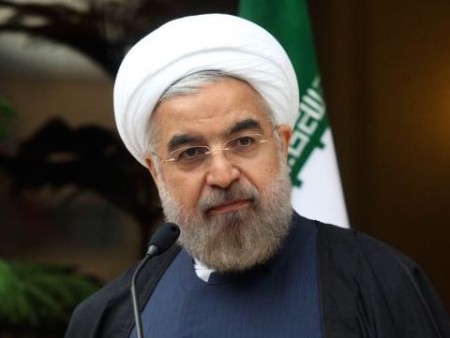
Iran-Hassan-Rouhani-450x338

According to the press, the negotiations to craft a more permanent agreement between Iran and the P5 + 1 are going nowhere, fast.  Bilateral talks are springing up to complicate the negotiations.  Many observers expect that the President and his team will simply agree to an extension of the interim agreement for another six months, as is provided for in the JPA.

The Obama Administration will eagerly sign onto an extension, so as to prevent yet another obvious foreign policy fiasco on their watch. 

Israel’s Strategic Affairs Minister Yuval Steinitz expressed his hope that the U.S. would not make a “bad” deal with Iran regarding the nuclear negotiations.

Unfortunately, there can be no doubt about what is going to happen.  The Obama Administration released five senior Talibani terrorists – and perhaps some additional ransom money – to the Taliban/Haqqani Network in return for one captured American serviceman, who may have been a deserter.  Any nuclear deal between the U.S. (and others) and Iran, including an extension of the current one, produced by President Obama and his team of “smart diplomats,” will inevitably be bad.

On July 20, 2014, the P5 + 1 nations’ Joint Plan of Action (JPA) with Iran officially ends.  The JPA was the bad deal promoted by President Obama that recognized Iran’s right to enrich nuclear material and gave it relief from crippling economic sanctions in return for almost nothing of any real significance to restrict Iran’s nuclear infrastructure.  Under the JPA, Iran was allowed to keep every one of its 19,000 plus centrifuges spinning, and was even able to continue to construct more.  Some limited caps were placed on Iran’s ability to enrich, but nothing was done to prevent it from expanding its stockpile of uranium.  Meanwhile, the JPA gave the Iranian regime an economic windfall of well over $20 billion.

It must be understood that the JPA was not just a bad deal, but it was, in fact, an exceptionally bad deal from the perspective of the U.S., Israel, the Arab states, and the Western World democracies.

• According to The Tower, “Iran is now mathematically certain to have busted through the caps on energy exports set by the interim Joint Plan of Action (JPA), which had eroded the sanctions regime, despite months of promises and ongoing declarations from administration officials insisting that violations of the remaining sanctions would not be tolerated.”

•While the Iranian concessions are easily reversible, the Western concessions in the JPA are likely irreversible, meaning the existing sanctions regime was gutted with no realistic prospect of restoring those sanctions to previous levels.

•The JPA promised Iran the right to nuclear enrichment simply for good conduct over a relatively small period of time, ignoring the fact that the Iranian regime is inherently aggressive and dangerous.

•The JPA deal did nothing to stop Iran from using its new installments of cash and time to advance the weakest parts of its nuclear program — bomb technology and the ballistic missiles needed to deliver such bombs to Israel, Europe or the U.S.

•The JPA deal was in direct contravention of six U.N. resolutions, all of which stated that Iran had no right to nuclear enrichment and required that Iran dismantle its vast nuclear infrastructure.

•The JPA deal actually included a provision allowing the Iranians to veto reports of their own violations of the interim agreement.

•The JPA increased the International Atomic Energy Agency (IAEA)’s access in Iran to monitor the agreement, but not enough.  It still falls short of what the IAEA says it needs, and it is less than the wide-ranging inspection powers the IAEA had in Iraq in the 1990’s.

•The JPA did not allow the West access to such places like the Parchin military base in Iran, which is believed to be used as a covert nuclear weapons development site.

•Soon after the JPA’s announcement, Iranian President Rouhani – a supposedmoderate – gloated on Twitter (later removed) and video about the world powers capitulating to Iran.

Now the question becomes, what will replace the JPA? According to the press, the negotiations to craft a more permanent agreement between Iran and the P5 + 1 are going nowhere, fast.  Bilateral talks are springing up to complicate the negotiations.  Many observers expect that the President and his team will simply agree to an extension of the interim agreement for another six months, as is provided for in the JPA.

In other words, these observers believe that the JPA will be replaced by the JPA.  The same bad agreement currently in existence.

The Obama Administration will eagerly sign onto an extension, so as to prevent yet another obvious foreign policy fiasco on their watch.  After all, they currently face Iraq, where a jihadist group too violent for al-Qaeda is carving out its own state and the U.S. can do nothing about it, because all of the American troops were removed by President Obama.  They face Libya, where the U.S. “led from behind” to oust the dictator Gaddafi, which resulted in the collapse of the Libyan nation, the spread of U.S. weapons to jihadists groups throughout the Middle East, the seizure of parts of Mali by jihadist groups armed with American weapons that prompted French intervention, and the death of the U.S. Ambassador by elements of al-Qaeda on the anniversary of 9/11.  They face Syria, where the Administration blustered with its red line against the use of chemical weapons before caving, and the dictator Assad continues to use those weapons against civilians in the bloody civil war.   And there are so many more foreign policy disasters under the current Administration.

Perhaps even more importantly, the Obama Administration will sign onto an extension of the JPA as a way to facilitate plans to “open direct talks with Iran on how the two longtime foes can counter the insurgents” in Iraq. (More “smart diplomacy” in action.)

The Mullahs in Iran will also probably agree to an extension of the JPA.   As we know, they are giving up almost nothing regarding their nuclear research, and getting huge benefits in time and money in return.  Plus,  the JPA does not seriously infringe, in any way, with the Iranian leaderships’ ability to threaten the U.S. and Jews, support terrorists and/or wars of aggression in Lebanon,SyriaEgyptYemen etc. and/or oppress its own people.

So why would the Iranians not take advantage of President Obama, if they can?  Every other bad actor is doing it.

ISIL Israel’s Trick to Create Safe Zone for Zionists: Iranian Commander

June 17, 2014

ISIL Israel’s Trick to Create Safe Zone for Zionists: Iranian Commander, Tasnim News Agency, June 17, 2014

(Is a perverse sense of humor a mandatory qualification for the Chief of Staff of the Iranian Armed Forces, or do General  Firuzabadi’s comments reflect the views of the humanitarian Iranian government which claims to oppose terrorism (unless sponsored by Iran)? Will expression of such views diminish the Obama Administration’s apparent willingness to help Iran in Iraq? “US and British sources report that Washington and Tehran are in practical talks on their respective roles: One proposal is for the US to provide air cover for Iranian ground troops and support in the form of air strikes against Al Qaeda targets.” — DM)

Iranian chief of staff

TEHRAN (Tasnim) – The Chief of Staff of the Iranian Armed Forces Major General Hassan Firuzabadi described the creation of ISIL terrorist group as an Israeli plot to make a safe zone for the Zionists and keep the revolutionary forces away from the occupied lands.

Firuzabadi stressed that unity and resistance of the Iraqi nation is key to defeating the terrorist group.

In early June, following its large-scale offensives in Iraq, ISIL seized control of most parts of Mosul, the second most populous city in Iraq, its surrounding Nineveh province. ISIL militants have been in control of Fallujah city since December.

The terrorists’ attacks have reportedly forced more than half a million people in and around Mosul, the capital of Nineveh Province, to flee their homes. The Takfiri (extremist) militants have vowed to march toward the capital, Baghdad.

Nearly 1.5 million Iraqis have volunteered to join battles against the al-Qaeda-linked militants shortly after senior religious and political leaders called on the nation to take up arms and defend their country against militants. The volunteers consist of people from all walks of life including retired officers.

Epic US-Iran military cooperation in Iraq coincides with Israel’s war on Tehran’s Palestinian ally, Hamas

June 17, 2014

Epic US-Iran military cooperation in Iraq coincides with Israel’s war on Tehran’s Palestinian ally, Hamas.

DEBKAfile Exclusive Report June 17, 2014, 12:20 PM (IDT)USS George H. W. Bush opposite Bahrain

USS George H. W. Bush opposite Bahrain

The US and Iran took the first steps for their military cooperation in Iraq on June 16, at the same time as Israel declared war on Tehran’s Palestinian ally, Hamas, in the wake of a fruitless four-day sweep of the West Bank Hebron region for the three Israeli teenagers kidnapped on June 12, and the detention of hundreds of Hamas activists – which Israel leaders said was just the beginning.

The talks between Washington and Tehran on working together in Iraq (A prospect first envisaged  by DEBKA Weekly 639 on June 14)  were revealed Monday by Secretary of State John Kerry who told a Yahoo interviewer that the US is “open to discussing any constructive process here… Let’s see what Iran might or might not be willing to do before we start making any pronouncements. I would not rule out anything that would be constructive to providing real stability.”

He also said that President Obama was vetting “every option that is available,” including drone strikes.

But, for once, reality  moved ahead of diplomatic caution.

Overnight, President Obama informed Congress that up to 275 troops could be sent to Iraq to provide support and security for US personnel and the American Embassy in Baghdad,which with a staff of 5,000 is the largest in the world. About 170 of those forces are already in Iraq.

debkafile: That is only the first step, to be followed by more. US naval, air and Marine forces are assembling in the Persian Gulf ready to go in.

Ahead of them, Iran sent at least 2,000 troops and the Al Qods chief Gen. Qassem Soleimeni to Baghdad.

Monday, The Iraqi crisis deteriorated further when ISIS seized Tal Afar, a key city on the Syrian border for its  Islamist state which is planned to span Iraq and Syria.

US and British sources report that Washington and Tehran are in practical talks on their respective roles: One proposal is for the US to provide air cover for Iranian ground troops and support in the form of air strikes against Al Qaeda targets.

The repercussions of this collaboration may at some point intersect with Israel’s long-delayed confrontation with Tehran’s Palestinian proxy, Hamas.

Israel’s leaders issued a blunt declaration of war on the Palestinian Hamas Tuesday, June 16, when the three Israeli teenagers remained missing. The mass detentions of Hamas activists was just the start of the pressure aimed at crushing their organization’s terrorist infrastructure, Prime Minister Binyamin Netanyahu, Defense Minister Moshe Ya’alon and Chief of Staff Lt. Gen. Benny Gantz, declared after their latest situation update.

More and tougher military operations were coming until the mission was accomplished – however grave the consequences and however long it takes, they said.

The chief of staff also made it clear that the IDF stands ready to hit back at Hamas’ Gaza strongholds in the event of a Hamas rejoinder to the harsh pressure clamped down on its West Bank organization.

By its policy of silence – abstaining from owning up to the kidnapping or uttering a single word about it –  Hamas has left Israel with no option but to confront the extremist organization head-on to force the issue.

Hamas’ political leaders in the West Bank and Gaza Strip – or even its military officers – may be ignorant of the boys’ whereabouts and constrained from admitting as much. Only a very tight hard core may be in possession of this information.

This kind of standoff follows the lines of the abduction in 2006 of the Israeli soldier Gilead Shalit by an international terrorist league of which Hamas was a member. It took years for the circumstances of his capture to come to light after the Palestinian group gained the release of nearly a thousand of its jailed members.

In the case of Naftali Frenkel, Gil-Ad Sha’ar and Eyal Yifrach, debkafile’s intelligence sources report that the IDF, Mossad, AMAN and the Shin Bet are better informed than they were in the hunt Gilead Shalit. This information is kept under tight wraps so as not to compromise the search.

But in the absence of a glimmer of light, Netanyahu, Ya’alon and Gantz cut through the emotionally-charged atmosphere in the country with a caution to be patient because the operation to smash Hamas, though determined and all-encompassing, is likely to be protracted and difficult.

It is also worth noting that even if leads to the mystery do turn up, the IDF and government may find as often before that their hands are tied by interminable legalistic quibbles and delays. Israeli left wing fringes make a habit of teaming up with Palestinian associates to throw up walls against security-related actions by petitions to the Supreme Court in Jerusalem to defeat or at least slow down those actions.

At the same time, it is to the credit of Palestinian Authority Chairman Mahmoud Abbas that, appreciating the complexity of the crisis and Israel’s sensitivities, picked up the phone and for the first time in many months talked to Binyamin Netanyahu. After condemning the abductions, he said he hoped the boys would return home safely. He also assured the Israeli prime minister of his continued cooperation, notwithstanding the constant assaults directed against him and the Palestinian Authority’s security and intelligence agencies.

That call was the first positive outcome of Netanyahu’s actions in this episode and the only one so far.

It will be interesting to see how the juxtaposition of the first US-Iranian military coordination in Iraq and Israel’s operation to hammer Tehran’s protégée, both epic events, affects US-Israeli relations.

US focus must be on Iran as Iraq falls apart

June 17, 2014

US focus must be on Iran as Iraq falls apart, Fox News, Amb. John Bolton, June 16, 2014

[F]or U.S. regional and global interests, we must increase (more accurately, renew) our efforts to overthrow the ayatollahs in Tehran. The reasons this objective deserves priority also explain why aiding an Iranian surrogate like Maliki’s regime does not benefit America today. 

The main beneficiary would be Tehran, especially if Obama, reprising Roosevelt’s World War II infatuation with Joseph Stalin, decided to do business with the ayatollahs. “Uncle Ali” Khamenei, Iran’s Supreme Leader, would undoubtedly have the last laugh.

Unfortunately, there is no chance Obama will adopt anything like this strategy. Indeed, given the president’s limp June 13 statement, it is doubtful Washington will even perform coherently in the months ahead. It is not a matter whether Obama’s Iraq “policy” is correct, but whether he is even interested.

Whole forests have been sacrificed since the stunningly swift military advances of the Islamic State of Iraq and the Levant (”ISIL”) to provide enough newsprint for the debate over who bears responsibility for the current debacle in Iraq. Inevitably, analysts are rearguing George W. Bush’s decision to overthrow Saddam Hussein, Barack Obama’s complete withdrawal of U.S. forces, and virtually everything else Iraq-related in between.

This is all beside the point for today’s decision-makers confronting the question of what, if anything, to do as Iraq nears disintegration. America must instead decide what its national interests are now, not what they were five or ten years ago. As economists love to remind, the “sunk costs” fallacy warns against revisiting past mistakes to recreate a history we wish had unfolded.

Maliki has had his chance, and he has failed; aiding him is likely a fool’s errand.

None of the parties to Iraq’s current conflict have anything to recommend them. ISIL is a terrorist organization, and even conceding its (perhaps temporary) schism with Al Qaeda, it is precisely the terrorist enemy we have been fighting since September 11, 2001 (and before, although we didn’t realize it until too late).

Ranged against ISIL are Assad’s regime in Syria, Maliki’s regime in Iraq, and their puppet-masters in Iran. None of them smell any sweeter. (The Kurds are a special case, but they first need to make their goals clear before we decide how to respond.)

Nonetheless, some argue we should assist Maliki to prevent the complete loss of America’s heroic effort to oust Saddam Hussein and give Iraqis the chance for representative government. From a very different perspective, people who always (or at least sometimes) opposed the second Iraq war, now suggest we should aid Maliki because it would provide an opportunity to work with Tehran, presumably building mutual confidence thereby.

Both these arguments are wrong and their policy implications misguided. Instead, we should pursue two courses of action, one tactical, one strategic.

First, regarding the immediate hostilities, we should stand aside, hoping the conflict damages all the combatants, as in the 1980’s Iran-Iraq war, of which Henry Kissinger reportedly quipped that he hoped both sides would lose.

Second, strategically and most importantly for U.S. regional and global interests, we must increase (more accurately, renew) our efforts to overthrow the ayatollahs in Tehran. The reasons this objective deserves priority also explain why aiding an Iranian surrogate like Maliki’s regime does not benefit America today.

Maliki has had his chance, and he has failed; aiding him is likely a fool’s errand. Even if Washington conditioned its assistance on Maliki effectively breaking with Tehran, there is precious little chance he would agree. And if he did, there is every chance he would break his commitment — or Iran would break it for him — at the earliest opportunity once ISIL was crushed.

Iran is clearly the strongest, most threatening power in this conflict. It is rapidly approaching (or has already all but reached) a deliverable nuclear-weapons capability.

For nearly 35 years since the 1979 Islamic Revolution, Tehran has been the world’s central banker for international terrorism. It has armed and financed terrorists and state sponsors of terrorism on an equal-opportunity basis, including Sunnis like Hamas and Taliban, and Shia like Hezbollah in Lebanon and Iraqi Shia who attacked American forces. A nuclear Iran could engage in even greater terrorist activity with relative impunity, something Taliban and Al Qaeda lacked the luxury of contemplating while we were overthrowing their regime in Kabul after 9/11.

Thus understood, it becomes perfectly clear that we should not aid our stronger adversary power against our weaker adversary power in the struggle underway in Iraq. There is little in it for us. The main beneficiary would be Tehran, especially if Obama, reprising Roosevelt’s World War II infatuation with Joseph Stalin, decided to do business with the ayatollahs. “Uncle Ali” Khamenei, Iran’s Supreme Leader, would undoubtedly have the last laugh.

U.S. strategy must rather be to prevent Tehran from re-establishing its scimitar of power stretching from Iran through Iraq and Syria to Lebanon. Our interests dictate not being content with a Middle East where Iran and its puppets predominate. Balancing against Iran by aiding friendly Arab regimes (which Maliki’s is not) is inadequate. At best, we would produce a regional status quo filled with sworn enemies of America.

Instead, our objective should be to remove the main foe, Tehran’s ayatollahs, by encouraging the opposition, within and outside Iran, to take matters into their own hands. There is no need to deploy U.S. military power to aid the various opposition forces. We should instead provide them intelligence and material assistance, and help them subsume the political differences that separate them. Their differences should be addressed when the ayatollahs’ regime lies in ashes. And as Iran’s regime change proceeds, we can destroy ISIL.

Unfortunately, there is no chance Obama will adopt anything like this strategy. Indeed, given the president’s limp June 13 statement, it is doubtful Washington will even perform coherently in the months ahead. It is not a matter whether Obama’s Iraq “policy” is correct, but whether he is even interested.

Possibly, Iraq’s potential disintegration, together with the broader collapse of U.S. influence and interests now unfolding, could give impetus to a major national debate, long overdue, about America’s proper place in the world. Let it begin now, whether Obama is inclined to participate or not.