Archive for June 16, 2014

Obama-Supported Palestinian Gov’t Kidnapped American Citizen | Truth Revolt

June 16, 2014

Obama-Supported Palestinian Gov’t Kidnapped American Citizen

Israel Revolt

Daniel Mael

via Obama-Supported Palestinian Gov’t Kidnapped American Citizen | Truth Revolt.


he Hamas-endorsed Palestinian unity government, which the Obama administration has committed to fund, kidnapped three Israeli teenagers on Thursday evening, including an American citizen.

As outlined by the Wall St. Journal on June 6th, “The 1988 Hamas Charter explicitly commits the Palestinian terror group to murdering Jews. Thanks to the formation this week of an interim government uniting Hamas and the Palestinian Authority, which the U.S. supports to the tune of more than $400 million a year, the American taxpayer may soon become an indirect party to that enterprise.”

Funding Hamas is a direct violation of United States law:

(a) Prohibited Activities.—

(1) Unlawful conduct.— Whoever knowingly provides material support or resources to a foreign terrorist organization, or attempts or conspires to do so, shall be fined under this title or imprisoned not more than 15 years, or both, and, if the death of any person results, shall be imprisoned for any term of years or for life. To violate this paragraph, a person must have knowledge that the organization is a designated terrorist organization (as defined in subsection (g)(6)), that the organization has engaged or engages in terrorist activity (as defined in section 212(a)(3)(B) of the Immigration and Nationality Act), or that the organization has engaged or engages in terrorism (as defined in section 140(d)(2) of the Foreign Relations Authorization Act, Fiscal Years 1988 and 1989).

On Wednesday, a day before the kidnapping, 88 senators sent a bi-partisan letter to the Obama administration demanding that the United States cease its assistance to the government:

Dear Mr. President:

We are appreciative of your Administration’s dedication to achieving a two-state solution to the Israeli-Palestinian conflict. Unfortunately, the recent formation of a Palestinian Authority unity government supported by Hamas, a designated Foreign Terrorist Organization that has never publicly accepted the Quartet principles, represents a serious setback to efforts to achieve peace. We are gravely concerned that the formation of this government and President Abbas’ renewed effort to upgrade the status of the Palestinians within international organizations will jeopardize direct negotiations with Israel to achieve a two-state solution.

By its actions and inaction, Hamas has demonstrated it is not a partner for peace. Hamas has openly called for Israel’s destruction and last month Hamas leaders again repeated their refusal to meet recognized international demands: recognition of Israel, renunciation of terror, and acceptance of previous Israel-PLO agreements.

Recent events have consequences as to U.S. assistance to the Palestinian Authority as provided for in the Palestinian Anti-Terrorism Act of 2006 and restrictions contained in the Omnibus Appropriations Act of 2014, including prohibiting foreign assistance to Hamas or any power-sharing government of which Hamas is a member or over which Hamas has undue influence. These troubling developments, including the role played by Hamas in the formation of the government, have undermined Congressional support for U.S. assistance to the Palestinians. Any assistance should only be provided when we have confidence that this new government is in full compliance with the restrictions contained in current law. We urge you to continue to impress on President Abbas the need for him to cease any alliance with terrorist organizations such as Hamas and to return to the negotiating table with Israel.

On Sunday, John Kerry issued a statement condemning the kidnapping, though the press release failed to mention that one of the abducted boys, Naftali Frenkel, is a United States citizen:

The United States strongly condemns the kidnapping of three Israeli teenagers and calls for their immediate release. Our thoughts and prayers are with their families. We hope for their quick and safe return home. We continue to offer our full support for Israel in its search for the missing teens, and we have encouraged full cooperation between the Israeli and Palestinian security services. We understand that cooperation is ongoing.

We are still seeking details on the parties responsible for this despicable terrorist act, although many indications point to Hamas’ involvement. As we gather this information, we reiterate our position that Hamas is a terrorist organization known for its attacks on innocent civilians and which has used kidnapping in the past.

Israel made clear that it knows Hamas was behind the kidnapping of the innocent school-children. Former Israeli ambassador to the United States, Michael Oren, called on the U.S. government to rescind its recognition of the new government after the latest developments and Israeli Prime Minister Benjamin Netanyahu did not mince words:


Added by Joop Klepzeiker


As the US dawdles in Iraq, opportunity for the Kurds — and Iran

June 16, 2014

As the US dawdles in Iraq, opportunity for the Kurds — and Iran, Times of Israel,  Lazar Berman, June 16, 2014

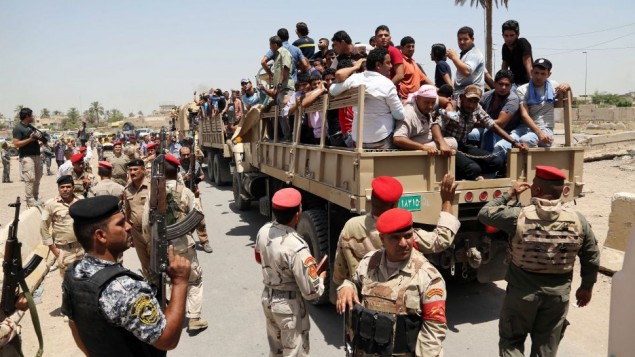
Iraqis on military trucksIraqi men board military trucks to join the Iraqi army at the main recruiting center in Baghdad, Iraq, Saturday, June. 14, 2014, after authorities urged Iraqis to help battle insurgents. (Photo credit: AP/Karim Kadim)

[T]here is a stable, pro-Western force in the country, the Kurds, and Washington is doing itself no favors by not backing them more firmly in their disputes with Baghdad and neighboring countries.

But there is little chance the US will back Kurdish independence. Washington, after investing so much blood and treasure into keeping the Iraqi state together after Saddam’s downfall, is not interested in seeing it fracture along ethnic lines. The Americans “want to keep the political map of the region as it is,” noted Salam Saadi, editor of Rudaw.

If the US insists on keeping out of the Iraqi mess, there is not much left for it to do but hope Iran can stem the ISIL advance while moving Iraq in a direction that will meet American interests — not an especially good bet.


The big players in Iraq are surprised and deeply alarmed by the lightning gains achieved over the past week by the Sunni militants of the Islamic State of Iraq and the Levant (ISIL).

In Baghdad, the Shiite-dominated government of Nuri al-Maliki is on its heels, its soldiers led passively to the slaughter in the desert, and its patrons in Iran sending troops across the border to help prop it up. The United States, which expended billions of dollars and thousands of lives building up the Iraqi state and training the crumbling Iraqi army, finds itself mulling military action two weeks after President Barack Obama ridiculed those who say “that every problem has a military solution.”

But for the Kurds, rulers of Iraq’s semi-autonomous northern region, the Iraqi army’s retreat offers new opportunity.

The most significant gain they have made so far is to take full control of the disputed oil-rich city of Kirkuk, after rolling in last Thursday with their Peshmerga forces.

Kurds see Kirkuk as an integral part of their historic homeland, their “Jerusalem,” and believe it should be under their authority. A historically ethnically mixed city of Turkomen, Assyrians, Arabs, and Kurds within a heavily Kurdish province, Kirkuk’s demographics were changed drastically by Saddam Hussein’s Arabization campaign, during which he drove out of 100,000 Kurds.

A referendum on Kirkuk’s future, mandated by the 2005 Iraqi constitution, has been delayed indefinitely by Baghdad. Thus, the Kurds have decided to solve their biggest outstanding dispute — and there are many — with the central government themselves, by taking control of the city.

With the Kurdistan Regional Government in control of all the areas under dispute between Baghdad and the KRG capital Erbil, the Kurds’ position has improved drastically. According to some reports, Kurdish Prime Minister Nechirvan Barzani ordered the Peshmerga to prepare for permanent control of the city.

Keeping Kirkuk “means moving forward an extra mile toward independence,” said Ofra Bengio, an expert on Iraq at Tel Aviv University. “This means further escalation with Baghdad, which, however, seems incapable to stop the advancement of the Kurds.”

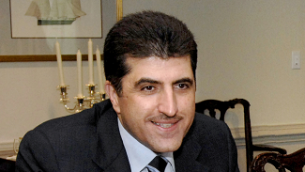
Kurdish PMKurdish PM Nechirvan Barzani (photo credit: US Department of Defense)

And who would take the city from them? The United States and the Iraqi central government have much bigger problems on their hands; and for ISIL, fighting the Peshmerga forces would be an unnecessary, perhaps fatal, diversion from the campaign against Iraq’s Shiites.

Still, there is always an outside chance that in the bloody ring that Iraq has become, the Peshmerga could find itself in a serious fight with the Islamists. “The Kurds stated that they do not want to open a front against ISIL, but if the latter does there is no doubt that such a clash might occur,” Bengio noted.

Kurdish media reported that Peshmerga forces have already battled ISIL militants, in the town of Jalula last week, driving the Islamist fighters out while losing two of their own. In addition, Kurdish news channel Rudaw reported Sunday that ISIL was sending messages to the Peshmerga through civilians passing through checkpoints, asking the Kurds to refrain from attacking.

A video posted to YouTube showed a group of Kurdish ISIL fighters addressing the Kurdish people in their own language, said Rebaz Ali, a Kurdish journalist based in the United States. They promised to liberate the Kurds one day from the parties currently controlling the region.

In any event, the Peshmerga are not about to pursue ISIL fighters beyond disputed territories. “Kurds are not ready to fight against ISIL in support of Maliki unless they have some assurance from his side that he’s going to resolve the issues with them,” said Ali.

Granting Iraq to Iran on a silver plate

As Sunni militants advance, Iran sends troops in to back the US-supported government, and Kurds move closer to independence, what options remain for the United States?

First, Washington should give up the expectation that it can put the country back together again, emphasized Bengio: “Iraq as a unitary state has gone forever. In fact this artificial entity has never managed to become a cohesive and unified entity without the force of arms.”

She also placed significant blame on the Obama administration for the current turmoil in Iraq. “Not because it withdrew its forces from Iraq, as Maliki insisted that not one soldier should remain in Iraq after 2011 there, but because of the free hand which it gave him in the aftermath of the withdrawal to marginalize the Sunnis and antagonize a whole section of the population,” she said. “Their support of Maliki against the Kurds was another gross mistake.

“However, the worst was granting Iraq to Iran on a silver plate.”

Unless Obama takes decisive action now, including airstrikes, Iran could gain significantly if it manages to save the Maliki government, becoming the decisive player in the country at the expense of the US. If that were to happen, Tehran would hold sway from Iraq to the Mediterranean Sea through Syria and Lebanon.

But airstrikes alone are only one piece of the solution, Ali said, and the US must pressure Baghdad to enact policies designed to meet the needs of the Sunni population, now actively helping ISIL fighters. “It’s a Sunni uprising against the Shiite-dominated government,” said Ali. “Maliki’s sectarian war against the Sunnis has been brutal. We only see the ISIL fighters, but there are also tribal fighters, former Iraqi military officers and soldiers.”

Moreover, there is a stable, pro-Western force in the country, the Kurds, and Washington is doing itself no favors by not backing them more firmly in their disputes with Baghdad and neighboring countries.

But there is little chance the US will back Kurdish independence. Washington, after investing so much blood and treasure into keeping the Iraqi state together after Saddam’s downfall, is not interested in seeing it fracture along ethnic lines. The Americans “want to keep the political map of the region as it is,” noted Salam Saadi, editor of Rudaw.

If the US insists on keeping out of the Iraqi mess, there is not much left for it to do but hope Iran can stem the ISIL advance while moving Iraq in a direction that will meet American interests — not an especially good bet.


It’s June 2015. Isis has its own ‘holy land’ and airliners are being blown out of the sky

June 16, 2014

It’s June 2015. Isis has its own ‘holy land’ and airliners are being blown out of the sky, The Telegraph, June 16, 2014

(To what extent are the “powers that be” trying to anticipate the consequences of their actions and inactions. Does Iran’s generally long-term approach suggest that it may be doing that while others dither? — DM)

Far-fetched? Maybe. But I want to make three points. First, to emphasise the interwoven threads of Middle Eastern politics: one circumstance causes a ripple of other effects, which in turn cause further ripples and so on. Second, to highlight the influence of paranoia in political calculations. Third, to suggest that the West won’t find insulation from this crisis.

As events spiral out of control in Iraq, I thought it might be useful to consider what the country might look like this time next year . . .

One year after Isis seized Mosul and Tikrit, the Iraqi Prime Minister remains in power.

Maliki’s survival is no great victory.

Snaking a bloody path from Syria into Iraq, Isis has scoured itself a shadow Caliphate. In this holy land, cells of car bombers and death squads reign supreme. Unable to fight Isis alone, Maliki has made a deal with Iran. In return for thousands of Revolutionary Guards, Ayatollah Khamenei and Qassem Suleimani (a top Guards force commander) have locked Maliki into an implicit political union with the Islamic Republic. Gone are the days when Maliki could confront Iranian-supported militias. Today, Maliki has expelled most American contractors from Iraq, US Embassy staff rarely leave Baghdad and CIA officers are regularly harassed by Iraqi security forces. Facing Iran’s surge, even Najaf’s Grand Ayatollah, Ali al-Sistani, has been pressured into silence. Iran is playing the long game.

Though driven from Mosul last summer, Isis are fully content with their present condition. They control many towns and villages in both Iraq and Syria. Their lines of communication are covert but secure, and their authority is imbued in the minds of those who live under them. To be sure, the barbarism of Isis Sharia courts has alienated some. In Anbar province, an anti-Isis insurgency is gathering steam. Still, many others have been won over by Isis gifts of medical supplies and expensive household goods. Bribery works.

Paranoia has foisted Sunni and Shia communities into stark sectarian divisions. It’s never been this bad, not even in the darkest days of 2006. Weekly death tolls are soaring. Signs of torture are etched into the bodies dumped on the streets. To make matters worse, the Sunni Arab monarchies are funnelling stacks of hard cash to Isis financiers. They’re desperate to stop Iranian usurpation of Iraq, whatever the cost.

For Isis, 2015 is therefore a dream come true. Using their Caliphate as a vehicle to export terrorism, they’ve launched two major attacks on the West. In November 2014, French citizens bombed a restaurant and a bus in Paris. In a simultaneous January 2015 attack, British citizens blew up two transatlantic passenger planes. Six hundred died. This airline attack has taken more than innocent lives. It has frayed EU-US diplomacy. America now requires EU passport holders who’ve traveled to any of 10 countries (including Jordan, Lebanon and Turkey) to attain a visa for travel to the United States. Combined with fears over flight safety, the airlines have lost billions in revenues. Intelligence services are struggling to identify Isis terrorists who are returning home with a smile and the knowhow of a bomb-maker. Benefiting from Snowden’s leaks, Isis has dramatically reduced its use of the internet and cell phones. More attacks are expected.

Of course, Isis has also lost people. Back in February, its leader Abu Bakr al-Baghdadi was killed in a joint US-Jordanian special forces raid in Syria. But he’s been replaced by Ni’ma al-Jabouri, another Iraq-focus commander. And while Isis has suffered heavy casualties, its stunning successes have attracted waves of new recruits. Maliki’s overt association with Iran has enabled ISIS to present itself as a necessary defender against Shia aggression. Sectarian neutrality doesn’t exist in 2015 Iraq. Sunni-Shia intermarriage is a capital offence.

In June 2015, the chaos is spilling across borders. Watching Iran’s unrestrained advance across the Middle East, Israel is convinced it cannot allow Khamenei to gain a nuclear weapon. Netanyahu has told Obama he may strike Iran at any time. In Syria, Assad has taken advantage of American distraction, using chemical weapons and starvation to crush the nationalist rebel formations. Opposing a de facto independent state of Kurdistan in northern Iraq, Turkey’s Republican People’s Party is calling for military action. Across the world, from Indonesia to Pakistan, Isis has inspired Salafi Jihadist groups to believe that anything is possible. Global terrorism is exploding.

2015 is not a good year.

Far-fetched? Maybe. But I want to make three points. First, to emphasise the interwoven threads of Middle Eastern politics: one circumstance causes a ripple of other effects, which in turn cause further ripples and so on. Second, to highlight the influence of paranoia in political calculations. Third, to suggest that the West won’t find insulation from this crisis.

Obama Fiddles While the World Burns

June 16, 2014

Obama Fiddles While the World Burns, Algemeiner, Rabbi Shmuley Boteach, June 16, 2014

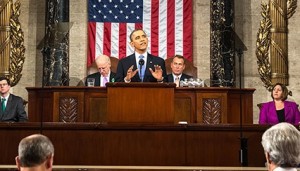
State-of-the-union-obama--300x171Depiction of President Obama delivering his 2014 State of the Union address. Photo: White House.

[B]y allowing Iraq and Syria to degenerate into Afghanistan, we are all but guaranteeing another hit on the United States. A lawless world cannot possibly keep America safe.

Under President Obama, the world is becoming unstuck. Iraq is being overrun by Islamist terrorists and the United States is now evacuating its Baghdad embassy. The Arab Spring has led to either civil war and mass slaughter, like Syria, or new Arab dictators, like Egypt. Libya is degenerating into a den of terrorists who have already murdered the American Ambassador. Putin is sending tanks into Ukraine and the thuggish Russian strongman bestrides the world like a colossus, unchecked by American will.

These facts are undeniable. The only question is whether President Obama is responsible.

Obama’s argument, as laid out in his 2014 West Point commencement, is that his first rule of foreign policy is “Don’t do anything stupid.” Military action should be reserved only for the most extreme circumstances. Americans are war-weary after Iraq and Afghanistan. Our President believes in a minimalist approach.

The shallowness of this argument, however, lies in this simple fact. Yes, Americans are weary of entering foreign conflicts. The President is correct that we don’t want our boys dying to fight on behalf of Iraqi cowards who shed their uniforms at the first sound of gunfire. But we are even more weary of another 9/11 attack. And by allowing Iraq and Syria to degenerate into Afghanistan, we are all but guaranteeing another hit on the United States. A lawless world cannot possibly keep America safe.

I have contempt for Prime Minister Maliki of Iraq. Increasingly autocratic, he is even more guilty of gross ingratitude. Rather than show America any kind of thanks for all that we sacrificed to give his nation their freedom, he treats America with disdain. Who wants to help a man who is becoming a despot, hates democratic Israel, and reaches out to America only when he fears being strung up by Jihadists?

But this isn’t about Maliki, but America. The chaos that comes to Iraq will directly impact the security of the United States. An evacuation of Baghdad would be much worse than the shame of Saigon because at least the North Vietnamese communists did not deploy a global army of terrorists who fly planes into buildings. Al Qaeda does.

I visited West Point last night with my family for their summer concert series. It was the 239th birthday of the Army, and the West Point Band put on a stirring and patriotic performance. President Obama had spoken at the cadets’ commencement just two weeks earlier. Ask yourself: how did these cadets feel when President Obama got up at their graduation and told them there is increasingly no substantive role for them to play in the world. Here were young warriors, trained to fight and protect the United States, being told that the use of force has little to no application. No wonder there was such tepid applause and a cold response. These bright young men and women must have been thinking why they didn’t instead just land jobs in the  State Department.

No one wants to see American troops die in foreign wars. Of course our soldiers should never be sent needlessly into harm’s way. But the threat of American force must always be present, even if it’s not deployed. People must fear the United States. What President Obama is doing by not taking action and by giving so many unnecessary speeches defending his belief in doing nothing, is that he is removing the deterrent of a credible threat. The world believes that the United States under President Obama has no stomach for a fight. And we’re watching the effects all around us. The inmates are running the asylum.

The world is slowly becoming unglued. The Islamic world especially is in a deteriorating spiral that’s positively tragic to watch. Turkey, once a proud democracy, now boasts a Prime Minister whose own political aides violently attack peaceful protestors. My God, Erdogan doesn’t even shy from harassing and shoving CNN reporters while they are live on the air. He no longer even shows the pretense of freedom. When I was in Istanbul I was amazed to experience firsthand how YouTube is permanently blocked, and Twitter was restored just two days before I arrived. This Turks were once a free people. How are they allowing this?

Syria is a giant killing zone with President Obama’s red line against the use of chemical weapons being repeatedly violated without consequence. Iran sports the second most brutal and vile government on the earth, after North Korea, and thinks nothing of stoning women, hanging gays from cranes, and assassinating peaceful protestors in cold blood. Worse, they fund the bloodiest terrorists around the world. But that does not stop our President from negotiating with them and leaving them within a few months of nuclear weapons. Egypt is back to Presidents who win elections with 95% of the vote. Nigeria’s Boko Haram is the filthiest terror group in the entire world, murdering children in large number and bragging about selling young girls into sexual slavery.

And who most pays the biggest price for this lawlessness? Why Israel, of course, with three teenagers now kidnapped by what appears to be Hamas, an organization that the United States officially labels as terrorists but whose joint government with Mahmoud Abbas we now recognize.

Through all this, Barack Obama drifts along, meditating on his mantra of “let’s do nothing stupid.” But I have long believed that the true sins we are guilty of in life are not the sins of commission, the mistakes we make, but rather the sins of omission, the good things we fail to do.

Sometimes the dumbest thing is to fail to act because of the fear of doing dumb things.

Barack Obama is fiddling while the world is burning. Israel is already smoldering under its heat and it won’t be long before America too is cindered.

Marc Thiessen: Obama’s Iraq disaster – The Washington Post

June 16, 2014

Marc Thiessen: Obama’s Iraq disaster – The Washington Post.

June 16 at 10:21 AM

In 2011, the situation in Iraq was so good that the Obama administration was actually trying to take credit for it, with Vice President Joe Biden declaring that Iraq “could be one of the great achievements of this administration.”

Now in 2014, as Iraq descends into chaos, Democrats are trying to blame the fiasco on — you guessed it — George W. Bush. “I don’t think this is our responsibility,” said House Minority Leader Nancy Pelosi, declaring that the unfolding disaster in Iraq “represents the failed policies that took us down this path 10 years ago.”

Sorry, but this is a mess of President Obama’s making.

When Obama took office he inherited a pacified Iraq, where the terrorists had been defeated both militarily and ideologically.

Militarily, thanks to Bush’s surge, coupled with the Sunni Awakening, al-Qaeda in Iraq (AQI, now the Islamic State of Iraq and Syria, or ISIS) was driven from the strongholds it had established in Anbar and other Iraqi provinces. It controlled no major territory, and its top leader — Abu Musab al-Zarqawi — had been killed by U.S. Special Operations forces.

Ideologically, the terrorists had suffered a popular rejection. Iraq was supposed to be a place where al-Qaeda rallied the Sunni masses to drive America out, but instead, the Sunnis joined with Americans to drive al-Qaeda out — a massive ideological defeat.

Obama took that inheritance and squandered it, with two catastrophic mistakes:

First, he withdrew all U.S. forces from Iraq — allowing the defeated terrorists to regroup and reconstitute themselves.

Second, he failed to support the moderate, pro-Western opposition in neighboring Syria — creating room for ISIS to fill the security vacuum. ISIS took over large swaths of Syrian territory, established a safe haven, used it to recruit and train thousands of jihadists, and prepared their current offensive in Iraq.

The result: When Obama took office, the terrorists had been driven from their safe havens; now they are on threatening to take control of a nation. Iraq is on the cusp of turning into what Afghanistan was in the 1990s — a safe haven from which to plan attacks on America and its allies.

It did not have to be this way. In 2011, the U.S. commander in Iraq, Gen. Lloyd J. Austin III, recommended keeping between 14,000 and 18,000 troops in Iraq (down from 45,000). The White House rejected Austin’s recommendation, worried about “the cost and the political optics.” So our commanders reduced their request to 10,000 — a number commanders said might be able to work “in extremis.” But the White House rejected this as well, insisting the number be cut to between 3,000 to 4,000 troops — a level insufficient to provide force protection and train Iraqis, much less to counterbalance Iran.

Iraqi leaders saw that the United States has headed for the exits — and decided that the tiny U.S. force Obama was willing to leave behind was not worth the political costs of giving Americans immunity from prosecution in the Iraqi judicial system. So Iraq rejected Obama’s offer, and the United States withdrew all its forces. And now ISIS is taking back cities that were liberated with American blood. It has taken control of Mosul, Tikrit and Tal Afar and is nearing the outskirts of Baghdad.

ISIS is not the only U.S. enemy taking advantage of power vacuum Obama left in the region. So is Iran. A month ago, Iraqi leaders asked the United States to carry out air strikes against ISIS positions but were rebuffed by Obama. So the Iraqis have turned to Iran for help. This weekend, the brutal commander of Iran’s notorious Quds Force, Gen. Quasim Suleiman, flew to Baghdad to advise the Iraqis on the defense of Baghdad. This is the man who organized and funded the Shia militias in Iraq, and armed them with EFPs (explosively formed penetrators) — sophisticated armor-piercing roadside bombs that killed hundreds of U.S. troops. And, if you thought matters could not get any worse, the Wall Street Journal reports that Obama “is preparing to open direct talks with Iran on how the two longtime foes can counter the insurgents.” Yes, you read that right. Obama is planning to work with Iran to counter ISIS in Iraq. In other words, our troops may soon be providing air cover for the very Iranians who were killing them.

If Obama had listened to the advice of his commanders on the ground, ISIS would probably not be marching on Baghdad today, and Iran would not be stepping in to fill the void left by the U.S. withdrawal. Thanks to Obama, we may soon have a situation where we are helping our Shia extremist enemies (Iran) fight our Sunni extremist enemies (ISIS) for control of Iraq.

That’s quite an “achievement.”

What to Do in Iraq

June 16, 2014

What to Do in Iraq, The Weekly StandardFrederick W. Kagan and William Kristol, June 16, 2014

(See also State Dept. Ignored warnings on Iranian efforts to destabilize Iraq. But see U.S. Doesn’t know who to hit in Iraq. — DM)

It would be irresponsible to embrace a premature fatalism with respect to Iraq. And it would be damaging and counterproductive to accept a transformation of our alliances and relationships in the Middle East to the benefit of the regime in Tehran. There is a third alternative.

This would require a willingness to send American forces back to Iraq. 

It’s widely agreed that the collapse of Iraq would be a disaster for American interests and security in the Middle East and around the world. It also seems to be widely assumed either that there’s nothing we can now do to avert that disaster, or that our best bet is supporting Iran against al Qaeda. Both assumptions are wrong. It would be irresponsible to embrace a premature fatalism with respect to Iraq. And it would be damaging and counterproductive to accept a transformation of our alliances and relationships in the Middle East to the benefit of the regime in Tehran. There is a third alternative.

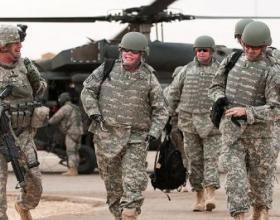
Iraq_troops

That alternative is to act boldly and decisively to help stop the advance of the forces of the Islamic State of Iraq and Syria (ISIS)—without empowering Iran. This would mean pursuing a strategy in Iraq (and in Syria) that works to empower moderate Sunni and Shi’a without taking sectarian sides. This would mean aiming at the expulsion of foreign fighters, both al Qaeda terrorists and Iranian and Lebanese Hezbollah regular and special forces, from Iraq.

This would require a willingness to send American forces back to Iraq. It would mean not merely conducting U.S. air strikes, but also accompanying those strikes with special operators, and perhaps regular U.S. military units, on the ground. This is the only chance we have to persuade Iraq’s Sunni Arabs that they have an alternative to joining up with al Qaeda or being at the mercy of government-backed and Iranian-backed death squads, and that we have not thrown in with the Iranians. It is also the only way to regain influence with the Iraqi government and to stabilize the Iraqi Security Forces on terms that would allow us to demand the demobilization of Shi’a militias and to move to limit Iranian influence and to create bargaining chips with Iran to insist on the withdrawal of their forces if and when the situation stabilizes.

This path won’t be easy, but the alternatives are much worse. Doing nothing means we will face a full-scale sectarian war—Syria on steroids—with millions of refugees and tens or hundreds of thousands more dead, along with a massive expansion of Iranian control into southern Iraq and an al Qaeda safe haven stretching from the Tigris to the middle of Syria.

Throwing our weight behind Iran in the fight against al Qaeda in Iraq, as some are suggesting, would make things even worse. Conducting U.S. airstrikes without deploying American special operators or other ground forces would in effect make the U.S. Iran’s air force. Such an approach would be extremely shortsighted. The al Qaeda threat in Iraq is great, and the U.S. must take action against it. But backing the Iranians means backing the Shi’a militias that have been the principal drivers of sectarian warfare, to say nothing of turning our backs on the moderates on both sides who are suffering the most. Allowing Iran to in effect extend its border several hundred kilometers to the west with actual troop deployments would be a strategic disaster. In addition, the U.S. would be perceived as becoming the ally of the Islamic Republic of Iran against all of the forces of the Arab and Sunni world, conceding Syria to the Iranian-backed Bashir al-Assad, and accepting the emergence of an Iranian hegemony soon to be backed by nuclear weapons. And at the end of the day, Iran is not going to be able to take over the Sunni areas of Iraq—so we would end up both strengthening Iran and not defeating ISIS.

Now is not the time to re-litigate either the decision to invade Iraq in 2003 or the decision to withdraw from it in 2011. The crisis is urgent, and it would be useful to focus on a path ahead rather than indulge in recriminations. All paths are now fraught with difficulties, including the path we recommend. But the alternatives of permitting a victory for al Qaeda and/or strengthening Iran would be disastrous.

State Dept. Ignored Warnings of Iranian Efforts to Destabilize Iraq

June 16, 2014

State Dept. Ignored Warnings of Iranian Efforts to Destabilize Iraq, The Washington Free Beacon, June 16, 2014

Shakir WaheibAl Qaeda linked militants in Iraq’s Anbar Province / AP

[T]he recent outreach to Iran runs counter to the State Department’s own Country Report on Terrorism issued just six weeks ago.

That report warned that Iran is building a terror network across the globe and that it was specifically seeking to undermine U.S. goals in Iraq by fostering terror groups on both sides of the ethnic Arab divide in Iraq.

State Department counterterrorism officials warned in late April that Iran had “trained, funded, and provided guidance” to ethnic Iraqi terror groups bent on destabilizing the country.

The April warning appears to directly contradict and undermine comments last week by a State Department spokeswoman claiming that the United States and Iran have a “shared interest.”

As Iraqi militants continue to wage attacks and seize territory, the State Department has signaled that it is willing to work with neighboring Iran to stabilize the country. They have even raised the idea of discussing Iraq on the sidelines of the ongoing nuclear discussions taking place in Vienna.

However, the recent outreach to Iran runs counter to the State Department’s own Country Report on Terrorism issued just six weeks ago.

That report warned that Iran is building a terror network across the globe and that it was specifically seeking to undermine U.S. goals in Iraq by fostering terror groups on both sides of the ethnic Arab divide in Iraq.

“Despite its pledge to support Iraq’s stabilization, Iran trained, funded, and provided guidance to Iraqi Shia militant groups,” the report stated.

Iran also has sought to protect and bolster al Qaeda, a Sunni Muslim group that has ties to Islamic State of Iraq and Syria (ISIS), the extremist terror group that is currently seeking to violently depose the Iraqi government.

“Iran remained unwilling to bring to justice senior al Qaeda (AQ) members it continued to detain, and refused to publicly identify those senior members in its custody,” the State Department determined in its April report.

“Iran allowed AQ facilitators Muhsin al-Fadhli and Adel Radi Saqr al-Wahabi al-Harbi to operate a core facilitation pipeline through Iran, enabling AQ to move funds and fighters to South Asia and also to Syria,” according to the report.

Iran’s efforts to inflame ethnic tensions in Iraq and elsewhere appear to run counter to the State Department’s more recent claims that the United States and Iran have a “shared interest” in Iraq.

The United States and Iran “certainly have a shared interest” in combating ISIS, State Department spokeswoman Marie Harf told reporters on Friday.

Secretary of State John Kerry also has signaled a willingness to talk with Iran about Iraq. State Department spokeswoman Jennifer Psaki said Monday that U.S. officials are open to a “political conversation” with Tehran.

Iran has a long and well-documented history of stoking ethnic tensions in Iraq.

Iran’s elite Revolutionary Guard Corps (IRGC) has worked with the terror group Hezbollah and “provided training outside of Iraq as well as advisers inside Iraq for Shia militants in the construction and use of sophisticated improvised explosive device technology and other advanced weaponry,” according to the April counterterrorism report.

“Similar to Hezbollah fighters, many of these trained Shia militants then use these skills to fight for [embattled President Bashar al-Assad] in Syria, often at the behest of Iran,” the report continued.

On the other side of the coin, Iran has worked with senior al Qaeda officials, permitting them to move freely around the region.

Al Qaeda facilitator Al-Fadhli “began working with the Iran-based AQ facilitation network in 2009 and was later arrested by Iranian authorities,” according to the counterterrorism report. “He was released in 2011 and assumed leadership of the Iran-based AQ facilitation network.”

Iran also has sent military advisers and assets to Iraq in recent days to help prevent ISIS from overtaking Baghdad, according to multiple reports. Up to 2,000 Iranian troops have already been sent by Iran, according to the Guardian.

As far back as 2007, Iran was accused by U.S. military officials of “training Iraqi insurgents to attack coalition forces in Iraq,” according to reports at the time.

This led former President George W. Bush to single out Iran as a “destabilizing force” vis-a-vis Iraq and a “very troubling nation,” Reuters reported.

Iran was then caught in June 2008 facilitating the passage of grenade launchers and bomb-making material to Iraqi insurgents.

That same year the Justice Department indicted a cohort of foreign nationals for funneling weapons to Iran. These arms were traced to deadly attacks against U.S. forces in Iraq.

In May 2009, a large weapons stockpile was discovered along the Iran-Iraq border. The weapons cache, which included explosives and rocket launchers, was tied a Shiite militia purportedly trained and armed by Iran.

Similar reports of Iran arming Iraqi insurgents and attempting to destabilize the government emerged in 20092010201120122013, and 2014.

As ISIS continues its violent rampage across Iraq, the United States has said that it is not willing to send American troops into the region.

ISIS is committed to establishing a radical Islamic state in Iraq, Syria, and elsewhere in the region.

US could allow Iran sanctions to expire in 2016

June 16, 2014

US could allow Iran sanctions to expire in 2016, Al MonitorBarbara Slavin, June 16, 2014

(The assumptions seem to be (1) that a “deal” is likely to be signed and (2) that President Obama will follow the law. President Rouhani stated earlier this month that the sanctions had already crumbled and will not be rebuilt should a “deal” not be reached by July 20th. The second assumption may not be valid, because President Obama has a pattern and practice of doing as he pleases with little regard for the law, as explained here by Andrew McCarthy. Were President Obama to eliminate sanctions contrary to law, there would be little that could be done about it through the judicial system, due to the doctrine of standing. Even if the judiciary were to consider the matter it would take years, making an “effective” sanctions package extremely difficult if not impossible to resuscitate– DM)

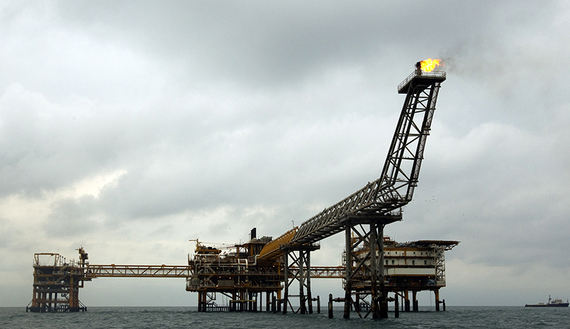
The SPQ1 gas platform is seen on the southern edge of Iran's South Pars gas field in the Gulf, off AssalouyehThe SPQ1 gas platform sits on the southern edge of Iran’s South Pars gas field in the Persian Gulf, off Assalouyeh, 1,000 kilometers (621 miles) south of Tehran, Jan. 26, 2011. (photo by REUTERS/Caren Firouz)

According to a top expert on US sanctions against Iran, President Barack Obama can provide significant relief by waiving many penalties and allowing a major piece of sanctions legislation to “sunset” before he leaves office.

As nuclear negotiations resume June 16 in Vienna, a new paper by a veteran US Iran expert and congressional analyst lays out options for unwinding US sanctions that include initial waivers by President Barack Obama and the 2016 expiration of a key piece of legislation that has impeded foreign investment in Iran’s energy sector.

According to the paper, written by Kenneth Katzman and slated to be presented at an Atlantic Council event along with a companion report on lifting European sanctions, the Obama administration “might decide to allow the Iran Sanctions Act to sunset” when it expires on Dec. 31, 2016, shortly before Obama leaves office. Expiration of the act “would reopen Iran’s energy sector to unimpeded foreign investment and would enable Iran to begin expanding oil and gas production again after many years of stagnation,” notes Katzman, writing in his personal capacity and not on behalf of his employer, the Congressional Research Service. He adds that Congress could vote to extend the act, as it has repeatedly done since the law was first passed in 1996, but the president could exercise his veto authority.

The issue of sanctions relief is a key element in what both US and Iranian negotiators have called a Rubik’s Cube in an attempt to describe the complexity of fitting together verifiable curbs on the Iranian nuclear program with a phased removal of penalties that have crippled the Iranian economy. Katzman’s paper could provide a road map both feasible for the White House and acceptable to Iran, whose negotiators have indicated that they do not expect quick action by Congress to repeal sanctions legislation.

Since the 1979 hostage crisis, but especially in the last few years, Iran has been the target of a plethora of US and European penalties. US sanctions include 10 statutes and 26 executive orders alone. Iran has also been penalized in four resolutions by the UN Security Council.

Still, the White House has considerable flexibility in how to apply the US restrictions, especially when it comes to so-called secondary sanctions on foreign entities. The president can revoke or amend executive orders that have not been codified, such as sanctions on companies that purchase petrochemicals from Iran. The president can also waive requirements under the fiscal year 2012 National Defense Authorization Act that have obliged foreign buyers of Iranian oil to significantly reduce their purchases of crude in the past few years. These sanctions have already been eased under the interim nuclear accord Iran signed last fall with the five permanent members of the UN Security Council plus Germany (P5+1). The act allows the president to waive sanctions for 120 days and to continue to do so for an unlimited number of 120-day periods, by certifying to Congress that “such a waiver is in the national security interest of the United States.”

Sanctions on foreign banks that do business with sanctioned Iranian banks — part of another piece of pivotal legislation, the 2010 Comprehensive Iran Sanctions, Accountability and Divestment Act (CISADA) — can also be waived indefinitely if the secretary of the Treasury says that it is in the US national interest and submits a report to the appropriate congressional committees. Without repeal of CISADA, however, many European banks may still be leery of dealing with Iranian financial institutions given the heavy fines imposed on several banks for doing business with Iran in the past.

Even if some of the options outlined by Katzman become part of a long-term deal with Iran, the Islamic Republic will still face sanctions linked to its spot on the State Department’s list of state sponsors of terrorism and its human rights abuses. Most of these laws, however, also include presidential waiver authority.

European sanctions relief is less complicated bureaucratically but intricately tied to American action on sanctions, according to Cornelius Adebahr, an associate at the Carnegie Endowment for International Peace, where he runs the endowment’s Europe program. As Adebahr notes in his report on European sanctions, “Both the imposition of sanctions and their removal require merely one ingredient: the political will of member states.” If the 28 members of the European Union vote to suspend or lift sanctions, that is enough: “The EU’s foreign policy executive does not have to deal with a Congress.”

Adebahr continues, however, “It is crucial that any sanctions relief be synchronized between the EU and the US” because of the way in which the penalties are intertwined and have reinforced each other. Thus it would not be sufficient for the EU to lift its sanctions and expect European companies to resume business with Iran “as long as the specter of liability looms over their activities in America.”

Adebahr suggests that the focus for sanctions relief in a long-term deal be on four specific areas:

  • Allowing foreign countries to import Iranian oil and gas freely.
  • Unfreezing the estimated $100 billion in Iranian oil revenues currently sitting in foreign banks.
  • Easing restrictions on financial transactions with Iran, insurance and the civilian economy, including the automotive and shipbuilding industries.
  • Delisting a number of Iranians currently on travel ban lists.

Many European sanctions that also have US equivalents are likely to remain in place, namely, the ban on supplying Iran with any technology that could be used in a nuclear or other weapons program, an arms embargo, inspections of cargo and restrictions on dealings with businesses connected to the Revolutionary Guards.

The reports do not address the possibility that Congress will try to reinstate some sanctions in so-called snapback provisions should Iran be suspected of violating an agreement or impose new penalties tied to Iran’s ballistic missile program, support for anti-Israel groups or human rights abuses. Given the degree of congressional suspicion of the Islamic Republic and the influence of powerful anti-Iran lobby groups, long-term sanctions relief will require extensive consultations with Congress by the White House, scrupulous observance of any deal by Iran and a durable US-Iran diplomatic channel to resolve inevitable disputes about the nuclear deal and other issues.


Fatah-linked terrorists claim abduction of three teenagers

June 16, 2014

Fatah-linked terrorists claim abduction of three teenagers, Times of Israel,  Joshua Davjdkvjch, June 16,2014

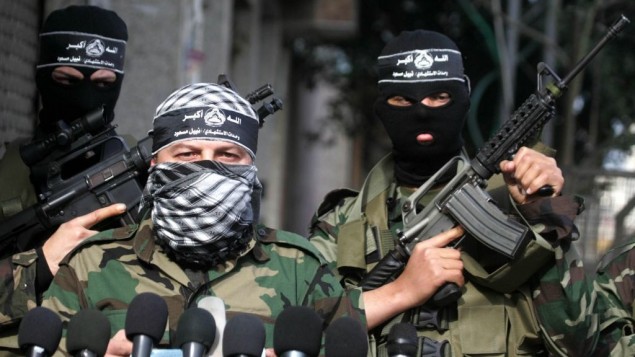
Martyrs brigadeMembers of the Al-Aqsa Martyrs’ Brigade give a press conference in Gaza City, Gaza, January, 2011 (photo credit: Mohammed Othman/Flash90)

Doubts were raised as to the veracity of the claim.

A Palestinian terror group aligned with the Fatah movement claimed responsibility Monday for the kidnapping of three Israeli teenagers, saying the boys were safe and that it would prove this soon.

A statement posted online ostensibly by the al-Aqsa Martyrs Brigades, the armed wing of Palestinian Authority President Mahmoud Abbas’s Fatah movement, claimed responsibility for the Thursday abduction of Eyal Yifrach, 19, Naftali Frenkel, 16, and Gil-ad Shaar, 16, south of Jerusalem.

However, doubts were raised as to the veracity of the claim.

The message claimed the group was holding the three, but not in the city of Hebron, and they would only be released in a swap deal.

“We won’t release the three children, except in return for thousands of prisoners,” the statement read, according to a translation posted online by the Israeli 0404 news outlet.

Prime Minister Benjamin Netanyahu had blamed Hamas for the kidnapping, saying their involvement was a fact. The Hamas terror group, considered more hard-line than Fatah, had praised the abduction but denied involvement.

Two smaller West Bank groups earlier claimed responsibility for the kidnappings, but neither claim was considered credible.

Some 150 Palestinian suspects, including a large number of Hamas leaders have been arrested over the last several days as Israel and Palestinian forced conduct a massive manhunt for the kidnappers and the three teens.

The search has mostly focused on the Hebron area.

Earlier on Monday, Abbas condemned both the kidnapping and the Israeli response. Netanyahu also held a rare phone conversation with the Palestinian leader in which he requested Palestinian help in finding the perpetrators.


U.S. quietly moves detainees out of secretive Afghanistan prison

June 16, 2014

U.S. quietly moves detainees out of secretive Afghanistan prison

By Missy Ryan

WASHINGTON Thu Jun 12, 2014 7:44pm EDT

via U.S. quietly moves detainees out of secretive Afghanistan prison | Reuters.

U.S. President Barack Obama speaks in the Oval Office of the White House in Washington June 12, 2014.Credit: Reuters/Larry Downing

(Reuters) – The Obama administration has quietly repatriated a dozen detainees from a small U.S. military prison in Afghanistan, moving a modest step closer toward winding down the United States’ controversial post-9/11 detainee system.

President Barack Obama, in a letter to Congress released on Thursday, informed U.S. lawmakers that about 38 non-Afghan prisoners remained at the Parwan detention center outside of Kabul, down from around 50 a few months ago.

A U.S. defense official, speaking on condition of anonymity, said that a Frenchman, a Kuwaiti and 10 Pakistani prisoners were sent back to their respective home countries at the end of May.

The remaining detainees include Yemeni, Tunisian and more Pakistani nationals, and a Russian who the United States is also considering trying in a military or civilian court.

The transfers, which are not publicly disclosed, underscore the challenges the Obama administration faces in shutting down Parwan and the larger U.S. military prison at Guantanamo Bay, Cuba, which has been widely criticized by human rights groups since being populated in the wake of the Sept. 11, 2001 attacks.

Many of the detainees have not been charged with a crime, but the release of any military detainees has the potential to intensify the political backlash the Obama administration is facing over its handling of suspected militants captured in Afghanistan and elsewhere since 2001.

White House officials have sought to rebuff criticism of the decision last month to send five senior Taliban prisoners held at Guantanamo Bay to Qatar in exchange for Bowe Bergdahl, a U.S. soldier held by Taliban-linked militants in Pakistan.

The Obama administration is slowly moving to transfer some inmates out of Guantanamo Bay, where about 150 inmates remain. Obama has renewed promises to close the prison despite long-standing congressional opposition.

The non-Afghan prisoners at Parwan are the only detainees remaining in U.S. custody in Afghanistan after U.S. officials shifted hundreds of Afghan prisoners to Afghan government custody last year.

In February, U.S. officials were outraged when the government of Afghan President Hamid Karzai released 65 of those prisoners, who Washington insisted were dangerous militants requiring at least further investigation.

The U.S. government considers some remaining non-Afghan prisoners at Parwan, like some at Guantanamo, too dangerous to be freed. Some of them have unclear links to the Afghan conflict, including a Yemeni arrested in Bangkok and secretly moved to Afghanistan.

The Parwan detainees’ identities, and the transfer of some of them to other countries in the past, have remained largely a mystery to the public in the United States and Afghanistan.

Last month, the Defense Department provided U.S. lawmakers with a classified report on the identities of the detainees and their alleged militant ties.

Their fate takes on new importance as the end of the U.S. and NATO military mission in Afghanistan approaches. If the two countries can finalize a troop deal, Obama plans to leave just under 10,000 soldiers in Afghanistan after 2014 and withdraw almost all by the end of 2016.

It is unclear under what circumstances the prisoners transferred last month were repatriated.

Pakistani officials have said that returned detainees would be kept under surveillance to make sure they had no militant links. Prisoner advocates say at least some returned detainees were held in secret prisons in Pakistan before being set free.


Added by Joop Klepzeiker

Judge Jeanine: Obama’s feckless foreign policy has minimized America on the world stage