Archive for June 12, 2014

Iran aims to gain trust on nukes with diplomatic push

June 12, 2014

Iran aims to gain trust on nukes with diplomatic push | The Times of Israel.

Direct talks with US seen as ‘trust mechanism’ for final deal; negotiations enter ‘intensive’ stage, but differences remain

June 11, 2014, 7:28 pm

Iranian President Hassan Rouhani delivers a speech at a memorial ceremony in Tehran, June 3, 2014. (photo credit: AFP/ATTA KENARE)

Iranian President Hassan Rouhani delivers a speech at a memorial ceremony in Tehran, June 3, 2014. (photo credit: AFP/ATTA KENARE)
AFP — Direct meetings this week between Iran and world powers, including the US, aim to deliver what diplomats are calling a “trust mechanism” meant to ensure both sides honor a nuclear deal.The announcement of separate talks with the United States, Russia, France and Germany — all members of the P5+1 that is negotiating with Iran — underscores that serious differences remain.Current and former diplomats say the problem is a failure to overlap positions and interests, which must be reconciled by a July 20 deadline.

Iran has in the past few weeks repeatedly declared its “inalienable” right to pursue a nuclear program for peaceful purposes, while insisting that sanctions be lifted.

By contrast, the United States and other members of the P5+1 have said almost nothing publicly, indicating only that there are significant gaps between the two negotiating teams.

While the Western powers and Iran both say they want an agreement, neither is yet willing to cede sufficient ground.

“The Iranians want a robust civil nuclear program that would give them a rapid nuclear breakout capability and a future nuclear weapons option,” a former US negotiator told AFP.

“But America wants to keep Iran as far from the nuclear weapons threshold as possible,” he said, admitting to a deficit of understanding made worse by a climate of suspicion.

The solution is an agreement that neither side can later back out of, but despite the talk of a good atmosphere and constructive negotiations, a bitter divide remains at the heart of the negotiations.

Talks enter intensive phase

“The aim is to ensure that Iran does not get a bomb,” said a Western diplomatic source based in Tehran, conceding that the talks have entered an “intensive” phase.

“They know and we know that there is a little time left. We have a lack of trust between the two sides and we have to find a mechanism to build trust. This is hard to achieve.”

Talks with US officials ended in Geneva on Tuesday night, with lran’s top negotiator reiterating that “divergencies” remain. Meetings with France, in Geneva, and Russia, in Rome, are scheduled to take place on Wednesday.

On Wednesday in Tehran, foreign ministry spokeswoman Marzieh Afkham noted the talks, saying Iran has always asked “for realism and restoration of our nuclear rights,” remarking that the Islamic republic is “against any weapons of mass destruction, or proliferation.”

The bilateral meetings with four of the P5+1 powers — no meetings with Britain or China are yet planned — aim to bridge the gap before the next round of main talks in Vienna, between June 16-20.

Gholam-Ali Khoshroo, a former deputy foreign minister and member of Iran’s nuclear negotiating team between 2003-2005, agreed on the need for trust-building measures and said direct talks could iron out differences with specific P5+1 nations.

“The nearer we get to a comprehensive agreement the more we need to examine all the issues,” he said, identifying the repeal of various sanctions and limits on Iran’s enrichment capability as pertinent.

“During a meeting between seven countries (the P5+1 plus Iran) it is not possible to discuss precise details of all the questions.”

Concern at US midterm elections

Another Iranian former negotiator, on condition of anonymity, was more specific, identifying US President Barack Obama’s position ahead of midterm elections in November as a big concern for Tehran.

“The main problem is Obama has failed to demonstrate the necessary power and political reserves needed to solve the problem,” said the ex-diplomat, noting rising pessimism about the US position.

“They know that if the problem is not resolved in July or in August or September, it is very possible with a change in Congress, that it could be harder to accept the commitments given to Tehran,” he added.

The fear of a deal being signed and then going sour was likely raised in the Geneva meetings, a Western diplomat in Tehran said.

“If they have expressed worries that is a good thing,” he said, noting that Iran has abided by the commitments it gave in the interim Geneva agreement which expires on July 20.

“It also shows that the (Iranian) taboo of speaking openly to the US has gone.”

Unified Senate sends Obama message on Palestinian unity

June 12, 2014

Unified Senate sends Obama message on Palestinian unity | JPost | Israel News.

 06/12/2014 17:08

88 US lawmakers send letter of “grave concern” to White House, warning that the new PA unity effort might “jeopardize direct negotiations with Israel to achieve a two-state solution.”

Palestinian President in Ramallah

Palestinian President Abbas meets with ministers of the unity government in Ramallah Photo: REUTERS

 WASHINGTON — The US Senate sent a united message of “grave concern” to US President Barack Obama on Thursday regarding the formation of a reconciliation government between Fatah and Hamas, and what the move might require of Congress in determining future US aid to the Palestinians.

88 senators from across party lines signed the letter sent to the White House, written by Senators Ben Cardin (D-MD) and Susan Collins (R-ME), which warns the new PA unity effort might “jeopardize direct negotiations with Israel to achieve a two-state solution.”

“The recent formation of a Palestinian Authority unity government supported by Hamas, a designated Foreign Terrorist Organization that has never publicly accepted the Quartet principles, represents a serious setback to efforts to achieve peace,” the senators wrote.

Citing recent appropriations law, which calls for an end to assistance to the PA should Hamas share power in the government or exert “undue influence” over its government, the Senate said the law is clear and warned the president that the chamber would reconsider future aid.

“Any assistance should only be provided when we have confidence that this new government is in full compliance with the restrictions contained in current law,” the letter reads.

The State Department considers the current government an interim body, occupied by technocrats unaffiliated with either Palestinian party. Given those circumstances, the Obama administration plans on monitoring the political developments while continuing aid, officials say.

The American Israel Public Affairs Committee, which helped circulate the letter through the halls of the Senate, “commended” the bipartisan group in a statement. They have publicly called for a debate on Capitol Hill on the continuation of aid to the PA.

Netanyahu: We Kill Those Who Want to Kill Us

June 12, 2014

Netanyahu: We Kill Those Who Want to Kill Us”Our policy is clear – kill those who rise up to kill us,” says PM Netanyahu after the IDF eliminates a Gaza terrorist.

By Elad Benari
First Publish: 6/12/2014, 12:16 AM

via Netanyahu: We Kill Those Who Want to Kill Us – Defense/Security – News – Arutz Sheva.


Prime Minister Binyamin Netanyahu Flash 90
 

Israel’s policy is to “kill those who plan to kill you”, Prime Minister Binyamin Netanyahu said on Wednesday night, responding to the IDF’s elimination of a Gaza terrorist who planned to carry out deadly attacks in Israel.

“Our policy is clear – kill those who rise up to kill us. The IDF and the ISA (Shin Bet -ed.) carried out a precise operation and will continue to take strong action against all those who try to attack the security of Israel’s citizens,” said Netanyahu.

“This is the true face of Hamas; it is continuing to plan terrorist attacks against Israeli citizens even as it inside the Palestinian government,” he continued.

“I would like to remind the international community that [Palestinian Authority Chairman Mahmoud Abbas] – on the day he formed a government with the Hamas terrorist organization – promised to honor all previous agreements. This means that he is responsible for disarming Hamas and the other terrorist organizations of the arsenals in Gaza,” declared Netanyahu.

Wednesday night’s airstrike targeted terrorist Mohammed Awar, who the IDF said had been involved in rocket attacks on Israel and had also served as member of the Hamas police force in Gaza, said the IDF.

The terrorist group of which he was a member carried out rocket attacks on communities surrounding Gaza and on Sderot on April 21, the statement said. The group was also plotting other terrorist attacks, including a plan to down an Israeli helicopter.

The airstrike came hours after a Kassam rocket fired by terrorists in Gazaexploded in the Eshkol Regional Council area.

No physical injuries or damage were reported as a result of the attack. The rocket fell right near a central highway by one of the communities in the region.

Abbas later condemned the rocket fire from Gaza – not because of the threat to human or Israeli lives, but because of the threat to the Hamas-Fatah unity pact and Palestinian Arab security.

Defense Minister Moshe Ya’alon warned Tuesday that Hamas is preparing for the next clash with Israel, regardless of the recent unity government formed between the terrorist group and Fatah last Monday.

“Hamas signed the reconciliation pact from a position of disadvantage. It has no better alternative,” Ya’alon said during a meeting with soldiers from the IDF’s Gaza Division.

“But make no mistake: Hamas is preparing itself for a confrontation with Israel, training forces and storing missiles and rockets,” he continued. “It already has thousands of missiles and rockets pointed towards Israel.”

Iraq’s Maliki ‘appealed for US air strikes’

June 12, 2014

Iraq’s Maliki ‘appealed for US air strikes’Prime minister asked US to launch strikes against ISIL last month but Washington refused,New York Times report says.

Last updated: 12 Jun 2014 11:15

via Iraq’s Maliki ‘appealed for US air strikes’ – Middle East – Al Jazeera English.


ISIL launched a lightning campaign to seize areas in the north of Iraq [REUTERS]
 

Iraq’s prime minister has asked the United States to carry out drone and air strikes against Islamic State of Iraq and the Levant (ISIL) fighters, but the US has so far refused to get involved, according to a report.

The New York Times reported on Wednesday that the request was made by Nuri al-Maliki last month as the threat from ISIL escalated.

Al Jazeera’s David Schuster, reporting from New York, said while there had been no official comment from the US on the story, US officials had been “quick to point out that the situation in Iraq is under constant review”.

“The response could be quite different in the days and weeks ahead,” Schuster said.

Sources in Washington indicated that the US was weighing possibilities for more military assistance – including drone strikes – to Baghdad. However, others signalled that the US instead wanted to strengthen Iraqi forces.

The city of Tikrit on Wednesday became the second to fall to ISIL in two days.

Sources told Al Jazeera that gunmen had set up checkpoints around the city, which lies between the capital Baghdad and Mosul, Iraq’s second largest city which was captured by ISIL on Tuesday.

“All of Tikrit is in the hands of the militants,” a police colonel told the AFP news agency. A police brigadier general told AFP that fighters attacked from the north, west and south of the city, and that they were from ISIL.

A police major told the agency that ISIL had freed about 300 inmates from a prison in the city, which is the capital of Salaheddin province.

UN condemnation

Iraqi state television reported that special forces soldiers were fighting to regain control of city. Sources claimed the Iraqi soldiers had cleared the city of ISIL fighters, but these reports remain unverified.

Profile: Islamic State in Iraq and the Levant

There were reports that the nearby city of Kirkuk, home to Iraq’s biggest oil refinery, was also being attacked by ISIL. Fighters had guaranteed the safety of Iraqi soldiers if they gave up their weapons.

The AFP reported overnight that ISIL had advanced in the Hawijah, Zab, Riyadh and Abbasi areas west of Kirkuk.

It was also reported that 15 Iraqi security personnel had been executed at their posts.

Maliki has been meeting Iraqi politicians and Kurdish regional leaders to reach an agreement on declaring a state of emergency throughout the country.

A parliamentary vote on declaring a state of emergency could not go ahead because the session was unable to reach quorum.

Al Jazeera’s Imran Khan, reporting from Baghdad, said privately some Iraqi officials were afraid Maliki was taking advantage of the situation to consolidate his position and accused him of a “power grab”.

The fighting comes after half a million people are reported to have fled Mosul since the city fell to ISIL.

The Geneva-based International Organisation for Migration said the Mosul takeover had “displaced over 500,000 people in and around the city”, a quarter of the city’s population.

The Turkish government also said that ISIL had stormed its consulate in Mosul, taking staff and the consul captive.

The UN Security Council on Wednesday condemned the upsurge of violence and the taking of Mosul by what it described as a “terrorist organisation” attempting to destabilise the region.

The 15-nation council also demanded the immediate release of the Turkish hostages.

US F-16 Sale to Iraq: Profit over Principle

June 12, 2014

US F-16 Sale to Iraq: Profit over Principle.

By Anwar Faruqi yesterday at 09:24

A US Air Force instructor (L) and a student pilot from Iraq’s Flight Instructor School walk to their planes before a mission at Kirkuk Air Base. Photo: US Air Force, 2008

( This is “on topic.”  It’s as though they are supplying them to Iran…  Now?  Wow!  MSM is either asleep or avoiding this story. – JW )

US plane maker Lockheed Martin has handed over the first of three dozen F-16 fighter jets to Iraq. What this means is that US politicians overseeing such sales have either been sleeping on the job, or are sunbathing on their new yachts.
The jet fighter sale is “a clear sign to the world and the region that a stable and strong Iraq, in a partnership of choice with the United States, is what we are after,” Iraq’s US ambassador, Lukman Faily, told the Star-Telegram newspaper in the United States.
That is not true: Iraqi Prime Minister Nouri al-Maliki’s “partnership of choice” is not with the United States; it is with next door Iran – Washington’s regional nemesis.
Then there are Maliki’s ties to Syria’s Bashar al-Assad. Didn’t the prime minister open up Iraq’s territory and airspace for Iran to send arms and fighters to Syria?
“Planes are flying from Iran to Syria via Iraq on an almost daily basis carrying IRGC (Iranian Revolutionary Guard Corps) personnel and tens of tons of weapons to arm the Syrian security forces and militias fighting against the rebels,” according to a Western intelligence report quoted by Reuters in September 2012.
Iran and Iraq are on the same side in Syria. The United States is on the opposite end, arming the rebels who want to overthrow Assad.
And how responsible is it to give advanced weapons to an unstable country that is reeling under sectarian violence and attacks by al-Qaeda and other insurgents?
This week, in a new blow for the army, Maliki’s government lost control of Iraq’s second-largest city, Mosul in the northwest, to the al-Qaeda splinter Islamic State of Iraq and Syria (ISIS).  Also in trouble is Anbar province, where the army has been warring with insurgents and Sunni tribes all of this year.
Maliki has said the military needs the F-16s — and other arms it is buying in multi-billion dollar deals from both the United States and Russia — to crush Islamic insurgents. But the jihadists in Iraq are guerrillas, and fighter jets are not the best way to chase them.
How wise is it to sell advanced weapons to a government dominated by a prime minister who even his former Shiite allies have abandoned for being too “authoritarian?”  If he wins the third term he is after, Maliki will rule Iraq for another four years.
Iraq’s national security adviser, Falih Al-Fayyadh, hailed the handover of the first F-16 as “a weapon in the hands of all the people.”
But did anyone ask the Iraqi people whether they preferred fighter planes over schools, hospitals, water and electricity?
“Twenty-five years ago, Iraq was widely regarded as the most developed country in the Middle East,” according to a 2007 survey by the World Bank. “Since then, Iraq has been the only Middle Eastern country whose living standard has not improved,” the survey said.
It found that 14 percent of school-age children are out of school in Iraq, because they don’t have access to schools are so poor that they must work instead. Nearly a quarter of Iraqi adults are illiterate.
Since January this year, the US has sent 14 million rifle shells, tank rounds, hellfire missiles and 7,000 weapons that include rifles, rockets and launchers, according to Lt. Gen. Michael Bednarek, chief of the US Office of Security Cooperation-Iraq.
“We do not have any other ally that receives such a significant support in the security and defense sector,” Bednarek said in an interview with the pan-Arab Azzaman newspaper, published last month.
In January, Pentagon chiefs gave the US Congress another piece of good news: Their intention to sell 24 Apache attack helicopters to Iraq.
How responsible — and ethical — is it for the United States to sell $4.8 billion worth of choppers to a government that cannot even supply the vast majority of its population with basic services?
Only one-fifth of Iraqis had access to water from the general network all day long, according to a 2011 survey by the Iraq Knowledge network; Iraq’s electricity supply system is “particularly unreliable and serves its users only a few hours each day,” according to a UN inter-agency report.
There remains also the question of who the weapons are to be used against. Iraq’s Sunnis and Kurds, both locked in serious disputes with the central government that could turn to war, have raised fears that Baghdad’s arms could someday be turned against them.
But despite all objections and concerns, US leaders chose to let the F-16 and other sales go through.
With this sale, America has exposed its real foreign policy: Profit over principle.

Islamist militants vow to march on Baghdad after seizing key Iraqi Sunni city

June 12, 2014

 Islamist militants vow to march on Baghdad after seizing key Iraqi Sunni citiesIraqi government mulls state of emergency over insurgents’ gains;

Kurds say oil-rich Kirkuk now in their hands after Iraqi army flees

Associated PressPublished: 06.12.14, 12:23 / Israel News

via Islamist militants vow to march on Baghdad after seizing key Iraqi Sunni cit… – Israel News, Ynetnews.

The al-Qaeda inspired group that led the charge in capturing two key Sunni-dominated cities in Iraq this week vowed Thursday to march on to Baghdad, raising fears about the Shiite-led government’s ability to slow the assault following the insurgents’ lightning gains.

Fighters from the militant group known as the Islamic State of Iraq and the Levant on Wednesday took Saddam Hussein’s hometown of Tikrit, as soldiers and security forces abandoned their posts and yielded ground once controlled by US forces.

That seizure followed the capture of much of Mosul, Iraq’s second-largest city, the previous day. The group and its allies among local tribesmen also hold the city of Fallujah and other pockets of the Sunni-dominated Anbar province to the west of Baghdad.


Related stories:


A spokesman for the Islamic State said the group has old scores to settle with Iraqi Prime Minister Nouri al-Maliki’s government in Baghdad. The Iraqi leader, a Shiite, is trying to hold onto power after indecisive elections in April.

Al-Maliki has called on parliament to declare a state of emergency that would give him the “necessary powers” to run the country – something legal experts said could include powers to impose curfews, restrict public movements and censor the media. Lawmakers are expected to consider that request later today.

The ISIL spokesman, Abu Mohammed al-Adnani, also threatened that the group’s fighters will take the southern Iraqi Shiite cities of Karbala and Najaf, which hold two of the holiest shrines for Shiite Muslims.

“March toward Baghdad because there was have an account to settle,” he urged followers in a recording posted on militant websites commonly used by the group. The statement could not be independently verified.

Al-Adnani also said in the recording that one of ISIL’s top military commanders, Adnan Ismail Najm, better known as Abu Abdul-Rahman al-Bilawi al-Anbari, was killed in the recent battles in Iraq.

Al-Adnani said Najm worked closely with the former leader of al-Qaeda in Iraq, Jordanian-born Abu Musab al-Zarqawi, who was killed by U.S. troops in 2006. Najm was later detained and spent years in prison before he was set free two years ago and prepared and commanded the operations that led to the latest incursions by the group in northern and central Iraq.

The Islamic State aims to create an Islamic emirate spanning both sides of the Iraq-Syria border. It has been able to push deep into parts of the Iraqi Sunni heartland once controlled by US forces because police and military forces melted away after relatively brief clashes.

The White House said Wednesday that the United States was “deeply concerned” about ISIL’s continued aggression.

There were no reliable estimates of casualties or the number of insurgents involved, though several hundred gunmen were involved in the Tikrit fight, said Mizhar Fleih, the deputy head of the municipal council of nearby Samarra. An even larger number of militants likely would have been needed to secure Mosul, a much bigger city.

Baghdad does not appear to be in imminent danger from a similar assault, although Sunni insurgents have stepped up car bombings and suicide attacks in the capital in recent months.

So far, ISIL fighters have stuck to the Sunni heartland and former Sunni insurgent strongholds where people are already alienated by the Shiite-led government over allegations of discrimination and mistreatment. The militants also would likely meet far stronger resistance, not only from government forces but by Shiite militias if they tried to advance on the capital.

Mosul, the capital of Ninevah province, and the neighboring Sunni-dominated province of Anbar share a long and porous border with Syria, where the Islamic State is also active.

Mosul’s fall was a heavy defeat for al-Maliki. His Shiite-dominated political bloc came first in April 30 parliamentary elections — the first since the US military withdrawal in 2011 — but failed to gain a majority, forcing him to try to build a governing coalition.

In addition to being Saddam’s hometown, Tikrit was a power base of his once-powerful Baath Party. The former dictator was captured by U.S. forces while hiding in a hole in the area and he is buried south of town in a tomb draped with the Saddam-era Iraqi flag.

Meanwhile, a Kurdish military spokesman said Thursday that Kurdish forces are in full control of Iraq’s oil-rich city of Kirkuk after the federal army abandoned its bases there.

Kirkuk lies at the heart of a long-running dispute between the federal government in Baghdad and the Kurds, who run their own autonomous region in the north of the country and have an armed force called the peshmerga.

“The whole of Kirkuk has fallen into the hands of peshmerga,” said Jabbar Yawar, referring to the Kurdish forces. “No Iraqi army remains in Kirkuk now”.

The move came after Iraqi soldiers fled their posts in the city of Mosul and several other towns and cities in the face of an onslaught by ISIL fighters.

Photo added by Joop Klepzeiker

Al Qaeda forms up to march on Baghdad, gathering up Iraqi Sunni rebels. Maliki cries treason

June 12, 2014

Al Qaeda forms up to march on Baghdad, gathering up Iraqi Sunni rebels. Maliki cries treason, DEBKAfile, June 11, 2014

Wednesday alone, in a lightening push, ISIS fighters captured the Iraqi oil refinery and electricity power center of Biji (Baiji), 200 km southeast of Mosul, torched the court and police buildings and warned local police and soldiers not to challenge them. They next moved south to seize Hawajah and Tikrit, Saddam Hussein’s birthplace, 140 km northwest of Baghdad.

 With the Mosul refinery, the Islamists now control Iraq’s northern oil refining facilities as well as the Biji power center which supplies Baghdad and Kirkuk with electricity.

Our military sources found various Sunni militias, who had never before followed al Qaeda – not during the American occupation, or even last year when al ISIS began moving fighting strength from Syria to Iraq – flocking to the ISIS campaign against Nuri al-Maliki.

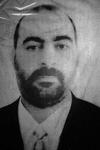
Abu_Bakr_al-Baghdadi_11.6.14Abu Bakr Al-Baghdad, ISIS chief

Under its commander, Abu Bakr Al-Baghdadi, Al Qaeda’s Islamic State in Iraq and Levant – ISIS – formed up Wednesday night, June 6, to march on Baghdad in two columns – one from Tikrit, which fell a few hours earlier, to Taji, just 20 km from the capital; the second from Tuz Khormato, 55 km south of the northern oil center of Kirkuk.

The Shiite Prime Minister Nuri al-Maliki ordered the last two divisions and six mechanized brigades, totaling 50,000, still operational out of his million-strong army, to build a defensive line to save Baghdad and the seat of Iraqi government from the enemy.

But it remains to be seen how these units perform, given the way the 3rd and 4th divisions supposed to have defended Mosul and the central Salahuddin province melted away under Al Qaeda onslaughts Tuesday and Wednesday, June 10-11.

Al-Baghdadi has assigned the second column heading for Baghdad the additional task of wrapping up Islamist control of the eastern province of Diyala on the Iranian border.

The first column will approach the capital from the north; the second from the east. Suicide bombers have meanwhile fanned ahead of the columns to smash the roadblocks and military posts set up in their path to check their advance

This week, Muslim extremists worldwide acclaimed the ISIS chief their hero.

DEBKAfile’s military and intelligence sources report that al Qaeda’s march of conquest at incredible speed, while causing havoc and misery across Iraq, is also beginning to mutate from a terrorist assault into an insurgency. It is gathering up a growing following of disaffected Sunnis ready for revolt against the Shiite-led government in Baghdad.

Sunni Muslims account for around one-third of the Iraqi population of 35 million and their numbers are therefore in the region of 12 to 14 million.

Wednesday alone, in a lightening push, ISIS fighters captured the Iraqi oil refinery and electricity power center of Biji (Baiji), 200 km southeast of Mosul, torched the court and police buildings and warned local police and soldiers not to challenge them. They next moved south to seize Hawajah and Tikrit, Saddam Hussein’s birthplace, 140 km northwest of Baghdad.

With the Mosul refinery, the Islamists now control Iraq’s northern oil refining facilities as well as the Biji power center which supplies Baghdad and Kirkuk with electricity.

Our military sources found various Sunni militias, who had never before followed al Qaeda – not during the American occupation, or even last year when al ISIS began moving fighting strength from Syria to Iraq – flocking to the ISIS campaign against Nuri al-Maliki.

Among them are not only demoralized army commanders, but adherents of  the dictator Saddam Hussein’s secular Baath Party, who have come out of retirement to join the jihad against Shiite rule.

Wednesday night, the panic-stricken Al- Maliki accused Sunni politicians and army chiefs of “betraying the Iraqi motherland.” He refused to believe that Al Qaeda had been able unaided to conquer northern and central Iraq in a two-day blitz, unless it was the fruit of a long conspiracy carried out between the Islamists and Sunni leaders behind his back. The Iraqi prime minister alleged that the Sunni plotters against the government had provided Al-Baghdadi with intelligence, funds and arms caches ready for his fighters to use.