Archive for April 2014

Off Topic: The Left must sober up

April 7, 2014

The Left must sober up, Israel Hayom, Dr. Haim Shine, April 7, 2014

[T]he naive optimists on the Left have managed to convince third parties, including the U.S. State Department, that the lack of peace is Israel’s fault. The Palestinians, they say, are the poor victims of the Zionist vision. The Left insists that only when Israel buckles under U.S. pressure will peace arrive in the region, with “every man under his vine and under his fig tree” (1 Kings 4:25).

President Barack Obama divides the world into victims and tyrants, masters and slaves, strong and weak. As a result, he has signed off on the Left’s vision. Having fully embraced the Palestinian victimhood narrative, he has repeatedly dispatched Secretary of State John Kerry to region.

. . . .

Peace talks should not be considered a sacred value. Our situation is not going to get any better if they were to be extended by nine months. The truth is simple: We must erect an ironclad wall to shield us from those who would like to have two states for one people. Of course, those two states will not include the Jewish people.


The peace talks never really took off, and now, it seems, they are all but over. Time and again, Israel offers to make major concessions in the hope of reaching a lasting peace, only to be rebuffed by a hostile and intransigent Palestinian counterpart who refuses to accept Israel’s fundamental right to exist. This Palestinian rejectionism has nothing to do with the borders of the country.

Palestinian negotiators are not going to come to terms with the State of Israel in the foreseeable future because of Islam, because of the refugees, and because of the vested interests of the various Arab states. Haj Amin al-Husseini, the grand mufti during the British Mandate, was of the belief that there was no room for both the Jews and the Arabs in the Land of Israel. He would preach this “either/or” approach everywhere he went.

As a result of this ideology, any Arab leader who would surrender even one square inch of territory would essentially sign his own death warrant. Palestinian Authority President Mahmoud Abbas is cognizant of this “land or life” paradigm. The two-state solution is good for Israel advocacy efforts, but it is unfeasible; there is simply no Arab partner to embrace it.

When will the Left realize that it has been on a fool’s errand? When will it sober up and abort its incessant efforts to make Israel relinquish parts of its historic homeland and compromise vital security assets?

Optimism is a noble virtue. But in this violent region, where martyrdom often trumps the sanctity of life, naivete and shortsightedness are dangerous traits to have. The wheels came off the peace wagon a long time ago. It has been at a standstill and covered in mud ever since.

But the Left has tried to push it forward time and again. It has failed to convince Israelis that they should embrace the path it has charted. Why? Because they know that a return to the 1967 borders would ultimately have Israel withdraw to the water’s edge.

Nevertheless, the naive optimists on the Left have managed to convince third parties, including the U.S. State Department, that the lack of peace is Israel’s fault. The Palestinians, they say, are the poor victims of the Zionist vision. The Left insists that only when Israel buckles under U.S. pressure will peace arrive in the region, with “every man under his vine and under his fig tree” (1 Kings 4:25).

President Barack Obama divides the world into victims and tyrants, masters and slaves, strong and weak. As a result, he has signed off on the Left’s vision. Having fully embraced the Palestinian victimhood narrative, he has repeatedly dispatched Secretary of State John Kerry to region.

But Kerry recently returned home empty-handed, leaving behind scorched earth. Israel hoped the renewed talks would convince Obama that the Palestinians are the victims of a bellicose ideology and spineless leadership. It hoped that Obama, after watching the two sides engage in negotiations, would sober up and realize that Israel’s insistence on a viable peace and meaningful security measures has nothing to do with the Palestinians becoming victims. And let’s not forget that the deal to relaunch the peace process last year came with a heavy moral price: Israel agreed to release a large number of deadly terrorists.

The Left’s efforts to have the collapse of the talks attributed to the Israeli government — and specifically to the housing and construction minister — only weaken Israel at the negotiating table. Those who view new housing units in greater Jerusalem as an obstacle to peace must have been burying their head in the sand.

Rather than leave the coalition, Israeli ministers have resorted to attacking their own government. But their statements, which serve as fodder for our adversaries, are just mind-boggling. When the Palestinians agreed to hold peace talks, they knew that there were no guaranteed results. So why are they complaining now?

Peace talks should not be considered a sacred value. Our situation is not going to get any better if they were to be extended by nine months. The truth is simple: We must erect an ironclad wall to shield us from those who would like to have two states for one people. Of course, those two states will not include the Jewish people.

 

US arms Syrian rebels with first heavy weapons, anti-tank BGM-71 TOW missiles – raising war stakes

April 7, 2014

US arms Syrian rebels with first heavy weapons, anti-tank BGM-71 TOW missiles – raising war stakes.

DEBKAfile Exclusive Report April 7, 2014, 8:56 AM (IDT)


BGM-71 TOW anti-tank missile

BGM-71 TOW anti-tank missile

Two Syrian rebel militias judged moderate in Washington have in the last few days taken delivery and begun using – mostly in the Idlib region – the first advanced US weapon to be deployed in more than three years of civil war, debkafile’s military sources reveal. It is the heavy anti-tank, optically-tracked, wire-guided BGM-71 TOW, which is capable of piercing 50mm thickness of Syrian tank armor and Syrian fortifications at a range of 4 kilometers. Armed with this weapon now are Brig-Gen. Abdul-Hila al Bashir, the new commander of the rebel Free Syrian Army, which is headquartered at the Golan town of Quneitra, and Jamal Maarouf, head of the rebel Syrian Revolutionary Front fighting in the north.

The appearance of this advanced missile radically alters the balance of strength on the Syrian battlefield. It also denotes a striking change in Obama administration policy, which hitherto flatly resisted every demand to provide Syrian rebel groups with the heavy arms essential for them to have any chance of standing up to Bashar Assad’s superior military strength.

Our sources report that in the last few days, the new weapons are being airlifted in through two routes: the southeastern Turkish town of Diyarbakir on the Tigris, and the giant northern Saudi King Faisal Air Base at Tabuk near the Jordanian border.

US Gen. Martin Dempsey, Chairman of the Joint Chiefs, arranged during his visit to Israel last week for the Netanyahu government to waive a standing agreement between the US, Saudi Arabia and Israel, whereby Saudi Air Force F-15 fighters are not stationed in Tabuk given its proximity to Israeli air space.

Dempsey explained that they were needed as air cover for the American transports flying the new weapons in via Saudi, and the convoys ferrying them onward from the Saudi base to their destination in southern Syria through Jordan. Stationed at the Tabuk air base too is a squadron of French fighter jets.

The route from Turkey to Syria runs through the “Kilis Corridor”, which is a narrow rebel-controlled strip 40 kilometers long from the southern Turkish town of Gaziantep up to the big Syrian town of Aleppo.

From his headquarters at Quneitra, opposite IDF positions on the Golan, Gen. al Bashir commands most of the Syrian forces fighting Bashar Assad’s army in the south.

Maarouf and his Syrian Revolutionary Front operate from a base in the southern Turkish town of Antakya.

In the last of his recent press interviews on April 2, Maarouf disclosed that some of the Front’s operations against the Syrian army were carried out in conjunction with al Qaeda’s Jabhat al Nusra.
Our military sources report that Syrian tank armor is not thick enough to withstand the BGM-71 TOW rockets. To save his tanks, Assad has shifted the brunt of his anti-rebel operation to heavy air force bombardments, which claim a heavy toll among civilians.

Washington is therefore confronted with its next decision about whether to give the rebels sophisticated anti-aircraft weapons as well.
According to our sources in Washington and Moscow, Russian Foreign Minister Sergey Lavrov obtained from US Secretary of State John Kerry a commitment, when they met in Paris last week, not to supply the rebels with hand held anti-aircraft missiles.

Israel concerned of collapse of peace process in the near future

April 6, 2014

Israel concerned of collapse of peace process in the near future, Ynet News, Attila Somfalvi, April 6, 2014

(The position of the Obama Administration is still seen as relevant. Should it be? — DM)

Israeli officials say package deal offered to Palestinians to keep them at the negotiating table is no longer relevant, add Israel is readying to return to pre-talks routine.

. . . .

“We are noticing a real coolness in the way the Americans are treating (the peace process), and it’s obvious that today’s Kerry is not the same Kerry from a few weeks ago,” one of the officials said.

[Videos at the link]

Israel is gravely concerned the peace process will collapse completely in the very near future, Israeli officials said Sunday, but noted that efforts to reach some sort of understandings that would allow continuing talks continue.

While different Israeli officials familiar with the talks expressed slightly different positions, the overall tone of their comments was pessimistic.

“The way it’s looking now, the talks as they were several weeks ago are no longer relevant. Last week’s package deal (offered to the Palestinians) is now off the table and Israel is preparing to return to routine dealings with the Palestinians as they were before the negotiations started nine months ago,” one official said.

“As far as we’re concerned, the coordination on the ground with the different security forces continues, but the peace process is no longer relevant,” he added.

Despite that, the officials stressed that Israel was still waiting to see how the United States decides to act following US President Barack Obama’s meeting with Secretary of State John Kerry.

“We are noticing a real coolness in the way the Americans are treating (the peace process), and it’s obvious that today’s Kerry is not the same Kerry from a few weeks ago,” one of the officials said.

Another official said current talks are heading in a bad direction, but said he believed another chance needs to be given to Israeli chief negotiator Tzipi Livni’s efforts.

“We have to wait a few more days. The direction is not good, but I wouldn’t rush to call it a complete collapse of the talks. A lot of efforts are being done to salvage the situation,” he said.

Israel also clarified that despite punitive measures taken against the Palestinians following their decision to join UN agencies, it will refrain from making any moves that would significantly damage the Palestinian Authority’s economy, as that would hurt Israeli interests as well.


Iran ‘plotting in the back room’ for nuke talks failure, Menendez says

April 6, 2014

Iran ‘plotting in the back room’ for nuke talks failure, Menendez says, Jerusalem Post,  Michael Wilner, April 6, 2014

(Ineffective containment, not prevention, of Iranian nukes seems to be the P5+1 goal. As with the “peace process,” the process has become more important than its results. Is President Obama ignoring, or has he rejected, Senator Menendez’ views on both Israel and Iran? — DM)

At JPost Conference in New York, chief foreign policy senator warns international community wants “any deal” on the nuclear crisis “more than a good deal”; says “we are all conservative” on Israel’s Jewish character.

. . . .

“If past is prologue, I’m skeptical of Iran keeping its promises,” Menendez (D-NJ) said. “Based on the parameters described in the Joint Plan of Action, all I have heard in briefings, and recent Iranian actions— I am very concerned.”

[Video at the link]

WASHINGTON — Senator Robert Menendez, chairman of the Senate Foreign Relations Committee, expressed deep skepticism on Sunday that world powers will be able to forge a comprehensive agreement with Iran on its nuclear program.

The New Jersey Democrat and Senate foreign policy chief placed blame for those odds squarely on an “obfuscating” Iran— and on the international community for wanting “any deal” on the nuclear crisis “more than a good deal,” he said.

“If past is prologue, I’m skeptical of Iran keeping its promises,” Menendez (D-NJ) said. “Based on the parameters described in the Joint Plan of Action, all I have heard in briefings, and recent Iranian actions— I am very concerned.”

Speaking to The Jerusalem Post Annual Conference in New York on Sunday, Menendez issued his support for US President Barack Obama’s efforts to forge a lasting nuclear agreement— what Obama has called one of the two greatest foreign policy goals of his presidency, alongside the achievement of a peace accord between Israel and the Palestinians.

But Menendez, a veteran of the upper chamber who has worked on Iran policy for decades, is also the author of the latest sanctions bill against Iran that would have triggered new financial penalties against the Islamic Republic if negotiations expired this summer without a final deal.

Obama threatened to veto that bill in January, warning that its passage might fray the international consensus at the negotiating table amongst the P5+1— the US, United Kingdom, France, China, Russia and Germany— across from Iran.

Menendez defended the bill once again on Sunday. But he stopped short of renewing his call for a swift vote in the Senate. The bill has 59 cosponsors, but is unlikely to reach the floor for debate.

“Make no mistake,” Menendez said: “While they are smiling at our negotiators across the table, they are plotting in the back room.”

His harsh words on Iran extended beyond its nuclear program: “Iran-like fundamentalist theocracies bent on turning the clock back 500 years,” he said, should be “relegated to the dustbin” of history.

Negotiations between the P5+1 and Iran resume this week in Vienna.

Menendez, a Democrat, made a broad case for “conservative” policies on Israel and on the policy priorities shared between Israel and the United States.

That conservatism, according to Menendez, extends across party lines in Washington— most definitively on the issue of Israel’s character as the Jewish homeland.

“We are all conservative when it comes to Israel’s right to exist as a Jewish state,” Menendez said. “We are all conservative when it comes to keeping the people of Israel safe and secure in their homes and within their borders.”

[Another video at the link]

Menendez last spoke extensively on Iran and the Middle East peace process at the American Israel Public Affairs Committee, where he opened for Prime Minister Benyamin Netanyahu.

The senator quoted Netanyahu’s AIPAC speech on Sunday, where the Israeli premiere said there can be ‘no fantasy of flooding Israel with refugees,” and “no movement to amputate parts of the Negev and the Galilee.'”

“Notwithstanding any hopes we may harbor, one thing is certain, set in stone: President Abbas must recognize the Jewish state as a Jewish state without equivocation,” Menendez charged, questioning whether the Palestinian Authority was a “committed partner” in the peace process.

Since taking over from John Kerry— who left his foreign relations chairmanship in the Senate to succeed Hillary Clinton as secretary of state— Menendez has put threats emanating from Syria and Iran front and center on Capitol Hill.

While Menendez holds the respect of the Obama administration, the senator is keen on proving the worth of the Senate on foreign policy, and considers the legislature an equal branch of government on affairs abroad.

Menendez underlined that message in his Sunday address. He repeatedly backed Obama’s approach to Iran, and reinforced his support for the president’s performance on Syria throughout the chemical weapons crisis that gripped the world last August. But he also took credit for the results of that policy: Bashar Assad’s signing of the Chemical Weapons Convention, and his agreeing to rid Syria of its massive stockpile of chemical arms.

“On Syria, my committee’s authorization for the use of military force last September was the reason— and the only reason, I am convinced— Assad agreed to dismantle and destroy his regime’s arsenal of chemical weapons,” Menendez said. “Our willingness to use our military power can be a force for positive change.”

Menendez spoke to a crowd of over 1,000 at the thirdJerusalem Post Annual Conference in Times Square in New York City.


Post mortem, perhaps a bit early

April 6, 2014

Post mortem, perhaps a bit early | Jerusalem Post – Blogs.

Ira Sharkansky

( Superb analysis… Don’t miss this. – JW )

John Kerry’s peace process is dying. Or it was born dead, despite having parents who praised its prospects.

 The fault is not Israel’s, nor Palestine’s, but John Kerry’s. Or maybe Barack Obama’s, due to his appointing a visionary for a job that is supposed to be serious.
Kerry’s various ideas join the collection amassed since the 1930s, resembling the jumble of the Jewish graveyard of Prague, with stones leaning one on the other and hardly room to set foot among them.
An item in the Washington Post called  the process a fool’s errand.
Israeli skeptics doubted Kerry’s chances from the beginning. Their numbers have grown. In recent days only the most die hard leftists and optimists have spoken of what Israel could do to bring about an agreement.
Given Jewish history, it should be no surprise that skepticism is part of Israel’s national culture.
Cynicism is a close cousin of skepticism, and the shallowness of Kerry and his American colleagues have provided ample reasons for disrespect, bordering on ridicule. Moshe Ya’alon is not the only Israeli to have described the US Secretary of State as messianic.
Among the faults of the Obama-Kerry team is investing a great deal of political capital in Israel-Palestine when other pressing issue seemed more capable of responding to American influence. Among them are soothing the ruffled feathers of Saudi Arabia, and getting back on track with Egypt. The Americans have also failed to lessen the carnage in Syria, or prevent continued bloodshed in Libya, Iraq, and Afghanistan. They have done little more than bluster with respect to Russia and the Ukraine, and do not seem likely to lessen the nuclear threats associated with Iran or North Korea.
Kerry has not only failed with respect to Israel and Palestine. He has made things worse.
After years of relative quiet and economic development in the West Bank, there has been an upsurge in violence. Rather than applause, Kerry and Obama will deserve condemnation for whatever Israeli and Palestinian deaths come from this.
At its heart, the failure reflects mutual distrust, derived principally from the lack of resolve among Palestinians to deal with Israel. It is not new, and has allowed a creeping spread of settlements that makes a Palestinian resolve to take what they can get even less likely.
Not too far in the background are the severe conflicts among Muslims, which–perhaps provoked by a visionary and naive American president–have erupted to new heights of casualties. What has come from Arab Spring make Israelis even more wary of helping to create another Muslim state, especially one that declares that it wants no Israeli residents.
The latest Palestinian demands do not make them more attractive. The list now includes a state with the borders of 1967, a capital in Jerusalem, no mention of giving up the rights of refugees, recognizing Israel as a Jewish state, or agreeing to end the conflict if those demands are accepted.
Abbas’ demands recall the comment of Chaim Herzog when he was Ambassador to the UN, and on the table was the resolution that Zionism is racism. Let is pass, Herzog advised at a certain point. It would be better to have something so extreme as to make it easy to ridicule and oppose.
The next step, according to what we hear from ranking Palestinians, will be accusations of war crimes.
Naftali Bennet has already announced, in response,  that he has begun to prepare a counter case against Abbas for sponsoring terror.
Initial sanctions have already been announced, against a cell phone company owned by Abbas’ son.
Israel will no longer allow the erection of antennae for the company.
How’s that for targeting the soft underbelly of Palestinian corruption, where concessions go to those well connected?
There is a lot else that Israel can do, given its control over Palestine’s borders.
Neither Kerry nor the principal Israeli or Palestinian negotiators have formally called an end to the process. Israeli commentators continue to ponder what can happen to bring them back to the table, at least till the end of the month, the end of the year, or the end of the Obama presidency. However, none see anything like an agreement that an Israeli government or Palestinian leadership would accept. The New York Times correspondent in Israel concludes that all sides have an interest in keeping the process going, even though none see it as going anywhere.
Tsipi Livni is betting her political career on yet another effort to restart the negotiations. She is demanding that the Palestinians retract their applications to join UN affiliated organizations, and accept the deal that Israel was about to offer. She criticized the Minister of Housing and Construction for announcing a new building project that triggered the Palestinians breaking off the negotiations and turning to the UN. However, that project is in the neighborhood of Gilo, which has been part of Jerusalem for nearly half a century. With Livni seeming to accept the Palestinian (and American) conception that neighborhoods of Jerusalem should be labeled “settlements,” she is not strengthening her position among other members of the Israeli government.
It is not clear if Pollard remains on the table, or if Israel would agree to release Israeli Arabs in the list of prisoners that Abbas demands.
Among the charges against John Kerry is that he failed to make clear to the Palestinians that Israel had not agreed to release Israeli Arab prisoners. The issue is important to members of the government, who see it as defining a crucial line between Palestinian aspirations and Israeli sovereignty.
Kerry has said that he remains committed to the process, but that he will consider with the President whether the United States should continue with its heavy role in the Middle East.
Kerry’s career may depend on keeping this going, and neither Israeli nor Palestinians want to offend Uncle.
The most likely prospect is that Americans and others will have to tolerate the anomaly of a stateless people. Those in the West Bank live as well or better than the average throughout the Middle East. They invest, receive investments from the Palestinian diaspora, improve their living standards and travel internationally. Those of Gaza have less reason to be happy, reflecting the greater extremism of their leadership.
Humanitarians will screech at us, but their day may have passed.
Israel is not alone as a developed country that must cope with troublesome neighbors.
Various European countries are getting tougher with illegal migrants. Australia tows them to unpleasant quarters on distant islands. The US is buffering its border with Mexico.
America’s internal problems are well known. Drugs, crime, violence, and guns for protection against all of that, with the world’s highest incidence of incarcerated people. Americans may criticize Israel for its failure to make peace with the Palestinians, but Americans have not had any better results with their own citizens.

Thomas Friedman says Sheldon Adelson is ‘Iran’s best ally’

April 6, 2014

Thomas Friedman says Sheldon Adelson is ‘Iran’s best ally’ | JPost | Israel News.

( Friedman seems intent on shedding whatever remnant of credibility he still holds. – JW )

By JPOST.COM STAFF

 04/06/2014 09:58

New York Times columnist says that by staunchly supporting the “occupation” of the West Bank, Adelson is unintentionally leading to Israel’s demise.

Thomas Friedman Sheldon Adelson

New York Times columnist Thomas Friedman (L) and US casino magnate Sheldon Adelson. Photo: REUTERS

 The recent debacle over New Jersey Gov. Chris Christie calling the West Bank the “occupied territories” at pro-Israel billionaire Sheldon Adelson’s Las Vegas conference only fuels the Palestinian cause and ensures Israel’s continued isolation, according to New York Times columnist Thomas Friedman.

The fact that Christie felt he had to apologize to Adelson in person would make Iranian Supreme Leader Khamenei very happy, Friedman says, because the more Adelson tries to control government policy on Israel, the more Israel and its powerful supporters look like the “bad guys.”

Iran would love nothing more than to watch Israel be destroyed by way of international public opinion and disdain, he says. Sheldon Adelson and his mission to financially control the US government’s official line on the West Bank is only speeding up the process, he writes.

By using his billions to sway politicians towards what he sees as protecting Israel, Adeldon is actually hurting its cause, Friedman says. Adelson is “loving Israel to death.”

“Now Iran has an ally: Sheldon Adelson — the foolhardy Las Vegas casino magnate and crude right-wing, pro-Israel extremist,” he wrote. “Adelson personifies everything that is poisoning our democracy and Israel’s today — swaggering oligarchs, using huge sums of money to try to bend each system to their will.”

Last week, Christie apologized to Adelson, a key donor to Republican presidential candidates, for using the term “occupied territories” during a speech to Jewish Republicans.

The controversy erupted when Christie recalled a 2012 trip to Israel in remarks before the assembled crowd at the Republican Jewish Coalition event.

“I took a helicopter ride from the occupied territories across and just felt personally how extraordinary that was to understand, the military risk that Israel faces every day,” the Republican governor, who is believed to be eyeing a run to the White House in 2016, was quoted as saying by Politico.

Christie’s use of the term “occupied territories” raised eyebrows among the assembled donors.

After the event, Christie met privately with Adelson and offered an explanation and apology, which were accepted.

The New Jersey governor “clarified in the strongest terms possible that his remarks today were not meant to be a statement of policy,” a source told Politico.

Adelson, a confidante of Prime Minister Binyamin Netanyahu and the owner of the popular freebie newspaper Israel Hayom, is one of the most powerful figures in American politics by virtue of the massive donations he doles out to Republican candidates. His hawkish positions on Middle East issues, and Israel in particular, have been articulated in the past.

Options for Mid East talks: Carrying on, interim deal, or a turn to the Saudi-UAE-Egyptian bloc

April 5, 2014

Options for Mid East talks: Carrying on, interim deal, or a turn to the Saudi-UAE-Egyptian bloc, DEBKAfile, April 5, 2014

US Secretary of State John Kerry’s hard work as would-be peacemaker was not just thrown back in his face but drew criticism at home from his colleagues in the White House and State Department. He tried Thursday to speak to both Israeli and Palestinian leaders in what was described as a desperate bid to bring the two sides back to the negotiating table.

The US Secretary rebuked both the two leaders equally for engaging in “tit-for-tat” tactics, but he knew exactly which side had caused the rupture. Kerry must by now realize that Abu Mazen’s history of withdrawing from any fruitful dialogue for peace made this outcome inevitable. Had he gone for interim accords, which he never considered, rather than final solutions, he might have bought a few years’ lull in the dispute, although this too would have come apart over the same Palestinian dynamic.

Sheikh_Mohamed_bin_Zayed_Al_Nahyan_4.14UAE Crown Prince Gen. Sheikh Al Nahyan

Palestinian leader Mahmoud Abbas, nearing 80, has proved time and again in the last two decades that he will never put pen to paper on an accord for ending the dispute with Israel. If he really wanted an independent Palestinian state, he could at any time have followed the path to self-determination chosen by David Ben Gurion, when he declared Israeli statehood on May 14, 1948 in Tel Aviv. Had Abbas (known mostly as Abu Mazen) formally convened an assembly of Palestinian community and institutional leaders at the Palestinian parliament building in Ramallah and proclaimed statehood, there would have been very little Israel could have done.

But that is not his way and never has been, because for him Palestinian independence is no more than an abstract slogan which must never come to earth.

In 1995, Abbas and the dovish Israeli politician Yossie Bailin jointly drafted a document, which later carried their names, offering  a formula for resolving the Palestinian-Israeli dispute – except that he never signed it. He couldn’t bring himself to this commitment, because it conflicted with his fundamental principles and put his political survival at risk.

Today, too, the rise of a Palestinian state would end Abbas’s career as Palestinian leader. He holds sway over the six West Bank towns which passed to Palestinian Authority control without a legal mandate. The last Palestinian elections in 2006 gave his Fatah party only 48 seats compared with 76 netted by the rival Hamas.

Israel, the United States and Europe therefore respect as their legitimate Palestinian partner for peace negotiations a figure who is unelected and whose rule is buttressed by seven Palestinian security battalions, which America and Europe agreed to bankroll to the tune of $2 billion, after the cutoff of Arab aid. Another three battalions are due to be added to the force.

So Abu Mazen keeps up the masquerade of striving for Palestinian independence and staying in the talking shop for two purposes: It keeps him in power by dint of international recognition, and donations continue to roll in to feed his corrupt regime and cover the payroll of his security force.

Not much is left to trickle down to the ordinary Palestinian family.

To buy a small measure of street credibility, Abbas must show the people that he is the only leader able to force Israel to release Palestinians from long prison sentences. He achieves this by making this his price for not walking away from the table
So long as the money flows in and Palestinians are sprung from Israeli jails, no voices are raised in circles that count in Ramallah against the corrupt practices eating away at the regime.

Abbas therefore ranted and raved when Israel’s cancelled the fourth batch of 26 Palestinian prisoners due to be released March 30, to punish him for sending applications to 15 UN agencies and conventions for membership to bypass the negotiations. Israel also hit back at Abbas with a threat of sanctions – some directed against his personal business interests.

US Secretary of State John Kerry’s hard work as would-be peacemaker was not just thrown back in his face but drew criticism at home from his colleagues in the White House and State Department. He tried Thursday to speak to both Israeli and Palestinian leaders in what was described as a desperate bid to bring the two sides back to the negotiating table.

The US Secretary rebuked both the two leaders equally for engaging in “tit-for-tat” tactics, but he knew exactly which side had caused the rupture. Kerry must by now realize that Abu Mazen’s history of withdrawing from any fruitful dialogue for peace made this outcome inevitable. Had he gone for interim accords, which he never considered, rather than final solutions, he might have bought a few years’ lull in the dispute, although this too would have come apart over the same Palestinian dynamic.

In the past, Abu Mazen had to contend with only one effective dissenting voice. It came from his bitter rival, Mohammed Dahlan, who ended up quitting his comfortable berth on Palestinian Authority and Fatah councils in Ramallah and going into exile. There, too, he landed on his feet.

Some 30 years younger that Abbas, Dahlan has been a persona non grata for Israel as former Gaza strongman and innovative terrorist.

He is problematic on at least three more counts:

1. Seven years ago, he extracted from the US government a huge sum – estimated at $1 billion – for promising to rid the Gaza Strip of Hamas rule. He never delivered and refused to refund the money.

That is one US count against him. In addition, he has thrown in his lot with Saudi Arabia and the United Arab Emirates and their offensive against Obama administration Middle East policies.

2.  Because of his unbridled criticism of Mahmoud Abbas and calls for his removal, Dahlan is on the run from his enemies who have sworn to destroy him.

3.  Dahlan has managed to win the sympathy and patronage of powerful Gulf rulers. With their help, he established himself three months ago in Cairo within the Egyptian strongman Abdel-Fatteh El-Sisi’s inner circle of advisers on the Palestinian question. This explains why Abbas gives Cairo a wide berth.

The Palestinian renegade gained this position through the influence of UAE Crown Prince Mohammed Bin Zayed Bin Sultan Al Nahyan, who is one of El-Sisi’s most generous bankers and who stands at the forefront of the Saudi-UAE life-and-death campaign against the Muslim Brotherhood.
The talk of Ramallah this week was not the breakdown of talks, which surprised no one there, but interest in the way the

Palestinian fate could be profitably drawn into the Saudi-UAE-Egyptian war on the Muslim Brotherhood and its offspring Hamas – away from the American ken.

Abbas’s rival Dahlan is shaping up as facilitator.

This trend appears to have been picked by some Israeli government and intelligence circles, judging by a comment heard from Foreign Minister Avigdor Lieberman Wednesday, April 2, during an office party on Passover Eve. He remarked that the ball is now in the Palestinian court. “Irrespective of the negotiations, Israel has found an attractive political horizon in such places as the Arab oil emirates and Saudi Arabia,” he said, adding: “If Abu Mazen is willing to follow us in that direction, fine. If not, we don’t need him.”

This comment suggested that Israel has thoughts of linking up with the emerging Saudi-Egyptian-UAR bloc and bringing the Palestinian issue on board.  Whether or not these thoughts crystallize into hard policy, they hint at an alternative Israeli approach to the Palestinian question.

Bitter Livni slams housing minister for ‘torpedoing’ peace efforts

April 5, 2014

Bitter Livni slams housing minister for ‘torpedoing’ peace efforts, Times of Israel, April 5, 2014

Israel’s chief negotiator also hints US is over-involved, doesn’t endorse Abbas as partner, can’t promise current crisis will be overcome

Livini

Justice Minister Tzipi Livni (photo credit: Miriam Alster/Flash90)

Israel’s chief peace negotiator on Saturday accused one of her ministerial colleagues of deliberately working to “torpedo” her peace efforts with the Palestinians, and intimated that the United States was over-involved in the process, when more time needed to be spent in direct Israeli-Palestinian contacts.

She also slammed Palestinian Authority President Mahmoud Abbas for breaching their agreed negotiating framework, and sounded far from confident that the ruptured talks could be rescued.

Looking weary and at times angry in a Channel 2 interview, Livni said Housing and Construction Minister Uri Ariel had “deliberately” reissued housing tenders for 708 new homes in east Jerusalem’s Gilo neighborhood, at a highly sensitive moment in the peace efforts last Tuesday, “in order to torpedo what I am doing along with the prime minister” to try to advance peacemaking.

Ariel, from the Orthodox-nationalist Jewish Home party, “must be reined in,” she said.

While she indicated that she placed overwhelming blame on the PA for the current crisis in the talks, Livni said that “announcements of settlement building will always mean blame is placed on us” for the failure to achieve peace. “The whole world will blame us.”

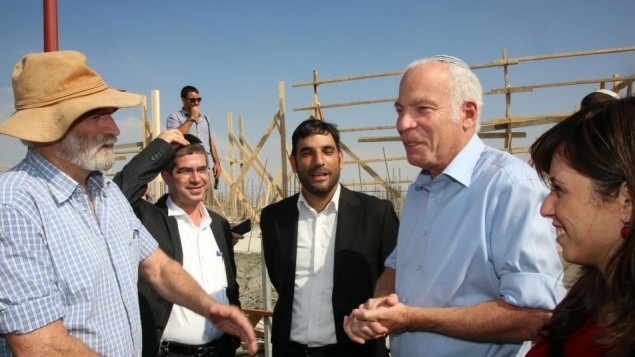
Uri-Ariel-e1376415154286-635x357Housing Minister Uri Ariel (second from right) and Deputy Transportation Minister Tzipi Hotovely (right) during visit to the settlement of Kochav Yaakov in August 2013 (photo credit: Sasson Tiram/ Ministry of Housing and Construction)

Livni, the justice minister from the center-left Hatnua Party, confirmed that she would be meeting her Palestinian counterpart Saeb Erekat on Sunday to try to revive the talks, and said she’d had “a very difficult” meeting with him, long into Thursday night, mediated by US special envoy Martin Indyk. The trio also met for hours, unproductively, on Wednesday night.

She said she was “angry” that Abbas had “lost patience” after Israel delayed releasing a fourth and final group of longterm Palestinian terror convicts last weekend, and said he had “breached” their understandings by applying to join 15 UN and other international treaties. “We can’t just smile and move on,” she said.

Asked repeatedly whether she had a formula for reviving the talks, Livni offered no specifics, but said she was “in the midst of the struggle… It’s complex… We have to try to find a way forward, while protecting Israel’s interests.”

Long one of the most optimistic Israeli leaders as regards the prospects for progress with the Palestinians, Livni on Saturday sounded deeply downbeat. In answer to a repeated question, she did not endorse Abbas as a viable partner for a two-state solution, saying, “He’ll have to prove it… The test is still ahead of us.”

And she did not offer a single example of progress made over the past eight months of negotiating, regretting that too much of the time had been spent in Israeli-American and Palestinian-American talks, rather than in direct Israeli-Palestinian negotiations. More bilateral Israeli-Palestinian contacts were needed, she said, including direct talks between Prime Minister Benjamin Netanyahu and Abbas.

“We worked hard with the United States” on the “framework” accord that Secretary of State John Kerry had tried, and thus far failed, to attain to govern ongoing negotiations. Kerry was “unbelievable,” she said. “There is no limit to the effort he makes.”

Livni made clear that she would not be bolting the coalition over the collapse of peace talks. Indeed, she praised Netanyahu for having taken “very complicated decisions,” including over releasing terrorist convicts and constraining settlement expansion.

Livni said it had been clear from the start that Israel would not free Israeli-Arabs, as demanded by the PA, in the canceled fourth group of prisoner releases, except in the context of a wider “package” — a reference to the deal that had been taking shape for the US to free American-Israeli spy Jonathan Pollard, Israel to release more prisoners and restrict settlement building, and the Palestinians to commit to extended negotiations and no unilateral moves toward statehood. That package deal, which had been taking shape Tuesday, fell apart after Abbas signed the treaty applications. “The Palestinians decided not to wait any longer,” Livni said bitterly.

Boeing licensed to sell spare aircraft parts to Iran

April 5, 2014

Boeing licensed to sell spare aircraft parts to Iran – Middle East Israel News | Haaretz.

Iran Air is still flying passenger planes bought before the 1979 hostage crisis, in which 52 Americans were held hostage.

By | Apr. 5, 2014 | 1:24 PMIran Air

An Iran Air plane lands at Tehran Airport. Photo by Wikimedia Commons

Plane manufacturer Boeing has received a license to export spare parts for commercial aircraft to Iran, according to the BBC.

Boeing has had no public dealings with Tehran since 1979.

The license is seen as part of a temporary agreement to ease sanctions on Tehran following the nuclear framework agreement between Iran and six global powers reached last November.

Boeing said in a statement that the license had been granted out of concern for the safety of flight.

On Friday, General Electric announced it had received United States permission to overhaul 18 engines sold to Iran in the late 1970s. The work will be carried out at GE facilities or at German firm MTU Aero Engines, it said.

Iran Air is still flying passenger planes bought before the 1979 hostage crisis, during which 52 Americans were held hostage in Tehran for 444 days.

Iran has reportedly argued that sanctions imposed after the hostage ordeal have prevented Tehran from upgrading its plane fleet and reduced the safety of its aircraft.

There have been more than 200 accidents involving Iranian planes in the past 25 years, leading to more than 2,000 deaths, according to media reports.

Boeing said the license covers only components required to ensure ongoing safe flight operations of planes it sold before Iran’s revolution in 1979.

60 – YouTube

April 5, 2014

60 – YouTube.

10006967_10203972369656119_482588036_n

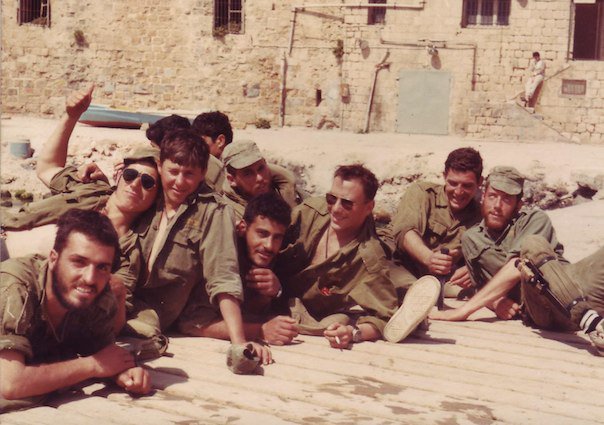
Eleven of my fellow candidates for officer in the IDF Navy ( קורס חובלים ) came down to Eilat from the north to celebrate my 60th.

I don’t think I’ve ever been more moved.

As such, please forgive the semi inebriated quality of my running commentary..

I had good reason to drink.

 *   *   *

This is what they had to say to me on my birthday.  It was read out to the table after dinner.

 This is my best translation of the original Hebrew, below.

Valued Joe

It’s only yesterday you were 26 and we were 18. Eight years older than us

– but absolutly not the “responible mature.” Instead you held fast to the

spirit of youth and cheer. You painted our drab olive green and our salty

stains with authentic “Beach Boys” color – Especially when we saw you in

that blue Lancia Spyder convertibe when we hitchhiked to get home.

You were already by then a pilot, a lawyer, the son of a famous novelist –

Still, you chose to be one of us and not some spoiled American.

You embraced the Zionist ideal with the IDF as a central element of it.

This brought you to complete your combat service in the Navy followed by a

long reserve service as a fighter on the line.

Even my mother said you looked like a movie star, so it was no surprise

when you married the most beautiful woman in the Navy at the time.

But in Hollywood, like in Hollywood, people get divorced.

You chose to return to your roots – to Eilat – The place you so loved to

serve in the Navy as well as to live.

Because of this and because (as one of our drill instructers once told us)

“This is already for your whole life,” so we find ourselves celebrating

with you your 60th birthday – The family of the 45th class of officers.

Of course, as always, we’re stll 8 years younger than you… But in your

approach to life you are younger than us by at least 8 years.

Continue with your youthful spirit, lively and curious.

Continue to bombard the Internet with interesting articles.

You’re halfway there!

To 120…..

______________________

ג’ו היקר
הנה רק אתמול היית בן 26 ואנחנו בני 18.
גדול מאתנו ב 8 שנים – אבל ממש לא ה”מבוגר האחראי” אלא שמרת על
רוח צעירה ועליזה וצבעת את הירוק זית שלנו ואת הכתמים של המלח
בצבעים אוטנטיים של הביץ בויס – בטח כשראינו אותך בלאנצ’יה ספיידר
ספורט הכחולה עם הגג הנפתח בזמן שאנחנו נסענו בטרמפים הביתה.
כבר אז היית טייס , עורך דין , בן של סופר מפורסם אך אהבת להיות אחד
מהחֶבְרֶה ולא איזה אמריקאי מפונק. התחברת לרעיון הציוני שצה”ל הוא
בוודאי חלק ממנו ובזכות זה סיימת שרות קרבי בחיל הים ואף שירתת
תקופה ארוכה במילואים כלוחם מהשורה.
אפילו אמא שלי אמרה לי שהיית יפה כמו שחקן קולנוע ולכן זה לא מפתיע
שהתחתנת עם החיילת הכי יפה בחיל הים שהייתה אז – אבל בהוליווד כמו
בהוליווד – גם מתגרשים..
אבל בחרת לחזור למקורות –
לאילת – שכל כך אהבת לשרת ולחיות בה.
ומאחר וכמו שאמר לנו פעם איזה מדריך אחד – מחזור מ”ה – זה כבר לכל
החיים. אז הנה אנחנו חוגגים יחד אתך יומולדת 60 –משפחת מחזור מ”ה.
אמנם כרגיל אנחנו עדיין צעירים ממך בגיל ב 8 שנים.. אבל במנטליות אתה
צעיר מאתנו לפחות ב 8 שנים ..בטח ממני.
תמשיך לשמור על רוח צעירה , תוססת וסקרנית.
תמשיך להפגיז את האינטרנט בכתבות מעניינות.
הגעת לחצי הדרך…עד 120…..
_______________

Us.    Then…

chovlim-resting'