Archive for April 13, 2014

Washington takes time out from Israeli-Palestinian talks, Netanyahu and Livni upbeat about deal

April 13, 2014

Washington takes time out from Israeli-Palestinian talks, Netanyahu and Livni upbeat about deal, DEBKAfile, April 13, 2014
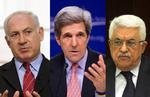
Abbas-Netanyahu-Kerry_13.4.14

President Barack Obama and Secretary of State John Kerry, after several days of evaluating the chances of re-igniting Israel-Palestinian peace negotiations, have decided to distance themselves for the time being from the process until the two leaders, Prime Minister Binyamin Netanyahu and Palestinian Authority Chairman Mahmoud Abbas, find their own way back to the table.

This is reported exclusively by DEBKAfile’s sources.

Kerry describes the US approach for now as “a light touch,” while counting on Netanyahu and chief negotiator Justice Minister Tzipi Livni to bring Abbas around.

The administration’s offer is still standing to free the long-serving Israeli spy Jonathan Pollard in the interests of facilitating a deal for Israel to release Palestinian prisoners jailed for terrorism.

The US was cheered by Abbas’s approach to the Israeli prime minister’s office Sunday, April 13, to say he is willing to resume negotiations, and the new proposal our sources report that Livni will put before the Palestinians when the two teams meet Sunday night.

Israel now agrees to release 420 imprisoned terrorists. It will also accept the inclusion of the contested 14 Israeli Arabs, contingent on their deportation from the country. They will also be stripped of their citizenship.

Abbas has rejected this stipulation. But Netanyahu and Livni insist that the Palestinian leader has no standing in the way Israel treats its nationals or any right to interfere in its conditions for citizenship.

As for the sanctions imposed on the Palestinians for applying to 15 UN agencies for membership, Israel will agree to suspend the freeze on the transfer of $115 million per month of tax deductions, but also demand that the Palestinians suspend seven of those applications and guarantee to halt all unilateral moves for gaining international recognition.

Informed sources in Washington and Jerusalem are not yet ready to dismiss the speculation heard this week in Jerusalem of a looming government crisis and early election, sparked by the Economy Minister Naftali Bennett’s threat to take his pro-settlement Bayit Yehudi (Jewish Home) party out of the government if Israeli Arab terrorists are released.

Netanyahu sees no reason for a government break-up, nor does he seek an early election. Finance Minister Yair Lapid would certainly not wish his Future party to face the voter without an upturn in his falling rating, any more than Livni, whose tiny party’s fate depends on her success as a peace negotiator.

Both the Likud and Jewish Home are gaining support according to updated opinion polls and have less to fear from an early poll..Foreign Minister Avigdor Lieberman said in New York last week that he would rather see an early election than accept the US framework deal for a deal with the Palestinians.

But that may just be bravado. In the last election, his party ran on a joint list with the prime minister’s Likud. Next time, his party faces the voter on its own and that could be a gamble.

Moshe Kachlon, the popular former communications minister who quit the government – though not Likud – after falling out with the prime minister, may move to the front line as a dark horse if the government does fall. He is already much in demand in various insider political circles.
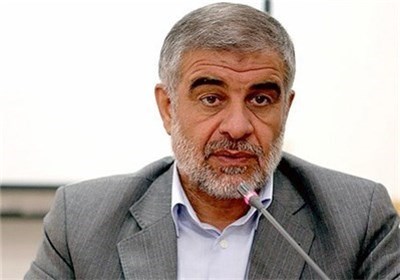
Iranian MP Calls for Relocation of Int’l Bodies from US Soil

April 13, 2014

Iranian MP Calls for Relocation of Int’l Bodies from US Soil, Tasnim News Agency, April 13, 2014

(His proposal should find ample support from conservatives in the United States. How about moving the U.N to Havana, Cuba, Caracas, Venezuela or any other happy place where the peasants are expected to behave as their masters direct? The U.N. Commission on Human Rights should feel insanely comfortable there. — DM)

Senior Iranian leader

TEHRAN (Tasnim) – A senior Iranian legislator on Sunday said the world community should reconsider establishing international organization on the US soil.

Referring to the US government’s decision to bar Hamid Abutalebi, Iran’s newly-appointed ambassador to the United Nations, from entering the US, Mohammad Saleh Jokar, member of Iranian parliament’s National Security and Foreign Policy Commission, told the Tasnim News Agency that given Washington’s “entirely irrational decision”, it is necessary that the world community consider to relocate the headquarters of world bodies and international organizations from the US.

On Tuesday, after the US Senate voted to bar Hamid Abutalebi and the White House said Abutalebi will not be welcomed in the US, and described his nomination as “not viable”. The House of Representatives unanimously passed the same legislation on Thursday.

Jokar said the legislation passed by the US Congress was against the spirit of international laws and showed (the Americans’) disregard for the approvals of international bodies.

He also underlined that the UN secretary general must take a decisive stance against this US move and condemned it if he is truthful and impartial and is not under the influence of certain governments.

According to reports, Washington has decided to deny a visa to Abutalebi over his possible involvement in the takeover of the US embassy in Tehran during post-revolution incidents in 1979.

On November 4, 1979, and in less than a year after the victory of the Islamic Revolution that toppled a US-backed monarchy, Iranian university students that called themselves “students following the line of (the late) Imam (Khomeini)” seized the US embassy in Tehran.

The students justified the takeover by insisting that the compound had become a center of espionage and planning to overthrow the newly established Islamic system in Iran.

The students occupying the embassy later published documents proving that the compound was indeed engaged in plans and measures to overthrow the Islamic system.

Report: Iran says entitled to enrich uranium at 90% weapons-grade level

April 13, 2014

Report: Iran says entitled to enrich uranium at 90% weapons-grade level | JPost | Israel News.

By JPOST.COM STAFF, REUTERS

 04/13/2014 19:18

Iranian nuclear energy chief announces his country is planning to build 4 new nuclear plants with Russian help.

Ali Akbar Salehi.

Ali Akbar Salehi. Photo: REUTERS/Muhammad Hamed

 Iran’s atomic energy chief said on Sunday that the Islamic Republic was entitled to enrich uranium to the weapons-grade level of 90%, and announced that Tehran was planning to construct four new nuclear plants with the help of Russia.

While Ali Akbar Salehi, the head of the Atomic Energy Organization of Iran (AEOI), refrained from saying his country would implement plans to enrich uranium at the level needed to yield nuclear weapons material, he said Iran had the “right” to.

“Firstly, we believe that we are entitled to any right that any NPT (Non-Proliferation Treaty) and (International Atomic Energy) Agency member has, which means that enrichment (of uranium) from 1% to 90% is our right,” Iran’s semi-official Fars news agency quoted him as saying.

However, Salehi said Iran had agreed to limit its enrichment activities to the 5% level, under the terms of an interim deal reached between Tehran and the P5+1 world powers in November.

Salehi also said his country planned to build four new nuclear power plants in the coming years to accompany Iran’s sole nuclear power plant Bushehr. He said construction of what would be Iran’s second nuclear site was due to begin in the coming Iranian-calendar year. He added that construction of the next three plants would continue every other year following alongside Russian experts.

Iranian officials have previously stated that plans to build more nuclear reactors were underway.

On Wednesday, Iran and world power concluded two days of negotiations in Vienna.

Despite remaining gaps between the West and the Islamic Republic, the so-called P5+1 powers – the US, UK, France, Germany, Russia and China – were prepared to draft a comprehensive agreement on Iran’s expanisve nuclear program.

The stakes in a deal are high on both sides. Western powers, along with Russia and China, want to avert an escalation of tensions in the Middle East in the form of a new war or a regional nuclear arms race. Iran, for its part, is keen to be rid of international sanctions hobbling its oil-based economy.

Iran: 30,000 new centrifuges needed for fuel

April 13, 2014

Iran: 30,000 new centrifuges needed for fuel | The Times of Israel.

Nuclear chief Ali Akbar Salehi says program intended to meet domestic energy needs

April 13, 2014, 7:59 pm

Illustrative photo of centrifuges enriching uranium (photo credit: US Department of Energy/Wikimedia Commons)

Illustrative photo of centrifuges enriching uranium (photo credit: US Department of Energy/Wikimedia Commons)

TEHRAN — Iran will need 30,000 of its new generation centrifuges to meet domestic fuel demands, far more than the current number, its nuclear chief said Sunday.

Ali Akbar Salehi’s comments came just days after the latest round of international talks in Vienna aimed at securing a long-term deal over Iran’s disputed nuclear program.

The capability and number of centrifuges at Tehran’s disposal has been a key concern among countries which suspect the Islamic republic’s eventual goal is to build an atomic bomb.

Iran currently has nearly 19,000 centrifuges, including 10,000 of the so-called first generation being used to enrich uranium.

The country insists its nuclear activities are solely for civilian purposes.

“If we want to use the Natanz enrichment facility to produce the annual fuel of Bushehr nuclear power plant, we need to build 30,000 new centrifuges,” Salehi was quoted by the Fars news agency as saying.

Under an interim agreement reached last year that expires on July 20, Iran froze key parts of its nuclear program in return for limited sanctions relief and a promise of no new sanctions.

Under the deal, Iran cannot increase its number of centrifuges, but in February it announced it was developing new ones that are 15 times more powerful than those currently used.

Any final deal with the West may involve Iran slashing its number of centrifuges, changing the design of a new reactor at Arak and giving UN inspectors more oversight.

The Bushehr plant, which produces 1,000 megawatts of electricity, came into service in 2011 after several delays blamed on technical problems. Tehran took control of the plant from Russia last year.

In October, Salehi said Iran had built a fuel production line for its sole nuclear power plant which would go on stream within three months.

However, he did not specify a date after which Iran could use locally produced fuel instead of that provided by Russia.

Iran has said it wants to produce 20,000 megawatts of electricity from nuclear power, which would require building 20 reactors.

US: Row over Iran ambassador won’t harm nuke talks

April 13, 2014

US: Row over Iran ambassador won’t harm nuke talks | The Times of Israel.

( Natch… Whats one got to do with the other?  Right…? – JW )

Tehran’s UN envoy faces possible ban from entering New York over his part in the 1979 takeover of the US embassy

April 13, 2014, 8:03 pm

Iran's newly appointed UN ambassador Hamid Aboutalebi (screen capture: YouTube)

Iran’s newly appointed UN ambassador Hamid Aboutalebi (screen capture: YouTube)

WASHINGTON — The United States’ ambassador to the United Nations says talks about Iran’s nuclear program are continuing undisturbed by Washington’s decision to block Tehran’s ambassador to the diplomatic body.

US Ambassador Samantha Power on Sunday told ABC’s “This Week” that Iran’s selection of Hamid Aboutalebi (ah-boo-TAH’-leh-bee) to be its United Nations envoy is not acceptable. She says Tehran should pick someone else.

President Barack Obama’s administration had previously said only that it opposed the nomination of Hamid Aboutalebi, who was a member of the group responsible for the 1979 takeover of the US Embassy in Tehran as a revolution erupted in Iran. US officials had hoped the issue could be resolved by Tehran simply withdrawing the nomination.

“We’ve communicated with the Iranians at a number of levels and made clear our position on this — and that includes our position that the selection was not viable,” White House spokesman Jay Carney said last week. “Our position is that we will not be issuing him a visa.”

Iran has rejected that suggestion following Washington’s refusal to give Aboutalebi a visa to enter the United States.

Aboutalebi was a member of the group responsible for the 1979 takeover of the US embassy in Tehran that held 52 Americans hostage for 444 days. His nomination has outraged members of Congress, who passed a bill barring entry to the US to an individual found to be engaged in espionage, terrorism or a threat to national security. Aboutalebi has insisted his involvement in the Muslim Students Following the Imam’s Line was limited to translation and negotiation.

Iran has called US rejection of Aboutalebi “not acceptable,” with Iranian state television quoting Foreign Ministry spokeswoman Marzieh Afkham as saying Aboutalebi is one of the country’s best diplomats and arguing that he previously received a US visa.

Iranian officials said they had submitted a visa application for Aboutalebi, but it was unclear whether the US actually denied the request or simply decided not to act on it. State Department spokeswoman Jennifer Psaki has said the administration was prohibited from discussing the matter in detail because visa cases are confidential.

In past problematic visa cases for ambassadors and even heads of state — such as with a previous Iranian nominee in the early 1990s and more recently with Sudanese President Omar el-Bashir — the US has either signaled opposition to the applicant and the request has been withdrawn, or the State Department has simply declined to process the application. Those options, as well as approving or denying the application, are available in the current case.

US immigration law allows broad rejection of visas to foreigners and, in many cases, authorities do not have to give an explicit reason why other than to deem the applicant a threat to national security or American policy.

The law bars foreigners whose entry or activity in the US would “have potentially serious adverse foreign policy consequences for the United States.”

Copyright 2014 The Associated Press.

Off Topic: Israeli Hackers Expose ‘Amateur’ Anonymous Hackers

April 13, 2014

Israeli Hackers Expose ‘Amateur’ Anonymous Hackers – Technology, Science, Health – News – Israel National News.

‘Israel Elite Force’ takes the fight to anti-Israel hackers behind #OpIsrael attack – using their own webcams to expose them.

By Ari Soffer

First Publish: 4/13/2014, 12:08 PM

Busted: One of the hackers behind #OpIsrael

Busted: One of the hackers behind #OpIsrael

Courtesy

Israeli hackers have gone on the offensive against their anti-Israel opponents in revenge for the #OpIsrael hacking attack against Israeli sites and servers.

After the failed “operation” by members of the “Anonymous” hacker network, Israeli hackers from Israel Elite Force took the fight to them – robbing them of their anonymity by posting details and even photos of some of the hackers on their website.

The hacker behind the counterattack, an Israeli known as “Buddhax”, said that he did it to make anti-Israel hackers “think twice” before attacking Israeli sites, and to expose them as amateurs.

Israeli hackers had already responded to attempts last week to infiltrate Israeli and Jewish sites by taking down or defacing anti-Zionist and Muslim sites.

But Buddhax has gone a step further.

After infiltrating the target computers via a Trojan horse, he managed to lure the hapless hackers to their computers and take pictures of them using their own webcams – which he promptly posted online together with a list of personal information and a direct message to his targets: “Next time don’t take part in OpIsrael. Long live Israel.”

“I’m not a great hacker, but I’m at least good enough to expose you,” he wrote, and signed off with a message for anti-Israel hackers:

“Israel will stay ISRAEL so forget about “Palestine”. Long Live Israel.”

Lior Pollack, CTO of information security at 2BSecure, told Geektime that the “exposure carried out by a team of hackers shows that the level of sophistication is very high as shown by the use of advanced tools to reach PC attackers to obtain information, photographs from their cameras through a Trojan horse.

“It’s not easy, they had to lure the attackers to press all kinds of links to get the Trojan horse in… there is a challenge even in recognizing which tools used can be accessed. Their methods suggests they are much more sophisticated and experienced than those attacking from OpIsrael, who are basically just kids who do basic things.”

The exposed anti-Israel hackers hailed from a variety of countries in Europe, the Middle East and Asia, most prominently from Indonesia and Malaysia.

Off Topic: American academia bites the dust: Brandeis University’s historic mistake

April 13, 2014

American academia bites the dust: Brandeis University’s historic mistake | JPost | Israel News.

By PHYLLIS CHESLER

04/12/2014 23:59

Ayaan Hirsi Ali has just been dishonored by Brandeis University, which withdrew its offer of a Distinguished Professorship because the Muslim Brotherhood in America mounted a successful campaign against the award.

hirsi ali brandeis

Ayaan Hirsi Ali Photo: REUTERS

By now, we all know that Brandeis University was about to bestow an honor on the elegant and distinguished author and activist Ayaan Hirsi Ali, best known for her critique of Islam, her decision to leave Islam, and her championship of Muslim women’s rights.

One might understand why an apostate intellectual might be in danger in Somalia, the country of her birth, or in Saudi Arabia, where she once lived.

However, she has just been dishonored by Brandeis University, which withdrew its offer of a Distinguished Professorship because the Muslim Brotherhood in America, known to us as the Council on American-Islamic Relations (CAIR), and its national student group, the Muslim Students Association, which is also allied with the Islamic Society of North America (ISNA), mounted a successful campaign against the award.

Both CAIR and ISNA are unindicted co-conspirators in the Holy Land Foundation terrorist financing case.

CAIR provided the Muslim Student Association (MSU) at Brandeis with outdated, out-of-context and highly inflammatory quotes from Hirsi Ali. They did not provide her thought-provoking, stirring, moving passages of which there are many.

Brandeis simply caved to the lynch mob.

This is a terrible moment for academic freedom and critical inquiry on the American campus.

Yale University drove the first nail into the coffin of academic freedom, freedom of thought, and critical inquiry, when Yale’s University Press refused to publish the Danish “Mohammed” cartoons to accompany Jytte Klausen’s 2009 book on the subject: The Cartoons That Shook The World.

Yale drove a second nail into that coffin when it ousted Dr.

Charles Small, who dared to focus on contemporary anti-Semitism, not merely on safely dead Jews. Dr. Small’s major international conference on this subject in 2010 had over 100 speakers and 600 in attendance.

The conference did not demonize the Jewish or American states and it did look at Jew-hatred and the persecution of Christians in Islamic countries today. However, official Palestinians and student Palestinians insisted this was an “Islamophobic” conference. A campaign was mounted and Yale administrators and professors dismissed Dr. Small’s Institute for the Study of Global Antisemitism, although it was independently funded.

Brandeis University, the “Jewish” university, (in terms of liberal values), has driven the third nail into the coffin of academic freedom and intellectual diversity, when it bowed to student and faculty pressure and rescinded its offer to Hirsi Ali.

I am outraged, saddened and frightened all at the same time. I have sentimental ties to Brandeis and I am suffering from its betrayal of its own stellar values.

I understand that perfectly peaceful Muslim students at Brandeis may not wish to be associated with the hate propaganda and terrorist atrocities being committed in Islam’s name. They should be standing outside the mosque that indoctrinated the Boston bomber with signs reading “Not in my Name,” and listing the gender and religious apartheid that characterize Islam today, and the Muslim-on-Muslim and Muslim-on-infidel violence being committed in the name of a religion that is dear to them.

They should be holding teachins at mosques and within Muslim communities about human rights in Islam and wrestling with the question of whether radical Islam is compatible with modern Western values.

Hirsi Ali is a consummate intellectual. Students should hear what she has to say.

Instead, Brandeis and the Muslim Student Association have taken a Sharia-like position about apostates and the anti-Islamist position she has adopted.

The Brandeis MSA student Facebook page is filled with an attitude of offended Islamist supremacism and rage over alleged “Islamophobia.”

Ironically, none other than Brandeis Professor Jytte Klausen, the author of The Cartoons That Shook the World, published her views in the Brandeis student newspaper The Justice. In her (Stockholm-syndrome?) view, giving Hirsi Ali a degree “undermines years of careful work to show that Brandeis University promotes the ideals of shared learning, religious toleration and coexistence, irrespective of religion.”

Klausen was joined by Brandeis Professors Mary Baine Campbell and Susan Lanser of the English Department. Campbell told Justice that “Hirsi Ali represents values that Brandeis, in naming itself after Justice [Louis] Brandeis … was founded in noble opposition to.” Professor Lanser said that Hirsi Ali’s (outspoken views on Islam) foment an intolerance that is wholly antithetical to Brandeisian values.”

Women’s and Gender Studies Professor Mitra Shavarini told Justice that offering this award to Hirsi Ali is not in line with the university’s mission, unless it wishes to “incite hate, mistrust and division among its community.”

She further stated that Hirsi Ali’s approach to discourse “collapses thought in obscure, non-contextualized allegations that have no intellectual merit.”

Alas, this is the language being used these days by professors on American campuses.

I have been told that over 40 professors signed a petition against honoring Hirsi Ali.

American campuses have long welcomed critiques of Judaism, Christianity, Mormonism etc. on the grounds of misogyny and biblical-era atrocities. Secularists, atheists, anti-religionists have been lionized. Great thinkers have, historically, condemned religion – all religion.

Over the years, Brandeis has awarded Distinguished Professorships to a wide variety of worthy people. The awards are wide-ranging, balanced and reasonable.

In 1987, the award was given to Adrienne Rich who said, “With initial hesitation but finally strong conviction I endorse the Call for a US Cultural and Academic Boycott of Israel.” In 2000, Brandeis also gave this award to Desmond M. Tutu, who has been quoted as saying that the “Jewish lobby” is too “powerful and scary.” In 2006, Brandeis also gave this award to Tony Kushner who is on record saying that he can “unambivalently say that I think it’s a terrible historical problem that modern Israel came into existence.”

There was no groundswell of protest against these awards; if there were, they were not successful.

The conclusion: One can criticize Judaism, the Jewish state, America, real apartheid in South Africa, but one cannot criticize Islam, Islamic Jihad, Islamic supremacism and Islamic gender and religious apartheid without being attacked and silenced.


