Archive for March 2014

On Iran, US bets everything in Vienna

March 1, 2014

Washington watch: On Iran, US bets everything in Vienna | JPost | Israel News.

By MICHAEL WILNER

LAST UPDATED: 03/01/2014 15:42

The White House and Congress agree on one thing: If negotiations over Tehran’s nuclear program fail in Vienna, America’s remaining options are terrible.

kerry

US Secretary of State John Kerry. Photo: REUTERS

In Washington, an assumption has taken hold that a great partisan gap exists over how best to handle Iran and its nuclear program. That impression is false.

The disagreements are tactical, deep in the weeds in the implementation of a largely bipartisan policy: delaying an inflection in the crisis for as long as possible, hoping that, before such a point comes to pass, the Islamic Republic will capitulate under the pressure of economic sanctions. It is, first and foremost, a policy of hope.

The first problem with policy on Iran reliant on hope is that, in the foreseeable future, some parties— namely, Israel’s leadership— may well run out of patience tolerating Iran as a nuclear-threshold state.

The second problem concerns credibility— not just that of US President Barack Obama, but of the US as a strategic force in the world. Cutting through the politics and the assignment of blame, multiple “red lines” have been drawn both by Congress and the president on a nuclear Iran. And yet, all parties refuse to discuss the consequences of their red lines being crossed.

That is why everyone seems to agree on the importance of negotiations currently underway in Vienna, geared toward definitively ending Western concerns with Iran’s expansive nuclear program once and for all.

But what if those negotiations fail?

Since the January 20 implementation of the Joint Plan of Action— the interim deal temporarily delaying the crisis, granting world powers six months to negotiate—The Jerusalem Post has asked senior Obama administration officials, Senate leadership aides and foreign policy experts across party lines just that question.

More specifically, they have been asked the following: What is the logic behind revisiting sanctions as policy, should diplomacy definitively fail during the JPOA, if the purpose of sanctions thus far has been to compel Iran to negotiate in the first place?

Realistically, would the goal be a future, second round of talks? Would the US seek another pause in Iran’s nuclear work?

Reflecting unity on this issue already well-established – and widely denied – responses have been virtually the same across party lines: nobody likes the question, because nobody has a good answer. Washington is at a loss for words on what happens next if negotiations fail.

That eventuality is not just a potentiality, but a likelihood: the president himself, with a vested interest in the outcome, puts the odds of success at less than 50 percent.

“The administration has made it additionally more complicated by positing only two futures: negotiations succeed, or war,” David Albright, founder and president of the Institute for Science and International Security, said.

In actuality, the administration has posited multiple futures that come very close to contradicting one another.

Sanctions have brought Iran to the table, officials say, providing the world not with its “last,” but with its “best” chance at a peaceful resolution to the crisis. In this regard, sanctions have purportedly succeeded.

“For the sake of our national security and the peace and security of the world,” Obama has said of the stakes in Vienna, “now is the time to give diplomacy a chance to succeed.”

And yet, in dissuading Congress from passing a bill that would trigger new sanctions tools against Iran if talks fail, Obama and US Secretary of State John Kerry have promised to support the new penalties without hesitation, should the JPOA expire without a comprehensive deal.

In other words: if negotiations do not succeed this year, the current plan is to revert back to a policy that might further entice Iran to negotiate, yet again, hopefully with better results.

While the White House says it will not engage publicly in hypotheticals, in practice, the administration has planned far enough ahead to have the confidence to proclaim this to Congress. That declarative was not issued subtly; the president said it in his fifth State of the Union address last month.

“I think sanctions are still central to this issue,” said Nicholas Burns, undersecretary for political affairs in the Bush administration and currently a professor at Harvard University’s Kennedy School of Government.

“Effective diplomatic strategy on Iran cannot succeed without continuous pressure on the Iranian government, and that includes the prospect of future sanctions.”

“The threat of further sanctions is to serve a larger strategic purpose,” Burns added, “and that is to convince the Iranians that there are real red lines in place here.”

What are those red lines? Obama has said he will not allow Iran to acquire a nuclear weapon during his presidency.

Foreign policy leaders in Congress, alternatively, have adopted Israel’s red line: that Iran cannot retain nuclear weapons capacity, a higher bar requiring greater dismantling of their program’s infrastructure.

Entering talks in Vienna with the P5+1 world powers – the US, UK, France, Russia, China and Germany— Iranian officials publicly ruled out the dismantlement of “any” of its nuclear facilities.

“There’s only a few scenarios that come out of this: either we resolve it diplomatically, or we resolve it a different way,” State Department deputy spokeswoman Marie Harf said on February 1. “And it’s just common sense that that different way could involve– is likely to involve – military action.”

Harf said failure in Vienna would leave the US with “less durable and, quite frankly, riskier” options.

“If in six months this doesn’t work, yes, we will ask for more sanctions,” she added. “I’m not predicting that we would take military action right away.”

Surprised by the frank assessment provided by Harf, Dennis Ross, a veteran diplomat of the George H. W. Bush, Clinton and Obama administrations now with the Washington Institute for Near East Policy, said a blunt threat of force might ultimately be necessary at the tail end of talks.

“That’s actually what I think the position should be, because its the best way to ensure that you obtain a diplomatic outcome,” Ross said. “For me, the irony is: if you want the diplomacy to succeed, you need that coercive element to it.”

The administration’s harshest critics in the Republican Party charge the president with weak leadership; they do not believe he will order a strike against Iran under any circumstances. And yet those same members are advocating a policy almost identical to their Democratic counterparts: they consider their options limited to sanctions. The only question left for them is one of timing.

In private, senior Republican aides say their members believe change will only come from Tehran when change comes to the Iranian regime. And yet no Senate Republican is publicly discussing a trigger bill authorizing the use of force when the JPOA expires.

“There’s a good reason to believe that sanctions are what brought the Iranians to the table in the first place,” Senate Minority Leader Mitch McConnell (R-Kentucky) said on Wednesday, echoing the White House. “So it just stands to reason if the Iranians break the interim deal, they should get tougher sanctions. If nothing happens, we should send a message: you can’t just keep talking forever.”

“That’s especially true given the fact that we’re running out of tools here,” McConnell conceded, “short of the use of force.”

Irking Senate Foreign Relations Committee chairman Robert Menendez, a New Jersey Democrat who wrote the trigger sanctions bill and has pushed for its passage during the negotiations period, the White House suggested last month that, “if certain members of Congress want the US to take military action, they should be upfront with the American public and say so.”

And yet the administration’s warning has an unintended effect. It shows that the White House recognizes the steep political cost of even appearing amenable to military action against Iran. And the reaction of many senators, demanding apologies for being labeled warmongers, reveals their concerns over that reputation as well.

If the JPOA expires without a comprehensive deal, “the sanctions would be increased, and there would also be an effort to truly cripple the Iranian economy,” Albright said. “In that, you’d be showing them that they’ve made a big mistake.”

“It would be pretty gloves-off,” he added, “and at that point, I would expect talk of regime change.”

Ross expects an extension of the Vienna negotiations from six to 12 months, which is allowed by the JPOA if all parties agree – and perhaps a second extension, if world powers feel they are close to reaching a deal.

“I think there’s a certain tension when they say, ‘This is a march to war,’ when they are also saying there might be another shot at this,” Ross said. “The real hard question is, if we impose more sanctions, presumably the Iranians will ratchet up their program. And then we have to decide whether they’re shortening their breakout time so dramatically that we have to act.”

Administration officials tell this paper that their actions, and their words, are in no small part an effort to maintain international consensus on pressuring Iran. Should the crisis come to a point of conflict, that unity will be of great value to the US when the administration has to make a case for action.

“We took the initiative and led the effort to try to figure out if, before we go to war, there actually might be a peaceful solution,” Kerry said on Wednesday, insisting the US would “exhaust all the remedies available” before taking such moves.

Officials also take from their standoff with Syria over the use of chemical weapons a lesson in brinksmanship: that only at the last moment, under the rare but viscerally authentic threat of American action, might Iran be prepared to make the concessions required of their program’s harshest critics. If that is the case, expect sharp rhetoric from the White House in the heat of summer.

If it is not – if the debate over Iran is simply a game of hot potato over who wants war least– it should be clear to all that no one is truly prepared for that eventuality, and that the probable outcome of the conflict is something between war and peace, satisfactory to few, conclusive to none.
Iran’s president urges Defence Ministry to export weapons

March 1, 2014

Iran’s president urges Defence Ministry to export weapons, Trend, March 1, 2014

(We need to be open for business in armaments as well as oil and petrochemicals. — DM)

Rouhani went on to say that weapon trade is important in terms of foreign relations with other countries. . . .This kind of trade develops semi-strategic ties between countries, he added.

Iran president

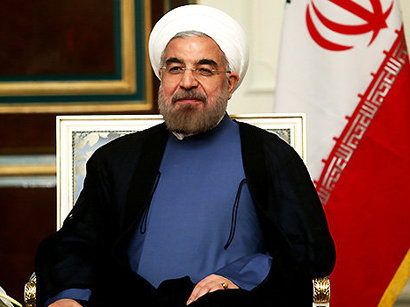
Iranian President Hassan Rouhani has called on the country’s defence ministry to export its military products to the other countries, Iran’s state-owned IRINN TV channel reported on March 1.

The president made the remarks during a meeting with senior Iranian military officials in Tehran.

Rouhani went on to say that weapon trade is important in terms of foreign relations with other countries.

This kind of trade develops semi-strategic ties between countries, he added.

Iranian president also remarked that the country’s development is impossible without security.

Rouhani said “defence diplomacy” can be effective in both creating better relations with the world and conducting deterrence.

He stressed the importance of deterrence in Iran’s military strategy, saying that “the armed forces should pay attention to prevention of threats against the country, but they also should be ready to confront any possible attacks by the enemies”.

Rouhani added that Iran’s deterrence strategy is based on military equipments including missiles, UAVs, trained army and people’s support as well.

“Our behaviour is also important in deterrence,” he said, adding that “threatening does not only mean firing missiles or conducting military exercises. Sometimes your speech style maybe also considered as a threat against other countries. Even if you don’t intend to fight, your words will be deemed as threat”.

Iran’s foreign policy is based on peace and confidence-building with the world, he remarked.

Iran does not deal on its honour, independence, national interests and values, Rouhani said, adding that within these redlines Iran is ready to negotiate and cooperate with all countries.

Referring to Iran’s military redlines Rouhani said that manufacturing mass destruction weapons is Iran’s redline.

The Islamic Republic rejects the manufacture of nuclear weapons because it is out of principle, not because it is prevented by international conventions such as Nuclear Non-Proliferation Treaty (NPT) agreement, Rouhani said.

He added that if Iran wanted to have mass destruction weapons, it would have been easier for it to make chemical or biological weapons.

The U.S. and its Western allies suspect Iran of developing a nuclear weapon, something Iran denies. The Islamic Republic has on numerous occasions stated that it does not seek to develop nuclear weapons, using nuclear energy for medical research instead.

Iran and the P5+1 reached a nuclear agreement on November 24, 2013. Iran has agreed to curb some of its nuclear activities for six months in return for sanctions relief. Iran and the P5+1 group have agreed to implement the agreement starting from Jan. 20.

Off Topic: Ukraine: Russia sending ‘thousands’ of troops to Crimea

March 1, 2014

Ukraine: Russia sending ‘thousands’ of troops to Crimea | The Times of Israel.

Moscow said to send 30 armored personnel carriers and 6,000 extra troops to the peninsula without warning or Kiev’s permission

March 1, 2014, 1:50 pm

Anti-Yanukovych protesters wearing fatigues guard a barricade in Kiev's Independence Square, the epicenter of the country's current unrest, Ukraine, on Saturday, March 1, 2014. (photo credit: AP Photo/Emilio Morenatti)

Anti-Yanukovych protesters wearing fatigues guard a barricade in Kiev’s Independence Square, the epicenter of the country’s current unrest, Ukraine, on Saturday, March 1, 2014. (photo credit: AP Photo/Emilio Morenatti)

SIMFEROPOL (AFP) — Ukraine accused Russia on Saturday of sending thousands of extra troops into Crimea as the Kremlin vowed to help restore calm on the flashpoint peninsula and Washington warned of “costs” to Moscow should it use force.

Defence Minister Igor Tenyukh told the Ukrainian government’s first cabinet session that Russia’s armed forces had sent in 30 armored personnel carriers and 6,000 additional troops into Crimea in a bid to help local pro-Kremlin militia gain broader independence from the new pro-EU leaders in Kiev.

Tenyukh accused Russia of starting to send in these reinforcements on Friday “without warning or Ukraine’s permission.”

The defence chief spoke as dozens of pro-Russian armed men in full combat gear patrolled outside the seat of power in Crimea’s capital Simferopol, a day after similar gunmen seized control over airports and government buildings in the territory.

The rugged peninsula jutting into the Black Sea — host to a Kremlin fleet and with an ethnic Russian majority — has now effectively been cut off from mainland Ukraine, with airports shut down and a pro-Kremlin militia establishing a tightly-controlled checkpoint on the main road from the mainland.

Crimea has come to the fore of a Cold War-style confrontation between the West and Russia over Ukraine, a faceoff that has also exposed the ancient cultural rifts between the pro-European west and Russian-speaking south and east of this country of 46 million.

Nowhere has that divide been more apparent than in Crimea — a Black Sea peninsula of nearly two million people that has housed Kremlin navies for nearly 250 years and which a Soviet leader gifted to Ukraine when it was still a part of the USSR in 1954.

Pro-Russian gunmen seized Crimea’s government and parliament buildings in Simferopol on Thursday before allowing lawmakers to appoint a new prime minister and call for a regional referendum — moved forward on Saturday to March 30 — that would proclaim even greater independence for the already-autonomous region.

Dozens of soldiers with no insignia but dressed in Russian battle fatigues and armed with Kalashnikovs then seized Crimea’s main airport in Simferopol and Ukraine’s Belbek military air base near Sevastopol — home of Russia’s Black Sea Fleet.

Crimea’s newly-chosen prime minister followed that up on Saturday by fervently calling on Russian President Vladimir Putin to help restore “peace and calm” amid his standoff with Kiev’s Western-backed authorities.

“Taking into account my responsibility for the life and security of citizens, I ask Russian President Vladimir Putin to help in ensuring peace and calm on the territory of Crimea,” Sergiy Aksyonov said in an address broadcast in full on Saturday by Russian state television.

Aksyonov also said that all of Crimea’s security forces — including the regional armed forces and police — would now be subordinate to him.

“All those who do not agree, I ask to leave the service,” Aksyonov said in the address.

A source in the Kremlin administration soon told Moscow’s three main news agencies that “Russia will not leave this request without attention.”

The ex-Soviet country’s bloodiest crisis since its 1991 independence erupted in November when ousted president Viktor Yanukovych — who has since fled to Russia — rejected an historic deal that would have opened Ukraine’s door to eventual EU membership in favour of tighter ties with old master Moscow.

A week of carnage in Kiev claimed nearly 100 lives last week.

Gazprom warns Ukraine

Ukraine’s interim president Oleksandr Turchynov had made his own dramatic appeal to Putin late on Friday as the pace of Russian troop movements intensified around their bases and armored personnel carries patrolled Simferopol’s main streets.

“I personally appeal to President Putin to immediately stop military provocation and to withdraw from the Autonomous Republic of Crimea,” a sombre Turchynov said on national television.

“It is a naked aggression against Ukraine.”

Western governments have been watching with increasing alarm as Kiev’s new rulers grapple with the dual threats of economic collapse and secession by Russian-speaking regions that had backed Yanukovych.

But the more immediate threat of a debt default that Kiev leaders warn could come as early as next week looked even more ominous when Russia’s state-owned Gazprom — often accused of being wielded as a weapon by the Kremlin against uncooperative ex-Soviet states — warned that it may be forced to hike the price it charges Ukraine for natural gas.

“The debt is $1.549 billion, it is huge,” Gazprom spokesman Sergei Kupriyanov told the RIA Novosti news agency.

“Clearly, with this debt Ukraine may not be able to keep its discount (to market price) for the gas. The agreements on the discount forsee a full and timely payment.”

Ukraine won a one-third discount from Gazprom under a deal signed by Yanukovych with Putin that also saw Russia promise to buy $15 billion in the Kiev government debt.

But Russia has only bought $3.0 billion in Ukrainian obligations and has effectively frozen further deliveries of aid.

Ukraine’s new leaders have said that the economically-teetering country needs $35 billion over the coming two years to keep the economy afloat.

Obama to skip Russia summit?

Ukraine had filed a formal protest on Friday after claiming that Russian helicopters had entered its airspace as part of snap military drills involving 150,000 troops that Putin had ordered in a region bordering Ukraine last week.

The UN Security Council discussed the crisis behind closed doors while US President Barack Obama — although not referring to Russia directly — warned that “there will be costs for any military intervention in Ukraine.”

“We are now deeply concerned by reports of military movements taken by the Russian Federation inside of Ukraine,” Obama said in a hurriedly scheduled statement at the White House.

A senior US official separately told AFP that Obama and some key European leaders could skip June’s G8 summit in Sochi if Moscow’s forces became more directly involved in Ukraine.

The Foreign Office said British Foreign Secretary William Hague will arrive in Kiev on Sunday for talks with the new government.

Polish Foreign Minister Radoslaw Sikorski — a top proponent of Ukraine’s future EU membership — also cut short a visit to Iran to handle the deepening crisis.

© 1994-2014 Agence France-Presse

Rouhani: We don’t want weapons of mass destruction

March 1, 2014

Rouhani: We don’t want weapons of mass destruction | The Times of Israel.

Iranian president, invoking Khameini, says republic would pursue chemical and biological weapons if it wanted WMDs — because they’re ‘easier to make’

March 1, 2014, 1:43 pm Updated: March 1, 2014, 2:14 pm Iranian President Hassan Rouhani (C) and Foreign Minister Mohammad Javad Zarif (R) during the World Economic Forum in Davos, on January 22, 2014. (photo credit: AFP/File, Eric Piermont)

Iranian President Hassan Rouhani (C) and Foreign Minister Mohammad Javad Zarif (R) during the World Economic Forum in Davos, on January 22, 2014. (photo credit: AFP/File, Eric Piermont)

TEHRAN, Iran (AP) — Iran’s president said the Islamic Republic has decided not to develop nuclear weapons out of principle, not only because it is prevented so by treaties.

Hassan Rouhani told Defense Ministry officials Saturday that, if Iran wanted weapons of mass destruction, it would be easier for it to make chemical or biological weapons.

Rouhani was reiterating a police set by Iran’s Supreme Leader Ayatollah Ali Khamenei, who issued a religious decree banning the production and use of nuclear weapons. He has said holding such arms is a sin as well as “useless, harmful and dangerous.”

“We are not after weapons of mass destruction. That’s our red line,” he said. “If Iran was after weapons of mass destruction, it would build chemical weapons. Those are easier to make. It would build biological arms, which are even easier than making chemical weapons.”

He said Iran’s “beliefs” and commitment to “ethical principles”, not merely the U.N’s nuclear non-proliferation treaty, prevent it from making a bomb. Iran is a signatory to the NPT and says it will remain committed to its obligations not to build nuclear weapons under the treaty but will not compromise on its right to enrich uranium and produce nuclear fuel.

“We signed these treaties to show the world we are not after such weapons,” he told military commanders. “Even if there were no NPT or other treaties, our belief, our faith, our religion and principles tell us not to seek weapons of mass destruction.”

The U.S. and its allies fear that Iran seeks to develop the ability to make a nuclear weapon, should it want one. Iran denies the charge, saying its nuclear program is peaceful and geared toward generating electricity and producing radioisotopes to treat cancer patients.

Rouhani said his government’s policy of moderation and easing tensions with the outside world is “not a tactic” but a genuine change in the Islamic Republic’s foreign policy.

“The foreign policy of the Islamic Republic of Iran is based on easing tensions and building confidence with the world. This is not a tactic or slogan. Iran is not seeking tensions with others … but we don’t compromise on our dignity, independence, national interests and values,” he said.

Rouhani says his countrymen elected him president in June to change Iran’s foreign policy and shift away from the bombastic style adopted under his predecessor, Mahmoud Ahmadinejad. He has said however that its principles — including maintaining a peaceful nuclear program — will not change.

That policy, also supported by Khamenei, led to a historic interim nuclear deal with world powers Nov. 24 in Geneva. Iran stopped enriching uranium to 20 percent and started neutralizing its existing stockpile of that grade — just steps away from weapons material — in January in order to fulfil commitments reached under the deal. The U.S. and the European Union also lifted some sanctions in response to the Iranian moves.

Iran and the six-nation group — the five permanent members of the U.N. Security Council plus Germany — began talks earlier this month for a comprehensive deal in Vienna.

Copyright 2014 The Associated Press.

Off Topic: Obama Warns Russia Against Military Action In Ukraine – YouTube

March 1, 2014

Obama Warns Russia Against Military Action In Ukraine – YouTube.


Obama warns Russia over military actions in the southern Ukrainian peninsula that borders Russia.


Off Topic: Russia considers “unacceptable” foreign meddling in the internal affairs of Venezuela. Russian & Chinese aircraft carriers Kuznetsov & Shilang -07 head to the Caribbean

March 1, 2014

ChUcHeRiAs: Russia considers “unacceptable” foreign meddling in the internal affairs of Venezuela. Russian & Chinese aircraft carriers Kuznetsov & Shilang -07 head to the Caribbean.

Russia is uneasy at ” alarming information ” coming from ” friendly Venezuela ” and calls for no ” instigating actions and acts of violence.”

ChUcHeRiAs: Russia considers

“The key is respect for the Constitution and the democratically elected authorities of Venezuela , led by President Nicolas Maduro ,” said the Russian Foreign Ministry in a statement .

Moscow urges to find the solution to the problems “through peaceful dialogue ,” stressing that ” meddling from the outside in the internal affairs of a sovereign state ” is something “unacceptable.”

“The smear campaign and incitement to violent antigovernment actions must stop,” said the Russian Foreign Ministry.The tension does not subside in Venezuela after holding two weeks of protests in favor and against the administration of President Maduro, taking the life of many demonstrators and Govt. supporters . On Monday the guild Venezuelan motorcyclists have staged a caravan in support of President Nicolas Maduro. Meanwhile, anti-government groups up barricades and burn garbage in protest .

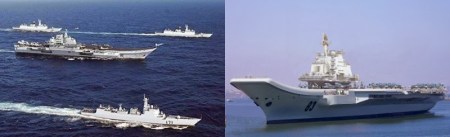
Russia & China send aircraft carriers to the coast of VenezuelaThe Russian aircraft carrier ” Alexander Kuznetsov ” heads to the coast of Venezuela , in theory, for military exercises with the Bolivarian Navy.

Moreover, according to some sources , the Chinese aircraft carrier ” Shilang -07″ escorted by warships , also set to change its course towards Caribbean waters and engage the Russian aircraft , to- according to sources- support  Venezuela from a possible U.S. military intervention .

Happy Birthday, MERKAVA ! – YouTube

March 1, 2014

Happy Birthday, MERKAVA ! – YouTube.

35 years ago, intent on becoming less reliant on foreign factories, the IDF rolled out the Merkava tank– now considered among the world’s best tanks.

The Merkava has ensured Israel’s military advantage through the years, and proves that not by strength of numbers, nor by quantity of money does Israel win its battles, but through intelligence, ingenuity and power of will.

Off Topic: Erekat Rejects Proposal to Extend Peace Talks

March 1, 2014

Erekat Rejects Proposal to Extend Peace Talks, Israel National News, February 28, 2014

(Interpretation: If we had been dealing with the fair and reasonable P5+1 negotiators and had been given what we wanted like Iran, without having to make meaningful concessions, we would already have an acceptable deal. When trying to deal with Israelis, the peace process is futile. They refuse to bow to well informed world opinion and voluntarily abandon our land. We may have no choice but to drive them out.– DM)

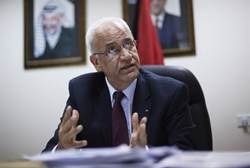
PA chief negotiator PA chief negotiator Saeb Erekat, Reuters

The Palestinian Authority’s (PA) chief negotiator on Thursday rejected U.S. moves to extend an April deadline for nine months of talks with Israel to culminate in a framework peace deal.

“There is no meaning to prolonging the negotiation, even for one more additional hour, if Israel, represented by its current government, continues to disregard international law,” Saeb Erekat told AFP.

“If there was a committed partner, we wouldn’t even have needed nine hours to reach that deal,” he added.

Erekat was responding to comments by U.S. Secretary of State John Kerry, who told reporters in Washington on Wednesday that more time would be needed and that he hoped first to agree a framework to guide further talks.

It was Kerry who coaxed the two sides back to the negotiating table in late July, after a three-year hiatus.

“Then we get into the final negotiations. I don’t think anybody would worry if there’s another nine months, or whatever it’s going to be… But that’s not defined yet,” he said.

The negotiations have shown little sign of progress, amid bitter recriminations with each side blaming the other for the stalemate.

Kerry insisted, however, that both parties were still “in the middle” of the talks.

“I laugh at people who say it’s not going anywhere. They don’t know because we’re not talking about where it’s at. They have no clue where our negotiations are and whether they could go anywhere,” he claimed.

Last week, Kerry met twice in Paris with PA Chairman Mahmoud Abbas,  in what a U.S. official later described as “constructive” talks.

A PA official, however, said last Friday that ideas proposed by Kerry in Paris could not be accepted “as the basis for a framework accord… as they do not take into account the legitimate rights of the Palestinian people.”

Few details have been made public of Kerry’s proposed framework, though Thomas Friedman of the New York Times published some alleged details of the plan, which, he said, will call for a phased Israeli withdrawal from Judea and Samaria based on the 1949 lines, with “unprecedented” security arrangements in the strategic Jordan Valley.

The Israeli withdrawal will not include certain settlement blocs, but Israel will compensate the Arab side for this with Israeli territory.

On Thursday, the New York Times reported that President Barack Obamahas decided to take a more “active role” in the negotiations.

According to the report, during his meeting next week with Prime Minister Binyamin Netanyahu, Obama will make an “urgent appeal” to Netanyahu to accept Kerry’s plan.

Meanwhile, the PA-based Al-Quds newspaper reported on Wednesday that  Abbas became very angry during his meeting with Kerry last week and threatened to end the negotiations with Israel.

According to the report, Abbas fumed when, during a meeting with Kerry in Paris, the top U.S. diplomat presented a new offer which, according to senior PA officials, adopted the Israeli positions for a peace agreement. The newspaper also reported that in order to appease Abbas and get him to continue the negotiations, the Americans invited him to a meeting at the White House with Obama.

Off Topic: Frameworks for disaster

March 1, 2014

Frameworks for disaster, Israel Hayom, Ruthie Blum, February 28, 2014

(Since the P5+1 negotiations with Iran have gone well from his perspective, President Obama wants to keep the Israeli – Palestinian “peace process” moving after the April 29th deadline. Surely, there must be more that Israel can yield.– DM)

Whenever Netanyahu impresses upon Obama the urgency of stopping Iran before it’s too late, the U.S. president responds by pressuring him into promises of appeasement [toward the Palestinians], if not concrete concessions.

Watching time run out at a dangerous pace, U.S. President Barack Obama has decided to take a more hands-on role in foreign policy. The impending peril he fears is not an Iranian atom bomb, however.

No, in spite of the Islamic Republic’s refusal to halt its nuclear program, Obama is as hopeful about the latest round of talks in Vienna as is European Union negotiator Catherine Ashton.

“We had three very productive days during which we have identified all the issues we need to address to reach a comprehensive and final agreement,” Ashton said last week.

This was music to White House ears. Now it could ignore Iran’s about-face following its signing of an interim agreement with the West in November. Indeed, before the ink had dried on the document, Iran was denouncing Obama’s interpretation of it.

Imagine the U.S. president’s relief, then, that he had not caved to pressure from Congress to step up sanctions against Tehran, and that a whole new series of talks — the first of which will take place on March 17 — was in the cards.

What, then, is causing the American president to grab the reins out of Secretary of State John Kerry’s hands with such urgency?

You guessed it — the fast approach of the April 29 deadline, set by the U.S., for a negotiated “two-state solution” between Israel and the Palestinian Authority.

Realizing that there is no chance of achieving such a goal within the next two months, Kerry came up with the next best thing: a “framework” for an agreement which would enable an extension of the deadline.

Ashton used that very word to describe the charade with Iran.

“We have set a timetable of meetings … with a framework to continue our deliberations,” she said.

The purpose of Kerry’s “framework,” too, is to perpetuate a process of “deliberations.”

This is all that is possible when dealing with a partner whose endgame does not bear any resemblance to one’s own. It is also what enables the harboring of illusions about making progress.

But even “frameworks” have to be agreed upon by negotiating partners, no matter how far apart their positions. The Iranians have consented to a new “framework” for talks, because this buys them more time to work on their nuclear program, with an ease on sanctions.

The Palestinians, on the other hand, have not done so. And why should they? They have suffered no consequences for their intransigence. On the contrary, so far, money from the U.S. and Europe keeps flowing into their coffers, and Israel has released many of the 104 Palestinian terrorists it committed to freeing as part of a goodwill gesture to jumpstart negotiations, with a fourth bunch about to be let out of prison at the end of March.

Nor has Kerry’s “framework” been met with anything but disdain on the part of Palestinian Authority President Mahmoud Abbas, who (according to a report in the Jerusalem-based Palestinian daily paper Al-Quds) called it “crazy.” Apparently, this was due to Kerry’s proposing, among other things, that the Beit Hanina neighborhood — rather than east Jerusalem as a whole — could become the capital of a future Palestinian state.

Meanwhile, Prime Minister Benjamin Netanyahu has been receptive to all State Department suggestions. Even those that are utterly untenable for Israel — such as a return to the 1967 borders — are open to discussion. Indeed, Netanyahu is taking serious flak within his own Likud party for the degree of open-mindedness with which he has been treating talks on the “core issues.”

According to White House Press Secretary Jay Carney, who gave a press conference on Thursday to explain why Obama is now directly entering the fray, these core issues are “borders, security, Jerusalem, refugees, mutual recognition, an end of conflict and an end of claims.”

The White House believes, he said, “that the framework will be a significant breakthrough, as it would represent a common picture on the outlines of the final status agreement.”

What Carney failed to address was what would happen in the event that Israel and the PA do not agree on such a “framework.” This, undoubtedly, will be the focus of Obama’s meeting with Netanyahu on Monday in Washington and subsequently with Abbas on March 17 (coincidentally the date of the next round of U.S. and EU talks with Tehran in Vienna.)

Netanyahu, on the other hand, has one thing on his agenda: preventing a nuclear Iran by any means necessary. It is a safe bet that this will be the highlight of his speech on Tuesday at the annual AIPAC conference. Unfortunately, though, Obama is more concerned about extending the deadline for Middle East “peace,” a euphemism for the establishment of a Palestinian state.

As an anonymous American official told The New York Times on Wednesday, “Now is a very timely opportunity for [Obama] to get involved. … The president wouldn’t want to run any risk that it was the lack of his involvement that would make the difference between success and failure.”

This is very bad news. Whenever Netanyahu impresses upon Obama the urgency of stopping Iran before it’s too late, the U.S. president responds by pressuring him into promises of appeasement, if not concrete concessions.

It is a framework for disaster.