Archive for March 2014

Israeli minister slams Ashton’s Tehran trip

March 9, 2014

Israeli minister slams Ashton’s Tehran trip, Times of Israel, March 9, 2014

(Please see my comment at the beginning of an article posted here today about U.S. plans to go forward with the P5+1 negotiations despite Iran’s apparent arms shipment to Gaza and her lies about it. — DM)

Steinitz says EU foreign policy chief should have postponed visit after Israel intercepted Iran arms shipment to Gaza.

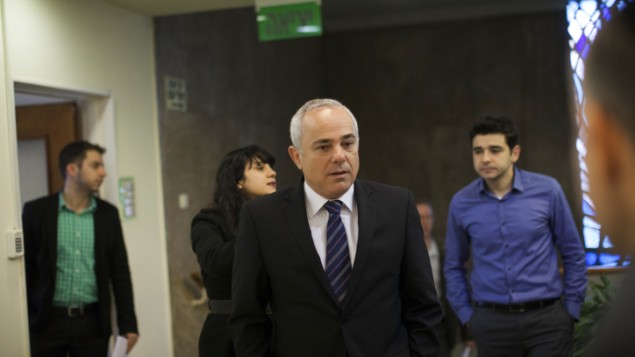
1 SteinitzStrategic Affairs Minister Yuval Steinitz on February 2, 2014. (photo credit: Yonatan Sindel/Flash90)

A senior Israeli minister lashed out Sunday at EU foreign policy chief Catherine Ashton for visiting Tehran after the interception of a ship allegedly carrying arms from Iran to Gaza.

“I would expect Catherine Ashton to cancel or at least postpone her visit to Tehran,” said Intelligence Minister Yuval Steinitz.

“The Iranian regime has been caught here in a severe act of smuggling large missiles to a terror organization, while violating all the UN decisions placing an arms embargo on and from Iran,” he told Israel Radio.

“At this time to go and speak with the Iranians as if nothing happened, is something that should be avoided,” he said.

The Israeli army was on Sunday busy unloading a ship it intercepted in the Red Sea last week which it said was carrying an Iranian shipment of M-302 rockets destined for the Gaza Strip, which is controlled by Hamas.

Ashton’s visit to Tehran, the first by a EU foreign affairs chief since 2008, comes after Iran signed a preliminary deal in November with world powers under which it agreed to curb its disputed nuclear activities in exchange for sanctions relief.

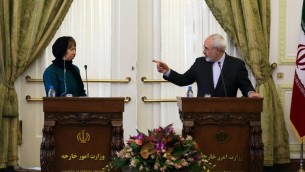
Ashton and ZahrifEU foreign affairs chief Catherine Ashton, left, and Iranian Foreign Minister Mohammad Javad Zarif give a joint press conference following a meeting on March 9, 2014 in Tehran. (photo credit: AFP/ATTA KENARE)

Earlier, Prime Minister Benjamin Netanyahu accused Iran of “brazenly lying” over its involvement in the shipment, which Tehran flatly denied, in remarks he said were directed at Ashton.

“I’d like to ask her if she asked her Iranian hosts about the delivery of weapons to the terror groups, and if she didn’t, why not?” he said at the start of the weekly cabinet meeting.

“Nobody has the right to ignore the real, murderous actions of the regime in Tehran,” he added.

The prime minister said Israel would show evidence linking the shipment to Iran on Monday, when the weapons will be put on display at a news conference in Eilat which he himself will give.

Israel was harshly critical of the interim nuclear agreement with Iran and is pushing hard for world powers to keep a series of crippling economic sanctions in place.

The West and Israel have long suspected Iran of using its nuclear energy program as a cover for developing atomic weapons, a charge denied by the Islamic republic.

40 missiles, 181 mortars, 400K bullets found on arms ship

March 9, 2014

40 missiles, 181 mortars, 400K bullets found on arms ship | The Times of Israel.

IDF releases preliminary inventory after troops offload 150 containers from Klos-C; soldiers, sailors inspecting cargo

March 9, 2014, 8:08 pm

Israeli security forces inspect containers of missiles uncovered on board the Klos-C. (photo credit: IDF Spokesperson)

Israeli security forces inspect containers of missiles uncovered on board the Klos-C. (photo credit: IDF Spokesperson)

The Israeli military announced Sunday that it had offloaded 40 M-302 missiles,181 122-mm mortars, and 400,000 7.62 caliber bullets from the containers aboard the ship seized several days earlier in the Red Sea.

A combined task-force of sailors, combat engineers and ordnance experts have begun inspecting the containers offloaded from the Klos-C, and may uncover more munitions over the next several days.

Naval commandos seized the vessel on Wednesday in the Red Sea between Eritrea and Sudan, and it was escorted into Eilat on Saturday by two Israeli warships.

The army said Wednesday that soldiers carried out a preliminary inspection of the ship and found several dozen advanced Syrian M-302 missiles, with a range of up to 200 kilometers (125 miles) and a payload of up to 170 kilograms (375 pounds). The missiles were hidden in shipping containers also carrying sacks of concrete with Iranian markings.

The IDF said the Iranian shipment was destined for the Hamas-run Gaza Strip.

Israel has hailed the discovery of the shipment as exposing Iranian efforts to support global terrorism.

Israeli soldiers unload cargo found on the Klos-C. (photo credit: IDF Spokesperson)

Israeli soldiers unload cargo found on the Klos-C. (photo credit: IDF Spokesperson)

On Sunday, a senior security official in Egypt said the shipment was destined for militants in either the Sinai Peninsula or the Gaza Strip.

The official said Sunday that the ship carrying the missiles took the same route used by vessels ferrying potential illegal migrants who arrive in Sinai and then sneak across the border into Israel.

He said the missiles have a range of 90 kilometers, and that the ship carrying them was under surveillance while it was off Sudan’s Red Sea coast.

Meanwhile Sunday, Prime Minister Benjamin Netanyahu said he wanted EU foreign policy chief Catherine Ashton, in Tehran for talks, to bring up the issue.

“I call this to the attention of Catherine Ashton, who is now visiting Tehran,” he said at the start of a weekly cabinet meeting. “I would like to ask her if she asked her Iranian hosts about this shipment of weapons for terrorist organizations, and if not, why not.”

Netanyahu scheduled a press conference in Eilat on Monday to present and detail the findings.

IDF Chief of Staff Lt. Gen. Benny Gantz met with soldiers who participated in the raid and hailed their success on Saturday evening. During the meeting, at a naval base in Eilat, Gantz told the soldiers that the struggle against the empowerment of terrorist groups and the effort to keep them from strategic arms hadn’t ended with their return home to Israel.

Israeli security forces inspect boxes of M-302 rockets that were unloaded from the Panamanian-flagged Klos-C vessel on March 9, 2014 at the southern Israeli port of Eilat. The vessel, which was allegedly transporting arms from Iran to Gaza, was escorted into the port of Eilat after Israeli naval commandos seized it on March 5, 2014. (photo credit: Jack Guez/AFP)

Israeli security forces inspect boxes of M-302 rockets that were unloaded from the Panamanian-flagged Klos-C vessel on March 9, 2014 at the southern Israeli port of Eilat. The vessel, which was allegedly transporting arms from Iran to Gaza, was escorted into the port of Eilat after Israeli naval commandos seized it on March 5, 2014. (photo credit: Jack Guez/AFP)

“Each one of these rockets poses a threat to the safety of the citizens of Israel — each bullet and each rocket that was discovered had an Israeli address,” he said.

Iran has flatly denied any involvement with the shipment, which the Israeli army said was carrying missiles capable of striking anywhere in Israel.

Israeli soldiers inspect containers unloaded from the Panamanian-flagged Klos-C vessel on March 9, 2014 at a navy base near the southern Israeli port of Eilat. (photo credit: Jack Guez/AFP)

Israeli soldiers inspect containers unloaded from the Panamanian-flagged Klos-C vessel on March 9, 2014 at a navy base near the southern Israeli port of Eilat. (photo credit: Jack Guez/AFP)

Israel and the US coordinated intelligence and military activities leading up to Israel’s seizure of the Klos-C off the coast of Port Sudan, US Ambassador to Israel Dan Shapiro and the State Department said Wednesday.

After consultations between American and Israeli officials, it was decided that Israel would act against the vessel, Shapiro told Israel Radio, even though the Pentagon had already drafted plans to intercept the ship.

Israel’s capture of the Klos-C followed intensive intelligence work, officials said, with the missile shipment tracked for months from Damascus to Iran and from there to Iraq before it was intercepted en route to Gaza.

Times of Israel staff and The Associated Press contributed to this report.

US condemns Iran for illicit arms shipment

March 9, 2014

US condemns Iran for illicit arms shipment, Israel Hayom, March 9, 2014

(Assume, at least for the sake of argument, that irrefutable evidence shows that Iran knew what the ship contained and that she is now lying about it. Lying has been her consistent practice vis a vis her nuke activity and continuing to lie is not a rational basis for crediting material statements she has made or later makes during the P5+1 negotiations. Why should negotiations proceed on that basis, allowing Iran to continue to garner funds and other types of international support which make effective sanctions highly unlikely to be reinstated?

Defense Secretary Hagel’s spokesman reiterated “the United States’ commitment to holding Iran accountable for its destabilizing activities in the region, even as we continue efforts to resolve our concerns over Iran’s nuclear program through diplomacy.” Destabilizing activities are bad. However, habitual lying as to matters material to the P5+1 negotiations is even more consequential for those negotiations. If Iran’s persistent lying is ignored, how can the U.S. “resolve” her “concerns over Iran’s nuclear program through diplomacy,” unless her concerns are so ephemeral that they can be “resolved” by ignoring them? — DM)

Pentagon praises Israel’s interception of Klos C, says U.S. is “holding Iran accountable for its destabilizing activities in the region” • Analyst: Either Iranian FM knew about the shipment or U.S. is negotiating with an envoy who is out of the loop.

Klos C

The U.S. over the weekend condemned Iran for the illicit weapons shipment that was intercepted by the Israeli Navy last Wednesday.

U.S. Defense Secretary Chuck Hagel spoke with Defense Minister Moshe Ya’alon on Friday. After their conversation, Pentagon press secretary Navy Rear Adm. John Kirby issued a statement saying that the Hagel had congratulated Ya’alon on the success of the interception of the Klos C, and reiterated “the United States’ commitment to holding Iran accountable for its destabilizing activities in the region, even as we continue efforts to resolve our concerns over Iran’s nuclear program through diplomacy.”

Hagel made clear that “illicit actions by Iran are unacceptable to the international community and in gross violation of Iran’s U.N. Security Council obligations.”

Meanwhile, Forbes Magazine’s foreign news analyst Claudia Rosett addressed the connection between the attempted shipment of missiles to Gaza and Iranian Foreign Minister Mohammad Javad Zarif.

“While Zarif was in Vienna, standing shoulder-to-shoulder with European Union foreign policy chief Catherine Ashton, reading a statement to the press about their ‘very productive’ nuclear talks, the freighter, secretly stuffed with weapons, was already en route from Iran toward the Red Sea,” Rosett pointed out.

The analyst went on to question whether Zarif really had not known about the arms shipment to Gaza, or had chosen to lie.

“If Zarif knew anything about this, that’s damning. If he was clueless, that’s alarming. Which is it?” the analyst asked.

Rosett then concluded that if in fact Zarif had been ignorant of the illicit arms smuggling, the U.S. was negotiating with an Iranian envoy who was “so far out of the loop that he believes his own lies.”

Iran: Pulling the strings of terror

March 9, 2014

Iran: Pulling the strings of terror, Israel Hayom, Dr. Ephraim Kam, March 9, 2014

(Achieving a satisfactory “comprehensive” solution under the P5+1 “deal” is useful for political purposes. Amorphous mumblings about eliminating Iran’s nuclear threat, particularly by those involved in the negotiations, seem likely to be disingenuous. Talk of Iran’s persistent dishonesty and support for terrorism does not contribute to getting a satisfactory “comprehensive” solution either and is also likely to be disingenuous. — DM)

[I]t is likely that the damage to Iran’s image will be slight. Its involvement in terrorism has been well-known for years. Capturing this vessel, therefore, is not going to change that very much. And since it is also a high Western priority to reach a final deal over the nuclear issue, it is unlikely that this affair is going to put the brakes on the nuclear talks. 

The Iranians have already gotten used to it. From time to time, they send massive weapons shipments to their allies in Lebanon, Syria, Gaza, Iraq and other countries by land, by air or by sea. And from time to time, when these arms are meant to harm Israel, and when the intelligence community attains precise information about such shipments — the Israel Defense Forces attacks them. These strikes are accomplished through weapons seizures in the Red and Mediterranean seas, or by air assaults on weapons convoys — typically in Lebanon, Syria or Sudan.

Despite Israel’s success, the Iranians continue to attempt to send weapons — perhaps because they have in fact sent several successful weapons shipments under the radar. So despite such foiled attempts, Hezbollah, Hamas and Islamic Jihad’s respective weapons stockpiles are substantial, and an integral part of each of them came from Iran.

It is in Iran’s best interest to provide its allies with weapons, especially terrorist groups. Using terror groups to fight its enemies is one of the most important components in Iran’s security outlook because it has proved to be an effective method of deterrence. That is why, since 1984, the U.S. government has defined Iran as one of the world’s leading state sponsors of terror. Providing assistance to terrorist groups has benefitted Iran by allowing Tehran to wield influence in the Middle East — in Lebanon, Iraq and the Palestinian territories. Assisting terrorist groups fighting Israel has helped Iran in its goal to wear Israel down through armed struggle, putting terrorist groups — especially Hezbollah, which has an umbilical relationship with Iran — at the forefront of its efforts. Using terrorism is cost-effective from Iran’s perspective. Tehran never really has to pay a price for supporting terror; its agents do.

The illicit shipment on the Klos C blends well with Iran’s approach. The vessel was meant to bring weapons to the Gaza Strip via Sudan. Sudan is an opportune transit station on the way to Egypt, the Sinai Peninsula and, ultimately, the Gaza Strip. Iran-Sudan relations have been close for years; Iran provides Sudan with military and economic aid.

It is still unclear who exactly the weapons were meant for: Hamas is one option, but its relations with Iran were challenged in 2012 both when the group cozied up to the Muslim Brotherhood, which ruled Egypt at the time, and when Iranian involvement in Syria started to raise eyebrows among Hamas’ leadership; another possibility is Islamic Jihad, which boasts the closest relations to Tehran among Palestinian groups. Perhaps the weapons were meant for both.

In any case, transferring weapons to Gaza has become both more difficult and problematic. The Egyptian government has been investing a lot of effort of late to regain control of the Sinai and to destroy the smuggling tunnels between Sinai and the Gaza Strip. The Egyptian government also sees an antagonistic threat in Hamas, so how the Iranians planned to smuggle the unwieldy missiles shipment into the Gaza Strip remains unclear.

The weapons discovery marked an embarrassment for Iran, which has been endeavoring both to improve its international standing and to paint a positive, moderate picture of itself to reach agreements with Western governments over its nuclear program, a development that could alleviate painful economic sanctions. The U.N. Security Council also explicitly banned Iran from exporting weapons in 2007, which is why Iran hurriedly denied any involvement with this shipment.

Still, it is likely that the damage to Iran’s image will be slight. Its involvement in terrorism has been well-known for years. Capturing this vessel, therefore, is not going to change that very much. And since it is also a high Western priority to reach a final deal over the nuclear issue, it is unlikely that this affair is going to put the brakes on the nuclear talks. International attention has also been focused on the Russia-Ukraine confrontation, overshadowing the arms shipment.

Seizing this ship is a blow to Iran, which certainly poured effort and resources into organizing the attempted stealth mission. Iran’s beef with Israel is getting bigger — previous strikes against attempted arms shipments, the deaths of several Iranian scientists, Iranians computer systems infected with viruses, the assassination of Hezbollah military commander Imad Mughniyeh. We should probably bear in mind then that Iran is planning to settle the score — perhaps through Hezbollah.

Netanyahu to Israel Hayom: Iran has not changed

March 9, 2014

Netanyahu to Israel Hayom: Iran has not changed, Israel Hayom, Shlomo Cesana, March 9, 2014

(A wide ranging interview, from Iran to the “Peace Process.” — DM)

“Right now the battle is over the truth, and the truth is Iran is a country that breaks all the rules,” Prime Minister Benjamin Netanyahu says in Israel Hayom interview • PM: Palestinian Authority President Mahmoud Abbas refuses to move toward peace deal.

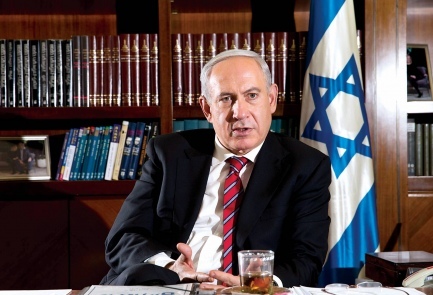
Netanyahu 9 mar 14

“The smuggling of the missiles was an Iranian covert operation that we discovered, caught and stopped. Beyond catching the dangerous missiles, this is a message to the world, a message that we are transferring gradually and methodically: Despite the Iranian denials, despite the smiles and imaginary moderation emanating from Iran, this is still the same Iran and it hasn’t altered its murderous conduct in any way,” Prime Minister Benjamin Netanyahu told Israel Hayom in an interview upon his return from last week’s trip to the United States.

In the interview, Netanyahu addressed the Iranian nuclear issue, the peace talks with the Palestinians, his most recent meeting with U.S. President Barack Obama and the ongoing incarceration of Israeli spy Jonathan Pollard.

Netanyahu continued to tout the military and diplomatic victory scored by Israel and its naval commandos by capturing the Klos C weapons ship: “It should and it will influence those conducting the negotiations with Tehran regarding the question of how best to proceed with Iran. Right now the battle is over the truth, and the truth is Iran is a country that breaks all the rules. It is important to expose Iran’s true face.”

‘Concessions aren’t necessary’

Next week, Palestinian Authority President Mahmoud Abbas is also scheduled to visit with Obama in Washington. Netanyahu hopes the U.S. president will pressure Abbas to agree to a one-year extension period for the peace talks. According to the prime minister’s assessment, Abbas is not showing signs that he is willing to do so.

What is the framework agreement document expected to include?

“It is an American document with negotiation proposals that the sides can address. This is not an Israeli document, and it is certainly liable to include things that Israel will not agree to and will object to. But this document, if it is indeed presented, will be a platform for discussing the renewal of negotiations, which are expected to last about a year if the Palestinians come around and finally agree to enter talks. I cannot say for certain, they are currently not showing any signs in this direction.”

What concessions will you have to make?

“At this point concessions aren’t required. Only one thing is required right now: The willingness to engage in negotiations; and this willingness exists. It has always existed. The simple fact is that [Abbas] has refused to negotiate for close to five years already. This cannot be ignored or glossed over. I have no conditions for starting talks. I have clear conditions about how they will end, but not to how they begin.

“[Abbas] is not prepared even for the first stage of discussions toward an agreement. At its foundation the American document contains American ideas, but its advantage is that it suggests a path for the sides to progress and for each to express his position.”

In the first round, terrorists were released from prison. Do you intend to release more Palestinian prisoners even after the scheduled fourth round of releases, just to renew negotiations or extend them by another year?

“This has not come up.”

‘The coalition is not in danger’

Can you promise that you won’t freeze settlements during the negotiations, as the Palestinians are demanding?

“Our experience with the U.S. administration’s decision to freeze [construction] is that it doesn’t lead to starting talks. My opinion on the matter is very clear. At this time it is self-evident that Israel is prepared to begin negotiations. I don’t think there is much wisdom in touching on this matter at the moment. Either way, I don’t expect us to implement another construction freeze in the manner it was done so in the past.”

Would entering negotiations on the basis of the expected American document threaten your coalition?

“No, there is no reason for it to threaten the coalition. These are after all American positions, not Israel’s. There are many things we like in [the document] and of course many things that we do not, but that’s what talks are for.”

Foreign Minister Avigdor Lieberman proposed that, within the framework of a land swap, the Triangle (an Israeli Arab-populated area in Israel adjacent to the West Bank) will be transferred to a Palestinian state. Is this also your position?

“There is no point in getting into the various possibilities. This issue has also never been discussed. All these issues will be examined and raised down the road if the Palestinians agree to engage in talks and get on the road. At the moment they refuse to do so. The Palestinians threaten to go to the United Nations and are showing no signs of agreeing to extend the negotiations for a certain period of time and exploring whether we can end the process that has been started.

“Therefore in regards to the question, we are to a large extent currently conducting negotiations with ourselves and I propose we conduct negotiations with the Palestinians.”

What can you tell us about your meeting with Obama?

“First of all, it was much better than the interview that preceded it. This is a fact. Before I arrived in Washington I mentioned that over past five years I’ve proven that I know how to stand up very well to pressures and criticism, and maintain Israel’s vital interests — and that’s what I did during the meeting on the Palestinian issue and on the Iranian issue. I don’t hide, aside from our agreement that Iran must not be allowed to acquire a nuclear weapon, our disagreement over allowing Iran to preserve uranium enrichment capabilities. I have not wavered from my view that there is no reason for Iran to have even one centrifuge. If [Iran] is indeed honest about its intention to create nuclear energy for peaceful purposes, then centrifuges are not required for peaceful purposes, they are required to make a nuclear weapon.”

Netanyahu also gave interviews to Israel’s three television stations and Israel Radio. The prime minister told Channel 2 News: “We will not abandon any Israeli citizens.” He also reiterated what he said before the U.S. Congress and in a 2009 interview with Israel Hayom, that some settlements would need to be removed as part of a final-status agreement. “It is clear that some of the settlements won’t be part of the arrangement, everyone understands this. I will ensure that this is as limited as can be, as far as it is possible, if we do get there, and we will take care of every citizen.”

Netanyahu told Channel 10 that despite the traditional American and Palestinian position on Jerusalem, he has insisted that Jerusalem not be divided: “On Jerusalem, until now, I haven’t compromised, and this is a strong indication about the future.”

‘All-time high support for Israel’

The prime minister also discussed Israel’s relationship with the U.S. and the painful issue of Jonathan Pollard’s ongoing incarceration in an American federal prison.

There is a change taking place in the United States. Certain communities are growing, such as the Hispanic community, where Israel has less influence. Among other populations as well, among youngsters, there is less support for Israel, and there are those who accuse you of essentially not knowing today’s America. What is your response to these claims?

“I am amused by them. If someone thinks I don’t know the U.S., he apparently doesn’t know me. I know it well, including all the changes taking place there. That’s why I recently said we need to teach Israeli children two additional languages: Mandarin Chinese and Spanish, preferably with a Mexican accent. This is precisely because I am aware of the changes happening in the United States. I am making great efforts, as is our diplomatic corps, to engage the Hispanic community specifically and American youth in general in the U.S.

“Factually, according to surveys, support for Israel has risen and is now at an all-time high. Israel has a 72 percent support rating — this is a very impressive figure. If you compare support for Israel in the 1960s, for example, it was only half back then. So there has been a constant rise in support. It’s true though that we cannot rest on our laurels. We must continue to make more of an effort. Therefore, for example, during my visit to the U.S. I was in Los Angeles and I went to Hollywood to persuade those who influence the youth through movies, TV shows and the Internet [Netanyahu met with movie producers and actors, and with Apple CEO Tim Cook and WhatsApp co-founder Jan Koum], and I discovered a great deal of interest in Israel and also a lot of support. People responded very positively to a first-person account of the real Israel, not the Israel described its detractors, rather the only democratic country in our enormous region, which espouses the same important values that Americans also hold dear.”

‘The entire price has been paid’

The time is passing, the meetings with American presidents are friendly, but Jonathan Pollard is still in America prison. Did you request his release?

“The issue was most certainly raised. There is never a time I when meet the American president and this matter does not come up. Pollard needs to be freed. The time has come for him to return home. He has already served his time. He erred, the state of Israel erred by sending him on his mission, and for this the price has been paid in full and with extra interest.”

What is needed for Pollard to be released?

“An American decision is required. I think the time has come. The time is growing long and the man is not well. “

Did Obama provide any light at the end of the tunnel on this matter?

“I can only say what I’ve said.”

‘Rows of Iranian rockets’ said found on seized ship

March 9, 2014

‘Rows of Iranian rockets’ said found on seized ship | The Times of Israel.

Troops unload 150 containers off ‘Klos-C,’ intercepted in Red Sea; Netanyahu asks Ashton to discuss cargo of arms during Tehran meet

March 9, 2014, 12:36 pm

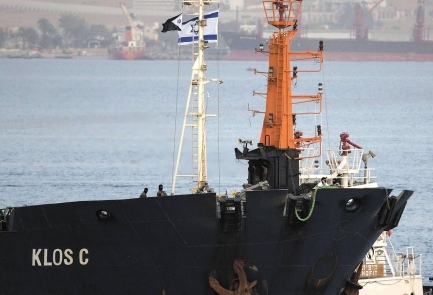
The 'Klos-C' at the port of Eilat on Saturday. (photo credit: Flash90)

The ‘Klos-C’ at the port of Eilat on Saturday. (photo credit: Flash90)

Israeli troops in Eilat unloaded Sunday morning some 150 containers, suspected of holding illicit Iranian arms, from a ship seized several days earlier in the Red Sea.

Israeli officials plan on inspecting the containers taken off the ‘Klos-C’ over the next several days, and are expected to uncover more munitions like the medium-range missiles the army says it already found in an initial search.

Naval commandos seized the vessel on Wednesday in the Red Sea between Eritrea and Sudan, and it was escorted into Eilat on Saturday by two Israeli warships.

The IDF said it was carrying an Iranian shipment of M-302 rockets destined for the Hamas-run Gaza Strip.

IDF spokesperson Peter Lerner said on Twitter there were “approximately 150 containers” and a hangar housing the seized munitions had “rows of …rockets.”

Israel has hailed the discovery of the shipment as exposing Iranian efforts to support global terrorism.

On Sunday, Prime Minister Benjamin Netanyahu said he wanted EU foreign policy chief Catherine Ashton, in Tehran for talks, to bring up the issue.

“I call this to the attention of Catherine Ashton, who is now visiting Tehran,” he said at the start of a weekly cabinet meeting. “I would like to ask her if she asked her Iranian hosts about this shipment of weapons for terrorist organizations, and if not, why not.”

Netanyahu scheduled a press conference in Eilat on Monday to present and detail the findings.

IDF Chief of Staff Lt. Gen. Benny Gantz met with soldiers who participated in the raid and hailed their success on Saturday evening. During the meeting, at a naval base in Eilat, Gantz told the soldiers that the struggle against the empowerment of terrorist groups and the effort to keep them from strategic arms hadn’t ended with their return home to Israel.

“Each one of these rockets poses a threat to the safety of the citizens of Israel — each bullet and each rocket that was discovered had an Israeli address,” he said.

Iran has flatly denied any involvement with the shipment, which the Israeli army said was carrying missiles capable of striking anywhere in Israel.

The army said Wednesday that soldiers carried out a preliminary inspection of the ship and found several dozen advanced Syrian M-302 missiles, with a range of up to 200 kilometers (125 miles) and a payload of up to 170 kilograms (375 pounds). The missiles were hidden in shipping containers also carrying sacks of concrete with Iranian markings.

Israel and the US coordinated intelligence and military activities leading up to Israel’s seizure of the “Klos-C” off the coast of Port Sudan, US Ambassador to Israel Dan Shapiro and the State Department said Wednesday.

After consultations between American and Israeli officials, it was decided that Israel would act against the vessel, Shapiro told Israel Radio, even though the Pentagon had already drafted plans to intercept the ship.

Israel’s capture of the “Klos-C” followed intensive intelligence work, officials said, with the missile shipment tracked for months from Damascus to Iran and from there to Iraq before it was intercepted en route to Gaza.

Netanyahu calls on EU’s Ashton to question arms ship during Tehran visit

March 9, 2014

Netanyahu calls on EU’s Ashton to question arms ship during Tehran visit | JPost | Israel News.

By HERB KEINON

03/09/2014 11:34

At cabinet meeting, PM calls on EU policy chief to question Iranians during her visit to Tehran over ship intercepted by IDF containing weapons bound for Gaza.

Prime Minister Binyamin Netanyahu discussing Iran after meeting US Secretary of State Kerry, Nov 8.

Prime Minister Binyamin Netanyahu discussing Iran after meeting US Secretary of State Kerry, Nov 8. Photo: Amos Ben-Gershom/GPO

As Israel began unloading the crates of ordnance on the Klos-C now docked in Eilat, and EU foreign policy chief Catherine Ashton began a landmark visit to Teheran, Prime Minister Binyamin Netanyahu wondered out loud Sunday whether Ashton would raise the issue with her hosts.

“I would like to ask her if she asked here hosts in Tehran about the arms shipment to terrorist organizations, and if not, why not?” Netanyahu said at Sunday’s weekly cabinet meeting.

“No one has the right to ignore from the true murderous activities of the regime in Tehran, and I think that it is fitting for the international community to deal wit the true polices of Iran, not its propaganda,” he said.

Relating to Iranian denials about any involvement in the ship laden with Syrian-missiles, Netanyahu said that the Iranians were blatantly lying, and that Israel would soon present the evidence.

He reiterated that Israel had two aims in intercepting the ship: protecting Israeli citizens, and revealing the true face of Iran.

The Ukraine crisis: Russia may halt (START) strategic weapons inspections, revert to Cold War tactics

March 8, 2014

The Ukraine crisis: Russia may halt (START) strategic weapons inspections, revert to Cold War tactics, DEBKAfile Special Report March 8, 2014

(Is the apparent chill just a phase of global smarming warming, or is it meaningful? — DM)

Russia ratcheted up international tensions over Ukraine by a big notch Saturday, March 8, the day after mobilizing air and coastal defenses for a large-scale month-long drill to prevent the disruption of the May 16 Crimean referendum. The defense ministry in Moscow announced: “Russia is considering halting foreign inspections of its strategic weapons arsenal, including nuclear-capable missiles, in response to “threats” from the United States and NATO over the Ukraine crisis.

Lines of tanks were seen Saturday heading from Russian bases towards Crimea.

A high-ranking defense ministry official in Moscow, who was not named, released this statement to all Russian news agencies: “The unfounded threats towards Russia from the United States and NATO over its policy on Ukraine are seen by us as an unfriendly gesture that allows the declaration of force majeure circumstances.”

By this statement, Moscow announces that due to “force majeure circunstances” it no longer feels bound by its commitment to international inspections under the Strategic Arms Reduction Treaty (START) with the United States and the Vienna Document between Organization for Security and Cooperation in Europe (OSCE) member states.

START, which was signed between the United States and Russia in 1991, mandated the mutual reduction by the two powers of nuclear warheads, missiles and nuclear missiles carried by submarines, under international inspection..

The signing of the first START treaty in 1991 marked the historic end of the Cold War and the Soviet empire’s breakup.

Two years ago, Presidents Barack Obama and Dmitry Medvedev renewed the treaty. The incumbent Russian president Vladimir Putin is now threatening to abdicate from the 23-year pact, i.e., warning the United States and the West that Moscow is prepared to revert to the belligerent posture maintained by the Soviet Union in the years of the Cold War unless they back off on punitive measures over the Ukraine dispute.

In a phone conversation to US Secretary of State John Kerry, Friday night, Russian Foreign Minister Sergey Lavrov warned against “hasty and reckless steps capable of causing harm to Russian-American relations – particularly… sanctions, which,” he said,  “would inevitably hit the United States like a boomerang.”

DEBKAfile Friday tracked the military escalation centering on Crimea.

Amid spiraling tensions between Moscow and the West over the fate of Crimea, Russia has mobilized its air and coastal defenses and more than 1,000 missile and tank units for a month-long drill in Kapustin Yar, around 450 km from the Ukraine border in the Astrakhan district. DEBKAfile’s military sources report that this facility is home to one of Russia’s biggest missile bases. The exercise covers the whole of March and early April, including the March 16 Crimean referendum on secession and its aftermath.

It will conclude with live-firing drills and the deployment of air defense systems in early April, when Moscow calculates they may be needed to thwart any Ukrainian or Western attempt to disrupt Crimea’s expected application to join the Russian Federation.

The referendum, put forward by two weeks to March 16, will ask roughly three million Crimean citizens for a straight “yes” or “no” on whether to remain part of Ukraine or secede to Russia. Since around 65 percent of the voters are ethnic Russians, the region’s future is not hard to predict.

The Russian parliament announced voting on a bill enabling annexation of Crimea to the Russian Federation at the request of a majority would take place on March 21.

President Barack Obama, in an hour-long phone call to President Vladimir Putin early Friday, March 7, declared the referendum was a violation of international law, echoing European Union leaders.

After imposing sanctions on individuals abetting Crimea’s breakaway from Ukraine, Obama urged the Russian leader to cancel the referendum and return his forces to the bases Russia holds on lease in Crimea.

Putin replied that the regime in Kiev and its decisions were “absolutely illegitimate.” He said he appreciated the importance of the Russian-American relationship to global security, and maintained that bilateral ties “should not be sacrificed for individual – albeit rather important – international issues.”

Col. Oleg Kochetkov of the Kapustin Yar district command described the new Russian deployment as “the largest-ever exercise held by air defense units of the Western Military District.” He added: “It is for the first time that all air defense units from the district, including coastal defenses of the Northern Fleet, have gathered in one place.”

Taking part in the exercise are S-300 long-range surface-to-air missiles, Buk-M1 medium-range missiles and Strela-10 short-range missiles.

DEBKAfile’s military sources report that Kapustin Yar is home to one of Russia’s biggest missile bases. From there, the army tested on March 3 its new anti-air missile system S-500, followed the next day by the test-launch of an RT-2PM Topol (NATO codenamed SS-25 Sickle) IBCM.

This flurry of Russian military momentum is partly in response to the military steps announced by the Pentagon in the last 48 hours:

Friday, March 7, the USS Truxtun guided-missile destroyer crossed the Bosporus into the Black Sea to join the fleets of NATO allies Rumania and Bulgaria in a naval exercise, the day after the Pentagon unveiled plans to put another six US F-15 fighters on an air patrol mission over the Baltic states of Estonia, Latvia and Lithuania.

Twelve US F-16 fighter bombers and 300 military personnel are to be transferred to Poland over the weekend and more US military exercises are planned in areas around the Russia starting Sunday.

Israeli Navy arrives in Eilat with Iranian missile ship – YouTube

March 8, 2014

Israeli Navy arrives in Eilat with Iranian missile ship – YouTube.

My brothers in active service…

God bless them!!!

– JW

Ship with Iran missile cargo escorted into Eilat port

March 8, 2014

Ship with Iran missile cargo escorted into Eilat port | The Times of Israel.

3 days after IDF interception, Israel prepares to unload Klos-C with its dozens of Iranian-sent missiles intended for Gaza

March 8, 2014, 4:49 pm

Israeli Navy ships entering Eilat Port after accompanying Klos C weapons ship (Photo: EPA)

Klos-C enters port of Eilat Saturday afternoon with the INS Hanit alonside her. (screen capture: Ynet)

The Klos-C and its Israeli Navy escort entered the port of Eilat Saturday afternoon after a voyage of three-and-a-half days following Israel’s interception of the ship off the coast of Sudan early Wednesday.

The Klos-C, which was captured with what the IDF says is a cargo of Iranian arms in its hold, is to be unloaded at the civilian port over the course of Saturday and Sunday. Its Croatian crew was to disembark and be held for questioning. IDF sappers were standing by on shore to search the ship for booby traps and handle explosives in the Klos-C’s hold.

Masked soldiers of the crack Shayetet 13 naval commando unit were visible standing on the decks of the Klos-C as it docked.

The arms found aboard the ship will be shown to the media at a press conference scheduled for Monday.

Masked Shayetet 13 soldiers standing on the bow of the Klos-C as it docks in Eilat on Saturday, March 8, 2014. (screen capture: Ynet)

Masked Shayetet 13 soldiers standing on the bow of the Klos-C as it docks in Eilat on Saturday, March 8, 2014. (screen capture: Ynet)

The cargo ship entered port just after 4:30 p.m. Saturday with the INS Hanit cruising along its port side. The INS Hetz sailed into port shortly thereafter. Civilian craft welcomed the ships back to Israeli waters with a chorus of horn-blowing, Israel Radio reported.

The Klos-C is expected to be released with her Turkish captain and her crew in the coming days after the weapons in its hold are offloaded.

Israeli commandos boarded the Panamanian-flagged ship early on Wednesday in the Red Sea, and found it to be carrying an Iranian arms shipment headed for the Gaza Strip, Israel’s military said. The consignment had been tracked by Israeli intelligence for months, officials said.

The army said Wednesday that soldiers carried out a preliminary inspection of the ship and found several dozen advanced Syrian M-302 missiles, with a range of up to 200 kilometers (125 miles) and a payload of up to 170 kilograms (375 pounds). The missiles were hidden in shipping containers also carrying sacks of concrete with Iranian markings.

The INS Hetz sails into Eilat with all hands on deck on Saturday, March 8, 2014. (screen capture: Ynet)

The INS Hetz sails into Eilat with all hands on deck on Saturday, March 8, 2014. (screen capture: Ynet)

Israel and the US coordinated intelligence and military activities leading up to Israel’s seizure of the Klos-C off the coast of Port Sudan, US Ambassador to Israel Dan Shapiro and the State Department said Wednesday.

After consultations between American and Israeli officials, it was decided that Israel would act against the vessel, Shapiro told Israel Radio, even though the Pentagon had already drafted plans to intercept the ship.

Israel captured the Klos-C near early Wednesday with Israeli officials saying the naval operation followed heavy intelligence work tracking the missile shipment from Damascus to Iran and from there to Iraq before being captured en route to Gaza.