Archive for March 2014

It’s a Sabotage

March 15, 2014

It’s a Sabotage. foreignpolicy.com

Iran’s hard-liners are using mass executions to undermine the nuclear deal.

BY Ryan Costello , Trita Parsi

MARCH 14, 2014

Negotiations between Iran and the world powers will determine not just the future of Iran’s nuclear program, but also whether moderate forces can consolidate their tentative hold on power and shape the country’s direction for years to come. If Iranian President Hassan Rouhani secures a nuclear deal that delivers sanctions relief and boosts the economy, he will validate his argument that reconciliation with the outside world benefits Iran and unlock the possibility of far-reaching domestic reform. If the talks fail, however, hard-liners will have the ammunition they need to undercut the new president and shift the political pendulum back in their favor.

With so much at stake, Iran’s hard-liners are determined to sabotage Rouhani at every turn. Their latest effort appears aimed at spoiling the international community’s appetite for diplomacy: In a deeply troubling turn, Iran’s judiciary — which is not under the control of the Rouhani administration — has dramatically increased the number of executions in the country. At least 500 people were executed last year, according to U.N. Secretary-General Ban Ki-moon, while at least another 176 have been hanged so far in 2014.

Rouhani has thus far insulated himself from criticism on nuclear negotiations by gaining the backing of Supreme Leader Ali Khamenei. While Khamenei is more closely aligned with the hard-liners and is skeptical of diplomacy, his shift can be partially attributed to the need to shore up political legitimacy in the wake of the stolen 2009 presidential election and subsequent crackdown on Green Movement activists. If Khamenei openly denied the Iranian people’s will yet again, he would risk deepening political fissures that could threaten the survival of the regime. Instead, the supreme leader has gone along with Rouhani’s diplomacy, gambling that he will either be credited with helping secure a nuclear deal, or that the negotiations will collapse and the West will impose new sanctions, giving him an excuse to rein in Rouhani and his moderate allies.

Rather than directly challenge Rouhani — and by extension Khamenei — on the nuclear issue, the hard-liners have instead worked to stymie domestic reform. Overcoming their obstruction will likely depend on striking a nuclear deal that strengthens moderate forces and vindicates the new president’s leadership. If the threat of war remains, hard-liners will be able to further perpetuate Iran’s security-dominated political atmosphere in order to hinder domestic reform. Similarly, if sanctions continue, middle-class Iranians that could form the core of a democratic movement will continue to bear the brunt of the country’s economic plight.

Iran’s hard-liners have bet their political future on the hope that the international community will fall into their trap.

Iran’s hard-liners have bet their political future on the hope that the international community will fall into their trap. The spike in executions — which frequently target alleged drug offenders, as well as political opponents and religious minorities — has been overseen by the head of the judiciary, Sadeq Larijani. The Larijani family represents a formidable political bloc in Iran: Sadeq and his four brothers all hold prominent positions in Iran’s political establishment. Sadeq’s brother Ali currently heads Iran’s parliament, which is also dominated by hard-liners, ensuring that the Larijanis exert a powerful influence over two very powerful institutions.

But if Rouhani is successful and fulfills many of his campaign promises, moderates have a strong shot at winning the parliamentary elections in 2016 and booting Ali Larijani from his speakership. Hence, the Larijanis and their hard-line allies have added motivation to ensure that Rouhani fails. The Iranian people, unfortunately, are suffering the consequences.

If Rouhani openly takes on the conservatives over human rights abuses, he will have opened a new front in this political war — but one in which he does not enjoy Khamenei’s support. This in turn could overextend his political capital and limit his ability to get a nuclear deal. If he chooses to deprioritize human rights and stay silent in the face of these abuses — which appears to be the case — the situation is likely to deteriorate even further, and the Green Movement veterans and reformist-oriented voters, who make up an important portion of his base, will be jeopardized.

The rising number of executions also presents the world community with a dilemma. If the United States and Europe use the human rights violations as a justification to punish Iran with sanctions, the hard-liners will get their excuse to end nuclear negotiations. But if the world ignores the abuses, the hard-liners may further intensify the violations to beget a response.

This balancing act will be difficult for both the Rouhani government and the international community. Ignoring the human rights abuses cannot be an option, nor can cancellation of diplomacy. In the near term, diplomats can shine a spotlight on these abuses and push for them to stop — if the international community specifically calls out the conservative-controlled judiciary as the responsible party, the hard-liners will be put on the defensive. Their effort to pass the responsibility for their abuses to the moderates will have failed.

In this process, dialogue is a far more effective method of pressure than threats. European Union High Representative Catherine Ashton’s recent trip to Iran serves as a prominent example. While nuclear negotiations were the primary purpose of her trip, Ashton pressed Iranian Foreign Minister Javad Zarif on human rights and was able to meet with Iranian women’s rights activists at the Austrian Embassy. The world also has other avenues of  highlighting abuses and pressing for change: U.N. Special Rapporteur for Human Rights Ahmed Shaheed just issued a new report outlining concerns with the human rights situation in Iran, and should continue his important work.

This balancing act also shows the importance of reaching a nuclear accord — and doing so quickly. The sooner a nuclear deal is struck, the sooner the hard-liners’ trap will fall apart.

Off Topic: Gaza’s sole power plant shuts down due to fuel shortage

March 15, 2014

Gaza’s sole power plant shuts down due to fuel shortage, Jerusalem Post, March 15, 2014

(Remember the boy being tried for murdering his parents who asked for mercy because he was an orphan? — DM)

The power plant is one of the main sources of electricity for Gazans, and without it, daily blackouts of around 12 hours are expected.

. . . .

The Gaza Strip is run by the Islamist group Hamas, which is sworn to Israel’s destruction and the two sides have no direct dealings.

Gaza power outagePalestinians in Gaza brave a power outage this past November. Photo: REUTERS

The Gaza Strip’s sole power station stopped generating electricity on Saturday, causing blackouts throughout the territory after it ran out of fuel, officials said.

The power plant is one of the main sources of electricity for Gaza’s 1.8 million people and without it, daily blackouts of around 12 hours are expected. Electricity is also received directly from Israel and Egypt.

Gaza lacks much basic civil infrastructure and lives under an Egyptian-Israeli blockade meant to cut off arms flows but which also curbs imports of fuel and building supplies.

A few months ago the plant was switched off for 43 days due to a fuel shortage that arose after neighboring Egypt closed off smuggling tunnels. Israel eventually allowed in fuel paid for by Qatar when a storm swept the region.

But that fuel has run out, said Ahmed Abu Al-Amrain, a spokesman Gaza’s energy authority.

The Gaza Strip is run by the Islamist group Hamas, which is sworn to Israel’s destruction and the two sides have no direct dealings.

Last time there were blackouts, Qatar gave funds to Hamas’s West Bank-based rival, President Mahmoud Abbas’s Palestinian Authority, which then ordered fuel for the enclave from Israel.

Gaza’s energy authority said on March 12 that Qatar had agreed to extend its funding of fuel for three more months.

For the arrangement to work again, Israel would have to open its commercial crossing on the border with Gaza, which it closed after violence erupted along the frontier this week.

“The closure of the crossing by the Israeli occupation is an act of collective punishment,” Amrain said.

Off Topic: Is Kerry an honest broker? ‘We’ll see,’ Israel’s defense minister says

March 15, 2014

Is Kerry an honest broker? ‘We’ll see,’ Israel’s defense minister says, Jerusalem Post, March 15, 2014

(In recent times, the Palestinians have repeatedly and heatedly refused to recognize Israel as a Jewish state. Even if dubious arguments can be made that they once did, they have nothing to do with the current “peace process,” beyond a specious contention that since the Palestinians won’t cave Israel should.  — DM)

“The only thing that can ‘save’ us is for John Kerry to win his Nobel Prize and leave us alone,” the defense minister reportedly said.

In an interview with Channel 2, Defense Minister Moshe Ya’alon disputes notion that Palestinians have already recognized Israel as a Jewish state.

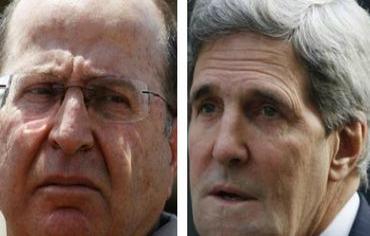
Kerry and YaalonUS Secretary of State John Kerry (R) and Defense Minister Moshe Ya’alon Photo: REUTERS

One day after US Secretary of State John Kerry told lawmakers in Washington that raising the idea of Palestinian recognition of Israel as a Jewish state was a mistake, Defense Minister Moshe Ya’alon declined to say whether Kerry is an honest broker in peace talks between the Israeli government and the Palestinian Authority.

In an interview which aired Saturday on Channel 2’s Meet the Press, Ya’alon disputes Kerry’s contention that Israel erred in demanding Palestinian recognition of its Jewish character.

“[Late Palestinian leader Yasser] Arafat never recognized Israel as a Jewish state,” the defense minister told Channel 2. “That was one of his manipulations. [The idea that the Palestinians already recognized Israel as a Jewish state] is simply not true.”

Ya’alon was responding to Kerry’s remarks to members of Congress on Thursday that international law already declares Israel a Jewish state, and called Prime Minister Benyamin Netanyahu’s insistence on a public declaration of Israel’s Jewish character from the Palestinians “a mistake” in the diplomatic process.

“I think it’s a mistake for some people to be raising it again and again as the critical decider of their attitude toward the possibility of a state, and peace, and we’ve obviously made that clear,” Kerry told the House Foreign Relations Committee, in a hearing on budget matters.

When asked by Channel 2 if Kerry was an honest broker for peace, Ya’alon sidestepped the issue.

“That’s something we will have to see during the course of the negotiations,” the defense minister said.

Ya’alon has been bitterly critical of Kerry, particularly due to what is perceived by some in Israel as the secretary’s preoccupation with the Israeli-Palestinian peace process.

Earlier this year, Ya’alon was quoted by the daily tabloidYedioth Ahronoth as saying Kerry was “obsessive” and “messianic.”

According to the newspaper, the defense minister told associates in private conversations that Kerry “should take his Nobel Prize and leave us alone.”

“Abu Mazen lives and dies by our sword,” Ya’alon was quoted as saying by Yedioth. “Once we leave Judea and Samaria, he is finished. In effect, during these past months, there haven’t been negotiations with the Palestinians, but with the Americans.”

“The only thing that can ‘save’ us is for John Kerry to win his Nobel Prize and leave us alone,” the defense minister reportedly said.

Minister: Fateh submarine soon to join Iran Navy

March 15, 2014

Minister: Fateh submarine soon to join Iran Navy, Trend, March 15, 2014

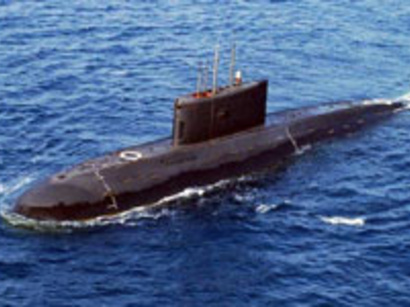
(A new Fateh (Conqueror) defensive submarine for Iran. — DM)

Iranian submarine

Iran’s Defense Minister Brigadier General Hossein Dehqan says the indigenous Fateh (Conqueror) submarine will join the Navy in May, Press TV reported.

Dehqan said on Saturday that the submarine has undergone necessary tests and its faults have been corrected.

He said the submarine will probably join the Navy on May 24 which marks the anniversary of the liberation of Khorramshahr city during the eight-year imposed war with Iraq.

Fateh weighs nearly 500 tons and it is Iran’s newest semi-heavy submarine.

In recent years, Iran has made major breakthroughs in its defense sector and attained self-sufficiency in producing important military equipment and systems.

Iran has so far launched different classes of indigenous advanced submarines including Fateh, Ghadir, Qaem, Nahang, Tareq and Sina.

The Islamic Republic has also conducted several military drills to enhance the defense capabilities of its armed forces and to test modern military tactics and equipment.

Iran says its military might poses no threat to other countries, stating that its defense doctrine is based on deterrence.

Iran: Palestinian firepower is 1000 stronger than before

March 15, 2014

Iran: Palestinian firepower is 1000 stronger than before, Ynet News, March 15, 2014

(Kind of him to tell Israel, but how could he possibly know? It’s not as though Iran sends them missiles, or something.– DM)

Iranian defense minister warns Palestinian terror groups in Gaza have yet to display their actual missile capabilities.

Palestinian terror organizations in Gaza have yet to display their actual missile capabilities, Iranian Defense Minister Hossein Dehqan told the semi-official Iranian news agency Fars on Saturday.

“The resistance forces have fired over 150 missiles against the occupied territories in the last four days and after the assassination of a number of resistance commanders by the Zionist regime in Gaza and the West Bank,” Dehqan said.

He warned that “the operational power of the Resistance against the Zionist regime is a thousand times more than what it was before.”

Iran says detects sabotage at nuclear facility

March 15, 2014

Iran says detects sabotage at nuclear facility, Ynet News, March 15, 2014

Tehran claims its intelligence agencies identified an attempt to harm its heavy water reactor and neutralized it before any damage was done.

A senior Iranian official says authorities detected sabotage at the country’s heavy water reactor facility and neutralized it before any damage was done.

Semiofficial Fars news agency quoted Asghar Zarean, a senior official in charge of nuclear security at the Atomic Energy Organization of Iran, as saying Saturday that Iran’s intelligence agencies were instrumental in uncovering the plot. He didn’t provide further details.

Iran’s Natanz uranium enrichment facility was the target of the so-called Stuxnet virus in 2010 that temporarily disrupted operation of centrifuges, a key component in nuclear fuel production.

Tehran says Stuxnet and other computer virus attacks are part of a concerted campaign by Israel, the US and their allies to undermine its nuclear program.

IDF fires on Hezbollah position after blast on Lebanon border

March 14, 2014

IDF fires on Hezbollah position after blast on Lebanon border – Diplomacy and Defense Israel News | Haaretz.

Explosive charge detonated in Har Dov; no wounded reported.

By | Mar. 14, 2014 | 8:23 PM |

An IDF soldier patrolling Israel's border with Lebanon.

An IDF soldier patrolling Israel’s border with Lebanon, August 2010. Photo by Yaron Kaminsky

An explosive charge detonated Friday evening near Har Dov in the vicinity of the Israel-Lebanon border.

No wounded were reported in the attack which targeted an IDF force. The Israeli army said it is investigating the incident.

The IDF fired at a Hezbollah position near the border north of the Israeli city of Metula, using tanks stationed in the area and artillery.

A high-ranking officer told reporters that no Hezbollah casualties are known, and noted that the retaliatory fire was “automatic, as a result of understanding the incident.” He added that the IDF currently considers Hezbollah as involved in the incident. The IDF is still uncertain where exactly the charge was placed and what was it made of.

Lebanese sources reporedt the IDF fired five artillery shells at open terrain near Lebanese villages, causing no injuries.

The Lebanese army announced a state of alert along the border, and eyewitnesses reported increased activity by UNIFIL forces in the area.

Today, March 14, marks the 36th anniversary of the Litani Operation, in which the Israeli army invaded Lebanon up to the Litani River in 1978 in response to the Coastal Road massacre.

About ten days ago a similar incident occurred in the northern Golan Heights, when an IDF force spotted several persons suspected of attempting to plant a charge near the border fence with Syria. The force fired at the persons, using both artillery shells and bullet rounds.

An IDF source said the activity was directed by Hezbollah.

Tensions have risen in the north since an airstrike, attributed by foreign reports to the Israeli Air Force, targeted a Hezbollah weapons convoy in Lebanon.

Hezbollah threatened to attack Israel in retaliation, and Israeli authorities directed civilians to stir clear of the border to avoid possible sniper fire.

Lebanese security forces told the Lebanese newspaper a-Nahar after the attack that “Israel has taken Hezbollah’s threats very seriously.” According to the report, in addition to the increased alertness along the northern border, Israel has also related a message through UNIFIL to Lebanon’s government according to which all Lebanon will come under fire if Hezbollah carries out its threats.

IDF convoy hit by explosive device on Lebanese border, sustain no injuries

March 14, 2014

IDF convoy hit by explosive device on Lebanese border, sustain no injuries | JPost | Israel News.

By YAAKOV LAPPIN

03/14/2014 19:18

Israeli tanks, artillery fire and destroy Hezbollah post; no injuries sustained by IDF soldiers.

Tanks fire rounds as part of an intensive ‘master gunner’ course.

Tanks fire rounds as part of an intensive ‘master gunner’ course. Photo: IDF Spokesman

An IDF convoy moving in the area of Har Dov, on the border with Lebanon, was the target of an explosive device activated by Hezbollah terrorists in Lebanon on Friday night.

One of the armored vehicles was directly hit by the explosion, the IDF sustained no injuries. However, three of the soldiers were taken to Ziv Medical Center in Tzfat for precautionary reasons.

The IDF concluded within minutes of the attack that Hezbollah was behind the explosion. In response, IDF tanks and artillery fired on and destroyed a Hezbollah post in Metullah, Lebanon.

Since the incident, there has been no further exchange of fire; however, IDF sources added that the situation is still ongoing.

An IDF source stated regarding the incident, “The coming hours will tell whether or not this will lead to an escalation.”

Off Topic: Jordan: Not in our interest to cut ties with Israel

March 14, 2014

Jordan: Not in our interest to cut ties with Israel, Times of Israel, March 14, 2014

As thousands protest outside the Israeli Embassy, PM Ensour points to issues of mutual concern like water, refugees and Jerusalem.

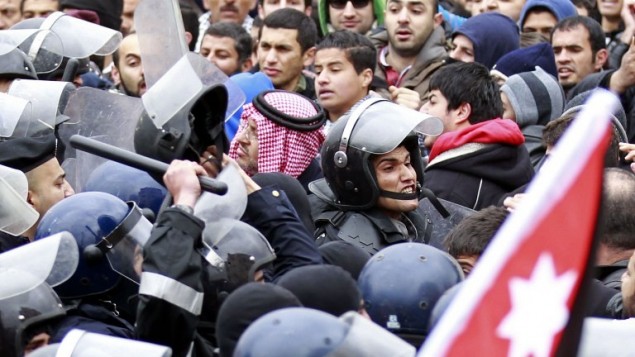
Jordanian riot policeJordanian riot police confront protesters during a demonstration in front of the Israeli Embassy in Amman on Friday (photo credit: AFP/Khalil Mazraawi)

AMMAN, Jordan — Some 2,000 protesters demonstrated in front of the Israeli Embassy in Jordan on Friday over the killing of a Jordanian judge earlier in the week.

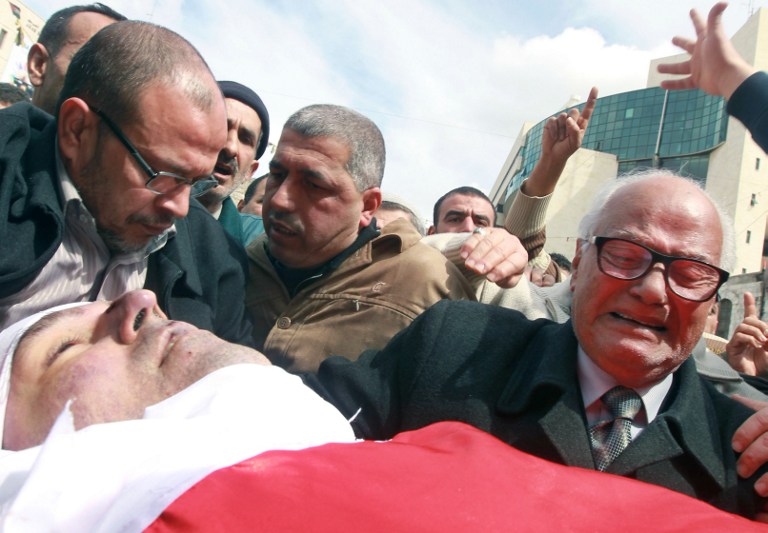
The death of Raed Zeiter, a Jordanian magistrate of Palestinian descent, has caused an uproar in Jordan, triggering street protests and calls in parliament to annul the 1994 peace agreement with Israel.

The IDF said that guards shot Zeiter on Monday after he tried to grab a rifle from a soldier at the Allenby border crossing between the West Bank and Jordan.

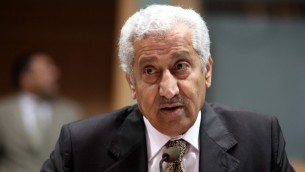
Jordanian Prime Minister Abdullah Ensour addressed the parliament’s concerns on Friday, saying that it was not in the national interest to cut ties with Israel. He also said such a step could hurt Israeli-Palestinian peace negotiations and US aid to Jordan.

Ensour said that water issues, borders, Palestinian refugees and sovereignty over Jerusalem were all issues of mutual concerns for both countries.

Jordanian PMJordanian Prime Minister Abdullah Ensour (photo credit: AP)

Protesters on Friday chanted anti-Israel slogans and called upon the Jordanian government to deport the Israeli ambassador, to return the Jordanian ambassador from Tel Aviv and to annul the peace treaty. Thousands of riot police stood on hand and stopped protesters from attacking the embassy.

Opposition Islamists, youth groups, leftists and nationalists took part in the demonstration that started after Friday prayers in Kaluti mosque. Jordan’s Muslim Brotherhood organized the protest.

Demonstrators waved Jordanian flags and banners reading “the people want to cancel the peace treaty,” and “shut down the Zionist entity’s embassy and kick the ambassador out for the sake of the martyr’s blood.”

“Zeiter you are a martyr and our rulers are slaves. We will not forget you,” they chanted.

PALESTINIAN-ISRAEL-JORDAN-CONFLICTThe father of Raed Zeiter grieves over his son’s body during his funeral in the northern West Bank city of Nablus, on March 11, 2014 (photo credit: AFP/Jaafar Ashtiyeh)

Several protesters were arrested for trying to break through the barrier formed by police, reported the country’s Ammon News.

On Wednesday, the lower house of Jordan’s parliament demanded in a non-binding resolution the government free Jordanian soldier Ahmad Dakamseh, who was jailed after he opened fire on a group of Israeli schoolgirls in 1997, killing seven.

Preventing an Iranian Breakout after a Nuclear Deal

March 14, 2014

Preventing an Iranian Breakout after a Nuclear Deal – The Washington Institute for Near East Policy.

Washington must urgently reestablish the credibility of its military threat, along with other steps, to guard against noncompliance from Tehran.

James F. Jeffrey and David Pollock
March 12, 2014

Assuming a final Iranian nuclear agreement is achieved, whatever the details, the task of the United States, the rest of the P5+1 (Britain, China, France, Russia, and Germany), and U.S. allies and friends in the region to manage the threat of an Iranian nuclear program will not slacken. Thus, the arrangements to encourage Iran to stick with an agreement will be every bit as important as the specifics of an agreement itself. It is thus important to begin thinking about these arrangements now.

Furthermore, even with an agreement, the United States and its partners will face a long-term Iranian push for hegemony in the Middle East. That fact, plus analogous recent Russian and Chinese behavior and questions about U.S. responses, offers the context within which any nuclear deal, and plans to maintain it, must be considered. 

In any likely final agreement with Iran, a residual nuclear enrichment program, however undesirable, will likely be permitted. This will necessitate a regime to prevent Iran from breaking out of that agreement to develop nuclear weapons, or exploiting the threat of a breakout for regional intimidation. Such a regime would require three interlocking components: specific limitations on Iran’s program, in order to maximize Iran’s prospective breakout time; extensive verification, monitoring, and intelligence capabilities, inside and outside the agreement, to spot any breakout as soon as possible; and, finally, credible response scenarios should a breakout occur. Steps for achieving these essential goals are inventoried as follows:

Immediate next steps. The path to enforcing a final deal begins with enforcement of the current interim deal. The administration has rejected the option of passing conditional congressional sanctions in case a final deal proves beyond reach. But neither that nor the language of the Joint Plan of Action (JPOA), as the interim agreement is known, should stop the White House from immediately underlining that any Iranian infringement of the interim deal will incur new sanctions, along with other enforcement actions. Iran will protest, but this should be the first signal of U.S. resolve in enforcing any deal with Tehran. Iran is unlikely to walk away from the talks in response. And if it does, that will be an invaluable warning of the inherent fragility of agreements with the regime. Moreover, if the United States cannot credibly enforce a limited interim deal, how will it ever enforce a final one?

One way for the White House to reinforce this crucial early message would be to clearly state that it prefers no extension of the interim deal beyond its first six-month timeframe. As it is unlikely that this call would gain wider acceptance, however, Washington could lay down a clear marker that only one six-month extension will be acceptable. Otherwise, the temptation to extend the interim deal indefinitely, offering no real rollback of Iran’s nuclear program while sanctions erode, may well prove irresistible to Iran and to some other interested parties.

Verification of a final deal. Verification is critical to deterring Iranian breakout, spotting Iranian noncompliance, and triggering a rapid international-community reaction, including sanctions and ultimately use of force. It is thus essential that the most intrusive monitoring regime possible be secured in any agreement, building on the enhanced International Atomic Energy Agency (IAEA) inspection regime in the JPOA and following up on Iranian commitments to sign the Nuclear Nonproliferation Treaty’s Additional Protocol as part of the final agreement. National means of verification must be strengthened and their findings accepted, once tested and confirmed, as a supplement to the IAEA.

Any UN Security Council resolution adopting a final agreement should empower the IAEA’s on-site personnel to provide certain reporting to the Security Council through — but not requiring votes by — the IAEA board. A precedent is UN Security Council Resolution 1022 on the Dayton Accords, which directed NATO’s Implementation Force (IFOR) commander to report through its channels to the Security Council.

Enforcement of a final deal. Any agreement, or the UN Security Council resolution adopting the agreement, necessarily would have provisions for alleged or proven noncompliance. At a minimum, these provisions would resemble those of UN Security Resolution 3118, on Syrian chemical weapons, which “Decides, in the event of non-compliance with this resolution…to impose measures under Chapter VII of the United Nations Charter.” Even better would be to include the specific enforcement measures directly in the UN Security Council resolution under Chapter VII.

Second, certain current UN sanctions on Iran, rather than being lifted, should be suspended. Third, sanctions relief, rather than occurring immediately, should be phased in as an incentive for compliance, especially concerning the inspections regime.

Setting a military redline. Most important of all, the U.S. administration must maintain, convincingly, its explicit threat to use force if Iran attempts to develop a nuclear weapon, as the president has affirmed repeatedly. To reinforce this aim, the United States should push for military force authority in the adopting UN resolution, as a complement to, but not a prerequisite for, a unilateral U.S. threat. The United States should, further, make clear its redline that would spark a military response. At least as important will be the strict avoidance of mixed public messages, such as previous statements by senior officials about how “destabilizing” or “unpredictable” a necessary military action might be. Any such statement should be immediately and publicly disavowed by the president, or else his own credibility will suffer.

The Obama administration understandably has previously refused to spell out what specific Iranian action would trigger a U.S. military response, along with the details of that response. But a verified violation of a nuclear agreement is different from an ambiguous development of a dual-use capability.

Recent experience and various other factors point to a limited military response focused on nuclear infrastructure and missile systems. But the United States also has a compelling interest in neutralizing Iran’s retaliation to a U.S. or international strike. So it should prepare if Iran retaliates not to slog out an air-sea campaign in the Gulf but rather to strike back asymmetrically against Iran’s strategic command, control and communications, fuel production, and electrical generation capabilities, with standoff, precision-guided weapons — making sure Iran is aware of these intentions.

Establishing military credibility. For any planned military response to serve as a deterrent, the threat must be credible. Given the present administration’s considerable deficit in this area, it must strengthen its regional military presence and encourage other states, such as France and Britain, to follow suit. Some such developments are under way, but public attention needs to be kept on this issue. Moreover, U.S. military actions, from Afghanistan to NATO missile defense and deployment cancellations, can color perceptions of its determination and thus of its deterrence. Worst of all is an administration that actually intends to respond militarily to a breakout, with an Iran that does not believe it.

Restoring the balance following a breakout attempt. The United States needs a game plan for “the day after” any breakout attempt is stopped, whether by negotiations, sanctions pressure, or military action. Possibilities include ending Iranian enrichment altogether, restricting oil exports, confidence-building measures including U.S. and other military presence, and diplomatic steps to sustain P5+1 and alliance solidarity.

Diplomatic Efforts

Implementing the program just outlined requires multiple simultaneous negotiations. A breakout response regime, especially one automatically linking Iranian failure to comply with a UN Security Resolution to the use of force, would be controversial. Washington would have to persuade its fellow P5+1 states, some of which recoil at the idea of military action, that such a regime is a sine qua non of any agreement. Likewise, Iran would have to tolerate intrusive verification and breakout enforcement provisions. Aside from the “sticks” discussed in this piece, “carrots” to encourage Iran to remain with any agreement, while outside the scope of this discussion, will likewise be important. Finally, Gulf allies and Israel will need to be convinced of the wisdom of any nuclear agreement.

Domestic Considerations

The U.S. Congress and the American people are skeptical about a deal with Iran, but, as the Syrian chemical weapons scenario showed, both can also be leery about using force. Here, only the president can make the case. He should make clear that he would use his presidential prerogatives, consulting with but not requiring consent from Congress, if military force were needed. Congress, in turn, could relieve some of the administration’s burden at the time an agreement was reached by passing a general resolution of support, including for a U.S. military response if the deal were violated. Because this would significantly enhance the military option’s credibility, it would be well worth the advance consultations with Congress, starting right now, required to secure its explicit endorsement.

Concluding Recommendations

For any agreement to secure regional stability and prevent a nuclear-armed Iran, the elements discussed here for a breakout response must be strong and mutually supporting. And they must be reinforced with the following understandings: (1) an agreement with Iran would not signal the creation of a new ally; (2) a credible, internationally endorsed response to any violation is obligatory; (3) U.S. military action must be at the core of any such response; and (4), relatedly, credibility must urgently be restored to the much-doubted U.S. threat of military force against Iran.

James F. Jeffrey is the Philip Solondz Distinguished Visiting Fellow at The Washington Institute. David Pollock is the Institute’s Kaufman Fellow and director of Fikra Forum.