Archive for March 26, 2014

Could the Peace Process Be Destroying Israel’s Legitimacy?

March 26, 2014

Could the Peace Process Be Destroying Israel’s Legitimacy? Commentary Magazine, March 26, 2014

Once Israel establishes that it has the land by right, only then can it effectively confront Arab rejectionism, which negotiations and land withdrawals actually spur on. It would seem that if Israel cannot tolerate the status quo then it must either unilaterally withdraw from the West Bank or annex it. But it’s possible that further withdrawals might actually damage Israel’s legitimacy more than annexation would. 

In the world of hasbara–Israel advocacy–it is usually suggested that the best way to make Israel’s case is by emphasizing that Israel wants peace: pointing to Israel’s willingness to negotiate, its withdrawals from territory, its evacuation of settlements, its prisoner releases, the settlement freezes, the moves to help establish and strengthen the Palestinian Authority. It’s true that Israel has done all of these things, but how is Israel’s standing in the world doing? Have peace talks and the surrender of territory done anything to placate those who only ever respond to these moves by calling for still more Israeli concessions? The hard truth is that today, in many circles, Israel’s legitimacy is in a worse place than it’s ever been. Israel negotiates and concedes, yet the movement to boycott and demonize Israel has only grown increasingly strident.

Israel has been locked down in the latest round of negotiations for months now. To make these talks happen Israel was first compelled to consent to the release of 104 convicted Palestinian terrorists. In the past Israel has been forced to freeze Jewish communities in the West Bank and even projects in Jerusalem. In both cases these concessions were to no avail. President Obama and Secretary Kerry regularly threaten Israel that should this current round of allegedly last-chance negotiations fail, Israel will be cast asunder to meet its fate in a cold world of boycotts and diplomatic isolation. Concessions and goodwill from Israel are rarely cause for praise from Western allies, they have simply come to be expected.

The boycott threat that Obama and Kerry try to use to panic Israel into doing whatever they instruct is really a case in point. Israel doesn’t await a wave of calls for boycotts if these talks fail; it faces them now. If anything, while this past round of Israeli concessions and negotiations have dragged on, the call for the boycott of Israel has only become louder. Across Europe and on American campuses, the campaign for boycotts is becoming frenetic. Oxfam’s attack on Scarlett Johansson and SodaStream made the headlines but there have been many cases that didn’t. In Europe a Dutch pension fund and several Scandinavian banks have already divested from Israel, while on both sides of the Atlantic the student campaign for boycotts has become particularly ugly. As Jonathan Tobin wrote about yesterday, the BDS campaign has even come to propagate racist hate speech. During a boycott vote only last night at King’s College, London, Jewish students were first hectored and reduced to tears, then mocked and taunted by BDS students.

At the very least, the fact that all of this goes on while Israel is in negotiations to try and end its presence in the West Bank should convince us that this has nothing to do with the “occupation.” Omar Barghouti, one of the leading founders of BDS, has been unequivocal in saying that the creation of two states would not end calls for boycotts. Yet if it is true that none of this is about creating a Palestinian state but rather opposing a Jewish one, then where does this leave notions about land for peace? Indeed, it would seem that on this point the boycotters are consistent with the Palestinians’ own refusal to let go of the desire to end Israel, even if it prevents them from getting a state themselves.

In a hard-hitting follow-up piece for Mosaic, Yoav Sorek tells us that since the beginning of the Oslo peace process, when Israel reneged on its pledge to itself not recognize or negotiate with the terrorist PLO, the net result has not only been unprecedented waves of carnage and violence, but the onset of deep self-doubt about Israel’s own national legitimacy. By promoting the idea that the conflict is a territorial one, Israel at once legitimized the PLO and undermined its own legitimacy before itself and the world. Accepting the land-for-peace equation meant that Israel was now saying it was the problem, not Arab annihilationism toward the Jewish state, but rather its occupation of “Palestinian land.”

Israel has put itself in the dock by endorsing land-for-peace. By promoting this idea Israel accepts that its activities over the 1949 armistice lines are illegitimate if not illegal. For the international community, land for peace means that Israel withdraws from territory and gets peace in return. By that logic the absence of peace is on account of the presence of Israelis in occupied land. Israel knows that it can’t hand over territory to those who will only use it to advance warfare against its people. So Israel is forced to say one thing and do another; the debate becomes fixated on whether or not the Palestinians are really a partner for peace and the Israelis just appear dishonest. Nor does Israel get any praise for the withdrawals it makes for, as Evelyn Gordon has argued previously, by denying its claim to the land Israel earns the status of a thief partially returning what never belonged to her.

Sorek suggests that asserting to the world Israel’s legal rights in the West Bank is the only viable option left. Once Israel establishes that it has the land by right, only then can it effectively confront Arab rejectionism, which negotiations and land withdrawals actually spur on. It would seem that if Israel cannot tolerate the status quo then it must either unilaterally withdraw from the West Bank or annex it. But it’s possible that further withdrawals might actually damage Israel’s legitimacy more than annexation would.

Apology politics, inexcusable policies

March 26, 2014

Apology politics, inexcusable policies, Jerusalem Post, Michael Widlanski, March 26, 2014

(January of 2017? — DM)

America’s leaders need to stop seeking apologies, making apologies and looking for excuses.

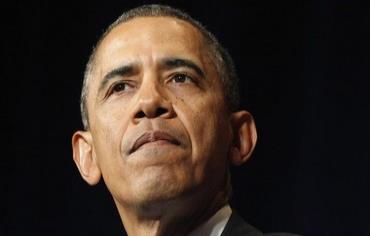
US Pres ObamaUS President Barack Obama. Photo: REUTERS

America’s first president to go abroad during office and make a mark on the world scene was Teddy Roosevelt – a man of good phrase and sound action.

“Speak softly and carry a big stick,” Roosevelt once said, “and you will go far.”

Roosevelt grasped the gritty power politics of the “Old World” and the soaring rhetoric of the “New World.” He understood power balances, how to balance strong ideals and strong actions. This separates Roosevelt from subsequent presidents and candidates like Jimmy Carter, Barack Obama, John Kerry and Hillary Clinton.

Carter was the first US leader to make apology a major part of policy, regretting America’s leading role, promising to lead less and consult more.

“We have learned that more is not necessarily better, that even our great Nation has its recognized limits, and that we can neither answer all questions nor solve all problems,” said Carter in his inaugural. His words had validity but were meant not just to bury the Vietnam era but to hint at a US pull-back from the rest of the world.

President Carter wrapped himself in idealism untroubled by reality. He promised to aid those who claimed to support democracy and human rights, even if this meant helping Iranian ayatollahs and Nicaraguan Sandinistas.

Carter naively invited Leonid Brezhnev and the Soviet Union to impose jointly an Arab-Israeli peace at a Geneva Conference. Anwar Sadat and Menachem Begin thought differently. They found peace in direct Egyptian-Israeli talks. Indeed, Israel and Egypt made peace despite Carter, not because of him. No thanks to Brezhnev. The Soviets did not help peace anywhere. They invaded Afghanistan, and they kept backing terrorists.

History is repeating, 1977-1979 sounds like 2009- 2014: Russian invasions, trying to engage supposed Iranian moderates and half-cocked American attempts to impose Arab-Israeli peace.

Obama, Clinton and Kerry use Carter’s playbook.

They often apologize for America, but their policies have been inexcusable. Obama’s much-touted “flexibility” and “re-start” with Russia became Russia’s invasion of Crimea. “Engaging” Iran led to increased Iranian nuclear bomb planning.

Clinton wants everyone to forget her star role in the TV tragi-comic show “Russian Re-Start,” where Russian Foreign Minister Sergei Lavrov lectures Clinton about how her staff cannot even get the word “re-start” correct in Russian.

Clinton-Obama want us to forget how they bragged terror had been vanquished on their watch. That was before the 9-11 attack on the US consulate in Benghazi, the details of which they have covered-up. Obama-Clinton did not apologize for criminal neglect. They apologized to Muslims for a video that had nothing to do with the terrorist attack.

Obama wants us to remember how cool he was in his role on Jimmy Fallon’s late night show. Obama wants us to forget his comic appearance with Russian puppet Dimitri Medvedev, promising “flexibility” to puppet- master Vladimir Putin.

“I can be more flexible after the election,” said Obama, talking to the puppet president of Russia.

“I will tell Vladimir,” said Medvedev.

Someone should apologize to Sara Palin, the GOP vice-presidential candidate in 2008. Obama-Clinton- Kerry loved the performance of Tina Fey, from Saturday Night Live, lampooning Palin as a country bumpkin. “I can see Russia from my window,” laughed Tina Fey-as-Palin.

But whether it was from her window or from her reading of history, Palin saw Russia a lot more clearly than Obama-Clinton-Kerry or Tina Fey.

Obama should apologize to election rival Mitt Romney. Obama ridiculed Romney for warning about Russia. Romney urged the US to restore global reach, energy independence, and its navy. Obama said Romney was living in the past. Obama ignores the past, evades the present and mortgages the future. And not just in Russia.

Obama-Clinton engaged Bashar Assad of Syria, and tens of thousands of Syrians died. Millions became refugees on the borders of Turkey, Israel and Jordan. Obama threatened and caved on Syrian chemical weapons. Obama accepted a face-saving retreat worked out by the peace-loving Putin.

President Obama speaks loudly and carries a tiny stick.

In recent days, the Obama administration has demanded an apology not from Putin, not from Assad, but from Israel, because its defense minister, Moshe Ya’alon, claimed America has lost its direction as a major power.

Israel’s defense minister, an ex-commando and army intelligence chief, also offended Obama and Kerry by saying the US is wasting time by trying to cultivate PLO leaders as peace partners and as the key to Middle East stability. The PLO leaders, according to Ya’alon, are not real partners, interested in peace or important as a regional factor.

This is the truth. America’s leaders need to stop seeking apologies, making apologies and looking for excuses.

The writer is the author of Battle for Our Minds: Western Elites and the Terror Threat, published by Threshold/ Simon and Schuster. He teaches at Bar-Ilan University, was strategic affairs advisor in Israel’s Public Security Ministry, and is the Schusterman Visiting Professor at University of California, Irvine, for 2013-14.

Off Topic: US spokesman calls for immediate release of Iranian border guards

March 26, 2014

Off Topic: US spokesman calls for immediate release of Iranian border guards – IRNA.

(DISGUSTING! While the American Pastor Saeed Abedini is being beaten by his prisoners and is rotting in a notorious Iranian prison the US state department calls for the release of two Iranian soldiers.  – Artaxes)

Tehran, March 26, IRNA – Spokesman for the US Department of State Alan Eyre called for immediate release and safe return of the kidnapped Iranian border guards in Pakistan.

The Persian-language speaking spokesperson made the remarks in an interview with the BBC Persian on Tuesday.

Touching on possible martyrdom of one of the five abducted Iranian border guards named Jamshid Danaie far, he added that the US has seen the unconfirmed reports on the killing of the Iranian guard by terrorist group-let called ˈJeish al-Adlˈ.

Saying that the US is closely watching the case, he expressed hope that the report is not true.

It’s Not Just Ukraine

March 26, 2014

It’s Not Just Ukraine – MOSAIC Magazine.

(This excellent article not only explains the failure of US policy vis a vis Russia but it also helps to understand the game that Russia plays in the MidEast. – Artaxes)

What his actions in Eastern Europe tell us about how Vladimir Putin sees the Middle East.

Russian President Vladimir Putin signs bills making Crimea part of Russia, Friday, March 21, 2014. Photo credit: AP/Sergei Chirikov.

Does the Ukraine crisis mark the beginning of a new cold war? The answer from President Obama is a firm no. “The United States does not view Europe as a battleground between East and West, nor do we see the situation in Ukraine as a zero-sum game. That’s the kind of thinking that should have ended with the cold war,” he told a Dutch newspaper.

The president is partially correct. Unlike the Soviet Union, Russia has neither the intention nor the capability to challenge the entire European order, and it is certainly not mounting a global revolutionary movement. Nevertheless, it is a revanchist power, and its appetites are much larger than the president cares to admit.

That Russian President Vladimir Putin sees Ukraine as a zero-sum game seems obvious. Somewhat less apparent is the fact that his revisionist aspirations also extend elsewhere, and most saliently to the Middle East.

Obama’s first-term effort to “reset” relations with Russia was rooted in the firm conviction that the main cause of Russian-American competition in the Middle East lay in the previous Bush administration’s war on terror, which was read by the Russian leader as a pretext for a global power grab. Bush’s freedom agenda, with its support for democratic reform inside Russia, only confirmed Putin’s worst suspicions.

Alienating Putin, the Obama White House believed, had been a strategic blunder, depriving the United States of a potentially valuable partner. Putin, whatever his faults, was a realist: someone who could cut a deal in situations—like those in the Middle East—where Russia and America shared many interests. Once Putin fully grasped our sincerity, demonstrated by our ending the wars in Iraq and Afghanistan, Russian fears of American aggressiveness would dissipate and Russian-American cooperation would blossom.

Unfortunately, getting through to Putin proved harder and took longer than expected—though not for want of trying. Famously, during the 2012 American presidential campaign, an open microphone caught Obama making his pitch. “This is my last election. After my election I have more flexibility,” he told then-Russian President Dimitry Medvedev. “I understand,” Medvedev answered. “I will transmit this information to Vladimir.”

Eventually, Putin did seem to grasp the concept. When Russian Foreign Minister Sergei Lavrov stepped forward last September with an offer to strip Syria’s Bashar al-Assad of his chemical weapons, Obama saw the move as a breakthrough, precisely the kind of mutually beneficial arrangement that the Russian reset was designed to generate. Soon, working together on the chemical-weapons problem, Secretary of State John Kerry and Lavrov also conspired to launch Geneva II, a peace conference designed to find a diplomatic solution to the Syrian civil war.

In the dawning new era, Syria was seen by the White House as a prototype: a model for stabilizing the Middle East and containing its worst pathologies. If successful, it could be applied to other problems in the region—including the Iranian nuclear program, the greatest challenge of all. In his speech at the General Assembly last September, the president was eager to defend his friendship with Putin in just these terms. “[L]et’s remember this is not a zero-sum endeavor,” Obama reminded his critics. “We’re no longer in a cold war.”

Today, just six months later, the new model is collapsing before our eyes. The proximate cause is the spillover from the Ukraine crisis. On March 19, Russia’s Deputy Foreign Minister Sergei Ryabkov warned that if the West imposed sanctions over the annexation of Crimea, Russia would retaliate by exacting a much greater price: it would throw its support to Iran in the nuclear talks. “The historic importance of what happened . . . regarding the restoration of historical justice and reunification of Crimea with Russia,” Ryabkov explained, “is incomparable to what we are dealing with in the Iranian issue.”

Even before Ryabkov issued this extortionate threat, there were clear signs that the Kremlin never truly supported the new model of Middle East cooperation. Kerry and Lavrov did convene Geneva II in January, but the conference ended in abject failure thanks to the intransigence of the Assad regime—which after all is Russia’s client. Shortly thereafter, Kerry openly blamed Russia for the Syrian disaster. “Russia needs to be a part of the solution,” he complained, “not contributing so many more weapons and so much more aid that they are really enabling Assad to double down.”

In the Middle East as in Eastern Europe, then, the reset looks increasingly bankrupt. In fact, being based on two major errors, it never had a chance.

The administration’s first error was the failure to appreciate Putin’s either-or perspective on politics, a viewpoint succinctly expressed in Lenin’s famous formula: “who-whom?” Who will dominate whom? In Putin’s view, all accommodations with the United States are tactical maneuvers in a struggle—sometimes overt, sometimes covert—for the upper hand.

In the bad old days of the cold war, the overtly malevolent intentions of the Kremlin were hard to misread (although, even then, some American leaders did try to misread them). Today, Russia’s motivations are more complex: a unique mix of Great Russian nationalism, crony capitalism, and autocratic whimsy. This makes it difficult to predict the Kremlin’s behavior. For 364 days of the year, a deal between a Western client and Gazprom, the largest Russian natural-gas supplier, will function like a normal business transaction. On the 365th day, to teach the recipient a lesson about who’s really in charge, Putin will cut the gas flow.

Adding to the unpredictability is Putin’s mercurial-seeming personality. Perhaps the single most revealing fact about him is his interest in Sambo, a Russian form of judo whose techniques have been deliberately tailored to the requirements of each state security service. “Judo teaches self-control, the ability to feel the moment, to see the opponent’s strengths and weaknesses,” Putin writes in his official biography on the Kremlin website. “I am sure you will agree that these are essential abilities and skills for any politician.” As a former KGB agent and judo black belt, Putin is undoubtedly adept at the deceptive move that turns an ordinary handshake into a crippling wristlock, instantly driving the adversary’s head to the ground.

Turning a blind eye to such niceties, Western politicians assumed that by enmeshing Putin in a web of diplomatic and economic deals, they would foster in Moscow a sense of shared destiny that would ultimately work to moderate Russian behavior. As the Ukraine crisis demonstrates, the web has indeed created mutual dependencies. But the crisis also reveals that the two sides do not approach dependency in a spirit of reciprocity. When shaking hands on a deal, Putin never fails to assess whether he has positioned himself for a speedy takedown of his partner.

The Sambo approach to diplomacy is particularly suited to the Middle East, where international relations, more often than not, is a zero-sum game dominated by brutal men with guns. This is Putin’s natural habitat; as prime minister in 1999, he supported the Russian military’s use of ballistic missiles against civilians in Grozny. It is a simple truism that a leader habitually photographed shirtless while performing feats of derring-do will understand the politics of the Middle East better than sophisticated Westerners who believe that the world has evolved beyond crude displays of machismo.

Lack of attention to the perfect fit between Putin’s mentality and Middle East reality constitutes the second error of the administration’s Russian reset.

With respect to political alignments, the most influential event in today’s Middle East is the Syrian civil war. That the conflict is barbarous is easily gleaned from a slogan of the pro-Assad forces, scrawled on buildings in all major cities: “Assad, or we will burn the country.” This demand has divided the entire region into two groups. On one side stand the allies of America: the Saudis, Turks, and other Sunni Muslim states, all of whom agree that, come what may, Assad must go. On the other side, the Iranians, together with Hizballah, have lined up squarely behind Assad, their partner in the so-called Resistance Alliance.

For Putin, Syria has raised two key questions, each a variant of who-whom: (1) who will dominate inside Syria; (2) who will dominate in the region more broadly. It was Foreign Minister Lavrov who two years ago, in a rare slip of the tongue, best explained how Putin saw these questions: “if the current Syrian regime collapses, some countries in the region will want to establish Sunni rule in Syria.” More bluntly, the Kremlin sees itself as the great-power patron not just of the Assad regime but also of Iran and Hizballah—the entire Resistance Alliance. At the time, Moscow’s unvarnished preference for Shiites won little attention in the United States, but it sparked a storm of outrage in the Sunni Arab world, leading one prominent Saudi commentator to dub the foreign minister “Mullah Lavrov.”

Not surprisingly, Putin’s position was in perfect keeping with one of the most fundamental rules of strategy, perhaps best expressed by Machiavelli: “A prince is . . . esteemed when he is a true friend and a true enemy, that is, when without any hesitation he discloses himself in support of someone against another.” In the Middle East, Machiavelli’s logic is inescapable, and Putin grasps it intuitively. Not so Obama, who has convinced himself that he can hover above the gritty game on the ground yet somehow still remain an influential player.

In Syria, the United States criticizes Assad harshly and says it sympathizes with the opposition. But it releases only dribs and drabs of military aid to opposition forces while simultaneously qualifying and hedging its diplomatic support. Fretting incessantly about the Sunni jihadist elements fighting the Assad regime, it develops no strategy to combat them; instead, it cozies up to Assad’s Russian and Iranian patrons. When the Sunni allies of the United States compare the confusion of American policy with the clarity of Russian strategy, it’s no wonder they despair.

Obama is not entirely oblivious of the problem. In a recent interview, the journalist Jeffrey Goldberg asked him bluntly, “So why are the Sunnis so nervous about you?” His answer: “[T]here are shifts that are taking place in the region that have caught a lot of them off-guard. I think change is always scary. I think there was a comfort with a United States that was comfortable with an existing order and the existing alignments, and was an implacable foe of Iran.” This exercise in condescension, while doing nothing to allay and everything to aggravate the fears of America’s allies, offers a glimpse into the mindset that generated the reset, a mindset that dreamed of a concert arrangement whereby both Russia and America would place a greater value on comity with each other than either would put on its relations with allies.

To be sure, Putin will gladly sign on to American-sponsored initiatives like Geneva II. But he will insist on guiding them in directions that, regardless of their stated intentions, serve the interests of his clients. If the Obama administration has yet to admit or adjust to this reality, that is partly because the Russians do not wave a flag identifying themselves as the great-power patrons of Iran, Syria, and Hizballah. Nor does Putin back Tehran and Damascus to the hilt as the Soviet Union backed its clients in the cold war.

It is thus more accurate to say that Russia in an alignment, not an alliance, with Iran and Syria. Depending upon competing priorities and the vicissitudes of world politics, Putin will tack this way today, that way tomorrow. In the end, however, he will never sell out Tehran and Damascus in order to win compliments in Washington; if forced to choose, he will always side with the former against the latter, and will certainly leave them in no doubt that Russia is their most dependable friend in the United Nations Security Council.

It is this fact that makes Russia a revisionist power in the Middle East and the permanent adversary of the United States.

What, then, about the Iranian nuclear question? Hasn’t Russia consistently called for preventing Iran from acquiring a nuclear weapon? Didn’t it vote in favor of six Security Council resolutions against Tehran? Hasn’t it signed on to the economic sanctions? Surely all of these actions support the Obama administration’s contention that Russia, in certain contexts, is a valuable partner.

Indeed, Putin has a strong track record of supporting some actions designed to prevent an Iranian bomb; in an ideal world, he would probably prefer an Iran devoid of such weapons. But he also has a strong track record of building the Iranian nuclear program and of providing security assistance to the Iranian military. Whatever his preferences in an ideal world, in the here and now his goal is less to stop Iran from acquiring a nuclear weapon than to garner as much power and influence for Russia as he can. He is supportive enough of the United States and its key European partners to maintain credibility with them. On the key issue of stopping Iran from acquiring a nuclear weapon, he is never so supportive as to be taken for granted.

How this cynical game works was revealed in Deputy Foreign Minister Ryabkov’s extortionate threat mentioned earlier. It has placed Obama on the horns of a severe dilemma. If, on the one hand, the president simply acquiesces in Putin’s power play in Ukraine, he will embolden not just Russia but also Iran, Syria, and Hizballah by demonstrating that, just as in Syria, he retreats when challenged. If, on the other hand, he marshals a robust Western response, he could well provoke the threatened Russian countermeasures of increased support for Iran.

No matter which course the president follows, the Ukraine crisis has damaged the prestige of the United States in the Middle East. America’s Arab friends in the region, who are on the front line against Iran, Syria, and Hizballah, already feel the pinch, and are deeply uncertain about how to respond. Unlike the Resistance Alliance, they are not accustomed to cooperating on their own. As Karl Marx notoriously said of peasants, America’s Arab allies are like potatoes. When U.S. leadership provides a sack, they take on a single form and become hefty in weight. In its absence, they are a loose assortment of small, isolated units.

The ally who most immediately feels the fallout is Israel. On March 17, Defense Minister Moshe Yaalon described, with unusual bluntness, the consequences of what he called the “feebleness” of American foreign policy. The Obama administration’s weakness, he argued, was undermining the position not just of Israel but also of America’s Sunni allies. “The moderate Sunni camp in the area expected the United States to support it, and to be firm, like Russia’s support for the Shiite axis,” Yaalon lamented.

Yaalon spoke no less despairingly of Obama’s ability to make good on his pledge to prevent Iran from acquiring a nuclear weapon. “[A]t some stage,” he observed, “the United States entered into negotiations with them, and unhappily, when it comes to negotiating at a Persian bazaar, the Iranians were better.” On the matter of Iran, Yaalon concluded, inevitably, “we have to behave as though we have nobody to look out for us but ourselves.”

Whether Israel actually has the political will and military capability to launch an independent strike against Iran is anybody’s guess. But two facts are undeniable. First, Putin’s muscular foreign policy and Washington’s timorous response have increased the pressure on Israel to strike independently. Second, Obama has lost influence over the Israelis—just as he lost influence over his Arab allies when he refused to back them on Syria.

Adrift in Machiavelli’s no man’s land, neither a true friend nor a true enemy, Washington is left with the worst of both worlds, treated by its adversaries with contempt, charged by its friends with abandonment and betrayal. President Obama was correct to say at the UN that the U.S. and Russia are no longer locked in a cold war. But it was a strategic delusion to assume that Putin’s handshake was an offer of partnership. It was instead the opening gambit in a new style of global competition—one that, in the Middle East, Russia and its clients are winning and the United States, despite huge natural advantages, is losing.

__________________________

Michael Doran, a senior fellow of the Saban Center for Middle East Policy at the Brookings Institution, is a former deputy assistant secretary of defense and a former senior director of the National Security Council in the George W. Bush administration. He is finishing a book on Eisenhower and the Middle East. He tweets @doranimated.
Al-Qaida Pursues New Home in Syria: U.S. Officials

March 26, 2014

Al-Qaida Pursues New Home in Syria: U.S. Officials – Global Security Newswire.

Syrian opposition fighters train in the city of Deir Ezzor on Tuesday. Recent U.S. findings suggest al-Qaida leaders in Pakistan may want to establish a base in Syria for coordinating new attacks against Western nations.

Syrian opposition fighters train in the city of Deir Ezzor on Tuesday. Recent U.S. findings suggest al-Qaida leaders in Pakistan may want to establish a base in Syria for coordinating new attacks against Western nations. (Ahmad Aboud/AFP/Getty Images)

Al-Qaida operatives may be infiltrating Syria to establish a staging ground for new attacks against the West, the New York Times reports.

U.S. intelligence and antiterrorism specialists believe Syria has seen an influx of mid-ranking and other veteran al-Qaida members from Pakistan in past months, the newspaper said on Tuesday.  The concern emerged as secret intelligence findings hinted at possible work by Ayman al-Zawahiri and other al-Qaida commanders to prepare a more sophisticated strategy for tracking down and taking in Syrian rebel fighters from Western countries.

The terror group could exploit Syria to “recruit individuals and develop the capability to be able not just to carry out attacks inside of Syria, but also to use Syria as a launching pad,” CIA Director John Brennan told members of the House of Representatives.

Antiterrorism personnel said the possible initiative could reinvigorate al-Qaida’s central organization, and give the group its first safe haven beyond Pakistan’s borders for plotting strikes against the West.

Still, certain U.S. allies have differed on whether the growing al-Qaida presence they see in Syria is part of a broader plan to launch attacks against international targets.

“At this stage, it’s a lot less organized than a directed plan,” a Western security insider said. “Some fighters are going to Syria, but they’re going on an ad hoc basis, not at an organized level.”

One U.S. insider suggested Zawahiri might currently be “soft-pedaling” activities in Syria “to consolidate al-Qaida’s position for the future.”

“There is going to be push and pull between local operatives and al-Qaida central on attack planning,” the source said. “How fast the pendulum will swing toward trying something isn’t clear right now.”

President Obama’s Message to Assad, Putin, and Khamenei

March 26, 2014

President Obama’s Message to Assad, Putin, and Khamenei, Brookings,  Michael Doran, March 26, 2014

[This article by Michael Doran was originally published on Mosaic Magazine under the headline “Pass the Fig Leaf, Please – The president’s true message to Assad, Putin, and Khamenei: Get me out of here” on Tuesday March 11, 2014.]

(Things remain much the same. President Obama will not apply pressure on Iran comparable to that applied to Israel. Is it because he can’t, because he views Israel as an extremist apartheid state and Iran as moderate or something else? — DM)

It is undoubtedly the case that Obama’s policies have weakened the deterrent credibility of the United States everywhere. While many are now decrying the results of that weakness in the case of Ukraine, its effects are even more directly visible, and more alarming, in the case of Iran. Maybe, just maybe, the president will keep his promise to prevent Iran from going nuclear on his watch. But the emphasis is entirely on the last phrase—on his watch. That’s very different from a policy aimed at preventing Iran from going nuclear, period. Meanwhile, interim deal or no interim deal, Tehran, as aware of American election cycles as is Barack Obama himself, steadily moves toward a point within a hair’s breadth of an undetectable breakout capability.

The day before Russian President Vladimir Putin flexed his muscles in Ukraine, the columnist Jeffrey Goldberg asked President Obama whether, given his failure to police his own “red line” in Syria, countries like Russia and Iran still believed he was capable of using force to advance American interests. Repudiating the inference, the president pointed to his threat last fall to intervene militarily with targeted strikes in Syria. That threat, he averred, was directly linked with the support subsequently given by both Russia and Iran to the agreement stripping the Assad regime of its chemical weapons:

We’ve now seen 15 to 20 percent of those chemical weapons on their way out of Syria with a very concrete schedule to get rid of the rest. That would not have happened had the Iranians said, “Obama’s bluffing, he’s not actually really willing to take a strike. . . .” Of course they took it seriously!

In three ways, this rendition of events is illusory. First, the Syrians are not, in fact, sticking to the chemical-weapons agreement. Assad has repeatedly dragged his feet, delaying the process of removing the weapons in order to keep Washington and the Europeans dickering with him; in the meantime, Syrian security forces continue to enjoy a free hand slaughtering people by means of conventional arms. Second, and more important, Obama’s stated goal in Syria was to establish a process that would force Assad to step aside and make way for a transitional government capable of ending the civil war. Touting his “success” with Assad’s chemical weapons is a sleight of hand, deflecting attention from the abject failure of that larger aim.

Which brings us, third, to that larger aim, an aim vehemently opposed by both the Russians and the Iranians and whose relinquishment was decisively—and handily—abetted by them. In fact, both Putin and Ali Khamenei, Iran’s Supreme Leader, understood something very well back in the fall: Obama’s threat of force was half-hearted at best, and he was looking for a path of retreat. In coming to his rescue, Putin in particular expected a quid pro quo. In return for Russia’s agreeing to help with the chemical-weapons deal, the U.S. would back off from any pursuit of regime change.

Putin was not disappointed, and neither were the Iranians. Time and again, Obama has since made it clear that he does not intend to help the Syrian opposition topple Assad. Meanwhile, the Russians and the Iranians have redoubled their efforts in the opposite direction: training and equipping Syrian government forces and, on Iran’s part, sending detachments of the Qods Force and Iranian-trained foreign militias like Hizballah.

Contrary to what he boasted to Jeffrey Goldberg, then, Obama’s true message to Assad, Putin, and Khamenei was not, “Negotiate with me or face military action” but “Hand me a fig leaf and I will retreat.”

To judge by events now unfolding on both the Russian and the Iranian fronts, that message has been heard loud and clear. In the former case, it is undoubtedly true that many factors of a purely domestic nature have gone into determining Putin’s well-documented belligerence toward Ukraine and other countries bordering Russia. Still, the Russian leader’s decision to act forcibly must have been eased by Obama’s flaccid performance in the Middle East. As Scott Wilson of the Washington Post noted about the president’s warning to Putin to keep his hands off Crimea, “[r]arely has a threat from a U.S. president been dismissed as quickly — and comprehensively.”

But the real consequences of the Syria debacle can be seen with respect to Iran.

If the Iranians understand one thing, the president assured Jeffrey Goldberg, it’s that, if cornered, he will resort to military force to stop them from acquiring a nuclear weapon. But, just as in Syria, Obama’s primary goal in Iran is to avoid ever being cornered. Gary Samore, a former Obama White House official, has expressed it with admirable clarity: “Our strategy is to buy time.”

Unfortunately, time does not come cheap. Although the president insists that a policy of delaying the arrival of an Iranian nuclear bomb is perfectly consistent with a policy of preventing its arrival altogether, in fact the two aims are largely incompatible. Delay comes at the cost of prevention.

Stopping Iran’s march toward nuclear capability would require instilling in Ali Khamenei the certain knowledge that if he fails to drop his program, he will suffer economic ruin, or a devastating military attack, or both. To be successful, therefore, the interim diplomacy must be carried out under a hard deadline. The Iranians must be left in no doubt whatsoever that failure to reach a deal by a date certain will leave them in a much worse position than before the negotiations ever started.

Obama’s diplomacy fails this elementary test. Rather than forcing Khamenei to make a hard choice, the “interim deal” struck in Geneva last November explicitly offers him an escape route: endless negotiations. According to the terms of that deal, diplomacy can be extended indefinitely. Although defenders of the administration downplay the significance of this fact, claiming that the Iranian program is “frozen” during the period of negotiations, that claim is false. The program advances even as the diplomats haggle.

For one thing, the interim deal is silent on ballistic missiles and warheads, two key components of any nuclear program. For another thing, although the deal does extract concessions on centrifuges and enrichment, even in these areas the Iranians are still moving forward. In recent congressional testimony, David Albright, a leading expert on counter-proliferation, pointed to a major loophole in the agreement that allows continued “research and development” on second-generation centrifuges. Since, he explains, these so-called IR-2Ms are more efficient than the first-generation machines currently in operation, “At the end of the interim period Iran is likely to be far better positioned to deploy reliable IR-2m centrifuges on a mass scale at its enrichment plants. This gain would allow Iran to make up for time lost more quickly.”

Over the next months, we can expect Khamenei’s negotiators to test Obama’s red lines. What then? If the president finds himself compelled to assume a firm posture, as he did with Syria last fall, the Iranians might present him with a fig leaf in the form of a revamped interim deal. For example, they might agree to dismantle first-generation centrifuges in return for the right to replace them with IR-2Ms, thereby increasing the program’s overall capacity to enrich uranium with a decreased number of centrifuges.

Would Obama reject such a deal and launch a military strike, or would he embrace it in order to buy more time? Odds are, he’d embrace it. Congress would certainly balk, but the big showdown between Capitol Hill and the White House would not come, if ever, until after this year’s mid-term elections, by which time the president will be less constrained by domestic critics. In addition, he could deal with those critics as his staffers did when November’s interim deal was first announced, painting dissenters in Congress as warmongers and subtly suggesting that they are dancing to the tune of a foreign power (i.e., Israel). At the same time, the president could turn to the American people and proclaim, “Just as I forced Assad to give up chemical weapons, I have now compelled Iran to destroy nuclear infrastructure.”

In brief, it is undoubtedly the case that Obama’s policies have weakened the deterrent credibility of the United States everywhere. While many are now decrying the results of that weakness in the case of Ukraine, its effects are even more directly visible, and more alarming, in the case of Iran. Maybe, just maybe, the president will keep his promise to prevent Iran from going nuclear on his watch. But the emphasis is entirely on the last phrase—on his watch. That’s very different from a policy aimed at preventing Iran from going nuclear, period. Meanwhile, interim deal or no interim deal, Tehran, as aware of American election cycles as is Barack Obama himself, steadily moves toward a point within a hair’s breadth of an undetectable breakout capability.


Only a ground offensive will defeat the enemy, says senior IDF source

March 26, 2014

Only a ground offensive will defeat the enemy, says senior IDF source – Jerusalem Post.

Ground forces make upgrades to prepare for war with Hezbollah; 40% of artillery rounds to be high-accuracy shells.

By YAAKOV LAPPIN        03/26/2014 03:05

A tank from the 52nd Armored Battalion in the Jordan Valley.

A tank from the 52nd Armored Battalion in the Jordan Valley. Photo: IDF Spokesman’s Office

In the event of another war, only a full-scale ground offensive will achieve a convincing defeat of Hezbollah in Lebanon, a high-ranking IDF source said on Tuesday.

“It’s clear to the general staff that a ground maneuver is what’s needed” to extinguish the threat of mass rocket attacks, the source said. This view holds true despite the highly advanced capabilities developed in recent years by the air force, which enable it to strike a myriad of targets in a short space of time, he said.

The Ground Forces Command embarked on a series of upgrades designed to better prepare it for the day forces are ordered to storm hostile ground.

“The enemy is growing powerful” in its ability to rain down rockets and missiles on the Israeli home front, the source said, but it remains challenged by the IDF’s ability to launch ground offensive, which Hezbollah sees as an Israeli advantage.

One change under way involves an upgrade to weapons systems. Some 40 percent of artillery shells are being converted into precision shells that accurately strike targets as far as 40 km. away.

The shells come equipped with fins and other adaptations to make them accurate.

“It’ll prevent the need to place artillery forces deep into enemy territory. The new shells have 150% more range. This gives us more operational flexibility,” the source said.

This enables a battalion commander to request whatever firepower he needs and receive it within a few minutes.

“We don’t have to get the air force to drop 250kg. bombs on every target. Sometimes a shell going through a structure is enough,” the source said.

The remainder of the Artillery Corps’s shells – which are classed as statistical firepower – will be made more efficient, the source said. The IDF is in advanced stages of purchasing a new artillery gun to replace its aging M109 155mm. self-propelled Howitzers.

Ground Forces planners are taking into account an enemy that knows how to strike and “disappear,” while operating in closed spaces where much of the IDF’s firepower is more limited, the source said.

“They [Hezbollah] have many missiles and explosive devices [to target advancing IDF armored vehicles],” he said, adding that Hezbollah’s armament efforts are “unceasing.”

As a result, Ground Forces planners are aiming to inject units into the depth of Hezbollah’s territory.

“For us, that means we must restructure and prepare, and to stay ready for a clash that can occur tomorrow, in a few months, or a few years,” he said.

“A ground offensive has to be deadly, defensible, network- based and agile, with advanced firepower adapted to… a changing battlefield,” the source said. “It’s clear to us that we have to shorten a conflict. A ground maneuver will accomplish that.”

Other areas of improvement include working in conjunction with the air force and receiving and applying intelligence in real time.

Command and control tools, such as the Digital Ground Army, link up various forces to a computer-generated map showing target locations, the source said, describing such developments as the most advanced in the world.

“A tank gunner will see a target as it is seen by fighter jet pilot. Companies on the ground will be able to detect targets and place them on a [digital] map,” he said.

“We are developing a battle doctrine based on the need to operate in enemy’s depth. It is focused on how to get forces there, how to fight in closed spaces, destroy tunnels, and take on fortified targets.

It looks at how an [infantry] company enters a home to destroy a rocket launcher,” he said.

Structural changes to the Ground Forces are under way.

These include giving territorial army divisions greater autonomy.

If war breaks out with Hezbollah in the North, the Gaza Division in the South will be able to “solve its own problems” and formulate independent responses to rocket attacks from Gaza, freeing up the General Staff to deal with the Lebanese arena.

All-purpose divisions that can fight on multiple fronts (there are a few such divisions) have been enlarged with extra battalions, such as Engineering Corps units, the source said.

“We have to get to the enemy and strike its ability to fire on us. In the end, this creates pressure on it and on Lebanon, and this is an enemy that understands when it’s starting to lose,” he said.

Off Topic: Jimmy Carter Confuses Israel as ‘Jewish State’ for Meaning All Arabs Must Convert

March 26, 2014

Jimmy Carter Confuses Israel as ‘Jewish State’ for Meaning All Arabs Must Convert, Algemeiner, March 25, 2014

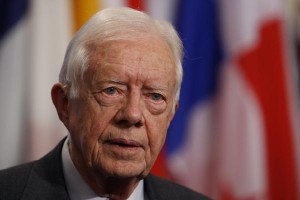
Jimmy-Carter-1-300x200Former President Jimmy Carter. Photo: http://www.reddogreport.com

Former U.S. President Jimmy Carter confused Israel’s demand for the Palestinian Authority to recognize it as a ‘Jewish state’ for meaning that all Arabs living there would need to convert.

In an interview with the Associated Press on Monday, Carter said, “Israel can claim `We are a Jewish state.’ I don’t think the Arab countries will contradict that Jewish statement. But to force the Arab people to say that all the Arab people that they have in Israel have to be Jews, I think that’s going too far.”

Carter continued, incorrectly implying that the 1.5 million Arab-Israelis citizens would either have to convert to Judaism or leave, rather than recognize that the essence of the country, it’s laws, calendar, legal structure, would be based, as they are, on Jewish tradition, rather than Muslim or Christian ideals.

“I don’t see how the Palestinians or the Arab world can accept that premise, that Israel is an exclusively Jewish state,” Carter said. “This has never been put forward in any of the negotiations in which I was involved as president, or any president, before (Benjamin) Netanyahu became prime minister this time. And now it has been put into the forefront of consideration.”

Blogger Elder of Ziyon, who flagged the former president’s statement on Tuesday, also pointed out that, in fact, the question of declaring Israel the ‘Jewish state’ far precedes Netanyhau’s government.

Elder of Ziyon wrote: “Carter accepts the absurd premise, being spouted by Palestinian Arabs as well as others across the Arab world, that if Israel is recognized as a Jewish state then it means that only Jews can live there. He even goes further than the idiot Arabs who keep repeating this, by claiming that it means that Arabs ‘have to be Jews’ to live in Israel. Given this level of cluelessness, it is hardly worth pointing out that Carter is also wrong in saying that Netanyahu is the first to demand Israel be recognized as a Jewish state.”

Blaming Israel Despite the Facts

March 26, 2014

Blaming Israel Despite the Facts, Commentary Daily, March 25, 2014

(I wrote today that it’s bedtime for Obama. It’s bedtime for others as well. — DM)

Kerry  has been lionized by the left for attempting to revive the talks in spite of the fact that the division among the Palestinians (Hamas in Gaza and Abbas’s Fatah in the West Bank) made it unlikely that Abbas could or would say yes to peace terms that he had turned down in 2008 and that his predecessor Yasir Arafat had rejected in 2000 and 2001. But when the secretary put forward a framework that was hardly to Netanyahu’s liking because of its reliance on the 1967 borders, he said yes and Abbas said no even with the proviso that an acceptance would not commit the Palestinian Authority to its terms. And yet even though Abbas’s decision makes a fourth historic no to peace terms from the Palestinians in the last 15 years, Judis still thinks the collapse of the talks is Israel’s fault.

The facts are no obstacle for those who are determined to stick to their narrative about Israel not wanting peace. With Secretary of State John Kerry’s peace process on the brink of failure, the New Republic’s John Judis has trotted out the familiar themes about Israeli Prime Minister Netanyahu being the one to blame. Judis goes on at length about Netanyahu’s perfidy but toward the end of the piece, he is forced to let drop an important nugget of information. When asked by Kerry to keep negotiating on the basis of the framework he has crafted to try and give both sides something to work with, Abbas said no. As Judis writes:

Kerry proposed that the two sides agree to the framework with reservations—a tactic that had doomed the Quartet’s framework proposal—but Abbas was not ready to agree to the proposal even with reservations.

Let’s get this straight. Kerry  has been lionized by the left for attempting to revive the talks in spite of the fact that the division among the Palestinians (Hamas in Gaza and Abbas’s Fatah in the West Bank) made it unlikely that Abbas could or would say yes to peace terms that he had turned down in 2008 and that his predecessor Yasir Arafat had rejected in 2000 and 2001. But when the secretary put forward a framework that was hardly to Netanyahu’s liking because of its reliance on the 1967 borders, he said yes and Abbas said no even with the proviso that an acceptance would not commit the Palestinian Authority to its terms. And yet even though Abbas’s decision makes a fourth historic no to peace terms from the Palestinians in the last 15 years, Judis still thinks the collapse of the talks is Israel’s fault.

How is that possible? Judis doesn’t even bother defending this preposterous proposition directly since his work is so lazy that he writes as if all his readers will naturally assume that nothing that actually happened leading up to Abbas’s no must as a matter of course be Israel’s fault. But the flimsy case he does build against Israel tells us more about his own well-documented prejudices about the key issue that led to Abbas’s decision—recognition of Israel as a Jewish state—than it does about Netanyahu.

This is, after all, the same author who wrote Genesis: Truman, American Jews, and the Origins of the Arab/Israeli Conflict, a book dedicated to the proposition that the problems of the Middle East stem from the decision to create a Jewish state in what was then the British Mandate of Palestine–putting himself on record as believing that Israel should never have been born and that American support for the concept was a mistake imposed upon the nation by Jewish lobbying and political considerations. You would think that someone who studied that period would understand the centrality of the concept of the Jewish state both to the inception and the theoretical conclusion of the conflict. But Judis sticks to the anti-Israel talking points of the day and says this demand—rightly accepted by the United States despite some of Kerry’s later comments—that the Palestinians accept that Israel is the nation state of the Jewish people is designed to throw a monkey wrench into the talks.

As Rick Richman noted, Dennis Ross confirms that the Jewish state issue was part of the negotiations during the Clinton administration. How could it have been avoided since the whole point is that its acceptance signifies that the Palestinians are giving up their century-long struggle against Zionism? Judis also brings up settlement construction as a deal breaker but neglects to note that almost all the houses slated for construction are to be built in the settlement blocs and neighborhoods in Jerusalem that will be part of Israel in any agreement. Complaints about them are both disingenuous and distractions from the Palestinian refusal to accept terms that signify an end to the conflict. Abbas told President Obama on his visit to Washington earlier this month that he would not agree to recognize Israel as a Jewish state, give up the “right of return” for the 1948 refugees and their descendants, or accept that any agreement means the end of the conflict. What’s more, even though he won’t keep negotiating, he expects Israel to release more terrorist murderers from its jails (the ransom he exacted from Kerry and Netanyahu as the price for his return to the talks last year) and now also wants the release of Marwan Barghouti, a Fatah leader serving five life-in-prison sentences for murders of civilians carried out at his behest during the second intifada and a settlement freeze to keep him at the table.

And yet Judis still says, “blame should almost certainly be assigned to Netanyahu and the Israelis.” It’s illogical, but if you enter a discussion of this topic believing Israel has no right to exist in the first place, it’s easy to see why you would think there’s nothing wrong with Palestinian intransigence. The problem is not so much Judis’s specious arguments as the pretense that he actually cares about who is to blame for preventing an outcome—a two-state solution—that he disdains.