Archive for March 9, 2014

Ashton’s visit to Iran seen as start of expansive cooperation

March 9, 2014

Ashton’s visit to Iran seen as start of expansive cooperation, Xinhua Net, March 10, 2014

(There is no mention of Iran’s apparent shipment of weaponry to Gaza or allegations that Iran has been lying about it. Consider the source: Xinhua is the state press agency of the People’s Republic of China, which has substantial trade relations with Iran and also desires more. — DM)

During her visit, the two sides explored areas for developing economic and trade cooperation, she said, adding that “My presence in Iran shows that the EU is eager to have better, more effective and more active relations with Iran along with the nuclear negotiations.”

TEHRAN, March 9 (Xinhua) — There is “no guarantee” that Iran and the world powers will succeed in reaching a final agreement in their nuclear talks, the European Union foreign policy chief said Sunday during her landmark visit to Tehran.

EU foreign policy chief Catherine Ashton and Iranian Foreign Minister Mohammad-Javad Zarif discussed nuclear negotiations and the latest developments over the country’s nuclear program in their meeting on Sunday.

Ashton hailed the interim nuclear agreement as an “important” preliminary step, but added that it is “not as important as a ( possible) comprehensive accord,” and that reaching a final agreement with Iran is “difficult, challenging and there is no guarantee that we will succeed.”

With the support of the Iranian people and the international community, there is a hope that comprehensive agreement can be reached, she said.

Zarif reiterated that “Iran is not after a nuclear weapon,” adding that Iran plans to tackle the nuclear issue and stressing that finding a solution depends on the commitment of the other party to solve the problem at the negotiation table.

Iran and the P5+1 group held expert-level nuclear talks in Vienna from March 5 to 7. They aimed to hammer out a final deal on Iran’s controversial nuclear program after an interim agreement was reached in November last year.

“Based on the reports from the negotiation meeting, there has been good progress,” said Head of the Atomic Energy Organization of Iran (AEOI) Ali-Akbar Salehi, adding that “if the other side shows goodwill, there would be a positive outcome.”

Ashton’s visit comes as the two sides aimed to narrow the distance between the Islamic Republic and the EU.

Iranian lawmakers said Saturday that Ashton’s visit will open a new chapter in the bilateral economic ties between Iran and the European bloc and it can serve as an opportunity for both sides to amend damaged ties.

President Hassan Rouhani said Sunday that the Iranian government is keen on longstanding relations with the EU based on mutual interests, according to official IRNA news agency.

For Tehran, the EU foreign policy chief’s visit is seen as a part of the EU’s new approach to the country, Rouhani said at a meeting with Ashton, adding the that Iran wants increased economic cooperation with Europe.

Echoing Rouhani, Ashton said her visit to Tehran should be seen as the start of expansive cooperation between Iran and the EU, according to semi-official Fars news agency.

“I have come to Iran with the message of goodwill of 28 European countries, and this is my first opportunity to talk with the Iranian officials over a different issue. And this is a start for the development of cooperation between Iran and the EU,” Ashton was quoted as saying.

During her visit, the two sides explored areas for developing economic and trade cooperation, she said, adding that “My presence in Iran shows that the EU is eager to have better, more effective and more active relations with Iran along with the nuclear negotiations.”

“The EU acknowledges Islamic Republic’s importance and role in the region,” she added.

Ashton is in Iran at the invitation of Iran’s foreign minister. She will visit the historic city of Isfahan on Monday.

Off Topic: Tilting toward the Palestinians

March 9, 2014

Tilting toward the Palestinians, Israel Hayom, Richard Baehr, March 9, 2014

(Tilting? Or leaning over backwards? — DM)

Even Goldberg, a fan of the president, and a journalist more than happy to see and present the president in the best light as a true friend of Israel (one who knows better than Israel’s elected leaders and the Israeli voters what is really best for them), seemed to think the president stepped over the line this time.

When U.S. President Barack Obama wants the Jewish community to sit up and listen to what he thinks about Israel and the Middle East, he regularly does two things. One is to call in Jeffrey Goldberg, a writer for Bloomberg View and The Atlantic, to interview him on the subject. The second is to let The New York Times know what’s fit to print in their news stories and especially their op-eds and editorials about the subject. Of course, the White House need not issue directives to writers or editors at The Times, though for all I know it might. An interview with Jeffrey Goldberg will convey the message and do the trick. So too will comments the president makes in public. One thing you will never find is any space between Barack Obama’s stated views on Israel and those of the staff of The New York Times opinion pages in the days and weeks that follow.

Last week, just as Israeli Prime Minister Benjamin Netanyahu was flying to the United States to meet with Obama, and speak at the annual American Israel Public Affairs Committee convention, the White House invited Goldberg back in to set the stage before Netanyahu might seize it from him. The text of the conversation was released as the AIPAC conference was starting up.

Even Goldberg, a fan of the president, and a journalist more than happy to see and present the president in the best light as a true friend of Israel (one who knows better than Israel’s elected leaders and the Israeli voters what is really best for them), seemed to think the president stepped over the line this time.

“I took it to be a little bit of a veiled threat, to be honest,” Goldberg said. “It’s almost up there with, you know, nice little Jewish state you got there, I’d hate to see something happen to it.”

As always, the president was unhappy that Israel had built new housing units in Judea and Samaria and Jerusalem in the prior year, though none of this was prohibited under any existing international agreement, any agreement between Israel and the Palestinians, or even any understanding with the United States. The count of new housing units goes up one year, down the next, and always the refrain is the same — they are an obstacle to peace. In fact, they are regularly described by self-proclaimed true friends of Israel as the crucial obstacle to peace.

Of course, Israel removed all 9,000 Israelis living in the Gaza Strip and all Israeli forces from the area, without seemingly removing any obstacles to peace between Hamas and Israel or for that matter, the Palestinian Authority and Israel.

The president also spoke of demographic realities that presumably were becoming less favorable to Israel over time. However, a sharply rising Israeli birth rate, a rapidly declining Arab birth rate in Israel as well as in Judea and Samaria, and the use of more accurate population estimatesfor the Palestinian population, have enabled convincing arguments to be made that Israel would be able to sustain a significant Jewish majority (close to two-thirds) even if Arabs in Judea and Samaria were given citizenship at some point.

The president never speaks of obstacles to peace that are provided by Israel’s supposed partner for peace — the Palestinian Authority. In fact, the president pointed out to Goldberg that Israel did not want to miss the chance to negotiate a peace agreement with Mahmoud Abbas, the quintessential moderate Arab leader in the eyes of all those in the conventional-wisdom camp. The government of the moderate Abbas was of course still demanding a right of return for 5 million descendants of fewer than 50,000 living refugees from the 1948 war, certainly not a deal killer (nor an obstacle to peace). Abbas and his emissaries were absolute in their rejection of the demand by Israel for the Palestinian Authority to recognize Israel as a Jewish state (while demanding a Judenrein Palestinian state next door). This too was not an obstacle. The fact that the PA was working with every nongovernmental organization it could find in Europe and elsewhere who would make trouble for or make demands of Israel, encouraging the worldwide boycott, divestment and sanctions movement against Israel, and constantly inciting its own population while honoring murderers of Jews, were also not obstacles that anyone need be concerned with — not Obama certainly. And of course, if Obama is not concerned, why should Israel be, since Obama knows best?

The president told Goldberg that it is becoming more difficult to defend Israel at the U.N. and with foreign leaders. Goldberg says it is an open question whether Obama has in fact become unwilling anymore to do so.

“It was, look, I want to help you, but you’re not helping me help you, and, therefore, there’s only so much political capital I’m going to go spend in the U.N., with the EU, with the Arab League, on your behalf,” Goldberg said. “I think it was all couched very carefully but it’s there and certainly the government in Israel feels like it’s there.”

When asked to describe the relationship between Obama and Netanyahu, Goldberg quipped, “Oh, it’s just filled with joy, very clearly.”

Despite the interview’s release, the talks between Obama and Netanyahu were nonetheless a bit less frosty than at times in the past five years. But that may be because Netanyahu has learned to ignore the White House hectoring and instead make his and Israel’s case in every public setting in America, to people who have an open mind and are, unlike the president or the New York Times editors and staff, supportive of Israel’s right to exist as a Jewish state, with secure borders and with the Iranian nuclear threat removed.

The New York Times editorial pages this week were an indication of how complete is the subservient loyalty of Times editors to the great leader’s wishes. In an editorial titled “Israel’s Choice” appeared this gem describing Secretary of State John Kerry’s nonstop effort to get both sides to agree to certain framework principles for continued negotiations:

“But there are fears that the principles might tilt toward Israel, which would mean the final negotiations simply won’t get off the ground.”

In other words, The Times (meaning Obama) is afraid that the secretary of state has been listening too much to Israel, and that is a problem. While Kerry pursues his shuttle diplomacy, the president golfs, attends fundraisers, and stays tuned to ESPN Sports Center and then undermines his own secretary’s efforts, presumably to set the stage forblaming Israel if talks collapse.

Nothing in the Times editorial suggests that leaning to accept the Palestinian position would be an unacceptable tilt. In fact, The Times argues that the Palestinian position on Jerusalem is more reasonable than the Kerry framework that someone leaked to The Times. So too, The Times is unhappy with Israel’s demand for recognition as a Jewish state, which would prejudice the Palestinians demand for a right of return for 5 million non-refugees to Israel.

The Times position on refugees was spelled out in a debateconducted online between Daniel Gordis and Lara Friedman of American this week. The introduction to the debate again provides all the context one needs for how The Times approaches the current conflict:

“Israel’s expansion of settlements in the occupied territories has been an obstacle to the two-state solution, considered the most likely hope for peace with the Palestinians.

The boycott, divestment and sanctions movement has called for worldwide disassociation with Israel to end the occupation. Even many supporters of the two-state solution, though, condemn the movement because it attacks Israel itself and supports the right of refugees to return to homes in Israel that were theirs before its creation.

But what about a boycott of the territories, and all activity within them, to end the occupation? Would that be in the best interest of Israel and the most likely path to peace?”

One could spend many words deconstructing this purported neutral introduction to the debate, but two items stand out. The Times believes that expansion of settlements has been an obstacle to the two-state solution. Case closed on that one. And then the latest addition to The Times “down the middle” approach: The Palestinian refugees are only trying to return to homes that were theirs before the creation of Israel. When pressed on this issue of refugees versus descendants, the Times editor who wrote the introductory note, Nicholas Fox, explained that he was only following the accepted international definition of refugees:

“I believe that our reference to refugees is in line with definition of the United Nations Relief and Works Agency for Palestine Refugees. The agency’s website refers to its work with ‘four generations of Palestine refugees, defined as “persons whose normal place of residence was Palestine during the period 1 June 1946 to 15 May 1948, and who lost both home and means of livelihood as a result of the 1948 conflict.” The descendants of Palestine refugee males, including legally adopted children, are also eligible for registration. … Today, some 5 million Palestine refugees are eligible for UNRWA services.'”

Assume that one accepts this “follow the UNWRA” script. How exactly are these 5 million people who are entitled to “register” as refugees, returning to homes in Israel that were theirs before the creation of Israel? How indeed, since they were not alive at the time!

One certainly does not want to be seen as unduly critical of a newspaper that promises to present “all the news that’s fit to print,” but is The Times, like Obama, maybe, just possibly, tilting towards the Palestinians?

Israeli minister slams Ashton’s Tehran trip

March 9, 2014

Israeli minister slams Ashton’s Tehran trip, Times of Israel, March 9, 2014

(Please see my comment at the beginning of an article posted here today about U.S. plans to go forward with the P5+1 negotiations despite Iran’s apparent arms shipment to Gaza and her lies about it. — DM)

Steinitz says EU foreign policy chief should have postponed visit after Israel intercepted Iran arms shipment to Gaza.

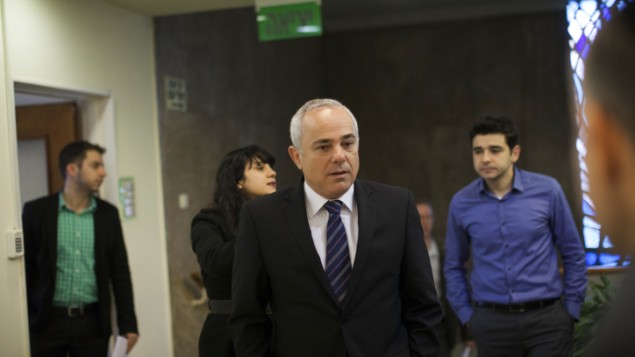
1 SteinitzStrategic Affairs Minister Yuval Steinitz on February 2, 2014. (photo credit: Yonatan Sindel/Flash90)

A senior Israeli minister lashed out Sunday at EU foreign policy chief Catherine Ashton for visiting Tehran after the interception of a ship allegedly carrying arms from Iran to Gaza.

“I would expect Catherine Ashton to cancel or at least postpone her visit to Tehran,” said Intelligence Minister Yuval Steinitz.

“The Iranian regime has been caught here in a severe act of smuggling large missiles to a terror organization, while violating all the UN decisions placing an arms embargo on and from Iran,” he told Israel Radio.

“At this time to go and speak with the Iranians as if nothing happened, is something that should be avoided,” he said.

The Israeli army was on Sunday busy unloading a ship it intercepted in the Red Sea last week which it said was carrying an Iranian shipment of M-302 rockets destined for the Gaza Strip, which is controlled by Hamas.

Ashton’s visit to Tehran, the first by a EU foreign affairs chief since 2008, comes after Iran signed a preliminary deal in November with world powers under which it agreed to curb its disputed nuclear activities in exchange for sanctions relief.

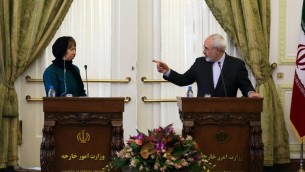
Ashton and ZahrifEU foreign affairs chief Catherine Ashton, left, and Iranian Foreign Minister Mohammad Javad Zarif give a joint press conference following a meeting on March 9, 2014 in Tehran. (photo credit: AFP/ATTA KENARE)

Earlier, Prime Minister Benjamin Netanyahu accused Iran of “brazenly lying” over its involvement in the shipment, which Tehran flatly denied, in remarks he said were directed at Ashton.

“I’d like to ask her if she asked her Iranian hosts about the delivery of weapons to the terror groups, and if she didn’t, why not?” he said at the start of the weekly cabinet meeting.

“Nobody has the right to ignore the real, murderous actions of the regime in Tehran,” he added.

The prime minister said Israel would show evidence linking the shipment to Iran on Monday, when the weapons will be put on display at a news conference in Eilat which he himself will give.

Israel was harshly critical of the interim nuclear agreement with Iran and is pushing hard for world powers to keep a series of crippling economic sanctions in place.

The West and Israel have long suspected Iran of using its nuclear energy program as a cover for developing atomic weapons, a charge denied by the Islamic republic.

40 missiles, 181 mortars, 400K bullets found on arms ship

March 9, 2014

40 missiles, 181 mortars, 400K bullets found on arms ship | The Times of Israel.

IDF releases preliminary inventory after troops offload 150 containers from Klos-C; soldiers, sailors inspecting cargo

March 9, 2014, 8:08 pm

Israeli security forces inspect containers of missiles uncovered on board the Klos-C. (photo credit: IDF Spokesperson)

Israeli security forces inspect containers of missiles uncovered on board the Klos-C. (photo credit: IDF Spokesperson)

The Israeli military announced Sunday that it had offloaded 40 M-302 missiles,181 122-mm mortars, and 400,000 7.62 caliber bullets from the containers aboard the ship seized several days earlier in the Red Sea.

A combined task-force of sailors, combat engineers and ordnance experts have begun inspecting the containers offloaded from the Klos-C, and may uncover more munitions over the next several days.

Naval commandos seized the vessel on Wednesday in the Red Sea between Eritrea and Sudan, and it was escorted into Eilat on Saturday by two Israeli warships.

The army said Wednesday that soldiers carried out a preliminary inspection of the ship and found several dozen advanced Syrian M-302 missiles, with a range of up to 200 kilometers (125 miles) and a payload of up to 170 kilograms (375 pounds). The missiles were hidden in shipping containers also carrying sacks of concrete with Iranian markings.

The IDF said the Iranian shipment was destined for the Hamas-run Gaza Strip.

Israel has hailed the discovery of the shipment as exposing Iranian efforts to support global terrorism.

Israeli soldiers unload cargo found on the Klos-C. (photo credit: IDF Spokesperson)

Israeli soldiers unload cargo found on the Klos-C. (photo credit: IDF Spokesperson)

On Sunday, a senior security official in Egypt said the shipment was destined for militants in either the Sinai Peninsula or the Gaza Strip.

The official said Sunday that the ship carrying the missiles took the same route used by vessels ferrying potential illegal migrants who arrive in Sinai and then sneak across the border into Israel.

He said the missiles have a range of 90 kilometers, and that the ship carrying them was under surveillance while it was off Sudan’s Red Sea coast.

Meanwhile Sunday, Prime Minister Benjamin Netanyahu said he wanted EU foreign policy chief Catherine Ashton, in Tehran for talks, to bring up the issue.

“I call this to the attention of Catherine Ashton, who is now visiting Tehran,” he said at the start of a weekly cabinet meeting. “I would like to ask her if she asked her Iranian hosts about this shipment of weapons for terrorist organizations, and if not, why not.”

Netanyahu scheduled a press conference in Eilat on Monday to present and detail the findings.

IDF Chief of Staff Lt. Gen. Benny Gantz met with soldiers who participated in the raid and hailed their success on Saturday evening. During the meeting, at a naval base in Eilat, Gantz told the soldiers that the struggle against the empowerment of terrorist groups and the effort to keep them from strategic arms hadn’t ended with their return home to Israel.

Israeli security forces inspect boxes of M-302 rockets that were unloaded from the Panamanian-flagged Klos-C vessel on March 9, 2014 at the southern Israeli port of Eilat. The vessel, which was allegedly transporting arms from Iran to Gaza, was escorted into the port of Eilat after Israeli naval commandos seized it on March 5, 2014. (photo credit: Jack Guez/AFP)

Israeli security forces inspect boxes of M-302 rockets that were unloaded from the Panamanian-flagged Klos-C vessel on March 9, 2014 at the southern Israeli port of Eilat. The vessel, which was allegedly transporting arms from Iran to Gaza, was escorted into the port of Eilat after Israeli naval commandos seized it on March 5, 2014. (photo credit: Jack Guez/AFP)

“Each one of these rockets poses a threat to the safety of the citizens of Israel — each bullet and each rocket that was discovered had an Israeli address,” he said.

Iran has flatly denied any involvement with the shipment, which the Israeli army said was carrying missiles capable of striking anywhere in Israel.

Israeli soldiers inspect containers unloaded from the Panamanian-flagged Klos-C vessel on March 9, 2014 at a navy base near the southern Israeli port of Eilat. (photo credit: Jack Guez/AFP)

Israeli soldiers inspect containers unloaded from the Panamanian-flagged Klos-C vessel on March 9, 2014 at a navy base near the southern Israeli port of Eilat. (photo credit: Jack Guez/AFP)

Israel and the US coordinated intelligence and military activities leading up to Israel’s seizure of the Klos-C off the coast of Port Sudan, US Ambassador to Israel Dan Shapiro and the State Department said Wednesday.

After consultations between American and Israeli officials, it was decided that Israel would act against the vessel, Shapiro told Israel Radio, even though the Pentagon had already drafted plans to intercept the ship.

Israel’s capture of the Klos-C followed intensive intelligence work, officials said, with the missile shipment tracked for months from Damascus to Iran and from there to Iraq before it was intercepted en route to Gaza.

Times of Israel staff and The Associated Press contributed to this report.

US condemns Iran for illicit arms shipment

March 9, 2014

US condemns Iran for illicit arms shipment, Israel Hayom, March 9, 2014

(Assume, at least for the sake of argument, that irrefutable evidence shows that Iran knew what the ship contained and that she is now lying about it. Lying has been her consistent practice vis a vis her nuke activity and continuing to lie is not a rational basis for crediting material statements she has made or later makes during the P5+1 negotiations. Why should negotiations proceed on that basis, allowing Iran to continue to garner funds and other types of international support which make effective sanctions highly unlikely to be reinstated?

Defense Secretary Hagel’s spokesman reiterated “the United States’ commitment to holding Iran accountable for its destabilizing activities in the region, even as we continue efforts to resolve our concerns over Iran’s nuclear program through diplomacy.” Destabilizing activities are bad. However, habitual lying as to matters material to the P5+1 negotiations is even more consequential for those negotiations. If Iran’s persistent lying is ignored, how can the U.S. “resolve” her “concerns over Iran’s nuclear program through diplomacy,” unless her concerns are so ephemeral that they can be “resolved” by ignoring them? — DM)

Pentagon praises Israel’s interception of Klos C, says U.S. is “holding Iran accountable for its destabilizing activities in the region” • Analyst: Either Iranian FM knew about the shipment or U.S. is negotiating with an envoy who is out of the loop.

Klos C

The U.S. over the weekend condemned Iran for the illicit weapons shipment that was intercepted by the Israeli Navy last Wednesday.

U.S. Defense Secretary Chuck Hagel spoke with Defense Minister Moshe Ya’alon on Friday. After their conversation, Pentagon press secretary Navy Rear Adm. John Kirby issued a statement saying that the Hagel had congratulated Ya’alon on the success of the interception of the Klos C, and reiterated “the United States’ commitment to holding Iran accountable for its destabilizing activities in the region, even as we continue efforts to resolve our concerns over Iran’s nuclear program through diplomacy.”

Hagel made clear that “illicit actions by Iran are unacceptable to the international community and in gross violation of Iran’s U.N. Security Council obligations.”

Meanwhile, Forbes Magazine’s foreign news analyst Claudia Rosett addressed the connection between the attempted shipment of missiles to Gaza and Iranian Foreign Minister Mohammad Javad Zarif.

“While Zarif was in Vienna, standing shoulder-to-shoulder with European Union foreign policy chief Catherine Ashton, reading a statement to the press about their ‘very productive’ nuclear talks, the freighter, secretly stuffed with weapons, was already en route from Iran toward the Red Sea,” Rosett pointed out.

The analyst went on to question whether Zarif really had not known about the arms shipment to Gaza, or had chosen to lie.

“If Zarif knew anything about this, that’s damning. If he was clueless, that’s alarming. Which is it?” the analyst asked.

Rosett then concluded that if in fact Zarif had been ignorant of the illicit arms smuggling, the U.S. was negotiating with an Iranian envoy who was “so far out of the loop that he believes his own lies.”

Iran: Pulling the strings of terror

March 9, 2014

Iran: Pulling the strings of terror, Israel Hayom, Dr. Ephraim Kam, March 9, 2014

(Achieving a satisfactory “comprehensive” solution under the P5+1 “deal” is useful for political purposes. Amorphous mumblings about eliminating Iran’s nuclear threat, particularly by those involved in the negotiations, seem likely to be disingenuous. Talk of Iran’s persistent dishonesty and support for terrorism does not contribute to getting a satisfactory “comprehensive” solution either and is also likely to be disingenuous. — DM)

[I]t is likely that the damage to Iran’s image will be slight. Its involvement in terrorism has been well-known for years. Capturing this vessel, therefore, is not going to change that very much. And since it is also a high Western priority to reach a final deal over the nuclear issue, it is unlikely that this affair is going to put the brakes on the nuclear talks. 

The Iranians have already gotten used to it. From time to time, they send massive weapons shipments to their allies in Lebanon, Syria, Gaza, Iraq and other countries by land, by air or by sea. And from time to time, when these arms are meant to harm Israel, and when the intelligence community attains precise information about such shipments — the Israel Defense Forces attacks them. These strikes are accomplished through weapons seizures in the Red and Mediterranean seas, or by air assaults on weapons convoys — typically in Lebanon, Syria or Sudan.

Despite Israel’s success, the Iranians continue to attempt to send weapons — perhaps because they have in fact sent several successful weapons shipments under the radar. So despite such foiled attempts, Hezbollah, Hamas and Islamic Jihad’s respective weapons stockpiles are substantial, and an integral part of each of them came from Iran.

It is in Iran’s best interest to provide its allies with weapons, especially terrorist groups. Using terror groups to fight its enemies is one of the most important components in Iran’s security outlook because it has proved to be an effective method of deterrence. That is why, since 1984, the U.S. government has defined Iran as one of the world’s leading state sponsors of terror. Providing assistance to terrorist groups has benefitted Iran by allowing Tehran to wield influence in the Middle East — in Lebanon, Iraq and the Palestinian territories. Assisting terrorist groups fighting Israel has helped Iran in its goal to wear Israel down through armed struggle, putting terrorist groups — especially Hezbollah, which has an umbilical relationship with Iran — at the forefront of its efforts. Using terrorism is cost-effective from Iran’s perspective. Tehran never really has to pay a price for supporting terror; its agents do.

The illicit shipment on the Klos C blends well with Iran’s approach. The vessel was meant to bring weapons to the Gaza Strip via Sudan. Sudan is an opportune transit station on the way to Egypt, the Sinai Peninsula and, ultimately, the Gaza Strip. Iran-Sudan relations have been close for years; Iran provides Sudan with military and economic aid.

It is still unclear who exactly the weapons were meant for: Hamas is one option, but its relations with Iran were challenged in 2012 both when the group cozied up to the Muslim Brotherhood, which ruled Egypt at the time, and when Iranian involvement in Syria started to raise eyebrows among Hamas’ leadership; another possibility is Islamic Jihad, which boasts the closest relations to Tehran among Palestinian groups. Perhaps the weapons were meant for both.

In any case, transferring weapons to Gaza has become both more difficult and problematic. The Egyptian government has been investing a lot of effort of late to regain control of the Sinai and to destroy the smuggling tunnels between Sinai and the Gaza Strip. The Egyptian government also sees an antagonistic threat in Hamas, so how the Iranians planned to smuggle the unwieldy missiles shipment into the Gaza Strip remains unclear.

The weapons discovery marked an embarrassment for Iran, which has been endeavoring both to improve its international standing and to paint a positive, moderate picture of itself to reach agreements with Western governments over its nuclear program, a development that could alleviate painful economic sanctions. The U.N. Security Council also explicitly banned Iran from exporting weapons in 2007, which is why Iran hurriedly denied any involvement with this shipment.

Still, it is likely that the damage to Iran’s image will be slight. Its involvement in terrorism has been well-known for years. Capturing this vessel, therefore, is not going to change that very much. And since it is also a high Western priority to reach a final deal over the nuclear issue, it is unlikely that this affair is going to put the brakes on the nuclear talks. International attention has also been focused on the Russia-Ukraine confrontation, overshadowing the arms shipment.

Seizing this ship is a blow to Iran, which certainly poured effort and resources into organizing the attempted stealth mission. Iran’s beef with Israel is getting bigger — previous strikes against attempted arms shipments, the deaths of several Iranian scientists, Iranians computer systems infected with viruses, the assassination of Hezbollah military commander Imad Mughniyeh. We should probably bear in mind then that Iran is planning to settle the score — perhaps through Hezbollah.

Netanyahu to Israel Hayom: Iran has not changed

March 9, 2014

Netanyahu to Israel Hayom: Iran has not changed, Israel Hayom, Shlomo Cesana, March 9, 2014

(A wide ranging interview, from Iran to the “Peace Process.” — DM)

“Right now the battle is over the truth, and the truth is Iran is a country that breaks all the rules,” Prime Minister Benjamin Netanyahu says in Israel Hayom interview • PM: Palestinian Authority President Mahmoud Abbas refuses to move toward peace deal.

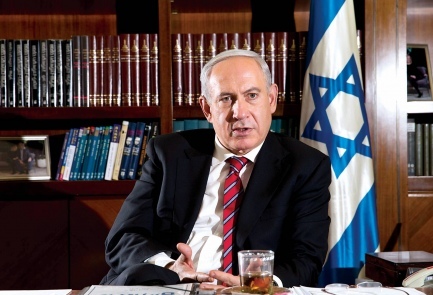
Netanyahu 9 mar 14

“The smuggling of the missiles was an Iranian covert operation that we discovered, caught and stopped. Beyond catching the dangerous missiles, this is a message to the world, a message that we are transferring gradually and methodically: Despite the Iranian denials, despite the smiles and imaginary moderation emanating from Iran, this is still the same Iran and it hasn’t altered its murderous conduct in any way,” Prime Minister Benjamin Netanyahu told Israel Hayom in an interview upon his return from last week’s trip to the United States.

In the interview, Netanyahu addressed the Iranian nuclear issue, the peace talks with the Palestinians, his most recent meeting with U.S. President Barack Obama and the ongoing incarceration of Israeli spy Jonathan Pollard.

Netanyahu continued to tout the military and diplomatic victory scored by Israel and its naval commandos by capturing the Klos C weapons ship: “It should and it will influence those conducting the negotiations with Tehran regarding the question of how best to proceed with Iran. Right now the battle is over the truth, and the truth is Iran is a country that breaks all the rules. It is important to expose Iran’s true face.”

‘Concessions aren’t necessary’

Next week, Palestinian Authority President Mahmoud Abbas is also scheduled to visit with Obama in Washington. Netanyahu hopes the U.S. president will pressure Abbas to agree to a one-year extension period for the peace talks. According to the prime minister’s assessment, Abbas is not showing signs that he is willing to do so.

What is the framework agreement document expected to include?

“It is an American document with negotiation proposals that the sides can address. This is not an Israeli document, and it is certainly liable to include things that Israel will not agree to and will object to. But this document, if it is indeed presented, will be a platform for discussing the renewal of negotiations, which are expected to last about a year if the Palestinians come around and finally agree to enter talks. I cannot say for certain, they are currently not showing any signs in this direction.”

What concessions will you have to make?

“At this point concessions aren’t required. Only one thing is required right now: The willingness to engage in negotiations; and this willingness exists. It has always existed. The simple fact is that [Abbas] has refused to negotiate for close to five years already. This cannot be ignored or glossed over. I have no conditions for starting talks. I have clear conditions about how they will end, but not to how they begin.

“[Abbas] is not prepared even for the first stage of discussions toward an agreement. At its foundation the American document contains American ideas, but its advantage is that it suggests a path for the sides to progress and for each to express his position.”

In the first round, terrorists were released from prison. Do you intend to release more Palestinian prisoners even after the scheduled fourth round of releases, just to renew negotiations or extend them by another year?

“This has not come up.”

‘The coalition is not in danger’

Can you promise that you won’t freeze settlements during the negotiations, as the Palestinians are demanding?

“Our experience with the U.S. administration’s decision to freeze [construction] is that it doesn’t lead to starting talks. My opinion on the matter is very clear. At this time it is self-evident that Israel is prepared to begin negotiations. I don’t think there is much wisdom in touching on this matter at the moment. Either way, I don’t expect us to implement another construction freeze in the manner it was done so in the past.”

Would entering negotiations on the basis of the expected American document threaten your coalition?

“No, there is no reason for it to threaten the coalition. These are after all American positions, not Israel’s. There are many things we like in [the document] and of course many things that we do not, but that’s what talks are for.”

Foreign Minister Avigdor Lieberman proposed that, within the framework of a land swap, the Triangle (an Israeli Arab-populated area in Israel adjacent to the West Bank) will be transferred to a Palestinian state. Is this also your position?

“There is no point in getting into the various possibilities. This issue has also never been discussed. All these issues will be examined and raised down the road if the Palestinians agree to engage in talks and get on the road. At the moment they refuse to do so. The Palestinians threaten to go to the United Nations and are showing no signs of agreeing to extend the negotiations for a certain period of time and exploring whether we can end the process that has been started.

“Therefore in regards to the question, we are to a large extent currently conducting negotiations with ourselves and I propose we conduct negotiations with the Palestinians.”

What can you tell us about your meeting with Obama?

“First of all, it was much better than the interview that preceded it. This is a fact. Before I arrived in Washington I mentioned that over past five years I’ve proven that I know how to stand up very well to pressures and criticism, and maintain Israel’s vital interests — and that’s what I did during the meeting on the Palestinian issue and on the Iranian issue. I don’t hide, aside from our agreement that Iran must not be allowed to acquire a nuclear weapon, our disagreement over allowing Iran to preserve uranium enrichment capabilities. I have not wavered from my view that there is no reason for Iran to have even one centrifuge. If [Iran] is indeed honest about its intention to create nuclear energy for peaceful purposes, then centrifuges are not required for peaceful purposes, they are required to make a nuclear weapon.”

Netanyahu also gave interviews to Israel’s three television stations and Israel Radio. The prime minister told Channel 2 News: “We will not abandon any Israeli citizens.” He also reiterated what he said before the U.S. Congress and in a 2009 interview with Israel Hayom, that some settlements would need to be removed as part of a final-status agreement. “It is clear that some of the settlements won’t be part of the arrangement, everyone understands this. I will ensure that this is as limited as can be, as far as it is possible, if we do get there, and we will take care of every citizen.”

Netanyahu told Channel 10 that despite the traditional American and Palestinian position on Jerusalem, he has insisted that Jerusalem not be divided: “On Jerusalem, until now, I haven’t compromised, and this is a strong indication about the future.”

‘All-time high support for Israel’

The prime minister also discussed Israel’s relationship with the U.S. and the painful issue of Jonathan Pollard’s ongoing incarceration in an American federal prison.

There is a change taking place in the United States. Certain communities are growing, such as the Hispanic community, where Israel has less influence. Among other populations as well, among youngsters, there is less support for Israel, and there are those who accuse you of essentially not knowing today’s America. What is your response to these claims?

“I am amused by them. If someone thinks I don’t know the U.S., he apparently doesn’t know me. I know it well, including all the changes taking place there. That’s why I recently said we need to teach Israeli children two additional languages: Mandarin Chinese and Spanish, preferably with a Mexican accent. This is precisely because I am aware of the changes happening in the United States. I am making great efforts, as is our diplomatic corps, to engage the Hispanic community specifically and American youth in general in the U.S.

“Factually, according to surveys, support for Israel has risen and is now at an all-time high. Israel has a 72 percent support rating — this is a very impressive figure. If you compare support for Israel in the 1960s, for example, it was only half back then. So there has been a constant rise in support. It’s true though that we cannot rest on our laurels. We must continue to make more of an effort. Therefore, for example, during my visit to the U.S. I was in Los Angeles and I went to Hollywood to persuade those who influence the youth through movies, TV shows and the Internet [Netanyahu met with movie producers and actors, and with Apple CEO Tim Cook and WhatsApp co-founder Jan Koum], and I discovered a great deal of interest in Israel and also a lot of support. People responded very positively to a first-person account of the real Israel, not the Israel described its detractors, rather the only democratic country in our enormous region, which espouses the same important values that Americans also hold dear.”

‘The entire price has been paid’

The time is passing, the meetings with American presidents are friendly, but Jonathan Pollard is still in America prison. Did you request his release?

“The issue was most certainly raised. There is never a time I when meet the American president and this matter does not come up. Pollard needs to be freed. The time has come for him to return home. He has already served his time. He erred, the state of Israel erred by sending him on his mission, and for this the price has been paid in full and with extra interest.”

What is needed for Pollard to be released?

“An American decision is required. I think the time has come. The time is growing long and the man is not well. “

Did Obama provide any light at the end of the tunnel on this matter?

“I can only say what I’ve said.”

‘Rows of Iranian rockets’ said found on seized ship

March 9, 2014

‘Rows of Iranian rockets’ said found on seized ship | The Times of Israel.

Troops unload 150 containers off ‘Klos-C,’ intercepted in Red Sea; Netanyahu asks Ashton to discuss cargo of arms during Tehran meet

March 9, 2014, 12:36 pm

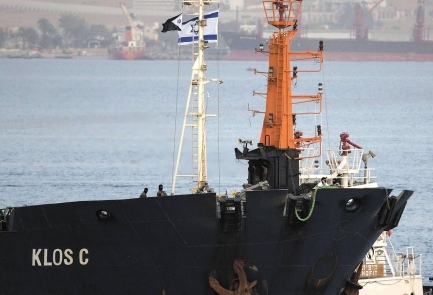
The 'Klos-C' at the port of Eilat on Saturday. (photo credit: Flash90)

The ‘Klos-C’ at the port of Eilat on Saturday. (photo credit: Flash90)

Israeli troops in Eilat unloaded Sunday morning some 150 containers, suspected of holding illicit Iranian arms, from a ship seized several days earlier in the Red Sea.

Israeli officials plan on inspecting the containers taken off the ‘Klos-C’ over the next several days, and are expected to uncover more munitions like the medium-range missiles the army says it already found in an initial search.

Naval commandos seized the vessel on Wednesday in the Red Sea between Eritrea and Sudan, and it was escorted into Eilat on Saturday by two Israeli warships.

The IDF said it was carrying an Iranian shipment of M-302 rockets destined for the Hamas-run Gaza Strip.

IDF spokesperson Peter Lerner said on Twitter there were “approximately 150 containers” and a hangar housing the seized munitions had “rows of …rockets.”

Israel has hailed the discovery of the shipment as exposing Iranian efforts to support global terrorism.

On Sunday, Prime Minister Benjamin Netanyahu said he wanted EU foreign policy chief Catherine Ashton, in Tehran for talks, to bring up the issue.

“I call this to the attention of Catherine Ashton, who is now visiting Tehran,” he said at the start of a weekly cabinet meeting. “I would like to ask her if she asked her Iranian hosts about this shipment of weapons for terrorist organizations, and if not, why not.”

Netanyahu scheduled a press conference in Eilat on Monday to present and detail the findings.

IDF Chief of Staff Lt. Gen. Benny Gantz met with soldiers who participated in the raid and hailed their success on Saturday evening. During the meeting, at a naval base in Eilat, Gantz told the soldiers that the struggle against the empowerment of terrorist groups and the effort to keep them from strategic arms hadn’t ended with their return home to Israel.

“Each one of these rockets poses a threat to the safety of the citizens of Israel — each bullet and each rocket that was discovered had an Israeli address,” he said.

Iran has flatly denied any involvement with the shipment, which the Israeli army said was carrying missiles capable of striking anywhere in Israel.

The army said Wednesday that soldiers carried out a preliminary inspection of the ship and found several dozen advanced Syrian M-302 missiles, with a range of up to 200 kilometers (125 miles) and a payload of up to 170 kilograms (375 pounds). The missiles were hidden in shipping containers also carrying sacks of concrete with Iranian markings.

Israel and the US coordinated intelligence and military activities leading up to Israel’s seizure of the “Klos-C” off the coast of Port Sudan, US Ambassador to Israel Dan Shapiro and the State Department said Wednesday.

After consultations between American and Israeli officials, it was decided that Israel would act against the vessel, Shapiro told Israel Radio, even though the Pentagon had already drafted plans to intercept the ship.

Israel’s capture of the “Klos-C” followed intensive intelligence work, officials said, with the missile shipment tracked for months from Damascus to Iran and from there to Iraq before it was intercepted en route to Gaza.

Netanyahu calls on EU’s Ashton to question arms ship during Tehran visit

March 9, 2014

Netanyahu calls on EU’s Ashton to question arms ship during Tehran visit | JPost | Israel News.

By HERB KEINON

03/09/2014 11:34

At cabinet meeting, PM calls on EU policy chief to question Iranians during her visit to Tehran over ship intercepted by IDF containing weapons bound for Gaza.

Prime Minister Binyamin Netanyahu discussing Iran after meeting US Secretary of State Kerry, Nov 8.

Prime Minister Binyamin Netanyahu discussing Iran after meeting US Secretary of State Kerry, Nov 8. Photo: Amos Ben-Gershom/GPO

As Israel began unloading the crates of ordnance on the Klos-C now docked in Eilat, and EU foreign policy chief Catherine Ashton began a landmark visit to Teheran, Prime Minister Binyamin Netanyahu wondered out loud Sunday whether Ashton would raise the issue with her hosts.

“I would like to ask her if she asked here hosts in Tehran about the arms shipment to terrorist organizations, and if not, why not?” Netanyahu said at Sunday’s weekly cabinet meeting.

“No one has the right to ignore from the true murderous activities of the regime in Tehran, and I think that it is fitting for the international community to deal wit the true polices of Iran, not its propaganda,” he said.

Relating to Iranian denials about any involvement in the ship laden with Syrian-missiles, Netanyahu said that the Iranians were blatantly lying, and that Israel would soon present the evidence.

He reiterated that Israel had two aims in intercepting the ship: protecting Israeli citizens, and revealing the true face of Iran.