Archive for January 2014

Off Topic: Shin Bet: West Bank terror attacks more than doubled in 2013

January 27, 2014

(What will the rest of 2014 bring? – DM)

Jerusalem Post, Shin bet: West Bank terror attacks more than doubles in 2013

Israel Security Agency releases annual terror statistics showing jump in W. Bank terror attacks, most of which were firebomb, stone-throwing attacks.

Pals throw stonesPalestinian throws stone at Beitunia Nakba Day Photo: REUTERS/Darren Whiteside

The past year saw a sharp rise in the number of terror attacks and fatalities in Judea and Samaria over 2012, according to a report issued by the Shin Bet General Security Services.In 2013, there were some 1,271 attacks in Judea and Samaria, as opposed to 578 in 2012, the Shin Bet said. Of these attacks, 1,042 took place in Judea.In addition, of the 6 Israelis killed in terror attacks in 2013, five were killed in the West Bank, as opposed to in 2012, when all of the 10 Israeli fatalities from terror attacks took place inside the Green Line. Of those killed, three were civilians and three were members of the security forces.

Shin bet stats

The 10 fatalities listed for 2012 include six Israelis killed during Operation Pillar of Defense in November 2012, the Shin Bet noted.

No Israelis were killed in attacks launched from Sinai the report said, adding that most of the attackers were considered “lone wolf types” and not members of organized terror cells.

Of the six Israelis killed, three were stabbed to death by their attackers, two were killed by snipers and one, IDF soldier Tomer Hazan, was kidnapped and strangled. Five of the six killings took place from September until the end of the year.

Altogether, some 44 Israelis were injured in terror attacks in 2013 according to the Shin Bet, as opposed to 309 in 2012, 269 of which were during Operation Pillar of Defense. The Shin Bet said that 78% of the injuries in 2013 were caused in rock-throwing or fire bomb incidents. Of the 44 injured, 15 were civilians and 29 members of the security forces.

Shin bet stats 2

The biggest drop off in 2013 was seen in attacks originating from the Gaza Strip, figures which include rocket attacks. In 2013, there were 55 attacks originating from Gaza, as opposed to 1,130 in 2012 according to the Shin Bet report. These figures include 63 rockets and 11 mortars fired into Israel in 2013, as opposed to 2,327 and 230 in 2012, respectively.

In addition, the Shin Bet said that they managed to prevent 190 suicide attacks in 2013 including 16 suicide attacks, as opposed to 112 in 2012.

Terror attacks in the West Bank more than doubled in 2013, climbing from 578 in 2012 to 1271 in 2013.

The Shin Bet arrested more than 2,500 terror suspects in 2013, most of them in the West Bank.

There was a rise in attacks by extreme right-wing activists against Arabs in 2013, with 25 such attacks being recorded.

The report also documented the thwarting of 40 terror attacks in the West Bank, being directed from Gaza, which involved Palestinian prisoners released in the Gilad Schalit deal.

As world marks Holocaust Memorial Day, Netanyahu decries silence over Iran’s annihilative ambitions

January 27, 2014

As world marks Holocaust Memorial Day, Netanyahu decries silence over Iran’s annihilative ambitions | JPost | Israel News.

By HERB KEINON, SAM SOKOL

01/27/2014 17:37

Questioning Israel’s basic right to exist “undermines the foundations of Western civilization,” Netanyahu says.

Netanyahu Yaalon Gantz

Defense Minister Moshe Ya’alon, Prime Minister Binyamin Netanyahu and IDF Chief of Staff Benny Gantz at security briefing, January 27, 2014. Photo: AMOS BEN GERSHOM, GPO

Prime Minister Binyamin Netanyahu railed against what he termed the world’s silence over Iran’s stated desire to destroy the state of Israel, in remarks marking International Holocaust Remembrance Day on Monday.

Even now the world doesn’t cry out against a state calling for Israel’s destruction, and instead warmly greets Iran’s leader, he said, adding that this is happening even though there is wide agreement in the world that more should have been done to prevent the Holocaust.

“Facing a country openly calling for the destruction of the state of the Jews, everyone is clearing their throats and smiling in front of the smiles, Netanyahu said.

Netanyahu added that the world’s attitude toward Israel is out of all proportion to the issues on the agenda, and is a continuation of thousands of years of anti-Semitism.

The prime minister noted Canadian Prime Minister Stephen Harper’s speech in the Knesset last week, saying it was one of the most important speeches ever heard in the Israeli parliament. Harper, during his speech, said the singling out Israel “was extreme and out of any reasonable proportion.”

The questioning of Israel’s basic right to exist, Netanyahu said, “undermines the foundations of Western civilization which is supposed to fight for our rights and for the rights of others. “We have to struggle against efforts to deny the legitimacy of the Jewish state and to demand our rights here,” he said.

The United Nations and countries around the world held memorial ceremonies commemorating the victims of the Holocaust on Monday. In a video reflection on his trip last year to the Auschwitz death camp, UN Secretary General Ban Ki-moon stated that he will “never forget my visit. I saw the horrific remnants of the machinery of genocide… The United Nations was founded to prevent any such horrors from happening ever again.”

“We will continue to shine a light on these unspeakable crimes so that they may never be repeated,” he stated.

European Union foreign affairs chief Catherine Ashton also related to International Holocaust day Monday, emphasizing the importance of fighting racism.

“On Holocaust Remembrance Day, we must keep alive the memory of this tragedy. It is an occasion to remind us all of the need to continue fighting prejudice and racism in our own time. We must remain vigilant against the dangers of hate speech and redouble our commitment to prevent any form of intolerance. The respect of human rights and diversity lies at the heart of what the European Union stands for,” Ashton stated.

Jews in Europe have become increasingly uncomfortable, with almost a third mulling emigration as a response to heightened anti-Jewish sentiment, according to a recent study by the European Union Agency for Fundamental Rights (FRA) cited by Jerusalem and Diaspora Affairs Minister Naftali Bennett during his annual report on antisemitism at Sunday’s cabinet meeting.

The rise of far right political parties alleged by Jewish organizations to maintain Neo-Nazi ideologies in Greece, Hungary and Ukraine have been a matter of concern, Bennett stated. He also referred to recent attempts to ban circumcision and ritual slaughter on the continent.

Large medical associations in Sweden and Denmark recommended banning non-medical circumcision of boys last week and the Parliamentary Assembly of the Council of Europe called for a discourse on the ethical implications and legal status of the practice in a resolution last year. Ritual slaughter is currently prohibited by law in Poland.

“70 years after the liberation of Auschwitz, who could have imagined representatives of parties with Nazi insignia, race hatred for Jews and a proclivity for violence marching down the streets of our capitals and into our parliamentary chambers – including this one,” European Jewish Congress President Dr. Moshe Kantor said at a ceremony marking the 69th anniversary of the liberation of the Auschwitz concentration camp at the European Parliament.

“World Holocaust Day is meaningless if we only pay attention to the past and ignore the same problems that threaten us today,” World Jewish Congress President Ronald Lauder said. “We must be willing to see what is right in front of us and we must have the courage to deal with it.”

Greek President Antonis Samaras praised his government’s handling of the far right at the memorial, citing a widespread crackdown against the Golden Dawn party.

“The Greek Government’s fight against the neo-Nazi Golden Dawn party is an example of the defense of democracy which we hope to see replicated across the continent wherever those engrossed in hate, racism and xenophobia seek to utilize the democratic system to further their dark aims,” Samaras averred.

“As we commemorate the destruction of the Jewish communities of Greece and Hungary just 70 years ago, how liberated really are the citizens of Europe when we witness today the eruption of political parties with Nazi insignia on the streets of Athens and Budapest while we genuinely fear the very real prospect of the strengthening of far-Right and neo-Nazi parties in the coming European elections,” he asked.

While countries around the world held Holocaust memorials, two violent attacks against Jews and mounting violence between anti-government demonstrators and police in Kiev led the local Jewish community to cancel its annual Holocaust memorial, the JTA reported.

Some 400 Jews were expected to attend the event on Jan. 27, International Holocaust Remembrance Day, at the Brodsky Synagogue, according to Eduard Dolinsky, the executive director of the Ukrainian Jewish Committee. But as the death toll in the clashes reached at least four on Wednesday, organizers decided to cancel.

On Sunday, immediately prior to Holocaust Remembrance Day, several thousand demonstrators in Paris chanted “Jews go home,” and “Jews, France is not your country” while performing the Quenelle, a gesture reminiscent of the Hitler salute invented by the anti-Semitic French comedian Dieudonne M’bala M’bala.

Yad Vashem, Israel’s national Holocaust memorial, held events in locations around the world, including such far flung locations as Ghana, Singapore and Paris. Several Yad Vashem’s events also focused on practical issues of Holocaust education.

Dorot Hahemshech, an organization representing the descendants of Holocaust survivors in Israel, called for “both the Israeli government and other democracies to renew and intensify the efforts to apprehend unprosecuted Nazi war criminals and collaborators in order to bring them to justice while it is still possible,” on Monday.

“There are hundreds of Nazi war criminals still alive all over the world who are responsible for the murder of Jews and/or their deportation to death camps, and therefore the efforts to bring them to justice must continue,” organization Chairman Shmuel Sorek stated.

JPost.com Staff and JTA contributed to this report.

Charles (Manos) Artaxes joins “A Sclerotic Goes to War”

January 27, 2014

(It is with great pleasure and gratitude that I announce a new editor who has joined me and Dan Miller in keeping this the best site online covering the Iran/Israel conflict.  Welcome, Manos! – JW )

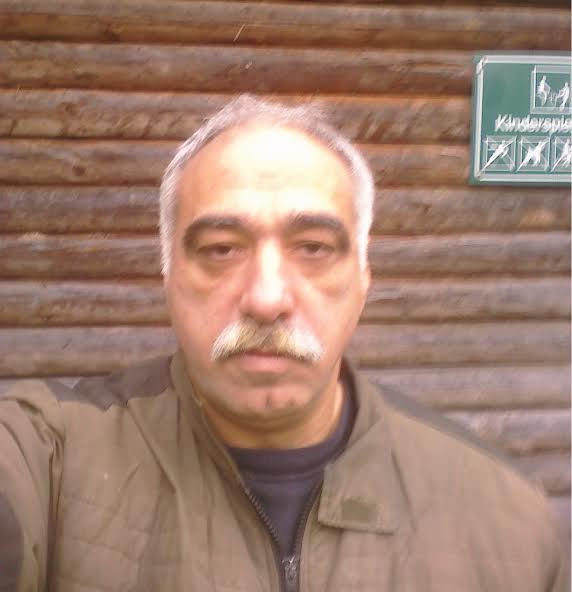
artaxes

Born to Greek parents, I live since my earliest childhood in Germany.
After having worked for about a decade in different jobs I completed my education and got my university-entrance diploma.
During the following side tour in university life, the world of science and higher mathematics I decided to abandon the pursuit of an academic career and instead pursue my lifetime passion which is the programming of computers. A choice that suited my fascination with the abstract world.

Since the late 90s I have been developing software architecture and programming software as a software developer for different companies and industries like manufacturing, trade and educational institutions with a focus on database-, internet- and advanced .Net applications.
Currently I’m working as a software developer for a big multinational company on a permanent basis.

Other than that I enjoy nature, hiking, good food and intellectually stimulating conversations in good company.

The aftermath of 9/11 caused me to study the causes of islamic terrorism and resulted in my awareness and keen interest in Israel’s political situation especially vis a vis Iran.

After having created my own blog I ended up spending most of the time commenting and participating on this site.

That fact and my interest in Israel’s and therefore the West’s future convinced me that I might as well become an associate editor on this great site.

Hey Stupid! It’s Not About Nukes, It’s About Life and Death

January 27, 2014

Faster, Please! » Hey Stupid! It’s Not About Nukes, It’s About Life and Death.

January 26th, 2014 – 7:18 pm

Michael Ledeen

There are none so blind as those who will not see, and hardly anyone wants to see Iran for what it is:  an evil regime bound and determined to dominate and destroy us, our friends and our allies. 

The evidence is luminously clear, but most all of our attention has focused, as usual, on the nuclear issue.  Did the Iranians promise to stop enriching uranium or “dismantle” some of the components of their nuclear program?  How many Western sanctions are being eased or lifted in exchange? And on and on…

We don’t know the answers to these questions, as the text of the agreement is secret.  However, we do know that the Iranians now have six months — the sort of deadline that often slides — to reach a “final” agreement with the 5 + 1 countries.

We can expect the Iranians to prolong and exploit this period to their advantage and our peril.  They’ve already begun. The Iranian regime is expanding its regional and global power, killing its domestic enemies, and subverting and intimidating Middle Eastern nations that are reluctant to bend to its will.  These matters require serious Western attention, but they aren’t getting much.  For us, it’s all about nukes and sanctions.

Just take a few of their major actions:

● A few days ago, Mohammad Reza Naghdi, the head of the Basij– a highly ideological militia under the umbrella of the Iranian Revolutionary Guards Corps — publicly announced that Iran had created Basij units in Egypt, Jordan, Lebanon, and “Palestine.”  This means that the world’s leading sponsor of terrorism has put paramilitary forces on Israel’s borders.

● In a closely related matter, Iran has taken a giant step toward establishing control over Lebanon.  A week ago, Saad Hariri, a key Sunni leader long opposed to Iranian influence and a declared enemy of Iran’s close ally Bashar Assad, said he is willing to form a government with Hezbollah, an Iranian proxy.  Hariri made this grim announcement in the Hague, where he was attending the trial of four Hezbollahis accused of murdering his father in 2005.  It came soon after the Beirut assassination of his close advisor, Mohamad Chatah, during the Christmas holidays.  The murder was widely blamed on Hezbollah.

● In Syria, where Iran is effectively in command of the pro-Assad forces, the slaughter of opposition forces and innocent civilians continues unabated.  Now that chemical weapons have been banned (although the opposition continues to claim they are still being used), more conventional weapons of mass destruction — like the “barrel bombs” — are being dropped on opposition centers in and around Aleppo, and elsewhere regime enemies are being starved to death.

● In Iran itself, the tempo of executions is surging, as it has for more than a year.  Hardly a day goes by without an announcement of multiple hangings, and those who closely follow this nasty business invariably find that the real numbers are significantly higher than the official ones.  Even the UN has taken notice, but the dips and businessmen are jockeying for position to make deals with Zarif and Rouhani.

● Iran continues its activities in our hemisphere, working ever more closely with Uruguay and Bolivia and continuing its operational activities with Venezuela.  According to the Uruguayan foreign minister, his country holds “identical view on international affairs” with Tehran.

● Finally, Iranian-sponsored terrorists continue to plot very nasty operations against us.  There’s a court case under way, involving two men arrested in Canada and another in New York.  They are accused of planning to attack a passenger train traveling between the two countries.  According to documents made public in Canada, one of the two Canadians was trained in Iran.

While Iranian President Rouhani and Foreign Minister Zarif whisper sweet words to reporters and businessmen, and even dangle the possibility of reopening the American Embassy in Tehran, the regime continues to wage war against us and our friends and allies.  Instead of simply crunching numbers on centrifuges and sanctions, it behooves serious strategists to pay attention to Iranian activity, now as ever aimed at our global defeat.

Our former close friends in the area know full well what’s going on, and they are acting accordingly.  The Gulf countries have just agreed to unify the command of their armed forces, creating an army of roughly 100,000 men to defend themselves against the ever-more threatening crowd around Supreme Leader Ali Khamenei.

Anyone with minimal understanding of human nature knows where all this is headed:  to ever more violence, and eventually to a war with Iran that everyone says they don’t want.  The hell of it is that the regime has never been so riven with internal conflict as it is today, as the various factions maneuver for position in the succession struggle that has intensified over the past couple of years.  The wave of executions is a sign of weakness and fear, not evidence of a regime that is firmly in control.  If Khamenei and Rouhani were confident they were firmly in control of Iran, they would fulfill some of Rouhani’s “moderate” promises, from greater rights for women to greater press and assembly freedoms, to release of political prisoners.  Instead they are nastier than in Ahmadinejad’s time.

If we were serious, we would support the oppressed people of Iran instead of making deals with their evil tyrants.  But, as throughout the past 35 years, our leaders keep trying to reach that elusive grand bargain with the mullahs.  Our leaders have confused the Iranians’ bark with a real ability to bite, when the sharpest teeth in Iran belong to the people.  As Winston Churchill once remarked, “Dictators ride to and fro upon tigers which they dare not dismount. And the tigers are getting hungry.”

I’m not holding my breath for Obama to embrace the cause of democratic revolution in Iran.  He’s already abandoned the freedom fighters from Tunis to Tehran, and from Aleppo to Cairo.  But he’s losing.  His pals in the Muslim Brotherhood have been routed, Tunisia has turned around, and his best friend in the region, Turkey’s Erdogan, is beginning to sense a hard wall at his back.  Life is full of surprises, sometimes even pleasant ones.  Obama’s betrayals may paradoxically be catalyzing revolutionary change more powerfully than his support could have accomplished.

Or not.  You never know.  But it’s wild out there…

Syrian opposition: Israeli jets bomb missile launchers in Latakia

January 27, 2014

Syrian opposition: Israeli jets bomb missile launchers in Latakia | JPost | Israel News.

By ARIEL BEN SOLOMON, JPOST.COM STAFF

01/27/2014 09:30

Channel 2 cites opposition claims saying that the explosion took place in the Sheikh Dahar neighborhood near the local port.

IAF A-4, F-16 jets at Hatzerim [file]

IAF A-4, F-16 jets at Hatzerim [file] Photo: Reuters/Amir Cohen

Israeli fighter planes bombarded S-300 missile launchers in the Syrian port city of Latakia late Sunday, Syrian opposition groups were quoted as saying by Israel’s Channel 2 television. Residents of the city reported hearing loud explosions just around midnight.

Opposition sources are quoted as saying that the explosion took place in the Sheikh Dahar neighborhood just near the local port, Channel 2 reported. The claims by the opposition have not been confirmed by any official sources.

Israel has on numerous occasions been fingered as responsible  for attacks on Syrian military targets during the two-year long uprising against the Assad regime.

The claims of an Israeli strike in Syria coincided with reports that IAF jets breached the sound barrier at medium altitude over the city of Baalbek, located in the Hezbollah stronghold of the Bekaa Valley. The flights caused panic among the residents, the Lebanese Broadcasting Corporation International (LBCI) reported Monday morning.

“On Sunday at 10:45 p.m., two Israeli war planes violated Lebanese airspace off west Batroun [district in north Lebanon], executed circular flight over the Lebanese regions; and then left at 11:55 p.m. off west Nakoura village [in the south,]” the Lebanese Army Command Guidance Directorate said in a statement according to Lebanon’s National News Agency.

Despite opposition claims, it is unclear if Syria has even acquired the S-300 system. Russian President Vladimir Putin revealed in September that the delivery was suspended, even though some components had been delivered.

“We have delivered separate components but the whole delivery has not been completed and for the moment we have suspended it,” Putin said according to AFP.

A military source told the state RIA Novosti news agency that the components were not enough to use the S-300 missile system, AFP reported.

Edward Hunt, an aerospace and defense consultant for HIS Janes in London, told The Jerusalem Post back in August that it is believed that the S-300 system was not yet delivered.

Syria possesses a mixed range of surface to air anti-aircraft weapons, “some old and some quite new, like the SA-10, SA- 11, SA-19 and SA-22.”

“It is not clear how effective they would be when facing well-trained and equipped US, British [and] French pilots using stand-off weapons,” said Hunt. “In the absence of the S- 300 long-range SAMs that Russia seems not to have delivered, that’s probably the best they have outside of unconventional methods.”

In October, a US official said that Israel conducted air raids against a Syrian missile base near Latakia.
The official, speaking to CNN, said Israel targeted missiles and related equipment out of concern that they would be transferred to Hezbollah.

The Syrian Observatory for Human Rights, which collates reports from opposition activists, said there had been an explosion at a Syrian air defense base near Jableh, in the Mediterranean coastal province of Latakia. The Latakia area is an Alawite and regime stronghold.

Israel has repeatedly warned that it is prepared to use force to prevent advanced weapons, particularly from Iran, reaching Hezbollah through Syria. According to foreign reports, Israel reportedly carried out several air strikes on Syria earlier this year.

In September, Israel was believed responsible for an attack on an arms depot in Latakia that killed between 10 and 20 Syrian troops. The Israeli government has consistently denied involvement in the Syrian civil war.

“For a long time we have continued to say that we are not involving ourselves in the bloody civil war in Syria,” Defense Minister Moshe Ya’alon said this past fall. “We have established our red lines and we are sticking to them.”

Off Topic: Fatah Leader Calls for ‘Armed Uprising’

January 26, 2014

(Did Abbas receive guidance during his meeting with Putin? – DM)

Fatah Leader Calls for ‘Armed Uprising’ Israel National News, January 26, 2014

Fatah terroristsTerrorists from Fatah’s Al Aqsa Martyrs Brigade

A senior member of Fatah, the party headed by Palestinian Authority Chairman Mahmoud Abbas, has called to renew terrorist attacks on Israel, Maariv/nrg reports.

Fatah Central Committee member Tawfik Tirawi reportedly told Al-Miadin that there will be no new Arab state in Judea, Samaria and Gaza in the near future, and not even in 20 years. For that reason, he said, Fatah must resume the “violent uprising” against Israel – meaning terrorism.

“That’s the only way things will change,” he argued.

Fatah must “join all of the organizations, both those operating under the Palestinian Authority, and those outside it,” he added, in an apparent reference to Hamas and Islamic Jihad. Hamas remains openly committed to obliterating Israel, while Islamic Jihad recently threatened to resume suicide bombings.

Tirawi argued that Fatah never truly abandoned terrorism. “Fatah never abandoned any form of action, including armed resistance,” he insisted.

Tirawi clarified that he is pessimistic regarding the chances of establishing a PA-led Arab state through negotiations because he believes the PA will reject any compromise deal of the type offered by United States Secretary of State John Kerry.

PA leaders have repeatedly declared that they are unwilling to compromise on their demands, which include the expulsion of all Israeli Jews from land over the 1949 armistice line, sole control of the Temple Mount – Judaism’s holiest site, the “right of return” for millions of Arabs descended from those who left Israel in 1948, the release of all terrorists, and the right to import weapons.

This is the latest in a string of incendiary statements by senior Fatah officials – statements which belie the PA’s official stance in undertaking negotiations with Israel.

Just a few days ago, the Fatah party’s official Facebook page featured a video by the group’s armed wing – the Al Aqsa Martyrs Brigades – in which it threatened to bomb Tel Aviv and promised to continue rocket attacks from Gaza.

Earlier this month, Fatah Central Committee member Abbas Zaki told Syrian state TV that the PA’s participation in US-brokered talks is part of a wider strategy to destroy Israel, and that whatever concessions it receives through diplomatic means will simply be the “first step” in achieving that long-term goal.

Transferring the War to the Enemy’s Computer

January 26, 2014

Transferring the War to the Enemy’s Computer.

The future is in Cyber – that much is clear. But who are those young soldiers assigned to protect us from a cybernetic attack?

(Photo: Ofer Zidon)
(Photo: Ofer Zidon)

The IDF of 2013 is an army on the web. The Merkava Mark-IV tanks are on the web, the F16 and F-15 fighters are on the web and even the Iron Dome batteries are on the web. If anyone should hack into this web, at the very least he would be able to familiarize himself with the secrets of the Iron Dome system. In a worst-case scenario, however, he would be able to cause the Iron Dome system to launch an interceptor missile not at a Grad rocket fired from Gaza, but at an IAF aircraft.

During the term of the previous Chief of Staff, Lt. Gen. Gabi Ashkenazi, the IDF authorities came to the realization that the future is in cyber, and that cyber is the fifth dimension, or medium, of warfare – in addition to the air, the sea, the ground and outer space. The responsibility for this dimension was divided in those days between two different GHQ Divisions: defensive operations were assigned to the C4I Division, and offensive operations were assigned to the Intelligence Division.

The people charged with the task of protecting the computer systems of the IDF are youngsters who have just completed their matriculation examinations in computer science. 

They are here, taking the Cyber Defender course of the IDF C4I Division at the IDF Personnel Corps base in Ramat-Gan, “the home where Israeli high-tech was born”. They take pride in the old buildings where the first computers used by the IDF are stored.

It is a battlefield to all intents and purposes. The enemies are all the immediate suspects, but the thing is – even countries Israel has no direct conflict with, like Russia and China, possess impressive cyber capabilities, and they, too, are interested in prying into the intestines of the IDF. Instead of shells and missiles, the weapons used by the IDF cyber defenders are worms, viruses and silent Trojan Horses.

Silent is the Name of the Game

A good cyber attack is an attack nobody knows about. In the strange strategic era in which we live – neither peace nor war – where, according to foreign sources, Israel has been conducting a secret campaign against the Iranian nuclear program and another secret campaign against arms smuggling and the empowerment of terrorist organizations, cyber plays an increasingly more important role.

For this reason, the cyber layout has expanded physically with the addition of many new recruits, as well as budget-wise. An IDF cyber unit can easily snatch recruits with a clean bill of health (“Health Profile 97”) at the expense of the Golani infantry brigade, for example. If a cyber attack needs to be silent, the role of the cyber defenders is just the opposite: the idea is to identify attacks taking place at the earliest possible stage, block them, contain them, and just like the classic combat doctrine of the Ben-Gurion school – transfer the war into the enemy’s territory, or in this case, into the enemy’s computer.

2nd Lt. Liav is one of the commanders of the present Cyber Defender course – it is only the third class since the course was conceived. “Two and a half years ago they established the Cyber Defense Department at the C4I Division,” he tells Israel Defense. “I attended the first training course, went on to the officer training school and returned here as an instructor. About thirty trainees complete the annual Cyber Defender course.”

How do you define their role for them before they are assigned to the various units?

“The function of the Cyber Defender is to protect the networks of the IDF, which are different from the networks we are familiar with in civilian life, owing to all sorts of threats from outside and from within, from anything that can damage the IDF and their strength.”

What are the contents you deliver to the trainees during the course?

“The course lasts four months. They learn about infrastructure, information security and the systems used in the IDF, and I am unable to give you any examples regarding the systems used in the IDF. During the last part of the course they have training exercises where they practice attacks that are taking place and they need to counter them. The final examination takes place between 10:00 AM and 06:00 on the following morning. They sit in the classroom, in shifts of four-man teams that investigate the attacks on the classroom network. We have systems that simulate attacks. After three hours, the teams rotate and this goes on for 20 hours. The morning hours, between 04:00 AM and 06:00 AM are the most difficult. This activity is intended to prepare them for their actual work in the field, at the units they will be assigned to, which can be any IDF unit that has a sizeable computer center. Cyber attacks take place 24 hours a day. The Cyber Defenders’ duty is to protect each and every IDF unit that has computer networks. After the course, they are dispersed among the various units.”

It has recently been announced that Israel had been experiencing, over the last year, a sharp increase in the number of cyber attacks, mainly against government and military websites – an increase that peaked during Operation Pillar of Defense.

“I cannot go into that for information security reasons. The point is there has been an increase in detection, too. It is highly likely that things are happening and attacks are taking place and we are not aware of that. Our objective is to prevent that. The question is not what the attack is. It can be an attack against communications, an attack against our weaknesses, an attack against an application through which the attacker can gain access – it all depends on how you write the code and the main thing is that you managed to gain access.”

Are there attacks that we do not know about?

“We hope not.”

Is it possible for someone to attack us, be detected and subsequently repelled without him knowing that he has been repelled, as we did not want him to know?

“This is a part of the combat doctrine the IDF are developing in the realm of cyber. It is possible that for me, as the defender, it would not be right to shut everything off now. Instead, it may be more desirable to keep on loitering inside the enemy’s ‘territory’ and see what happens there, so that I may take advantage of the opportunity for the benefit of our objectives. This is called ‘Proactive Defense’. I will prefer to go outside the box. The question is how to turn a situation where he attacks me around, so that I may attack him; how to turn a situation where the opponent is ahead of you into a situation where you are ahead of him.”

How do you cope with the splitting of the efforts, when the offensive effort is assigned to the Intelligence Division?

“The defensive dimension is the most important. If your defenses are compromised – you will not be able to attack. This can affect armored formations where all of the systems will collapse; aircraft that will not be receiving the targets they are supposed to attack; it can affect the navy, where naval forces will not be receiving data on the targets they should engage and so forth. Today, cyber is a complete dimension and that is how it is regarded by the IDF. It is a human dimension, causing people to do all sorts of things, the physical dimension is the equipment itself, with which we can hack into applications and obtain information. There is also the logic dimension – the information being transferred.”

Foreign sources published the story of the Stuxnet worm, attributed to Israel and the USA, which had allegedly slowed down the centrifuges of the Iranian nuclear project.

“During the cold war they managed, through computer systems, to cause gas pipes to burst using a logic bomb that changed the pressure settings inside the gas pipes. The most famous example is the Stuxnet worm. You create it through cyber and it physically changes the Iranian nuclear project through the rotation of the centrifuges it stopped, thereby delaying the entire nuclear project.”

Who produced the Stuxnet worm?

“Foreign sources…” (laughing).

Who are the trainees of the course?

“They go through the IDF Computer Skills School – an IDF training school that works with MAMRAM, and then come to this course.”

Can someone with no computer background take this course?

“There are people who come here whose only computer background consists of Facebook and Youtube. We look for individuals who think outside the box. In this world of information security you need to cause a certain component to do something it was not intended to do. If you have an application that produces specific reports, you are supposed to hack into it and cause it to do other things for you, like provide you with intelligence about the organization that uses it. We talk to the candidates and see if they think in a different way. We present logic questions to them in order to test their way of thinking.”

Are you disappointed of dealing with defense all day long when the offensive dimension is situated elsewhere?

“Being on the defensive side is more important as without effective defense you will not have the other things. No one goes out of here as ‘exclusively defense’ or ‘exclusively attack’. You must be both, but eventually, you will not be equally proficient at both.”

Don’t you think that the division between you and the Intelligence Division should be abolished?

“I do not think so. The operations should be cooperative and fully coordinated, but operating through different units is not a problem.”

“Demand has Rocketed”

Sgt. David joins the conversation: “Like Liav, I have been here since the first Cyber Defender course. I have been introduced to a small portion of Israel’s cyber capabilities. This activity is occupying an increasingly more prominent position worldwide. You have seen the stories about the monitoring by the agencies of the USA. Everything is in cyberspace. The demand for information security professionals has rocketed. The IDF, as in everything else, adapt to the technological evolution. The heads of this state and the commanders of the military had said a long time ago that they regard cyber as a combat zone to all intents and purposes.”

Have you had a chance to attend a real-life cyber attack situation?

“I have seen how we train ourselves. We practice an attack and then stop and analyze the attack. The training kicks in and the guys know how to solve whatever takes place.”

What is the most troubling thing about cyber attacks by states? Is it the fact that these attacks cannot be detected?

Sgt. Yuval joins the conversation: “States, undoubtedly. They have more funds and budgets and resources and reasons to do it, whether they are enemy states or rival states, and they are much more dangerous than organizations”.

Theoretically, can cyber prevent a war?

“Theoretically, yes. The question is to prevent a war in what way. Let me give you an example. Cyber can shut down an entire country and prevent it from going to war. Cyber can prevent war and decide the outcome of a war. The beauty of cyber is that you can do anything you want with it. This is also one of the difficulties as far as cyber defense is concerned. It is very difficult to know where things are coming from.”

Is it possible for someone to stage a cyber attack against us, and we will think that the perpetrator is one country, while in fact it was another country?

“It is definitely possible to create a situation where someone attacks us and we think it has come from one direction while in fact it came from a totally different direction. An attacker will not leave any footprints of what he had done. A superpower will not leave footprints. With a superpower, it would be much more difficult to find a trail.

“Cyber can start a war, too. The President of the United States of America has already announced that anyone staging a cyber attack against them will be answered by conventional warfare. This war is going on all the time, with varying intensity”.

If a total war should break out tomorrow morning, will the IDF cyber capabilities be mature enough to assist and contribute?

“The cyber contributes all the time and the contribution it makes is substantial and evident. Those who need to know are aware of it, and the cyber is contributing even now. Because of the cyber world, the course is kept current all the time.”

Rouhani: Israel Would be ‘Crazy’ to Attack

January 26, 2014

Rouhani: Israel Would be ‘Crazy’ to Attack – Defense/Security – News – Israel National News.

Israel will not dare attack Iran, because it knows what the consequences will be, said Iranian President Hassan Rouhani in a CNN interview

By David Lev

First Publish: 1/26/2014, 8:05 PM

Iranian president Hassan Rouhani

Iranian president Hassan Rouhani
AFP photo

Israel will not dare attack Iran, because it knows what the consequences will be, said Iranian President Hassan Rouhani. In an interview with CNN, Rouhani said that an Israeli attack on Iran’s nuclear facilities would be “crazy.”

Iran would agree not to enrich more uranium to levels that could be used for nuclear weapons, but it would not agree to relinquish any uranium it had already enriched, he said, addressing the recent discussions between Iran and Western countries. “It is part a part of our national pride, and nuclear technology has become indigenous,” Rouhani said. “And recently, we have managed to secure very considerable prowess with regards to the fabrication of centrifuges,” which the country would retain under any circumstances, he said.

“In the context of R&D and peaceful nuclear technology, we will not accept any limitations,” he said, adding that Iran was planning to use its nuclear facilities for medical purposes. “We are standing on our own two feet. Iranian scientists have designed this. We have constructed it. It’s nearly finished. So when it comes to medical concerns, we cannot accept limitations.”

Rouhani dismissed the possibility that Israel would attack Iran’s nuclear facilities. “Israel knows very well what the response would be. Israel knows well our regional capability,” he said. “When it comes to practice, the Israelis cannot do that. If they do such a crazy thing, our response will make them rue the day.”

Earlier, Prime Minister Binyamin Netanyahu said that a long-term deal with Iran on its nuclear program, as the West was trying to develop, was doomed to failure. Speaking at the weekly cabinet meeting, Netanyahu said that such deals with Iran “just won’t work. Rouhani said he favored recognition of all countries of the Middle East, but he refused questions that referred to recognizing the State of Israel. In his speech he not only said that Iran will not dismantle (its centrifuges), but would not dismantle even one centrifuge. The meaning of this statement, if Iran stands by it,” Netanyahu added, “is that there is no agreement with Iran that can work.”

Secret Iranian team in Beirut to counter suicide attacks and upgrade Hizballah intelligence

January 26, 2014

Secret Iranian team in Beirut to counter suicide attacks and upgrade Hizballah intelligence.

DEBKAfile Exclusive Report January 26, 2014, 5:13 PM (IST)
Iranian Beirut Embassy bombing 19.11.13

Iranian Beirut Embassy bombing 19.11.13

debkafile Exclusive: Iran has embarked on an urgent project for rebuilding Hizballah’s intelligence and security mechanisms from scratch, to repair the ravages inflicted by the spate of suicide attacks on its strongholds in Beirut and other parts of Lebanon, since the Shiite militia joined the Syrian war.

A top team of senior officials from Iran’s Revolutionary Guards Al Qods Brigades intelligence and Ministry of Intelligence and Security, landed secretly in Beirut last week. They arrived under cover of a delegation, headed by Deputy Justice Minister Abdol-Ali Mirkoohi, which came to collect information from the interrogation of Majid al Majid, the Saudi Arabian leader of the Abdallah Azzam Brigades terrorist group, who died in a Lebanese prison on Jan. 4.

That group claimed some of the attacks on Hizballah targets.
On its arrival, the secret Al Qods-led team separated from the delegation and got down to what is clearly a long-term project for reconstructing its Lebanese surrogate’s intelligence and security bodies.
It was armed with guidelines from an emergency conference, held among the Al Qods commander Gen. Qassem Soleimani, Hizballah secretary general Hassan Nasrallah and his two top lieutenants, Mustafa Badr al-Din, military chief, and Wafiq Safat, head of Hizballah’s security directorate.

This conference decided to retain a permanent team of Iranian experts in the Lebanese capital for the task of rebuilding Hizballah’s intelligence and security mechanisms on the same structural lines as Iran’s clandestine and security services.

It was obvious that those mechanisms would not stand the present rate of bombing attacks and other violence without caving in.

The Iranian-Hizballah conference selected three areas for remolding and fortifying Hizballah’s intelligence and security capabilities:

1. The East Lebanese Beqaa. Hizballah has worked hard to conceal its loss of security control in this area, traditional site of its most important command centers, military facilities and arms dumps. Security there is so enfeebled that Hizballah units can’t move from place to place, night or day, without coming under missile or artillery barrages from across the Syrian border. These attacks are targeted precisely by Syrian rebels, al Qaeda, Syrian and/or Lebanese Sunni Salafists aided by Saudi intelligence, whose intelligence and mobility are clearly superior to those of Hizballah.

Its commanders were shocked to discover how far they had fallen when on Dec. 12, when their Baalbek command centers were struck by suicide bombers. The locations of those command centers were a close secret. The planners of that particular attack were intent on showing Hizballah that it was vulnerable to attack everywhere, even in its most secret lairs.

2.  Hizballah’s strongholds in the Shiite Dahya district of southern Beirut. The frequent deadly suicide bombing attacks in the past three months were facilitated by the breakdown of Hizballah’s early warning system in the Lebanese capital and its dminished capacity to fight them off. The organization’s military and political stronghold in Beirut is currently wide open to hostile penetration.
3.  Hizballah’s field intelligence on the Syrian battlefield. In the course of the fighting, the Lebanese group turned out to be woefully deficient in field intelligence and forced to rely on Syria, whose capabilities are not much better. The Iranian expert team has undertaken to build and operate a new field intelligence arm for Hizballah combatants in Syria.

Netanyahu says West has ‘no chance’ of striking final nuclear deal with Iran

January 26, 2014

Jeruselem Post: Netanyahu says West has ‘no chance’ of striking final nuclear deal with Iran January 26, 2014

“No final status agreement with Iran will work,” the premier said hours after returning from his trip to Davos, where he took part in the World Economic Forum.

Netanyahu
PM Netanyahu speaks at weekly cabinet meeting Photo: EMIL SALMAN/POOL

Prime Minister Binyamin Netanyahu told his cabinet ministers in Jerusalem on Sunday that continued negotiations between Iran and the Western powers are pointless.

“No final status agreement with Iran will work,” the premier said hours after returning from his trip to Davos, where he took part in the World Economic Forum.

The premier cited the remarks made during the event by Iranian President Hassan Rouhani, who vowed that Iran sought peaceful relations “with countries that it already recognized.”

“Rouhani spoke of being in favor of recognizing all countries in the Middle East, yet he refused to answer sharp questions that were asked of him regarding recognition of Israel,” the premier said. “He said that Iran would not disarm its nuclear program, and it would not even dismantle one centrifuge.”

Under these circumstances, any agreement with Iran “cannot succeed,” according to the premier.