Archive for January 2014

In Iran We Trust?

January 31, 2014

In Iran We Trust? – The Weekly Standard.

If Tehran breaks its promises, we’re unlikely to know.

Feb 10, 2014, Vol. 19, No. 21 • By GABRIEL SCHOENFELD

President Obama is rushing to implement the six-month interim agreement with the Islamic Republic of Iran that went into effect last week. Together with five other world powers, he is now working to negotiate a long-term agreement aimed at keeping Iran from developing a nuclear bomb. He regards his opening to Iran as a signature achievement of his presidency and has proudly declared that diplomacy opened a path to “a future in which we can verify that Iran’s nuclear program is peaceful and that it cannot build a nuclear weapon.”

Syria’s camouflaged reactor

Syria’s camouflaged reactor

If we assume that negotiations do not collapse and some sort of long-term accord is struck, there will still be thorny questions. A preeminent one concerns Iranian compliance. How much confidence can we have that the ayatollahs will not press ahead with their nuclear program in clandestine facilities, as they have done in the past? And if they do press ahead, how much confidence can we have that our intelligence agencies will catch them?

Obama’s faith that “we can verify” Iranian compliance glides over the fact that the U.S. track record in unmasking covert nuclear programs is checkered at best. This is not because our intelligence agencies are incompetent—although sometimes they are—but because the task is exceptionally hard. Just last week, a three-year study by a Pentagon subunit, the Defense Science Board, concluded that U.S. intelligence agencies “are not yet organized or fully equipped” to detect when foreign powers are constructing nuclear weapons or adding to existing arsenals. What is more, their ability to find “small nuclear enterprises designed to produce, store, and deploy only a small number of weapons” is “either inadequate, or more often, [does] not exist.”

Past intelligence lapses in the nuclear realm go back to the dawn of the atomic age and include a failure to foresee the first Soviet A-bomb test in 1949, the first Soviet H-bomb test in 1953, and the first Indian nuclear test in 1974. After the first Gulf war, the U.S. intelligence community was astonished to learn that Iraq was only months away from putting the final screw in a nuclear device. In the run-up to the second Gulf war, the CIA blundered in the opposite direction, declaring with high confidence—“a slam dunk” in CIA director George Tenet’s notorious phrase—that Saddam Hussein was developing nuclear weapons. He was not. More recently, North Korea constructed a uranium enrichment facility that, despite intense scrutiny by American intelligence, went unnoticed until the North itself chose to reveal it.

The case of Syria is especially pertinent to our efforts to monitor Iran.
By the late 1990s, U.S. intelligence detected glimmerings that Syria might be embarking on some sort of nuclear project. But the agency had trouble making sense of the evidence it was gathering. It perceived that North Korea was helping Syria with a joint venture involving North Korean nuclear experts, but as a senior U.S. intelligence official explained in a briefing, we “had no details on the nature or location of the cooperative projects.” By 2003, U.S. intelligence had concluded that the activity involved work at sites “probably within Syria,” but they “didn’t know exactly where.” The fog of intelligence had set in: “We had this body of evidence, kind of almost like a cloud of, boy, there is something going on here but we can’t get a whole lot of precision about it.”

By 2005, the United States had made more progress in determining what was transpiring. Satellite photos revealed a “large unidentified building under construction” set in a canyon in eastern Syria near the Euphrates River at a juncture called al Kibar. But American intelligence analysts could not say much more. All they had was images of a structure that was “externally complete,” but it was “hard to figure out, looking at that building, what its purpose is.”

One problem was that “it certainly didn’t have any observable, externally observable characteristics that would say, oh, yeah, you got yourself a nuclear reactor here—things like a massive electrical-supply system, massive ventilation, and most importantly a cooling system.” Another problem was that though the structure closely resembled North Korea’s plutonium reactor at Yongbyon, America’s highly skilled photo-interpreters could not connect the dots between the two facilities. The oversight was not their fault; the Syrians had erected curtain walls and a false roof to disguise the building’s shape and conceal typical features of a reactor. The multibillion-dollar, ultra-high-tech tools of U.S. intelligence were foiled by one of the most low-cost and ancient techniques of warfare: camouflage.

Only in 2007, just as the reactor was ready to be loaded with uranium fuel, did U.S. intelligence conclude that Syria had built a gas-cooled, graphite-moderated reactor. It reached this judgment not by dint of its own collections efforts but thanks to incontrovertible evidence provided by Israel: photographs of the building’s interior. Under our eyes but without our seeing, the Syrians had come breathtakingly close to possessing an operational generator of the nuclear bomb ingredient plutonium.

“This was a significant failure on the part of U.S. intelligence agencies,” writes former defense secretary Robert Gates in his new memoir. Gates notes that “Syria for years had been a high-priority intelligence target for the United States” and that “early detection of a large nuclear reactor under construction in a place like Syria is supposedly the kind of intelligence collection that the United States does superbly well.” The failure clearly shook Gates and led him to ask President Bush: “How can we have any confidence at all in the estimates of the scope of the North Korean, Iranian, or other possible programs?”

That was the right question to ask in 2007 and it remains the right question to ask about Iran today.

It is especially significant that the CIA was undaunted by its own lapse. After Israel presented the United States with photographs of the interior of the building at al Kibar, the CIA told President Bush that while it now had high confidence that the structure was a nuclear reactor, it still had low confidence that Syria was engaged in a project to develop nuclear weapons. The reason for the low confidence estimate: It had scoured Syria and not been able to locate or identify any other components of a Syrian nuclear program. This was not a conclusion without consequences. In the wake of the WMD intelligence fiasco that precipitated the second Gulf war, President Bush was reluctant to strike the Syrian reactor without a rock-solid CIA judgment behind him. Israel was not so reluctant. It destroyed the reactor in an air raid on September 6, 2007.

What does all this mean for our dealings with Tehran? “With respect to Iran, the Syrian episode reminds us of the ability of states to obtain nuclear capability covertly,” is what U.S. intelligence itself has said about its own failure. But President Obama does not appear to take the reminder all that seriously. Even if inspectors were free to roam Iran at will, the ability of American intelligence to monitor a country whose territory is nearly 10 times larger than Syria’s would be in doubt. But under the preliminary agreement with Iran struck by President Obama in November, International Atomic Energy Agency inspectors are not free to roam at will; it appears they will be confined to those nuclear facilities that the IAEA already knows about. 

In any longer term agreement with Iran, far-reaching and highly intrusive verification provisions are going to remain crucial. But even in the unlikely event that the United States and its negotiating partners persuade Iran to grant inspectors unlimited access to all potential nuclear sites on its territory, our ability to detect violations will still be limited. It may be difficult to conceal a large structure like a nuclear reactor from the lenses of American satellites (although Syria found it easy enough for a time). It is far easier to conceal facilities housing centrifuges for uranium enrichment, which can be underground and do not require the kinds of cooling facilities that reactors demand. The leaders of our spy agencies may boast of the kinds of intelligence collection that they have been reputed to do “superbly well.” But history shows that their tools are limited and their record spotty.

For more than 20 years, Iran has violated IAEA safeguard agreements, developed covert nuclear facilities, and sought to mislead the West about the scope and pace of its activities. As the American people weigh the value of an agreement with a regime that has a consistent record of cheating on international accords—not to mention lying, inciting hatred, terrorizing, and murdering—they would do well to understand that if the agreement is violated, we may not find out until it is far too late to rectify our oversight, for at that point, Iran will already have achieved its terrible goal.

Gabriel Schoenfeld, a senior fellow at the Hudson Institute, is the author of Necessary Secrets: National Security, the Media, and the Rule of Law and, most recently, A Bad Day on the Romney Campaign: An Insider’s Account

Are Syria, Iran playing Obama for a fool?

January 31, 2014

(The bigger question is: Does he care about being fooled? “Tell me lies. Tell me sweet little lies …” Artaxes)

Are Syria, Iran playing Obama for a fool? – CNN Opinion.

By Frida Ghitis
January 31, 2014 — Updated 1355 GMT (2155 HKT)
 

Editor’s note: Frida Ghitis is a world affairs columnist for The Miami Herald and World Politics Review. A former CNN producer and correspondent, she is the author of “The End of Revolution: A Changing World in the Age of Live Television.” Follow her on Twitter @FridaGhitis.

(CNN) — Remember Syria’s chemical weapons? Yes, those, the ones the Syrian regime agreed to give up after President Obama threatened to bomb.

All of the “priority one” the most dangerous of those weapons, were supposed to be gone by December 31 last year. They’re not. Almost all of them — more than 95% — are still in Syria despite a commitment by the Syrian President Bashar al-Assad to get rid of his deadly arsenal.

The deal to remove Syria’s stock of WMD was the one tangible accomplishment of the Obama administration’s approach to the Middle East’s multiple crises. Now that deal looks to be failing, even as red flags also start flying along the path to a deal with Iran.

Frida Ghitis

Frida Ghitis

It’s hard to escape the impression that Iran and its close ally, Syria, are toying with the U.S.

America is earnestly seeking a diplomatic solution. And we should all hope diplomacy succeeds in securing an agreement that stops the carnage in Syria and one that prevents Iran from becoming a greater threat to its neighbors. But there is a reason these efforts are already running into trouble.

Secretary of State John Kerry is valiantly pursuing the suit-and-tie approach to peace, but Kerry is handicapped by the growing perception that Obama will not use military force under any circumstances. The U.S. doesn’t need to release bombs to show it is powerful. What it needs to do is remind its adversaries, its enemies, that it has options beyond the well-appointed rooms of hotels along Lake Geneva.

Obama can do this by speaking directly and firmly about those choices. That alone would go a long way in reshaping some points of views, and could produce results. If it doesn’t, more concrete steps would be required, from increasing material support for specific anti-al-Assad forces to a tightening of sanctions against Iran and other steps.

Diplomats can help concentrate the mind of their interlocutors when the people on the other side of the table worry about the possible cost of failure.

This is true of Syria’s al-Assad, who has heard Obama’s threats on the use of chemical weapons starting in the summer of 2012, and is still playing games with America while relentlessly slaughtering and starving his people.

And it is true about Iran, which just heard Obama during the State of the Union threaten to veto a plan to set the stage now for additional sanctions against Iran if negotiations fail in the next six months. Iranian officials presumably also heard the president state what so many have stopped believing: that he is prepared “to exercise all options to make sure Iran does not build a nuclear weapon.”

Iran foreign minister says Obama’s remarks are for “domestic consumption”

The more we hear from the Iranians, the less likely it seems that a successful agreement can be reached.

After CNN’s Fareed Zakaria talked to Iranian President Hassan Rouhani last week, he concluded there’s a “train wreck” on its way in negotiations. The U.S. is moving forward on the assumption that a deal would involve the dismantling of some key nuclear facilities, but Rouhani, the moderate face of the Islamist Republic, made it “categorically, specifically and unequivocally” clear that Iran has no intention of ever rolling back its nuclear program. 

On Syria, I had heard rumors that the removal of its most terrifying weapons was not going as scheduled. Then an anonymous source told Reuters that the regime has delivered a dismal 4.1% of the 1,300 tons of toxic agents it has reported, “and there is no sign of more,” on the way.

Then the U.S. confirmed it.

On Thursday, Ambassador Robert Mikulak, who heads the U.S. delegation to the Organization for the Prohibition of Chemical Weapons, told the group that Syria is ignoring the timeline for removal of banned weapons and displaying “a ‘bargaining mentality’ rather than a security mentality.” In addition, he said, there is little progress on Syria’s commitment to destroy its chemical weapons production facilities.

If Syria’s games over its chemical weapons sound familiar — agreements followed by “misunderstandings” and endless delays — it is because we see much the same already unfolding with Iran.

Iran’s President and foreign minister are well versed in their communications strategy with the West. They are charming and fluent, speaking directly to Western publics who would like nothing better than to be done with the threat of a confrontation. And how great it would be to truly resolve the issue diplomatically.

Hope, however, is not a strategy any more than closing your eyes when you don’t like what you see, as when Iranian President Hassan Rouhani tweeted that in the Geneva agreement the “world powers surrendered” to Iran. That’s when the White House dismissed the worrisome statement as a play for a domestic audience.

Since then, however, one after another Iranian official has maintained they have no intention of taking apart any of their nuclear program. Without destroying any centrifuges, reactors, or other facilities, Iran can negotiate with the West, and receive political, diplomatic and economic benefits from the loosening of sanctions, as it already has. And then, as top Iranian officials have said, it can reverse any freeze and resume high-level enrichment in 24 hours. That’s the vow from the top nuclear negotiator and the foreign minister.

Making matters worse, much worse, we have just learned that American intelligence officials believe Iran has essentially already reached the “nuclear breakout” capability it sought. Director of National Intelligence James Clapper told Congress this week that Iran has made “technical progress in a number of areas — including uranium enrichment, nuclear reactors, and ballistic missiles — from which it could draw if it decided to build missile-deliverable nuclear weapons.” In other words, he concluded, the only thing between Iran and nuclear weapons is a political decision to build the bomb. Everything else is already in place.

That extraordinary revelation received little attention in the U.S., where the headlines were consumed with the crisis in ice-logged Atlanta. In other places, the news was cause for alarm. “Heaven help us,” tweeted a respected Israeli journalist, “Iran can now build and deliver nukes.”

How is it possible that Iran and Syria are getting away with this?

Iran and Syria are not the only countries convinced that the U.S. will not take military action. Saudi Arabia apparently has reached much the same conclusion.

After his 2012 red lines became blurred, the deal to get rid of al-Assad’s chemical weapons allowed Obama to claim he had succeeded in showing consequences for their use, even if al-Assad stayed in place and the killing continued. But now it looks as if essentially nothing has changed. Except that tens of thousands more have died.

To support American diplomacy, Obama needs to erase that image of a weak America. Again, there is no need to launch attacks and deploy troops. But there is a need to show to America’s enemies they cannot play the U.S. for a fool. The President needs to assert convincingly that he will be able to exercise power if that becomes necessary. Nothing would be more helpful to the chances for diplomatic success.

IAEA: Time to tackle ‘more difficult’ Iran issues

January 31, 2014

IAEA: Time to tackle ‘more difficult’ Iran issues – The Times of Israel.

Head of UN’s nuclear watchdog says allegations of past weapons programs, detailed in a major 2011 report, must be resolved

By AFPJanuary 31, 2014, 4:46 pm

Head of Iran's Atomic Energy Organization Ali Akbar Salehi, left, and International Atomic Energy Agency (IAEA) Director General Yukiya Amano, in Tehran, Iran, Nov. 11, 2013 (photo credit: AP/ ISNA/Mehdi Ghasemi)
Head of Iran’s Atomic Energy Organization Ali Akbar Salehi, left, and International Atomic Energy Agency (IAEA) Director General Yukiya Amano, in Tehran, Iran, Nov. 11, 2013 (photo credit: AP/ ISNA/Mehdi Ghasemi)

VIENNA — After recent progress with Iran, it is time to tackle “more difficult” nuclear issues such as allegations of past weapons work, the head of the UN atomic watchdog told AFP in an interview.

“We started with measures that are practical and easy to implement, and then we move on to more difficult things,” said Yukiya Amano, director general of the International Atomic Energy Agency.

“We certainly wish to include issues with ‘possible military dimensions’ in future steps … We have already discussed it and will continue to discuss it at the next meeting” between the IAEA and Iran on February 8, he said.

A November 11 agreement with the IAEA towards improved oversight over Iran’s program included six steps such as this week’s visit by IAEA inspectors to the Gachin uranium mine and to a new reactor plant at Arak in December.

But the deal, separate to an accord struck with world powers on November 24 in Geneva, made no specific mention of long-standing allegations that prior to 2003, and possibly since, Iran’s nuclear work had what the IAEA calls “possible military dimensions”.

Two years of talks between the IAEA and Iran over these accusations, detailed in a major and controversial IAEA report in November 2011 and consistently denied by Iran as being based on faulty intelligence, went nowhere.

But Amano, 66, told AFP that Iran has not been let off the hook, saying that the November 24 accord with world powers made clear that “all past and present issues” must be resolved.


Iran and North Korea: The Nuclear ‘Axis of Resistance’

January 31, 2014

(There is not much new here but it is a persistent problem. It has been one of my pet concerns for months, see herehere and here. DM)

Iran and North Korea: The Nuclear Axis of Resistance  The Daily Beast

Korea nukes 1

A new U.S. intelligence report warns North Korea could resume exporting nuclear technology and material. That could spell trouble for U.S. efforts to keep Iran from getting the bomb.

The comprehensive nuclear deal Iran is negotiating with the West could be undermined by increased Iranian cooperation with North Korea, a country that the U.S. intelligence community reports is ramping up its nuclear enrichment and illicit export programs.

Iran has halted its enrichment of uranium to the 20 percent level as part of the interim agreement it signed with the world’s major powers last November. That temporary deal doesn’t address Iran’s illicit trade with countries like North Korea, which has been building a massive complex of uranium-enriching centrifuges. Given North Korea’s penchant for selling Iran illicit technology, the risk of Pyongyang exporting nuclear technology is real, according to the U.S. intelligence community.

“North Korea’s export of ballistic missiles and associated materials to several countries, including Iran and Syria, and its assistance to Syria’s construction of a nuclear reactor… illustrate the reach of its proliferation activities,” the U.S. intelligence community wrote in its annual Worldwide Threat Analysis, released Wednesday. And despite its repeated pledges “not to transfer nuclear materials, technology, or know-how, North Korea might again export nuclear technology.”

North Korea has already expanded its uranium-enrichment facilities at its Yongbyon nuclear facility, and restarted a plutonium reactor at Yongbyon that was shut down in 2007, the IC report stated. North Korea conducted its third nuclear test last February.

Video screenshotGo behind North Korea’s propaganda to see the regime’s grim reality.
Meanwhile, Iran continues to pursue capabilities that could ultimately be used to build missile-deliverable nuclear weapons, the IC report added. The central question is whether Tehran has the political will to actually build a nuclear bomb. Iran’s president last week said his country would not dismantle the cascades of centrifuges that the West fears Iran could use to one day rapidly produce weapons-grade fuel. Tehran is also developing advanced centrifuge designs and stockpiling low-enriched uranium.

But Iran would not be able to enrich enough uranium to weapons-grade levels to produce a nuclear bomb before the world detected that activity, the IC concluded. That’s where North Korea could come in.

Last September, at the same time Iran was secretly meeting with U.S. officials to set up the current nuclear talks, North Korea leaders visited Tehran and signed a science and technology agreement that is widely seen as a public sign the two countries are ramping up their nuclear cooperation.

“Iran declared Sept. 1, 2012 North Korea was part of their ‘Axis of Resistance,’ which only includes Iran, Syria, and Hezbollah. They’ve announced to the world they are essentially allies with North Korea,” said David Asher, the State Department’s coordinator for North Korea from 2001 to 2005.

North Korea signed a similar agreement in 2002 with Syria’s Bashar al-Assad, after which North Korean scientists aided Syria in building a nuclear reactor that was destroyed by an Israeli strike in 2007. Iran is suspected to have aided in the funding of that reactor.

“It’s a very suspicious situation and rather alarming given the precedent with Syria,” said Asher. “The last time North Korea signed an agreement like this it led to the largest act of nuclear proliferation in modern history.”

The Institute for Science and International Security, a think tank that closely monitors Iran’s nuclear program, issued a report on Jan. 15 on a possible agreement that would actually preclude Iran from getting a nuclear weapon. The report said that if Iran is allowed to maintain any nuclear-enrichment program, the supply channel for that program should be dictated by the United Nations Security Council and overseen by a panel of international experts, to ensure North Korea is not involved.

“You don’t want North Korea to become Iran’s supplier for critical components for their centrifuge program. Raw materials that Iran needs to go out and buy. If Iran can buy the raw materials they need from North Korea, there’s no way to control that or stop it,” said David Albright, president of ISIS. “Part of the challenge of these negotiations is to make sure there are conditions to say that at least if Iran cooperates with North Korea on nuclear, that would be a violation of the agreement.”

North Korea is creating a program for up to 10,000 centrifuges but nobody knows how many are operational, said Albright. “That provides Iran another option to keep their [highly enriched uranium] program advancing,” he said.

“The last time North Korea signed an agreement like this it led to the largest act of nuclear proliferation in modern history.”

The Obama administration is tight-lipped about how and when they have raised North Korean nuclear cooperation with Iran in the context of the current round of nuclear negotiations. “We have raised all the issues involved with Iran’s nuclear program and will continue to do so throughout the comprehensive negotiations,” a senior U.S. official told The Daily Beast.

In May testimony to Congress, Undersecretary of State Wendy Sherman declined to discuss the administration’s view on Iran-North Korea nuclear cooperation in an unclassified setting. But she noted that both countries had been part of the network of notorious Pakistani nuclear proliferator A.Q. Khan.

“Everyone is very well aware of the history with Pakistan, for instance, and A.Q. Khan in a network of proliferation,” she said. “So, it is very important and we think very careful about where there may be interaction that affects one or the other of these situations.”

North Korea is suspected of providing Iran with nuclear assistance in the form of scientists, hard-to-obtain centrifuge components, and raw materials, experts said. North Korea also has large natural uranium deposits.

Olli Heinonen, a former deputy at the International Atomic Energy Agency, said there has always been speculation about Iran-North Korea nuclear development. But he said proof has been very difficult to come by.

“This is one of many issues that needs to be addressed about the possible military dimension of Iran’s program,” he said. He also stressed that his agency was able to surmise a list of technical items and techniques that Iran had been seeking in general, such as technology to refine steel needed for advanced centrifuges. Some of Iran’s wish list, he said, had correlated with the kinds of expertise the North Koreans had. But he stressed, “this is not hard evidence.”

Other U.S. experts have pointed to other kinds of cooperation between the Islamic Republic and the Hermit Kingdom. Last March, the Washington Post reported that the two countries had cooperated on missile technology One such example is Iran’s development of its Shahab 6 missile, which has used North Korean technology for its boosters. The first reports of this cooperation go back to the 1990s.

In 2012, the German publication Die Welt quoted a former senior German defense official as saying North Korea’s 2010 nuclear test was actually a test on behalf of the Iranian program.

Off Topic: Quartet to meet in Munich over stalled Israeli-Palestinian peace talks

January 31, 2014

Quartet to meet in Munich over stalled Israeli-Palestinian peace talks  The Jerusalem Post

(Neither Israel nor the PA will be there. How much pressure will be put on Kerry to pressure Israel to yield to even more PA demands?)

EU foreign policy chief Ashton, US Secretary of State Kerry to be joined by UN Secretary-General Ban, Russian FM Lavrov and Quartet envoy Blair to discuss how to help both sides reach “difficult and bold decisions.”

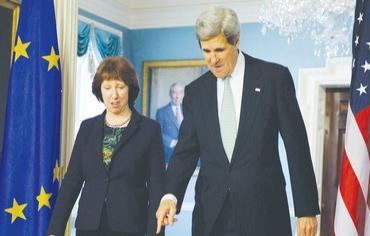
Israeli peace talks in MunichUS SECRETARY OF STATE John Kerry walks with EU official Catherine Ashton in Washington, Feb 14 Photo: REUTERS

MUNICH, Germany – Top officials from the United Nations, United States, Russia and European Union will meet on Saturday to discuss how they can help US Secretary of State John Kerry’s drive for a Middle East peace deal, the EU said on Friday.

The meeting of the so-called Quartet of Middle East peace mediators will be held in Munich on the sidelines of the annual security conference there.

EU foreign policy chief Catherine Ashton said she would chair the meeting with Kerry, United Nations Secretary-General Ban Ki-moon, Russian Foreign Minister Sergei Lavrov and Quartet envoy Tony Blair, the former British prime minister.

“This meeting takes place in a moment when difficult and bold decisions need to be made. The dividends of peace for Israelis and Palestinians are enormous,” Ashton said in a statement.

“I hope that together we can help those decisions to become a reality to continue working towards a negotiated peace agreement, setting an end to the conflict and fulfilling the legitimate aspirations of both parties,” she said.

Kerry has toiled for six months to push Palestinians and Israelis towards an elusive peace deal to end their generations-old conflict.

A handful of diplomats remain hopeful he will defy the pessimists and secure at least a framework deal in the coming weeks to allow detailed talks to continue beyond the original nine-month deadline, which expires on April 29.

But, with both sides far apart on many core issues including borders, security, the right of return for Palestinian refugees and the future status of Jerusalem, many Palestinians and Israelis believe the talks are going nowhere.

Off Topic: ‘Chances for deal with the Palestinians are quite low’

January 31, 2014

‘Chances for deal with the Palestinians are quite low’ Israel Hayom

Former Military Intelligence chief Maj. Gen. (res.) Amos Yadlin, now head of the INSS, thinks neither Israel or the Palestinians are ready to make the concessions necessary for a peace deal • Yadlin on Iran: Israeli military option is still possible.

“As a matter of fact, the chances are quite low,” he said.

Today, Yadlin heads the Institute for National Security Studies in Tel Aviv. He “commands” a number of senior researchers at the prestigious institute who analyze events in the Middle East. At the annual conference staged by the INSS, appearances were made by the president, the prime minister, and various cabinet ministers, army officers, diplomats, and academics. The top echelon came to make statements, but also to listen to assessments that allow them to pause and them take stock of ongoing processes, possibilities, risks and opportunities.

Yadlin offered his analysis of the two most pressing diplomatic processes taking place at the moment — the Palestinian question and the Iranian nuclear issue. Reading his statements brings a better understanding of the significance of those four words often said when discussing these issues: “The situation is complicated.”

“The odds of reaching an agreement with the Palestinians are low, since each side needs to accept three painful concessions,” he said.

“Israel is required to accept the partitioning of the land and the establishment of a Palestinian state. Now, it’s true that this is a principle that has already agreed upon, supposedly, but it appears that when one gets down to details, the situation is much more difficult.

“Also, Israel needs to agree to a Palestinian state based on the 1967 lines with territorial swaps, when just 60 to 90 percent of settlers need to be included in the settlement blocs. Finally, Israel will also have to agree to a Palestinian presence in Jerusalem to the point where the Palestinians realize their goal of establishing a capital in the city. When it comes to the last two concessions, Prime Minister Benjamin Netanyahu has yet to get there, and he is certainly not prodding the nation to get there.

“As for the Palestinians, [Palestinian Authority President Mahmoud] Abbas needs to agree to three critical concessions of his own. First, he needs to declare an end to the conflict, an end to all claims, and to recognize Israel as a Jewish state. Secondly, he needs to renounce the right of return of refugees. Thirdly, he needs to agree to limits on Palestinian sovereignty in deference to Israeli security arrangements.

“Abbas will try to find a way out of all of these commitments and obligations because from a Palestinian perspective, if he agrees to all of them, it would be tantamount to a recognition of Zionism.

“As for the return of refugees, Abbas, personally, has given up on his demand to return to Safed, as he has said. But he added that all of the other refugees needed to be individually asked whether they would agree to give up the demand to return to their homes. This, of course, is unacceptable to us. What is needed is an agreement between the peoples on the issue of refugees, and not to keep the issue open. What is needed is an agreement that won’t include the right of return of Palestinians to territory on which the Jewish people established their state.

“As such, the Palestinians will have to understand that they will have to make concessions and accept limitations on their sovereignty to meet Israeli security arrangements. We thought that of all of the core issues, the matter of security arrangements would be solved quite easily, but the Palestinians were quick to reject the American proposals drafted by Gen. John Allen.”

Do the security arrangements focus on the Jordan Valley?

“The focus placed on the Jordan Valley misses the point entirely,” Yadlin said.

“It’s not that the issue of the Jordan Valley isn’t important, but besides the valley we must also deal with defense elements in western Samaria, since that is where the most danger lies given that the coastal plain is most vulnerable to enemy fire from there and there is also the matter of security arrangements for Jerusalem.

“Any future agreement will have to take into account the mistakes that were made in the Oslo Accords thus far. The lesson that was learned from the Gaza withdrawal, from leaving the Philadelphi Route along the Sinai-Gaza border vulnerable to Iranian weapons transfers from Sudan and Libya, must be internalized and implemented in the Jordan Valley as well.

“We don’t want a situation where a Palestinian state arises and we see the presence of radical elements in Judea and Samaria who will use the territory as a base to launch missiles at Israel. So the valley needs to be tightly protected.

“But, as I mentioned earlier, that’s not the only problem. The more serious problem is whether the Palestinian Authority will be strong enough to deal with terrorist organizations. Will it survive after Israel withdraws from the territory or will Hamas take over just like it did in Gaza? The security arrangements need to provide an answer even in the scenario of a coup in the Palestinian state and whether we are dealing with a weak Palestinian state that either doesn’t have the will or the strength to deal with terrorism.

“If this is the situation, then most of the terrorism will come from the western side, in Samaria, and that’s where we need to put the focus. That’s a part of the landscape from which they could launch shoulder-fired missiles at airplanes that land at Ben-Gurion Airport and take off from it as well. They could also fire at cars on Route 6 [the main trans-Israel highway]. As such, we must also focus on security arrangements for Jerusalem. We need to see that we are not replacing a good security situation with one that involves constant terrorism, which is what we had during the Arafat era from 2000 until 2003.”

To ensure security, what other concessions on sovereignty will the Palestinians need to make?

“Control over air space and electromagnetic fields, for example. There is very limited wiggle room here. In order to ensure control over airspace, we need to have a shared field with the Palestinians. There’s no need to blink here. Without Israeli control over airspace, the chances of attaining real security are very slim.”

How is it possible to partition Jerusalem without risking the security of neighborhoods that would be left vulnerable to enemy fire, as we saw in Gilo during the last intifada?

“In Jerusalem, the discussions could be divided into three dimensions. The negotiators need to delineate the territorial borders, the political arrangements (on the Temple Mount, among other places), and then to begin work on the security arrangements that would address all the concerns regarding the territorial and political questions. Jerusalem is one of the key obstacles to a deal. It is anticipated that the Arab neighborhoods of Jerusalem will be under Palestinian control. The State of Israel has no interest in controlling Arab neighborhoods of Jerusalem and adding another 250,000 Arab residents to its citizen registry. A unique political arrangement will have to be implemented on the Temple Mount and we will need to come up with security solutions to these two issues.”

What possible security solution could ensure quiet in Jerusalem?

“If there will be a Palestinian government that will want to keep the peace and fight terrorism, we will have to test its ability to do so. Every security arrangement will have to be tested over a length of time. Israel can’t leave after three years, as Abbas has proposed. We are talking about arrangements and an agreement that are arrived at after 2,000 years in which the Jewish people returned to their land and after 120 years of conflict with the Palestinians. So, 20 years, for example, is not a long time.

“We need to test the Palestinians over a period of time to determine whether they are providing security as we hope they will. We need to test whether they are proving themselves in terms of controlling events on the ground, if they are capable of proving that they could fight terrorism, prevent weapons smuggling, and when there’s something going on and our intelligence detects that something’s up, they need to do the right thing. This wasn’t the situation when Arafat was in power. Like I said, this time the security arrangements need to provide answers to all possible scenarios and correct the shortcomings that were exposed in the Oslo Accords and during the Arafat era, when he was in charge of security.”

You mentioned a number of factors that limit sovereignty and a lot of conditions. Which Palestinian leader will be ready to accept them?

“There are many countries that have accepted limits on their actions due to the geopolitical situation as reflected in their region. The Palestinians have a tendency to portray themselves as the weak party going up against mighty Israel, but the picture is skewed. If one were to look at things correctly and realistically, it is Israel that is very small, and it is facing 57 Muslim countries. The State of Israel cannot take the risk of forfeiting its security by failing to adequately provide safeguards, because it cannot afford to lose a war.”

What about Abbas? Is he a partner?

“He certainly is a partner, and as evidence, one can point to the fact that is currently negotiating with Israel. He sincerely believes in peace and he is of the opinion that terrorism has led the Palestinians to a place where they were much worse off and strategically placed them in a very problematic position. On the other hand, he is a very tough opponent at the negotiating table. He doesn’t want to give up the Palestinian people’s right of return, he has a difficult time declaring an end to the conflict, and he has a hard time recognizing Israel as the state of the Jewish people or agreeing to its security demands. He is a partner for negotiations, but is he a partner for signing a peace treaty? We will find out in the next year.”

If Iran reaches a stage where it is capable of assembling an atomic weapon, it will remain an existential threat to Israel. Is this still true today after the interim agreement?

“Iran has declared that the State of Israel is an illegitimate state and that it needs to be erased from the map. This is a country that combines an extremist ideology with an extreme weapon that enables it to destroy Israel, creating a potentially existential danger. As of this moment, they do not have this lethal weapon, but it is a potential danger.

“Its nuclear program was indeed halted at Geneva, but it was halted at a point that is very, very close to the point in which the Iranians could decide to make a dash to the bomb that would take a matter of months. So the place where they stopped is a dangerous one. If the Geneva agreement becomes a permanent deal, or if similar parameters will be included in the final deal, and the agreement is extended indefinitely, then it will be a bad agreement.

“Iran has placed itself in a position of a nuclear threshold state, where the only thing separating it from the bomb is a decision by the leadership and the taking of steps that cannot be implemented given the limitations of the International Atomic Energy Agency, which Iran is a signatory to them, particularly the limitations on enrichment of high-level uranium and the use of enriched uranium in warheads.

“The State of Israel cannot accept a situation in which the Iranians will be that close to the bomb. The prime minister is demanding – as do UN Security Council resolutions — that they cease uranium enrichment completely and dismantle all of their nuclear facilities. I assume that the final agreement will not include that. The index by which it should be measured is how much is Iran distanced from the nuclear threshold. It needs to be years, not months [before they could sprint to the bomb].”

How would you analyze the U.S. conduct in the negotiations with Iran?

“I was surprised by the Americans’ willingness to concede some very important points on this agreement, very clear points that were mentioned in the Security Council resolutions. It seems as if the sanctions weren’t imposed on Iran, but on the west, which is more eager to strike a deal than the Iranians are. I think that the U.S.’s strategic goals are very similar to Israel’s strategic goals: that Iran doesn’t go nuclear.

“But the manner in which the Americans went to the Geneva conference and the way in which the agreement was forged [gives me pause]. I fear that the Americans are losing two key levers that they could have used to reach a reasonable deal with Iran: the sanctions regime and the credible threat of military force. Perhaps the sanctions regime is falling apart. We are now seeing countries who were party to the talks running to Tehran [to do business].

“There was talk about an agreement to buy $20 billion worth of petroleum from Russia. That’s three times the sanctions relief that the Americans gave to the Iranians. If this agreement is implemented, I believe that the Americans will be left without the leverage afforded them by the sanctions. There is concern that the leverage provided by the threat of military force has been significantly weakened by virtue of the statements and actions [by the U.S.] in the Middle East these past two years.”

Is the prospect of an Israeli attack still in play?

“The Israeli military option must be on the table. It was this option that spurred the sanctions and their efficiency. I am among those who believed that the sanctions would work, and they did indeed work. The Iranians came to Geneva not because they suddenly realized they needed to halt their nuclear program, but because their economy was hampered by the sanctions. The regime began to get the sense that the economic situation was endangering its rule. I never talk about the details of the military option. The only thing I could say is that the Israeli military option is still possible.

“Either way, in the next six months, because of the Western powers’ talks with Iran, the legitimacy of an Israeli attack has fallen. Fundamentally, a reasonable agreement with Iran is preferable to an attack on Iran. Israel needs to take into account what the U.S. thinks about an Israeli attack. Yes, we have never asked the Americans for a green light, and we will never ask. On the other hand, when the red light is flashing brightly in Washington, the right thing to do is carefully weigh the options. We need the Americans not for the attack itself, nor do we need them for the chaos that would ensue after it. But we do need them for the decade after the attack.”

Off Topic: Exclusive: CIA Helped Saudis in Secret Chinese Missile Deal

January 31, 2014

(The CIA’s involvement in 2007 is hardly newsworthy but the article gives some interesting details about the Saudi missile program. Artaxes)

Off Topic: Exclusive: CIA Helped Saudis in Secret Chinese Missile Deal – Newsweek.

 By

Filed: 1/29/14 at 12:53 PM  | Updated: 1/30/14 at 11:32 AM
1
The spy agency held secret meetings with Saudi air force officers, overseeing the technical details of the kingdom’s purchase of East Wind ballistic missiles Ibraheem Abu Mustafa/Reuters


Saudi Arabia has long been a backroom player in the Middle East’s nuclear game of thrones, apparently content to bankroll the ambitions of Pakistan and Iraq (under Saddam Hussein) to counter the rise of its mortal enemy, Iran. 

But as the West and Iran have moved closer to a nuclear accommodation, signs are emerging that the monarchy is ready to give the world a peek at a new missile strike force of its own – which has been upgraded with Washington’s careful connivance.

According to a well-placed intelligence source, Saudi Arabia bought ballistic missiles from China in 2007 in a hitherto unreported deal that won Washington’s quiet approval on the condition that CIA technical experts could verify they were not designed to carry nuclear warheads.

The solid-fueled, medium-range DF-21 East Wind missiles are an improvement over the DF-3s the Saudis clandestinely acquired from China in 1988, experts say, although they differ on how much of an upgrade they were.

The newer missiles, known as CSS-5s in NATO parlance, have a shorter range but greater accuracy, making them more useful against “high-value targets in Tehran, like presidential palaces or supreme-leader palaces,” Jeffrey Lewis, director of the James Martin Center for Nonproliferation Studies at the Monterey Institute of International Studies, tells Newsweek. They can also be fired much more quickly.

The poor accuracy of the old DF-3s rendered them impotent during the first Gulf War as a counterstrike to Saddam Hussein’s Scuds, according to Desert Warrior, a 1996 memoir by Saudi Prince Khaled bin Sultan, then-commander of the Riyadh’s Air Defense Forces. King Fahd declined to fling them at Iraq because the likely result would have been mass civilian casualties, and “the coalition’s air campaign being waged against Iraq was sufficient retaliation,” Khaled wrote.

When that war ended, the Saudis went looking for something better. In China, they likely found it. But unlike in 1988, when they royally annoyed Washington with their secret acquisition of DF-3s, this time they decided to play nice. And the CIA was their assigned playmate.

CIA and Saudi air force officers hammered out the ways and means for acquiring the new Chinese missiles during a series of secretive meetings at the spy agency’s Langley, Va., headquarters and over dinners at restaurants in northern Virginia during the spring and summer of 2007, a well-informed source tells Newsweek. The arrangements were so sensitive that then-deputy CIA director Stephen Kappes ordered the CIA’s logistical costs, estimated at $600,000 to $700,000 buried under a vague “ops support” heading in internal budget documents – prompting loud complaints from the head of the agency’s support staff.

Aside from technical personnel, among the few CIA officials let in on the deal were the agency’s then-number three, Associate Deputy Director Michael Morrell, a longtime Asia hand; John Kringen, then-head of the agency’s intelligence directorate; and the CIA’s Riyadh station chief, who Newsweek is not identifying because he remains undercover. Two analysts subsequently traveled to Saudi Arabia, inspected the crates and returned satisfied that the missiles were not designed to carry nukes, says the source, who asked for anonymity in exchange for discussing the still-secret deal.

The CIA declined to comment, as did current and former White House officials. The Chinese and Saudi embassies in Washington did not respond to requests for comment.

Reports that the Saudis have upgraded their missile fleet, however, are not new. Former CIA analyst Jonathan Scherck, for example, who managed intelligence reports on Saudi Arabia as a contractor from 2005 to 2007, claimed in Patriot Lost, an unauthorized 2010 book, that China began supplying a “turnkey nuclear ballistic missile system” to the kingdom with the covert approval of the George W. Bush administration, “no later than December 2003.”

Lewis discounts Scherck’s “nuclear” claim, which Scherck says he based on reports he saw from CIA spies and technical collection systems.

Kenneth Pollack, a former CIA and White House National Security Council expert on the Middle East, also dismisses Scherck’s nuclear scenario, as well as recent claims by the BBC and Time magazine – citing a former head of Israeli military intelligence – that the Saudis had placed Pakistani nuclear warheads “on order.”

“Nonsense and disinformation,” he told Newsweek.

But Lewis says that other small but important details in Patriot Lost checked out. “One can raise a number of questions about the logic in Scherck’s book – particularly when he starts imagining Pakistani warheads on those Chinese missiles or accusing Bush administration officials of various crimes,” Lewis explains, “but when Scherck sticks to the details about monitoring foreign missile shipments and deployments, he’s believable.”

An engineer on a U.S. Navy guided missile cruiser before joining the CIA, Scherck was fired in 2008 for pursuing details out of channels at the National Geospatial Agency, the satellite imagery service helmed by James Clapper when he began to dig into the missile mystery. Clapper is now director of National Intelligence. Then the Justice Department pounced on Scherck, seizing the modest revenues from his self-published book and prohibiting him from writing or talking further about the matter. Now 39, Scherck works as a night manager of a hotel in Southern California while he works on a screenplay.

Meanwhile, the Saudis have been acting like they want people to take notice of their previously furtive missile program.

“Over the past few years, Saudi Arabia has started talking a lot about its Strategic Missile Force,” Lewis writes in the draft of an upcoming piece for Foreign Policy that he showed Newsweek. “And, in the course of doing so, Riyadh seems to be hinting that it has bought at least two new types of ballistic missiles.”

“For example,” Lewis writes, “in 2010, Khaled – by then deputy defense minister – cut the ribbon on a new headquarters building in Riyadh for the Strategic Missile Force. They released a number of images of the building, both inside and out. Moreover, since about 2007, the Saudi press has covered graduation ceremonies from the Strategic Missile Force school in Wadi ad-Dawasir – especially if the commencement speaker is a person of importance.

“The process of recruiting Saudis has also resulted in fair amount of information appearing in print, right down to the pay schedule,” he added. “For a while, the Strategic Missile Force even had a website, although it is no longer active.”

The most intriguing photo to appear so far, showed “Khaled’s replacement – the recently removed deputy minister of defense Prince Fahd – visiting the Strategic Missile Force headquarters in Riyadh,” Lewis writes. Instead of gifting him with the usual “solid-gold falcon in a glass case… the stuff dreams are made of,” Lewis cracks, officials are shown posing with a glass-enclosed case of three missile models.

“The missile on the far left is, obviously, a DF-3 of the sort that Saudi Arabia purchased from China in the late 1980s,” Lewis writes. “But the other two? They could any one of Chinese or Pakistani missiles. All the missiles Lewis mentions are nuclear-capable.

Again, the unprecedented missiles-and-pony show could be a deception. In any case, the Saudis are banging the drums around their missile bases – without any apparent notice here, Lewis says, probably because it’s all in Arabic.

The local Saudi press has been covering blood drives and disaster relief efforts by personnel at known missile bases, Lewis tells Newsweek. And while officials have been secretive about another missile base, he’s discovered that “people on Arabic bulletin boards have big mouths.

“Turns out, if you’re a Saudi assigned to a launch unit,” he says, “the most natural thing in the world is to announce on a bulletin board, ‘Hi, I work for the Saudi missile force, and I’ve been assigned to this place, and where can I get an apartment?’ And people openly talk about their deployments in a way that Saudi officials would freak if they realized it.”

Maybe. But you can’t scare people if nobody knows what you got. Maybe the Saudis are suddenly trying to get attention. They’ve faced the deterrence dilemma before.

In late 1988, Khaled recalled in his memoir, he worried that nobody had detected the deployment of the secretly acquired Chinese DF-3s. What good was having them if nobody was afraid of them? He suggested leaking their existence, “as the object of acquiring the weapon would not have been achieved” unless the world (read: Iranians and Israelis) knew about it. “As it happened,” he wrote in Desert Warrior, “we had no need to do so, because the Americans broke the news first.” And they were in a king’s rage about it.

But what about the 2007 Chinese missile deal Newsweek was told about? No one seems to have noticed that, either.

But they may now.

Important note: Those DF-21s – or whatever they are – don’t dramatically tilt the Middle East map in the Saudis’ favor.

“Even if it is the case that Saudi Arabia received DF-21 missiles, unless they also received nuclear warheads for the missiles, it has little meaning for the regional military balance,” Pollack told Newsweek.

“Saudi Arabia has had Chinese ballistic missiles since the 1980s, and the DF-21 has a shorter range than the CSS-2s they originally bought. A conventional warhead on the DF-21 would be too small to cause the kind of damage that would have a strategic impact. Even if the Chinese had sold Saudis the mod-4 warhead for the DF-21 – which theoretically can cripple an aircraft carrier – the Saudis lack the sensor technology to find an aircraft carrier, except when one is docked at Port Jebel Ali in the UAE, Saudi Arabia’s close ally.”

Lewis agrees – with caveats. When you’re talking nukes and missiles, you always have to factor in the weird stuff, like Kissinger whispering to Hanoi that Nixon was bonkers over Vietnam and would slap the armageddon button if pushed too far – the so-called “madman theory.”

“It has its advantages, it definitely has its advantages,” Lewis says of the new Saudi missiles deal, if only because some of those missiles could have been modified to carry nuclear warheads after CIA technicians left. “But I don’t know if I were an Iranian I would feel fundamentally different about the DF 21s than I did about the DF-3…. “

He adds, “Maybe there’s a whole gut, or visceral, thing, where they” – the Iranians – “say, ‘Hey, these guys spent a lot of money, they’re serious.’ So maybe it just conveys the Saudis’ will in a way that is unsettling, in a way that the fine old missile system wasn’t.

“It’s a weird thing. It has its own, strange logic. So yeah, it makes a difference. But it’s not a difference-maker.”

Newsweek Contributing Editor Jeff Stein writes the SpyTalk column from Washington.

Analysis: Iran Not Fazed By Kerry’s Threat of Military Option

January 31, 2014

(Any other result would surprise me. Artaxes)

Analysis: Iran Not Fazed By Kerry’s Threat of Military Option – Washington Free Beacon

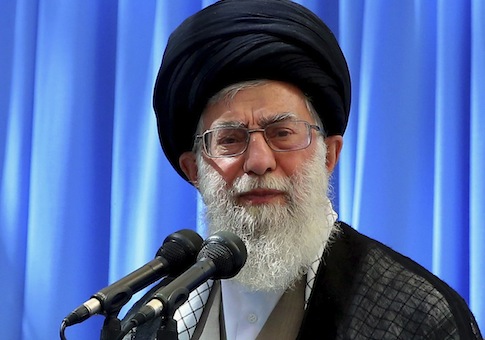
Ali Khamenei / AP

Ali Khamenei / AP

BY:
January 30, 2014 12:14 pm

An analysis of statements made by top Iranian officials shows that Iran does not take Secretary of State John Kerry’s threat of military force seriously.

Kerry warned in an interview with the Saudi-owned Al-Arabiya channel that if Iran were to restart its uranium enrichment program that the United States military option is “ready and prepared.”

“If they decided they’re going to throw this agreement away and go start enrichment again, sure, they can turn around,” said Kerry. “But guess what? If they do that, then the military option that is available to the United States is ready and prepared to do what it would have to do.”

An analysis by the Middle East Media Research Institute of comments made by top Iranian officials in reaction to Kerry’s statement shows that Iran thinks Kerry is bluffing.

Supreme Leader Ali Khamenei said earlier this month that the United States doesn’t have the ability to dismantle Iran’s nuclear program.

“If the Americans are not acting in a [particular] issue, the reason for this is lack of capability, not lack of hostility,” said Khamenei. “They [the Americans] have said, ‘If we could, we would dismantle Iran’s nuclear industry’–but they cannot … The recent talks showed both America’s hostility and its impotence.”

“What kind of action–or mistake–could they possibly take against Iran?” said Khamenei on Sunday.

Commander of the Islamic Revolutionary Guards Corps, Mohammad Ali Ja’fari, said that Iran has no fear of the United States’ “miniscule and shabby” military threat.

“Mr Kerry, in the eyes of the true fighters, the U.S., with all its military force, is miniscule and shabby,” said Ja’fari. “Your military option will remain only on the table.”

“Iran has no fear of this threat, and it and its revolutionary allies worldwide will unite to respond,” Ja’fari said.

On Tuesday, Iranian Army Chief of Staff Hassan Firouzabadi said that the “military option that is today on the table in the U.S. has become a joke among the nations.”

Top adviser to Khamenei, Ali Akbar Velayati, said that Kerry’s declarations are a bluff.

“These declarations are more of a bluff,” said Velayati. “Obviously the Americans do not have this capability, because if they did, they would not have been expelled, completely weakened, from Iraq and Afghanistan.”

Ayatollah Makarem Shirazi expressed disbelief that Kerry was anointed U.S. Secretary of State.

“People are wondering how a man who does not know how to speak was appointed Secretary of State,” said Shirazi.

Off Topic: Washington ‘deeply concerned’ about delay in Syria’s removal of chemical arms stockpile

January 31, 2014

Off Topic: Washington ‘deeply concerned’ about delay in Syria’s removal of chemical arms stockpile – Jerusalem Post.

Only 4% of stockpile has been prepared for transfer; US stops short of renewing threat of military action to force compliance.

By MICHAEL WILNER, REUTERS

01/30/2014 22:26
A UN team examining samples from site of August 21 attack in Damascus.
A UN team examining samples from site of August 21 attack in Damascus. Photo: REUTERS/Mohamed Abdullah

WASHINGTON – The US strongly condemned Syria for its failure to prepare and package the bulk of its chemical weapons arsenal for removal from the country, six days before a UN deadline requires its government to have shipped its entire stockpile to the port at Latakia.

In September, Syria agreed to forfeit its massive chemical weapons stockpile to be destroyed at sea under strict time constraints, under threat of military force from Washington.

“We all know that the Syrian regime has the capability to move these weapons, since they have been moved multiple times in the conflict,” State Department spokeswoman Jen Psaki said on Thursday, adding that the US was “deeply concerned” about the delay. “This isn’t rocket science here. They’re dragging their feet.”

Psaki said US President Barack Obama and Secretary of State John Kerry never removed the prospect of military action from the table after threatening Syria’s Bashar Assad with assault in August. But they are focused on enforcing the deal that resulted from that standoff, she said.

“We’ve never taken the option, as it relates to Syria, off the table. But obviously what we’re pursuing now is the diplomatic path,” Psaki said. “There is still the possibility, and still the option here… that the Syrian regime can deliver on the promise that they will deliver the weapons to the port.”

Secretary of Defense Chuck Hagel also condemned the Syrian government for the delay.

“I do not know what the Syrian government’s motives are – if this is incompetence – or why they are behind in delivering these materials,” Hagel told reporters in Warsaw on Thursday. “The Syrian government has to take responsibility to respect the commitment that had been made.”

Delays pose a difficult challenge for Obama, who has faced criticism at home and abroad for failing to do more to quell Syria’s nearly three-year-old civil war.

The president cited the chemical weapons deal in his annual State of the Union address on Tuesday, saying that “American diplomacy, backed by the threat of force, is why Syria’s chemical weapons are being eliminated.”

Underscoring the administration’s anxiety, Hagel said he discussed the issue in a call on Wednesday with his Russian counterpart, Defense Minister Sergei Shogun, and asked him to “do what he could to influence the Syrian government to comply with the agreement that has been made” for destroying the chemical weapons.

Sen. Lindsey Graham, a frequent Republican critic of Obama’s Syria policy, said: “Having the Russians disarm Assad is sort of like Mussolini disarming Hitler; I’m not so sure it’s going to work.”

According to US representative to the OPCW Robert Mikulak, “Syria has said that its delay in transporting these chemicals has been caused by ‘security concerns,’ and insisted on additional equipment – armored jackets for shipping containers, electronic countermeasures, and detectors for improvised explosive devices.”

But “these demands are without merit, and display a ‘bargaining mentality’ rather than a security mentality,” he said in a statement to the OPCW’s executive council.

The administration stopped short of threatening action if Syria failed to comply.

After threatening and then backing away from military action last year, there seems to be little support in Congress or among the war-weary American public for a new US military entanglement in the Middle East.

Failure to eliminate its chemical weapons could expose Syria to sanctions, although these would have to be supported in the UN Security Council by Russia and China, which have so far refused to back such measures against Assad.

“The question will be whether the Russians will tolerate Assad making them look bad,” said Dennis Ross, Obama’s former Middle East adviser. “I suspect he is dragging his feet to see what he can get away with.”

IAF strikes Gaza after rocket fired at Israel

January 31, 2014

IAF strikes Gaza after rocket fired at Israel – The Times of Israel.


IDF retaliates with airstrikes against targets in Gaza Strip, five reported injured; no injuries or damage in rocket attack

By Times of Israel staffJanuary 31, 2014, 1:25 am Updated: January 31, 2014, 3:18 am
 

A Grad rocket fired toward Israel from the Gaza Strip in 2009. (file photo: Jorge Novominsky/Flash90)

A Grad rocket fired toward Israel from the Gaza Strip in 2009 (file photo: Jorge Novominsky/Flash90
 

The Israeli Air Force early Friday morning retaliated against rocket fire into southern Israel hours earlier by bombing the Gaza Strip.According to the IDF, Israeli planes hit “a terror activity site and a weapon manufacturing facility in the northern Gaza strip and a weapon storage facility in the southern Gaza Strip.”

Unconfirmed reports from Gaza indicated as many as five injured in the strikes.

Palestinian security sources said two strikes targeted training sites of Ezzedine al-Qassam Brigades, Hamas’s armed wing, in Beit Lahiya in northern Gaza. In two additional air strikes at sites west of southern Gaza city Rafah two Palestinians were injured, the sources said.

“Israelis cannot be held at the mercy of these hideous terrorists operating from Hamas Gaza Strip,” IDF spokesperson Lt. Col. Peter Lerner said in a statement. “The bases of Gaza terrorism and its industry of death will not be immune while our citizens are being attacked. It is our responsibility, right and obligation to defend Israel from Gaza based aggression.”

A video uploaded to YouTube claimed to show the Israeli airstrikes hitting the Gaza Strip early Friday morning.

Earlier in the evening, sirens wailed in the southern city of Netivot as a Grad rocket fired from the Gaza Strip exploded in an open area outside town.

There were no injuries or damage reported in the incident. Security forces retrieved the remains of a projectile that landed outside the city, which is home to over 26,000.

Thursday night’s incident marked the first time since November 2012′s Operation Pillar of Defense that air raid sirens went off in the southern town as a result of rocket fire from the Hamas-controlled Gaza Strip.

Last Wednesday the Israeli Air Force launched an airstrike in the northern Gaza Strip town of Beit Hanoun, killing at least one man, said by Israel to be a terrorist. According to the IDF, Israel targeted and hit Ahmad Zaanin, 21, a member of a Gaza-based Popular Front for the Liberation of Palestine’s military wing, responsible for recent rocket fire against Israel. It said he fired the rockets that targeted Israel after the funeral for prime minister Ariel Sharon earlier in January.

AFP contributed to this report.