Archive for January 2014

Israel hits back twice after mortar volley from Gaza

January 9, 2014

Israel hits back twice after mortar volley from Gaza | The Times of Israel.

No casualties or damage in Israel; three reported hurt in Gaza in retaliatory strike


January 9, 2014, 8:12 am Updated: January 9, 2014, 6:07 pm

Israeli planes hit Gaza in two separate sorties Thursday morning, hours after Palestinians shot three mortar rounds at IDF troops patrolling near the border fence.

All three shells exploded near the border fence between Israel and the Gaza Strip, in the southern Eshkol region. There were no injuries or damage.

The Israel Defense Forces said it hit a terror cell near Rafah in the southern Gaza Strip just before noon. There were no reports of injuries.

Earlier in the day planes struck a group of people on a three-wheeled vehicle, injuring three, according to Palestinian sources.

The army said it had “intercepted terrorists during their final preparations to launch rockets toward Israel.”

It added that it held the Strip’s Hamas rulers responsible for the attack.

“This ongoing conflict that we are facing on a daily basis cannot be endured by Israeli civilians,” IDF spokesperson Lt. Col. Peter Lerner said in a statement. ”It is the IDF’s obligation to operate to the best of its abilities to prevent such malicious terroristic intentions from terrorizing Israeli civilians and assaulting IDF soldiers. We will continue in our activities to deter all threats originating from the Gaza Strip.”

The cross border flare-up comes amid several weeks of renewed violence along the border.

On Wednesday, Palestinians said Israeli forces had killed an Islamic Jihad operative in Gaza. Gaza health ministry spokesman Ashraf al-Kidra said the man, Mohammed al-Ejlla, was killed in an Israeli attack. The AFP news agency quoted family and medical sources saying he had been “torn apart” in a drone attack.

But the Israeli military denied responsibility. “We did not strike in Gaza today,” an IDF spokesperson said, “and we are unaware of any incident involving tanks or other shooting.”

Al-Kidra said 33-year-old al-Ejlla was killed near the border with Israel. He said two teenagers were slightly injured in the incident. Islamic Jihad confirmed that al-Ejlla was one of its fighters.

On Monday, a rocket launched by Palestinians in the Gaza Strip exploded in the Negev, also without causing casualties or damage.

The fragments of the projectile, which exploded in the Eshkol Regional Council, were found on Monday evening.

On Friday, the Israeli Air Force struck four targets in the Gaza Strip in retaliation for a rocket fired Thursday from Gaza at the western Negev region. No one was hurt in the explosion.

Also on Friday, a teenager shot by Israeli troops in Gaza died of his wounds, according to Palestinian medical sources. The 16-year-old died from gunshot wounds sustained Thursday after he and several other Palestinians approached the security fence separating Israel from the Gaza Strip and tried to damage it, according to Israeli reports.

Iran’s supreme leader: Nuke talks prove US animosity

January 9, 2014

Iran’s supreme leader: Nuke talks prove US animosity | The Times of Israel.

As talks with Western powers resume, Ayatollah Ali Khamenei says negotiating with the ‘Satan’ is a matter of expedience

January 9, 2014, 4:41 pm

Iranian supreme leader Ayatollah Ali Khamenei (photo credit: CC-BY-SA DragonFire1024/Wikipedia)

Iranian supreme leader Ayatollah Ali Khamenei (photo credit: CC-BY-SA DragonFire1024/Wikipedia)

Iranian supreme leader Ayatollah Ali Khamenei said Thursday that negotiations with world powers over his country’s nuclear program helped expose US animosity toward Muslims, but Iran was nevertheless prepared to hold talks with the “Satan” when it deemed them advantageous.

His statements came as talks on Iran’s nuclear program resumed to hammer out the details for implementing a recent interim nuclear deal.
During a speech to an audience of thousands in the city of Qom, next to Iran’s fortified Fordo uranium enrichment site, Khamenei expounded on how Tehran views the talks with the West, the official Press TV news website reported.

“One of the blessings of the negotiations was that the animosity of American officials toward Iran, Iranians, Islam and Muslims was revealed to everyone,” he said and asserted that Iran was not forced into negotiations by the pressure of Western sanctions. Rather, he explained, it was all part of Iran’s strategy for making the best of the situation.

“We have announced previously as well that the Islamic Republic will, on the certain issues that it deems expedient, negotiate with this Satan in order to ward off its evil and resolve the issue,” he added.
Khamenei’s comments came as representatives of Iran and six world powers met in Geneva to discuss the implementation of a nuclear deal signed in November 2013. However, officials said differences could delay the enactment of the agreement.

Before the two-day meeting, European Union spokeswoman Maja Kocijanic said “some issues remain to be resolved,” a statement echoed by Iranian officials.

They gave no details, but two officials said Iran wants to continue enriching uranium to 20 percent at one facility — something opposed by the six powers that signed the deal with Tehran.

The officials were from member countries of the UN nuclear agency. They demanded anonymity because they are not authorized to discuss the closed negotiations.

Uranium at 20 percent can be quickly turned into nuclear weapons-grade material. Iran says it is enriching only to make reactor fuel.

The Associated Press contributed to this report.

Off Topic: An open letter to US Secretary of State John Kerry

January 9, 2014

CANDIDLY SPEAKING: An open letter to US Secretary of State John Kerry | JPost | Israel News.

By ISI LEIBLER

01/08/2014 22:34

I urge you to set aside conventional political correctness to appreciate that our concerns are for the lives of our children and grandchildren, the future of our nation.

US Secretary of State John Kerry meets with Prime Minister Binyamin Netanyahu, January 4, 2014.

US Secretary of State John Kerry and PM Binyamin Netanyahu. Photo: Amos Ben Gershon/GPO

Dear Mr. Secretary,

Over the next week or so, you will be unveiling a US proposal for a “framework agreement” between Israel and the Palestinian Authority as a prelude to a final-status arrangement.

Before you do so, I encourage you to realistically consider the issues that gravely concern most Israelis, and to believe wholeheartedly that Israelis genuinely yearn for peace and will overwhelmingly endorse a plan that separates them from the Palestinians, provided their security is ensured.

Unfortunately, Mr. Secretary, you and the administration you represent are operating on premises that are misguided or false. President Barack Obama has deluded himself into believing that this conflict is essentially about real estate, an idea that has been disproven many times, most clearly when Palestinian presidents Yasser Arafat and Mahmoud Abbas rebuffed prime ministers Ehud Barak and Ehud Olmert’s offers to relinquish 95 percent of the territories formerly occupied by Jordan.

As befits a mediator, you have lavished praise on Abbas and the Palestinian Authority, and repeatedly stated that both parties are willing to make sacrifices to achieve peace. But alas, this assertion repeated endlessly by all parties, including Israelis, is simply false and contributes towards the “Alice in Wonderland” environment surrounding this issue which suppresses reality.

Dismissing political correctness, the fact is that our “peace partner” is a corrupt authoritarian regime that brutally suppresses dissent. Over the years, the Palestinians’ corrupt officials have diverted a substantial portion of billions of dollars of international aid to private, offshore accounts. This corrupt entity could collapse at any time, and the constitutional term of office of its president has long expired.

Our “peace partner” is indisputably committed to the elimination of Jewish sovereignty in the region.

That is why Palestinian leaders so adamantly refuse to recognize Israel as a Jewish state. President Abbas even denies that the Jewish people have a biblical or historical link to the land.

Our “peace partner” continuously assures its adherents that Israel’s destruction is inevitable.

Abbas has learned that he can better work toward this goal by exerting duplicitous diplomatic pressure on Israel than by engaging in terrorism. Through this deceitful diplomacy, he is attempting to dismantle Israel in stages, a strategy the majority in his government openly supports.

Indeed, in the unlikely event that Abbas finalizes an agreement that waives additional claims and pronounces the end of the dispute, there is little doubt that he will be assassinated.

I urge you, Mr. Secretary, to face the harsh reality that by American and Western standards, through intense propaganda, the Palestinians have engineered what can only be defined as a criminal society.

All sectors of Palestinian society – the government, religious networks, the media, the educational system – engage in brainwashing the Palestinian people, from kindergarten-age up, into regarding Israelis as demonic monsters, and sanctifying fanatic Islamic suicide bombers and terrorists as martyrs.

Just last week, your colleague, the official Palestinian spokesman, Saeb Erekat, whipped up fervor by accusing Israel of having murdered Arafat and speculating that we would kill Abbas.

Mr. Secretary, can you imagine an American government making peace with a neighboring government that provides salaries from humanitarian funds for incarcerated murderers of American citizens, and pensions to their families? Would Americans approve of their government negotiating with a neighbor whose leader personally embraced and hailed as national heroes those convicted of barbarically murdering American civilians? Would Americans contemplate making peace with a neighbor who imposes the death penalty on citizens who sell land to Americans? Bear in mind, Mr. Secretary, that nearly half of Palestine is comprised of “Hamastan,” the genocidal, Islamic fundamentalist entity that occupies the Gaza Strip and from which missiles against our cities are still being fired. Were it not for an Israeli military presence in the area, Hamas already would have wrested control of other areas currently under PA control.

Hamas remains dedicated to the destruction of Israel, and sanctions the murder of Jews everywhere.

Hamas’s Foreign Minister, Mahmoud Zahar, recently proclaimed that “any deal inked between the Palestinian Authority and Israel would be non-binding for the Palestinian people.”

Mr. Secretary, you have put pressure on us to make outrageous concessions under absurd conditions.

You have forced our hand in releasing mass murderers in order to “induce” a hostile neighbor to agree to commence negotiations. Can you morally justify freeing terrorists convicted of killing women and children? Could you visualize the response of Americans to an outside party who pressured their government to act in this manner? Mr. Secretary, during your numerous visits to the region, you have insisted that you would never be party to a policy that undermines Israel’s long-term security. But this is precisely what you are proposing.

You do not take any account of the unpleasant reality that our “partner,” the corrupt PA, could collapse or be taken over by Hamas at any time, should the IDF totally withdraw from the area.

But setting that aside, Mr. Secretary, you are now suggesting that more sophisticated technology combined with an international, possibly American force, replace the IDF in sensitive areas.

Israel has never asked America or any other country to fight on its behalf. We are profoundly conscious of the fact that we can rely only upon ourselves in the event of military attack. It is inconceivable for us to contemplate subcontracting any aspect of our security to a third party, including the US.

Nor can technological advances alone protect our borders. While UN Resolution 242 implicitly provides for secure, defensible borders, adherence to the1949 armistice lines, which give Israel a mere 14.5- to 24-kilometer-wide waistline, will place future generations at peril. And it is imperative that we retain depth and an IDF presence in the Jordan Valley.

These border issues are absolutely fundamental to Israel’s security.

In addition, Mr. Secretary, I find it difficult to comprehend your knee-jerk responses to housing construction for Israeli citizens in Israel’s capital and areas over the Green Line that will always remain part of Israel. This issue appears to weigh more heavily on your mind than the carnage and sectarian violence taking place throughout the Middle East region with hundreds of thousands of people brutally killed in within Syria, which borders us.

The Oslo Accords never precluded settlement construction.

And while Israelis are divided over construction in isolated settlements in disputed areas, they are pained that our American ally contributes to the global hysteria around this issue – even when the construction in question is taking place in Jerusalem’s Jewish suburbs.

Many longstanding friends of the US currently believe that the Obama administration has contributed to our regional chaos. Many of your staunchest Arab allies have lost faith in you. We pray that we may be wrong, but to us and many others, the US gamble with Iran appears an impending disaster.

I respectfully suggest, Mr. Secretary, that you pause before advising Israel on what is in her best interest.

(Imagine where we would be today had Israel shared your optimism about Syrian President Bashar Assad and taken your advice to cede the Golan Heights.) Israel’s relationship and friendship with the US is profound and based on genuine shared values. We are also deeply reliant on American military and diplomatic support, and greatly appreciate that the military aid provided by the Obama administration has exceeded that of its predecessors.

But we believe that the American people understand that Israel cannot afford to continue to make unilateral concessions, to accept the Palestinians’ stubborn refusal to acknowledge Israel as a Jewish state, to accede to their unrelenting demand for the right of return, or to compromise on long-term security issues.

Mr. Secretary, please do not attempt to score an unattainable foreign policy achievement. In the absence of Palestinian concessions on critical issues, a solution is simply not possible and should your initiatives undermine Israeli security, you will leave a legacy as the US secretary of state who abandoned the one and only genuine democracy and US ally in the Middle East.

We hope that you will concentrate on seeking interim solutions, encouraging mutual economic projects to improve Palestinian living standards and maintaining the channels for dialogue so that progress can be achieved, should a more accommodating Palestinian leadership emerge.

I urge you to set aside conventional political correctness to appreciate that our concerns are for the lives of our children and grandchildren, the future of our nation. I pray that you will contribute to our realization of the biblical vision of the Prophet Isaiah, and enable Israelis and Palestinians to set aside their weapons, and work together for the social and economic betterment of all inhabitants of the region.

The writer’s website can be viewed at http://www.wordfromjerusalem. com; he may be contacted at ileibler@ leibler.com

Iran blatantly defies five key Geneva Pact commitments – heads for nuclear arsenal

January 9, 2014

Iran blatantly defies five key Geneva Pact commitments – heads for nuclear arsenal.

DEBKAfile Exclusive Report January 9, 2014, 10:20 AM (IDT)
IR-2m centrifuges at Iran's enrichment plants

IR-2m centrifuges at Iran’s enrichment plants

Iran’s utilization of advanced IR-2m centrifuges for enriching uranium, in violation of the interim Geneva accord, was presented by the US and the five powers Wednesday, Jan. 8, as the main difficulty in its implementation.

This claim allowed the follow-up meeting to take place in Geneva on Thursday, Jan. 9. debkafile’s Iranian and intelligence sources report that this was a lame excuse to account for the real situation, which is that Iran has not even started implementing any part of the Geneva accord it signed last November 24. The follow-up talks this week are not expected to break out of this impasse, any more than the first round did on Dec. 19-20.

This is because the obstacles are far from technical; they arise from Iranian domestic politics.  Supreme leader Ayatollah Ali Khamenei has fenced in President Hassan Rouhani and Foreign Minister Mohammed Jawad Zarif with hard-line objectors to the tactics employed till now by the Iranian team, led by Iranian deputy foreign minister Abbas Araqchi. In future, negotiators will be required to refer all the conclusions reached with the powers to the policy-making levels in Tehran for approval and abide by their guidelines.

Using a “senior Western diplomatic source” to paint the centrifuge issue as the main obstacle to progress allowed the three figures running the show – US Undersecretary of State for Political Affairs Wendy R. Sherman, EU Foreign Policy Coordinator Catherine Ashton, and her deputy Helga Schmidt – to keep the negotiations alive while disregarding the full scale and blatancy of Iran’s misconduct.
debkafile’s sources reveal that the new state of the art centrifuges are not only already in place at the enrichment plants of Fordo and Natanz, but Tehran has brazenly informed the negotiating powers that even more advanced centrifuges have been developed and will soon be installed for test-runs.

The Iranians maintain that they are covered in this action by the Geneva clause acknowledging their right to pursue “nuclear research and development.”

Tehran is therefore treating this signal advance in uranium enrichment capacity as a done deal, even though it belies President Barack Obama’s words on November 25, which hailed Iran’s consent to halting the production and installation of advanced centrifuges as a major breakthrough won at the Geneva event.

So that there would be no misunderstandings about the use of the new centrifuges, Iranian Majlis member Mohammed Nabavian took the podium on Friday January 3 to explain:  “We had a few sessions on the nuclear issue at the Majlis with Foreign Minister, Mohammad Javad Zarif, Deputy Foreign Minister, Abbas Araqchi, Deputy Foreign Minister Majid Takht Ravanchi and Foreign Ministry spokeswoman Marzieh Afkham, and one session in which President Hassan Rouhani personally participated…”

After listing the five sections of the Geneva nuclear pact, Nabavian assumed the voice of Washington to declare in the name of the United States: “ ‘Never before have we succeeded in ensuring Israel’s security as we did today by means of the agreement… If a certain country has 270 kg of enriched uranium at a level of 20% and 10 tons [of enriched uranium] at a level of 5%, and 20,000 centrifuges, it will be in a breakout position and could manufacture a nuclear bomb on the uranium track within two weeks.’ “
After this “US quote,” the Iranian lawmaker commented: “We don’t aspire to obtain a nuclear bomb, but it is necessary so that we can put Israel in its place…”

The main point of Nabavian’s narrative wasn’t just confirmation that Iran possesses the capacity to produce a nuclear bomb at extremely short notice, but its continued development of ever-faster centrifuges that will dramatically change these figures within a short time and produce a complete arsenal aimed at a single target: Israel

This is not what President Obama, Secretary of State Kerry or Prime Minister Netanyahu wants to hear or bring to general knowledge. The Iranians have no such inhibitions and are making no bones about flouting at least five separate clauses of the nuclear pact they signed in Geneva – plus one:

1.  There has been no suspension or slowdown of 20-percent uranium enrichment.

2.  Uranium enrichment to 3.5- and 5-percent purity continues apace in disregard of the ceiling agreed in Geneva.

3. Advanced IR-2m centrifuges continue to roll off the assembly lines. Making a slight bow to the pact, they are being installed at Fordo and Natanz in individual units, not cascades. The Geneva pact bans their installation in any shape or form.

4. Iran has not stopped preparations for moving up to 60-percent enrichment and is being urged by many voices at home to go up to 80 percent. Iran’s pretext is that this level is necessary to fuel the reactors of the nuclear vessels it is building.

5. There has been no pause in the high-speed construction of the heavy water-plutonium plant at Arak.

6. Neither is there any slowdown at the research and development centers for nuclear weapons. Since the military dimension of Iran’s nuclear program was left unmentioned in the Geneva accord, Tehran is at liberty to continue this pursuit free of international inspection while denying it is taking place.

Can sponsors of the Iran Sanction bill reach two third of the US Senate to override Obama’s veto?

January 9, 2014

Can sponsors of the Iran Sanction bill reach two third of the US Senate to override Obama’s veto?.

Can sponsors of the Iran Sanction bill reach two third of the US Senate to override Obama’s veto?

WASHINGTON — Support among Senate members for a new sanctions bill against Iran has doubled since the measure was introduced last month.
50 senators across party lines now co-sponsor the Nuclear Weapons Free Iran Act of 2013, according to multiple Senate aides, who expect support to increase in the coming days. That amounts to half of all Senate members, just one shy of the number required for a bill to pass.
Senate Foreign Relations Committee chairman Robert Menendez introduced the bill just before Christmas with 25 co-sponsors.
If enacted, the bill would provide the president with a window of up to a year to negotiate a final settlement with Iran over its controversial nuclear program. Iran would also have to comply with an interim agreement forged between its government and the P5+1 powers— the US, United Kingdom, France, Russia, China and Germany— that effectively halts uranium enrichment and construction on its Arak plutonium reactor in exchange for modest sanctions relief.
Should Iran fail to meet either of these terms, new sanctions would trigger against the Iranian regime that would include harsh penalties for countries still importing Iranian oil, including US allies, requiring they cut at least 30 percent of their purchases within months of enactment.
‘Rhetoric aside, everyone can get something here,’ an aide told the Washington Post. ‘The administration gets up to a year of flexibility to negotiate, Iran gets its sanctions relief and Congress gets the insurance policy we’ve been seeking.’
In the House of Representatives, Republican leadership scheduled floor time for Iran legislation this month. Democratic whip Steny Hoyer and Republican majority leader Eric Cantor have jointly written a resolution framed in support of the Senate measure.

Iran nuclear talks hit snag on centrifuge research

January 9, 2014

Iran nuclear talks hit snag on centrifuge research | JPost | Israel News.

By REUTERS

LAST UPDATED: 01/09/2014 01:15

Geneva talks freeze over new model of advanced nuclear centrifuge Iran says it has installed.

Centrifuges unveiled in Natanz

Centrifuges unveiled in Natanz Photo: REUTERS

UNITED NATIONS – Negotiations between Iran and six world powers on implementing a landmark November deal to freeze parts of Tehran’s nuclear program in exchange for easing some sanctions have run into problems over the issue of centrifuge research, diplomats said.

The dispute over centrifuges highlighted the huge challenges facing Iran and the six powers in negotiating the precise terms of the Nov. 24 interim agreement. If they succeed, they plan to start talks on a long-term deal to resolve a more than decade-long dispute over Tehran’s nuclear ambitions.

Among the issues to be resolved in political discussions due to begin in Geneva later this week is that of research and development of a new model of advanced nuclear centrifuge that Iran says it has installed, diplomats said on condition of anonymity.

Centrifuges are machines that purify uranium for use as fuel in atomic power plants, or, if purified to a high level, weapons.

“This issue (centrifuges) was among the main factors in stopping the previous technical discussions on Dec. 19-21,” a Western diplomat told Reuters on condition of anonymity.

Other Western diplomats confirmed that centrifuges remained a “sticking point” in the talks with Iran but noted that last month’s discussions were understandably adjourned ahead of the December holidays – not because of the centrifuge issue.

“As part of the (Nov. 24) agreement, Iran is permitted to engage in R&D (research and development), but that is tempered by the fact that it is prohibited to install new centrifuges, except as required by wear and tear,” the first diplomat said.

Western diplomats said they were uncomfortable with the idea of Iran pressing ahead with the development of more advanced centrifuges. But Iran says centrifuge research is crucial.

State Department spokeswoman Jen Psaki said the United States was keen to see the interim deal implemented, though she declined to predict the outcome of the latest talks.

She said US Undersecretary of State for Political Affairs Wendy Sherman will be in Geneva on Thursday to discuss the issue with her European Union counterpart, Helga Schmid, and Iran’s negotiator, Deputy Foreign Minister Abbas Araqchi.

In December, Al-Monitor, a news website focusing on the Middle East, cited a former US official as saying Iran had notified the six powers it wanted to install additional “IR-2m” centrifuges, modified versions of second-generation machines. The website also said the former US official suggested this may have played a role in the dispute.

But diplomats now say Iran has told the six countries it wants to press ahead with the development of even more advanced centrifuges than the IR-2m.

Iran is already testing several different new, more efficient centrifuge models at its Natanz research facility, according to the UN nuclear watchdog. Iran’s statements last month that it was testing a new advanced centrifuge have not made clear whether it is an entirely new model or a modified version of an installed one.

‘Serious nuclear negotiations’

Western diplomats said they were uncomfortable with the idea of Iran pressing ahead with the development of more advanced centrifuges. But Iran says centrifuge research is crucial.

“We have to make sure our right to research and development is respected,” a senior Iranian government official said on condition of anonymity.

The research and development would be aimed at improving Iran’s existing centrifuge technology so it can enrich better and faster, a prospect Western governments find worrisome.

Iran and the so-called P5+1 – the United States, France, Britain, Germany, Russia and China – reached a deal on Nov. 24 in Geneva aimed at curbing the Islamic Republic’s most sensitive nuclear work, including medium-level 20 percent uranium enrichment, in return for easing some economic sanctions.

Iran is under UN, US and European Union sanctions for refusing to heed UN Security Council demands that it halt all enrichment- and plutonium-related work at its nuclear sites. Tehran rejects Western allegations that it is seeking the capability to produce atomic weapons, saying its nuclear ambitions are limited to the peaceful generation of electricity.

Nuclear experts from Iran and the six powers have held several rounds of talks since Nov. 24 to resolve various technical issues before the interim deal can be put into place.

The experts have to work out when the accord will be implemented. Western diplomats and Iranian officials say the six powers and Iran want to start implementing the deal on Jan. 20.

A senior Western diplomat, however, said that despite the disagreements, the latest rounds of talks between Iran and the six powers “actually made pretty good progress.”

“There are still, however, some outstanding issues. But we are still aiming to get the interim agreement started on Jan. 20,” he said “We haven’t given up hope of that.”

Iran’s Foreign Minister Mohammad Javad Zarif said on his Facebook page that Tehran was “very serious” about the Geneva deal. “Serious nuclear negotiations are under way and with strong political will,” he added.

Diplomats said the push by Iran to continue advanced centrifuge research and the resistance by Western powers to the idea is not surprising given what it is at stake for all sides.

“The gaps which have been making it difficult to reach an agreement clearly reflect the attempts of both sides to improve their status at the last stage before signing the agreement,” the first diplomat said.

“Iran seeks maximum maneuvering room in interpreting the agreement, while the US seeks to ensure that this interpretation does not go beyond its understanding of the agreement,” he said. “Either way, the two sides are interested in reaching an agreement as soon as possible.”

Israel, which has been highly critical of the six powers’ deal with Iran, was not surprised by Iran’s attempts to ensure that it could continue with advanced centrifuge research.

“It was clear from the outset that the Iranians would play games,” an Israeli official said on condition of anonymity. “They did it in the past, and now they’re up to their old tricks again.”

Iran’s negotiations with Britain, France and Germany in 2003-2005 collapsed after Tehran and the European trio failed to agree on what enrichment-related activities would be permitted under a voluntary suspension of the Iranian enrichment program.

The Europeans accused Tehran at the time of violating the terms of the suspension while Iran said London, Paris and Berlin failed to deliver promised economic incentives and kept trying to expand the scope of the agreed freeze.

WARNING!

January 9, 2014

My email account was hacked while I was in the air traveling. DO NOT OPEN ANY ATTACHMENTS YOU MAY HAVE RECEIVED.

I am now in the process of trying to reset my account.   I have no idea what happened or how.

What an incredible nightmare!

Anyone who received and opened an attachment from me should d/l this free program which will clean out any problems created by this or any other intrusion.

http://www.superantispyware.com/downloadfile.html?productid=SUPERANTISPYWAREFREE

JW

Off Topic: Liberman: Kerry proposals are the best Israel could hope for

January 6, 2014

Liberman: Kerry proposals are the best Israel could hope for | The Times of Israel.

( Please note: The site will not be updated for the next 30 hours or so.  It’s a LONG trip from Eilat to California!  – JW )

Still, FM insists peace means exchanging ‘territory and populations,’ rules out ‘return’ of a single Palestinian refugee

Foreign Minister Avigdor Liberman speaks to Israeli diplomats, at a conference at the Foreign Ministry in Jerusalem. January 5, 2014. (Photo credit: FLASH90)

Foreign Minister Avigdor Liberman speaks to Israeli diplomats, at a conference at the Foreign Ministry in Jerusalem. January 5, 2014. (Photo credit: FLASH90)

Foreign Minister Avigdor Liberman said Sunday he would not agree to any peace agreement with the Palestinians without the exchange of the “triangle” area southeast of Haifa, which is heavily populated by Israeli Arabs, for West Bank areas populated primarily by Jews, commonly known as “settlement blocs.”

Liberman emphasized that he supports the creation of a Palestinian state and appreciates the current efforts of US Secretary of State John Kerry to reach a final status deal, but added that he would not agree to an agreement that would allow “even one” Palestinian refugee to return to Israel.

He also suggested that Kerry’s positions on the peace process, including his understanding of Israel’s security needs and its demand to be recognized as a Jewish state, were the best offer Israel could expect from the international community. “Any alternative proposals brought forward by the international community will suit us much less,” he said.

Liberman spoke at the opening of the Foreign Ministry’s Ambassadors Conference for heads of Israeli missions across the world. At the conference, which took place at the Foreign Ministry headquarters building in Jerusalem, Liberman sounded decidedly less hawkish than in recent years. The foreign minister who has insisted in the past that a peace agreement with the Palestinian Authority was unattainable and accused PA President Mahmoud Abbas of “political terrorism,” on Sunday sounded as if he accepted the idea that a Palestinian state will be created in the near future.

“It’s appropriate to talk about an issue that is not exactly politically correct,” Liberman said, in the middle of a lengthy foreign policy address. “I’m talking of course of the exchange of territory and populations. And if someone thinks that I’m talking about an exchange of territory and ‘the triangle’ and Wadi Ara [both areas mostly populated by Israeli Arabs] – indeed, that’s what I am referring to.”

His party, Yisrael Beytenu, will not agree to a peace agreement that does not include such a territorial exchange, which would place a large portion of Israel’s Arab population centers within the future Palestinian state, and most of the West Bank’s Jews within the Jewish state. Liberman emphasized that he was not talking about a population transfer. “Everyone will stay in their own houses, in the same places. Just the borders will move toward what is today [the highway along Israel’s eastern spine] Route 6, more or less.”

The redrawing of Israel’s borders to exclude major Arab population centers that lie on the Israeli side of the Green Line, and which are populated by longtime Israeli citizens, has long been Liberman’s policy. In the past, Prime Minister Benjamin Netanyahu has rejected this approach.

The area known as “the triangle,” located in the Sharon plain, contains mostly Arab-populated towns and cities such as Kafr Qara, Umm al-Fahm, Tayibe and Qalansawe. It was to have come under Jordanian rule in the arrangements that saw the establishment of the State of Israel but was ultimately included in Israeli sovereign territory under the 1949 armistice agreements because of Israeli security demands. Israel instead ceded territory that had been earmarked for Israeli sovereignty in the area of the southern Hebron hills.

Last week, unnamed sources told Maariv that the “triangle” plan, involving some 300,000 Israeli Arabs living on land that would become part of a new Palestine, had come up during talks between Israel and US officials at various levels, including at least one occasion when very senior officials, Kerry among them, were in attendance. Israeli legal officials have begun investigating legal aspects of such an arrangement, the newspaper said. It added that the Americans have apparently not assented to the idea, and that the Palestinians are likely to reject it.

The idea is aimed at addressing two central issues in a possible peace agreement: first, land swaps between Israel and a Palestinian state that would enable Israel to expand its sovereignty to encompass major West Bank settlements, while compensating the Palestinians with territory that is currently part of sovereign Israel; and second, preserving Israel’s Jewish majority.

Liberman on Sunday also warned of millions of Palestinian refugees who would move to the future Palestinian state as soon as it is created. “There’s no doubt that the Palestinians who today live in Lebanon, Syria and Jordan will all consider moving to the Palestinian state,” he said. Currently an estimated 2.4 million Palestinians live in the West Bank, with almost 3 million in the three countries he mentioned. “Let’s take into consideration that the Palestinian economy is not like the economy of Switzerland or Norway,” he said. “They need to live and work somewhere. What will happen then? What kind of pressure will be exerted on Israel then?”

Liberman said he rejected a Palestinian “right of return” even on a theoretical basis. “I will not sign any agreement that includes any right of return into Israel, not even a single person. Because if you keep that option open, even theoretically or on a limited scale, it will invite a lot of pressure. And this pressure will be very heavy.”

It was important to look at the day after the signing of a possible peace agreement, Liberman said.

“It is important [to know] if we can live with the pressure that will be exerted on us, from outside and from within. Will a signature on the agreement with the Palestinians bring about an end to pressure on Israel from international community, or instead of so-called settlements, will those who criticize us over the settlements find something else to pressure us about?” Liberman said.

Indeed, the very same people who currently decry Israel over settlement expansions are already preparing to challenge Israel on other issues, such as the Bedouin or Israel’s Jewish communities in the Galilee. “These are exactly the same people,” he said. “It is clear that they are not about to calm down. Even if we sign a peace agreement and the issue with the settlements is solved, they’re already preparing the next issues.”

Earlier in this speech, Liberman praised Kerry for his efforts to bring Israelis and Palestinians to sign a final status deal, and said that there was value in the negotiations even if they did not lead to a deal. While he said that Israel needs to look for other partners across the globe, Jerusalem’s relations with the United States are the “cornerstone” of Israel’s foreign policy.

‘I would like to express genuine appreciation for the efforts of Secretary of State John Kerry, who works night and day and uses all his experience trying to end our conflict with the Palestinians,” the foreign minister said. “It needs to be understood that any alternative proposals brought forward by the international community will suit us much less.”

Off Topic: Netanyahu calls out Palestinian incitemet in front of Kerry

January 3, 2014

Netanyahu calls out Palestinian incitemet in front of Kerry – YouTube.

U.S. Secretary of State John Kerry returned to the Middle East on Thursday as he continue efforts to reach a “framework agreement” between Israel and the Palestinians. After landing at Ben-Gurion Internation Airport, Kerry went to Jerusalem, where he met with Prime Minister Benjamin Netanyahu.

Kerry was set to met with Palestinian Authority President Mahmoud Abbas in Ramallah on Friday.

In a joint press conference with Netanyahu on Thursday, Kerry said the goal of his latest trip was “to narrow the differences on a framework that will provide the agreed guidelines for permanent status negotiations.”

“This will take time and it will take compromise from both sides, but an agreed framework would be a significant breakthrough,” Kerry said. “It would address all of the core issues. It would create the fixed, defined parameters by which the parties would then know where they are going and what the end result can be. It would address all of the core issues that we have been addressing since day one, including borders, security, refugees, Jerusalem, mutual recognition, and the end of conflict and of all claims.”

Wary of criticism in Israel regarding “U.S. pressure,” Kerry stated he had come to “facilitate the parties’ own efforts,” rather than impose U.S. ideas.

“In the weeks and months ahead, both sides are going to need to make tough choices to ensure that peace is not just a possibility but is a reality for Israelis and Palestinians for now and for future generations,” Kerry said.

“It’s a tough road,” Kerry said. “But this is not mission impossible.”

“The commitment of the United States to Israel is ironclad,” Kerry said. “We know that Israel has to be strong to make peace. And we also know that peace will make Israel stronger not just with its near neighbors, but throughout the world.”

Kerry praised Netanyahu for making a “very difficult decision,” referring perhaps to Israel’s release of 26 Palestinian prisoners earlier this week.

Kerry also praised both Netanyahu and Palestinian Authority President Mahmoud Abbas for continuing negotiations despite the pressure they faced.

Standing beside Kerry, Netanyahu questioned the commitment of the Palestinians to reaching a peace agreement, accusing Palestinian leaders of orchestrating a campaign of “rampant” incitement against Israel.

“The people of Israel and I are prepared to make such a historic peace, but we must have a Palestinian partner who’s equally prepared to make this peace,” Netanyahu said. “Peace means ending incitement; it means fighting terrorism and condemning terrorism; it means recognizing Israel as the nation-state of the Jewish people; it means meeting Israel’s security needs; and it means being prepared to truly end the conflict once and for all. If we’re to succeed in our joint effort, President Abbas must reject terror and embrace peace. I hope he doesn’t miss again the opportunity to give Israelis and Palestinians a better future.”

“A few days ago in Ramallah, President Abbas embraced terrorists as heroes,” Netanyahu said. “To glorify the murderers of innocent women and men as heroes is an outrage. How can President Abbas … say that he stands against terrorism when he embraces the perpetrators of terrorism and glorifies them as heroes?”

On Friday morning, Kerry met with Foreign Minister Avigdor Lieberman in Jerusalem.

Off Topic: ‘The New York Times’ destroys Obama

January 3, 2014

Column one: ‘The New York Times’ destroys Obama | JPost | Israel News.

By CAROLINE B. GLICK

01/02/2014 21:09

Last week, the Times published account of Benghazi terrorist strike, criticizing Obama’s counterterrorism strategy and his policy in the Middle East.
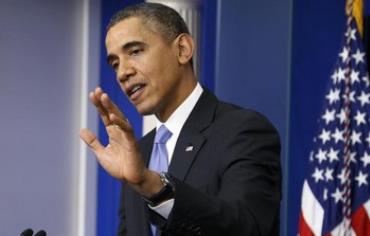
US President Barack Obama gestures during news conference

US President Barack Obama gestures during news conference Photo: REUTERS

The New York Times just delivered a mortal blow to the Obama administration and its Middle East policy.

Call it fratricide. It was clearly unintentional.

Indeed, is far from clear that the paper realizes what it has done.

Last Saturday the Times published an 8,000-word account by David Kirkpatrick detailing the terrorist strike against the US Consulate and the CIA annex in Benghazi, Libya, on September 11, 2012. In it, Kirkpatrick tore to shreds the foundations of President Barack Obama’s counterterrorism strategy and his overall policy in the Middle East.

Obama first enunciated those foundations in his June 4, 2009, speech to the Muslim world at Cairo University. Ever since, they have been the rationale behind US counterterror strategy and US Middle East policy.

Obama’s first assertion is that radical Islam is not inherently hostile to the US. As a consequence, America can appease radical Islamists. Moreover, once radical Muslims are appeased, they will become US allies, (replacing the allies the US abandons to appease the radical Muslims).

Obama’s second strategic guidepost is his claim that the only Islamic group that is a bona fide terrorist organization is the faction of al-Qaida directly subordinate to Osama bin Laden’s successor, Ayman al-Zawahiri. Only this group cannot be appeased and must be destroyed through force.

The administration has dubbed the Zawahiri faction of al-Qaida “core al-Qaida.” And anyone who operates in the name of al-Qaida, or any other group that does not have courtroom-certified operational links to Zawahiri, is not really al-Qaida, and therefore, not really a terrorist group or a US enemy.

These foundations have led the US to negotiate with the Taliban in Afghanistan. They are the rationale for the US’s embrace of the Muslim Brotherhood worldwide. They are the basis for Obama’s allegiance to Turkey’s Islamist government, and his early support for the Muslim Brotherhood-dominated Syrian opposition.

They are the basis for the administration’s kneejerk support for the PLO against Israel.

Obama’s insistent bid to appease Iran, and so enable the mullocracy to complete its nuclear weapons program. is similarly a product of his strategic assumptions. So, too, the US’s current diplomatic engagement of Hezbollah in Lebanon owes to the administration’s conviction that any terror group not directly connected to Zawahiri is a potential US ally.

From the outset of the 2011 revolt against the regime of Muammar Gaddafi in Libya, it was clear that a significant part of the opposition was composed of jihadists aligned if not affiliated with al-Qaida. Benghazi was specifically identified by documents seized by US forces in Iraq as a hotbed of al-Qaida recruitment.

Obama and his advisers dismissed and ignored the evidence. The core of al-Qaida, they claimed, was not involved in the anti-Gaddafi revolt. And to the extent jihadists were fighting Gaddafi, they were doing so as allies of the US.

In other words, the two core foundations of Obama’s understanding of terrorism and of the Muslim world were central to US support for the overthrow of Muammar Gaddafi.

With Kirkpatrick’s report, the Times exposed the utter falsity of both.

Kirkpatrick showed the mindset of the US-supported rebels and through it, the ridiculousness of the administration’s belief that you can’t be a terrorist if you aren’t directly subordinate to Zawahiri.

One US-supported Islamist militia commander recalled to him that at the outset of the anti-Gaddafi rebellion, “Teenagers came running around… [asking] ‘Sheikh, sheikh, did you know al-Qaida? Did you know Osama bin Laden? How do we fight?” In the days and weeks following the September 11, 2012, attack on the US installations in Benghazi in which US ambassador to Libya Christopher Stevens and four other Americans were killed, the administration claimed that the attacks were not carried out by terrorists. Rather they were the unfortunate consequence of a spontaneous protest by otherwise innocent Libyans.

According to the administration’s version of events, these guileless, otherwise friendly demonstrators, who killed the US ambassador and four other Americans, were simply angered by a You- Tube video of a movie trailer which jihadist clerics in Egypt had proclaimed was blasphemous.

In an attempt to appease the mob after the fact, Obama and then-secretary of state Hillary Clinton were filmed in commercials run on Pakistani television apologizing for the video and siding with the mob against the movie-maker, who is the only person the US has imprisoned following the attack. Then-ambassador to the UN and current National Security Adviser Susan Rice gave multiple television interviews placing the blame for the attacks on the video.

According to Kirkpatrick’s account of the assault against the US installations in Benghazi on September 11, 2012, the administration’s description of the assaults was a fabrication. Far from spontaneous political protests spurred by rage at a YouTube video, the attack was premeditated. US officials spotted Libyans conducting surveillance of the consulate nearly 15 hours before the attack began.

Libyan militia warned US officials “of rising threats against Americans from extremists in Benghazi,” two days before the attack.

From his account, the initial attack – in which the consulate was first stormed – was carried out not by a mob, but by a few dozen fighters. They were armed with assault rifles. They acted in a coordinated, professional manner with apparent awareness of US security procedures.

During the initial assault, the attackers shot down the lights around the compound, stormed the gates, and swarmed around the security personnel who ran to get their weapons, making it impossible for them to defend the ambassador and other personnel trapped inside.

According to Kirkpatrick, after the initial attack, the organizers spurred popular rage and incited a mob assault on the consulate by spreading the rumor that the Americans had killed a local. Others members of the secondary mob, Kirkpatrick claimed, were motivated by reports of the video.

This mob assault, which followed the initial attack and apparent takeover of the consulate, was part of the predetermined plan. The organizers wanted to produce chaos. As Kirkpatrick explained, “The attackers had posted sentries at Venezia Road, adjacent to the [consulate] compound, to guard their rear flank, but they let pass anyone trying to join the mayhem.”

According to Kirkpatrick, the attack was perpetrated by local terrorist groups that were part of the US-backed anti-Gaddafi coalition. The people who were conducting the surveillance of the consulate 15 hours before the attack were uniformed security forces who escaped in an official car.

Members of the militia tasked with defending the compound participated in the attack.

Ambassador Stevens, who had served as the administration’s emissary to the rebels during the insurrection against Gaddafi, knew personally many of the terrorists who orchestrated the attack.

And until the very end, he was taken in by the administration’s core belief that it was possible to appease al-Qaida-sympathizing Islamic jihadists who were not directly affiliated with Zawahiri.

As Kirkpatrick noted, Stevens “helped shape the Obama administration’s conviction that it could work with the rebels, even those previously hostile to the West, to build a friendly, democratic government.”

The entire US view that local militias, regardless of their anti-American, jihadist ideologies, could become US allies was predicated not merely on the belief that they could be appeased, but that they weren’t terrorists because they weren’t al-Qaida proper.

As Kirkpatrick notes, “American intelligence efforts in Libya concentrated on the agendas of the biggest militia leaders and the handful of Libyans with suspected ties to al-Qaida. The fixation on al-Qaida might have distracted experts from more imminent threats.”

But again, the only reason that the intelligence failed to notice the threats emanating from local US-supported terrorists is because the US counterterrorist strategy, like its overall Middle East strategy, is to seek to appease all US enemies other than the parts of al-Qaida directly commanded by Ayman al-Zawahiri.

Distressingly, most of the discussion spurred by Kirkpatrick’s article has ignored the devastating blow he visited on the intellectual foundations of Obama’s foreign policy. Instead, the discussion has focused on his claim that there is “no evidence that al-Qaida or other international terrorist group had any role in the assault,” and on his assertion that the YouTube video did spur to action some of the participants in the assault.

Kirkpatrick’s claim that al-Qaida played no role in the attack was refuted by the Times’ own reporting six weeks after the attack. It has also been refuted by congressional and State Department investigations, by the UN and by a raft of other reporting.

His claim that the YouTube video did spur some of the attackers to action was categorically rejected last spring in sworn congressional testimony by then-deputy chief of the US mission to Libya Gregory Hicks.

Last May Hicks stated, “The YouTube video was a non-event in Libya. The video was not instigative of anything that was going on in Libya. We saw no demonstrators related to the video anywhere in Libya.”

Kirkpatrick’s larger message – that the reasoning behind Obama’s entire counterterrorist strategy and his overall Middle East policy is totally wrong, and deeply destructive – has been missed because his article was written and published to whitewash the administration’s deliberate mischaracterization of the events in Benghazi, not to discredit the rationale behind its Middle East policy and counterterrorism strategy. This is why he claimed that al-Qaida wasn’t involved in the attack. And this is why he claimed that the YouTube video was a cause for the attack.

This much was made clear in a blog post by editorial page editor Andrew Rosenthal, who alleged that the entire discourse on Benghazi is promoted by the Republicans to harm the Democrats, and Kirkpatrick’s story served to weaken the Republican arguments. In Rosenthal’s words, “The Republicans hope to tarnish Democratic candidates by making it seem as though Mr. Obama doesn’t take al-Qaida seriously.”

So pathetically, in a bid to defend Obama and Clinton and the rest of the Democrats, the Times published a report that showed that Obama’s laser-like focus on the Zawahiri-controlled faction of al-Qaida has endangered the US.

By failing to view as enemies any other terror groups – even if they have participated in attacks against the US – and indeed, in perceiving them as potential allies, Obama has failed to defend against them. Indeed, by wooing them as future allies, Obama has empowered forces as committed as al-Qaida to defeating the US.

Again, it is not at all apparent that the Times realized what it was doing. But from Israel to Egypt, to Iran to Libya to Lebanon, it is absolutely clear that Obama and his colleagues continue to implement the same dangerous, destructive agenda that defeated the US in Benghazi and will continue to cause US defeat after US defeat.

caroline@carolineglick.com


