Archive for January 29, 2014

Iranian FM: More sanctions, more centrifuges

January 29, 2014

Iranian FM: More sanctions, more centrifuges – Trend

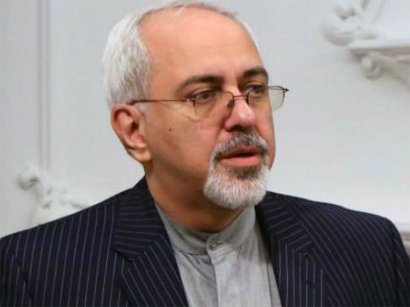
Iranian FM
29 January 2014, 10:32 (GMT+04:00)

“More sanctions would only result in more centrifuges,” Iran’s Foreign Minister Mohammad Javad Zarif said in reference to Iran’s steady progress in installing thousands of centrifuges for the enrichment of uranium over the past few years, despite the fact that the country has been under economic sanctions, Iran’s YJC news agency reported on Jan. 28 referring the Swiss Neue Zürcher Zeitung newspaper.

He also went on to say that the Geneva nuclear deal is a great success for his country.

“For one decade there was only one image in the West’s mind, that there is only one option, that is, zero enrichment, and that Iran’s uranium enrichment must be stopped,” he maintained.

Zarif further asserted “Although with delay, the US has now come to realize that it will not succeed in reaching such an objective. President Obama said that although he would have liked zero enrichment in Iran, he had not come to see it come true. President Rouhani put it in other words, saying ‘Americans had one understanding and now they must admit the truth, the truth of Iran’s uranium enrichment.'”

Rejecting reports about a secret agreement in 30 pages, the Iranian FM stated “There is the agreement that is being enacted. If the entire agreement does not lead to a positive outcome, it will not be the end of the world. That means that Americans think that more sanctions help the trend. Beside enraging the Iranian nation, the impact of the sanctions has more than anything been the fact that our enrichment facilities have carried on. Sanctions did not prevent the installation of 19 thousand centrifuges in Iran.”

Fatah official: PA hopes to renew ties with Iran

January 29, 2014

Fatah official: PA hopes to renew ties with Iran | The Times of Israel.

After meeting with Zarif, Jibril Rajoub says Palestinians ‘genuinely’ want to drive relations with Tehran forward

January 29, 2014, 9:59 pm

Fatah official Jibril Rajoub (photo credit: Nati Shohat/Flash90)

Fatah official Jibril Rajoub (photo credit: Nati Shohat/Flash90)

A day after he met with Iranian Foreign Minister Mohammad Javad Zarif in Tehran, Fatah Central Committee member Jibril Rajoub said Wednesday his movement was interesting in improving relations with the Islamic Republic.

Speaking in an interview with a Lebanese news outlet, Rajoub said the Palestinian Authority was”willing to consider a renewal of Palestinian-Iranian ties.”

“Our cards are shown and we are speaking frankly, we aren’t trying to cheat or manipulate anyone,” he told pan-Arab news network al-Mayadeen in an interview.

Rajoub met with Zarif Tuesday in a rare visit by a Palestinian Authority official to the Islamic Republic.

During the meeting, Zarif said Israel was using Iran’s “peaceful nuclear program as pretext to divert world public attention from their crimes in Palestine,” the semi-official Iranian news outlet Press TV reported.

Israel, along with Western countries, has long accused Iran of covertly pursuing nuclear weapons alongside its civilian program — charges denied by Tehran — and Jerusalem has criticized an interim nuclear deal reached between Iran and world powers in November.

Zarif reportedly told that Rajoub one of Iran’s motivations for advancing negotiations with the international community over its nuclear program has been to rob Israel of this “excuse.” He added that the Palestinians’ struggle was “a fundamental cause” for the Islamic Republic.

Rajoub, a senior member of Palestinian Authority President Mahmoud Abbas’s Fatah movement, said the group “will not stop the resistance until the establishment of an independent Palestinian government” in east Jerusalem. According to Press TV, he also told Zarif that Iran was a central player in the region and congratulated him on the interim nuclear deal.

While Rajoub’s only official capacity at the moment is as president of the Palestine Football Association, his visit was still a noteworthy occurrence in the relations between Iran and the PA, which over the past few years have mostly been tense.

Iran has traditionally held close ties with Hamas, a rival of the PA’s ruling Fatah party. And it has often sided with Hamas’s stance on the peace process, which rejects any negotiations with Israel, thus coming into conflict with the PA.

Iranian Foreign Minister Mohammad Javad Zarif speaks during a joint press conference with his Italian counterpart Emma Bonino in Tehran, Iran, Sunday, Dec. 22, 2013. (Photo credit: AP/Vahid Salemi)

Iranian Foreign Minister Mohammad Javad Zarif speaks during a joint press conference with his Italian counterpart Emma Bonino in Tehran, Iran, Sunday, Dec. 22, 2013. (Photo credit: AP/Vahid Salemi)

In 2010 then-Iranian president Mahmoud Ahmadinejad criticized the PA for resuming peace negotiations with Israel. PA spokesman Nabil Abu Rudaineh offered the following riposte: “The one who does not represent the Iranian people, who falsified election results, who oppressed the Iranian people and stole authority has no right to speak about Palestine, its president or its representatives.”

Still, in 2012 Abbas was invited by Ahmadinejad to visit Tehran, an offer that he initially accepted but upon which he ultimately did not follow through. The two did, however, meet in Cairo in February of 2013 on the sidelines of the Organization of Islamic Cooperation summit, and Abbas thanked the Iranian president for supporting the Palestinians’ November 2012 UN statehood bid.

Iran can now build and deliver nukes, US intel reports

January 29, 2014

Iran can now build and deliver nukes, US intel reports | The Times of Israel.

Tehran has capacity to break out to bomb if it wishes, intelligence chief James Clapper tells Senate, but would be detected if it tried to do so

January 29, 2014, 10:05 pm

Iran now has all the technical infrastructure to produce nuclear weapons should it make the political decision to do, Director of National Intelligence James Clapper wrote in a report to a Senate intelligence committee published Wednesday. However, he added, it could not break out to the bomb without being detected.

In the “US Intelligence Worldwide Threat Assessment,” delivered to the Senate Select Committee on Intelligence, Clapper reported that Tehran has made significant advances recently in its nuclear program to the point where it could produce and deliver nuclear bombs should it be so inclined.

“Tehran has made technical progress in a number of areas — including uranium enrichment, nuclear reactors, and ballistic missiles — from which it could draw if it decided to build missile-deliverable nuclear weapons,” Clapper wrote. “These technical advancements strengthen our assessment that Iran has the scientific, technical, and industrial capacity to eventually produce nuclear weapons. This makes the central issue its political will to do so.”

In the past year alone, the report states, Iran has enhanced its centrifuge designs, increased the number of centrifuges, and amassed a larger quantity of low-enriched uranium hexafluoride. These advancements have placed Iran in a better position to produce weapons-grade uranium.

“Despite this progress, we assess that Iran would not be able to divert safeguarded material and produce enough WGU [weapons grade uranium] for a weapon before such activity would be discovered,” he wrote.

Director of National Intelligence (DNI), James Clapper (photo credit: AP Photo/Susan Walsh, File)

Director of National Intelligence (DNI), James Clapper (photo credit: AP Photo/Susan Walsh, File)

He said the increased supervision and other “transparency” to which Iran has agreed under the new interim deal, reached with the world powers in Geneva in November and finalized last week, could offer earlier warning of a breakout to the bomb. Should Iran cooperate with the interim deal, halt enrichment, and “provide transparency,” then “This transparency would provide earlier warning of a breakout using these facilities.”

Clapper told the Senate committee that the interim deal will have an impact on Iran’s nuclear weapons program’s progress and “gets at the key thing we’re interested in and most concerned about,” namely, Iran’s 20 percent enriched uranium.

Iran had also worked hard to advance its program at the Arak heavy water facility, wrote Clapper. Its ballistic missiles, he noted, of which it has “the largest inventory in the Middle East,” are “inherently capable of delivering WMD.” And its space program gives it the means to develop longer-range missiles, including intercontinental ballistic missiles.

“We do not know if Iran will eventually decide to build nuclear weapons,” Clapper wrote. But he noted that Iran’s overarching “strategic goals” were leading it to pursue the capability to do so.

The national intelligence director reiterated that imposing additional sanctions against Iran would be “counterproductive” and would “jeopardize the [interim] agreement.” He advised that additional sanctions against the Islamic Republic should only be kept “in reserve.”

The report was released a day after Prime Minister Benjamin Netanyahu said that the interim nuclear agreement only set back the Islamic Republic’s nuclear program by six weeks.

“This agreement merely set Iran back six weeks — no more — according to our assessments, in relation to its previous position, so that the test, as to denying Iran the ability to manufacture nuclear weapons, has been and remains the permanent agreement, if such [a deal] can indeed be achieved,” Netanyahu said at a conference of the Institute for National Security Studies in Tel Aviv.

Last Wednesday, Foreign Minister Mohammad Javad Zarif accused the Obama administration of mischaracterizing the terms of an interim nuclear deal. “We did not agree to dismantle anything,” Zarif told CNN.

Zarif repeated that “we are not dismantling any centrifuges, we’re not dismantling any equipment, we’re simply not producing, not enriching [uranium] over 5%.”

The six-month deal freezes key aspects of Iran’s nuclear program, while allowing limited enrichment to continue, in exchange for some economic sanctions relief. It went into effect on January 20.

The next round of international nuclear negotiations with Iran is expected to be held in New York next month, according to officials involved in the planning.

Israel has threatened to attack Iran should it not back off from its alleged pursuit of a military nuclear capability.

On Tuesday, UN nuclear inspectors arrived in Tehran to visit Iran’s Gachin uranium mine for the first time in several years, Iran’s Atomic Energy Organization spokesman Behrouz Kamalvandi said. The visit was part of the framework of a separate deal between Iran and the International Atomic Energy Agency in November.

Times of Israel staff contributed to this report
IAF chief: Israel will destroy Hezbollah bases in Lebanon, even ones in residential areas

January 29, 2014

IAF chief: Israel will destroy Hezbollah bases in Lebanon, even ones in residential areas | JPost | Israel News.

By REUTERS

01/29/2014 21:14

Maj.-Gen. Amir Eshel says IDF’s military power is 15 times greater than what it had in last conflict with Hezbollah in 2006.

IAF chief Maj-Gen Amir Eshel

IAF chief Maj-Gen Amir Eshel Photo: IDF Spokeperson’s Office

Israel accused Lebanon’s Hezbollah guerrillas on Wednesday of putting “thousands” of bases in residential buildings and said it would destroy these in a future conflict, even at the cost of civilian lives.

The unusually explicit threat by air force chief Major-General Amir Eshel appeared to be part of an effort by Israeli officials to prepare world opinion for high civilian casualties in any new confrontation with Hezbollah in Lebanon.

Israel says Iran and Syria have supplied improved missiles to Hezbollah, which fought the technologically superior Israeli military to a standstill in a 2006 war in Lebanon.

“We will have to deal aggressively with thousands of Hezbollah bases which threaten the State of Israel and mainly our interior,” Eshel said in a speech, citing Beirut, the Bekaa Valley and southern Lebanon among the locations of the bases.

Other Israeli officials have alleged that Hezbollah uses Lebanese civilian homes as missile silos or gun nests. Eshel said the guerrillas sometimes had entire floors of residential buildings ready, under lock and key, to be used in combat.

“Above and below live civilians whom we have nothing against – a kind of human shield,” he told the Fisher Institute for Air and Space Strategic Studies, a think-tank near Tel Aviv.

“And that is where the war will be. That is where we will have to fight in order to stop it and win. Whoever stays in these bases will simply be hit and will risk their lives. And whoever goes out will live.”

Israeli Defense Minister Moshe Ya’alon said on Tuesday that Hezbollah now had around 100,000 missiles and rockets, or 30,000 more than figures given in official Israeli assessments in 2013.

Last year, Ya’alon showed UN Secretary-General Ban Ki-moon an Israeli map of alleged Hezbollah positions in southern Lebanese villages, apparently to demonstrate the risk of a high civilian death toll in any new war.

Hezbollah does not comment on its military capabilities but says these have been honed and expanded since the 2006 fighting, in which 1,200 people in Lebanon and 160 Israelis were killed. It says it needs its arms to defend Lebanon from Israeli attack.

Eshel said Israel’s military was “dozens” of times more powerful than Hezbollah and had more capabilities than in 2006.

“Our ability today to attack targets on a large scale and with high precision is about 15 times greater than what we did in the (2006) war,” he said, saying such intensity was required to keep the fighting short “because the more protracted the war, the more missiles we’ll be hit with here”.

Much of Hezbollah’s attention is now devoted to Syria, where its fighters have been helping President Bashar Assad battle an almost three-year-old insurgency.

While content to watch Hezbollah and the Islamist-led Syrian rebels fight each other, Israel worries that its Lebanese foes will obtain more advanced weaponry from Assad’s arsenal.

On at least three occasions last year, Israeli forces allegedly bombed suspected Hezbollah-bound arms convoys in Syria.

Asked whether Israel had done too little to intercept such transfers, Eshel said Israeli forces still had the upper hand.

“I don’t think this is a failure,” he said. “I think the State of Israel has extraordinary deterrence which should not be discredited – significant deterrence, bought in blood.”

ISIS: Interrim Deal not expected to seriously affect Iran’s Centrifuge R&D

January 29, 2014

The latest report from the Institute for Science and International Security (ISIS) concludes: The interim steps under the Joint Plan of Action are not expected to seriously affect Iran’s centrifuge research and development program.

By Charles Artaxes

In the latest ISIS report titled “Iran’s Centrifuge Research and Development Program” published on January 27, 2014 the Author David Albright concludes that the interrim deal (Joint Plan of Action) in its current form is not expected to seriously affect Iran’s centrifuge research and development program.

“The interim steps under the Joint Plan of Action are not expected to seriously affect Iran’s centrifuge research and development program. These steps may delay the final development of new centrifuges that have not yet used uranium hexafluoride at the Natanz Pilot Fuel Enrichment Plant. However, Iran can continue development of several existing types of advanced centrifuges there. More significant limitations on Iran’s centrifuge R&D combined with greater transparency of this program should be included in the final step of a comprehensive solution, given that Iran’s development of more advanced centrifuges would greatly ease its ability to conduct a secret breakout to nuclear weapons.”

But even more importantly, he points out that it seems that the only site under verified limitations is the Natanz enrichment plant.

“Verified limitations imposed by the interim steps on Iranian centrifuge R&D seem to be restricted to the Pilot Fuel Enrichment Plant at Natanz where uranium hexafluoride has been introduced into the centrifuges, which necessarily entails IAEA safeguards. Other sites involved in centrifuge R&D are not safeguarded under Iran’s comprehensive safeguards agreement and do not appear to be monitored in any way under the Joint Plan of Action. Activity at those facilities would likely not involve the secret use of uranium hexafluoride, since this act would be a violation of Iran’s safeguards agreement with the IAEA. However, this conclusion has not been confirmed by the IAEA and requires verification.”

It is not surprising that the number of centrifuge R&D sites is unknown.

“The number of Iranian facilities engaged in centrifuge R&D is not known. Moreover, the nature of the activities carried out at these sites is unclear. Nonetheless, these sites are likely conducting valuable R&D without the use of uranium hexafluoride, including design work, limited centrifuge manufacturing and assembly, and tests involving the spinning of rotors in air or under vacuum, often called mechanical testing. Mechanical testing is vital, and extensive mechanical testing would usually occur before a centrifuge would be brought to Natanz and tested with uranium hexafluoride. Afterwards, more mechanical testing of that centrifuge could also occur outside of Natanz.”

Worse and even more troubling is, that the sites which were involved in centrifuge R&D in the past are not under any IAEA safeguard and not subject to any kind of verification. He names explicitly three such sites.

“One of such unsafeguarded sites is Kalaye Electric, until 2003 Iran’s primary centrifuge R&D site and still an important part of its centrifuge research and development activities. Figure 1 shows commercial satellite imagery of the site in north Tehran.”

“One site that deserves further scrutiny is Farayand Technique, which is located in an industrial park in a valley near Esfahan. According to former senior U.N officials close to the IAEA, inspectors who visited this site during the 2003-2006 suspension suspected that the site could have been originally intended as a back-up to the Kalaye Electric facility or perhaps even as the pilot centrifuge plant. At the time, the site had two centrifuge test stands and a test pit, which would have been capable of mechanically testing centrifuges. Next to this facility was a large building under construction, which may have been intended to be the pilot centrifuge plant before the decision was made to establish it at Natanz. The Farayand building was far bigger than the building housing the pilot centrifuge plant at Natanz. In this case, Farayand Technique would have also served as a centrifuge assembly plant.”

“Another site deserving of scrutiny is Pars Trash, a subsidiary of Kalaye Electric located in Tehran that prior to 2004 was involved in centrifuge manufacturing and concealment activities aimed at defeating the IAEA’s efforts to uncover Iran’s centrifuge R&D program. This site received centrifuge manufacturing and development equipment from Kalaye Electric. It is located in Tehran among warehouses and light industrial buildings about a kilometer west of the Kalaye Electric facility. Prior to 2004, it manufactured centrifuge outer casings. Pars Trash was originally a small, private factory involved in making automobile parts. It went bankrupt and was bought by the Kalaye Electric Company, or its subsidiary, Farayand Technique. In February 2003, Pars Trash was involved in Iran’s concealment efforts. The facility stored centrifuge equipment that had been hastily moved from Kalaye Electric in an attempt to prevent its discovery by IAEA inspectors who were seeking access to that site. As in the case of Farayand, it is unclear whether this or possibly other sites have a current role in the production and testing of centrifuges, including advanced ones.”

All this shows us, if we didn’t know already, what a worthless piece of paper the interrim deal is.
Of course, its only worthless if the goal is to prevent Iran from becoming a nuclear power.
If the goal of the US goverment under Mr. Hope and Change is a different one, as I suspect, then it makes perfect sense.

Read the full report here.

Israel MoD Boss Blasts US Mideast Missteps

January 29, 2014

Israel MoD Boss Blasts US Mideast Missteps  —  Defense News

Warns of Iranian Hegemony as Washington Pivots From Region

Ya'alon
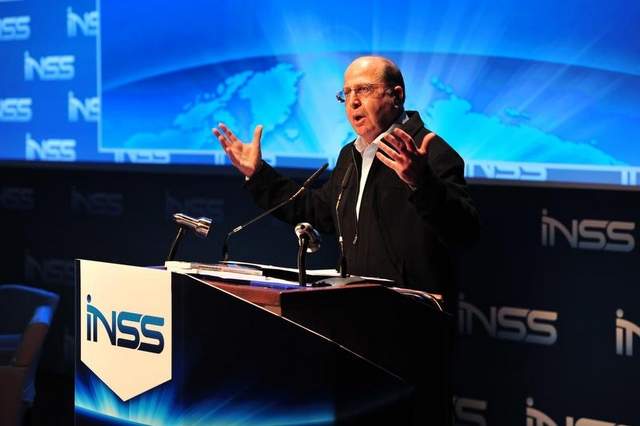
Israeli Defense Minister Moshe Ya’alon speaking Jan. 28 at Israel’s Institute for National Security Studies in Tel Aviv. (Israel Defense Ministry)

TEL AVIV — Two weeks after apologizing for a scathing attack on US Secretary of State John Kerry and the US-led Mideast peace drive, Israeli Defense Minister Moshe Ya’alon delivered a relatively temperate, yet no less critical assessment of US policy and its impact on the region.

In a Jan. 28 address kicking off an annual security conference here, Ya’alon assailed Washington for disengaging from conflict zones, relinquishing its role as global policemen and succumbing to an interim deal with Iran which he assailed as an “historic fumble.”

Unlike his tirade against Kerry, whom Ya’alon blasted as “inexplicably obsessed” with pursuing an Israeli-Palestinian peace deal unworthy of “the paper it was printed on,” the MoD boss offered a constructive assessment of a strategically shifting region.

Washington, said Ya’alon, will remain the world’s sole superpower, despite “the current situation, when the United States decides to disengage from conflict zones and is unenthusiastic about serving as the world’s policeman.”

While the US is challenged in the region by Russia and China, “there is no one that wants to step into the shoes of the United States.”

Russia is leading in the Syrian theater by default, Ya’alon told a gathering of Israel’s Institute for National Security Studies (INSS), due to Washington’s decision to “lower its profile.”

According to Ya’alon, a former head of military intelligence and Israel Defense Forces chief of staff, only two nations divide the world into territorial sectors of operational responsibility: the United States and Iran.

And while Washington has disengaged forces from Iraq and is drawing down from Afghanistan, Iran is rushing into those countries and elsewhere around the globe to fill the vacuum with terror and export a “messianic, apocalyptic” version of Islamic revolution, he said.

“The United States has its commands and Iran has its Corps. … It’s a regime that is now well received in the world despite the fact that it continues to spread its balance of terror in Afghanistan, Iraq, Syria, the Palestinian theater in Gaza, South America, Asia and Africa,” Ya’alon said.

On the US-led drive to reach a two-state peace deal, Ya’alon dismissed as “legend” claims that the Israeli-Palestinian conflict is a main source of Sunni-Shi’a wars and other troubles roiling the region.

“There is an argument between us and our friends about the [larger regional significance] of the Israeli-Palestinian conflict. But you can’t hang what’s happening in the Middle East on this conflict,” he insisted.

He also rejected arguments articulated by the US government, most world powers and many experts in Israel that failure to conclude a Palestinian peace deal deters Saudi Arabia and other moderate Sunni states from forging a united front against Iran.

“People in the Arab countries don’t raise the Palestinian issue; it’s only lip service for external consumption. What does the Palestinian issue have to do with the Iranian threat?”

In a televised interview presented Jan. 28 at the same INSS event, Palestine Authority President Mahmoud Abbas utterly dismissed Ya’alon’s assertions, insisting that 57 Arab and Islamic states — “from Mauritania to Indonesia” — would grant “full recognition” of Israel once a two-state deal was concluded.

“The opportunity for peace might not return,” Abbas told attorney, INSS fellow and former Israeli peace negotiator Gilead Sher.

But Ya’alon, a prominent, yet relatively pragmatic hawk in the right-of-center coalition government of Israeli Prime Minister Benjamin Netanyahu, said peace with the Palestinians “apparently won’t be realized in my generation.”

It is way too premature, he insisted, to consider US-crafted security arrangements when Palestinians are unwilling to accept Israel’s right to exist in the region as a sovereign homeland for the Jewish people.

“You can’t talk about security coming from unmanned aerial vehicles and sensors. As long as the Israeli flag does not appear on their map, and Palestine extends from Rosh Hanikra [bordering Lebanon in the north] to Eilat [at the Red Sea]…. As long as they are unwilling to declare an end of conflict and end of claims until the last Palestinian refugee is satisfied, what is there to discuss? This is the essence of the conflict.” ■

Implementation of the Interim Deal: New Realities in Advance of Renewed Negotiations

January 29, 2014

Implementation of the Interim Deal: New Realities in Advance of Renewed Negotiations.

INSS Insight No. 510, January 26, 2014

Emily B. Landau , Ephraim Asculai

On January 20, 2014, IAEA inspectors visited Natanz and Fordow to verify that Iran began implementing the interim deal with the P5+1 by halting its enrichment of uranium at these facilities to 20 percent. The last two months were spent rehashing the terms of what had ostensibly already been decided in late November in Geneva, although the different versions of the agreement that were released by Washington and Tehran at the time immediately revealed that the two states were not on the same page, which did not bode well for the continued process. The dispute over the correct interpretation of what was decided is still far from over, as evidenced by Iranian accusations days before implementation began that the “Summary” of the understandings released by the White House was “a unilateral and one-sided interpretation” of what had been agreed. It is also unclear why the White House chose to release only a summary, rather than the full text of the new understandings.

Topics:

On January 20, 2014, IAEA inspectors visited Natanz and Fordow to verify that Iran began implementing the interim deal with the P5+1 – two months after the deal was first announced in late November 2013 – by halting its enrichment of uranium at these facilities to 20 percent. The last two months were spent rehashing the terms of what had ostensibly already been decided in late November in Geneva, although the different versions of the agreement that were released by Washington and Tehran at the time immediately revealed that the two states were not on the same page, which did not bode well for the continued process. The dispute over the correct interpretation of what was decided is still far from over, as evidenced by Iranian accusations days before implementation began that the “Summary” of the understandings released by the White House was “a unilateral and one-sided interpretation” of what had been agreed. It is also unclear why the White House chose to release only a summary, rather than the full text of the new understandings.

The interim deal – known as the Joint Plan of Action (JPA) – was never meant to be more than an arrangement that would freeze Iran’s problematic nuclear activities for the duration of the continued negotiations over a comprehensive deal, in return for a limited amount of sanctions relief to Iran. The comprehensive deal is the goal; the interim deal was only meant to create the correct atmosphere for getting there.

IAEA inspectors and Iranian technicians at Natanz, January 20, 2014, AFP/Getty Images

Nonetheless, the interim deal has already taken on a life of its own. It has created new facts on the ground, or more precisely, new realities and new perceptions of reality. These include an already improving economic situation in Iran due to the anticipation of sanctions relief over the coming months. There is also a sense – despite US protestations to the contrary – that the US may be somewhat less determined to deal harshly with companies that cross the sanctions line, because the underlying message is strong US interest in continued diplomatic engagement with Iran.

On the nuclear front, the critical issue of Iran’s right to continue R&D on new generations of centrifuges – a major point of contention in discussions between Iran and the P5+1 over the past two months – seems to have been resolved in Iran’s favor. Iran believes that the JPA secures its right to work on any aspect of advanced centrifuge research and development that it chooses. This is evident in a series of Iranian statements, most recently by Rouhani when he said there would be no restrictions on Iran’s civilian nuclear program, including R&D.

The role of the IAEA in pressing to clarify the possible military dimensions (PMD) of Iran’s nuclear program – which was manifested most starkly over the course of 2012-2013 in its repeated demands to conduct inspections at Parchin – is not clear according to the JPA. Is it still the mandate of the IAEA to pursue these clarifications, or is the decision now under the purview of the Iran-P5+1 Joint Commission set up by the JPA? This issue cannot remain unresolved, because continued investigation of the military dimensions of Iran’s nuclear program – not mentioned as part of the JPA – is of crucial importance. If this dimension is not uncovered, Iran can continue to claim that it has done no wrong. Moreover, because the PMD remain outside the JPA, activities intended for the development and manufacturing of nuclear explosive devices and the subsequent development of warheads can proceed unhindered during implementation of the JPA.

According to the White House “Summary,” the Joint Commission will monitor the implementation of the JPA. This means that Iran itself will now have a direct role in the determination of whether it is complying or not with the terms of this understanding. This raises concerns over whether there is any realistic possibility of ever proclaiming that Iran has not fulfilled the terms of the agreement and that stronger measures – such as additional sanctions – are necessary.

On the enrichment front, while the JPA does not explicitly note Iran’s right to enrich uranium, it clearly defines the terms for Iran’s continued enrichment to 5 percent, in contradiction to the UNSC resolutions that demand suspension. For Iran, this is important de facto recognition of what it views as its right. Moreover, the JPA is valid for six months only, but can be extended, if both sides agree. What happens if no agreement is reached, but there is no comprehensive deal either? Can Iran go back to its pre-JPA activities?

The situation regarding 20 percent enrichment deserves special attention. Although this stockpile was ostensibly to be rendered “unusable,” the reality is somewhat different. Until November 2013, Iran produced some 400 kilograms of 20 percent UF6. The JPA states that from the existing uranium enriched to 20 percent, Iran would retain half as working stock of 20 percent oxide for fabrication of fuel for the Tehran Research Reactor (TRR). It would dilute the remaining 20 percent UF6 to no more than 5 percent.

The White House “Summary” states that the dilution of half of Iran’s stockpile of near-20 percent uranium hexafluoride must be completed in three months, and conversion of the rest of that material to oxide in six. This means that only half of the UF6 stock would be diluted. Since about half of the originally produced UF6 was transferred to the UCF to be transformed into an oxide form, this means that only some 100 kilograms of the remaining UF6 stock would be diluted, and 100 kilograms would remain. This amount would be added to the some 200 kilograms previously transferred to the UCF, and presumably converted to oxide. Therefore, following the dilution process, some 300 kilograms of UF6 equivalent of 20 percent enriched uranium would remain in various oxide forms. This amount could be reconverted into UF6 and be available for further enrichment, if so desired. Therefore, the “Summary’s” dismissal of the oxide form as “not suitable for further enrichment” is inaccurate. In fact, this amount, if reconverted and then enriched to 90 percent, could be sufficient for one nuclear explosive device.

Beyond these new realities on the ground, what has transpired over the past two months of haggling over the terms for implementing the JPA has had the side effect of reshaping and redefining the relative strengths and positions of the two main actors in the current dynamic – Iran and the United States. This is a dynamic that will now feed back into the process, and have its own impact on the prospects for success through the next phase of negotiations, due to commence sometime in February. Over the past months the US has demonstrated its eagerness to move forward on the interim deal regardless of how Iran has reacted to developments. Indeed, US rhetoric has seemed consistently determined to avoid offending Iran. Iran, meanwhile, has had no qualms about insulting the US, whether through its statements regarding the deal – claiming that the agreement on implementation indicates the surrender of the West to Iran, that the agreement can be reversed in a day, and that Iran under no circumstances will agree to destroy any centrifuges – through direct name calling, or through symbolic acts such as Foreign Minister Zarif placing a wreath on the grave of arch-terrorist Imad Mughniyeh in Lebanon. All of this will not work in America’s favor at the negotiations table, as it projects relative US weakness in standing up to Iran.

Combined with the relaxed sanctions and interpretations on the nuclear front that enable Iran to retain critical components of its program, this US-Iran trend serves to further chip away at American leverage in negotiations over the only deal that really matters: the comprehensive deal that must prevent Iran from moving toward a military nuclear capability.

Iran’s nuclear bid ‘only a matter of time,’ says PM’s former top adviser

January 29, 2014

Iran’s nuclear bid ‘only a matter of time,’ says PM’s former top adviser – The Times of Israel.

Uzi Arad also reveals settlers-in-Palestine idea has been widely discussed, says evacuation of settlers must be kept to a minimum

By Elhanan MillerJanuary 29, 2014, 1:51 am
 
Professor Uzi Arad greets attendees at the first annual lecture in memory of Zvi Yavetz in Tel Aviv, January 28, 2014 (photo credit: Roee Shpernik)
Professor Uzi Arad greets attendees at the first annual lecture in memory of Zvi Yavetz in Tel Aviv, January 28, 2014 (photo credit: Roee Shpernik

When Uzi Arad, a former national security adviser to Prime Minister Benjamin Netanyahu, analyzes the nuclear deal reached with Iran in November, he sees little prospect of the Islamic Republic rolling back its bid to attain nuclear weapons capabilities. The inability to reach a final agreement with Iran, he predicts, will leave Israel to face the dilemma of whether to attack Iran on its own.

According to the interim deal finalized between Iran and the six superpowers on January 13, the Islamic Republic is to limit the enrichment of uranium to a level of 5 percent and dilute its stockpiles of enriched uranium. The process, a spokesman for Iran’s atomic department stated, began on January 20.

But Arad, who has spent decades monitoring Iran’s nuclear proliferation, was deeply skeptical on Tuesday that Iran would voluntarily forgo its bid to attain nuclear military capabilities — in the allotted six-month time-frame for negotiations, or beyond. True to his past in Israel’s intelligence services, Arad’s messages are often cryptic; he refuses to reveal where he personally stands on many specifics. But the crux of his argument on Iran is fairly clear.

“From Israel’s perspective, the result [of the interim nuclear deal] is disappointing compared to what we had hoped for,” Arad told The Times of Israel on the sidelines of a first annual lecture series in memory his former history teacher, Tel Aviv University founder professor Zvi Yavetz, who passed away last year.

“Most experts doubt whether a [final] deal can be reached, so we should treat the current situation as one which will continue. They [the Iranians] will continue enriching [uranium] to a level they regard as permissible, until the opportunity arises when they decide to catch up easily. It’s only a matter of time. Meanwhile, they achieve sanctions relief and the sense of [Western] laxness. The threat of military intervention is dissipating in the air,” he said.

Uzi Arad (left) talks to Prime Minister Benjamin Netanyahu at a 2009 cabinet meeting. (Photo credit: Kobi Gideon / FLASH90)

Uzi Arad (left) talks to Prime Minister Benjamin Netanyahu at a 2009 cabinet meeting. (Photo credit: Kobi Gideon / FLASH90)

Once one of Netanyahu’s closest security confidants, Arad ended a 25-year career in the Mossad to become Netanyahu’s foreign policy adviser when he was first elected prime minister in 1997. Arad left that post when Netanyahu was replaced by Ehud Barak in 1999 to found the Institute for Policy and Strategy at the Herzliya Interdisciplinary Center (IDC), launching and presiding over the prestigious annual Herzliya Conference series. He returned to Netanyahu’s side in 2009 as head of Israel’s National Security Council and Netanyahu’s adviser on national security, a position he held until 2011.

For Arad, those who contend that American pressure can cause Iran to forgo its nuclear bid are delusional.

“I ask in the name of common sense: a state which went through such efforts to reach military nuclear capabilities, which paid such a heavy price over the years for whatever reason, will suddenly simply say: ‘Alright, never mind, this was just a game?’ Of course not. The same impulses remain, except now [Iran] needs to add new considerations to the equation. They want to reach nuclear capabilities cheaply, without sanctions.”

Iran already enjoys many of the benefits of being a “nuclear breakout state” (that is, a state which can produce a nuclear weapon within months if it so chooses), he said. The only situation worse for Israel is if Iran produces actual weapons.

Israel, for its part, is gradually losing confidence in the international coalition led by the US, which it formerly believed could tackle the Iranian challenge to Israel’s satisfaction, Arad said.

Germany's Foreign Minister Guido Westerwelle, Chinese Foreign Minister Wang Yi, Iranian Foreign Minister Mohammad Javad Zarif, US Secretary of State John Kerry, and French Foreign Minister Laurent Fabius at the UN Palais on November 24, 2013, in Geneva, after announcing an interim deal at the Iran nuclear talks. (photo credit: AP/Carolyn Kaster, Pool)

Germany’s Foreign Minister Guido Westerwelle, Chinese Foreign Minister Wang Yi, Iranian Foreign Minister Mohammad Javad Zarif, US Secretary of State John Kerry, and French Foreign Minister Laurent Fabius at the UN Palais on November 24, 2013, in Geneva, after announcing an interim deal at the Iran nuclear talks. (photo credit: AP/Carolyn Kaster, Pool

“If we have the ability to solve the problem through certain means, what are we waiting for? Why haven’t we done so earlier? Obviously our leaders, since the time of [Ariel] Sharon, thought that we’re part of a coalition. That the US is bearing this heavy burden. This was the situation until not long ago, but if no one is going to do it, Israel will face a dilemma; it will need to weigh [a military strike] in light of the possible outcomes.”

Two schools of thought now exist in Israel, Arad noted. There are those who believe in the “apocalyptic scenario” of a nuclear Iran, concluding that Israel must take any risk to stop it. Others believe that Israel can maintain a high level of security even given a nuclear Iran; hence expressing less willingness to go all out.

Arad refused to reveal which of the two views he supports.

‘Israel has discussed sovereign Jewish enclaves within Palestine’

The question of whether Jewish settlers should be allowed to remain in their communities under Palestinian sovereignty, a position The Times of Israel first revealed is supported by Prime Minister Benjamin Netanyahu, has dominated Israeli headlines over the past few days.

According to Arad, who currently heads the Center for Defense Studies and serves on the faculty of IDC’s Lauder School of Government, the idea of leaving Jewish settlements under Israeli sovereignty as enclaves within the Palestinian state has been discussed both by the Israeli government and academia.

“These ideas are part of the international inventory [of solutions]. There are precedents for this in almost every continent,” he said.

A Jewish settler argues with a female soldier during the disengagement from the Gaza Strip on August 17, 2005. (photo credit: Yossi Zamir/ Flash90)

A Jewish settler argues with a female soldier during the disengagement from the Gaza Strip on August 17, 2005. (photo credit: Yossi Zamir/ Flash90)

“Every Israeli should realize that transferring human beings is a serious matter. The blood of Jews is no less red than the blood of non-Jews. Just as we do not rush to move one population, so we should not rush to move another.”

Arad said that the evacuation of settlers should be treated as a matter of human rights and accordingly reduced to a minimum.

“The blasé attitude toward uprooting and moving families makes me uncomfortable. There should be a principle of minimizing the movement of populations, regardless of which side, if only from a human rights perspective.”

When speaking to his American counterparts, Arad said, he often compares the evacuation of settlements to a professional relocation, which employees often try to avoid for its harmful effect on family life.

“I ask the Americans: why are you so lighthearted about moving people who work and live in their historic homeland?”

US and Israeli buffer zones under Syrian rebel control designed to contain al Qaeda advances

January 29, 2014

US and Israeli buffer zones under Syrian rebel control designed to contain al Qaeda advances.

DEBKAfile Exclusive Report January 28, 2014, 7:17 PM (IST)
Planned rebel-controlled buffer zones for southern Syria

Planned rebel-controlled buffer zones for southern Syria

The Obama administration announced Tuesday, Jan. 28, that selected Syrian rebel militias would receive American light weapons including anti-tank – but not anti-air – rockets. And Friday, Jan. 24, an Israeli intelligence officer disclosed that his government was “rethinking” its neutrality policy in the Syrian war owing to the massing of 30,000 al Qaeda fighters on its Syrian border.
debkafile’s intelligence and counter-terror sources say these disclosures add up to a strong shift in the US and Israeli governments’ non-intervention policies on the Syria conflict. That shift appears already to be evolving into joint action for a limited military venture on Syrian soil – not by the deployment of their own troops, but through Syrian rebel militias unassociated with radical Islamist organizations.

These rebels are already taking delivery of American and Jordanian arms and training, and receiving logistical, medical and possibly intelligence assistance from Israel.

Mostly local militias, they are assigned with manning two security buffer zones taking shape in southern Syria and warding off attempts by al Qaeda-linked Jabhat al-Nusra and the Islamic State of Iraq and the Levant (ISIS) to reach Jordanian and Israeli borders.
The main thrust of this American plan is to create security zones for sealing those borders against both Bashar Assad’s army and the various Islamist militias including al Qaeda, by means of local anti-Islamist rebel groups provided with arms, funding and logistical aid allotted respectively by the US, Israeli and Jordan.

Israel for instance will carry on proffering medical aid and evacuating injured Syrians from the south – its most conspicuous form of support.

The plan has taken around 10 months to mature, starting from the deployment of 15,000 US special forces troops at the King Hussein Air Base at Mafraq in April 2013. The incoming units set about converting parts of the base into facilities for Jordanian military instructors to drill Syrian rebel fighters, before sending them back to Syria equipped with American weapons.

Two security sectors are taking form in South Syria.

One enclave, 45 km long and 75 km wide in the south west, is wedged between the Jordanian and Israeli borders. (See attached map).
The difficulty is its situation on the edge of Druze country, where 180,000 tribesmen living in 120 scattered villages, have taken care to stay out of the Syrian civil conflict and held back from acting against the Assad regime – thus far. But initial Al Qaeda encroachments on their territory may have persuaded Druze leaders to get off the fence.
If they do decide to throw in their lot with the US-backed rebels controlling this buffer zone, the enclave will acquire strategic depth and this part of southern Syria would grow into a powerful military entity capable of standing up to Assad’s and al Qaeda forces alike.

The second enclave is being rolled out further north (see map), to eventually give Syrian rebel militias control of a 30-km wide strip running the 60-km length of the Syrian-Israeli Golan border which, including Quneitra, has a population of around 300,000.
Eventually, US planners expect to connect the two buffer zones as a safe haven and stronghold in southern Syria for moderate Syrian opposition elements, safeguarded by US, Israel and Jordanian military support.

Tehran: We won’t dismantle any portion of our nuclear program

January 29, 2014

Tehran: We won’t dismantle any portion of our nuclear program | JPost | Israel News.

By ARIEL BEN SOLOMON

01/28/2014 21:20

FM says Iran won’t let Zionist regime divert world attention from “crimes against Palestinians.”

Arak

Iran’s heavy-water production plant in Arak, southwest of Tehran. Photo: REUTERS

Iranian Deputy Foreign Minister Abbas Araqchi said Tuesday that Iran would not “dismantle” any part of its nuclear program.

“Nothing will be stopped or dismantled in Iran’s nuclear program” and the country will “press ahead” with its current activities, said Araqchi, according to the Iranian Students’ News Agency.

He was quoted as saying that the Geneva deal reached with world powers in November has forced Iran to limit its enrichment.

On Monday, Araqchi said the deal does not mean that Iran would normalize relations with the US.

“We have fundamental disagreements with the US on different issues, including human rights, Palestine, hegemony, and so on,” he said. He added that the nuclear issue is just “one of the disagreements” where efforts are being made to “uphold the rights of the Islamic Republic of Iran,” Iran’s Mehr News reported.

“If they want to continue or restore sanctions on Iran under other excuses, it means they are violating the agreement,” he said.

An informed source told Iran’s Fars News Agency on Monday that Iran has no plans to give up its heavy water reactor in the city of Arak.

The source said that the “Arak reactor is the result of 30 years of efforts and Iran will not lose it, even under the most difficult conditions.”

Meanwhile, Iranian Foreign Minister Mohammad Javad Zarif said on Tuesday that Iran would not allow the Zionist regime to divert world attention away from their crimes against the Palestinians.

“In the past years, the Zionists have always tried to use Iran’s peaceful nuclear program as a pretext for diverting the attention of world public opinion and governments from their crimes in Palestine,” Zarif said in a meeting with Jibril Rajoub, a member of Palestinian Fatah’s Central Committee, according to a report by Iran’s Tasnim News Agency.

Iranian President Hassan Rouhani reiterated on Tuesday, in a meeting with former UN secretary-general Kofi Annan, that his country’s nuclear program is peaceful, Tasnim reported.

Annan is in Tehran as part of a delegation of The Elders, which describes itself as an independent group of global leaders who work together for peace and human rights.

UN nuclear inspectors arrived in Iran on Tuesday to visit a uranium mine, Iranian media reported, as part of a cooperation pact meant to help allay international concern about the country’s nuclear program.

Wednesday’s planned inspection of the Gchine mine in southern Iran will be the first by the International Atomic Energy Agency (IAEA) at this site since 2005.

Separately, Iranian parliamentarians are to come to London in the next few months, the first such visit in years, as Iran and Britain try to improve their damaged relations, a spokesman for a group of British lawmakers said on Tuesday.