Archive for January 28, 2014

Netanyahu: Under interim deal, Iran 6 weeks away from bomb

January 28, 2014

(That long? — DM)

Times of Israel, Netanyahu: Under interim deal, Iran 6 weeks away from bomb.

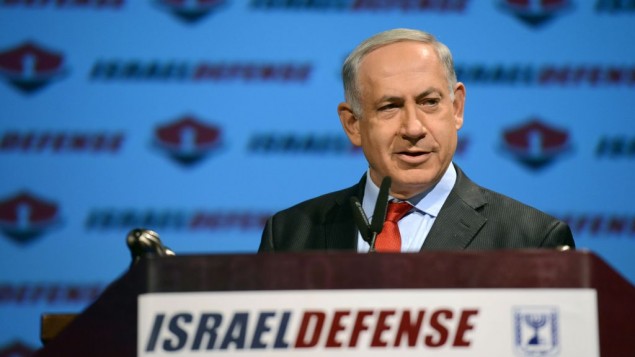
Netanyahu 27 Jan
Prime Minister Benjamin Netanyahu addresses a conference in Tel Aviv, Monday, January 27, 2014 (photo credit: Kobi Gideon/GPO/Flash90)

Iran could build a nuclear weapon in as little as six weeks, Prime Minister Benjamin Netanyahu warned in a speech on Tuesday night.

“Although there are internal disagreements in Iran, there is no dispute in the regime about developing nuclear weapons and the goal of wiping Israel off the map,” he told the crowd at a conference of the Institute for National Security Studies in Tel Aviv.

“The interim agreement in Geneva left Iran, according to our assessment, six weeks from a nuclear weapon, and therefore by our estimation, the test will be the permanent agreement, if such an agreement can be reached,” he said.

Iran reached the deal in November with the international community on its disputed nuclear drive, which the West suspects has a military goal, notwithstanding Tehran’s protestations to the contrary.

The six-month deal freezes key aspects of Iran’s nuclear program in exchange for some economic sanctions relief. It went into effect on January 20.

The next round of international nuclear negotiations with Iran is expected to be held in New York next month, according to officials involved in the planning.

“The whole world knows that Iran wants to develop nuclear weapons,” Netanyahu said. “We will only support an arrangement that ensures the complete dismantling of Iran’s infrastructure and capabilities to build nuclear weapons. We will not let Iran develop the capability to build nuclear weapons. This was and remains Israel’s stance.”

Israel has threatened to attack Iran should it not back off from its alleged pursuit of a military nuclear capability.

Earlier Tuesday, UN nuclear inspectors arrived in Tehran to visit Iran’s Gachin uranium mine for the first time in several years, Iran’s Atomic Energy Organization spokesman Behrouz Kamalvandi said. The visit was part of the framework of a separate deal between Iran and the International Atomic Energy Agency in November.

US To Transfer Weapons To Rebel Factions In Syria

January 28, 2014

US To Transfer Weapons To Rebel Factions In Syria – jerusalemonline.

According to a report by the Reuters news agency, the U.S. will supply more “moderate” factions of the rebels in Syria with arms and weaponry to be via Jordan. The decision was authorized in a U.S. Congressional hearing held behind closed doors

Jan 28, 2014, 04:55PM | Jonathan Benedek

Rebels in Syria

Rebels in Syria Photo Credit: AP

American-made firearms will apparently be transferred to “moderate” factions among the rebels in Syria, according to a report last night from the Reuters news agency. Top security officials in the US and European countries provided the information to Reuters. The security officials claim that most of the weapons will be transferred via Jordan, to non- Islamic factions fighting the Assad regime.

The supply of weapons will include a wide variety of firearms such as American-made assault rifles and even more powerful weapons such as shoulder-fired anti-tank weaponry. The arms shipments will not include however, anti-aircraft missiles out of fear that these weapons will fall into the wrong hands.

The decision to provide weapons to rebel factions in Syria was authorized by a U.S. Congressional hearing held behind closed doors. For a long time, the U.S. Congress has refused to authorize the supply of weapons to rebels in Syria primarily out of concern that weapons will end up in the hands of factions who oppose the US and Western influence.

Negotiating with Ourselves

January 28, 2014

Negotiating with Ourselves – The Weekly Standard.

Obama’s diplomatic march to an Iranian bomb

Feb 3, 2014, Vol. 19, No. 20 • By REUEL MARC GERECHT
 
Newscom 
Newscom

Analyzing the Islamic Republic isn’t a guessing game—at least it shouldn’t be. Iranian Islamists’ words and deeds are pretty consistent. Memoirs, speeches, and biographies have poured forth from those who made and sustain the regime. The New York Times and Senator Edward Kennedy may have called Ayatollah Ruhollah Khomeini an “enigma” and “the George Washington” of his country, respectively, but that was surely because no one at the newspaper or in the senator’s office had read the lectures that the mullah gave in the holy city of Najaf, Iraq, in 1970. To be fair to the Times and Kennedy, most scholars, spooks, intelligence analysts, and foreign-service officers hadn’t paid much attention to the clerics, either. They were too primitive for the secular set. 
Like Lenin’s What Is To Be Done? (1902), Khomeini’s 1970 lectures, published as Islamic Government, give a good picture of a new vanguard leading a purged and transformed society. Later, if more Iran experts had paid attention to Ali Khamenei—Khomeini’s successor, who may be even more ideological in his world view, and less to the liking of the Westernized leftists who’d rallied around the reformist president Mohammad Khatami (1997-2005)—fewer would have made so gross an error as to predict the evanescing of Iranian theocracy in the 1990s. “Realists” like Secretary of State John Kerry always want to apply Jacques Derrida to foreign policy: Ideas reified on the page, let alone in speech, just can’t compete with the supposedly overwhelming interest any state has in seeing geopolitical and economic challenges in a “rational” manner. Some Democratic congressmen and senior administration officials appear to be giving the Iranian regime a strange benefit of the doubt. They apparently conjecture that what Iranians say in Persian at home is less reliable than what they say in private in English in salons in New York, hotel rooms in Europe, or palaces in Oman hosting “secret” rendezvous. Lying less in English to foreign non-Muslims would be a first for the Middle East. 

So what can one say when officials at the White House, Democratic congressmen, newspaper editors, heavyweight columnists, think tankers, and academics describe the “interim” nuclear deal struck on November 24 in Geneva—athletically titled the “Joint Plan of Action”—as a serious diplomatic first step that could lead us away from an Iranian nuke and an American “march to war”? Khamenei and the leaders of the Revolutionary Guard Corps have never been taciturn in describing how attached they are to their nuclear program and how much they loathe the United States. The U.S. government knows—beyond a shadow of a doubt—that the clerical regime has been importing and building the means to construct nuclear weapons for more than 20 years. It has tracked Tehran’s progress in long-range ballistic missiles, weapons that wouldn’t be worth the investment if the Revolutionary Guards only wanted to deploy conventional or chemical warheads. It knows that newly elected Iranian president Hassan Rouhani and foreign minister Mohammad Javad Zarif—the Batman and Robin of regime “pragmatism” who are supposedly keeping the hardliners in Tehran barely at bay—are lying through their luminous teeth when they say that the Islamic Republic has never had any design to build atomic weapons. 

One has to ask what in the world deputy national security adviser Benjamin J. Rhodes meant when he confessed, “It just stands to reason if you close the diplomatic option, you’re left with a difficult choice of waiting to see if sanctions cause Iran to capitulate, which we don’t think will happen, or considering military action.” Rarely has a senior official so succinctly revealed the bankruptcy of a president’s approach (former defense secretary Robert Gates and United Nations ambassador Samantha Power, who recently gutted Barack Obama’s “neo-realist” foreign policy in a speech to the National Democratic Institute, took many more words). 

Let us parse Rhodes’s statement. First, the White House believes diplomacy will end if the Joint Plan of Action is abandoned or altered. This is odd since the administration also says that the interim deal is just the beginning of a process, which could take up to one year, to dismantle (the White House really means diminish) the Islamic Republic’s nuclear-weapons capability. Even if the administration only intends to retard the program, the supreme leader will have to make vastly greater concessions in the next 12 months than he did in the opening round. A recent report from the Institute for Science and International Security, headed by the former U.N. weapons inspector David Albright, estimates that in order to ensure that the program serves only civilian purposes, Tehran would have to disable approximately 15,000 centrifuges from its uranium enrichment plants at Natanz and Fordow, close down the Fordow facility, where the most advanced centrifuges are being installed, and convert the heavy-water reactor at Arak to a light-water facility incapable of producing plutonium for a bomb. The ISIS projection would still leave Tehran with an enrichment capacity—it would still have 4,000 spinning first-generation centrifuges. Yet these steps would severely impede the regime from using the known facilities in a rapid or surreptitious way. 

Zarif’s deputy, Abbas Araghchi, has flatly stated this will not happen. “As far as we are concerned, the heavy-water reactor at Arak is clear: It must remain as a heavy-water reactor. Iran’s nuclear program has not been set back at all—its expansion has only been stopped for a little while. Under [the interim] agreement, the system of Iran’s nuclear program is absolutely preserved, but in the sanctions system, there are cracks.” 

Ali Akbar Salehi, the current head of Iran’s Atomic Energy Organization and former foreign minister, echoes Araghchi: “We are not halting any nuclear activity, but only voluntarily reducing enrichment for six months, so that there can be comprehensive negotiations to determine what will happen with enrichment above 5 percent. If they see any concession [on our part], it is voluntary. The activity at Arak, the enrichment to 5 percent, all the activity to discover [uranium ore deposits], the research, and the development will continue. No activity will be halted.” 

As Salehi, a Ph.D. in nuclear engineering from M.I.T., must know well, neutralizing Iran’s nuclear weapons quest would also require Tehran to make available its paperwork and engineers involved with centrifuge-manufacturing and the importation of centrifuge parts and open Iran to unchallenged spot inspections by the U.N.’s International Atomic Energy Agency. Khamenei’s foreign-affairs adviser, former foreign minister Ali Velayati, has stated flatly that the Islamic Republic will not allow inspections of undeclared sites. And Salehi would be among the first to be rigorously questioned since he has quite likely had a major hand in overseeing the evasion of sanctions against nuclear-related technology since the 1980s. The regime’s centrifuge research, untouched by the interim deal, will give it the capacity to construct ever-more advanced centrifuges in larger numbers, provided Tehran has no supply problems. And why should it have supply problems? So far, U.N., U.S., and EU sanctions against nuclear-related machinery have not seriously impeded the regime’s impressive growth in centrifuge production since 2006 (134 spinning centrifuges then; around 9,000 spinning with an additional 10,000 installed today). Industrial-scale manufacturing of advanced centrifuges would make buried and heavily protected facilities like Natanz and Fordow unnecessary since defense against bombardment would become less critical. 

According to nuclear experts at ISIS and the University of Virginia, the U.S. government has no satellite or aerial means of detecting an enrichment facility hidden in a warehouse. Unless we had truly exceptional human intelligence, the Iranian regime could deploy lots of smaller cascades in place of the larger facilities, and the Pentagon and Langley would have no idea where to strike. Low-enriched, 5 percent uranium could be produced and refined further at clandestine facilities. The interim deal allows the Iranians to keep their current 5 percent enriched uranium stockpile, which is sufficient to produce half-a-dozen bombs. Clandestine facilities loaded with advanced centrifuges could easily be started from scratch and rapidly developed. According to CIA officers, Langley has been unable to penetrate either Iran’s ruling elite or the nuclear-weapons research establishment. There is no reason to believe our luck will improve. It is inconceivable to the Iranian elite that Khamenei, the Revolutionary Guards, and Rouhani—who proudly boasts in his memoirs that Iran’s nuclear progress is part of his legacy—would allow foreigners to destroy centrifuges, downgrade Arak, have access to the classified paperwork of the nuclear program, and debrief Salehi on how the Islamic Republic has cheated for more than two decades. 

The only (barely) conceivable circumstances under which the supreme leader would make dramatic concessions setting back the nuclear program are if (1) the pain of sanctions is so intense that he fears for the regime’s survival, (2) the military threat from the Obama administration is tangible and regime-threatening, or (3) Khamenei and the Revolutionary Guards, who dominate a big slice of the Iranian economy, get hooked on sanctions relief and become avaricious and avuncular capitalists, caring more about money and the common folk than they do about nukes.  

After the Syrian debacle, (2) seems surreal. Hardly a day goes by that senior Revolutionary Guard officers don’t mock the military will of an America that they see in a headlong retreat from the Middle East. When White House officials castigate Democratic senators who want to pass new sanctions legislation, which would only come into effect if Iran failed to dismantle its nuclear-weapons program, as hell-bent or careless warmongers, it clearly signals to Tehran that the Syrian retreat, even more than the withdrawal from Iraq and Afghanistan, is the administration’s defining moment. 

Barack Obama might still be obliged to strike Iran’s nuclear facilities, but surely this would only happen if Khamenei or the Revolutionary Guards, who have direct control of the nuclear-weapons program, did something monumentally stupid—like organize another big terrorist strike against Americans. Given the president’s allergic reaction to having Congress stipulate that any terrorist strike by Iran would trigger new sanctions, and given the reasonable conjecture that an American military response to Iranian terrorism could possibly lead to a war with, even an American invasion of, the Islamic Republic, an Iranian act of terrorism might have to be really big to force Obama to take out Tehran’s nuclear sites. That leaves either (1) or (3). 

Although (3) is probably what the administration is banking on, and is certainly where the president’s men will rhetorically slide if sanctions relief proves to be worth much more to Iran than the $7 billion claimed by the White House, this reasoning makes no historical sense. The Iranian regime has already lost at least $100 billion because of nuke-related sanctions. And freer, easier trade would have an explosive effect on the entire economy. If the regime had at any time been as pragmatic as American “realists” have thought (and hope of a new pragmatism has flowered in Washington after every Iranian presidential election since Khomeini died in 1989), the Islamic Republic would already be hundreds of billions of dollars richer. A simple “Hi!” from Khamenei to an American president, let alone the restoration of diplomatic relations, would have led to a tidal wave of Western investment. This did not happen because the supreme leader, Revolutionary Guard commanders (like Qasem Suleimani, who heads the Quds Force, the terrorist-nurturing, insurgent-supporting expeditionary unit), and the ordinary hard-core revolutionary faithful believe the United States really is, as Khamenei puts it, “Satan Incarnate.” 

From 1992 until 2005, Europeans embraced an invest-and-moderate strategy with the Islamic Republic. Although it’s certainly possible that increasing European trade helped to improve Iran’s economy in the mid-1990s, perhaps strengthening the college-educated and middle-class contempt for the regime, which in turn led to the unexpected presidential landslide in 1997 for the reformist cleric Mohammad Khatami, there’s no evidence whatsoever that increasing Western trade lessened Khamenei’s and the Revolutionary Guards’ attachment to revolutionary principles, especially implacable hostility towards the United States. Then, of course, in 2005, the populist, Holocaust-denying Mahmoud Ahmadinejad was elected president, and the supreme leader decided to advance an “in-your-face” acceleration of the nuclear program.

The Islamic Republic is caught in a perverse evolution. The country’s youth is Westernizing. First-rate sociological studies by French scholars show that Westernization, aka “globalization,” among the children of the Iranian elite continues, undermining the “Islamic” values of first-generation revolutionaries. The supreme leader and his guards, meanwhile, have become internally more oppressive and externally no less aggressive. The brutality that Khamenei used to crush the pro-democracy Green Movement in 2009 harks back to the nastiness unleashed in the early revolutionary years when the regime’s guiding lights—Khamenei, Ali Akbar Hashemi-Rafsanjani, and Rouhani prominent among them—feared for the revolution’s future. 

The “realist” dream of an Iranian version of the Chinese model, where private and state-sanctioned capitalism annihilates the revolutionary ideology, doesn’t appear to be imminent, for one simple, obvious reason: The Islamic revolution has at its white-hot core Islam as a religion and as a 1,400-year-old civilization at odds with the West. Iran’s revolutionaries have so far been able to overlay their creed onto the faith and culture, most successfully among the non-college-educated. Iran’s revolution is still fairly young: The Soviet Union’s ideology didn’t start to crack apart in Mother Russia until the 1970s, more than 50 years after it was born. And Allah in Iran is likely to outlast Marx in Europe. 

If President Rouhani can actually reform Iran’s centrally planned, corrupt economy (and the tepid free-enterprise efforts of his mentor Rafsanjani in the early 1990s suggest that he will fail), the regime will likely become even more paranoid and unstable, not less, as more wealth allows more Iranians again to feed their Western desires. President Rouhani’s lack of interest in pushing any internal political reform suggests that he doesn’t believe that political and economic reforms are organically tied; rather, that the Islamic Republic’s fundamental fusion of church and state can remain the same so long as the regime is better at economics and diplomacy. 

For anyone who can remember Rafsanjani’s two presidential terms (1989-97), Rouhani’s actions are not unexpected or innovative or reformist. It’s no coincidence that Iran’s improving economy under Rafsanjani also saw the launch of the regime’s nuclear-weapons quest and a much more aggressive, terrorism-fond foreign policy. In the Islamic Republic, among the pragmatic revolutionary set, there is no contradiction between avarice and the quest for nuclear weapons, or between less socialism and more terrorism against God’s enemies. 

Benjamin Rhodes and his boss may actually believe that the supreme leader and the Revolutionary Guards are willing to forsake the nuclear program for trade, that their enmity for the United States is just the product of misunderstandings and really bad American foreign policy (George W. Bush, the CIA-aided 1953 coup d’état against Mohammad Mossadegh, and all the other things that Bill Clinton once apologized for when Washington thought Khatami might transform U.S.-Iranian relations). Candidate Obama’s speeches and radio interviews from 2007 and 2008 displayed his ignorance of Islamic and Iranian history. But for the last five years, President Obama has had access to all the classified material on the clerical regime’s nefariousness and mendacity about the nuclear program, most glaringly about the Fordow site, which the regime didn’t fess up to until September 2009, and he has had the opportunity to learn from unfolding events—his two unrequited, let’s-make-up presidential entreaties to Khamenei; the crushing of the Green Movement; Iran’s lethal actions against American troops in Iraq and Afghanistan; the thwarted terrorist strike in a Georgetown restaurant in 2011, which was approved by Quds Force officers; Tehran’s all-in support to the Assad regime in Damascus; and, last but not least, all the speeches, interviews, and books by Iran’s ruling VIPs since 2008. Yet all this may not be enough to overwhelm the president’s ideology telling him how the world ought to work and what his own historic possibilities are. 

It’s hard to know, since senior administration officials give the impression that all the president wants is to escape the “binary choice” between accepting the unacceptable and launching a preemptive strike. Seeing a chance for détente between Washington and Tehran, which senior White House officials now cautiously confide might lie just beyond a successful nuclear deal, is just a “realist” reflex that ticks up when the administration runs away from hard choices and Rouhani and Zarif smilingly beckon. 

Which takes us back to (1), the possibility that the economic pain from sanctions could be so intense that Khamenei and the Revolutionary Guards would relent on the nuclear program. This is a highly dubious proposition—Rhodes is undoubtedly correct about Khamenei’s willingness to walk away from nuclear talks. Except economic pain is the only proposition now open to us that has any chance of convincing the supreme leader to cease and desist. 

In all probability, Khamenei will walk as soon as the Western powers insist that Tehran actually make concessions that enfeeble the nuclear program—regardless of what sanctions the West piles on the regime. The Joint Plan of Action was acceptable to the supreme leader because it didn’t demand anything from Tehran that wasn’t quickly reversible. Deputy foreign minister Araghchi, an unanimated, mainstream, process-oriented, revolution-loyal diplomat, was thoughtful and precise in his description of the interim deal.

In a recent speech in the clerical headquarters city of Qom, Khamenei himself made it clear that sanctions will not break him, that the economic pain Iran is now suffering is a “joke” compared with the “crime” that “all of the great powers of the world .  .  . perpetrated against our nation” in the Iran-Iraq war (1980-88). Iranian society today may be more volatile than during the war years; certainly the regime’s revolutionary base is smaller, and Khamenei knows that he is less loved, and less feared, than his predecessor. Economics has gained ground on revolutionary passion. The supreme leader assented to Rouhani’s new diplomatic offensive against the West because Rouhani argued, as he had in his nuclear memoirs: I can get you what you want with less pain; the United States and its European allies can be divided and defeated through clever diplomacy. The supreme leader wasn’t lying when he said in Qom that he hadn’t been forced to the negotiating table in Geneva; he came “to negotiate with the Devil to eliminate its evil,” to beat the Devil at his own diplomatic game. 

The Obama administration will eventually have to test the proposition that Khamenei’s and the Revolutionary Guards’ will cannot be broken by economic means since the Iranian regime will give the Americans no other choice. The current nuclear negotiations will fail. The White House, which is obviously willing to bend a lot in the direction of Tehran, will most likely be unable to bend far enough to satisfy the supreme leader and his men. Even the most acquiescent of American administrations has its limits. So, too, Congress. So, too, the French, who have been trying to tell Washington that concessions now are more likely to shatter the Western alliance than are new sanctions. 

We will soon see how many hawks and doves there are in Washington. Odds are, the doves are much more numerous. They’re certainly much more powerful in Obama’s Washington. 

Reuel Marc Gerecht is a contributing editor to The Weekly Standard and a senior fellow at the Foundation for Defense of Democracies.
Iran: America’s alliance flavor of the month

January 28, 2014

Iran: America’s alliance flavor of the month | David Turner | Ops & Blogs | The Times of Israel.

January 28, 2014, 4:34 pm

It is difficult for Israelis to understand Obama’s policy towards Iran because of failure to appreciate that confronting Iran confronting Israel is an Israel national priority. There is no such reciprocal threat between Iran and the US (leaving the “bait and switch” trap Iran set Bush in Iraq).

Since the US defeat in Iraq and the looming defeat in Afghanistan America’s policy towards the region has been to cut its losses and leave. This explains the apparent confusion by both the Bush and Obama administrations confronting the Iranian nuclear weapons program.

Despite the fact that a nuclear Iran will almost certainly trigger a nuclear arms race in the most volatile area of the world, the US military was determined to NOT enter yet another half-hearted war likely to follow the path of those already fast-tracked to failure.

So if the US is not willing to assert power for fear of failure, what policy option remains but to retreat, hopefully with some degree of dignity. Which demands crisis control en route to the exit. Protests in Tahrir, force Mubarak out and support the Brotherhood who promise a stable government. Two misjudgments and two fannings of the fires of regional instability. Bahrain, Libya, Yemen, Syria: serial misjudgments and disastrous policy failures embroiling rather than easing the US out of the region.

As for Iran and the bomb: Bush’s last decision regarding Ahmadinejad was to leave the problem to Obama. And Obama has repeatedly since entering office made concessions to Iran only to have them rub egg in his face and spurn his “generosity.” And now his grandiose claims regarding the “interim” agreement denied by Iran, and confirmed by the US. What does this all mean?

In the past an engaged US presence in the region needed Israel to project US power. Jordan dealing with Black September while Israeli armor threatened Syrian forces massing in support of the Palestinians being one example. Today, a US in retreat needs a different alliance, and that new “ally” is Iran, a balance of power between Sunni and Shia in the region.

Except Russia is already the patron of Iran?

Well, let’s just mark that off as just one more failure of Intelligence, and intelligence in America’s last hurrah as superpower.

As for Israel, well, yes… With Egypt negotiating arms deals with Russia; with the Saudis brokering that deal and engaged actively also with Russia: After forty years absence as regional power Russia returns!

Israel might just be able to provide Russia that which she provided the US previously, a stabilizing force to help control the instability of the Islamist Winter.

Bipartisan Task Force Calls for Support of Possible Israeli Military Strike on Iran

January 28, 2014

Bipartisan Task Force Calls for Support of Possible Israeli Military Strike on Iran | Washington Free Beacon.

Calls for strike as soon as July if no final nuclear agreement is reached
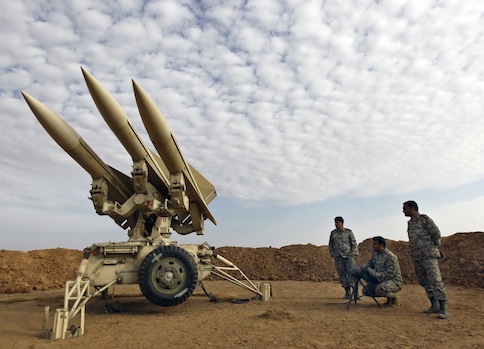
Iranian army members prepare missiles to be launched / AP

Iranian army members prepare missiles to be launched / AP

BY:
January 27, 2014 6:10 pm

A bipartisan task force led by Ambassadors Dennis Ross and Eric Edelman is calling on the Obama administration to support a possible Israeli military strike on Iran as soon as July if no acceptable final nuclear agreement is reached with Tehran by then.

The recommendation was included in a report released by the Jewish Institute for National Security Affairs’ (JINSA) Iran Task Force on Monday.

“The United States should move immediately to impose new sanctions and consider even tougher actions against Iran if no acceptable final agreement is in place 180 days after the [interim agreement’s] formal implementation on January 20,” the report says.

“At that time, the United States should do nothing that would impinge upon Israel’s ability to decide what actions it must take at that time, and indeed should support Israel if it takes military action.”

JINSA CEO Michael Makovsky said the task force was not calling for an Israeli strike on Iran, but for the United States to support one if Israel deemed it necessary after the 180-day window.

“It has been U.S. policy all along that we’d support Israel if it chose to attack,” said Makovsky at a panel discussion hosted by JINSA on Monday. “The reason why we focus on the Israeli government is because that is the last remaining stick right now.”

He said open-ended talks would undermine the only credible military threat against Iran, since Israel could be accused of thwarting diplomatic efforts if it attacked the nuclear program during drawn-out negotiations.

The task force’s report also criticized the interim nuclear deal reached by world leaders and Iran last year as “deeply flawed” and said it will “undermine the effort to prevent a nuclear Iran.”

Ross, a former top Middle East adviser to President Barack Obama, voiced a more favorable view of the deal during the panel discussion on Monday.

“I’m not one of those who thinks the agreement is that bad,” he said. “You do cap their program, and you do create inspections that are better than what we’ve had.”

He said the agreement clearly includes an acknowledgement that Iran can continue to enrich uranium, but added that he favored a limited enrichment approach because it showed the world that the deal was credible.

Steve Rademaker, a former State Department official under the Bush administration, disagreed with Ross and said the agreement removed the “bright line” between some enrichment and no enrichment.

He said the interim deal also concedes that any long-term agreement would not be permanent, and when it expires Iran would be subject to the same regulations as any other country with a civilian nuclear program.

“Iran is going to be treated just like Japan, just like Canada,” said Rademaker.

Bypassing sanctions and with help from Iran, Syria steps up missile production

January 28, 2014

Bypassing sanctions and with help from Iran, Syria steps up missile production | The Times of Israel.

Jane’s Defence Weekly says Assad regime is churning out rockets at pre-war rates, including ones slated for Hezbollah

January 28, 2014, 11:44 am

A screen capture from a video purporting to show the Syrian Army firing a Scud missile (image capture: YouTube)

A screen capture from a video purporting to show the Syrian Army firing a Scud missile (image capture: YouTube)

Syria is accelerating its production of missiles and rockets, effectively circumventing international sanctions imposed on it, according to the authoritative Jane’s Defence Weekly.

The magazine, which deals with military and security matters, presented evidence that the regime has upgraded its weapons capacity with the assistance of countries including Iran, North Korea and Belarus.

Jane’s reported that the Syria Scientific Studies and Research Center is responsible for the production of chemical weapons in Syria and oversees most of the regime’s missile projects. Yet according to the magazine, officials in the international community, including the UN, Russia and the United States, do not supervise the operations of the research center and have not imposed specific sanctions on it.

Jane’s added that although Syria has begun the process of destroying its chemical weapons arsenal, the SSRC still possesses the requisite knowledge to produce a host of warheads containing deadly chemical elements, including sarin, VX and Yperite.

The report reveals that the Assad regime has gone back to producing missiles and medium- to long-range rockets at a rate similar to that prior to the start of the country’s brutal civil war in March 2011. The two main reasons for the regime’s enhanced weapons production are an increased need for missiles in order to combat opposing rebel forces, and Hezbollah’s desire to acquire rockets and missiles stationed on Syrian soil.

Israel has hit Syrian missile facilities several times in the recent past, and has declared that it will not allow advanced weaponry to reach Hezbollah. The latest such reported Israeli air strike was on a missile warehouse in Latakia on Sunday night.

Jane’s report was published at the weekend — a particularity sensitive time, just as international factions convened in Switzerland for the “Geneva II” summit in an attempt to bring about a ceasefire between the Syrian regime and its opposition. So far, the conference has produced no notable achievements, except for an agreement to allow entry of humanitarian aid to Homs and to evacuate civilians from the area.

This image made from a video posted on Wednesday, September 18, 2013, shows Syrians in protective suits and gas masks conducting a drill on how to treat casualties of a chemical weapons attack, in Aleppo, Syria. (photo credit: AP)

This image made from a video posted on Wednesday, September 18, 2013, shows Syrians in protective suits and gas masks conducting a drill on how to treat casualties of a chemical weapons attack, in Aleppo, Syria. (photo credit: AP)

In surprising detail, Jane’s presented data on both chemical and conventional weapons production plants in Syria operated by the research center.

It said that chemical weapons production plants belonging to Institute 3000 have been closed down, and Branch 450, the production division of the institute, has been dismantled. But meanwhile, increased activity was observed at Institute 4000, which is responsible for the production of missiles and rockets. Some of its factories were moved to safer locations for fear that opposition forces would take control of them. Branch 340, responsible for missile research and development, which was previously located in Aleppo, as well as Branches 702 and 350, were all transferred to different locations.

The new rockets and missiles produced in SSRC facilities are considered more lethal in terms of their ability to inflict damage, though they are reported to be less accurate and have a more limited range.

Iran, Hezbollah, and the new missiles

One of the most interesting details presented by Jane’s relates to Project 702, an initiative that operates under Iranian supervision. The project has produced missiles intended for Hezbollah’s use, including an improved version of the Khaybar 1 missile, which has a range of about 100 km. Project 702 is now attempting to replace the liquid fuel currently used in missiles with solid fuel.

Members of a UN investigative team take samples near the site of an alleged chemical weapons attack, in Syria, August 28, 2013 (photo credit: AP/United Media Office of Arbeen)

Members of a UN investigative team take samples near the site of an alleged chemical weapons attack, in Syria, August 28, 2013 (photo credit: AP/United Media Office of Arbeen)

According to Jane’s, the SSRC bought weapons components from foreign countries through the use of shell companies or through intermediaries, both Syrians and foreigners living outside Syria. The intermediaries, Jane’s reported, purchased electronic parts and computers, among other things, from foreign countries, in exchange for funds provided to them by the research center. Jane’s added that when these efforts encountered obstacles, Syria would turn to its experienced allies which have been bypassing international sanctions for years, namely Iran and North Korea.

Besides these two infamous Syrian allies, the regime also concocted a deal with a company in Belarus specializing in the production and development of weapons. The company, Belvneshpromservice, negotiated with a Syrian shell company, a subsidiary of the SSRC, in order to establish an industrial unit to help produce more accurate M-600 and Scud D missiles. The Belorussian company declined to comment on the deal.

The SSRC is also working on a project with North Korea to help improve its Scud D missile capabilities. North Korean officials at the Tangun corporation have already begun researching and producing components for Scud D missiles which would make it difficult for enemy targets to calculate the missiles’ flight trajectory upon atmospheric entry, Jane’s reported, thus preventing or delaying interception by anti-missile systems, including those in Israel’s possession.

Turkey’s Erdogan to arrive in Iran, discuss Ankara-Tehran ties

January 28, 2014

Turkey’s Erdogan to arrive in Iran, discuss Ankara-Tehran ties | JPost | Israel News.

By JPOST.COM STAFF, REUTERS

01/28/2014 12:15

Iranian President Hassan Rouhani reportedly planning visit to Turkey in February.

Turkey's Prime Minister Tayyip Erdogan.

Turkey’s Prime Minister Tayyip Erdogan. Photo: REUTERS/Stringer

Turkish Prime Minister Recep Tayyip Erdogan was expected to arrive in Tehran on Tuesday for a two-day official visit to the Islamic Republic.

Erdogan was scheduled to meet with Iranian Supreme Leader Ayatollah Ali Khamenei and President Hassan Rouhani for the first time since the latter’s election in June.

The visit was slated to revolve around discussions over ties between Ankara and Tehran.

Rouhani in turn, was also planning a visit to Turkey in February, Istanbul-based Today’s Zaman cited Turkish Foreign Minister Ahmet Davutoglu as saying, adding that Zarif would return for an Iran-Azerbaijan-Turkey meeting.

“When Rouhani became the Iranian president, Turkey and Iran decided to communicate frequently, if possible every month, to discuss our mutual agendas and exchange views. I can say that we have accomplished this in the past five months,” said Davutoglu according to the report.

Moreover, he said that the two countries are planning to establish a High Level Cooperation Council mechanism before Erdogan visits Iran.

In addition, the countries are planning to increase trade, aiming for $30 billion in the next few years, with a further possibility for $50b. depending on legal issues, said Davutoglu.

Prof. Efraim Inbar, director of the Begin-Sadat Center for Strategic Studies, told The Jerusalem Post that “this is a continuation of an economic and political trend that is amplified by the nuclear agreement” reached between Iran and world powers in Geneva in November.

“Turkey needs Iranian energy and markets, while Iran needs Turkey to circumvent the sanctions,” said Inbar, adding that they both probably decided that Syria, where their interests collide, is a secondary issue.

“Turkey’s economic and political relationship with Iran continues to expand, even as the Turkish political elite’s ties to the Iranian underworld have mired the AKP government in scandal,” Jonathan Schanzer, vice president for research at the Foundation for Defense of Democracies, told the Post.

“Iranian gold traders have been at the center of this scandal, underscoring the dangers of working with Iran’s shadow economy,” he said.

Schanzer went on to point out that instead of scaling back relations, “it appears that the AKP is doubling down on Iran,” adding that “it is unclear why Turkey would stake out such a high-profile position at a time when Iran sanctions remain in place.”

Michael Rubin, a scholar at the American Enterprise Institute and a former Pentagon official told the Post, “Before the corruption scandal became public, Erdogan sought to have the best of both worlds: helping Iran evade sanctions for a profit, but was accepted in the White House as a pro-Western leader.

“With his dealings now blown open, it was decision- time, and he cast his lot with Iran.”

“It’s important to get inside his mind,” Rubin added, pointing out that “Erdogan believes his own conspiracy theories, is deeply anti-Semitic, seeks Israel’s eradication as a Jewish state, and is more inclined to see Iran rather than the West as an ideological ally because at least Iran doesn’t allow its few remaining Jews to control the newspapers, banks, and ‘interest-rate lobby.’”

Ariel Ben Solomon contributed to this report.

Poll: Most Americans think Obama not doing enough to stop Iran

January 28, 2014

Poll: Most Americans think Obama not doing enough to stop Iran | JPost | Israel News.

By LAHAV HARKOV

LAST UPDATED: 01/28/2014 15:16

World Zionist Organization poll of Americans shows nearly 60 percent advocate stronger sanctions on Iran; over half believe Obama could have done more to prevent development of nuclear weapons in the first place.

Obama

Most Americans think Obama not doing enough to stop Iran Photo: REUTERS

The American public overwhelmingly supports Israel in most issues, but opposes US President Barack Obama’s positions on related matters, according to a poll commissioned by the World Zionist Organization released Tuesday.

“President Obama and [US] Secretary of State [John] Kerry should heed these results. They should understand that the American people expect our government to support Israel; stop promoting a Palestinian state; stop condemning Jewish communities in Judea and Samaria and eastern Jerusalem as ‘illegitimate’; support Jerusalem as Israel’s undivided capital; stop funding the Palestinian Authority and impose stronger sanctions on Iran to persuade it to terminate its nuclear weapons program,” ZOA National President Morton A. Klein said.

Only 31 percent of Americans believe Obama is a close and reliable friend of Israel.

Most Americans – 51% – believe Obama has not done all he can to prevent Iran developing nuclear weapons, as opposed to a mere 28% who believe that he has.

In addition, 59% of Americans advocate the imposition of stronger sanctions on Iran to convince it to stop developing nuclear weapons, as opposed to a mere 17% who believe the US should weaken sanctions on Iran to convince it to stop developing nuclear weapons.

As for the conflict with the Palestinians, 59% of Americans believe a future Palestinian Arab state would be hostile to Israel and support terrorism.

By a ratio of over 3 to 1 (47% –– 14%), Americans believe that Jews have the right to settle in the West Bank, according to the poll.

An overwhelming majority of 72% Americans oppose Obama’s plan to give the Palestinian Authority $440 million, while only 15% believe that he should.

Over half – 55% – of Americans believe Jerusalem should remain the undivided capital of Israel, and 63% believe that the PA should recognize Israel as the sovereign state of the Jewish people.

“Pro-Israel organizations, both Jewish and non-Jewish, should cite these results to promote stronger support for Israel,” Klein stated.

The WZO poll was conducted by McLaughlin Associates, surveying 1000 Americans, consisting of Protestants (46%), Catholics (30%), Jews (3.6%), African Americans (13%), Hispanics (12%), Asians (3%) and Whites (70%). Politically, the respondents were 42% Democratic supporters and 41% Republican supporters.

“The results of this latest, very detailed and highly representative survey of American opinion show gratifyingly high, indeed, overwhelming levels of support for positions Israel takes, as opposed to the position the Obama Administration takes,” Klein said. “It also shows an understanding of the dangers Israel faces from a terror-sponsoring PA.”

“Large majorities of Americans clearly understand that a Palestinian state, if established, will not live in peace with Israel and will simply be another Mideast terrorist state,” he added.

Klein pointed out that the poll indicates that “only a small percentage [of Americans] believes in the racist, anti-Semitic Palestin