Archive for January 27, 2014

Obama vs. Harper: Who’s the real man of principle?

January 27, 2014

Obama vs. Harper: Who’s the real man of principle? – Opinion Israel News | Haaretz.

( And this is from the far-left Haaretz ! – JW )

While the American president hints at U.S. Jews’ dual loyalties and is disturbed by their activism, Canada’s PM confronts hostility to Israel for the bigotry it hides.

By | Jan. 27, 2014 | 3:49 PM

Stephen Harper and wife Laureen arrive in London on Tuesday, April 16, 2013

Prime Minister of Canada Stephen Harper and wife Laureen, April, 2013. Photo by AP

Years ago I wrote a column proposing that the leader of any country be permitted to run for president of the United States. The idea of the satire was that if the U.S. was to lead the world, foreigners ought to be able enter someone into the American fray. The Boston Globe illustrated the column with a cartoon of a perplexed, lunch-pail-toting factory worker walking past a line of politicians — Jimmy Carter, Leonid Brezhnev, Anwar Sadat, Menachem Begin — all wanting to shake his hand.

Well, why not Stephen Harper? He is the prime minister of Canada who just gave such a stirring address to the Knesset. Conrad Black, the ex-press baron who once owned the Jerusalem Post, is out with a column this week calling it one of the greatest speeches ever given by a Canadian leader. He ranks it with Sir John Macdonald’s defense of his conduct in the Pacific scandal in 1873 and Sir Wilfrid Laurier’s response to conscription in 1917.

The newsworthiness of Harper’s speech arises from the contrast with President Obama. The American leader is sending out word that he is “disturbed” by “Jewish activism in Congress” against his administration’s entente with Iran. Obama and Secretary of State Kerry, according to Israel Radio, are even blaming Prime Minister Netanyahu’s government for encouraging Jewish leaders to criticize the White House. We haven’t had this tone since President George H.W. Bush carped about being “one lonely little guy” beset by the Israel lobby.

Obama’s message hints at the kind of double-dual-loyalty libel that Harper confronted so bluntly in articulating the basis of the policies that have made him the most pro-Israel premier outside Jerusalem. He started with a paean to commercial and military cooperation, moved to the 250-year history of Jews in Canada and of the 350,000 Jews who are Canadians, and touched on the way the Holocaust put into sharp relief the logic of a Jewish homeland. “Canada supports Israel,” he said, “because it is right to do so.”

Then Harper acknowledged that Canada has made “terrible mistakes” in respect of the Jews, particularly “the refusal of our government in the 1930s to ease the plight of Jewish refugees.” But he said that “at the turning points of history,” Canada has “consistently chosen, often to our great cost, to stand with others who oppose injustice, and to confront the dark forces of the world.” He called it “a Canadian tradition to stand for what is principled and just, regardless of whether it is convenient or popular.”

Harper then declared that “support today for the Jewish State of Israel is more than a moral imperative.” He spoke of its “strategic importance” and declared it “a matter of our own long-term interests.” History, he argued, shows that those “who often begin by hating the Jew” eventually “end up hating anyone who is not them.” He spoke about “the new anti-Semitism” and the language that is used on campuses and in international fora to isolate the Jewish state. He called it “sickening” and said it “targets the Jewish people by targeting Israel and attempts to make the old bigotry acceptable for a new generation.”

At one point, Harper spoke of the “impossible calculus” with which Israelis live. “If you act to defend yourselves, you will suffer widespread condemnation, over and over again. But, should you fail to act, you alone will suffer the consequence of your inaction, and that consequence will be final, your destruction.”

Harper did not call on Israel to curtail its settlements — he didn’t mention them — or hector it about the peace process. This was startling given that, as Conrad Black pointed out, Canada has a foreign policy establishment as trans-configured against Israel as America’s own state department. Nor did Harper attack Obama’s demarche in respect of Iran. But he declared Canada’s intention to leave its own sanctions “fully in place” And “should the present agreement prove ephemeral” to renew the ones other nations are easing.

What is so striking about Harper’s speech is not the ardent expressions of friendship — all recent American presidents, including Obama, have done the same. Particularly George W. Bush, who, in the well of the Knesset, spoke of the “Chosen People” and called the Jewish state “the redemption of an ancient promise given to Abraham and Moses and David.” What is striking about Harper’s speech is the willingness to confront political correctness and call the hostility to Israel for what it is. It makes me think that if Harper were allowed to run for the president of America, he’d have a refreshing platform.

Seth Lipsky is editor of The New York Sun www.nysun.com. He was a foreign editor and a member of the editorial board of The Wall Street Journal, founding editor of The Forward and editor from 1990 to 2000.

The post-Khamenei era

January 27, 2014

The post-Khamenei era | JPost | Israel News.

By RAMIN PARHAM, SAEED GHASSEMINEJAD

01/26/2014 22:40

The West has considerable interests in how this era will be shaped in the Islamic Republic.

Iranian Supreme Leader Ayatollah Ali Khamenei

Iranian Supreme Leader Ayatollah Ali Khamenei Photo: REUTERS

A new Iran is emerging. New elites will arise. The battle has begun. Will the West be part of the problem or the solution? Will it be a merchant of the past, or a progressive actor of the future?

An ongoing tension

The Iranian Revolutionary Guards Corps is the fruit of Iran’s Islamic revolution. It was established by Ayatollah Ruhollah Khomeini, who called its members “his revolutionary children,” and they were to him what the Royal Army was to the Shah.

Khomeini’s “revolutionary children” over the past three decades have acquired immense power. The organization which was first established as an internal militia force to protect against a possible coup by the army gradually grew into what is known today as the IRGC: An army with a vast paramilitary branch, a well trained internal and extraterritorial intelligence apparatus and a vast military-industrial complex controlling the most important sectors of Iran’s economy.

Yet, the IRGC’s ambitions go even beyond its military and economic goals, with an intricate “soft power” infrastructure aimed at propagating the Islamic republic’s “messianic” message, born with the 1979 Revolution: “Revolutionary Islam.”

Since its inception, there has been ongoing tension between the IRGC and the clerics.

Although IRGC officers enthusiastically followed Ayatollah Khomeini, they have also persistently had a hard time coping with the clerics appointed by the supreme leader as his representatives within this “ideological army.” It is emblematic that this ongoing tension has consistently been tipped in favor of the “revolutionary children,” resulting in frequent changes of clerical appointees.

Who is Ali Khamenei?

After Khomeini’s death, a mid-ranking cleric lacking all due scholarly credentials rose to power: Sayyid Ali Khamenei.

Khamenei, who had, prior to the revolution, devoted his entire seminarian’s life to political activism against the Shah, began his own metamorphosis after the monarch’s overthrow. Before the revolution, he was better known within some intellectual circles, enjoying music and poetry, rather than in religious seminaries.

His interest in politics and history brought him to translate into Farsi a work of the renowned Muslim Brother Sayyid Qutb. After the revolution, his interests expanded to encompass military and intelligence issues.

Promoted Grand Ayatollah and Source of Emulation (Marja Taqlid) almost overnight, his outrageous rise was a direct insult to the traditional cleric establishment. The exponential growth of the IRGC coincides with his leadership. Illegitimate on scholarly grounds and non-charismatic, his rule could not be sustained, except on security pillars alone – provided by the IRGC. As the champion of messianic Islam, Khamenei is regarded by his zealots not only as the substitute of the Shia Messiah, but also as “Sayyid-e-Khurasani,” the prophetic character who prefigures and prepares the coming of the Savior.

In parallel, he has built an astronomic network of financial firepower and influence. Survivor of an assassination attempt shortly after the Revolution, the 74-year-old leader is currently in poor health. His death could lead to a huge redistribution of wealth and power among the Shia elites, already torn with infighting.

Post-Khamenei era; possible scenarios

How will the IRGC move in the post-Khamenei era? The options are threefold: First, that IRGC commanders stay neutral, not intervening in the process of selecting a new supreme leader, while safeguarding the stability of the regime in the transitional period. However, well aware of the possibility of being ousted by the new leadership and its entourage, high-ranking IRGC commanders, all indebted to Khamenei for their current positions, risk more than just their wealth and power.

The post-Khamenei era could well become for them a matter of life or death. Thus IRGC commanders have both the ability and the incentive to weigh in, with all their means, in the selection process of the new leader.

The second scenario is that IRGC commanders do intervene, installing their own pick for the supreme spot.

At the moment, the best option for them is Mojtaba Khamenei, son of the current leader. Symbolic as it might be, the ambitious heir has already started teaching his own seminars, known as “kharej,” interpreted as a sign of established religious credentials, a scholarly credit his own father did not have prior to his accession to leadership. However, it is no secret that Mojtaba’s most valuable credentials are his close ties with the IRGC and its related security apparatus.

Following in his father’s footsteps, Mojtaba Khamenei is personally involved in military programs and intelligence affairs. Also well known are the strong bonds between Mojtaba and Qasem Soleimani – the commander of the IRGC’s Qods Force and the most powerful operative in the Middle East according to Western sources.

The final scenario is that IRGC commanders stage a coup against the clerical establishment. After over 30 years of disastrous management of the country in all aspects, IRGC commanders are well aware of the profound unpopularity of the clerical establishment. It would thus not be unlikely for the IRGC to plan to present itself as the savior of both the country and the people from the catastrophic reign of corrupt and unpopular mullahs. This in turn may well guarantee the IRGC’s own power, at least in the short run. Such an ambitious move would, of course, face many obstacles, primarily within the IRGC itself, making it a possible yet perilous move.

The post-Khamenei internal battle has thus already begun in an emerging new Iran. The West has considerable interests in how this era will be shaped. The question is whether or not it has enough will and farsighted wisdom to abort shortsighted special interests. Realpolitik commands facilitating the emergence of a post-Islamist, open, plural and West-friendly Iranian society.

Dr. Ramin Parham is an Iranian writer and political analyst, author of L’histoire secrète de la révolution iranienne and Né à Ispahan. Parham is currently working on his third book on Iran-Israel relations.

Saeed Ghasseminejad is co-founder of Iranian Liberal Students and Graduates and a PhD candidate in finance at City University of New York.

The strategic achievements of the agreement with Iran

January 27, 2014

The strategic achievements of the agreement with Iran | JPost | Israel News.

By EPHRAIM ASCULAI

01/26/2014 22:52

Reaching an agreement with Iran was a brilliant move that served this purpose, and effectively neutralized any call for military action, specifically by Israel.

Bushehr nuclear Iranian

Iranian security official at Bushehr nuclear plant. Photo: REUTERS

The common wisdom is that the sanctions imposed on Iran were the main initiating reason for the Geneva talks between the P5+1 and Iran, talks that culminated with the November 23, 2013, Joint Plan of Action (JPA) and the subsequent “Technical Understandings” that went into effect on January 20, 2014.

There can be little doubt that the sanctions had a severe impact on Iran, but were they the main motive for the agreements? Looking into the situation in Iran and viewing the outcome of the discussions one can also suggest a different scenario, in which the strategic aims of both Iran and the US are not so far apart. In this scenario, the possible common ground dictated the advisability of the agreement, which will have a far-lasting effect, beyond its six-month term.

What are Iran’s strategic aims? Iran’s main priority, it is suggested, is to reach the capability to produce a nuclear weapon as quickly as possible, if and when the order to do so arrives from the leadership. The next order of priority is to avoid military conflict.

Iran is well aware that should it be found to be constructing even a primitive nuclear weapon, it would be susceptible to military attack, if not by the US, then by Israel, which has demonstrated its capability and willingness to carry out such an attack. The sanctions occupy only third place, since Iran has demonstrated that it can live with them. The ongoing Iranian “charm offensive” was the very effective tactic chosen to achieve these strategic aims.

What are the American strategic aims regarding the Iranian nuclear program? It appears, from extensive evidence, that the main US aim is to avoid conflict.

Reaching an agreement with Iran was a brilliant move that served this purpose, and effectively neutralized any call for military action, specifically by Israel. The relatively weak terms of this agreement were sufficient to convince many that the Iranians have effectively been stopped from advancing their program, while not forced to accede to conditions that would impede their ability to construct a nuclear weapon. This would hopefully come in the next stage – the final agreement, which many, including the US administration, doubt will ever be reached.

The next US aim was to prevent Iran from constructing a nuclear weapon. The US never claimed that preventing Iran from having the capability to produce a nuclear weapon was one of its strategic aims. Although Iran can already manufacture a nuclear weapon, it has no reason to do so at present, and by easing the sanctions Iran also partially achieved its third strategic aim. Iran also (inadvertently?) managed to deter the US administration from imposing more severe sanctions by threatening to enrich uranium to 60 percent – a very short step from military enrichment grade.

Thus, there is a convergence of interests between the US administration and Iran, and the terms of the JPA are not as important as the results of the agreement: reduction of tensions, postponing conflict and the easing of global economic concerns. However, although the exact terms of the agreement between Iran and the P5+1 have been kept confidential (why?) some loopholes are readily apparent. The main elements missing from the agreement are those dealing with what the IAEA called the “Possible Military Dimensions” of Iran’s nuclear program, meaning the work towards developing the nuclear explosive mechanism, and the prevention by Iran of the IAEA inspectors searching for undeclared nuclear and nuclear-related sites.

Iran can, regardless of the agreement, continue to develop anything it wants at undeclared sites, and as long as these activities remain concealed, all will be well. At present, no one really has an interest in enforcing these two missing factors, and the US is using a hard sales pitch to convince the world of the benefits of a very mediocre agreement.

On the practical side, Iranian Foreign Minister, Mohammad Javad Zarif was quite correct in stating, on January 23, that Iran had not agreed to dismantle anything. The only thing that can be remotely considered to be a rollback is the dilution of some of its 20% enriched uranium, and even this leaves a considerable amount in Iranian hands, which can then serve as a jump-start for enrichment to values beyond 20%. The Iranians will not accumulate much more 3.5% enriched uranium, but then, they have enough of it for several nuclear weapons, if further enriched.

The sanctions were never strong enough to force the hands of the Iranians. They do not hurt the pride and dignity of the Iranians, the weakest points in their armor. The Iranians can justifiably gloat, and the world can heave a sigh of relief, and the Middle East states, including Israel, can watch with wonder and anxiety, and try to assess how they will be able to live with a nuclear-capable Iran in their midst.

The author is a Senior Research Fellow at the Institute for National Security Studies (INSS) in Tel Aviv.

Analysis: Obama to confront a united Congress on Iran

January 27, 2014

Analysis: Obama to confront a united Congress on Iran | JPost | Israel News.

By MICHAEL WILNER

01/27/2014 21:36

Obama’s State of the Union address will focus mainly on domestic issues. But on foreign policy, the president will have to make his case on Iran to skeptical lawmakers.

US President Barack Obama at the White House

US President Barack Obama at the White House Photo: Reuters

WASHINGTON – Rarely does Congress find itself united on an issue, much less allied against the president. And yet on Tuesday night, amid a litany of domestic proposals that fall cleanly on party lines, US President Barack Obama will confront just that sort of bipartisanship against one of his policies: how to handle Iran.

Obama has been working the phones with members of the Senate for months now, calling privately on its leadership to pause work on a bill that would trigger new sanctions against the Islamic Republic should negotiations fail to reach a final-status agreement over its nuclear program.

That’s because key members of the upper chamber— including Senate Foreign Relations Committee chairman Robert Menendez (D-NJ) and his Republican counterparts— insist on an insurance policy that will apply pressure on Iran throughout the diplomatic process. Sanctions legislation from Congress has led Iran to the negotiating table, they say; by that logic, more sanctions will only encourage the process along and force the Iranians to capitulate further.

In November, an initial deal between Iran and world powers gave the parties six months to negotiate a comprehensive agreement. In the meantime, Iran agreed to halt its enrichment of uranium to high grades while the Obama administration agreed not to impose any new nuclear-related sanctions.

Reaching a comprehensive accord will be a difficult task that even the president and his allies agree is unlikely to succeed. The president himself has put the chances of success at less than 50 percent. But the US must demonstrate a good-faith diplomatic effort to its allies, the White House argues; and new sanctions from Congress would directly undermine that strategy, and the language of the interim deal, leaving the president only with the option of military force.

The president will enter the House chamber on Tuesday night and face 59 senators who have publicly endorsed the ‘trigger’ bill, along with 400 representatives who, over the summer, passed even harsher sanctions legislation aimed at cutting Iran’s remaining crude oil exports in half.

How Obama lays out his case against new legislation will be important to watch for several reasons. Most obviously, the president does not have an appetite for military conflict, and believes the public is on his side; and while the speech will be directed at Congress, the White House is well aware that this speech is his most significant policy platform of the year (members of Congress, as it turns out, are aware of that as well).

The president, therefore, might find it convenient to place on Congress the burden of such inevitable conflict should they pass a bill and undermine peace talks. While he’ll certainly seek to reassure them— expect to hear him reiterate that ‘no option is off the table’ in handling the crisis —  he may also try and threaten them with the specter of adverse consequences.

And yet Obama must also walk another fine line, away from redlines. Should he state, as the White House has implied, that the only option after the failure of diplomacy is war, then he obligates himself to conflict should talks fail in six months time.

That may be the lesson he learned from the Syrian chemical crisis in August: on matters of foreign policy, do not issue threats you are not prepared to uphold. In Tuesday’s speech, read between the redlines: listen carefully for what the president is truly prepared to do.

Next round of Iran nuclear talks set for New York

January 27, 2014

Next round of Iran nuclear talks set for New York | The Times of Israel.

Iran, world powers to convene next month to discuss long-term agreement over Tehran’s nuclear program

January 27, 2014, 8:49 pm

Illustrative photo of New York City (photo credit: CC BY-SA Dschwen, Wikimedia Commons)

Illustrative photo of New York City (photo credit: CC BY-SA Dschwen, Wikimedia Commons)

WASHINGTON — The next round of international nuclear negotiations with Iran is expected to be held in New York next month, according to officials involved in the planning.

The US and its negotiating partners — Britain, France, Germany, China and Russia — will be seeking a long-term agreement to halt Iran’s disputed nuclear program. The Islamic republic will be pressing for an end to international sanctions that have crippled the economy.

The opening rounds were held in Geneva. The parties agreed to a six-month deal that freezes key aspects of Iran’s nuclear program in exchange for easing some of the economic sanctions. That went into effect on January 20.

The officials insisted on anonymity because they weren’t authorized to identify themselves as confirming the location of the talks before a public announcement.

Copyright 2014 The Associated Press.

US warns Turkey against doing business with Iran

January 27, 2014

US warns Turkey against doing business with Iran | The Times of Israel.

Sanctions against Islamic Republic remain in force, top Treasury official says, though some restrictions lifted under nuke deal

January 27, 2014, 8:54 pm

David Cohen (photo credit: United States Government Work/Flickr/File)

David Cohen (photo credit: United States Government Work/Flickr/File)

ANKARA, Turkey — Companies should “hold off” doing business in Iran because many of the sanctions against the country are still in place despite an interim nuclear deal, the top US Treasury official warned Monday.

Speaking in Turkey, which is looking to expand business opportunities with its neighbor Iran, David Cohen, the US secretary for terrorism and financial intelligence, said a significant portion of sanctions against Iran remained, including in the banking, energy and shipping sanctions.

“Iran is not open for business,” Cohen said. “Businesses interested in engaging in Iran really should hold off. The day may come when Iran is open for business, but the day is not today.”

Last week, the United States and the European Union partially lifted economic sanctions on Iran after it unplugged banks of centrifuges involved in its most sensitive uranium enrichment work. The move was part of a deal aimed at easing concerns over Iran’s nuclear program.

Turkey has expressed hopes that the easing of sanctions against Iran will open business opportunities, especially in the energy sector. Turkish Prime Minister Recep Tayyip Erdogan travels to Iran on Tuesday.

Turkey imports gas and oil from Iran but the Turkish oil refiner, Tupras, was forced to reduce its Iranian oil purchases due to the sanctions.

“What we are working toward is the possibility of a long-term, comprehensive resolution with the Iranians in which they demonstrate that their nuclear program is exclusively for peaceful purposes,” Cohen said.

Cohen also said he expects Turkey’s state-run banking institution, Halkbank, to continue processing oil payments to Iran.

The bank’s head was arrested last month on bribery charges, along with two former Cabinet ministers’ sons, and police seized $4 million in cash in shoe boxes from the bank chief’s home.

Copyright 2014 The Associated Press.

Off Topic: Shin Bet: West Bank terror attacks more than doubled in 2013

January 27, 2014

(What will the rest of 2014 bring? – DM)

Jerusalem Post, Shin bet: West Bank terror attacks more than doubles in 2013

Israel Security Agency releases annual terror statistics showing jump in W. Bank terror attacks, most of which were firebomb, stone-throwing attacks.

Pals throw stonesPalestinian throws stone at Beitunia Nakba Day Photo: REUTERS/Darren Whiteside

The past year saw a sharp rise in the number of terror attacks and fatalities in Judea and Samaria over 2012, according to a report issued by the Shin Bet General Security Services.In 2013, there were some 1,271 attacks in Judea and Samaria, as opposed to 578 in 2012, the Shin Bet said. Of these attacks, 1,042 took place in Judea.In addition, of the 6 Israelis killed in terror attacks in 2013, five were killed in the West Bank, as opposed to in 2012, when all of the 10 Israeli fatalities from terror attacks took place inside the Green Line. Of those killed, three were civilians and three were members of the security forces.

Shin bet stats

The 10 fatalities listed for 2012 include six Israelis killed during Operation Pillar of Defense in November 2012, the Shin Bet noted.

No Israelis were killed in attacks launched from Sinai the report said, adding that most of the attackers were considered “lone wolf types” and not members of organized terror cells.

Of the six Israelis killed, three were stabbed to death by their attackers, two were killed by snipers and one, IDF soldier Tomer Hazan, was kidnapped and strangled. Five of the six killings took place from September until the end of the year.

Altogether, some 44 Israelis were injured in terror attacks in 2013 according to the Shin Bet, as opposed to 309 in 2012, 269 of which were during Operation Pillar of Defense. The Shin Bet said that 78% of the injuries in 2013 were caused in rock-throwing or fire bomb incidents. Of the 44 injured, 15 were civilians and 29 members of the security forces.

Shin bet stats 2

The biggest drop off in 2013 was seen in attacks originating from the Gaza Strip, figures which include rocket attacks. In 2013, there were 55 attacks originating from Gaza, as opposed to 1,130 in 2012 according to the Shin Bet report. These figures include 63 rockets and 11 mortars fired into Israel in 2013, as opposed to 2,327 and 230 in 2012, respectively.

In addition, the Shin Bet said that they managed to prevent 190 suicide attacks in 2013 including 16 suicide attacks, as opposed to 112 in 2012.

Terror attacks in the West Bank more than doubled in 2013, climbing from 578 in 2012 to 1271 in 2013.

The Shin Bet arrested more than 2,500 terror suspects in 2013, most of them in the West Bank.

There was a rise in attacks by extreme right-wing activists against Arabs in 2013, with 25 such attacks being recorded.

The report also documented the thwarting of 40 terror attacks in the West Bank, being directed from Gaza, which involved Palestinian prisoners released in the Gilad Schalit deal.

As world marks Holocaust Memorial Day, Netanyahu decries silence over Iran’s annihilative ambitions

January 27, 2014

As world marks Holocaust Memorial Day, Netanyahu decries silence over Iran’s annihilative ambitions | JPost | Israel News.

By HERB KEINON, SAM SOKOL

01/27/2014 17:37

Questioning Israel’s basic right to exist “undermines the foundations of Western civilization,” Netanyahu says.

Netanyahu Yaalon Gantz

Defense Minister Moshe Ya’alon, Prime Minister Binyamin Netanyahu and IDF Chief of Staff Benny Gantz at security briefing, January 27, 2014. Photo: AMOS BEN GERSHOM, GPO

Prime Minister Binyamin Netanyahu railed against what he termed the world’s silence over Iran’s stated desire to destroy the state of Israel, in remarks marking International Holocaust Remembrance Day on Monday.

Even now the world doesn’t cry out against a state calling for Israel’s destruction, and instead warmly greets Iran’s leader, he said, adding that this is happening even though there is wide agreement in the world that more should have been done to prevent the Holocaust.

“Facing a country openly calling for the destruction of the state of the Jews, everyone is clearing their throats and smiling in front of the smiles, Netanyahu said.

Netanyahu added that the world’s attitude toward Israel is out of all proportion to the issues on the agenda, and is a continuation of thousands of years of anti-Semitism.

The prime minister noted Canadian Prime Minister Stephen Harper’s speech in the Knesset last week, saying it was one of the most important speeches ever heard in the Israeli parliament. Harper, during his speech, said the singling out Israel “was extreme and out of any reasonable proportion.”

The questioning of Israel’s basic right to exist, Netanyahu said, “undermines the foundations of Western civilization which is supposed to fight for our rights and for the rights of others. “We have to struggle against efforts to deny the legitimacy of the Jewish state and to demand our rights here,” he said.

The United Nations and countries around the world held memorial ceremonies commemorating the victims of the Holocaust on Monday. In a video reflection on his trip last year to the Auschwitz death camp, UN Secretary General Ban Ki-moon stated that he will “never forget my visit. I saw the horrific remnants of the machinery of genocide… The United Nations was founded to prevent any such horrors from happening ever again.”

“We will continue to shine a light on these unspeakable crimes so that they may never be repeated,” he stated.

European Union foreign affairs chief Catherine Ashton also related to International Holocaust day Monday, emphasizing the importance of fighting racism.

“On Holocaust Remembrance Day, we must keep alive the memory of this tragedy. It is an occasion to remind us all of the need to continue fighting prejudice and racism in our own time. We must remain vigilant against the dangers of hate speech and redouble our commitment to prevent any form of intolerance. The respect of human rights and diversity lies at the heart of what the European Union stands for,” Ashton stated.

Jews in Europe have become increasingly uncomfortable, with almost a third mulling emigration as a response to heightened anti-Jewish sentiment, according to a recent study by the European Union Agency for Fundamental Rights (FRA) cited by Jerusalem and Diaspora Affairs Minister Naftali Bennett during his annual report on antisemitism at Sunday’s cabinet meeting.

The rise of far right political parties alleged by Jewish organizations to maintain Neo-Nazi ideologies in Greece, Hungary and Ukraine have been a matter of concern, Bennett stated. He also referred to recent attempts to ban circumcision and ritual slaughter on the continent.

Large medical associations in Sweden and Denmark recommended banning non-medical circumcision of boys last week and the Parliamentary Assembly of the Council of Europe called for a discourse on the ethical implications and legal status of the practice in a resolution last year. Ritual slaughter is currently prohibited by law in Poland.

“70 years after the liberation of Auschwitz, who could have imagined representatives of parties with Nazi insignia, race hatred for Jews and a proclivity for violence marching down the streets of our capitals and into our parliamentary chambers – including this one,” European Jewish Congress President Dr. Moshe Kantor said at a ceremony marking the 69th anniversary of the liberation of the Auschwitz concentration camp at the European Parliament.

“World Holocaust Day is meaningless if we only pay attention to the past and ignore the same problems that threaten us today,” World Jewish Congress President Ronald Lauder said. “We must be willing to see what is right in front of us and we must have the courage to deal with it.”

Greek President Antonis Samaras praised his government’s handling of the far right at the memorial, citing a widespread crackdown against the Golden Dawn party.

“The Greek Government’s fight against the neo-Nazi Golden Dawn party is an example of the defense of democracy which we hope to see replicated across the continent wherever those engrossed in hate, racism and xenophobia seek to utilize the democratic system to further their dark aims,” Samaras averred.

“As we commemorate the destruction of the Jewish communities of Greece and Hungary just 70 years ago, how liberated really are the citizens of Europe when we witness today the eruption of political parties with Nazi insignia on the streets of Athens and Budapest while we genuinely fear the very real prospect of the strengthening of far-Right and neo-Nazi parties in the coming European elections,” he asked.

While countries around the world held Holocaust memorials, two violent attacks against Jews and mounting violence between anti-government demonstrators and police in Kiev led the local Jewish community to cancel its annual Holocaust memorial, the JTA reported.

Some 400 Jews were expected to attend the event on Jan. 27, International Holocaust Remembrance Day, at the Brodsky Synagogue, according to Eduard Dolinsky, the executive director of the Ukrainian Jewish Committee. But as the death toll in the clashes reached at least four on Wednesday, organizers decided to cancel.

On Sunday, immediately prior to Holocaust Remembrance Day, several thousand demonstrators in Paris chanted “Jews go home,” and “Jews, France is not your country” while performing the Quenelle, a gesture reminiscent of the Hitler salute invented by the anti-Semitic French comedian Dieudonne M’bala M’bala.

Yad Vashem, Israel’s national Holocaust memorial, held events in locations around the world, including such far flung locations as Ghana, Singapore and Paris. Several Yad Vashem’s events also focused on practical issues of Holocaust education.

Dorot Hahemshech, an organization representing the descendants of Holocaust survivors in Israel, called for “both the Israeli government and other democracies to renew and intensify the efforts to apprehend unprosecuted Nazi war criminals and collaborators in order to bring them to justice while it is still possible,” on Monday.

“There are hundreds of Nazi war criminals still alive all over the world who are responsible for the murder of Jews and/or their deportation to death camps, and therefore the efforts to bring them to justice must continue,” organization Chairman Shmuel Sorek stated.

JPost.com Staff and JTA contributed to this report.

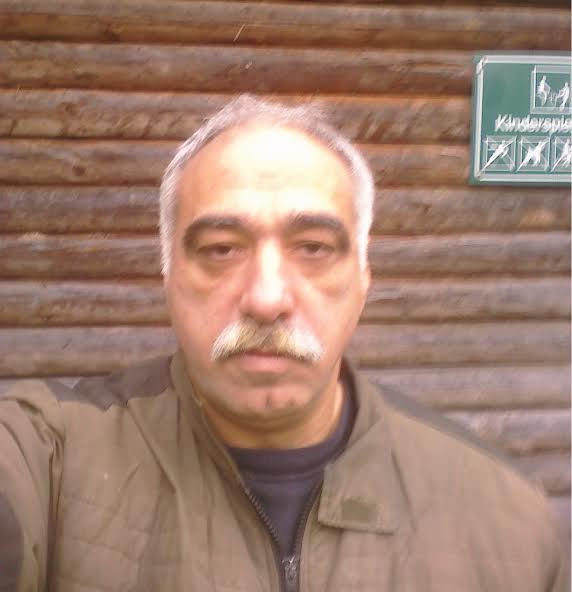
Charles (Manos) Artaxes joins “A Sclerotic Goes to War”

January 27, 2014

(It is with great pleasure and gratitude that I announce a new editor who has joined me and Dan Miller in keeping this the best site online covering the Iran/Israel conflict.  Welcome, Manos! – JW )

artaxes

Born to Greek parents, I live since my earliest childhood in Germany.
After having worked for about a decade in different jobs I completed my education and got my university-entrance diploma.
During the following side tour in university life, the world of science and higher mathematics I decided to abandon the pursuit of an academic career and instead pursue my lifetime passion which is the programming of computers. A choice that suited my fascination with the abstract world.

Since the late 90s I have been developing software architecture and programming software as a software developer for different companies and industries like manufacturing, trade and educational institutions with a focus on database-, internet- and advanced .Net applications.
Currently I’m working as a software developer for a big multinational company on a permanent basis.

Other than that I enjoy nature, hiking, good food and intellectually stimulating conversations in good company.

The aftermath of 9/11 caused me to study the causes of islamic terrorism and resulted in my awareness and keen interest in Israel’s political situation especially vis a vis Iran.

After having created my own blog I ended up spending most of the time commenting and participating on this site.

That fact and my interest in Israel’s and therefore the West’s future convinced me that I might as well become an associate editor on this great site.

Hey Stupid! It’s Not About Nukes, It’s About Life and Death

January 27, 2014

Faster, Please! » Hey Stupid! It’s Not About Nukes, It’s About Life and Death.

January 26th, 2014 – 7:18 pm

Michael Ledeen

There are none so blind as those who will not see, and hardly anyone wants to see Iran for what it is:  an evil regime bound and determined to dominate and destroy us, our friends and our allies. 

The evidence is luminously clear, but most all of our attention has focused, as usual, on the nuclear issue.  Did the Iranians promise to stop enriching uranium or “dismantle” some of the components of their nuclear program?  How many Western sanctions are being eased or lifted in exchange? And on and on…

We don’t know the answers to these questions, as the text of the agreement is secret.  However, we do know that the Iranians now have six months — the sort of deadline that often slides — to reach a “final” agreement with the 5 + 1 countries.

We can expect the Iranians to prolong and exploit this period to their advantage and our peril.  They’ve already begun. The Iranian regime is expanding its regional and global power, killing its domestic enemies, and subverting and intimidating Middle Eastern nations that are reluctant to bend to its will.  These matters require serious Western attention, but they aren’t getting much.  For us, it’s all about nukes and sanctions.

Just take a few of their major actions:

● A few days ago, Mohammad Reza Naghdi, the head of the Basij– a highly ideological militia under the umbrella of the Iranian Revolutionary Guards Corps — publicly announced that Iran had created Basij units in Egypt, Jordan, Lebanon, and “Palestine.”  This means that the world’s leading sponsor of terrorism has put paramilitary forces on Israel’s borders.

● In a closely related matter, Iran has taken a giant step toward establishing control over Lebanon.  A week ago, Saad Hariri, a key Sunni leader long opposed to Iranian influence and a declared enemy of Iran’s close ally Bashar Assad, said he is willing to form a government with Hezbollah, an Iranian proxy.  Hariri made this grim announcement in the Hague, where he was attending the trial of four Hezbollahis accused of murdering his father in 2005.  It came soon after the Beirut assassination of his close advisor, Mohamad Chatah, during the Christmas holidays.  The murder was widely blamed on Hezbollah.

● In Syria, where Iran is effectively in command of the pro-Assad forces, the slaughter of opposition forces and innocent civilians continues unabated.  Now that chemical weapons have been banned (although the opposition continues to claim they are still being used), more conventional weapons of mass destruction — like the “barrel bombs” — are being dropped on opposition centers in and around Aleppo, and elsewhere regime enemies are being starved to death.

● In Iran itself, the tempo of executions is surging, as it has for more than a year.  Hardly a day goes by without an announcement of multiple hangings, and those who closely follow this nasty business invariably find that the real numbers are significantly higher than the official ones.  Even the UN has taken notice, but the dips and businessmen are jockeying for position to make deals with Zarif and Rouhani.

● Iran continues its activities in our hemisphere, working ever more closely with Uruguay and Bolivia and continuing its operational activities with Venezuela.  According to the Uruguayan foreign minister, his country holds “identical view on international affairs” with Tehran.

● Finally, Iranian-sponsored terrorists continue to plot very nasty operations against us.  There’s a court case under way, involving two men arrested in Canada and another in New York.  They are accused of planning to attack a passenger train traveling between the two countries.  According to documents made public in Canada, one of the two Canadians was trained in Iran.

While Iranian President Rouhani and Foreign Minister Zarif whisper sweet words to reporters and businessmen, and even dangle the possibility of reopening the American Embassy in Tehran, the regime continues to wage war against us and our friends and allies.  Instead of simply crunching numbers on centrifuges and sanctions, it behooves serious strategists to pay attention to Iranian activity, now as ever aimed at our global defeat.

Our former close friends in the area know full well what’s going on, and they are acting accordingly.  The Gulf countries have just agreed to unify the command of their armed forces, creating an army of roughly 100,000 men to defend themselves against the ever-more threatening crowd around Supreme Leader Ali Khamenei.

Anyone with minimal understanding of human nature knows where all this is headed:  to ever more violence, and eventually to a war with Iran that everyone says they don’t want.  The hell of it is that the regime has never been so riven with internal conflict as it is today, as the various factions maneuver for position in the succession struggle that has intensified over the past couple of years.  The wave of executions is a sign of weakness and fear, not evidence of a regime that is firmly in control.  If Khamenei and Rouhani were confident they were firmly in control of Iran, they would fulfill some of Rouhani’s “moderate” promises, from greater rights for women to greater press and assembly freedoms, to release of political prisoners.  Instead they are nastier than in Ahmadinejad’s time.

If we were serious, we would support the oppressed people of Iran instead of making deals with their evil tyrants.  But, as throughout the past 35 years, our leaders keep trying to reach that elusive grand bargain with the mullahs.  Our leaders have confused the Iranians’ bark with a real ability to bite, when the sharpest teeth in Iran belong to the people.  As Winston Churchill once remarked, “Dictators ride to and fro upon tigers which they dare not dismount. And the tigers are getting hungry.”

I’m not holding my breath for Obama to embrace the cause of democratic revolution in Iran.  He’s already abandoned the freedom fighters from Tunis to Tehran, and from Aleppo to Cairo.  But he’s losing.  His pals in the Muslim Brotherhood have been routed, Tunisia has turned around, and his best friend in the region, Turkey’s Erdogan, is beginning to sense a hard wall at his back.  Life is full of surprises, sometimes even pleasant ones.  Obama’s betrayals may paradoxically be catalyzing revolutionary change more powerfully than his support could have accomplished.

Or not.  You never know.  But it’s wild out there…