Archive for January 3, 2014

Off Topic: Netanyahu calls out Palestinian incitemet in front of Kerry

January 3, 2014

Netanyahu calls out Palestinian incitemet in front of Kerry – YouTube.

U.S. Secretary of State John Kerry returned to the Middle East on Thursday as he continue efforts to reach a “framework agreement” between Israel and the Palestinians. After landing at Ben-Gurion Internation Airport, Kerry went to Jerusalem, where he met with Prime Minister Benjamin Netanyahu.

Kerry was set to met with Palestinian Authority President Mahmoud Abbas in Ramallah on Friday.

In a joint press conference with Netanyahu on Thursday, Kerry said the goal of his latest trip was “to narrow the differences on a framework that will provide the agreed guidelines for permanent status negotiations.”

“This will take time and it will take compromise from both sides, but an agreed framework would be a significant breakthrough,” Kerry said. “It would address all of the core issues. It would create the fixed, defined parameters by which the parties would then know where they are going and what the end result can be. It would address all of the core issues that we have been addressing since day one, including borders, security, refugees, Jerusalem, mutual recognition, and the end of conflict and of all claims.”

Wary of criticism in Israel regarding “U.S. pressure,” Kerry stated he had come to “facilitate the parties’ own efforts,” rather than impose U.S. ideas.

“In the weeks and months ahead, both sides are going to need to make tough choices to ensure that peace is not just a possibility but is a reality for Israelis and Palestinians for now and for future generations,” Kerry said.

“It’s a tough road,” Kerry said. “But this is not mission impossible.”

“The commitment of the United States to Israel is ironclad,” Kerry said. “We know that Israel has to be strong to make peace. And we also know that peace will make Israel stronger not just with its near neighbors, but throughout the world.”

Kerry praised Netanyahu for making a “very difficult decision,” referring perhaps to Israel’s release of 26 Palestinian prisoners earlier this week.

Kerry also praised both Netanyahu and Palestinian Authority President Mahmoud Abbas for continuing negotiations despite the pressure they faced.

Standing beside Kerry, Netanyahu questioned the commitment of the Palestinians to reaching a peace agreement, accusing Palestinian leaders of orchestrating a campaign of “rampant” incitement against Israel.

“The people of Israel and I are prepared to make such a historic peace, but we must have a Palestinian partner who’s equally prepared to make this peace,” Netanyahu said. “Peace means ending incitement; it means fighting terrorism and condemning terrorism; it means recognizing Israel as the nation-state of the Jewish people; it means meeting Israel’s security needs; and it means being prepared to truly end the conflict once and for all. If we’re to succeed in our joint effort, President Abbas must reject terror and embrace peace. I hope he doesn’t miss again the opportunity to give Israelis and Palestinians a better future.”

“A few days ago in Ramallah, President Abbas embraced terrorists as heroes,” Netanyahu said. “To glorify the murderers of innocent women and men as heroes is an outrage. How can President Abbas … say that he stands against terrorism when he embraces the perpetrators of terrorism and glorifies them as heroes?”

On Friday morning, Kerry met with Foreign Minister Avigdor Lieberman in Jerusalem.

Off Topic: ‘The New York Times’ destroys Obama

January 3, 2014

Column one: ‘The New York Times’ destroys Obama | JPost | Israel News.

By CAROLINE B. GLICK

01/02/2014 21:09

Last week, the Times published account of Benghazi terrorist strike, criticizing Obama’s counterterrorism strategy and his policy in the Middle East.
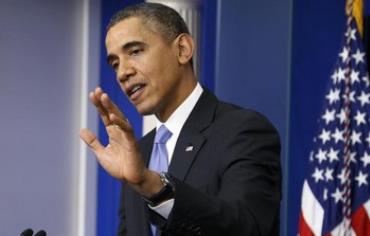
US President Barack Obama gestures during news conference

US President Barack Obama gestures during news conference Photo: REUTERS

The New York Times just delivered a mortal blow to the Obama administration and its Middle East policy.

Call it fratricide. It was clearly unintentional.

Indeed, is far from clear that the paper realizes what it has done.

Last Saturday the Times published an 8,000-word account by David Kirkpatrick detailing the terrorist strike against the US Consulate and the CIA annex in Benghazi, Libya, on September 11, 2012. In it, Kirkpatrick tore to shreds the foundations of President Barack Obama’s counterterrorism strategy and his overall policy in the Middle East.

Obama first enunciated those foundations in his June 4, 2009, speech to the Muslim world at Cairo University. Ever since, they have been the rationale behind US counterterror strategy and US Middle East policy.

Obama’s first assertion is that radical Islam is not inherently hostile to the US. As a consequence, America can appease radical Islamists. Moreover, once radical Muslims are appeased, they will become US allies, (replacing the allies the US abandons to appease the radical Muslims).

Obama’s second strategic guidepost is his claim that the only Islamic group that is a bona fide terrorist organization is the faction of al-Qaida directly subordinate to Osama bin Laden’s successor, Ayman al-Zawahiri. Only this group cannot be appeased and must be destroyed through force.

The administration has dubbed the Zawahiri faction of al-Qaida “core al-Qaida.” And anyone who operates in the name of al-Qaida, or any other group that does not have courtroom-certified operational links to Zawahiri, is not really al-Qaida, and therefore, not really a terrorist group or a US enemy.

These foundations have led the US to negotiate with the Taliban in Afghanistan. They are the rationale for the US’s embrace of the Muslim Brotherhood worldwide. They are the basis for Obama’s allegiance to Turkey’s Islamist government, and his early support for the Muslim Brotherhood-dominated Syrian opposition.

They are the basis for the administration’s kneejerk support for the PLO against Israel.

Obama’s insistent bid to appease Iran, and so enable the mullocracy to complete its nuclear weapons program. is similarly a product of his strategic assumptions. So, too, the US’s current diplomatic engagement of Hezbollah in Lebanon owes to the administration’s conviction that any terror group not directly connected to Zawahiri is a potential US ally.

From the outset of the 2011 revolt against the regime of Muammar Gaddafi in Libya, it was clear that a significant part of the opposition was composed of jihadists aligned if not affiliated with al-Qaida. Benghazi was specifically identified by documents seized by US forces in Iraq as a hotbed of al-Qaida recruitment.

Obama and his advisers dismissed and ignored the evidence. The core of al-Qaida, they claimed, was not involved in the anti-Gaddafi revolt. And to the extent jihadists were fighting Gaddafi, they were doing so as allies of the US.

In other words, the two core foundations of Obama’s understanding of terrorism and of the Muslim world were central to US support for the overthrow of Muammar Gaddafi.

With Kirkpatrick’s report, the Times exposed the utter falsity of both.

Kirkpatrick showed the mindset of the US-supported rebels and through it, the ridiculousness of the administration’s belief that you can’t be a terrorist if you aren’t directly subordinate to Zawahiri.

One US-supported Islamist militia commander recalled to him that at the outset of the anti-Gaddafi rebellion, “Teenagers came running around… [asking] ‘Sheikh, sheikh, did you know al-Qaida? Did you know Osama bin Laden? How do we fight?” In the days and weeks following the September 11, 2012, attack on the US installations in Benghazi in which US ambassador to Libya Christopher Stevens and four other Americans were killed, the administration claimed that the attacks were not carried out by terrorists. Rather they were the unfortunate consequence of a spontaneous protest by otherwise innocent Libyans.

According to the administration’s version of events, these guileless, otherwise friendly demonstrators, who killed the US ambassador and four other Americans, were simply angered by a You- Tube video of a movie trailer which jihadist clerics in Egypt had proclaimed was blasphemous.

In an attempt to appease the mob after the fact, Obama and then-secretary of state Hillary Clinton were filmed in commercials run on Pakistani television apologizing for the video and siding with the mob against the movie-maker, who is the only person the US has imprisoned following the attack. Then-ambassador to the UN and current National Security Adviser Susan Rice gave multiple television interviews placing the blame for the attacks on the video.

According to Kirkpatrick’s account of the assault against the US installations in Benghazi on September 11, 2012, the administration’s description of the assaults was a fabrication. Far from spontaneous political protests spurred by rage at a YouTube video, the attack was premeditated. US officials spotted Libyans conducting surveillance of the consulate nearly 15 hours before the attack began.

Libyan militia warned US officials “of rising threats against Americans from extremists in Benghazi,” two days before the attack.

From his account, the initial attack – in which the consulate was first stormed – was carried out not by a mob, but by a few dozen fighters. They were armed with assault rifles. They acted in a coordinated, professional manner with apparent awareness of US security procedures.

During the initial assault, the attackers shot down the lights around the compound, stormed the gates, and swarmed around the security personnel who ran to get their weapons, making it impossible for them to defend the ambassador and other personnel trapped inside.

According to Kirkpatrick, after the initial attack, the organizers spurred popular rage and incited a mob assault on the consulate by spreading the rumor that the Americans had killed a local. Others members of the secondary mob, Kirkpatrick claimed, were motivated by reports of the video.

This mob assault, which followed the initial attack and apparent takeover of the consulate, was part of the predetermined plan. The organizers wanted to produce chaos. As Kirkpatrick explained, “The attackers had posted sentries at Venezia Road, adjacent to the [consulate] compound, to guard their rear flank, but they let pass anyone trying to join the mayhem.”

According to Kirkpatrick, the attack was perpetrated by local terrorist groups that were part of the US-backed anti-Gaddafi coalition. The people who were conducting the surveillance of the consulate 15 hours before the attack were uniformed security forces who escaped in an official car.

Members of the militia tasked with defending the compound participated in the attack.

Ambassador Stevens, who had served as the administration’s emissary to the rebels during the insurrection against Gaddafi, knew personally many of the terrorists who orchestrated the attack.

And until the very end, he was taken in by the administration’s core belief that it was possible to appease al-Qaida-sympathizing Islamic jihadists who were not directly affiliated with Zawahiri.

As Kirkpatrick noted, Stevens “helped shape the Obama administration’s conviction that it could work with the rebels, even those previously hostile to the West, to build a friendly, democratic government.”

The entire US view that local militias, regardless of their anti-American, jihadist ideologies, could become US allies was predicated not merely on the belief that they could be appeased, but that they weren’t terrorists because they weren’t al-Qaida proper.

As Kirkpatrick notes, “American intelligence efforts in Libya concentrated on the agendas of the biggest militia leaders and the handful of Libyans with suspected ties to al-Qaida. The fixation on al-Qaida might have distracted experts from more imminent threats.”

But again, the only reason that the intelligence failed to notice the threats emanating from local US-supported terrorists is because the US counterterrorist strategy, like its overall Middle East strategy, is to seek to appease all US enemies other than the parts of al-Qaida directly commanded by Ayman al-Zawahiri.

Distressingly, most of the discussion spurred by Kirkpatrick’s article has ignored the devastating blow he visited on the intellectual foundations of Obama’s foreign policy. Instead, the discussion has focused on his claim that there is “no evidence that al-Qaida or other international terrorist group had any role in the assault,” and on his assertion that the YouTube video did spur to action some of the participants in the assault.

Kirkpatrick’s claim that al-Qaida played no role in the attack was refuted by the Times’ own reporting six weeks after the attack. It has also been refuted by congressional and State Department investigations, by the UN and by a raft of other reporting.

His claim that the YouTube video did spur some of the attackers to action was categorically rejected last spring in sworn congressional testimony by then-deputy chief of the US mission to Libya Gregory Hicks.

Last May Hicks stated, “The YouTube video was a non-event in Libya. The video was not instigative of anything that was going on in Libya. We saw no demonstrators related to the video anywhere in Libya.”

Kirkpatrick’s larger message – that the reasoning behind Obama’s entire counterterrorist strategy and his overall Middle East policy is totally wrong, and deeply destructive – has been missed because his article was written and published to whitewash the administration’s deliberate mischaracterization of the events in Benghazi, not to discredit the rationale behind its Middle East policy and counterterrorism strategy. This is why he claimed that al-Qaida wasn’t involved in the attack. And this is why he claimed that the YouTube video was a cause for the attack.

This much was made clear in a blog post by editorial page editor Andrew Rosenthal, who alleged that the entire discourse on Benghazi is promoted by the Republicans to harm the Democrats, and Kirkpatrick’s story served to weaken the Republican arguments. In Rosenthal’s words, “The Republicans hope to tarnish Democratic candidates by making it seem as though Mr. Obama doesn’t take al-Qaida seriously.”

So pathetically, in a bid to defend Obama and Clinton and the rest of the Democrats, the Times published a report that showed that Obama’s laser-like focus on the Zawahiri-controlled faction of al-Qaida has endangered the US.

By failing to view as enemies any other terror groups – even if they have participated in attacks against the US – and indeed, in perceiving them as potential allies, Obama has failed to defend against them. Indeed, by wooing them as future allies, Obama has empowered forces as committed as al-Qaida to defeating the US.

Again, it is not at all apparent that the Times realized what it was doing. But from Israel to Egypt, to Iran to Libya to Lebanon, it is absolutely clear that Obama and his colleagues continue to implement the same dangerous, destructive agenda that defeated the US in Benghazi and will continue to cause US defeat after US defeat.

caroline@carolineglick.com

2014 political forecast

January 3, 2014

Israel Hayom | 2014 political forecast.

Obama will cut whatever deals necessary to postpone Iran’s nuclear bomb production until after he leaves office.

David Weinberg

One year ago, I accurately forecasted in these pages that U.S. President Barack Obama would cut a deal with Iran over Israel’s objections, allowing Tehran to keep its nuclear enrichment facilities and freeing itself of sanctions by promising to halt 20 percent enrichment. Precisely what happened.

I also correctly calculated that Washington would wedge Israel and the Palestinian Authority into renewed peace talks, and that Prime Minister Netanyahu would again freeze plans to build E1. I estimated that the Muslim Brotherhood’s Mohamed Morsi wouldn’t last long as Egyptian president. Bingo.

But I was wrong in expecting a quick breakup of the current Israeli coalition government. (Wait a bit more…) I was also wrong, unfortunately, in envisaging the election of a religious Zionist chief rabbi. And I erred, fortunately, in reckoning that the Syrian civil war would spill over into real conflict on the Golan Heights.

Looking into my crystal ball for the year ahead, this is what I see:

Obama: The U.S. president truly abhors nuclear proliferation. So he really does not want the Iranians to test or produce a nuclear bomb on his watch. In Geneva, he’ll cut whatever deals are furthermore necessary to postpone Tehran’s bomb production for a few years; three years to be exact. As for the rest of us, well, Obama doesn’t really care about Israel, or the Palestinians, Egyptians, Syrians and Saudis. He isn’t going to invest any more American “blood, treasure and tears” in the Middle East. Killer drones against the al-Qaida types do the work from afar just fine. In any case, Obama knows that his legacy boils down to this and this only: Whether or not Americans can keep their existing health insurance plans.

U.S. Secretary of State John Kerry: All this Mideast peace-processing is a prelude to Kerry’s planned run in the Democratic primaries — against Hillary Clinton — for president of the United States. He will be a formidable contender, just as he is a formidable diplomatic juggernaut now. Of course, it’s easy for Kerry to beat up on Netanyahu and Palestinian Authority President Mahmoud Abbas, the two Mideast actors most dependent on America. Had he challenged the Russians or Iranians (as he should have), it would’ve been tougher going. And then he would have been better prepared to take on and beat Hillary. She will be no pushover.

Netanyahu: The prime minister has “crossed the Rubicon” and no longer feels any residual political loyalty to Judea and Samaria residents or to hard-right voters. His willingness to rollback Yesha is easily deduced from his insistence on an Israeli military presence only in the Jordan Valley. While he has no near-term plans to drag Israelis from their homes in Bet El or Hebron, his imminent agreement to John Kerry’s formula for a Palestinian state based on the 1967 lines will mark a further retrogression in Israel’s diplomatic stance. Netanyahu thinks that a rhetorical “framework agreement” with the Americans and the Palestinians is the best way to manage the conflict for several years hence. He thinks it will restrict Palestinian options, prevent the PA from criminalizing Israel in international legal forums, and ward-off European boycotts. But I think he is playing with fire, and that the gambit will backfire on Israel. The world’s demands on Israel will only increase following the framework agreement; and, after feting Israel for a few days and praising Netanyahu for a few minutes, the world will be back in no time at all to threaten Israel with boycotts unless it acts on its latest concessions.

Abbas: The Palestinian leader is getting very old and frail, and there is no succession plan in place, short of a bitter free-for-all with Hamas leaders in the mix. Abbas is searching for a legacy, which could be a “framework” deal with Israel but could also easily be more unilateral moves against Israel on the global front. Either way, Abbas has got to hurry; I’m not sure he’ll be around by this time next year. In the meantime, the Palestinian Authority continues to huff and puff and blow evil smoke at Israel while raking-in the international aid dollars, euros, krones, yens, francs and deutschmarks. It’s almost as hard to account for all that money as it is to count the number of times that Saeb Erakat has quit as chief Palestinian negotiator.

Defense Minister Moshe Ya’alon: “Bogie,” as he is often called, is proving to be the most clear-eyed and steady politician in the cabinet. While everybody else is running around scared of an impending “diplomatic tsunami” whereby Israel could be branded a “rogue state” for being on the wrong side of the international consensus on both the Iranian and Palestinian issues, Bogie is calm. When Tzipi Livni screeches “gevalt, we’re going to be boycotted” and drives for Israeli withdrawal from Judea and Samaria, Ya’alon responds logically that “In life, everything is a question of alternatives. If the alternatives are a European boycott, or rockets from Nablus, Jenin and Ramallah on our strategic front, and on Ben-Gurion International Airport — then indeed a European boycott is preferable.” Let’s hope that Ya’alon holds firm.

Former Minister Moshe Kahlon: The Likudnik who brought down cellphone costs plans to cash in on his popularity, simmering social-economic discontent and on disenchantment with Yesh Atid. He’ll be back this year with a new political party, accompanied by trade unionist Ofer Eini, economist Manuel Trajtenberg, generals Gabi Ashkenazi and/or Shlomo Yanai, and other prominent figures. Netanyahu, Yair Lapid, Isaac Herzog and Aryeh Deri should be worried. Israelis love new political parties, and Kahlon’s fresh lineup could tap into public disgruntlement with alacrity.

President Shimon Peres: This wily 90-year-old plans to come roaring back into Israeli politics when his term as president of Israel ends this summer. He will set himself up as a shadow prime minister to fervently advance his plans for peace with the Palestinians. He will convene international conferences to wedge Netanyahu against the wall, and cobble-together new Israeli political slates to challenge Netanyahu at the polls. Expect no more of the namby-pamby Peres-sponsored “Tomorrow” conferences, where “bold” entrepreneurs, “provocative” sexologists, and “prominent” European intellectuals talked mumbo-jumbo about “bottling the Jewish genius” and “generating the leaders of tomorrow.” Instead, expect an aggressive, focused Peres with a killer instinct, out to remake the Middle East and save Israel — as only he can.

Jewish Agency Chairman Natan Sharansky: By dint of personality and experience, in deference to Zionist history, and to boost global Jewish unity — Natan should be the next president of the State of Israel. His election should be a slam dunk. Alas, Minister Silvan Shalom of Likud and MK Binyamin (Fuad) Ben-Eliezer of Labor each have better chances of getting the necessary votes in Knesset to become president, because of narrow political calculations. Silvan’s election would free up three ministerial portfolios (regional cooperation; Negev and Galilee development; national infrastructure, energy, and water) for other Likud MKs. Fuad can pull in votes from across the political spectrum, including the Center, Left, and Arabs. Too bad. I’m still rooting for Natan.

Successful Arrow 3 missile interceptor trial carried out

January 3, 2014

Successful Arrow 3 missile interceptor trial carried out – Israel News, Ynetnews.

Second interceptor test was conducted Friday morning from Palmachim IAF base. System is designed to reinforce Israel’s protective layer against long-ranged missile threats

Yoav Zitun

Published: 01.03.14, 11:03 / Israel News

Another successful trial of the Arrow 3 interceptor was carried out at 8 am Friday morning. It was the interceptor’s second flight test and it was conducted within a trials field in the Palmachim Air Force base.

The main advantage of the Arrow 3 interceptor is in its ability to perform a change of flight direction while flying towards long-ranged target missiles.

The test was performed jointly by the Israeli Defense Ministry and the American Missile Defense Agency.

Prime Minister Benjamin Netanyahu praised the security establishment for its successful trial of the Arrow 3 system, “a trial that results from American-Israeli cooperation.”

Netanyahu, who met with US Senators John McCain, Lindsey Graham and John Barrasso, added: “We will continue developing the means to protect the citizens of Israel and to secure the future of the state of Israel.”

Among those who closely followed the flight trial were Israel Aerospace Industries (IAI) CEO Joseph Weiss, IAI’s Malam factory workers who produced the missile and IAI’s Elta company workers who created the system’s radar system Green Pine.

The trial tested the capabilities and performance of the new Arrow 3 interceptor, which is considered innovative and evolutionary among worldwide interceptors. These capabilities will allow the existing operational Arrow system components to more effectively deal with future threats on the State of Israel.

Arrow 3 trial (Photo: Defense Ministry)


The interceptor was successfully launched and performed all flight phases in the atmosphere and space, according to plan and pre-defined trial objectives. The Arrow 3 system is a central part in the multi-layered defense system, which is designed and led by the Defense Ministry.

‘Israeli operational milestone’

The multi-layered system includes four levels of defense: Iron Dome (operational), Magic Wand (in development), Arrow 2 (operational) and Arrow 3 (in development).

The Defense Ministry said: “The trial’s success is an important milestone in the operational capability of the State of Israel to protect itself against expected threats in the region. It is another trial in the development process, which will be continued in the next few years.” It was further added that in the future, additional trials will be conducted prior to the operation service of the system.

The main contractor for the development of the Arrow weapons and interception system is the IAI’s Malam, which work in cooperation with Beoing.

Last February, a first successful trial of the Arrow 3 system was carried out. Within the previous trial, the missile was launched from the Palmachin base towards the Mediterranean Sea, stayed in mid-air for six minutes and at its peak crossed the atmosphere and opened its second rocket engine.

Arrow 3 is the Israeli solution to intercepting long-ranged missiles that exit the atmosphere. The improved missile will be able to stand a future scenario of Iranian launch of a ballistic missile with a nuclear warhead.

The Arrow 3 missile is not intended for intercepting Syrian Scud missiles. In order to deal with that threat, Arrow 2 batteries were deployed in central and northern Israel.

Hezbollah moved advanced antiship missile systems into Lebanon, U.S. officials say

January 3, 2014

Hezbollah moved advanced antiship missile systems into Lebanon, U.S. officials say – Diplomacy and Defense Israel News | Haaretz.

Iran-backed organization smuggling powerful guided-missile systems piece by piece from Syria in order to evade secretive Israeli air campaign designed to stop them, U.S. officials say.

By | Jan. 3, 2014 | 7:45 AM

The P-800 Yakhont supersonic cruise missile.

The P-800 Yakhont supersonic cruise missile.

U.S. officials believe members of Hezbollah, the militant group backed by Iran, are smuggling advanced guided-missile systems into Lebanon from Syria piece by piece to evade a secretive Israeli air campaign designed to stop them.

Some components of a powerful antiship missile system have already been moved to Lebanon, according to previously undisclosed intelligence, while other systems that could target Israeli aircraft, ships and bases are being stored in expanded weapons depots under Hezbollah control in Syria, say current and former U.S. officials.

U.S. and Israeli officials say the airstrikes have stopped shipments of ground-to-air SA-17 antiaircraft weapons and ground-to-ground Fateh-110 rockets to Hezbollah locations in Lebanon. Some originated from Iran, others from Syria itself.

Nonetheless, as many as 12 antiship guided-missile systems may now be in Hezbollah’s possession inside Syria, according to U.S. officials briefed on the intelligence. Israel targeted those Russian-made systems in July and again in October with mixed results, according to U.S. damage assessments.

The U.S. believes Hezbollah has smuggled at least some components from those systems into Lebanon within the past year, including supersonic Yakhont rockets, but that it doesn’t yet have all the parts needed there. “To make it lethal, a system needs to be complete,” said a senior defense official.

On July 5, Israel targeted some of the Yakhonts at a Syrian base outside the coastal city of Latakia. Afterward, Israeli and U.S. spy satellites saw something unexpected. Ground forces destroyed military equipment at the bombing site to try to trick Israel into believing it had successfully taken out the launchers, officials briefed on the intelligence say.

A U.S. damage assessment concluded that Israel had taken out only part of its target, and that the Yakhont missiles and launchers appeared to have been moved out of the line of fire. On October 30, Israel targeted them again, U.S. officials said.

Israeli officials have told their U.S. counterparts that the strikes damaged some Yakhont components, while others are stuck in warehouses in Syria.

“We don’t think they have all the components in Lebanon to have a complete system,” said a senior U.S. defense official.

U.S. defense officials said they believe Hezbollah has tried to throw off Israel’s high-tech hunt by switching off and on communications and power networks along the border.

Hezbollah Moving Long-Range Missiles From Syria to Lebanon, an Analyst Says – NYTimes.com

January 3, 2014

Hezbollah Moving Long-Range Missiles From Syria to Lebanon, an Analyst Says – NYTimes.com.

BEIRUT, Lebanon — Amid the chaos of Syria’s civil war, Hezbollah has been moving long-range missiles to Lebanon from bases where it had stored them inside Syria, including long-range Scud D missiles that can strike deep into Israel, according to an Israeli national security analyst.

The analyst, Ronen Bergman, who has close contacts with Israeli intelligence officials, said Thursday that despite Israel’s undeclared campaign of airstrikes in Syria to stop new deliveries, most of the long-range surface-to-surface missiles given to Hezbollah by its allies Iran and Syria have been disassembled and moved to Lebanon.

American intelligence analysts have also concluded that members of Hezbollah, the Lebanese Shiite militia, are smuggling components of advanced Russian-made antiship missile systems piecemeal into Lebanon from war-stricken Syria to avoid an Israeli air campaign, a United States official said Thursday.

As many as 12 Russian-made antiship cruise missile systems may now be in Hezbollah’s possession inside Syria, according to the American official, who said that the organization had smuggled at least some components from those systems into Lebanon within the past year, but that it did not yet have all the parts needed there. The transfers were first reported Thursday night by The Wall Street Journal.

Hezbollah, which is also Lebanon’s strongest political party, has a network of bases that were built inside Syria, near the border with Lebanon, to give the group strategic depth and to store the missiles, Mr. Bergman said. But with a nearly three-year insurgency threatening President Bashar al-Assad of Syria, an ally of Hezbollah, keeping the missiles in Syria is no longer as secure, Mr. Bergman said.

The missiles being moved, he said, include Scud D’s, shorter-range Scud C’s, medium-range Fateh rockets that were made in Iran, Fajr rockets and antiaircraft weapons that are fired from the shoulder.

Israel has struck inside Syria at least five times in 2013, seeking to destroy weapons systems bound for Hezbollah.

Israel carried out an air attack in Syria in July that targeted advanced Yakhont antiship cruise missiles, which could threaten Israeli naval forces. American analysts later determined that the strikes did not destroy all the missiles systems.

In addition to targeting the Yakhont missiles, Israel carried out an airstrike in late January 2013 aimed at another system provided by Russia: a convoy of SA-17 surface-to-air missiles that Israeli officials believed were destined for Hezbollah.

In May 2013, Israeli warplanes conducted two days of airstrikes that targeted, among other things, a shipment of Fateh-110 missiles — mobile surface-to-surface missiles that had been provided by Iran and flown to Damascus, Syria, on transport planes that passed through Iraqi airspace.

Israel is concerned that Hezbollah not acquire what it considers game-changing strategic weapons during the Syria chaos.

Mr. Bergman said that on the first day of the war between Hezbollah and Israel in 2006, the chief of the intelligence agency Mossad at the time, Meir Dagan, advised the government not to start an attack on Hezbollah in Lebanon without first hitting the militia’s bases in Syria, which were built on the strategy that Israel would not dare to strike Syria. The bases were believed to contain much of Hezbollah’s long-range missile capability, Mr. Bergman said.

Mr. Bergman’s account corroborated one given by a Syrian military officer in December 2012, at a time when rebels seemed to have momentum in their advances on Damascus.

The officer, who spoke over Skype from Damascus, said he no longer supported the government and wanted to defect but was waiting for the right moment, in the meantime acting as an informant for the rebels. He said government forces were dismantling strategic weapons and sending them to two locations “for safekeeping”: the coastal province of Tartus that the government holds and south Lebanon, where Hezbollah holds sway.

The weapons, he said, were being sent in tractor-trailers with special coolers. The officer said his information came from another officer who was loyal to the government and with whom he had close relations, and from his own limited observations of the trucks being used to move the weapons.

After several contacts, the officer could no longer be reached, and the information could not be verified.

Anne Barnard reported from Beirut, and Eric Schmitt from Washington. Hwaida Saad contributed reporting.

IAF strikes Gaza in response to rocket fire

January 3, 2014

IAF strikes Gaza in response to rocket fire | The Times of Israel.

After rocket explodes in southern Israel, rocket launchers targeted in north of strip

January 3, 2014, 12:52 am

Illustrative photo of IAF F-15s flying in formation. (photo credit: Moshe Shai/Flash90)

Illustrative photo of IAF F-15s flying in formation. (photo credit: Moshe Shai/Flash90)

Israeli jets bombed targets in the northern Gaza Strip Thursday night, hours after a rocket launched from Gaza landed in the Negev Regional Council.

There were no immediate reports of injuries. The IDF confirmed it struck the Gaza Strip in response to the rocket fire earlier in the evening, which caused no injuries or damage.

“In response to rocket fire towards Israel, an IAF aircraft targeted a terror infrastructure site in the central Gaza Strip and three concealed rocket launchers in the northern Gaza Strip,” the IDF said in a statement. Twitter users in the Gaza Strip reported at least four explosions.

The exchange of fire was the latest in a series of recent security incidents along the volatile Israeli-Gaza border.

The missile came several hours after a Palestinian teen in Gaza who attempted to damage the border fence was shot and injured by IDF soldiers operating nearby, the Israeli military said.

It was not clear if there was a connection between the rocket fire and the shooting.

A group of suspects had approached a buffer zone near the fence from the Gaza side and were attempting to damage it, an IDF spokesperson told AFP, adding that after “numerous” warnings to desist, “soldiers then resorted to aiming fire at the individuals’ lower extremities,” and reported “one hit.”

A Hamas official later confirmed that a 16-year old male was wounded in the leg during the incident and had been hospitalized in moderate condition.

On Tuesday, an IDF patrol operating along the Gaza border came under fire from an unidentified source in the Hamas-controlled territory Tuesday night. There were no injuries or damage.

The incidents come amid a week of renewed violence along the border. A rocket launched from Gaza exploded Monday evening in the western Negev, causing no injuries or damage.

Last week, the Israeli Air Force struck targets in Gaza after several rockets hit Israeli territory, landing in open areas.

Last Tuesday, a Defense Ministry civilian worker was killed by sniper fire from the Gaza Strip, prompting retaliatory attacks by the IAF that, Palestinian media reported, killed a Palestinian toddler and her father.


