Archive for January 2014

Eilat again under missile attack from Sinai

January 31, 2014

Eilat again under missile attack from Sinai.

DEBKAfile January 31, 2014, 10:32 PM (IST)

At least two explosions rocked Eilat, Israel’s southernmost town, and its environs Friday night after a siren warned of a two-missile Grad attack from Sinai. No immediate reports of casualties or damage.

Iron Dome anti-missile fire missed its target.

DEBKAfile: The Ansar Bayt al-Maqdis terrorist group allied with al Qaeda and Egypt’s Muslim Brotherhood, warned last week that Israel would be targeted in revenge for any Egyptian military strikes against its forces, i.e., Israel is held hostage by the Islamist terrorists. Earlier Friday, Egyptian Air Force fighters and helicopters bombed their hideouts in N. Sinai, killing 13 terrorists..

Terrorists Fire Rockets on Eilat

January 31, 2014

Terrorists Fire Rocket on Eilat – Defense/Security – News – Israel National News.

( This is the third time my home has come under attack since I flew to California on the 7th of Jan.  As a city which depends entirely on tourism, we are facing complete economic collapse if this continues. – JW )

( Update: Six hours later.  Nary a mention on any MSM network or cable website.  “Rockets on Jews?  Yawn…” – JW )

Two explosions and siren heard in resort city as Iron Dome intercepts a rocket.

By Elad Benari, Canada

First Publish: 1/31/2014, 9:57 PM

Eilat

Terrorists fired a rocket at the Israeli resort city of Eilat on Friday night.

Residents reported hearing two loud explosions before 10:00 p.m. local time, and a siren indicating that rockets were fired at the region was heard.

It is believed one of the explosions was caused by the Iron Dome anti-missile system which intercepted the rocket before it could hit populated areas.

Police and IDF forces are searching the area in an attempt to locate the remains of the rockets.

Ten days ago, terrorists fired two rockets at Eilat. A Sinai-based Salafist group, Ansar Bayt al Maqdis, claimed responsibility for the attack, as it did with previous attacks on the resort city.

“Our war with the enemy in Egypt has not dissuaded us from the war against the first enemy of our nation. With Allah’s help, the Jews will only see injury from us,”  the group said.

On Thursday night, Gaza-based terrorists fired a rocket at the southern Israeli city of Netivot.

The rocket exploded in an open area in the Sdot Negev Regional Council, causing no physical injuries or damages. It was the first time since Israel’s counterterrorism Operation Pillar of Defense in 2012 that a Gaza rocket struck near Netivot.

The Israeli Air Force responded to Thursday night’s attack by striking several terror-related sites in Gaza.

Off Topic: Trying to scare Israel

January 31, 2014

Column One: Trying to scare Israel | JPost | Israel News.

By CAROLINE B. GLICK

01/30/2014 22:11

As we learned from Oslo and Gaza, nothing good comes from surrendering our rights and our land.
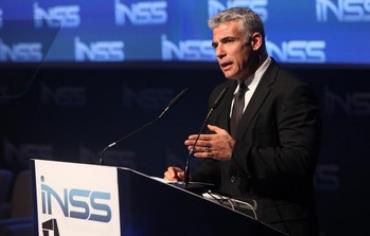
Lapid

Finance Minister Yair Lapid addresses the INSS conference in Tel Aviv, January 29, 2014. Photo: CHEN GALILI

Finance Minister Yair Lapid delivered a scary speech on Wednesday. At the Institute of National Security Studies conference, Lapid warned that if we don’t accept US Secretary of State John Kerry’s framework for negotiations, the Europeans are going to take away our money.Lapid claimed that Israel’s economic future is dependent on surrendering Jerusalem, Judea and Samaria to the PLO. If we don’t, he said, the EU will abrogate its economic association agreement with us. And such a move on Europe’s part will cause serious harm to our economy.

According to Lapid, “If negotiations with the Palestinians stall or blow up and we enter the reality of a European boycott, even a very partial one, the Israeli economy will retreat, the cost of living will rise, budgets for education, health, welfare and security will be cut [and] many international markets will be closed to us.”

On the other hand, if we give up Jerusalem, Judea and Samaria, Lapid promises that we will all get rich.

It took less than 10 minutes for Lapid’s remarks to be exposed as utter nonsense.

The EU delegation to Israel flatly denied that the EU is considering abrogating the association agreement.

“There has been absolutely no consideration in the EU of the abrogation of the association agreement. It is not in the cards,” a statement by the delegation said.

As for the economic benefits Lapid promised Israel would reap from giving in to the PLO, here too, his claims do not withstand scrutiny.

First of all, Israel’s economy will be dramatically weakened, not strengthened, by a deal with the PLO.

As Economy Minister Naftali Bennett explained last week, the establishment of a Palestinian state in Judea, Samaria and Jerusalem would cause unprecedented damage to the economy. Like the de facto Palestinian state in Gaza, such a state would serve as a launching ground for missile attacks against Israel. And from Judea and Samaria, the Palestinians would have the capacity to destroy Israel’s economy with just a few, relatively primitive projectiles.

As Bennett out it, “Imagine if just one missile per day fell on [Israel’s technology hub in] Herzliya Pituah, what that would do to Israel’s economy.

If even one plane which was supposed to land at Ben-Gurion Airport crashes [due to terrorism] per year, it would crush the Israeli economy.”

Beyond what the Palestinians would do, there is no reason to believe – and every reason to doubt – that Europe would reward Israel in any way for giving its capital and heartland to the PLO.

In remarks last week meant to counter Bennett’s statement, Justice Minister Tzipi Livni inadvertently explained the true situation Israel faces from Europe.

In Livni’s words, “Europe is boycotting [Israeli] products. And, true, it is starting with the settlements, but their problem is with Israel, which is perceived as a colonialist state, so it won’t only stop with the settlements but will [reach] Israel as a whole.”

As we learned from our experience with the 2005 withdrawal from Gaza, Israel’s actions play no role in Europe’s perception of the Jewish state.

Europe will not cease to perceive Israel as “a colonialist state” even if we remove ourselves, lock, stock and barrel to the 1949 armistice lines.

In the lead-up to the Gaza withdrawal, Livni promised that once Israel quit Gaza, its diplomatic position would improve dramatically. By ending the so-called occupation of Gaza, she argued, Israel would prove its good will, and the Europeans would stop attacking us and take our side against the Palestinians at the UN and other arenas.

In the event, not only did this not occur, but the EU refused to acknowledge that the so-called occupation of Gaza even ended. To this day, Europe castigates Israel for its mythical “occupation” of Gaza.

As Livni accidentally explained, as far as Europe is concerned, Israel’s size is not the issue. Israel is the issue. True, Israel surrendered Gaza to Palestinian terrorists and removed every Israeli civilian and soldier from the territory. But since Israel is still stronger than the terror state in Gaza, Israel is still the “occupier.”

By the same token, even if Israel were to quit Judea, Samaria and Jerusalem completely, as long as Israel remains more powerful than the Palestinians in the areas, Europe will castigate Israel as the “occupier.”

And since the Palestinians and their allies will destroy Israel if it is ever less powerful than they are, Europe will stop condemning Israel as “a colonialist state” only if Israel ceases to exist.

At any rate, since the EU is not considering abrogating the economic association agreement, and since Israel will be economically worse off if it quits Judea, Samaria and Jerusalem, why is the finance minister trying to scare us? First, he’s doing it because everyone else is doing it.

Peace Now has joined the boycott, sanctions and divestment campaign.

Livni threatens Israelis so often with economic ruin that Foreign Ministry officials are complaining that she’s giving foreigners ideas.

In Washington, the Obama administration has added the threat of Israeli economic devastation to its list of plagues that will befall the Jewish state if we don’t give up our national heartland to the PLO.

In his remarks at the World Economic Forum in Davos last week, US Secretary of State John Kerry said, “Israel’s economic juggernaut is a wonder to behold…. But a deteriorating security environment and the growing isolation that could come with it could put that prosperity at risk.”

In other words, “Nice economy you got there Israel. It’d be a real shame if anything happened to it.”

The second reason that Lapid is threatening us – along with Livni, Kerry and so many others – is that he has nothing else to say in support of the fake peace process.

Kerry’s framework for Middle East peace offers neither anything new nor anything positive for the Israeli public to support. Were Israel to follow him down his garden path, we would receive neither peace, nor demographic security, nor national security nor national prosperity.

We will not receive peace because there is no Palestinian leadership interested in making peace, and there is no significant Palestinian constituency that supports peace. As Strategic Affairs Minister Yuval Steinitz said at the INSS Wednesday, PLO chief Mahmoud Abbas is “the world’s number one anti-Semitic leader.”

Steinitz elaborated, “There is an anti-Semitic subtext prevalent throughout the Palestinian Authority’s curriculum and the children programs.

The subtext is very clear – the State of Israel and the Jews should be destroyed.

“Abbas does not actively finance terror, but he who denied the Holocaust now denies the existence of a Jewish nation and its right to a state.”

In this context, no negotiations will lead to peace. In Steinitz’s words, “There is no peace process.

If an agreement is signed with the Palestinian Authority, it will be a diplomatic agreement, not a peace agreement.”

And the vast majority of Israelis know this. And Livni, Lapid, Kerry and their ilk know we know this. So all they can do is threaten us.

The first place they went, after the promise of peace was blown up at cafes and bus stops countrywide, was demographics.

For 17 years, the Left has been relying on a falsified 1997 Palestinian census that exaggerated the Palestinian population by 50 percent, as a means of scaring Israelis into going along with its phony peace process.

Still today, Kerry, Livni, Lapid and their fellow travelers seek to intimidate us by constantly telling us that continued Israeli control over Judea, Samaria and Jerusalem will bring about Israel’s demographic demise.

But the lie at the heart of their argument is no longer possible to ignore.

As demographic expert Yoram Ettinger wrote last week in Yisrael Hayom, Jewish Israeli fertility rates are higher than Palestinian fertility rates in Judea and Samaria. In 2013, the Palestinian fertility rate was 2.91 children per woman and the Israeli Jewish fertility rate was 3.04 children per woman.

Today Jews make up 62-66 percent of the population in Judea, Samaria and sovereign Israel.

With a two to one majority, a higher birthrate, and positive immigration rates, far from being a strategic threat to Israel’s national viability, demographics are one of Israel’s strategic assets.

The only threat to Israel’s demographic stability is the two-state formula. A Palestinian state in Judea, Samaria and Jerusalem would permit the unlimited immigration of millions of foreign Arabs into its territory. Rather than securing Israel’s Jewish majority, a Palestinian state would place millions of hostile Arabs on the outskirts of a rump Israel’s major cities.

With their threat of demographic ruin losing its traction with the public, purveyors of the twostate plan now raise the threat of economic strangulation and ruin at every opportunity.

They understand that given the public’s refusal to be drawn into their fantasies about “peace dividends,” the only path before them is a mix of intimidation and political subversion. They hope that together these two tactics can force Prime Minister Binyamin Netanyahu to submit to Kerry’s dictates for Israeli territorial surrenders.

Regarding political subversion, last week Eli Lake at the Daily Beast reported that the Obama administration is appealing to retired Israeli security brass to lobby the public against the government, in support of Kerry’s plan for Israel to surrender the Jordan Valley to the PLO.

According to senior defense sources, administration lobbying is not limited to retired generals.

The US is also recruiting currently serving IDF commanders to work on behalf of Kerry’s plan.

The idea is to rally a large enough cadre of security brass in favor of surrendering the Jordan Valley to undermine the authority of Netanyahu and Defense Minister Moshe Ya’alon, who has rejected Kerry’s plan.

Beyond frightening the general public, the economic threats are geared toward subverting the economic leadership of the country. Until now, Israel’s business leaders have been supporting Netanyahu’s economic leadership.

The campaign’s largest success to date came last week when a large delegation of Israeli business leaders joined the Kerry bandwagon and called for the partition of Jerusalem and surrender of Judea and Samaria in order to avoid economic penalties.

Clearly we are getting to crunch time.

Kerry is waiting for Netanyahu to agree to his framework. Until he does, Kerry, his allies and agents will escalate their threats and subversion.

So far, Netanyahu, Bennett and Ya’alon have competently exposed the lies behind the threats.

And they must continue on this course.

As we learned from Oslo and Gaza, nothing good comes from surrendering our rights and our land. And with Judea, Samaria and Jerusalem hanging in the balance, the stakes have never been higher.

Fareed Zakaria: On Iran, compromise needed – The Washington Post

January 31, 2014

Fareed Zakaria: On Iran, compromise needed – The Washington Post.

By , Published: January 30

After Iran and the major powers signed onto an interim deal on Tehran’s nuclear program, expectations were high. Over the past week, they have fallen sharply as Iranian officials have made tough public comments and Israel’s prime minister has reaffirmed his opposition to almost any conceivable deal, a skepticism shared by several influential U.S. senators.

This does not mean a final deal with Tehran is impossible, but it does mean that both sides, Tehran and the West, need to start thinking creatively about how to bridge what is clearly a wide divide and how to get around the main obstacle they will face — which is not abroad but at home.

The Iranian statements that have attracted so much attention came from both the foreign minister and president. The former, Mohammad Javad Zarif, explained to CNN’s Jim Sciutto that, contrary to what Washington had repeatedly claimed , Iran “did not agree to dismantle anything.” Later, in an interview with me also on CNN, President Hassan Rouhani explained that Iran would not destroy any of its existing centrifuges. He also indicated to me that Iran would not shut down its heavy-water reactor at Arak, a point of contention with the West, which worries that the facility can produce plutonium capable of making a bomb.

Iran and America have fundamentally different views about an acceptable final deal. On the basis on my interview with Rouhani and talks with other Iranian officials, my sense is that the Iranian vision is as follows: Iran will provide the world with assurances and evidence that its nuclear program is civilian, not military. This means that the country would allow unprecedented levels of intrusive inspections at all facilities. This process has already begun. The interim agreement calls for international inspections at Iran’s centrifuge production factories, mines and mills. This week, for the first time in nearly a decade, inspectors have entered Iranian mines.

But Iran’s officials are determined not to accept any constraints on their program. They speak often about the importance of being treated like any other country that has signed the Nuclear Non-Proliferation Treaty, which to them means having the unfettered right to enrich uranium to produce electricity. In fact, the treaty says nothing about enrichment activities specifically. Many countries with nuclear power plants do not enrich but others do, which allows Iran to claim, reasonably, that enrichment has so far been a permitted activity. The only criterion the treaty lays out is that all nuclear production must be “for peaceful purposes.”

The American vision of the final deal is quite different and stems from the notion that Iran must take special steps to provide confidence that its program is peaceful. It would allow Iran to enrich some small, symbolic amount of uranium, up to a 5 percent level (a point at which it remains time-consuming to achieve weapons-grade levels). Beyond that, Tehran would dismantle thousands of its existing centrifuges and shut down its heavy-water reactor. Washington wants to lengthen the lead time between a civilian and military program.

Both sides will have to think hard about their core concerns. Iran’s officials will have to come to terms with the fact that their country is being treated differently and for good reasons. Iran has a program that is suspicious — a massive investment to produce a tiny amount of electricity — and the country has deceived the world about its program in the past. Washington will have to recognize that, while it will get more concessions than it thought possible on inspections, it will get fewer on the rollback of Iran’s existing program. If it can ensure that it has a real lead time — six to nine months — that’s a significant achievement. After all, if Tehran throws the inspectors out, that would change the situation instantly — and Washington would not need six months to react.

There are creative compromises that can bridge many of the gaps. Georgetown University’s Colin Kahl and The Ploughshares Fund’s Joseph Cirincione, who both work on these issues, pointed out to me that one could shut down centrifuges without destroying them. In fact, Iran has more than 19,800 installed centrifuges, but fewer than half are operational. Such compromises have already been found. Iran had always said it would not ship away its store of 20 percent enriched uranium, but in the interim agreement, it agreed to neutralize it by dilution and oxidation. Similarly, Iran could keep its heavy-water reactor running but convert it to a light-water system.

I have come away from meetings with Rouhani and Zarif convinced that they are moderates who seek greater integration of Iran with the world. (Rouhani hinted to me, for example, that in the next few months, the leaders of the Green Movement would be released.) But I am also sure that they are operating under constraints, with many domestic opponents. The same could be said of the Obama administration. It is better that both sides start preparing the ground domestically for a final deal — and the compromises it would involve — rather than hoping that somehow if it works out in Geneva, it will work out at home as well.

Iran Reveals Plan to ‘Confront U.S. Naval Forces’ Ahead of War Games

January 31, 2014

Iran Reveals Plan to ‘Confront U.S. Naval Forces’ Ahead of War Games | Washington Free Beacon.

Military commanders continue to issue threats against the U.S.
Iranian naval exercises / AP

Iranian naval exercises / AP

BY:
January 31, 2014 11:00 am

Iran unveiled this week new anti-aircraft missile systems and a plan to “confront U.S. naval forces” ahead of a series of eight new war games that are scheduled to begin in March, according to multiple Iranian press reports.

New anti-aircraft missile simulators have been installed at Iran’s Khatam ol-Anbia Air Defense Base, according to a top Iranian military commander, who said the systems would be used to train soldiers in the art of downing enemy aircraft, according to Iranian press reports.

Iran’s Revolutionary Guard Corps (IRGC) simultaneously announced this week that it had established a new organization for its “smart combat vessels.” The new war group was created in response to the “need for confronting U.S. naval forces,” according to Iran’s Press TV.

These announcements were made just over a month before Iran kicks off its next round of war games, which, for the first time, will include “a drill in the cyber field,” according to the state-run Fars News Agency.

Tehran’s latest round of military muscle flexing comes just days after President Barack Obama praised the recently signed nuclear accord during his annual State of the Union address. Iran’s Foreign Ministry responded to the speech by calling Obama’s comments “unrealistic and unconstructive.”

One of the Iranian generals in charge of the upcoming war games said that Tehran is constantly thinking about war.

“When the enemy observes that our Armed Forces are constantly in wargame zones and their fingers are kept on the trigger, it will not dare to invade the Islamic Iran’s borders,” General Ahmad Reza Pourdastan, commander of the Iranian Army Ground Force, was quoted as saying this month by Fars.

Iran’s military is slated to test “new home-made military tools, equipment, and weapons” during the war games, according to Pourdastan.

Meanwhile, a top IRGC commander in charge of the new combat ship war group said Iran is focused on combatting America’s naval presence in the Persian Gulf.

“The U.S. and its allies’ enmity toward the Islamic Revolution is not hypothetical, but rather it is a tangible animosity whose physical manifestation will be in the sea,” Admiral Ali Fadavi, commander of the IRGC’s Navy, was quoted as saying on Tuesday during a public address at an Iranian university.

“They [the United States] are a sea-based military force, and the Persian Gulf is the only part of the world for which Americans use the phrase ‘vital national security interests,’” Fadavi reportedly said. “It is the phrase that they only use for their homeland and the Persian Gulf.”

The newly unveiled anti-aircraft missile simulators will also help Tehran combat Western forces, according to the commander of Iran’s Khatam ol-Anbia Air Defense Base.

The missile simulators are specifically designed to mimic the Hawk and Skyguard anti-aircraft system, both of which are used to down enemy planes from moderate distances, according to Fars.

“We can simulate targets in real-scales and in different classes of missiles, airplanes, helicopters and drones by using these simulators which are completely independent and needless of operating systems,” Iranian Brigadier General Farzad Esmayeeli explained to Fars.

Israel Wages ‘War Between Wars’ as Mideast Threats Simmer

January 31, 2014

Israel Wages ‘War Between Wars’ as Mideast Threats Simmer | Washington Free Beacon.

Israeli soldiers leave after an operation near Ramallah

Israeli soldiers leave after an operation near Ramallah / Reuters

January 31, 2014 10:53 am

By Dan Williams

TEL AVIV (Reuters) – Watching old Arab enemies reel with sectarian insurgencies and international diplomacy capping the Iranian nuclear drive, Israel’s military is confounded by a new challenge: quiet.

The relative tranquility, for Israel at least, poses its own dilemma for commanders tasked with preparing for an array of potentially unpredictable future adversaries while trying to stave off steep cuts to their budget.

With no hostile armies massing nearby, Israel’s strategic position is “one of the best it has ever been”, military chief Lieutenant-General Benny Gantz told the IDC Herzliya college, venue for one of several security conferences held this week.

But Islamist guerrillas abound on its borders and the internal strife in neighboring Syria and Lebanon often spills over, raising tinderbox incidents every few days, Gantz said.

Failure to douse these could bring blinding escalation on several fronts. Israel enjoys economic and democratic vigor rare for the region and in past conflicts public opinion quickly mobilized in favor of big, even outsized retaliation.

As an example of his quandary, Gantz mentioned a Katyusha fired by jihadis in Sinai – a largely lawless patch of Egypt, which is at peace with Israel – at Eilat resort this month.

The rocket fell harmlessly in the Red Sea. “But had it hit the Meridien (hotel), we would be in a different place right now,” Gantz said, apparently alluding to what would be a major bust-up with Cairo as Israel weighed hitting back inside Sinai.

So containment is key. Israel has fenced off its frontiers and is building an integrated missile shield with U.S. help. To deter foes, Israeli leaders frequently talk up their own military’s prowess and sometimes resort to bold threats.

Air force commander Major-General Amir Eshel accused Lebanese Hezbollah guerrillas of setting up “thousands of bases” in residential buildings and said Israel was poised to destroy them if provoked – despite the likely civilian toll.

“Whoever stays in these bases will simply be hit and will risk their lives. And whoever goes out will live,” he told the Fisher Institute for Air and Space Strategic Studies.

WAR CHEST

Hezbollah is the most immediate menace to Israel. It fought an inconclusive war in 2006 and Israeli officials say the Iranian- and Syrian-backed militia’s arsenal now includes some 100,000 missiles – up 30,000 from Israel’s data last year.

Still, the timing of Eshel’s broadside raised eyebrows as the Israelis believe Hezbollah may be too busy helping Damascus battle an almost 3-year-old Syrian rebellion to fight them now.

An Israeli source briefed on military planning suggested that Eshel and other top officers might be trying to justify the armed forces’ high price to a thrift-minded government.

The defense budget is around 51.5 billion shekels ($14.74 billion), 6 percent of GDP, and the government wants wide cuts.

“It has been a year since our last round of fighting, so now there are questions about all of those defense projects that are worth billions,” the Israeli source said on condition of anonymity, referring to the November 2012 conflict in Gaza.

Fiscal pressure and Syria’s surrender of chemical arms to foreign inspectors led Israel to stop issuing its citizens gas masks as of next month. In another sign Israelis do not fear imminent shelling of their interior, the Defence Ministry wants to shut the Civil Defence Ministry and take over its duties.

The most obviously expensive and so-far unrealized military mission has been the mooted war on Iran’s nuclear program.

An interim deal between Iran and world powers put the brakes on Israeli Prime Minister Benjamin Netanyahu, though he condemned the accord as an “historic mistake” that eased sanctions while leaving Iran’s nuclear infrastructure intact.

Breaking with Netanyahu’s hard tone, Eshel – the man who would oversee any air strikes on Iran – said the diplomacy appeared to have “a positive direction”. However, he added: “I don’t know how it will end.”

In the absence of full-on conflagration, the Israeli military was now busy waging a “campaign between wars”, Eshel said, “to deal with the dangers before they form”.

This appeared to allude to covert strikes against targets as far-flung as Hezbollah-bound arms convoys in Syria or Iranian-supplied weapons depots in Sudan. The Israelis are also widely suspected of sabotaging Iran’s nuclear computers – a capability Netanyahu proudly touted at a Tel Aviv cyber forum.

ENEMY’S ENEMY

Israel, believed to have the Middle East’s only nuclear arsenal, finds cold comfort in not being uniformly threatened by regional Shiite and Sunni Muslims as they battle each other.

“The radical axis is at an all-time nadir. Syria, Iran and Hezbollah are under a lot of pressure,” military intelligence chief Major-General Aviv Kochavi told the INSS think-tank.

He expressed hope the opposing “pragmatic Sunni axis” – countries like Jordan and Saudi Arabia – would help Israel curb al Qaeda, whose spread has been spurred by Syria’s civil war.

There has been speculation in the media that Israel and Saudi Arabia might be cooperating behind the scenes on Iran. However, their lack of diplomatic ties and divisions over Palestinian statehood severly limit their room for maneuver.

Palestinian President Mahmoud Abbas, who governs in the West Bank under Israeli occupation and hopes to turn that territory and Gaza into a Palestinian state, told the INSS in videotaped comments that he was doing his best to maintain security. Khalil Shikaki, a West Bank-based pollster, said most Palestinians did not want to launch another armed revolt.

Israel was unmoved, however, describing its West Bank military dragnets – with some 8 Palestinians arrested nightly on average – as key to keeping quiet and preventing the rise there of lslamist Hamas, which seized Gaza from Abbas in 2007.

That assertion, by Defence Minister Moshe Yaalon, did not augur progress in peacemaking. He said Israel preferred its proven tough methods to “naïve” Western diplomatic initiatives.

“When I’m told it’s unsustainable, my answer is that it is sustainable if there is no alternative,” Yaalon said.

(Writing by Dan Williams)

U.S. official: Iran considers Saudi Arabia, not Israel, its enemy – Al Arabiya

January 31, 2014

U.S. official: Iran considers Saudi Arabia, not Israel, its enemy – Al Arabiya News.

Fred Hof, a senior U.S. State Department official who works on Syria, arrives at the headquarters of the Russian Foreign Ministry in Moscow June 8, 2012. (Reuters)

Former U.S. ambassador Frederic Hof has revealed that Iranian officials, in private meetings, told him that Iran is not in conflict with the United States or Israel but rather believe Saudi Arabia to be the main threat considering its perceived tampering in Syria, Kuwait’s daily al-Rai reported.

The former special advisor for transition in Syria at the U.S. Department of State spoke at a congressional panel discussion this week and shed light on the undisclosed meetings that are frequently held between U.S. and Iranian officials.

According to Hof, one Iranian official told him that “neither the U.S. nor Israel intervened in Syria,” adding that the real problem was Saudi Arabia and to a lesser extent, Turkey.

Hof said that Iran believes Saudi Arabia to be Iran’s real enemy inside and outside Syria, and not Israel.

“Iran is concerned about the consequences of the sectarian and civil war in Syria, but Saudi Arabia will benefit from sectarianism in the region,” Iranian officials reportedly told Hof.

“The United States and Iran have common interests in containing the sectarian war in the region and defeating Saudi Arabia that has challenged the U.S.,” Hof said, relaying what an Iranian official had expressed to him.

Hof added that “Russia favors the survival of Bashar al-Assad in Syria and that this is the crux of the matter,” adding “he is not sure about the extent that Russia is ready to undertake to ensure that Assad remains in power.”

Hof stated that Russian President Vladimir Putin wants Assad to remain in power because he wants Russia to be the sole “great power.” According to Hof, Putin wishes to drive home the message that when Russia stands by a friend, that friend is sure to win whatever conflict they are embroiled in.

Hezbollah and Iran

Hof quoted Iranian officials as saying that “Hezbollah is Iran’s main line of defense in case Israel [decides] to launch an attack against its nuclear facilities.”

He added that “Iranian officials believe that any Israeli leader who might think about launching any attack on Iran should first think about the impact of rockets on Israeli cities, economic infrastructure, and military bases.”

“keeping Hezbollah always ready to fight, is not an easy task for Iran, and since Bashar [al-Assad] has no problem in conveying weapons and spare parts from Iran to Hezbollah, Iran will uncompromisingly support him,” he said.

“Iran sees Bashar as a key pillar,” Hof added, “and Tehran sees him as the cornerstone of the Iranian regime; if he falls everything that Iran has planned will fall as well. Iran believes that overthrowing Bashar would be a test before leading the bigger operation: toppling the Iranian regime.” This is why Iranian officials reject the possibility of any political solution in Syria, stated the official.

Hof also indicated that “Iran is not ready to take into consideration any suggestion to replace the regime of Bashar with another regime even if it will similarly support Hezbollah. Iran considers that anyone succeeding Assad will represent a great loss in the interests of Iran’s national security.”

Hof further quoted an Iranian official as saying: “Iran is arming Syrian Shiites and other militias and its purpose is not providing support to Assad’s regime, but maintaining the bond with Hezbollah in case the Syrian regime collapses.”

Last Update: Friday, 31 January 2014 KSA 17:50 – GMT 14:50

What Iran’s stance on centrifuges means for the nuke deal – Al Arabiya

January 31, 2014

What Iran’s stance on centrifuges means for the nuke deal – Al Arabiya News.

The opening round of negotiations between Iran and the six world powers on a comprehensive agreement to end the decades-long dispute over Tehran’s nuclear program in exchange for easing and ending economic sanctions is expected to take place in New York in February rather than Geneva, according to reports by Western and Iranian officials this week.

This move away from Geneva— where the interim nuclear deal was reached and where three rounds of nuclear talks were carried out— to New York marks the diplomatic thaw between the Obama administration and the Iranian government. New York will be the location where the most difficult phase of the nuclear negations will be discussed, with the prospect of turning the provisional nuclear deal into a permanent one.

It is also argued that the United States was selected as the location for the meeting—particularly New York with its significant United Nations presence— in order to avoid the back-and-forth between the Iranian Foreign Minister Javad Zarif and the European Union’s foreign-policy chief Catherine Ashton over the date and location. Ashton leads the international diplomatic bloc negotiating with Iran.

“New York – agreed to by EU High Representative [Catherine] Ashton and Iranian Foreign Minister [Mohammad Javad] Zarif – has a similar support infrastructure to Geneva,” U.S. State Department spokeswoman Marie Harf said. “We believe that United Nations and international support is important for work on a comprehensive agreement.”

The location might have also shifted to the United States because of requests from both the Obama administration and Rowhani’s government. It was in New York where Zarif met face-to-face with U.S. Secretary of State John Kerry and foreign ministers from all six powers. After many years, the platform was provided for the first real breakthrough in nuclear talks, according to diplomats. On the sidelines of the annual U.N. General Assembly in New York, President Barack Obama and Iran’s new President Hassan Rowhani completed the famous, unprecedented 15-minute phone call.

Luring investors back: sanctions reliefs being implemented

As the diplomatic talks between Iran and the P5+1(the five permanent members of the United Nations Security Council plus Germany) continue, with the nuclear agreement signed in November taking effect on Jan. 20, Iran has received crucial relief in international sanctions.

For example, last week the United States and the European Union started easing sanctions on Iran regarding oil exports, trade in automotive services and precious metals. The U.S. is also releasing approximately $550 million to Iran every month as part of the deal.

Taking the political opportunity, Rowhani has also recently used the World Economic Forum Davos, the annual gathering of world and leaders, as a platform to lure back foreign investment.

This incident is not something new to Iran’s politics, with the same processes in action when former Iranian President Mohammad Khatami and the reformists were in power.

First, Khatami agreed to halt some of the enrichment of uranium and allowed some United Nations inspections in exchange for sanctions relief as part of an effort to negotiate a comprehensive and final nuclear deal. Later, he used Davos to lure foreign investors and oil companies. A few months after that, when many reformist candidates were disqualified in Iran’s parliamentary election under Khatami’s administration, the nuclear deal collapsed.

Will Iran and the P5+1 reach a comprehensive deal in New York?

In this phase, the different interpretations and conceptions of the nuclear deal will surface. Beside the minor details and nuances, there are two crucial issues that must be tackled by the P5+1 and Iran.

First of all, the P5+1’s perception of a final deal is that Iranian leaders will scale back on some of their advanced centrifuges and dismantle some of their nuclear structures, such as the plutonium and heavy water reactor in Arak.

Reaching a comprehensive deal while Iran maintains its nuclear infrastructure and centrifuges— with approximately 18,000 installed or being fed with UF6— will retain Tehran’s capability to re-initiate the spinning and enriching of high levels of uranium at any time. According to the reports from the International Atomic Energy Agency (IAEA) describing Iran’s uranium stockpile by utilizing the approximately 9,000 first-generation centrifuges operating in Natanz Fuel Enrichment Plant, Iran could theoretically produce enough weapons-grade uranium to fuel a single nuclear warhead. As a result, the P5+1’s interpretation of the nuclear deal is that Tehran will have to scale back or destroy some of its centrifuges.

What is Tehran’s interpretation or stand?

If Iran accepts to destroy its centrifuges and dismantle some in controversial nuclear sites like in Arak, a permanent deal is possible. Until recently, Tehran’s position has not been clear on this issue. Rowhani and other Iranian leaders only insisted that they have the rights to enrich uranium, have been ambiguous about scaling back.

Yet Iran’s position became clear in Rowhani’s sideline interview at the World Economic Forum with Fareed Zakaria of CNN. When he was asked about Iran’s stance on destroying the centrifuges, Rowhani clearly responded that there would be no destruction of existing centrifuges. He repeated this statement twice. “Under any circumstances,” Rowhani said. Rowhani’s message was a departure from the more conciliatory tone of Javad Zarif.
If Iran keeps its position in line Rowhani’s response, and if the West does not reconcile on this conception, the gap between Tehran and the West will be too deep to bridge. Iranian leaders are very unlikely to destroy a large amount of their centrifuges. One possibility is that, due to the eagerness of the West to reach a permanent deal and because of the concern over taking other routes rather than diplomacy, the West might change its position in the last moments and sign a permanent nuclear deal with Iran, while accepting Iran’s existing number of centrifuges and nuclear infrastructure.

_____________________________

Dr. Majid Rafizadeh, an Iranian-American political scientist and scholar, is president of the International American Council and he serves on the board of Harvard International Review at Harvard University. Rafizadeh is also a senior fellow at Nonviolence International Organization based in Washington DC and a member of the Gulf project at Columbia University. He is originally from the Islamic Republic of Iran and Syria. He has been a recipient of several scholarships and fellowship including from Oxford University, Annenberg University, University of California Santa Barbara, and Fulbright Teaching program. He served as ambassador for the National Iranian-American Council based in Washington DC, conducted research at Woodrow Wilson International Center for Scholars, and taught at University of California Santa Barbara through Fulbright Teaching Scholarship. He can be reached at rafizadeh@fas.harvard.edu.

Last Update: Friday, 31 January 2014 KSA 08:34 – GMT 05:34

▶ PM Netanyahu’s Keynote Speech at CyberTech 2014 Conference – YouTube

January 31, 2014

▶ PM Netanyahu’s Keynote Speech at CyberTech 2014 Conference – YouTube.


Off Topic: Israel hopes to cash in on the world’s cyber insecurity – CSMonitor.com

January 31, 2014

Israel hopes to cash in on the world’s cyber insecurity – CSMonitor.com.

Incidents like Target’s electronic payment hack and the Stuxnet virus have driven home the vulnerabilities in a connected world. Israel reckons that it has the answer.

By Staff writer / January 28, 2014

Israel has become well known as the Start-Up Nation. Israeli Prime Minister Benjamin Netanyahu, pictured here at the weekly cabinet meeting in Jerusalem on Sunday, Jan. 26, 2014, unveiled a new cyber complex in Beersheva on Monday.

Ronen Zvulun/AP

Tel Aviv

Israel has become well known as Start-Up Nation, led by Tel Aviv, the innovation hub second only to Silicon Valley. Now Prime Minister Benjamin Netanyahu is marketing a new brand: Cyber Nation.

From Stuxnet to the capture of 40 million credit-card numbers used at Target, recent attacks have established cyberattacks as a growing public threat. Everything from financial data to power grids to home appliances are vulnerable, and it doesn’t require a huge bank account to wreak havoc. A $150 piece of software off the black market can cause tens of millions of dollars in damage.

Israel, as a country whose lack of natural resources and abundance of enemies has long driven innovation, is perhaps better positioned than most countries to tackle the emerging cyber threat.

There is no guarantee of global success; the evolution of cybersecurity threats is unpredictable and hackers often outpace those pursuing them. But with Israeli military prowess in cybersecurity, significant government investment and incentives for multinationals, and unique collaboration between business and academia, Israel is well positioned to not only tackle one of the 21st century’s greatest challenges but turn it into an economic boon.

“The big problem of the world can become Israel’s major economic opportunity of the next 10 years,” said Erel Margalit, a prominent venture capitalist and chairman of Israel’s parliamentary task force on cyber protection, speaking at the international CyberTech 2014 conference in Tel Aviv yesterday.

Israel’s cyber edge

The full extent of Israel’s cyber prowess, and its ability to leverage that into economic growth, remains to be seen. But it has invested heavily in becoming a global leader.

At CyberTech, which was attended by 450 government and industry leaders from around the world, including a large contingent from the US Department of Homeland Security, Mr. Netanyahu yesterday unveiled a new cyber complex in Beersheva, named CyberSpark.

A key flagship of Israel’s commitment, CyberSpark is integrated with Ben Gurion University, which recently launched one of the country’s first cybersecurity master’s programs. A new advanced technology park next door recently opened the first of 20 planned buildings, and an adjacent Israeli military base for high-tech units is set to open in 2017. The close collaboration between academia, business, and the military has set the stage for a sequel to Israel’s boom in the telecommunications field over the past 20 years. 

“Now, we have the potential for a similar wave,” says Yoav Tzruya, partner at JVP Cyber Labs, a new incubator in Beersheva backed by Jerusalem Venture Partners, which manages a portfolio of more than $900 million. He cites the necessary venture capital to “kick-start” cyber innovation, plus the Israel Defense Forces’s investment in cyber talent over the past decade, which is bringing key talent to the market.

Israelis recruited by the IDF’s top cyber units can start training as early as sophomore year in high school, followed by three or more years of hands-on IDF training in dealing with cyberattacks – giving them a strong leg up before they even start college.

“You can’t train someone in cybersecurity at university, especially when you want to cope with advanced attacks,” says Yuval Elovici of BGU’s Cyber Security Labs. But when they come to a degree program with years of experience, in this case developed through military service, academia becomes much more fruitful for developing cyber know-how.

One of Elovici’s doctoral students, Mordechai Guri, recently discovered what BGU claimed was a “critical” vulnerability in the Knox security platform used by Samsung’s Galaxy G4 smart phone, though Samsung has since said the problem lies with Google’s Android system.

“Imagine if all Americans worked at the [National Security Agency] for five years then left and went to the open market,” says Professor Elovici, who also serves as director of the Telekom Innovation Laboratories at BGU. “I definitely believe Israel can be No. 1 in this domain. It’s already No. 1 in applying cybersecurity know-how … now we just need to turn it into business.” 

Standing on its own feet

One of the main criticisms of Israel’s innovation economy has been its inability to develop companies that become global players in their own right, rather than being bought early on by a giant like Intel. But a key exception to that is Checkpoint, which was started by graduates of one of the IDF’s elite technological units, 8200.

Since releasing its first product – the firewall – in 1994, Checkpoint has grown into a company with more than $1 billion in sales annually. Today, it secures 100 percent of Fortune 100 companies.

Over the next few years, Mr. Tzruya of JVP says he expects to see innovative companies become category leaders, similar to Checkpoint.

One promising start-up, the first established at JVP’s Cyber Labs three months ago, is CyActive. It aims to undercut one of the main economic advantages of hackers: that they are able to tweak malware as new defenses emerge, thereby recycling it countless times at little additional cost while their victims and pursuers spend a fortune.

CyActive’s young founders Liran Tancman and Shlomi Boutnaru are essentially donning the hat of hackers and beating them at their own game.They have developed an automated process to come up with new variants of existing malware, well before the hackers do. That way, they know exactly how to defend their customers before an attack is even launched.

While Tzruya is clearly impressed with CyActive, he says it’s critical for even the most promising cyber start-ups to have the support of multinationals to help bring them to the global market.

Multinationals are recognizing the value of Israel’s emerging cyber companies. The value of recent mergers and acquisitions in Israel’s cyber sector has exceeded $2 billion and involved 18 multinational corporations, the Times of Israel reported this month. They’re also recognizing the value of collaborating with each other, putting aside traditional rivalries to build a critical mass at Beersheva’s CyberSpark complex.

“Companies that are killing each other in the marketplace have joined forces and it’s really amazing,” says Netta Cohen, chief executive officer of Ben Gurion’s Technology Transfer Company, which has facilitated collaboration between business and academia.

Among those companies are information-management firm EMC and defense technology company Lockheed Martin, which signed a deal yesterday to create a joint cyber center in Beersheva, as well as IBM, which also yesterday announced a new center of excellence at BGU.

“We’re competitors but we understand together that to make an ecosystem … we as pioneers need to collaborate,” says Maya Hofman Levy, site manager of EMC, which was the first multinational to move to Beersheva. The government has wooed such multinational corporations with incentives that include up to 10 years of tax exemption and salary subsidies of up to 40 percent. (Editor’s note: The original version overstated the level of salary subsidy.)

“I think our army units, and the fact that government put this as a top priority, drives the best people to achieve this goal of being the leader of cyber globally,” says Ms. Hofman Levy.


