Archive for November 30, 2013

Iran envoy: Tehran, Ankara have ‘close’ intel ties

November 30, 2013

Iran envoy: Tehran, Ankara have ‘close’ intel ties | JPost | Israel News.

( Two turds that hopefully will go down with the same flush. – JW )

By JPOST.COM STAFF

11/30/2013 17:26

Iranian Ambassador to Turkey Alireza Bikdeli tells reporters that intelligence services are working in “close collaboration”.

Turkey's Prime Minister Tayyip Erdogan.

Turkey’s Prime Minister Tayyip Erdogan. Photo: REUTERS/Stringer

Iranian and Turkish intelligence services maintain close cooperation and will continue efforts to boost relations, Turkish daily Hurriyet cited Iran’s Ambassador to Ankara Alireza Bikdeli as saying Friday.

Weeks after reports emerged alleging Turkey had revealed to the Islamic Republic the identities of some ten Iranian nationals spying on behalf of the Mossad, Bikdeli told reporters in Ankara that Iranian and Turkish intelligence agencies were working in “close collaboration”.

Turkey has maintained denial of a Washington Post report published in October that said Turkey blew the cover of an Israeli-run spy ring in Iran.

The Iranian envoy’s remarks mark the latest in a signal of improving ties between the two countries in light of tensions between Ankara and Tehran over the conflict in Syria.

Iran has been a staunch ally of Syrian President Bashar Assad since the start of the almost three-year uprising against him, while Turkey has been one of his fiercest critics, supporting the opposition and giving refuge to rebel fighters.

Hurriyet also cited the Iranian envoy Turkey as saying his country was set to boost economic ties with Turkey as the West eases some of its economic sanction on the Islamic Republic as part of an interim deal reached in Geneva last weekend.

Reuters contributed to this report.

Americans Are Divided Over Deal Limiting Iran’s Nuclear Ambitions, Poll Shows

November 30, 2013

Americans Are Divided Over Deal Limiting Iran’s Nuclear Ambitions, Poll Shows.

Americans are divided over the deal between the United States and Iran to limit Iran’s nuclear program, according to a new HuffPost/YouGov poll. But the poll also finds many are uncertain about the deal’s impact on U.S. allies and about Iran’s intentions of following through on its promises.

According to the new poll, Americans are evenly divided over the temporary deal, which places limits on Iran’s nuclear program in exchange for the U.S. easing some sanctions. Thirty-six percent said they support the deal with Iran, and 35 percent said they oppose the deal. Another 17 percent said they neither support nor oppose the deal, and 12 percent said they weren’t sure.

An Ipsos/Reuters poll released Monday found more favorable opinions of the deal, with 44 percent saying they approved and 22 percent saying they disapproved.

Such differences in poll results are common in cases where Americans aren’t paying close attention to a news story, when question wording and context can be key to poll respondents’ understanding of an issue.

In this case, the HuffPost/YouGov poll found that only 19 percent of respondents said they have been following the negotiations over Iran’s nuclear program very closely. Another 42 percent said they had been following somewhat closely, while a combined 39 percent said either that they were not following closely (25 percent) or not following at all (14 percent). That makes poll responses on the issue more likely to be reactions to the deal as it is described, rather than reflections of preexisting opinions.

Not surprisingly, given that respondents to the new HuffPost/YouGov poll were divided on the deal as a whole, they also split over whether the proposal be good (31 percent) or bad (33 percent) for the United States. A combined 36 percent said either that the deal was neither good nor bad, (18 percent) or that they weren’t sure (18 percent).

But more feared that the deal might be a poor one for U.S. allies. By a 41-percent-to-17-percent margin, more said that the deal would be a bad one, rather than a good one, for Israel. Generally speaking, respondents were more likely to say that the deal would be bad for U.S. allies in the region than they were to say that the deal would be good, by a 34-percent-to-22-percent margin.

Israeli Prime Minister Benjamin Netanyahu has criticized the American deal with Iran, calling it a “historic mistake” that makes the world a “more dangerous place.”

Respondents to the poll were also skeptical that the deal would stop Iran from getting a nuclear weapon. Only 11 percent said that the interim deal would ultimately lead to an agreement that would stop Iran from getting a nuclear weapon, while another 28 percent said that it would delay but not prevent it. Thirty-three percent said it would do neither. Another 28 percent said they weren’t sure.

Proposed Senate bill would plug Iran deal loopholes

November 30, 2013

Proposed Senate bill would plug Iran deal loopholes | The Times of Israel.

Sen. Corker’s bill seeks to set preconditions for final-status agreement, as well as reinforce 240-day deadline for talks

November 30, 2013, 4:16 pm

US Secretary of State John Kerry, center, embraces EU foreign policy chief Catherine Ashton, during a ceremony at the United Nations after an agreement was reached on Iran's nuclear program, in Geneva, Switzerland, Sunday, Nov. 24, 2013. (Photo credit: AP Photo/Keystone, Martial Trezzini)

US Secretary of State John Kerry, center, embraces EU foreign policy chief Catherine Ashton, during a ceremony at the United Nations after an agreement was reached on Iran’s nuclear program, in Geneva, Switzerland, Sunday, Nov. 24, 2013. (Photo credit: AP Photo/Keystone, Martial Trezzini)

WASHINGTON — US Senator Bob Corker (R-TN), ranking member on the Senate Foreign Relations Committee, introduced legislation last week that would close some of the loopholes recently revealed regarding the P5+1 nuclear negotiations with Iran.

Corker’s bill, the Iran Nuclear Compliance Act of 2013, seeks to both keep pressure on Iran during continued negotiations, and prevent the interim agreement from being adopted as a final status agreement.

The bill, the details of which were released Saturday, would put pressure on the administration’s vague timetable for completing the negotiations. Although initially described as establishing a six-month interim period for continued negotiations, the Geneva talks did not conclude with a solid deadline for coming to a final agreement.

Instead, there is no clear start date for the six-month period, and that period can be extended for an additional six months pending the mutual consent of both parties. Corker’s bill would require an immediate return of all sanctions if an acceptable final deal isn’t reached within six months – or after confirmation of Iran’s noncompliance at any point in the talks.

Corker’s office noted that “the interim deal reached in Geneva with Iran weakens the leverage necessary for a strong final deal, legitimizes Iran’s enrichment activities, and provides Iran more time to further develop its nuclear weapons program.” It also called on Congress to “reject any guarantee of enrichment.”

The bill would provide the president 60 days to negotiate an interim deal and a further 180 days — as he has requested — to make an appropriate final deal. At the conclusion of the 240 days, all sanctions that had been lifted as part of the interim deal would be reinstated automatically. The current timeline is less clear, with reports that the six month-long interim period will not begin until at least January.

The bill also fulfills its original purpose, conceived weeks before US President Barack Obama announced an interim agreement with Iran last Saturday night. Corker originally sought out to impose conditions for the terms of any negotiated settlement with Iran – and this bill details eight such requirements.

The bill would require that a final agreement include the full suspension of all uranium enrichment and reprocessing activities; full suspension of all heavy-water (plutonium-related) activities; a cessation of all construction of uranium enrichment and heavy-water facilities; full compliance with the IAEA’s monitoring and inspection activities; full access to certain military nuclear-related facilities; full suspension of ballistic missile and nuclear delivery activities; a full accounting of all nuclear weaponization activities; and full suspension of all nuclear weaponization activities.

Although when he floated it initially, Corker’s bill seemed to be a non-starter in the Democrat-controlled Senate, it now reflects growing critiques of the P5+1 interim deal.

The day after the deal was announced, Sen. Charles Schumer (D-NY) voiced his displeasure with the agreement, complaining that through it, “Iran simply freezes its nuclear capabilities while we reduce the sanctions.”

“A fairer agreement would have coupled a reduction in sanctions with a proportionate reduction in Iranian nuclear capability,” he suggested.

Sen. Robert Menendez (D-NJ) has taken an increasingly combative tone toward the administration’s Iran policy. During a Wednesday interview with National Public Radio, the senator blasted White House press secretary Jay Carney’s description of the ongoing Senate push for additional sanctions as a “march to war.”

Menendez, who is likely to be one of the leaders pushing for such legislation when the Senate returns from Thanksgiving recess on December 9, complained that “what I don’t appreciate is when I hear remarks out of the White House spokesman that say … if we’re pursuing sanctions we’re marching the country off to war. I think that’s way over the top, I think that’s fear-mongering,” he said.

Menendez, like Schumer, has also criticized the interim agreement as insufficient, complaining that “we are going to roll back some of our sanctions, but they are rolling back nothing in their program, except for reducing the 20 percent enriched uranium to 3.5 or 5 [percent].”

The senator complained that the deal should have stopped the Iranian centrifuges and also that “the amount of enriched uranium that gets reduced doesn’t get reduced beyond the critical threshold level that is the jumping point in which you can get enough fuel enriched to create a nuclear bomb.”

‘Secret talks with Iran led Obama to shelve strike on Syria’

November 30, 2013

‘Secret talks with Iran led Obama to shelve strike on Syria’ | The Times of Israel.

Israeli TV suggests Iran persuaded Assad to give up chemical weapons in exchange for US abandoning planned punitive attack this summer

November 30, 2013, 4:02 pm

Members of a UN investigative team take samples near the site of an alleged chemical weapons attack, in Syria, August 28, 2013 (photo credit: AP/United Media Office of Arbeen)

Members of a UN investigative team take samples near the site of an alleged chemical weapons attack, in Syria, August 28, 2013 (photo credit: AP/United Media Office of Arbeen)

President Barack Obama’s last-minute decision not to carry out an intended punitive strike against Syria’s President Bashar Assad this summer, after Assad killed almost 1,500 of his own people with chemical weapons, was influenced by secret US back-channel discussions with Iran, Israel’s security and intelligence community reportedly believes.

Get The Times of Israel’s Daily Edition by email
and never miss our top stories
  Free Sign up!

The issue of Assad’s chemical weapons use came up in the secret US-Iran contacts held in recent months in Oman, Israel’s Channel 2 news reported Friday, and it quoted unnamed Israeli intelligence and security sources asserting Obama’s change of heart was affected by those contacts.

The report speculated that Iran persuaded Assad to agree to dismantle his chemical weapons capability in return for Obama not carrying out the intended attack.

The report underlines Israeli concerns, frequently stated by Prime Minister Benjamin Netanyahu, that Iran is fooling the US about its ostensibly moderate intentions, and that the US is being duped into unjustifiably warming relations with Iran, while Israel is gradually becoming isolated in its unbending opposition to Iran’s nuclear program. The same TV news broadcast also quoted unnamed Israeli government officials denouncing Obama for mishandling the Geneva nuclear negotiations, with the result that Iran has been granted the “right” to enrich uranium and economic sanctions pressure on Iran is collapsing.

The Obama administration last week acknowledged holding months of secret back-channel talks with Iran ahead of the interim deal on Iran’s rogue nuclear program that was signed last week by the P5+1 powers and Iran in Geneva. The president reportedly informed Netanyahu of those contacts when he visited the White House in late September soon after they became “substantive.” Israeli reports have claimed that the back-channel was opened much earlier than acknowledged by the Obama administration, and Israeli officials have privately protested that the US did not inform Israel fully of those contacts.

Friday’s Channel 2 report recalled that the Obama administration was so certain that its forces were about to attack Syria in the chemical weapons crisis at the end of August that US officials telephoned Israel’s prime minister and defense minister to give them “advance warning” the attack was about to take place. The phone calls were made shortly after Secretary of State John Kerry on August 31 had accused Assad’s regime of an August 21 chemical weapons attack that killed 1,429 Syrians. Israel’s leaders were told explicitly that the US would be taking punitive military action against the Assad regime within 24-48 hours.

Friday’s report said that Kerry personally telephoned Israel’s leaders to inform them of the imminent attack, and that Britain’s Foreign Secretary William Hague also made such a call. The calls were made so that Israel could take steps to defend itself against any potential Syrian retaliation that might target the Jewish state.

In fact, however, Obama on September 1 surprisingly announced that he would seek Congressional authorization before a strike on Syria. Ultimately Obama did not carry out the narrow, punitive action he had said he was planning, instead joining a Russian-led initiative for a diplomatic solution aimed at stripping Assad of his chemical weapons.

The Times of Israel reported claims Friday that the secret back channel of negotiations between Iran and the United States began several years ago, and that it has also led to a series of prisoner releases by both sides, which have played a central role in bridging the distance between the two nations.

In the most dramatic of those releases, the US in April released a top Iranian scientist, Mojtaba Atarodi, who had been arrested in 2011 for attempting to acquire equipment that could be used for Iran’s military-nuclear programs.

Netanyahu: Iran is the Darkness, We’re the Light

November 30, 2013

Netanyahu: Iran is the Darkness, We’re the Light – Defense/Security – News – Israel National News.

PM Netanyahu says Iran is “the greatest darkness” threatening the world, promises Israel will be the “light to the nations”.

By Elad Benari

First Publish: 11/29/2013, 5:12 AM


Prime Minister Binyamin Netanyahu

Prime Minister Binyamin Netanyahu
Flash 90

Relating to the holiday of Hanukkah, also known as the Festival of Lights, Prime Minister Binyamin Netanyahu on Thursday called Iran “the greatest darkness” threatening the world and said that Israel would be the “light to the nations” when it came to Iran’s nuclear program.

The comments were made at the Western Wall, where Netanyahu lit candles for the second night of Hanukkah.

“We have come to banish the darkness and the greatest darkness that threatens the world today is that of a nuclear Iran,” he said. “We are committed to doing whatever we can to prevent this darkness. If possible, it would be preferable to do so by diplomatic means and if not we will serve as a light to the nations.”

“We are now holding contacts with the U.S. and the P5+1 governments, with the major powers, regarding the type of agreement that could banish this darkness, and it must, in the end, lead to the result of the dismantling of Iran’s military nuclear capability,” declared Netanyahu.

“I believe that in our ability, in the ability of this people. I also believe in the truth. I am not caught up in illusions. Just today it was reported that a reactor in North Korea is back online – and this is after an agreement that everyone celebrated.”

“I believe in speaking the truth and standing up on important principles in order to ensure global peace and our security, and of course, our peace,” he said.

“I believe in this because I recall something the Lubavitcher Rebbe told me when I went to the UN. He told me, ‘Remember that even when you are in a world that is all dark and you light one candle, one candle of truth, the light – the precious light that this candle gives off, is seen from afar,’” added Netanyahu.

Netanyahu has been very vocal about Israel’s rejection of the deal reached with Iran in Geneva last weekend.

“As we learn more and more details about the agreement that was achieved last night in Geneva, it becomes increasingly clear how bad and dangerous this agreement is to the world, the region and Israel,” he said hours after the deal was signed.

“Iran is receiving billions of dollars in eased sanctions without having to pay any real price. Iran is receiving written approval to violate UN Security Council resolutions. To a large degree, this agreement rescues Iran from the pressure it has been under and also gives it international legitimacy to continue its nuclear program. This is a bad agreement.”

Netanyahu’s position has put him at odds with the United States, to the point where, according to one report, President Barack Obama was refusing to accept his phone calls.

On Thursday it was reported that Obama had asked Netanyahu to “take a breather” from his criticism of the deal.

The smartest person in the world offers a New Deal for Iran

November 30, 2013

The smartest person in the world offers a New Deal for Iran | danmillerinpanama.

From our own Dan Miller’s Blog

Breathtaking in its comprehensive nature, it’s a variation of
“We have to do it so you can find out what it means.”

WIcked witch of west melting

With an apparent impasse in the Geneva talks on Iran’s “peaceful” nuclear program, it now seems that history is (again) relevant.

Forty-one years ago, the U.S. and North Vietnam signed an agreement that allowed the American troops to end their combat mission in Southeast Asia. It was all too obvious that this was no peace deal. Any levelheaded person could have told you that. The communists and National Security Adviser Henry Kissinger settled on murky language. Kissinger tried to tout the agreement as proof that the U.S. had not suffered a crushing defeat on the battlefield.

Two years later the Democratic Republic of Vietnam invaded South Vietnam and made a mockery out of the U.S. The enlightened nations of the world could share the same exact fate in the talks with Iran. Having reached an impasse, they are now focused on formulating a memorandum of understanding rather than an interim agreement. [Emphasis added.]

This provides a way out for the ego-driven diplomats. It would amount to a verbal agreement that would allow each negotiator to have a triumphant homecoming. Perhaps no one would be on the losing end of such a bargain. Alas, any signed document would be only as strong as a bridge made of paper. The threat on Iran’s nuclear program will have turned out to be a paper tiger. [Emphasis added.]

A signed document can be as vague, and therefore as subject to spin, as the signatories desire.

Kick the Can

Let’s kick the Iranian problem down the road.
I need a victory to distract from My ObamaCare miseries.

With such a deal, there need be no acknowledgment of Iran’s “inherent” rights to continue to enrich Uranium, to continue to add more and better centrifuges or to continue to develop its Plutonium facility. There need be no affirmations that “if you like your policy of nuclear development you can keep it.” If only Israel (and maybe France) would sit down, shut up and let their betters deal with important matters, there need be no war. Thus spake an ObamaAdministration official.

A senior White House official criticized Israel’s stance on the Iran nuclear talks on Wednesday, claiming its hard-line position would lead to war.

Speaking in a phone conference with think tanks supportive of U.S. President Barack Obama’s approach to the nuclear issue, the official expressed frustration with Israeli Prime Minister Benjamin Netanyahu’s opposition to an interim deal that would call for relief in select sanctions in exchange for the partial dismantling of Iran’s nuclear program. Jewish News Agency JTA was given access to the call, on condition that its participants remain anonymous.

According to the official, Israel’s demand that Iran completely halt uranium enrichment and dismantle its centrifuges is paving the way for war. Although he admitted that Israel’s position was logical, he said that if the Iranians were left with the choice between a complete surrender of the nuclear program and developing nuclear weapons, they would choose the bomb. The Israeli stance would “close the door on diplomacy” and “essentially lead to war,” the official said. [Emphasis added.]

What difference could the “logic” of Israel’s position possibly make now? Why none whatever, of course. Giving Iran an essentially free hand and reducing sanctions may present an existential threat to Israel, but the Jews are rabid dogs and far less than human (according to Iran’s Supreme Leader) so what difference does  that make now?

Clinton testifies

Again, none whatever, of course. Besides, according to media reports, a recently released International Atomic Energy Agency report shows that Iran has already ceased doing bad stuff.

Last weekend, the International Atomic Energy Agency published one of its regular reports on the status of the Iranian nuclear program. This report was particularly important because it was coming out right before this week’s critical meetings in Geneva between Iran and the P5+1, where it would be decided whether sanctions against Iran would be reduced in exchange for concessions on the Iranian nuclear program. Many experts wanted to know if the Iranians slowed down their program in any way as a good will gesture prior to the Geneva meeting.

But the real story was not only what the IAEA said, but also the popular reaction to its report in much of the international press. The Los Angeles Times ran a headline “Iran’s nuclear program has slowed almost to a halt, IAEA says.” The Washington Post was more careful in its headline, but its report by Joby Warrick still led with a sweeping generalization that “Iran appears to have dramatically slowed work on its atomic energy program since the summer.” Even the normally conservative Wall Street Journal followed the rest of the journalistic pack with a headline that said: “U.N. says Iran has virtually frozen nuclear program in last few months.”

That’s not what the report shows, but that’s not important.

So what did the IAEA really think about what Iran was doing? Two days before its report was made public Yukio Amano, the director-general of the IAEA, gave an interview to the Reuters news agency, which served as a kind of curtain-raiser for his agency’s upcoming report. Looking at the previous three months coinciding with the period in which Hasan Rouhani came to power, Amano did not sound like the Western media. He simply stated: “I can say that enrichment activities are ongoing … no radical change is reported to me.” For the most part, the press ignored Amano, perhaps not wanting anything to break the momentum toward reaching an agreement in Geneva this week. [Emphasis added.]

But Amano was right. Indeed, if the IAEA report is examined its becomes immediately evident why Amano was so careful in his assessment and did not join the cheering gallery with the Western press. According to its summary of the main developments of the last three months, the rates of production of low-enriched uranium, that is uranium enriched up to the 5 per cent level, remained “similar to that indicated in the previous report” which the IAEA published in August. Looking at the rates of production of uranium enriched up to the 20 per cent level, the IAEA concluded that it remained “similar to those indicated in the previous report.” [Emphasis added.]

. . . .

Moreover, most newspaper reports covering the Iranian nuclear program have missed a key point made in the IAEA’s latest report. It states that “preparatory installation work” has been completed for another 12 IR-2m cascades at Natanz. Since 2011, Iran has been installing these centrifuges in what experts call “cascades” of 164 centrifuges. That means that Iran is laying the groundwork for nearly another 2,000 advanced centrifuges, on top of the thousand centrifuges they have added during 2013. [Emphasis added.]

Not only has Iran been enriching more uranium, it has also been quietly working on the next big expansion of its Natanz facility. On top of this the numbers of the older IR-1 centrifuges have also grown in recent years. In August 2011, the Iranians had installed roughly 8,000 centrifuges in total; but by November 2013 the IAEA was reporting that Iran had a total of more than 18,000 centrifuges in both of its enrichment facilities. [Emphasis added.]

These latest developments change the whole calculus of any future agreement in Geneva. International commentators on the Iran nuclear negotiations have been tirelessly repeating that any future agreement must deal with Iran’s stockpile of 20 percent uranium while conceding to Iran that it can continue to enrich to 3.5 percent. The distinction was based on the assumption that if Iran wanted to make the last sprint to weapons-grade uranium, in what experts call “nuclear breakout,” it would use its stock of 20 per cent enriched uranium. [Emphasis added.]

But a sharp quantitative increase in the number of Iranian centrifuges, or alternatively the introduction of qualitatively superior fast centrifuges, totally changes this scenario. Gary Samore, who served on the U.S. National Security Council during President Barack Obama’s first term, has in fact recently warned that all Iran has to do is massively increase its number of its older IR-1 centrifuges and it can pose a new threat to the West: “Ending production of 20-percent-enriched uranium is not sufficient to prevent breakout because Iran can produce nuclear weapons using low-enriched uranium and a large number of centrifuge machines.” The installation of fast centrifuges, like the IR-2m, makes this even more of a challenge for the West. [Emphasis added.]

Pish tish. The only difference any matter of foreign policy, security against Iranian nuclear weapons and the rest makes is whether it helps or hurts President Obama’s standing in domestic U.S. politics, where he has recently been taking a whipping.

Many Arab columnists (and nations?) agree with Israel and are afraid about what the ObamaAdministration may concede to Iran. So what do they know? Don’t they understand domestic politics in the United States of Obama?  Certainly not as well as the Smartest Man in the World. Besides, with Iran’s new “moderate” President Rouhani all will be well.

“The Iranian negotiator wants to tell the Westerners: ‘look, we wear Western suits, smile at the cameras, shave our beards, and speak fluent English. We have also appointed a woman as foreign ministry spokeswoman, just as you do. Therefor, there is no more justification to treat us harshly and deprive us of our frozen assets in your banks or boycott our oil exports which serve to counter the pitiful economic situation we suffer from,” writes Kharfoush. [Emphasis added.]

The Iranian motivation for acting hypocritically is clear, concludes Kharfoush, but where is the America interest in playing along with it?

How little they understand! It’s turtles President Obama’s standing in domestic politics all the way down. What could possibly go wrong?

Perhaps nothing, but it may at least be time to practice for the Christmas Holliday season.

UPDATES — Not really updates, but things I didn’t notice because I was too busy getting an old and sick standby computer to finish and post the article.

This from Michael Ledeen a PJ MediaIt’s all Bush’s fault NOT.

This from David Goldman, also at PJ Media, on America’s abdication of power.

The most important thing that has changed since 2009 is that American carriers no longer are invulnerable; China can sink them within 200 miles of its coast by saturating their defenses with shore-to-ship missiles. The other thing that has changed is that China has become a player in the Middle East. The present equation has too many unknowns: what is the discussion between Russia and China, between Saudi Arabia and Israel, between France and all the parties? With the US in a tailspin Middle East diplomacy looks like speed dating. We Americans will find out what is happening when someone else decides to tell us — maybe never. The contempt with which the United States is viewed in Asia is remarkable. No-one even asks about the political news from Washington. The world has moved on. [Emphasis added.]

But what difference does any of that make now?

The Geneva deal: A true test of leadership for Netanyahu and Obama

November 30, 2013

The Geneva deal: A true test of leadership for Netanyahu and Obama | JPost | Israel News.

By UDI SEGAL, SOF HASHAVUA

11/30/2013 12:13

Demonstration of power versus diplomacy; international criticism versus positive public opinion; pressure versus opportunity. The Geneva deal may shape the image of both leaders and determine their legacy.
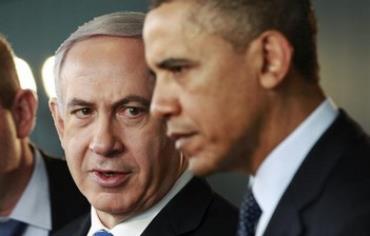
PM Netanyahu and US President Obama tour a technology expo at the Israel Museum, March 21, 2013.

PM Netanyahu and US President Obama tour a technology expo at the Israel Museum, March 21, 2013. Photo: REUTERS/Jason Reed

In the final analysis, the argument is about the player: Can you play with him, recruit him, change him and create a new team, or do you need to isolate him, pressure him, break him and never forget that he belongs to the opposing team. The player is Iran. More accurately, Iran’s Supreme Leader Ayatollah Ali Khamenei. The argument is between US President Barack Obama and Prime Minister Binyamin Netanyahu.

This is a deep, substantial and fundamental argument, and it defines the test of leadership for these two players, each in his own country, each facing the international community. This is a test that may end in the upcoming spring, or sooner, in the winter, in a regional war.

This test will, to a large extent, shape each of the leaders’ legacy: In Obama’s case, it will determine what kind of a president he will be remembered as, and whether the Nobel Peace Prize he received was an absurd joke and a mark of shame upon the judges’ foreheads, or a brilliant leadership move of European diplomats that were able to shape the Middle East. In Netanyahu’s case, this test will determine whether he can get re-elected as prime minister, and whether he is a leader with historical vision, as he and his advisers are convinced he is, or whether he is a hysterical politician, as his opponents claim.

This is why despite US attempts to alleviate concerns, the battle on public opinion and the message of the Geneva talks has yet to die down. The arguing and goading continues and will continue, even though Britain’s Foreign Secretary William Hague called on Israel to avoid undermining the agreement, and even though representatives of the six world powers asked Netanyahu to “move on,” in common speak, and join talks on shaping the “end state” stage of the negotiations with Iran.

This isn’t a personal matter, even though Netanyahu is from Venus and Obama is from Mars. This isn’t an issue of emotions, despite the mutual dislike between the two. It’s not a political matter, even though each side tries to interfere in the internal politics of the other and recruit it against the adversary. This is a matter of the perception and essence of the tools chosen to reshape the Middle East.

What Amidror said

The prime minister loves historic symbolism. And if it’s coming from “the book,” as he refers to the Bible, it speaks to him the most. These days, when Jews worldwide light Hanukka candles and retell the story of the Maccabees, Netanyahu wants to be portrayed as Yehuda Hamaccabi: a leader of a small yet determined force that manages to stop the Greek Empire and prevent the extinction of the Jewish nation.

He sees himself, as the Lubavitcher Rebbe told him and he himself has quoted it dozens of times, as the one who lights a candle and illuminates the truth. The Lubavitcher Rebbe told Netanyahu, before being appointed as the Israeli ambassador to the UN, that in a place where there is a lot of darkness, even a small candle can shine a massive light. Netanyahu is convinced that this is his historical role: To illuminate the truth in the great darkness of Western diplomacy, which is being led by Obama.

Netanyahu is right. The Geneva deal is a problematic agreement. It doesn’t stop Iran’s military nuclear program, it doesn’t dismantle Tehran’s enrichment capabilities, it gives international legitimization to the continuation of uranium enrichment even during the interim period, and it gives the Iranians a promise to maintain this “right” in the permanent agreement.

Whoever seeks to know what Netanyahu says behind closed doors needs to carefully read what Yaakov Amidror, who just a minute ago was still Israel’s National Security adviser, says. Despite Amidror’s outward dislike of the media in general, and his tendency to avoid speaking to the Israeli press in particular, he started singing in English to the Financial Times and the New York Times.

Even though Netanyahu claims Amidror did not ask for permission to give interviews and say that Israel has the military capability to strike Iran, the interviews fit strangely and remarkably well with the prime minister’s effort to maintain the credibility of Israel’s deterrence.

Netanyahu said at a cabinet meeting that “we are not bound by this agreement, and I will work to safeguard Israel’s security interests.” In Moscow, he sharpened the threat and said “I am committed to making sure Iran does not obtain nuclear weapons.” At the same time, as if by accident, Amidror is giving an interview about Israel’s military capabilities, without asking permission to do so. Strange.

“While the Obama administration maintains that the military option is still on the table in case Iran does not comply with the new agreement, that threat is becoming less and less credible,” Amidror wrote in an opinion piece in the New York Times under the headline “A Most Dangerous Deal.” He claims that the possibility that international inspectors are able to keep track of Iran’s nuclear activity is slim, and added that if the world powers’ gamble on Tehran fails, “there will be only one tool left to prevent Iran from getting a nuclear weapon,” a clear hint of an Israeli military strike on nuclear facilities.

In other words, Amidror is saying what Netanyahu is thinking: That Obama failed diplomatically and missed a great opportunity to use the sanctions pressure to bring Iran to its knees and prevent a war. In his opinion piece, Amidror does not mention the disappointing result, as far as Israel is concerned, of Obama’s move.

The result at the base of the argument: Iran received an opportunity from Obama to step up to the plate as a recognized and official player in the shaping of the Middle East. Obama reached out to Khamenei and allowed him to pitch in front of world powers on other regional matters as well, like the Syrian civil war. Before this week, Iran was throwing firecrackers from the stands, but from now on it is wearing official uniforms and takes the field as if it did not cheat, deceive, lie, send terror cells and aided in the massacre in Syria. This is the “historic mistake” Netanyahu is talking about.

According to this forecast, the criticism will continue, Obama’s attempts to calm the Saudi king will come to naught, Iran will continue inciting against Israel, and the world will be silent. The stock market will keep rising, the rial will grow strong and Iranian Foreign Minister Mohammad Javad Zarif’s comments on talks with international gas corporations and on the continuation of construction at the Arak heavy-water reactor are just the first sign of the collapse of the sanctions regime.

Netanyahu fears and predicts that the agreement reached in Geneva this week is a permanent agreement, and not an interim stage, because Tehran understands that Obama is not determined enough to be of any threat to it. Iran is buying time to develop the delicate military components of a nuclear weapon, and he who sleeps with dogs will wake up with fleas.

If Netanyahu is right, things will become very bad for Israel, and Jerusalem will have no choice but to act militarily. And maybe, and this is just speculation, Netanyahu is already working to prepare public opinion in Israel to the possibility of a strike on Iran without the US, a dangerous and crazy move that is currently not winning any support among Israelis.

Plate smashing

The American president is not denying that he is playing with the Iranians. On the contrary. A second after the Geneva accord was signed, American officials leaked details about a secret channel between Obama and the Iranian supreme leader.

It began a year ago, even before the presidential elections in the US. Covert understandings and trust-building actions were made, mediated by the Sultan of Oman. Obama is definitely proud of taking the Middle East’s problem child, the one with whom no one was willing to speak, and offered him a different option. Instead of fighting, a partnership. Instead of pressure, an opportunity.

The American administration did not spare any measures of public relations even here, in Israel, using US Ambassador to Israel Dan Shapiro and the president’s close aide Ben Rhodes, who spoke mostly of moderation. This is a level-headed game. The representatives of the six world powers are showing patience to Netanyahu’s cries of foul play, but claim he is exaggerating. All they did was remove some sanctions and got a freezing of Iran’s military nuclear program in return.

Except that Obama’s perception is completely different. “Diplomacy is making someone else do something he did not want to do,” a senior American official familiar with the talks said. As far as the American president is concerned, Iran has agreed to freeze its uranium enrichment in exchange for a time out on general trifles that do not include the core sanctions on oil and money. As far as he is concerned, he was able to put Iran on the western track leading to an accord. And then, he either stops the nuclear bomb, or derails Iran and forces it to fall on the sword of the West’s harsh sanctions.

Diplomats from the world powers have been anonymously talking as of late with a little more criticism towards Netanyahu. “His issue is that he compares what was achieved to what he thinks could have been achieved. This is a wrong, childish attitude,” a senior diplomatic source said and added “the question is what was the situation before and what is the situation now. And, no offense, what kind of experience does Netanyahu have in negotiating? What accord can he present as an example of diplomatic insistence and creativity?”

Simon Gass, the head of the British negotiating team at the nuclear talks in Geneva, stressed that the interim agreement is an addition to a series of bans and limitations imposed on Iran, both by the International Atomic Energy Agency (IAEA) and by the UN Security Council. Gass’s comments were made after Israeli officials claimed the agreement releases Iran from previous limitations.

Gass arrived in Israel to brief officials in Jerusalem ahead of the beginning of talks with Iran on a permanent agreement, and told reporters that Britain will continue consulting and cooperating with the Israeli government on Iran. “Israel can form an opinion on the Iranian issue on its own, but we agreed on a need to work together and look forward towards the future,” he said.

In a charity event organized by former Israeli Haim Saban, Obama said that boastful talk on the use of power may be politically convenient, but we must give a chance to diplomacy. What Obama didn’t say is the following simple truth: America is tired of wars. After two exhausting wars, that cost a trillion dollars, the American public is not in favor of another surgical strike. The Americans think that if one can pressure and lure Iran into a deal that will dismantle its nuclear program, that is great. If that doesn’t work out, freezing the nuclear program is also an option. And if the price is allowing them to play a part in shaping the Middle East, it’s a reasonable price to pay that may bring to an internal change in Iran.

This is another meaningful point in the argument between the two leaders: Obama is convinced that there is a chance these moves are creating an internal crack in Iran. He thinks the Iranian public will now expect additional relief, and this will tell Khamenei that he must compromise. Netanyahu is convinced this is all a game, and that the player is playing Obama – and not the other way around.

The results are in

If in the final analysis talks will achieve an agreement, a freezing or dismantling, postponing or preserving the current state, the guys at the Nobel committee can note that their gamble on their player paid off. They may have given Obama a prize for nothing, but that prize obligates him to pursue the path of peace. He did not attack Syria, they will note to themselves, and he reached an agreement to dismantle its chemical weapons. He avoided war, stopped Netanyahu from attacking, and reached an agreement with Iran. The target was marked in advance and the goal was reached.

Despite the understandable bitterness of the one who got the world to isolate Iran and pressure it, but at the last moment was unable to influence the nature of the deal that was reached, Netanyahu must recalculate his actions with regards to his player. If his prediction is correct, and only a strike or a credible military threat can help reach the goal, he must remember that the US does not attack without wide backing – both internal and external.

Meaning that for the chess player Obama to sacrifice his Iranian knight, the American public must be convinced that the US did all it could to avoid a military confrontation and that there is no other choice but to draw weapons, like in the old westerns. For that to happen, Israel must work with determination and sensitivity, because we are not the only player in the field.

This article originally appeared in Hebrew in Sof Hashavua magazine, published by The Jerusalem Post Group. Translated by Yaara Shalom.

Enough enriched uranium in Iran for 4 nuclear weapons. N-Bomb awaits Saudis in Pakistan

November 30, 2013

Enough enriched uranium in Iran for 4 nuclear weapons. N-Bomb awaits Saudis in Pakistan.

DEBKAfile Special Report November 30, 2013, 11:38 AM (IDT)
Pakistan's nuclear-capable Hatf IX short-range ballistic missile

Pakistan’s nuclear-capable Hatf IX short-range ballistic missile

Saudi King Abdullah and Israeli Prime Minister Binyamin Netanyahu were not won over by President Barack Obama’s pledges in personal phone calls to the two Middle East leaders last week not to allow Iran to acquire a nuclear weapon. Their skepticism only grew.

This development in the Iranian nuclear controversy finds two of the three leaders trapped in a credibility gap between their public pronouncements and the Iranian reality which has long overtaken them both.

Obama’s oft-repeated pledge is canceled out by most Western nuclear experts, who are convinced that Iran managed to advance to a capacity for producing four nuclear bombs, under cover of protracted diplomacy. In their view, the current first-step deal, followed by a comprehensive accord in six months’ time, are merely an attempt by the six world powers to hold Iran back from expanding its arsenal any further.

The US president’s avowals are therefore hollow.

Saudi princes and officials have often said that if Iran acquires a nuclear weapon or reaches the threshold of this capacity, the oil kingdom will not lag behind.

All Riyadh needs to do now, say debkafile’s Middle East sources, is to invoke the agreement signed with Islamabad in 2004, under which Saudi funding was provided for Pakistan’s nuclear bomb program in return for some of the bombs or warheads produced to await Saudi Arabia’s call for their delivery, complete with the appropriate missiles.
Pakistan denies the existence of this transaction.

However, military and intelligence experts in the West are certain that although this transfer has not yet taken place, it will soon, in the light of the edge Iran has gained in its current negotiations with the West.

Therefore, Obama’s phone conversation with Abdullah was more concerned with keeping a nuclear bomb out of Saudi hands than out of Iran’s.

Since 2008, the Israeli prime minister has vowed time and time again to prevent Iran reaching a nuclear threshold, making it clear that the Israeli armed forces would be sent into action – if need be.

So his credibility deficit is on a par with Obama’s.

At the Western Wall, Thursday, Nov. 11, on Hanukkah eve, Binyamin Netanyahu paraphrased a popular festival song to declare: “We came to drive out the darkness and the largest darkness that threatens the world today is a nuclear Iran!”

What did he mean by those words, if not an intention to exercise Israel’s military option to “drive out the darkness?”

Maj. Gen. (res) Yakov Amidror – until recently National Security Adviser to the prime minister – wrote last week in The New York Times that Iran already has enough enriched uranium to make four bombs. “The Geneva deal, in short, did not address the nuclear threat at all,” he wrote

Iran reached that point more than a year ago, so how to take the repeated pledges by the prime minister to “act itself, by itself” to prevent this happening?

Prime Minister Netanyahu has carefully avoided presenting the Knesset or the people with a clear picture of where Israel stands in relation to Iran’s nuclear program, has never laid out his policy on the question or depicted what the future may hold.

And so his “military option” has progressively waned in credibility both at home and abroad.
In Obama’s phone call to Netanyahu, debkafile’s intelligence and Washington sources report that the president described at length the US intelligence measures to be applied for verifying Iran’s compliance with the Geneva deal. He said that its findings would be referred to Israeli intelligence for a second assessment.

Obama also suggested a visit to Washington by an Israeli military intelligence delegation of nuclear experts to finalize the details of US-Israeli collaboration for verifying that Iran was living up to its commitments under the near accords.
When this US-Israeli dialogue reached their ears, the Iranians were furious. Thursday, Nov. 28, Foreign Minister Javad Zarif, dropping the genial mien he assumed in Geneva, reverted to harsh Islamic Republican-speak when he said: “Never such a thing will happen and definitely we will not be in the room in which representatives from the Zionist regime will have a presence!”

It was clear that Tehran would boycott the technical discussion on the details of the Geneva accord if Israeli experts were to sit in a side room, a proposal which might also be extended to Saudi Arabia, as the two Middle East nations most directly at risk from an Iranian nuclear capacity.

Then, Friday, President Hassan Rouhani weighed in to further devalue the Geneva accord’s international worth. In an interview with The Financial Times, he said Iran would never dismantle its atomic facilities. Asked whether this was a “red line” for the Islamic republic, Rouhani replied: “100 per cent.”

In other words, not only Netanyahu but Obama too can forget about any hopes they may have entertained of Iran shutting down its Fordo enrichment plant, or holding up the construction of its heavy water plant in Arak for the production of plutonium.

Tuesday, Nov, 26, two days after the six powers signed their first-step nuclear accord with Iran, Netanyahu called the security cabinet into special session which went on into the night to hear and debate briefings from IDF intelligence (AMAN) officers.

No word has leaked from that session, but some sources claimed anonymously that the ministers received the most optimistic outlook they had heard in years.

Before giving weight to such possible optimism, debkafile’s analysts recall AMAN’s 2011 prediction that Bashar Assad’s downfall was imminent, and its misreading of the situations prevailing in Washington and Tehran.

Israel, the Pilgrims and the Maccabees

November 30, 2013

Column one: Israel, the Pilgrims and the Maccabees | JPost | Israel News.

“It is this foundational faith that made the American people feel a natural kinship with the Jewish people. And it is this foundational faith that has brought the people of Israel to love America.

This bond, based on the best of both people persists today, even as Obama and his fellow appeasers push America on the path their founding fathers rejected when they came to the New World. Thanksgiving and Hanukka teach us that when we rely on our faith in God, we can surmount impossible challenges.”

By CAROLINE B. GLICK

11/28/2013 21:04

These two festivals that have rarely if ever been celebrated at the same time are similar in key respects.

Maccabee Cartoon

Maccabee Cartoon Photo: Avi Katz

Back in October 2001 then prime minister, Ariel Sharon, raised the hackles of the White House when he warned the United States, “Do not try to appease the Arabs at our expense. We cannot accept this.” Sharon then invoked the 1938 Munich Pact. As he put it, “Don’t repeat the terrible mistakes of 1938, when the enlightened democracies in Europe decided to sacrifice Czechoslovakia for a comfortable, temporary solution.”

Israel, he said, “will not be Czechoslovakia.”

Sharon was sharply rebuked not only by the White House, but by leading American supporters of Israel. They attacked him for daring to make the comparison. In time, with the US invasion of Afghanistan and Iraq, Sharon’s warning was largely forgotten.

The question of whether George W. Bush sought to appease the Arabs and Iran at Israel’s expense is an open one. Strong arguments can be made on both sides of the issue. On the one hand, Bush took the fight to terror supporting regimes.

On the other hand, Bush refused to face the threat of Iran. And he forced Israel to remain trapped in the two-state paradigm which requires it to make unreciprocated concessions to Palestinian terrorists working towards its destruction.

While Bush’s legacy remains uncertain, what is absolutely certain is that his successor Barack Obama is seeking to appease the Iranians and other Islamist forces at Israel’s expense. The appeasement Sharon accused Bush of contemplating has become the official policy of the US government under Obama.

In the haze of accusations and counteraccusations by opponents and supporters of Obama’s new pact with the mullahs of Tehran, it bears recalling that the problem with the Munich pact was not the agreement in and of itself. If Adolf Hitler had been a credible actor, then the agreement might have made sense.

But Hitler was not a credible actor.

The problem with the Munich pact was that it empowered Hitler and so paved the way for the German invasion of Poland a year later.

That invasion, in turn paved the way for the Holocaust, and for the death of 60 million people in World War II.

Those, like Winston Churchill and Zev Jabotinsky who foresaw these events, were castigated as extremists and warmongers. Those who ignored their warning were celebrated as peacemakers who boldly chose peace over war.

So too today, Israel is castigated by Obama and his supporters in Washington, Europe and the media as a warmonger for realistically foreseeing the consequences of last weekend’s nuclear deal with Iran. Even worse, they are portraying Israel as a rogue state that will be subject to punishment if it dares to militarily strike Iran’s nuclear installations. In other words, rather than threatening Iran – the leading state sponsor of terrorism, led by a regime that is pursuing an illicit nuclear weapons program while threatening Israel with annihilation – with military strikes if it refuses to cease and desist from building nuclear weapons, the world powers are threatening Israel.

British Foreign Minister William Hague made this projection of Iranian criminality onto its intended victim the explicit policy of the world powers on Monday during his appearance before the British Parliament.

Promising that Britain will be “on its guard” to prevent any state from threatening the agreement with Iran, Hague said, “We would discourage anybody in the world, including Israel, from taking any steps that would undermine this agreement and we will make that very clear to all concerned.” In other words, as Hague, Obama and Secretary of State John Kerry see things, Iran needs to be protected from Israel.

The agreement that Britain and the US heroically defend from the threat of Israeli aggression guarantees that Iran will develop nuclear weapons. Like the Munich Pact’s empowerment of Hitler 75 years ago, the Geneva agreement’s empowerment of Iran’s ayatollahs guarantees that the world will descend into an unspeakable conflagration. And this is far from the only step that they are taking to weaken Israel.

As the EU weakens its economic sanctions against the world’s leading sponsor of terrorism, it is ratcheting up its economic sanctions against Israel, the only liberal democracy in the Middle East. The goal of these sanctions is to coerce Israel into surrendering its historic heartland and ability to defend itself to Palestinian terrorists sworn to its destruction.

For its part, the Obama administration is expected to massively increase its pressure on Israel to make concessions to the PLO that if undertaken will similarly threaten Israel’s viability militarily, legally and politically. Obama has promised that if Israel and the PLO are unable to reach an accord by January, he will present his own formulation, and seek to coerce Israel into implementing it. Given Obama’s stated positions on the Palestinian conflict with Israel, it is clear that his formulation will involve the surrender of eastern, southern and northern Jerusalem, as well as the surrender of Judea and Samaria and the forced expulsion of more than a half a million Jews from their homes to enable the surrender of these areas Jew free.

And that is not all. Obama is also expected, in the next several months to place Israel’s purported nuclear arsenal on the international chopping block. Since entering office, he has already taken steps in this direction. Now, in his rush to transform Israel into the new Iran and Iran into the new Israel, it the prospect that Obama will expose Israel’s nuclear secrets as a means to enable Iran’s completion of its nuclear weapons program cannot be disregarded.

In other words, the weekend deal with Iran is not the end of a process of attempting to enfeeble Israel. It is the beginning of that process.

The worst is still very much before us.

It is a fortuitous coincidence that this challenging era in the history of Israel – certainly the most challenging diplomatic period since the establishment of the Jewish state 65 years ago – began the week of Thanksgiving. It is even more fortuitous that in these frightening moments, the most American of festivals took place during Chanukah the most Jewish of festivals.

This is a fortuitous coincidence because if we consider the meaning of these holidays, we can understand what the basis of our actions today must be. Just as importantly, we can rest assured that those actions will lead us to safer shores.

These two festivals that have rarely if ever been celebrated at the same time are similar in key respects. Thanksgiving is not simply about a voyage of religious freedom seekers from Europe to America. The story of the Pilgrims, who weathered an impossible 65 day journey from England to Plymouth Rock in a rickety ship called the Mayflower, is not remembered simply because they landed in the New World.

The Pilgrims are celebrated for how they comported themselves upon arrival. In the three months after their initial landing, half of the Pilgrims died from disease and murder at the hands of the native tribes. Those who survived suffered from unspeakable privations. Yet in three months, they managed through their sufferings to establish the first modern democracy, and to build a settlement.

Rather than rail against their fate, or abjectly surrender to their hardships, the Pilgrims gave thanks to God for the meager tools he gave them to mount the seemingly insurmountable challenges they faced. It is for the Pilgrims’ capacity to see the blessing in their condition, and to be empowered by their cognizance of that blessing that they are remembered. Their faith grounded heroic tenacity is the reason that a small band of religious rebels formed the cultural basis for the United States of America, when it was founded 155 years later. It was that heroism that led Abraham Lincoln to declare Thanksgiving a national holiday during the darkest hour of the Civil War, when the image of the Pilgrims empowered the Union soldiers fighting for a new birth of freedom.

As for Chanukah, the Festival of Lights is a celebration of Jewish religious freedom and national liberation. The Maccabees freed the Jews from the tyranny of Greece, the world’s greatest superpower, which denied them their right to remain Jewish. The Maccabees, a small band of heroically tenacious Jews who suffered extraordinary hardship in their war against the far superior Greek forces, took strength and comfort in their faith. It was their faith in God that empowered them to face impossible odds and emerge victorious. It was their faith in God that gave them the ability to stand up not only to the Greeks, but to the Jewish elites who preached submission and appeasement as the better part of virtue, castigating them as warmongering zealots for refusing to bow before false gods.

The faith of the Pilgrims and the faith of the Maccabees was the faith of free men. It was the faith that formed the foundations of the United States. It is the faith that has enabled the Jews to survive for four thousand years. It is the faith that enabled the Jews to do the impossible and rebuild our homeland after 2,000 years of exile and unspeakable persecution.

It is this foundational faith that made the American people feel a natural kinship with the Jewish people. And it is this foundational faith that has brought the people of Israel to love America. This bond, based on the best of both people persists today, even as Obama and his fellow appeasers push America on the path their founding fathers rejected when they came to the New World. Thanksgiving and Hanukka teach us that when we rely on our faith in God, we can surmount impossible challenges.

Israel has the means – limited though they may be – to meet the extraordinary tests we face today, as the leaders of America have turned on us by turning on the shared heritage of faith and fortitude of our nations.

Both the Israelis and the Americans must take heart from this week when we commemorate the heroic heritage of free men and women.

With the providence of God, we will be the loyal children of the Maccabees, and the Pilgrims.

And we will merit their legacy.

caroline@carolineglick.com

Israeli officials denounce Obama for giving Iran right to enrich, destroying sanctions

November 30, 2013

Israeli officials denounce Obama for giving Iran right to enrich, destroying sanctions | The Times of Israel.

Entire sanctions regime ‘will collapse within months,’ unnamed sources tell Israeli TV; US has shown it has ‘no red lines’ on Tehran

November 29, 2013, 10:00 pm US President Barack Obama and Prime Minister Benjamin Netanyahu prepare for a press session in the Oval Office of the White House in Washington, Monday, September 30, 2013 (photo credit: AP/Charles Dharapak)

US President Barack Obama and Prime Minister Benjamin Netanyahu prepare for a press session in the Oval Office of the White House in Washington, Monday, September 30, 2013 (photo credit: AP/Charles Dharapak)

Unnamed Israeli officials denounced US President Barack Obama on Friday night for presiding over failed negotiations with Iran under which they said the sanctions pressure on Tehran is collapsing and the Islamic Republic has been granted the right to enrich uranium. The entire wall of sanctions, painstakingly constructed over years, is already crumbling and “will collapse within months,” the officials were quoted as saying.

In comments reported by Israel’s Channel 2 news and attributed to unnamed senior Israeli officials and official sources in Jerusalem, Obama was castigated for ostensibly showing he “will do anything to avoid a situation in which he will have to resort to force” against Iran.

Under Obama’s supervision, the unnamed officials said, the Geneva talks had produced a failed interim deal under which Iran has been granted the right to enrich uranium, and years of international sanctions pressure on Iran is now melting away.

Publicly, Israel’s Prime Minister Benjamin Netanyahu has slammed the Geneva deal as a “historic mistake,” said Israel is not bound by it, and vowed to thwart Iran alone if necessary. In a phone conversation with Obama on Sunday, Netanyahu agreed to send a team led by his national security adviser to Washington to try to impact world powers’ upcoming efforts to reach a permanent accord to thwart Iran’s nuclear weapons drive.

Privately, the unnamed officials were quoted as indicating Friday, Jerusalem is feeling a bitter, dismayed and helpless sense of “We told you so.” Noting that officials and businessmen from around the world — notably including China, Turkey, France, Russia and India — are already converging on Iran, ready to resume large-scale oil, banking and all manner of other business dealings as sanctions are eased in the wake of Sunday’s Geneva deal, the officials were quoted saying that Israel knew the sanctions pressure would collapse, “but even we didn’t imagine it would happen this fast.”

The Channel 2 report quoted one official saying that the US was “not leading but is being led” by Iran, and that the Obama administration has indicated that it has “no red lines” in its dealings with the Iranians.

Melding the Hanukkah holiday and foreign affairs, Netanyahu on Thursday night vowed to serve as a “light unto the nations” and act against Iran’s nuclear program should diplomacy fail. Speaking at the Western Wall for a Hanukkah candle-lighting ceremony, Netanyahu compared Iran’s nuclear program to a darkness that would be forced out by Israel, referencing a popular children’s song for the holiday.

“We came to drive out the darkness, and the largest darkness that threatens the world today is a nuclear Iran,” he said. “We are bound to do all we can to prevent this darkness. If possible we will do this diplomatically, if not we will act as ‘a light unto the nations’.”

Earlier Thursday, Yaakov Amidror, the former head of the Israeli National Security Council took to the pages of The New York Times to rail against the nuclear deal between world powers and Iran, calling the accord a diplomatic failure that missed the mark in diverting Tehran’s nuclear weapons program. “The agreement represents a failure, not a triumph, of diplomacy,” Amidror wrote.


