Archive for November 15, 2013

Right-wing pro-Israel lobby slams Obama in new ad

November 15, 2013

Right-wing pro-Israel lobby slams Obama in new ad | The Times of Israel.

( The vid I posted yesterday just went National ! – JW)

Video exploits US public concerns over Obamacare to warn of president’s untrustworthiness on Iran

November 15, 2013, 6:43 pm

US President Barack Obama (photo credit: AP/Jacquelyn Martin/File)

US President Barack Obama (photo credit: AP/Jacquelyn Martin/File)

The Emergency Committee for Israel, a right-wing pro-Israel lobby in Washington, released a TV ad on Thursday bashing US President Barack Obama as untrustworthy on Israel and Iran.

The one-minute video, titled “Obama’s March to War,” strikes a very relevant cord for many Americans by beginning with the president’s promises regarding his signature healthcare legislation, popularly known as “Obamacare.”

“If you like your private health insurance plan, you can keep your plan, period” the now-famous presidential sound bite states, with the video cutting to Obama apologizing to those Americans who it now appears will not be able to maintain their previous coverage. “I am sorry they are finding themselves in this situation based on assurances they got from me.”

The clip then turns to the president’s “red line” vow to strike Syria if chemical weapons were to be used or transferred in the war-torn country. It then presents Obama as backtracking somewhat, when he tells reporters in September, “I didn’t set a red line, the world set a red line.”

The administration eventually decided to not strike Bashar Assad’s regime, in light of a last-minute deal to disarm Syria’s chemical weapons brokered by Russia.

The video resolves with an implicit warning to not take the president at his word on Iran, starting with another Obama sound bite, this time from an AIPAC conference. “When the chips are down, I have Israel’s back,” the president said in March 2012. But then the video shows Obama telling reporters that his comments to AIPAC were not a “military doctrine.”

The clip ends with Obama promising, during a debate with 2012 Republican presidential contender Mitt Romney, to prevent Iran from acquiring a nuclear weapon. The screen cuts to black and then a nuclear explosion is seen.

Meanwhile, Israeli public opinion of the president’s policies regarding Iran appeared to be solidifying. A poll in the Israeli daily Israel Hayom found Friday that 65.5% of Israelis felt that Israel should oppose the nuclear deal being formulated this month in Geneva between the P5+1 and Iran, while only 16.2% supported the potential agreement.

In addition, 52.4% of respondents said they would support an Israeli attack on Iran’s nuclear facilities, and a full 68.8% were confident that the IDF is up to the task.

The Increasing Desperation of John Kerry

November 15, 2013

The Increasing Desperation of John Kerry | Jewish & Israel News Algemeiner.com.

November 15, 2013 9:33 am 1 comment

Author:

Shmuley Boteach

Secretary of State John Kerry, then chairman of the Senate Foreign Relations Committee, speaks at a December 2009 hearing. Photo: U.S. Navy Petty Officer 1st Class Chad J. McNeeley.

Witness the transformation of John Kerry from global diplomat to global supplicant, Diplomat-in-Chief to Beggar-in-Chief.

Just a few weeks ago the new US Secretary of State bestrode the world like a colossus. The man who could not be president in 2004 got a new lease of life as second only to the President on the global stage.

And boy was he impressive. That is, until he wasn’t.

First he showed phenomenal moral fortitude in pushing for a strike against Bashar Assad after he gassed hundreds of children.

But then, after making an ill-informed comment about Syria doing a chemical dismantling deal, he quickly relented. Russia came to Assad’s rescue and the butcher of Baghdad has, to date, never been punished for the mass slaughter of kids.

Then Kerry rose to the occasion on Iran, warning the world of the dangers of the mullah’s nukes.

But here we are, just a few weeks later, and Kerry has been reduced to threats of violence against Israel in order to persuade a reluctant world to support his appeasement of Tehran.

Just this morning Kerry warned (threatened?) on MSNBC that failing to reach a nuclear deal with Iran will mean that Iran will get nuclear weapons.

Have we heard this script before?

Last week there was the even juicier nugget that if Israel did not reach an accord with the Palestinians there would be a third intifada, a comment that America’s outstanding Ambassador to Israel, Dan Schapiro, seemed to repudiate in his address to the Jewish General Assembly in Jerusalem.

I’ve discovered as a parent that when I reduced to threats of punishment against my kids it’s really because I have lost the voice of moral authority. Otherwise, I would not need external inducements to persuade them.

I feel bad for John Kerry. He is looking increasingly desperate and ridiculous. He did not learn from his predecessor, Hilary Clinton, who transformed her public image utterly as America’s top diplomat, that strength earns respect.

No, Kerry has gone in the opposite direction.

When he first started as Secretary of State there was the promise that his moral determination to hold tyrannies accountable for atrocities against their people would make America forget some of the things he unfairly said against America’s troops during Vietnam, accusing them of being the troops of Genghis Khan.

I for one could not have been more inspired by Kerry when he sounded the trumpet throughout the world that Assad was a murderer who would have to be punished. I praised him wherever I could. This is exactly what we need. An American foreign policy with a moral center.

Now I see a man whom even the French feel is weak in his negotiations with Iran, and who has been reduced to Twitter battles with Iran’s foreign minister.

The demise of Pax Americana

November 15, 2013

COLUMN ONE: The demise of Pax Americana | JPost | Israel News.

( An extreme analysis of the PERMANENT damage being done by Obama to the US.  She Pulls no punches:  “America’s appalling betrayal of Jerusalem under Obama likewise is the straw that has broken the back of American strategic credibility from Taipei to Santiago.” – JW )

By CAROLINE B. GLICK

11/14/2013 20:47

The US remains the most powerful actor in the world. But last week, American credibility was shattered.
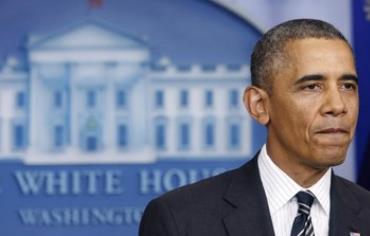
US President Barack Obama.

US President Barack Obama. Photo: REUTERS/Kevin Lamarque

What happened in Geneva last week was the most significant international event since the collapse of the Soviet Union in 1991. The collapse of the Soviet Union signaled the rise of the United States as the sole global superpower. The developments in the six-party nuclear talks with Iran in Geneva last week signaled the end of American world leadership.

Global leadership is based on two things – power and credibility. The United States remains the most powerful actor in the world. But last week, American credibility was shattered.

Secretary of State John Kerry spent the first part of last week lying to Israeli and Gulf Arab leaders and threatening the Israeli people. He lied to Prime Minister Binyamin Netanyahu and the Saudis about the content of the deal US and European negotiators had achieved with the Iranians.

Kerry told them that in exchange for Iran temporarily freezing its nuclear weapons development program, the US and its allies would free up no more than $5 billion in Iranian funds seized and frozen in foreign banks.

Kerry threatened the Israeli people with terrorism and murder – and so invited both – if Israel fails to accept his demands for territorial surrender to PLO terrorists that reject Israel’s right to exist.

Kerry’s threats were laced with bigoted innuendo.

He claimed that Israelis are too wealthy to understand their own interests. If you don’t wise up and do what I say, he intoned, the Europeans will take away your money while the Palestinians kill you. Oh, and aside from that, your presence in the historic heartland of Jewish civilization from Jerusalem to Alon Moreh is illegitimate.

It is hard to separate the rise in terrorist activity since Kerry’s remarks last week from his remarks.

What greater carte blanche for murder could the Palestinians have received than the legitimization of their crimes by the chief diplomat of Israel’s closest ally? Certainly, Kerry’s negotiating partner Catherine Ashton couldn’t have received a clearer signal to ratchet up her economic boycott of Jewish Israeli businesses than Kerry’s blackmail message, given just two days before the 75th anniversary of Kristallnacht.

Kerry’s threats were so obscene and unprecedented that Israeli officials broke with tradition and disagreed with him openly and directly, while he was still in the country. Normally supportive leftist commentators have begun reporting Kerry’s history of anti-Israel advocacy, including his 2009 letter of support for pro-Hamas activists organizing flotillas to Gaza in breach of international and American law.

As for Kerry’s lies to the US’s chief Middle Eastern allies, it was the British and the French who informed the Israelis and the Saudis that far from limiting sanctions relief to a few billion dollars in frozen funds, the draft agreement involved ending sanctions on Iran’s oil and gas sector, and on other industries.

In other words, the draft agreement exposed Washington’s willingness to effectively end economic sanctions against Iran in exchange for Iran’s agreement to cosmetic concessions that will not slow down its nuclear weapons program.

Both the US’s position, and the fact that Kerry lied about that position to the US’s chief allies, ended what was left of American credibility in the Middle East. That credibility was already tattered by US fecklessness in Syria and support for the Muslim Brotherhood in Egypt.

True, in the end, Kerry was unable to close the deal he rushed off to Geneva to sign last Friday.

Of course, it wasn’t Iran that rejected the American surrender. And it wasn’t America that scuttled the proposal. It was France. Unable to hide behind American power and recognizing its national interest in preventing Iran from emerging as a nuclear armed power in the Middle East, France vetoed a deal that paved the way a nuclear Iran.

Kerry’s failure to reach the hoped-for deal represented a huge blow to America, and a double victory for Iran. The simple fact that Washington was willing to sign the deal – and lie about it to its closest allies – caused the US to lose its credibility in the Middle East. Even without the deal, the US paid the price of appeasing Iran and surrendering leadership of the free world to France and Israel.

Just by getting the Americans to commit themselves to reducing sanctions while Iran continues its march to a nuclear weapon, Iran destroyed any remaining possibility of doing any serious non-military damage to Iran’s plans for nuclear weaponry. At the same time, the Americans boosted Iranian credibility, endorsed Iranian power, and belittled Israel and Saudi Arabia – Iran’s chief challengers in the Middle East. Thus, Iran ended Pax Americana in the Middle East, removing the greatest obstacle in its path to regional hegemony. And it did so without having to make the slightest concession to the Great Satan.

As Walter Russell Mead wrote last week, it was fear of losing Pax Americana that made all previous US administrations balk at reaching an accord with Iran. As he put it, “Past administrations have generally concluded that the price Iran wants for a different relationship with the United States is unsustainably high. Essentially, to get a deal with Iran we would have to sell out all of our other allies. That’s not only a moral problem. Throwing over old allies like that would reduce the confidence that America’s allies all over the world have in our support.”

The Obama administration just paid that unsustainably high price, and didn’t even get a different relationship with Iran.

Most analyses of what happened in Geneva last week have centered on what the failure of the talks means for the future of Obama’s foreign policy.

Certainly Obama, now universally reviled by America’s allies in the Middle East, will be diplomatically weakened. This diplomatic weakness may not make much difference to Obama’s foreign policy, because appeasement and retreat do not require diplomatic strength.

But the real story of what happened last week is far more significant than the future of Obama’s foreign policy. Last week it was America that lost credibility, not Obama. It was America that squandered the essential component of global leadership. And that is the watershed event of this young century.

States act in concert because of perceived shared interests. If Israel and Saudi Arabia combine to attack Iran’s nuclear installations it will be due to their shared interest in preventing Iran from acquiring a nuclear arsenal. But that concerted action will not make them allies.

Alliances are based on the perceived longevity of the shared interests, and that perception is based on the credibility of international actors.

Until Obama became president, the consensus view of the US foreign policy establishment and of both major parties was that the US had a permanent interest in being the hegemonic power in the Middle East. US hegemony ensured three permanent US national security interests: preventing enemy regimes and terror groups from acquiring the means to cause catastrophic harm; ensuring the smooth flow of petroleum products through the Persian Gulf and the Suez Canal; and demonstrating the credibility of American power by ensuring the security of US allies like Israel and Saudi Arabia. The third interest was an essential foundation of US deterrence of the Soviets during the Cold War, and of the Chinese over the past decade.

Regardless of who was in the White House, for the better part of 70 years, every US government has upheld these interests. This consistency built US credibility, which in turn enabled the US to throw its weight around.

Obama departed from this foreign policy consensus in an irrevocable manner last week. In so doing, he destroyed US credibility.

It doesn’t matter who succeeds Obama. If a conservative internationalist in the mold of Harry Truman, John F. Kennedy or Ronald Reagan is elected in 2016, Obama’s legacy will make it impossible for him to rebuild the US alliance structure. US allies will be willing to buy US military platforms – although not exclusively.

They will be willing to act in a concerted manner with the US on a temporary basis to advance specific goals.

But they will not be willing to make any longterm commitments based on US security guarantees.

They will not be willing to place their strategic eggs in the US basket.

Obama has taught the world that the same US that elected Truman and formed NATO, and elected George H.W. Bush and threw Saddam Hussein out of Kuwait, can elect a man who betrays US allies and US interests to advance a radical ideology predicated on a rejection of the morality of American power. Any US ally is now on notice that US promises – even if based on US interests – are not reliable. American commitments can expire the next time America elects a radical to the White House.

Americans uninterested in surrendering their role as global leader to the likes of Tehran’s ayatollahs, Russia’s KGB state and Mao’s successors, must take immediate steps mitigate the damage Obama is causing. Congress could step in to clip his radical wings.

If enough Democrats can be convinced to break ranks with Obama and the Democratic Party’s donors, Congress can pass veto-proof additional sanctions against Iran. These sanctions can only be credible with America’s spurned allies if they do not contain any presidential waiver that would empower Obama to ignore the law.

They can also take action to limit Obama’s ability to blackmail Israel, a step that is critical to the US’s ability to rebuild its international credibility.

For everyone from Anwar Sadat to South American democrats, for the past 45 years, America’s alliance with Israel was a central anchor of American strategic credibility. The sight of America standing with the Jewish state, in the face of a sea of Arab hatred, is what convinced doubters worldwide that America could be trusted.

America’s appalling betrayal of Jerusalem under Obama likewise is the straw that has broken the back of American strategic credibility from Taipei to Santiago. If Congress is interested in rectifying or limiting the damage, it could likewise remove the presidential waiver that enables Obama to continue to finance the PLO despite its involvement in terrorism and continued commitment to Israel’s destruction. Congress could also remove the presidential waiver from the law requiring the State Department to move the US Embassy in Israel to Jerusalem. Finally, Congress can update its anti-boycott laws to cover new anti-Israel boycotts and economic sanctions against the Jewish state and Jewish-owned Israeli companies.

These steps will not fully restore America’s credibility.

After all, the twice-elected president of the United States has dispatched his secretary of state to threaten and deceive US allies while surrendering to US foes. It is now an indisputable fact that the US government may use its power to undermine its own interests and friends worldwide.

What these congressional steps can do, however, is send a message to US allies and adversaries alike that Obama’s radical actions do not represent the wishes of the American people and will not go unanswered by their representatives in Congress.

caroline@carolineglick.com

Ben-Gurion’s legacy: Defiance of US pressure

November 15, 2013

Israel Hayom | Ben-Gurion’s legacy: Defiance of US pressure.

Yoram Ettinger

Upon the 40th anniversary of Prime Minister David Ben-Gurion’s death, Israeli and American policy-makers should study the 1948 legacy of Israel’s Founding Father:

Defiance of disproportionate U.S. pressure forged Israel into a national security producer rather than a national security consumer,

Catapulted the Jewish state into the most productive U.S. strategic ally,

Enhanced the long-term U.S.-Israel mutually beneficial ties (following short-term tension), and

Advanced the national security of both the U.S. and Israel.

On May 29, 1949, toward the end of Israel’s War of Independence, which consumed 6,000 Israeli lives (1 percent of the population!), the U.S. Ambassador to Israel, James McDonald, delivered a scolding message from President Harry Truman to Prime Minister Ben-Gurion. According to McDonald, Truman “interpreted Israel’s attitude [rejecting the land-for-peace principle; annexing West Jerusalem; refusing to absorb Arab refugees; pro-actively soliciting a massive Jewish ingathering] as dangerous to peace and as indicating disregard of the U.N. General Assembly resolutions of November 29, 1947 [the partition plan] and December 11, 1948 [refugees and internationalization of Jerusalem], reaffirming insistence that territorial compensation should be made [by Israel] for territory taken in excess of November 29 [40% beyond the partition plan!], and that tangible refugee concessions should be made [by Israel] now as essential, preliminary to any prospect for general settlement. The operative part of the note was the implied threat that the U.S. would reconsider its attitude toward Israel,” (“My Mission in Israel 1948-1951,” James McDonald).

Ben-Gurion’s response — with a population of 650,000 Jews, a $1 billion gross domestic product and a slim military force in 1949, compared with 6.3 million Jews, a $260 billion GDP and one of the world’s finest military forces in 2013 — was resolute, as described by McDonald: “[Truman’s] note was unrealistic and unjust. It ignored the facts that the partition resolution was no longer applicable since its basic conditions had been destroyed by Arab aggression which the Jews successfully resisted. … To whom should we turn if Israel were again attacked? Would the U.S. send arms or troops? The United States is a powerful country; Israel is a small and a weak one. We can be crushed, but we will not commit suicide.”

McDonald further wrote: “Two U.N. Security Council resolutions passed [with U.S. support] have implicitly threatened sanctions if Israeli troops were not withdrawn [from the ‘occupied Negev’].” Ben-Gurion reacted defiantly: “Israel has been attacked by six Arab States. As a small country, Israel must reserve the right of self-defense even if it goes down fighting. … As Ben-Gurion once put it to me, ‘What Israel has won on the battlefield, it is determined not to yield at the [U.N. Security] Council table.'”

As a result of Ben-Gurion’s determined stance, “there was apparently indecision and much heart-searching in Washington…. Our [responding] note abandoned completely the stern tone of its predecessor. … Fists and knuckles were unclenched. … The crisis was past. The next few months marked a steady retreat from the intransigence of the United States’ May note. … Washington ceased to lay down the law to Tel Aviv.”

On the eve of the declaration of independence, General George Marshall, Second World War hero and Secretary of State, who was then the most charismatic office-holder in the U.S., sent Ben-Gurion a brutal ultimatum, demanding the postponement of the declaration of independence and acceptance of a U.N. Trusteeship. Marshall, along with Secretary of Defense, James Forrestal, the CIA and the top Foggy Bottom bureaucrats imposed a regional military embargo, while Britain supplied arms to Egypt, Jordan and Iraq. They contended that a declaration of independence would turn the oil-producing Arab countries against the U.S., at a time when the threat of a Third World War (USSR vs U.S.) was hovering, which could force the U.S. to fight an oil-starved war. They threatened that Ben-Gurion’s unilateral declaration of independence would trigger a war, which could doom the Jewish people to a second Holocaust in less than ten years, since the U.S. would not provide any assistance to the Jewish state. They contemplated an expanded embargo — unilaterally or multilaterally — should Ben-Gurion ignore the ultimatum.

Ben-Gurion did not blink. McDonald wrote that “[Ben-Gurion] added that much as Israel desired friendship with the U.S., there were limits beyond which it could not go. … Ben-Gurion warned President Truman and the Department of State, through me, that they would be gravely mistaken if they assumed that the threat, or even the use of U.N. sanctions, would force Israel to yield on issues considered vital to its independence and security. … [He] left no doubt that he was determined to resist, at whatever cost, ‘unjust and impossible demands.’ On these he could not compromise.”

Ben-Gurion’s tenacity was vindicated when Israel was admitted to the U.N., despite its rejection of the land-for-peace, Jerusalem and refugees demands, “evidence of the growth of respect for Israel,” McDonald wrote. Moreover, Eisenhower’s Secretary of State John Foster Dulles, who was a delegate to the U.N. in 1949, admitted that the partition plan and the anti-Israel “Bernadotte U.N. plan” were not adequate and that the U.S. underestimated the Jewish muscle and determination. General Omar Bradley, the chairman of the Joint Chiefs of Staff, proposed to consider Israel as a major ally of the U.S.

Ben-Gurion was aware that fending off pressure constituted an integral part of Jewish history, a prerequisite for survival and long-term growth, militarily, diplomatically and economically. On the other hand, succumbing to pressure intensifies further pressure, threatening to transform Israel from a unique strategic asset to a liability. On a rainy day, the U.S. would rather have a defiant — and not a vacillating — ally.

Anatomy of a crisis

November 15, 2013

Israel Hayom | Anatomy of a crisis.

The U.S.’s eagerness to strike a deal with Iran says a lot about the way the Obama administration deals with the Israeli-Palestinian crisis • The American president might cross a few more red lines before he is done.

Prof. Abraham Ben-Zvi
U.S. Secretary of State John Kerry and Prime Minister Benjamin Netanyahu

|

Photo credit: AP

Can Israel survive Obama?

November 15, 2013

Can Israel survive Obama? – Israel Opinion, Ynetnews.

Op-ed: Isolated like never before, stark choices facing Israel’s leadership are unimaginably difficult

Noah Beck

Published: 11.15.13, 11:28 / Israel Opinion

In the spring of 2012, when I wrote “The Last Israelis,” I thought that the pessimistic premise of my cautionary tale on Iranian nukes was grounded in realism. I had imagined a US president who passively and impotently reacted to Iran‘s nuclear ambitions, leaving it to tiny Israel to deal with the threat. But something far worse is happening: The Obama administration is actively making it harder for Israel to neutralize Iran’s nukes, and more likely that Iran will develop a nuclear arsenal.

A few months after my apocalyptic thriller was published, the New York Times reported that “intense, secret exchanges between American and Iranian officials (dating) almost to the beginning of President Obama’s term” resulted in an agreement to conduct one-on-one negotiations over Iran’s nuclear program. In those secret talks, did Obama long ago concede to Iran a nuclear capability? If so, then the current Geneva negotiations merely provide the international imprimatur for what Iran and the US have already privately agreed. That might explain why France (of all countries) had to reject a Geneva deal that would have left Iran with a nuclear breakout capability.

An investigation by the Daily Beast also reveals that the “Obama administration began softening sanctions on Iran after the election of Iran’s new president last June, months before the current round of nuclear talks in Geneva…” The report notes that Treasury Department notices show “that the US government has all but stopped the financial blacklisting of entities and people that help Iran evade international sanctions since the election of its president, Hassan Rohani, in June.”

Obama’s desperately eager posture towards the smiling Mullahs has doomed any negotiation to failure by signaling that the US fears confrontation more than anything else. Obama’s pathetic approach to the world’s most pressing national security threat also makes US military action virtually impossible from a public relations and diplomatic standpoint because it promotes the naive idea that more diplomacy will resolve what a decade of talking hasn’t. And as long as the Iranians are “talking,” world opinion will also oppose an Israeli military strike, so naturally Iran will find ways to keep talking until it’s too late for Israel to act.

Obama has been downright duplicitous towards key Mideast allies. When in campaign mode or speaking to Israel supporters, Obama emphatically rejected containment as a policy option for dealing with Iranian nukes but he’s now taking steps that effectively make containment the only option available (while repeating the same empty reassurance that he has Israel’s back and won’t be duped by the smiling Iranians).

Despite his repeated reassurances, Obama rejected Israel’s estimates for how much more time Iran needs to develop its nuclear capability, and accepted overly optimistic timetables that assumed at least a year for more talking. Soon afterwards, the Institute for Science and International Security (ISIS) confirmed Israel’s estimates that Iran could be just weeks away from the critical nuclear threshold. Ignoring these critical facts, Obama has given diplomatic cover to Iran’s nuclear program by seizing on the cosmetic changes presented by the Iranian regime’s Ahmadinejad-to-Rohani facelift.

That this makeover is just a ruse becomes obvious from this video, in which Rohani boasts about masterfully manipulating diplomacy to achieve Iran’s nuclear objectives. So Obama must have known all along that “talks” are a fool’s errand that allow him to “fall back to” what has been his position all along: containment.

And despite repeated assurances from Secretary of State John Kerry that “no deal is better than a bad deal,” the current Geneva talks appear headed towards precisely that: A bad deal that leaves Iran with the very nuclear breakout capability that a diplomatic “solution” was supposed to prevent.

On the other hand, after Obama’s weak response to Syria‘s crossing of his “red line” against the use of chemical weapons, the threat of US force against Iranian nukes lost all credibility, making it even harder to change Iranian nuclear behavior without force. So containing the mess produced by weak negotiations is really all that’s left of Obama’s Iran “strategy.”

Abysmal ally

Only epic ineptitude or anti-Israel hostility no longer checked by reelection considerations can explain Obama’s moves on Iran. And the stakes couldn’t be higher for the rest of the world. After all, if Iran is the world’s biggest state sponsor of terrorism without nuclear weapons, what will terrorism look like once Iran goes nuclear? And there are already hints of the nuclear proliferation nightmare that will follow Iran’s nuclearization: Saudi Arabia has Pakistani nukes already lined up for purchase. Remarkably, Obama has known this since 2009 and apparently doesn’t care about that consequence any more than he does about Israel’s security. How else to explain his acceptance of the dreadful Geneva proposal granting Iran a nuclear weapons capability?

Exacerbating an existential threat against Israel is bad enough, but Obama has been an abysmal ally in other respects. Despite being history’s most aggressive president to punish leakers (except when they make him look good), Obama’s administration has repeatedly leaked sensitive Israeli information that could have easily provoked a Syrian-Israeli war. Obama summarily dumped a decades-long alliance with Egypt (that is also key to Israeli security) over some Egyptian state violence that is dwarfed by the decades-long brutality and terrorism of the Iranian regime now enjoying Obama’s overzealous courtship. And Obama’s image as a multi-lateralist who subordinates US interests to higher principles has been exposed as a fraud following reports that he knew that the US was spying on close European allies (contrary to his denials).

Add to that list Kerry’s increasing hostility to Israel and reports that the US plans to impose its undoubtedly risky vision of peace on Israel in a few months, and you have Israel’s worst nightmare in the White House. The irony is that the less Israel feels secure because of Obama’s betrayals, the less likely it is to behave as Obama would like. Why humor Obama’s requests and take unrequited risks for peace with the Palestinians or indulge yet another round of counter-productive “talks” about Iran’s nuclear program when Obama has apparently abandoned Israel anyway?

As if Israel didn’t face enough threats and challenges, it must now survive the Obama nightmare until he’s out of office in 38 months. Isolated like never before thanks to Obama, the stark choices facing Israel’s leadership are unimaginably difficult. With roughly 75 times more territory, 10 times as many people, and two times as big an economy, Iran is a Goliath compared to Israel, and has repeatedly threatened to destroy it. So what does David (Israel) do now that Obama’s perfidy has been exposed? If the neighborhood bully is bigger than you, has threatened you, and is reaching for a bat, do you preemptively attack him before he gets the bat and becomes even more dangerous?

Noah Beck is the author of The Last Israelis , an apocalyptic novel about Iranian nukes and other geopolitical issues in the Middle East

Senate set to begin debating new Iran sanctions

November 15, 2013

Senate set to begin debating new Iran sanctions | The Times of Israel.

Naftali Bennett tells Times of Israel he found Congress receptive to his points, US administration ‘gets’ Israel’s position on endgame

November 15, 2013, 11:24 am

Economics and Trade Minister Naftali Bennett meets with Republican US Senator John McCain in Washington on November 14, 2013. (photo credit: Shmulik Almany/Flash90)

Economics and Trade Minister Naftali Bennett meets with Republican US Senator John McCain in Washington on November 14, 2013. (photo credit: Shmulik Almany/Flash90)

WASHINGTON — After two days of heavy lobbying Wednesday and Thursday from both opponents and proponents of new sanctions legislation, the US Senate seemed more likely than ever to begin deliberations on a new sanctions bill against Iran.

US Undersecretary of State for Political Affairs Wendy Sherman tried Thursday to convince lawmakers to wait while Israeli Economics and Trade Minister Naftali Bennett lobbied for additional sanctions, but both sides attempted to talk down the apparent crisis of faith between the US and Israel.

“It’s not as if there is a chasm between us and the Americans,” Bennett told The Times of Israel after a long day pounding the halls of Congress Thursday. “We agree on the goal — the question is how to achieve it. I think that the administration is absolutely aligned with Israel on the objective of not allowing Iran to achieve a nuclear weapon. They get it.”

Bennett said that he “would not agree” with an assessment made by a fellow member of the Cabinet and his Jewish Home party that the tensions over an Iran deal have grown to such an extent that US Secretary of State John Kerry cannot serve as an honest broker. “This is a conversation between friends,” he emphasized after spending hours lobbying against Kerry’s chief deputy for Iran nuclear talks.

Bennett’s comments echoed statements made earlier in the day by Kerry himself, who told the American television station MSNBC that “what’s important here is we stand with Israel firmly — 100 percent.

“There’s no distance between us about the danger of the [Iranian nuclear] program and the endgame for us is exactly the same,” Kerry continued during an interview for that channel’s morning show.

It was however the route — and not the endgame — that shaped the battleground for the day of heavy lobbying on Capitol Hill.

Bennett said he found Congress receptive to his arguments, after meeting with over two dozen members of the House of Representatives and “a handful” of senators, including Sen. John McCain (R-AZ) and Sen. John Isakson (R-GA).

“I think that we’ve made some progress,” Bennett remarked. “I think we’ve helped many folks in Washington get a broad view.” In addition to individual legislators, Bennett met Thursday with members of The Washington Post editorial board and the members of the Jewish Democratic Caucus, where he “found that there is a lot of understanding” for his point of view.

“There are many questions that have been asked,” Bennett explained. “There is an approach that says that if we engage, they will warm up sufficiently that they will make further concessions.” Bennett dismissed one of the administration’s reported talking points on Capitol Hill, arguing that “we feel that it is not the case that in six months there will be more leverage against Iran if there are fewer sanctions.”

In the course of his visit to New York and Washington, Bennett was not just confining his advocacy to closed-door meetings with members of Congress. He was also set to make Israel’s case in interviews with major US news outlets, including CNN.

Bennett has been studying history, too. “Some suggest that [Iranian President Hassan] Rouhani is Gorbachev and we need to empower him,” Bennett explained. “But in fact it was America who turned Gorbachev into Gorbachev. The two sides met in 1986 at the Rejkjavik summit, and the US walked away from the talks in the end. But then when the Soviets came back the next time, they were ready to talk and it was a good deal.”

In a similar vein, Bennett argued before Congress members, increasing sanctions could force Iran into agreeing to a better deal. In his talking points, he likened Iran to a boxer. “He’s on the floor and the referee is beginning to count to 10 — this is not the point where you let off.” Despite the problematic use of the analogy, given the rules of boxing — while you wouldn’t offer a hand to your opponent, it is also illegal to “hit” him again while the ref is counting — Bennett’s point has found receptive ears in Congress.

Sherman had a more difficult line to toe, briefing both House and Senate leadership a day after she and Kerry briefed the Senate Banking Committee, facing, at times, openly hostile questioning.

After meeting with Sherman and other officials, Representative Eric Cantor (R-VA) still emphasized that “a vote on a sanctions bill would help” the US maintain its “posture” toward Tehran.

State Department officials were reluctant to discuss the efficacy of their lobbying effort.

“I’m not here to give you a whip count of where members of Congress stand,” State Department Spokeswoman Jen Psaki told reporters Thursday. “The secretary felt it was an important conversation he had with members yesterday; he laid out the full construct of our approach.

“He doesn’t feel that anybody could come out of there without a full understanding of what that approach would be. And the message he was conveying to members is that he fully supports sanctions,” she added. “They’ve worked. That’s why we’re at this point. But we have an obligation, a responsibility, to see if we can pursue a diplomatic path, and the question is: Why not wait a month? Why not wait six weeks and see if that will work?”

The push is also coming from within. This week, a bipartisan group of House members who support increasing sanctions circulated a letter addressed to Senate Majority Leader Harry Reid (D-NV) and Minority Leader Mitch McConnell (R-KY) calling on the senate to “act swiftly to continue consideration of rigorous Iran sanctions legislation.” They noted — in support of their argument — that the legislation and implementation of new sanctions would be a lengthy process, and that it would therefore not “short-circuit” diplomacy.

The whip count is increasingly problematic for the administration. Sen. Bob Menendez (D-NY) and Sen. Elliot Engels (D-NJ) both spoke out this week against the almost-deal in Geneva last weekend and in support of additional sanctions. Almost all of the 45 Republican members of the Senate have gone on record in support of increasing sanctions and only one senator, Chris Murphy (D-CT), has issued a statement against new sanctions at this juncture.

After Kerry’s briefing, Sen. Joe Manchin (D-WV) said that he supported “Secretary Kerry’s explanation of what direction and what needs to be done here and I support his intentions” and Sen. Carl Levin (D-MI) has also said that he does not support increasing sanctions now.

Attempts to get key Democratic leaders like Reid and Banking Committee Chairman Tim Johnson (D-SD) to give their opinion on record have gone unanswered. Johnson had previously agreed to hold off on sanctions legislation, which is expected to be routed through his committee — until after Kerry’s briefing. In the day after the briefing, no new schedule was released for hearings on the new sanctions.

The Democratic leadership will likely try to avoid having sanctions legislation popping up as part of the National Defense Authorization Act, a major — and must-pass — piece of legislation likely to come to the Senate floor next week.

Sen. Mark Kirk (R-IL) has already threatened to use the debate over the NDAA to get a vote on additional sanctions against Tehran.

‘It seems like Barack Obama has no red lines’

November 15, 2013

‘It seems like Barack Obama has no red lines’ | The Times of Israel.

Arab columnist critiques the US for allowing the Russians into the region, as Hezbollah’s leader appears as brazen as ever

November 15, 2013, 1:35 pm
Egyptian Foreign Minister Nabil Fahmy (right), accompanies his Russian counterpart Sergei Lavrov after their meeting in Cairo, Egypt, on November 14, 2013. (photo credit: AP/Amr Nabil)

Egyptian Foreign Minister Nabil Fahmy (right), accompanies his Russian counterpart Sergei Lavrov after their meeting in Cairo, Egypt, on November 14, 2013. (photo credit: AP/Amr Nabil)

The strengthening of ties between Russia and Egypt and the self-confidence of Hezbollah leader Hassan Nasrallah lead the headlines of Arab media as this week comes to a close. “Nasrallah: Hezbollah will remain in Syria to fight the Takfiris,” reads the headline of London-based daily Al-Quds Al-Arabi, referring to al-Qaeda affiliates fighting the regime of President Bashar Assad. “Were it not for our intervention in Syria, the Assad regime would have fallen within two hours,” quotes Dubai-based news channel Al-Arabiya from Nasrallah’s speech Thursday, on the most widely read article on its website. “The Assad army operates under our command.” The channel calls Nasrallah’s brazen statements “unprecedented.” Elias Kharfoush, writing for London-based daily Al-Hayat, claims that Nasrallah’s rare public appearance in Beirut’s southern suburb was intended to reassure his supporters that Hezbollah will prevail whether a political resolution is reached in Syria, or whether the civil war continues.

Hezbollah leader Sheik Hassan Nasrallah speaks to the crowd in a rare public appearance during Ashura, which marks the death of Shiite Islam's Imam Hussein, in the suburbs of Beirut, Lebanon, on Thursday, November 14, 2013. (photo credit: AP Photo/Bilal Hussein)

Hezbollah leader Sheik Hassan Nasrallah speaks to the crowd in a rare public appearance during Ashura, which marks the death of Shiite Islam’s Imam Hussein, in the suburbs of Beirut, Lebanon, on Thursday, November 14, 2013. (photo credit: AP/Bilal Hussein)

“The public appearance is significant in itself,” writes Kharfoush in his op-ed. “It underscores a state of security and political self-confidence which the leader of Hezbollah has not known since the [Second Lebanon] War of July 2006. Since that war, he was always cautious to appear on screen before his public, excluding rare occasions.” Qatari news channel Al-Jazeera covers Nasrallah’s statements from the point of view of his opponents in Lebanon’s March 14 coalition. “Hariri criticizes Nasrallah’s support for the Syrian regime,” reads the headline of its online article, featuring a photo of the young former Lebanese prime minister Saad Hariri on the backdrop of a portrait of his slain father, Rafik Hariri. “It is a shameful sign of our times that the memory of [the Shiite festival of] Ashura is turned into an occasion to stand by an oppressive regime against an oppressed people,” Hariri’s office said in a press statement.

Russia cuddles up to the Middle East

It feels like the Cold War all over again. A front-page article in Al-Hayat features a photo of the Russian and Egyptian foreign ministers meeting in Cairo this week, headlined “Egypt tightens its relations with Russia, but not at the expense of the United States.” According to the article, the two ministers discussed Russia providing missiles and ships to Egypt, which stressed that the warming ties with Russia do not come at the expense of “other countries,” a reference to the US. “Cairo and Moscow recreate the atmosphere of the sixties with 2+2 meetings,” reads the headline in Saudi-owned daily A-Sharq Al-Awsat, referring to the meeting of Russia’s foreign and defense ministers with their Egyptian counterparts. Russia has now inserted Egypt into the shortlist of five privileged countries with which it holds such tight meetings, including India, China, the US, Italy and France, reports the daily. Egypt’s independent daily Al-Masry Al-youm reports in its top headline Friday that the arms deal with Russia is funded by Saudi Arabia. It quotes Egypt’s Defense Minister Abdel-Fattah el-Sissi as saying that the deal “opens a new era of joint work.” Meanwhile, A-Sharq Al-Awsat columnist Rajeh Al-Khouri fears that Russia’s influence will soon reach the Persian Gulf as well. “Obama lays out the red carpet for Putin in the Gulf,” reads the headline of his op-ed Friday. “No one in Washington is talking about red lines anymore, but Tehran continues to indicate the red. Following the meetings with the P5+1, [Iranian President] Hassan Rouhani said that Iran will not bow its head before any threat or sanctions, and that it clings to its right to nuclear energy, saying that ‘enrichment is a red line.’ ” “It seems like Barack Obama has no red lines, but rather a red carpet, which he is laying on Putin’s path into the region,” concludes Al-Khouri. 

The current Israel-US rift was only a matter of time

November 15, 2013

The current Israel-US rift was only a matter of time | The Times of Israel.

Given their wildly different stances on the Mideast — the so-far positive outcome in Syria notwithstanding — is it any wonder the Obama administration and the Netanyahu government keep clashing?

November 15, 2013, 2:19 pm

Prime Minister Benjamin Netanyahu (right) meets with US Secretary of State John Kerry in Jerusalem on November 6, 2013. (photo credit: Miriam Alster/Flash90)

Prime Minister Benjamin Netanyahu (right) meets with US Secretary of State John Kerry in Jerusalem on November 6, 2013. (photo credit: Miriam Alster/Flash90)

In many ways, the most recent discord between Washington and Benjamin Netanyahu’s government was inevitable. It was really only a matter of time — for more reasons than just the personal tensions between Netanyahu and President Barack Obama.

A deep abyss separates the two sides when it comes to their perspectives of the Middle East and the changes it has undergone in recent years.

When an Israeli official was asked about the most recent disagreement with the Obama administration, he tried to argue that the disputes were over a single specific issue, namely the Iranian nuclear program and interim negotiations with world powers.

But later in the conversation with The Times of Israel, that same source admitted that the strategy that the Americans chose to employ in the talks with Iran is consistent with the erratic policies, in Israel’s eyes, that the US government has been promoting throughout the Middle East.

In his speeches this week, US Secretary of State John Kerry tried to send a message to Netanyahu along the lines of “you can trust me” — his precise words in the Iranian context being, “We are not blind and I don’t think we’re stupid.”

The trouble is that since the Arab Spring began three years ago, the White House has displayed what seems to many in the Israeli leadership to be a worrying combination of blindness and stupidity — from its intervention in Libya, its handling of Egypt under Hosni Mubarak’s regime and then under General Abdel-Fattah el-Sissi, its insistence on a settlement construction freeze in the West Bank at the beginning of Obama’s first term, to its decision not to act in Syria, despite ultimately making significant progress in dismantling Damascus’s chemical weapons.

For many in Jerusalem, the Syrian issue demonstrates the White House’s erratic policies in the region perfectly. The Assad regime ordered its forces to use chemical weapons against civilian populations, and the entire Arab world — including the Syrian opposition — expected American forces to strike back at Damascus. But then came Washington’s glorious capitulation.

That last-minute stammer, that indecision, may have had positive implications as far as dismantling Syria’s chemical weapons arsenal was concerned (mostly thanks to Russia’s intervention), but it had a negative impact on the US’s standing among moderate Sunni Arab countries in the region.

In addition, it intensified Jerusalem’s skepticism over Washington’s ability and willingness to take military action against Iran if the latter chooses to continue marching toward the bomb. The bottom line is that while the outcome of Washington’s strategies in Syria may turn out to be positive, the manner in which this strategy was devised has caused the decision makers in Tel Aviv and Jerusalem to think twice before accepting Kerry’s appeal to Israel to trust America.

No more chemical weapons

Many, including several senior IDF officers, question the new recommendation made by defense officials to stop the production and distribution of gas masks. Nevertheless, the efficiency with which Syria has destroyed its chemical weapons capabilities has succeeded in pleasantly surprising many, including Israeli supporters of the US-Russian agreement on the arsenal, signed in late September.

The latest progress reports from Syria regarding the complex task of destroying its nonconventional weapons are as follows: In the next 24 hours, Damascus is expected to present the UN delegation and the OPCW (Organization for the Prohibition of Chemical Weapons) with a detailed description of its plans for destroying all of the chemical weapons in its possession, or transporting it outside of Syrian boundaries.

The plan will also include disposing raw materials used to manufacture nuclear weapons. Last week, the OPCW reported that it had searched all of the facilities in 21 of the 23 sites used to produce chemical weapons, sealed them off and destroyed the machinery used to manufacture these weapons. The Syrians showed videos that documented an additional site being dismantled and sealed off by the Syrian army, meaning that only one facility remains. This final site is accessible only by routes that are currently controlled by the opposition, thus preventing the UN supervisors from reaching it. This means that the threat of Syria launching a chemical attack against Israel has all but dissipated. Progress on this scale would have been considered inconceivable only two months ago, but it happened nevertheless thanks to America’s indecision and Russia’s persistence.

There is still the “small” problem of destroying or transporting these materials. There are currently 1,300 tons of chemical warfare materials on Syrian soil, including raw materials — materials that do not become lethal until they make contact with other materials — that the Syrian government committed to destroying by mid-2014. Multiple inspections have led the international supervisors to the conclusion that the only alternative is to transport a significant amount of these materials outside of Syria where they can be neutralized. This means guaranteeing that the material is safely transported to a secure port such as the one in Latakia, though many of the routes that connect Damascus to the port city are controlled by rebels.

The Syrian army has recently compiled a long list of equipment that it will need in order to safely transport these materials outside of Syria. The list includes dozens of armored vehicles, which western countries adamantly refuse to provide to the Syrian army, fearing that they will use the vehicles against the opposition forces. Another challenge is finding a country willing to receive and destroy these dangerous materials.

One of the countries that the US considered was Albania, though several days after the Albanian government announced that the US had contacted them, concerned Albanian citizens began to protest the government’s intention of accepting the request. It remains unclear where the Syrian chemical weapons will be taken.

What about the possibility of the Syrians hiding chemical weapons or attempting to deliver them to Hezbollah? This scenario is possible, considering Assad’s long rap sheet and his past inability to conceal the nuclear reactor that was being built. US and Israeli sources suspect the Syrian regime is concealing chemical weapons, though the general consensus is that its capabilities are no more than “residual,” to use the term coined by Israeli experts. In other words, the supervision and control mechanisms that have been put in place as a result of the US-Russian agreement will make it extremely difficult for Syria to conceal a substantial amount of chemical weapons.

The agreement was drafted after Russian and American intelligence experts cross-checked the information that they had regarding the Syrian chemical weapon cache — and if any country has accurate information about this, it is certainly Russia. After Washington and Moscow compared information, and reported it in great detail back to Moscow, supervisors arrived in Syria equipped with this data.

In addition, Damascus submitted its own version of the amounts of chemical weapons in its possession and the location of all of the materials; and the supervisors found only minor discrepancies between the two versions. The probability of Syria delivering chemical weapons to Hezbollah is negligible as well — first, due to the accurate information about existing chemical weapons; and second, because of Israel’s proven ability to foil attempts to smuggle “game-changing” weapons from Syria to Lebanon.

Hezbollah, for its part, does not appear at all enthusiastic about receiving chemical weapons. Therefore, even at this early stage (less than two months since the agreement) and despite the erratic route that the US took to reach its decision, the Israeli government had to admit that the agreement served the interests of the State of Israel as well as those of the citizens of Syria.

The Americans can also celebrate a preliminary triumph on yet another complex issue. The Syrian National Council, the central political opposition organization that operates outside of Syria, has announced the establishment of a temporary government that will take responsibility for all of the territories under opposition control. What’s more, the Council has agreed to participate in Geneva II — the international conference aimed at finding a political solution for Syria set for later this month.

The Council has meanwhile retracted its demand that no representatives of the Syrian regime would attend the conference, a demand it stood by for months. The opposition further announced that it will not demand the release of political prisoners and the creation of humanitarian corridors leading to territories under opposition control, as preconditions for attending the conference.

The dramatic announcements means that if and when Geneva II convenes, the opposition leaders will finally meet with representatives of the regime and attempt to resolve the crisis in Syria.

The armed militant forces that fight the regime on Syrian soil vehemently object to the Council’s announcement and refuse to sit with members of the regime. This was the reason for the fierce arguments at the Syrian National Council meeting held in Istanbul late last week.

The political opposition may have finally comprehended the situation in Syria — realizing that continuing to boycott the regime means intensified fighting and increased instances of violence and terror. Or to echo the US Ambassador to Syria Robert Ford, who attended the meeting in Istanbul and is of course not in Syria, in a conversation with representatives of the opposition (as quoted in The New York Times) — your alternatives are to sit with representatives of Assad’s regime or with those of al-Qaeda.

Peres warns against feud with US over Iran diplomacy

November 15, 2013

Peres warns against feud with US over Iran diplomacy | JPost | Israel News.

( Hey, Peres… Don’t go “appeasing” Obama with MY security.  You are NOT PM, thank God.  You’re a ceremonial “father figure” at your best.  Stick to your best….   – JW )

By REUTERS

11/15/2013 13:37

Amid rising tensions with Jerusalem’s number one ally, Israel’s president attempts to ease tensions: “We must not underestimate the importance of this friendship.”

President Shimon Peres with US Secretary of State John Kerry, November 6, 2013.

President Shimon Peres with US Secretary of State John Kerry, November 6, 2013. Photo: Mark Neiman/GPO

President Shimon Peres urged Israelis on Friday to show respect for the United States, seeking to soothe relations with the country’s most powerful ally that have been strained over Iran.

Prime Minister Binyamin Netanyahu has condemned a proposal
, endorsed by Washington, to reduce sanctions if Iran suspends parts of its nuclear programme. Several ministers have also harshly criticized Washington, prompting Peres to intervene.

“We must not underestimate the importance of this friendship. There can be disagreements, but they must be conducted with a view to the true depth of the situation,” Peres said in comments released by his office.

“If we have disagreements we should voice them, but we should remember that the Americans also know a thing or two. We are not the only ones,” he said.

Although Peres’s position as president is largely ceremonial, he is a widely-respected elder statesmen and his comments will be welcomed by Washington.

Netanyahu and US President Barack Obama have often tussled over Tehran, but tensions flared last week when Israel discovered the terms of a deal that world powers are due to discuss again with Iran in Geneva next Thursday.

Israel says tough sanctions must remain until Iran dismantles its entire uranium enrichment program, arguing that anything less would enable it to develop nuclear bombs.

Iran denies it is seeking nuclear weapons and accuses Israel, believed to be the Middle East’s only nuclear armed state, of hypocrisy.

Backers of the nuclear talks see the diplomatic push as a way to resolve a decade-long nuclear standoff that both Israel and Washington have said could lead to war.

US Secretary of State Kerry said Netanyahu was over-reacting to the proposed deal and a State Department spokeswoman dismissed an Israeli estimate of its impact on sanctions as “inaccurate, exaggerated and not based in reality”.

Netanyahu has said he would not be bound by the terms of the Iran deal and reiterated that Israel would take military action if it thought Iran was close to getting an atomic bomb.

Relations with Washington have also been strained over the lack of progress in peace talks with Palestinians, with Kerry calling Israeli settlement building “illegitimate”.

A minister in Netanyahu’s inner security cabinet, Naftali Bennett, flew to Washington this week to urge members of Congress, many of whom are very close to Israel, to reject the proposed Iran deal.

“I think more and more members of the House and Senate understand now … that the deal being formed is a deal that removes the sanctions without dismantling the Iranian nuclear machine,” Bennett told Israel Radio on Friday.

Some Israeli analysts have warned Netanyahu not to try to play Congress off against the US president, and Peres made a point of praising Obama’s efforts on behalf of Israel.

“There has not been an Israeli request which the Obama administration has not responded to,” he said.


