Archive for May 2013

Russia’s Putin warns against aggravating Syria crisis

May 14, 2013

Russia’s Putin warns against aggravating Syria crisis | JPost | Israel News.

By REUTERS
05/14/2013 15:47

SOCHI, Russia – Russian President Vladimir Putin said on Tuesday it was important to avoid actions that might aggravate Syria’s civil war, a veiled warning against foreign military intervention or arming anti-government forces.

“In this crucial period it is extremely important to avoid any actions that could aggravate the situation,” Putin said after talks with Israeli Prime Minister Benjamin Netanyahu in the Black Sea resort of Sochi. He gave no further details.

Netanyahu did not immediately make clear whether Putin had eased his concerns that Russia is about to deliver an advanced air defense system to Damascus that could undercut the new diplomatic initiative aimed at reaching a political solution.

Foreign Minister Sergei Lavrov said on Friday that Russia had no new plans to sell the S-300 missile defense system to president Bashar Assad’s government but left open the possibility they could be delivered under an existing contract.

Netanyahu travels to Russia for missile talks

May 14, 2013

Netanyahu travels to Russia for missile talks | The Times of Israel.

( The fact that the MSM is universally reporting that the topic of Netanyahu’s visit is the missiles tells me that this is a straight out disinfo “cover story.” – JW )

Prime minister will try to convince Putin to halt transfer of game-changing S-300 anti-aircraft weapons to Syria; Arab newspaper says rockets may already be there

May 14, 2013, 8:28 am
Prime Minister Benjamin Netanyahu boards a plane to Russia on Tuesday, May 14 (photo credit: Kobi Gideon/GPO/Flash90)

MOSCOW (AP) — President Vladimir Putin’s talks with Israeli Prime Minister Benjamin Netanyahu in Russia on Tuesday will focus on the situation in Syria, the Kremlin said, amid growing concerns that Moscow may soon provide Damascus with an advanced anti-aircraft weapon.

Israeli officials say Russia is on the verge of selling S-300 anti-aircraft missiles to Syria and they have asked Russia to stop supplying Syrian President Bashar Assad’s regime with such “game-changing” weapons.

Despite the civil war in Syria, Russia has rejected Western demands to halt such sales, arguing that they haven’t violated international law. The Russian arms deliveries have included air defense missiles and artillery systems, but Moscow has so far refrained from providing Damascus with the advanced S-300.

The powerful weapon has a range of up to 200 kilometers (125 miles) and the capability to track down and strike multiple targets simultaneously with lethal efficiency. It would mean a quantum leap in Syria’s air defense capability and pose a strong challenge to any possible aerial campaign. Israel also fears that advanced Russian weapons could fall into the hands of Hezbollah, a key Syrian ally in neighboring Lebanon.

Israeli Tourism Minister Uzi Landau accused Russia on Monday of destabilizing the Middle East by selling weapons to Assad’s regime. “Anyone who provides weaponry to terror organizations is siding with terror,” Landau said.

Speaking in Warsaw on Friday, Russian Foreign Minister Sergey Lavrov said that Russia was completing the delivery of air defense systems to Syria under earlier signed contracts, but avoided specifying whether the S-300 batteries are among them.

Earlier this month, Lavrov met with U.S. Secretary of State John Kerry, and they announced they would host an international conference during which Syrian government officials and rebels will be offered the chance to name an interim government.

On Friday, Putin met with British Prime Minister David Cameron in Moscow for talks that also centered on Syria.

Cameron said the two were committed to developing a proposal for a Syrian transitional government. The British leader didn’t say if the missile issue was discussed, but Russian news agencies said Moscow had insisted it would honor all earlier signed contracts.

The business daily Kommersant, without citing a source, reported Monday that Putin told Cameron during the talks that the S-300 will be delivered to Syria. But Vyacheslav Davidenko, a spokesman for Russia’s Rosoboronexport state arms trader, refused to comment on the issue Monday.

Russia media have reported that Moscow signed a contract for the delivery of the S-300s to Syria a few years ago, but shelved it under pressure from Israel and the West.

But according to a report in the London-based Al-Quds Al-Arabi, Syria may already in possession of the weapons. An unnamed Syrian military source told the paper that Netanyahu may here from Putin that the S-300 missiles may already have been delivered.

Igor Korotchenko, a former colonel of the Russian General Staff who now heads the Center for Analysis of Global Weapons Trade, said that the decision on the S-300 delivery would have to be made by Putin himself.

“It may lead to a new round of confrontation with the West,” he said. “It will have a serious impact on the balance of forces, depriving Israel of its air superiority.”

Korotchenko added that Syrian crews will have to spend up to one year in Russia training on how to use the S-300 systems. “Without that, the delivery would make no sense,” he said. “It’s a complex system, and only highly qualified crew can handle it.”

Russia has been a key ally of Assad, joining forces with China at the U.N. Security Council to shield his regime from international sanctions.

The Syrian civil war, which began as a popular uprising against Assad in March 2011, has killed tens of thousands of people and displaced several million. The two sides are deadlocked, though the regime has scored recent military gains against the rebels.

Israel has carried out a pair of airstrikes in recent months aimed at halting the transfer of key weapons to Hezbollah. In January, Israel destroyed a shipment of anti-aircraft missiles bound for Hezbollah, and earlier this month, it destroyed Iranian-made guided missiles also believed headed to Hezbollah. Israel has not officially confirmed carrying out the strikes.

Hezbollah is a bitter enemy of Israel. It battled Israel to a stalemate in a month-long war in mid-2006, and already possesses a formidable arsenal of tens of thousands of missiles and rockets.

Copyright 2013 The Associated Press.

Damascus makes demands over U.S.-Russia peace plans

May 14, 2013

Damascus makes demands over U.S.-Russia peace plans – Alarabiya.net English | Front Page.

Tuesday, 14 May 2013
Assad’s departure has been a demand of the opposition since the revolt started two years ago. (Reuters)
Al Arabiya with Agencies –

The Syrian government has demanded details on a U.S.-Russian proposed peace conference before it decides whether to attend and says the role of President Bashar al-Assad is a decision “only for the Syrian people and the ballot box,” a minister said.

Syrian Information Minister Omran Zoabi was quoted by Reuters, citing state news agency SANA, on Tuesday as saying Syria welcomed the proposal but “will not be a party at all to any … meeting which harms, directly or indirectly, national sovereignty.”

Assad’s departure has been a demand of the opposition since the revolt started two years ago and previous peace efforts have ground to a halt over failure to specify Assad’s future role.

The statement came as further violence on the ground was anticipated by opposition bloc, the Syrian National Council (SNC).

Danger in Qusayr

The SNC warned Tuesday that 30,000 civilians in the rebel-held town of Qusayr faced an “extremely dangerous situation” as regime troops prepare to attack, according to AFP news agency.

Assad has “mobilized military forces in the direction of the city of Qusayr, in the province of Homs,” the statement said, describing reports of dozens of tanks and large groups of soldiers on the outskirts of the town.

“The Syrian Coalition stresses that this is an extremely dangerous situation. We warn civil society of these new crimes that Assad may soon commit against the residents of Qusayr.”

The statement called on NGOs to head to Qusayr and for quick international action “to help save 30,000 civilians facing imminent danger.”

“We ask the (U.N.) Security Council to issue a decision forcing Lebanon to control its borders, and thus guarantee the withdrawal of Hezbollah members from Syrian territory,” the coalition said.

Lebanese Shiite militant group Hezbollah, an Assad ally, has dispatched its fighters to battle alongside regime troops in the Qusayr region, near the border with Lebanon.

The regime has made recapturing the town and the area in central Homs province a key objective, and fierce fighting has raged in the vicinity for months.

In recent weeks, regime forces backed by Hezbollah and members of the National Defense Forces, a pro-regime militia, have advanced in the region, taking a string of villages and reportedly surrounding the town of Qusayr on three sides.

A military source last week said leaflets had been dropped on the town, urging civilians to leave via a safe passage, but activists in Qusayr said no leaflets were dropped and there was no safe way out.

On Syrian missiles, Netanyahu may be too late

May 14, 2013

On Syrian missiles, Netanyahu may be too late | The Times of Israel.

Arabic daily reports that Russia has already given Syria its advanced anti-aircraft missile system

May 14, 2013, 12:54 pm Barack Obama, right, welcomes British Prime Minister David Cameron in the Oval Office on Monday. (photo credit: AP/J. Scott Applewhite)

Barack Obama, right, welcomes British Prime Minister David Cameron in the Oval Office on Monday. (photo credit: AP/J. Scott Applewhite)

An American and British pledge to step up the pressure on Bashar Assad to resign leads the news in several Arab dailies Tuesday, amid reports that the Syrian president’s forces have made significant advances on the ground.

Saudi daily A-Sharq Al-Awsat features a photo of US President Barack Obama and British Prime Minister David Cameron shaking hands at the end of a press conference in Washington Monday, in a story dealing primarily with the arrest of nine Turkish nationals suspected of carrying out the deadly attacks that killed 46 people in the border town of Reihanli on Saturday.

Turkish sources tell the daily that the nine men admitted to preparing the attacks months in advance, and that they are part of the Acilciler group which maintains close ties with Syrian intelligence.

London-based daily Al-Hayat reports that in their meeting, which lasted over an hour, Obama and Cameron primarily discussed the Syrian issue, congratulating Russia and President Vladimir Putin for organizing a new peace conference.

Quoting “Russian experts,” the daily also reports that Russia is unlikely to oblige Israeli Prime Minister Benjamin Netanyahu by canceling the sale of advanced S-300 anti-aircraft missiles to Syria. Netanyahu is scheduled to land in Moscow on Tuesday and hold talks with President Putin.

Indeed, the London-based daily Al-Quds Al-Arabi reports that Russia delivered S-200 missiles to Syria at the start of the crisis two years ago and trained the Syrian army on how to use them. According to the daily, the S-200 has a range of 150 kilometers and can hit a target accurately.

The daily reported that Syria may even already have the more advanced S-300 ant-aircraft system. “The same source says that Benjamin Netanyahu may hear from the Russians that the Russian ministry of defense has given Damascus S-300 missiles and that the matter is done, as this system is already in Syrian territory. The source hinted that the next stage is completely handing over the command process over this system to the Syrians,” reads the article in Al-Quds Al-Arabi.

A-Sharq Al-Awsat columnist Ghassan Imam claims, in an op-ed titled “Hezbollah is killing Syrians to establish an Alawite state,” that the maneuverability of Turkish Prime Minister Recep Tayyip Erdogan on Syria is limited due to the significant Alawite population in the Hatay province, known in Arabic as Iskenedrun, where the explosions took place.

“The existence of an Alawite minority in Turkey was an implicit reason for the lack of maneuverability by the Erdogan regime in pressuring and threatening the Assad regime,” writes Imam. “True, the Turkish regime aided the Syrian opposition factions. But the remnants of Arab Alawites in Iskenderun (Hatay) were fed up with the Syrian refugees of Kurdish and Sunni Arab origin, and especially those belonging to the Nusra Front.”

“In my humble opinion, the Reihanli bombing was perpetrated by this extremist Jihadist movement, in response to the harassment by the Alawites of Iskendrun. But Turkey accuses the Syrian regime of perpetrating it. The ball is now in the Turkish court. Will Erdogan react? Where? How? Or will he remain silent, settling for support of the revolution across the border?”

Imam might be on to something. Turkish demonstrators on the Syrian border on Monday called for Turkish non-intervention in the Syrian crisis. “Remove your hands from Syria,” they chanted, calling for the removal of “Jihadist killers” from the city of Reihanli, Al-Jazeera reports.

It’s not just the missiles, stupid

May 14, 2013

It’s not just the missiles, stupid | The Times of Israel.

The S-300 air defense system that Netanyahu is urging Putin not to sell to Syria is the ‘ultimate’ in protection. But it’s still only a part of the wider problem: Russia’s unwavering support for Bashar Assad

May 14, 2013, 1:19 pm
A Russian S-300 anti-aircraft missile system is on display in an undisclosed location in Russia (photo credit: AP)

A Russian S-300 anti-aircraft missile system is on display in an undisclosed location in Russia (photo credit: AP)

Prime Minister Benjamin Netanyahu, only just back from China, was back overseas on Tuesday, meeting with President Vladimir Putin to ensure –- or more accurately to plead — that Russia refrain from sending Syria four S-300 batteries, a $900-million, long-range aerial defense system that, Israeli experts say, would change the calculus of Israeli and US involvement in Syria.

Russian Foreign Minister Sergei Lavrov struck a defiant tone in advance of the meeting. “Russia is not planning to sell,” he told reporters in Warsaw, without specifying which systems he was referring to. “Russia already sold them a long time ago. It has signed the contracts and is completing deliveries, in line with the agreed contracts, of equipment that is anti-aircraft technology.”

Russian state TV was even more explicit. “After the S-300s are put into service, a repeat of the Libyan scenario — the imposition of a no-fly zone over the country — would be extremely difficult,” the Wall Street Journal reported Vesti-24 as saying.

Russian Foreign Minister Sergey Lavrov (photo credit: AP/Alexander Zemlianichenko)

Russian Foreign Minister Sergey Lavrov (photo credit: AP/Alexander Zemlianichenko)

Israeli experts largely agree with this assessment. The S-300, which can intercept fighter jets and cruise missiles, “is the ultimate system,” said Uzi Rubin, the former head of missile defense at Israel’s Defense Ministry and a senior researcher at the Begin Sadat Center for Strategic Studies. “It covers enormous surfaces and is so potent that when the Cypriots bought the system the Turks threatened them with war because it endangered Turkish aircraft flying over Turkey.”

Nonetheless, Rubin said, it is the fact of Russian unstinting involvement on Bashar Assad’s behalf in Syria, more than the precise nature of that role, which dictates the course of events.

A review of Assad’s air defenses, their capacity and their performance in recent years — including after a 2007 upgrade — underlines the importance of the S-300 amid what thus far has been unwavering Russian support.

In 1967 Israel destroyed Syria’s air force on the first day of the war. By 1973 the situation had changed. The Russian SA-6 system downed more than 20 IAF planes over Syria.

Yet air defense systems, Rubin explained, are a lot like locks. Some are old and feeble. They can be cut with a pair of pliers and tossed aside. Some are familiar. An experienced thief knows how to extract the combination with relative ease. And some are state-of-the-art and keep all but the best at bay.

By 1982, Israel, unbeknown to Syria, had cracked the combination to Russian air defense. On June 9, the fourth day of the Lebanon War, after Syria had moved 19 SA-6 surface-to-air missile batteries southwest into Lebanon’s Bekaa Valley in order to protect PLO forces there, Israel launched an attack. Using a combination of radar-jamming electronic warfare, radiation-seeking missiles and, according to international reports, early unmanned aircraft, the IAF destroyed 17 of the 19 batteries and downed 29 Syrian jets without suffering any losses of its own.

“That’s how it is,” said Rubin. “Air defense is always a game of cops and robbers, and once you know a system for some time, you get to know its strong points and its weak points.”

Before and after satellite images of the Syrian nuclear reactor at al-Kibar, which was reportedly struck by Israel in 2007 (AP/DigitalGlobe)

Before and after satellite images of the Syrian nuclear reactor at al-Kibar, which was reportedly struck by Israel in 2007 (AP/DigitalGlobe)

In September 2007, Israel reportedly exploited its technological advances to blind Syrian air defenses and strike and destroy Syria’s plutonium reactor in the far northeast of the country.

Subsequently, Syria set out to further modernize its aging defenses. That same year, Assad signed contracts with Russia for the Pantsir S1 mobile air defense units. Prime minister Ehud Olmert reportedly met with then prime minister Putin to bar the sale, said Yiftah Shapir, the head of the Middle East Military Balance assessment at the Institute for National Security Studies in Tel Aviv. “But by 2009 it had arrived.”

The Pantsir batteries were the newest layer of defense, complimenting the old Russian systems from the seventies and eighties. The Israeli news site Walla recently reported that Syria now has eight such batteries. The Wall Street Journal, quoting US intelligence officials, put the number at 36.

The discrepancy may be part of the public battle over the quality of Syrian air defenses, which began in earnest in late April when an Israeli general revealed what most Western intelligence agencies apparently already knew: Assad’s soldiers had used sarin gas against rebel troops. This revelation, a clear crossing of President Barack Obama’s red line, pushed the US closer to action in Syria and triggered a flood of leaks from the Pentagon.

When briefing the president or his staff, Gen. Martin Dempsey, the Chairman of the Joint Chiefs of Staff, frequently singles out Syria’s air defenses as the single greatest obstacle to US involvement in the conflict, the Wall Street Journal reported several days after the Israeli statement.

The paper quoted US intelligence and defense officials as saying that Assad’s air defense network was the most advanced and concentrated on the planet.

Rubin and Shapir agree that cumulative effect of the systems means Syria’s skies are densely protected but said that today, before the arrival of the S-300, the coverage is more tactical than strategic.

“The Pantsir units provide pinpoint coverage,” Shapir said, meaning that the batteries defend only small swaths of the sky and only from close range.

Technologically, the Pantsir is state of the art. In June 2012, a Pantsir battery shot down an American-made Turkish Phanton F-4 jet somewhere near the countries’ border line.

Yet judging by the air strikes, reportedly by the IAF, in and around Damascus in January and earlier this month, their lock is easily picked. Many precision guided strikes, said Shapir, appear to offer a path around the Pantsir.

This reportedly served Israel’s purpose of attacking specific weapons shipments. Establishing a no-fly zone – a constant blanket of air cover – is another story, as the Pantsir units are highly mobile and hard to track and could inflict losses on NATO aircraft.

Prime Minister Benjamin Netanyahu meets with Russian President Vladimir Putin in Jerusalem on June 25, 2012. (photo credit: Amos Ben Gershom/GPO/FLASH90)

Prime Minister Benjamin Netanyahu meets with Russian President Vladimir Putin in Jerusalem on June 25, 2012. (photo credit: Amos Ben Gershom/GPO/FLASH90)


Four units of the S-300 would further change the calculus. “They would cover all of Syrian airspace,” Rubin said, and “would be like a new lock on the safe.”

Rubin stressed that all locks can be picked and that Israel and the US possess the technological means to address such weapons systems, but he said they have yet to be tested on the S-300.

Al Quds al-Arabi newspaper claimed Tuesday that Assad’s army actually already possesses the S-300 system, but that it is under Russian control. This cuts to the heart of the matter: the extent of Russian-Syrian cooperation. More than the technological ability of each weapons system, the very fact of Russian involvement on the ground – in terms of technical support and strategic backing – is pivotal.

“The surface-to-air missiles are a small problem,” Rubin said, with varying degrees of severity. “The big problem is Russia itself.”

Iran foreign minister warns of Syria breakup

May 14, 2013

Iran foreign minister warns of Syria breakup – Alarabiya.net English | Front Page.

Monday, 13 May 2013
Iranian Foreign Minister Ali Akbar Salehi, pictured in Tehran on March 2, 2013. (AFP)
AFP, Jeddah –

Iran’s Foreign Minister Ali Akbar Salehi warned on Monday of the possibility of Syria breaking up and its conflict spilling across the Middle East unless a political solution can end the bloodshed.

“God forbid, if there was a void, or disintegration, in Syria, this crisis would spill over into all countries in the region,” said Salehi, whose country is a close ally of Syrian President Bashar al-Assad.

Instead, the Assad regime and its opponents should seek a political solution by setting up a transitional government until elections, he told reporters in Jeddah.

He also rejected foreign intervention in Syria, which is in its third year of conflict after protests against the regime in 2011 morphed into an armed rebellion.

“The Syrian people should have self-determination… It is not permitted that decisions made abroad get to be imposed on an ancient country and people like Syria,” he said.

Salehi on Sunday held talks with his Saudi counterpart, Prince Saud al-Faisal. He acknowledged he had “different views” with his host, whose kingdom supports the Syrian opposition.

The Syria conflict has claimed more than 80,000 lives, according to the Syrian Observatory for Human Rights, a Britain-based watchdog.

Saudis explore Iranian options for Syria & Lebanon in talks with Iran’s Salehi

May 14, 2013

Saudis explore Iranian options for Syria & Lebanon in talks with Iran’s Salehi.

DEBKAfile Special Report May 13, 2013, 7:49 PM (IDT)
Foreign Ministers Saud al Faisal and Ali Akbar Salehi

Foreign Ministers Saud al Faisal and Ali Akbar Salehi
Saudi Arabia has decided to explore dialogue with its great regional rival Iran for ending the Syrian conflict and assuring Lebanon’s political future, debkafiles Gulf sources report. They have given up on US policy for Syria in view of Russian and Iranian unbending support for Bashar Assad; his battlefield gains aided by Hizballah and Iranian Bassij forces; and Turkey’s inaction after Saturday’s terrorist bombings in the town of Reyhanli near the Syrian border which caused 46 deaths.

Saudi Foreign Minister Saud al-Faisal took advantage of the Organization of Islamic Conference-OIC, in Jeddah this week on the Mali conflict for getting together Monday, May 13, with Iranian Foreign Minister Ali Akbar Salehi who was in attendance.
Our sources report that Riyadh’s first priority is to stabilize Lebanon through a Saudi-Iranian entente on political equilibrium in Beirut. The Saudis would next seek an accord with Tehran on the outcome of the Syrian civil conflict.
The Saudi rulers have come to the conclusion, which the West and Israel have been slow to acknowledge, that since the Iranian-Hizballah-Syrian military alliance is pulling ahead in the Syrian conflict and chalking up victories, they had better look to their interests in Lebanon, which hinge heavily on the Sunni clan headed by Saad Hariri. If they wait till a victorious Hizballah comes marching home and grabs power in Beirut, protecting Lebanon’s Sunni community will be that much harder.

HIzballah has increased its strategic clout in Lebanon and Syria and its leader Hassan Nasrallah will have a greater say in any deal for Lebanon on the strength of his successful support for Assad.
These issues were covered in several hours of discussion between the Saudi and Iranian foreign ministers.
Riyadh has little faith in the initiative undertaken by US Secretary of State John Kerry to convene an international conference with Russia for ending the Syrian conflict.
Obama himself left a big question mark over the conference at his joint White House news conference with British Prime Minister David Cameron, Monday, when he spoke of “lingering suspicions between Russia and the US” left over from the Cold War.
The US president said he didn’t know if Russia would cooperate in moves to remove Assad from power, so enabling Washington and Moscow to work together for a solution.

The truth is that Putin has staunchly backed the Syrian ruler in the more than two years of the Syrian conflict.
Any Saudi-Iranian deal, if they do come to terms, would run contrary to Obama’s perception of the Syrian issue. Riyadh would need to meet Tehran at least halfway on Iranian Hizballah aspirations, which center on a role for Assad in any future political accommodation fro ending the Syrian war.
The Saudis also deeply disapprove of the Turkish role on Syria.
The track they have opened up to Tehran has the additional purpose of outmaneuvering Turkish Prime Minister Tayyip Erdogan before he reaches the White House Thursday, May 16, to confer with President Obama on the Syrian imbroglio.

Iran expects ‘progress’ in UN nuclear talks – Israel News, Ynetnews

May 13, 2013

Iran expects ‘progress’ in UN nuclear talks – Israel News, Ynetnews.

Tehran’s ambassador to IAEA says ‘we are serious in these talks,’ but Western diplomat sees ‘no room for optimism’

Reuters

Published: 05.13.13, 16:46 / Israel News

Iran expects progress will be made in talks this week with the United Nations’ atomic agency, Tehran’s nuclear envoy said on Monday, but Western diplomats held out little hope of an end to the deadlock.

The International Atomic Energy Agency (IAEA) has been trying for more than a year to coax Iran into letting it resume a stalled investigation into suspected atomic bomb research by Tehran, which denies any aims to make nuclear weapons.

Wednesday’s talks in Vienna will be the 10th round of negotiations between the two sides since early 2012, so far without an agreement that would give the IAEA the access to sites, officials and documents it says it needs for its inquiry.

“We have the meeting with the expectation of progress of course,” Ali Asghar Soltanieh, Iran’s, told Reuters. “We are serious in these talks.”

But a Western diplomat, also based in the Austrian capital, said he saw “no reason at all for optimism” in view of a series of failed meetings in the last 17 months. Other envoys also said they did not expect any breakthrough.

In May one year ago, IAEA Director General Yukiya Amano said after visiting Tehran that he expected to sign a deal with Iran soon to unblock the inquiry, but that hope was later dashed.

Western officials accuse Iran of stonewalling the IAEA, and of seeking to restrict the ability of UN inspectors to carry out their investigation the way they want.

Previous round of nuclear talks with Iran (Archive photo: EPA)


Iran says the demands for access go beyond its obligations under the nuclear Non-Proliferation Treaty and that the allegations against it are based on forged intelligence.

The IAEA-Iran talks are separate from, but still closely linked to, broader diplomatic negotiations between Tehran and six world powers aimed at resolving the decade-old dispute peacefully and prevent a new Middle East war.

Israel and the United States have warned of possible military action against Iran if diplomacy and sanctions fail to make it curb its nuclear program.

Tehran says the program is a purely peaceful project to generate electricity.

Iran and the six powers – the United States, France, Germany, Britain, Russia and China – failed to break the diplomatic impasse in their last meeting, held in early April in Kazakhstan.

Also on Wednesday, negotiators from the European Union and Iran will meet in Istanbul to discuss these diplomatic efforts, although analysts do not expect any substantive negotiations before Iran’s presidential election on June 14.

Some diplomats say Iran is merely using the talks with the IAEA for leverage in the separate negotiations with world powers which, unlike the IAEA, have the power to ease sanctions that are hurting its oil-dependent economy.

The IAEA’s immediate priority is to visit the Parchin military base. It suspects explosives tests relevant to nuclear weapons may have taken place there, perhaps a decade ago, and then been concealed. Tehran denies the accusation.

Iran says it must first agree with the IAEA on how the investigation should be carried out before allowing such access.

“Nothing will happen until this framework is negotiated and agreed upon,” Soltanieh said.

Nick Turse: Nuclear Terror in the Middle East

May 13, 2013

Nick Turse: Nuclear Terror in the Middle East.

( Now the left seeks to equate Iran’s possession of nuclear weapons to Israel’s.  Why not to to the United States’ ?  Self deluding, self destructive “cultural relativism” at its worst. – JW )

Huffington Post

In those first minutes, they’ll be stunned. Eyes fixed in a thousand-yard stare, nerve endings numbed. They’ll just stand there. Soon, you’ll notice that they are holding their arms out at a 45-degree angle. Your eyes will be drawn to their hands and you’ll think you mind is playing tricks. But it won’t be. Their fingers will start to resemble stalactites, seeming to melt toward the ground. And it won’t be long until the screaming begins. Shrieking. Moaning. Tens of thousands of victims at once. They’ll be standing amid a sea of shattered concrete and glass, a wasteland punctuated by the shells of buildings, orphaned walls, stairways leading nowhere.

This could be Tehran, or what’s left of it, just after an Israeli nuclear strike.

Iranian cities — owing to geography, climate, building construction, and population densities — are particularly vulnerable to nuclear attack, according to a new study, “Nuclear War Between Israel and Iran: Lethality Beyond the Pale,” published in the journal Conflict & Health by researchers from the University of Georgia and Harvard University. It is the first publicly released scientific assessment of what a nuclear attack in the Middle East might actually mean for people in the region.

Its scenarios are staggering.  An Israeli attack on the Iranian capital of Tehran using five 500-kiloton weapons would, the study estimates, kill seven million people — 86% of the population — and leave close to 800,000 wounded.  A strike with five 250-kiloton weapons would kill an estimated 5.6 million and injure 1.6 million, according to predictions made using an advanced software package designed to calculate mass casualties from a nuclear detonation.

Estimates of the civilian toll in other Iranian cities are even more horrendous.  A nuclear assault on the city of Arak, the site of a heavy water plant central to Iran’s nuclear program, would potentially kill 93% of its 424,000 residents.  Three 100-kiloton nuclear weapons hitting the Persian Gulf port of Bandar Abbas would slaughter an estimated 94% of its 468,000 citizens, leaving just 1% of the population uninjured.  A multi-weapon strike on Kermanshah, a Kurdish city with a population of 752,000, would result in an almost unfathomable 99.9% casualty rate.

Cham Dallas, the director of the Institute for Health Management and Mass Destruction Defense at the University of Georgia and lead author of the study, says that the projections are the most catastrophic he’s seen in more than 30 years analyzing weapons of mass destruction and their potential effects.  “The fatality rates are the highest of any nuke simulation I’ve ever done,” he told me by phone from the nuclear disaster zone in Fukushima, Japan, where he was doing research.  “It’s the perfect storm for high fatality rates.”

Israel has never confirmed or denied possessing nuclear weapons, but is widely known to have up to several hundred nuclear warheads in its arsenal.  Iran has no nuclear weapons and its leaders claim that its nuclear program is for peaceful civilian purposes only.  Published reports suggest that American intelligence agencies and Israel’s intelligence service are in agreement: Iran suspended its nuclear weapons development program in 2003.

Dallas and his colleagues nonetheless ran simulations for potential Iranian nuclear strikes on the Israeli cities of Beer Sheva, Haifa, and Tel Aviv using much smaller 15-kiloton weapons, similar in strength to those dropped by the United States on the Japanese cities of Hiroshima and Nagasaki in August 1945.  Their analyses suggest that, in Beer Shiva, half of the population of 209,000 would be killed and one-sixth injured.  Haifa would see similar casualty ratios, including 40,000 trauma victims.  A strike on Tel Aviv with two 15-kiloton weapons would potentially slaughter 17% of the population — nearly 230,000 people.  Close to 150,000 residents would likely be injured.

These forecasts, like those for Iranian cities, are difficult even for experts to assess.  “Obviously, accurate predictions of casualty and fatality estimates are next to impossible to obtain,” says Dr. Glen Reeves, a longtime consultant on the medical effects of radiation for the Defense Department’s Defense Threat Reduction Agency, who was not involved in the research.  “I think their estimates are probably high but not impossibly so.”

According to Paul Carroll of the Ploughshares Fund, a San Francisco-based foundation that advocates for nuclear disarmament, “the results would be catastrophic” if major Iranian cities were attacked with modern nuclear weapons.  “I don’t see 75% [fatality rates as] being out of the question,” says Carroll, after factoring in the longer-term effects of radiation sickness, burns, and a devastated medical infrastructure. 

According to Dallas and his colleagues, the marked disparity between estimated fatalities in Israel and Iran can be explained by a number of factors.  As a start, Israel is presumed to have extremely powerful nuclear weapons and sophisticated delivery capabilities including long-range Jericho missiles, land-based cruise missiles, submarine-launched missiles, and advanced aircraft with precision targeting technology.

The nature of Iranian cities also makes them exceptionally vulnerable to nuclear attack, according to the Conflict & Health study.  Tehran, for instance, is home to 50% of Iran’s industry, 30% of its public sector workers, and 50 colleges and universities.  As a result, 12 million people live in or near the capital, most of them clustered in its core.  Like most Iranian cities, Tehran has little urban sprawl, meaning residents tend to live and work in areas that would be subject to maximum devastation and would suffer high percentages of fatalities due to trauma as well as thermal burns caused by the flash of heat from an explosion.

Iran’s topography, specifically mountains around cities, would obstruct the dissipation of the blast and heat from a nuclear explosion, intensifying the effects.  Climatic conditions, especially high concentrations of airborne dust, would likely exacerbate thermal and radiation casualties as well as wound infections.

Nuclear Horror: Then and Now

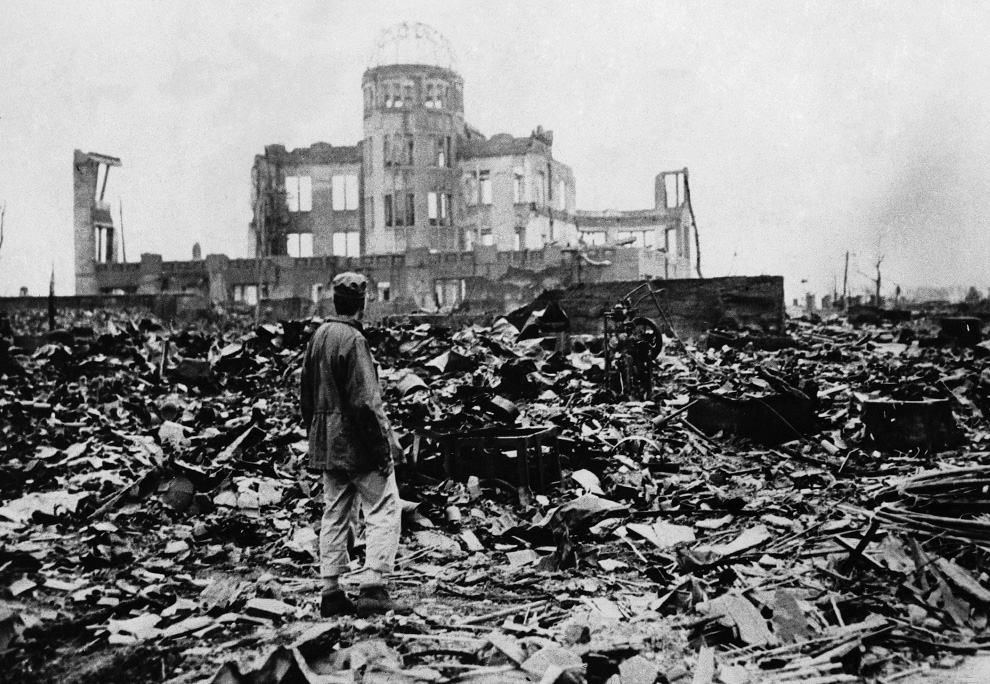
The first nuclear attack on a civilian population center, the U.S. strike on Hiroshima, left that city “uniformly and extensively devastated,” according to a study carried out in the wake of the attacks by the U.S. Strategic Bombing Survey.  “Practically the entire densely or moderately built-up portion of the city was leveled by blast and swept by fire… The surprise, the collapse of many buildings, and the conflagration contributed to an unprecedented casualty rate.”  At the time, local health authorities reported that 60% of immediate deaths were due to flash or flame burns and medical investigators estimated that 15%-20% of the deaths were caused by radiation.

Witnesses “stated that people who were in the open directly under the explosion of the bomb were so severely burned that the skin was charred dark brown or black and that they died within a few minutes or hours,” according to the 1946 report.  “Among the survivors, the burned areas of the skin showed evidence of burns almost immediately after the explosion.  At first there was marked redness, and other evidence of thermal burns appeared within the next few minutes or hours.”

Many victims kept their arms outstretched because it was too painful to allow them to hang at their sides and rub against their bodies.  One survivor recalled seeing victims “with both arms so severely burned that all the skin was hanging from their arms down to their nails, and others having faces swollen like bread, losing their eyesight. It was like ghosts walking in procession…  Some jumped into a river because of their serious burns. The river was filled with the wounded and blood.”

The number of fatalities at Hiroshima has been estimated at 140,000.  A nuclear attack on Nagasaki three days later is thought to have killed 70,000.  Today, according to Dallas, 15-kiloton nuclear weapons of the type used on Japan are referred to by experts as “firecracker nukes” due to their relative weakness.

In addition to killing more than 5.5 million people, a strike on Tehran involving five 250-kiloton weapons — each of them 16 times more powerful than the bomb dropped on Hiroshima — would result in an estimated 803,000 third-degree burn victims, with close to 300,000 others suffering second degree burns, and 750,000 to 880,000 people severely exposed to radiation. “Those people with thermal burns over most of their bodies we can’t help,” says Dallas.  “Most of these people are not going to survive… there is no saving them.  They’ll be in intense agony.”  As you move out further from the site of the blast, he says, “it actually gets worse.  As the damage decreases, the pain increases, because you’re not numb.”

In a best case scenario, there would be 1,000 critically injured victims for every surviving doctor but “it will probably be worse,” according to Dallas.  Whatever remains of Tehran’s healthcare system will be inundated with an estimated 1.5 million trauma sufferers.  In a feat of understatement, the researchers report that survivors “presenting with combined injuries including either thermal burns or radiation poisoning are unlikely to have favorable outcomes.”

Iranian government officials did not respond to a request for information about how Tehran would cope in the event of a nuclear attack.  When asked if the U.S. military could provide humanitarian aid to Iran after such a strike, a spokesman for Central Command, whose area of responsibility includes the Middle East, was circumspect.  “U.S. Central Command plans for a wide range of contingencies to be prepared to provide options to the Secretary of Defense and the President,” he told this reporter.  But Frederick Burkle, a senior fellow at the Harvard Humanitarian Initiative and Harvard University’s School of Public Health, as well as a coauthor of the just-published article, is emphatic that the U.S. military could not cope with the scale of the problem.  “I must also say that no country or international body is prepared to offer the assistance that would be needed,” he told me. 

Dallas and his team spent five years working on their study.  Their predictions were generated using a declassified version of a software package developed for the Defense Department’s Defense Threat Reduction Agency, as well as other complementary software applications.  According to Glen Reeves, the software used fails to account for many of the vagaries and irregularities of an urban environment.  These, he says, would mitigate some of the harmful effects.  Examples would be buildings or cars providing protection from flash burns.  He notes, however, that built-up areas can also exacerbate the number of deaths and injuries.  Blast effects far weaker than what would be necessary to injure the lungs can, for instance, topple a house.  “Your office building can collapse… before your eardrums pop!” notes Reeves.

The new study provides the only available scientific predictions to date about what a nuclear attack in the Middle East might actually mean.  Dallas, who was previously the director of the Center for Mass Destruction Defense at the Centers for Disease Control and Prevention, is quick to point out that the study received no U.S. government funding or oversight.  “No one wanted this research to happen,” he adds.

Rattling Sabers and Nuclear Denial

Frederick Burkle points out that, today, discussions about nuclear weapons in the Middle East almost exclusively center on whether or not Iran will produce an atomic bomb instead of “focusing on ensuring that there are options for them to embrace an alternate sense of security.”  He warns that the repercussions may be grave.  “The longer this goes on the more we empower that singular thinking both within Iran and Israel.”

Even if Iran were someday to build several small nuclear weapons, their utility would be limited.  After all, analysts note that Israel would be capable of launching a post-attack response which would simply devastate Iran.  Right now, Israel is the only nuclear-armed state in the Middle East.  Yet a preemptive Israeli nuclear strike against Iran also seems an unlikely prospect to most experts.

“Currently, there is little chance of a true nuclear war between the two nations,” according to Paul Carroll of the Ploughshares Fund.  Israel, he points out, would be unlikely to use nuclear weapons unless its very survival were at stake. “However, Israel’s rhetoric about red lines and the threat of a nuclear Iran are something we need to worry about,” he told me recently by email.   “A military strike to defeat Iran’s nuclear capacity would A) not work B) ensure that Iran WOULD then pursue a bomb (something they have not clearly decided to do yet) and C) risk a regional war.”

Cham Dallas sees the threat in even starker terms.  “The Iranians and the Israelis are both committed to conflict,” he told me.  He isn’t alone in voicing concern.  “What will we do if Israel threatens Tehran with nuclear obliteration?… A nuclear battle in the Middle East, one-sided or not, would be the most destabilizing military event since Pearl Harbor,” wrote Pulitzer Prize-winning national security reporter Tim Weiner in a recent op-ed for Bloomberg News.  “Our military commanders know a thousand ways in which a war could start between Israel and Iran… No one has ever fought a nuclear war, however. No one knows how to end one.”

The Middle East is hardly the only site of potential nuclear catastrophe.  Today, according to the Ploughshares Fund, there are an estimated 17,300 nuclear weapons in the world.  Russia reportedly has the most with 8,500; North Korea, the fewest with less than 10.  Donald Cook, the administrator for defense programs at the U.S. National Nuclear Security Administration, recently confirmed that the United States possesses around 4,700 nuclear warheads.  Other nuclear powers include rivals India and Pakistan, which stood on the brink of nuclear war in 2002.  (Just this year, Indian government officials warned residents of Kashmir, the divided territory claimed by both nations, to prepare for a possible nuclear war.)  Recently, India and nuclear-armed neighbor China, which went to war with each other in the 1960s, again found themselves on the verge of a crisis due to a border dispute in a remote area of the Himalayas.

In a world awash in nuclear weapons, saber-rattling, brinkmanship, erratic behavior, miscalculations, technological errors, or errors in judgment could lead to a nuclear detonation and suffering on an almost unimaginable scale, perhaps nowhere more so than in Iran.  “Not only would the immediate impacts be devastating, but the lingering effects and our ability to deal with them would be far more difficult than a 9/11 or earthquake/tsunami event,” notes Paul Carroll.  Radiation could turn areas of a country into no-go zones; healthcare infrastructure would be crippled or totally destroyed; and depending on climatic conditions and the prevailing winds, whole regions might have their agriculture poisoned.  “One large bomb could do this, let alone a handful, say, in a South Asian conflict,” he told me.

“I do believe that the longer we have these weapons and the more there are, the greater the chances that we will experience either an intentional attack (state-based or terrorist) or an accident,” Carroll wrote in his email.  “In many ways, we’ve been lucky since 1945.  There have been some very close calls.  But our luck won’t hold forever.”

Cham Dallas says there is an urgent need to grapple with the prospect of nuclear attacks, not later, but now.  “There are going to be other big public health issues in the twenty-first century, but in the first third, this is it.  It’s a freight train coming down the tracks,” he told me. “People don’t want to face this.  They’re in denial.”

Nick Turse is the managing editor of TomDispatch.com and a fellow at the Nation Institute.  An award-winning journalist, his work has appeared in the Los Angeles Times, the Nation, and regularly at TomDispatch. He is the author most recently of the New York Times bestseller Kill Anything that Moves: The Real American War in Vietnam (The American Empire Project, Metropolitan Books). You can catch his conversation with Bill Moyers about that book by clicking here. His website is NickTurse.com. You can follow him on Tumblr and on Facebook.

Tenth time lucky for Iran and the IAEA?

May 13, 2013

Tenth time lucky for Iran and the IAEA? – Alarabiya.net English | Front Page.

Monday, 13 May 2013
Iran’s chief nuclear negotiator Saeed Jalili shakes hands with IAEA chief Yukiya Amano. (AFP)
AFP, Vienna –

The U.N. atomic agency will on Wednesday press Iran, in their 10th meeting since late 2011, to grant access to sites, documents and scientists involved in Tehran’s alleged efforts to develop nuclear weapons.

The International Atomic Energy Agency (IAEA) says that there is “overall, credible” evidence that until 2003, and possibly since, such activities took place.

The agency conducts regular inspections of Iran’s declared nuclear facilities and Tehran, which denies seeking or ever having sought atomic weapons, says it is not obliged to grant access to any other sites.

Iran says the IAEA’s findings are based on faulty intelligence from foreign spy agencies such as the U.S. CIA and Israel’s Mossad — intelligence it complains it has not even been allowed to see.

Nine rounds of talks, the latest in February, since the publication of a major IAEA report in November 2011 on these alleged activities have produced no breakthrough. Iran says progress has been made but the agency denies even this.

In particular, the IAEA wants to be allowed to go to the Parchin military base near Tehran. It says its information on alleged activities at the site are not from spy agencies and can therefore be easily shared.

Iran counters that the IAEA already visited Parchin twice in 2005. The agency says that it has obtained new information since then, and Western countries have accused Iran of hiding evidence there.

Ali Asghar Soltanieh, Iran’s ambassador to the IAEA, has called such accusations “childish”.

In March, IAEA head Yukiya Amano called on Iran to grant access to Parchin without waiting for a wider accord covering all outstanding issues, but Tehran rejected the idea.

Parallel diplomatic efforts meanwhile between Iran and six major powers — the U.S., China, Russia, Britain, France and Germany — are focused more on Iran’s current activities, most notably uranium enrichment.

Enriched uranium is at the heart of the international community’s concerns since it can be used not only for peaceful purposes such as power generation but also — when highly purified — in a nuclear bomb.

The latest round with the “P5+1” in Almaty, Kazakhstan in early April ended with chief negotiator and EU foreign policy head Catherine Ashton saying the two sides remained “far apart”.

The U.N. Security Council has passed multiple resolutions calling on Iran to suspend all uranium enrichment, imposing several rounds of sanctions on the Islamic republic.

Additional U.S. and EU sanctions last year began to cause major economic problems by targeting the Persian Gulf country’s vital oil sector and financial system.

Israel, the Middle East’s sole if undeclared nuclear-armed state, meanwhile has refused to rule out military action on Iran, as has Washington.

The IAEA talks come ahead of the release next week of its latest regular report, which is expected to show that Tehran has continued to expand its nuclear program in spite of its international isolation.

“It seems like Iran is trying one more time to offer a minimal conversation right before the (IAEA) director general issues his next report … in a calculated move by Iran to soften criticism,” one Western diplomat told AFP.

Mark Fitzpatrick, analyst at the International Institute for Strategic Studies in London, was similarly pessimistic.

“The IAEA is persistent in asking for a means of resolving the issues, but Iran is stubbornly insisting on tying its IAEA obligations to sanctions relief on the diplomatic track,” he told AFP last month.