Archive for November 2012

Islamophobia… GIMMEE A BREAK !

November 23, 2012

Islamophobia… GIMMEE A BREAK ! – YouTube.

phobia
pho·bi·a
[foh-bee-uh]
noun
a persistent, irrational fear of a specific object, activity, or situation that leads to a compelling desire to avoid it.

Pat Condell demonstrates conclusively that it doesn’t exist.

Additionally, fear of radical Islam is far from “irrational.”  Given history and current events, any other view would be foolhardy. – JW

Alan M. Dershowitz: Why Gaza Cease-Fire Will Fail

November 23, 2012

Why Gaza Cease-Fire Will Fail.

Alan M. Dershowitz’s Perspective:

A cease-fire between Israel and Hamas may end the immediate exchange of rockets, but it is not likely to be of long duration. That is because every time Hamas fires rockets into Israel, it creates a win-win-win situation for itself.

The first win is that it terrorizes Israeli civilians, killing some, wounding others and creating panic among millions of Israelis who fear being hit. This show of strength enhances Hamas’ standing within much of the Muslim world.
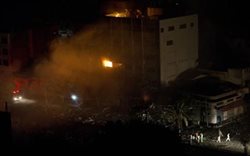
The second win is that by firing these rockets from densely populated areas in Gaza City, rather than from the many open fields outside of the populated areas in the Gaza Strip, Hamas provokes Israel into targeting the rockets and the terrorists who fire them. As soon as the terrorists fire the rockets, they run to special underground bunkers that are open only to the terrorists, thereby leaving civilians above ground and vulnerable to Israeli rockets.

This is a deliberate tactic employed by Hamas over many years and designed to bring about international condemnation of Israel for inadvertently killing Palestinian civilians. Israel’s only other options would be to allow Hamas rockets to be fired unanswered into Israel, or to conduct a ground war which would result in even greater international condemnation.

The third win for Hamas is that every time it fires rockets into Israel and provokes Israel into returning fire, it weakens the Palestinian Authority — its arch enemy in the West Bank. The Palestinian Authority has renounced violence, but it has no choice other than to support Hamas’ violence against Israel, which is popular among many Palestinians. The end result is a strengthened Hamas, which is seen as doing something and a weakened Palestinian Authority, which is seen as doing nothing.

The proof that this win-win-win strategy is working for Hamas can be seen on television, in the newspapers, at the United Nations and among the chattering classes. Virtually everyone acknowledges that Israel has the right to defend itself, but that Israeli military actions — particularly if they are tough enough to achieve a modicum of success — do more harm than good to Israel’s standing around the world. That is precisely the reaction that Hamas has been counting on — and with repeated success.

They attack Israel, thus committing the double war crime of using Palestinian civilians as human shields and targeting Israeli civilians. Yet it is Israel that is criticized for engaging in entirely lawful activities, such as conducting a military blockade of Gaza designed to prevent new rockets and rocket material from reaching Hamas terrorists, and targeting Hamas terrorist leaders and Hamas fighters who fire rockets at Israeli civilians.

So long as this dynamic continues, it will be in Hamas’ interest to do precisely what it did in 2008 and again now: start a new battle by firing rockets at Israeli civilians from behind its Palestinian human shields, provoke Israel into responding, and calling on the international community to condemn Israel for killing its babies.

This “dead-baby strategy” has been acknowledged by Hamas leaders, who refer to the victims as “martyrs” and proclaim that Palestinian children and women “have formed human shields . . . in order to challenge the Zionist bombing machine.” This strategy always works with an international media that cannot resist showing pictures of the dead babies who are brought to them by Hamas leaders (even when, as in one case, the baby was killed by a misfiring Hamas rocket.)

The real victims of this gruesome strategy are the Palestinian civilians who are cynically used as human shields. Hamas leaders refer to them as martyrs, because they are being used to implement this win-win-win strategy. There is growing evidence that at least some Gaza civilians are fed up with the Hamas strategy. They complain that too few Hamas fighters are being killed and too many Palestinian civilians are dying. They complain that Hamas has deliberately built underground bunkers only to protect its fighters but not its civilians.

Unfortunately, the Gaza Strip is not a democracy. It is tyranny ruled by Hamas killers, who have no hesitation in murdering Palestinians who express disagreement with their strategy. It is unlikely, therefore, that the views of the dissatisfied Palestinians in Gaza will have any impact on the Hamas strategy.

What we can expect, therefore, is a relatively short truce — Hamas calls it a “hudna” — that will last until Hamas decides it is time to invoke its strategy once again. Israel will respond, as it has in the past. In Israel this is called, “mowing the lawn” — cutting down Hamas periodically with no real expectation that the deadly grass will not continue to grow.

The only solution to this recurring problem is for the international community and the media, once and for all, to expose the Hamas strategy, to condemn it, and to deny Hamas the diplomatic and media victory it seeks to achieve by its double war crimes.

Alan M. Dershowitz’s Perspective: A cease-fire between Israel and Hamas may end the immediate exchange of rockets, but it is not likely to be of long duration. That is because every time Hamas fires rockets into Israel, it creates a win-win-win situation for itself.

The first win is that it terrorizes Israeli civilians, killing some, wounding others and creating panic among millions of Israelis who fear being hit. This show of strength enhances Hamas’ standing within much of the Muslim world.

gaza-nov--21.jpg
Palestinians inspect damage moments after an Israeli airstrike in Gaza City on Wednesday.
(AP Photo)

The second win is that by firing these rockets from densely populated areas in Gaza City, rather than from the many open fields outside of the populated areas in the Gaza Strip, Hamas provokes Israel into targeting the rockets and the terrorists who fire them. As soon as the terrorists fire the rockets, they run to special underground bunkers that are open only to the terrorists, thereby leaving civilians above ground and vulnerable to Israeli rockets.

This is a deliberate tactic employed by Hamas over many years and designed to bring about international condemnation of Israel for inadvertently killing Palestinian civilians. Israel’s only other options would be to allow Hamas rockets to be fired unanswered into Israel, or to conduct a ground war which would result in even greater international condemnation.

The third win for Hamas is that every time it fires rockets into Israel and provokes Israel into returning fire, it weakens the Palestinian Authority — its arch enemy in the West Bank. The Palestinian Authority has renounced violence, but it has no choice other than to support Hamas’ violence against Israel, which is popular among many Palestinians. The end result is a strengthened Hamas, which is seen as doing something and a weakened Palestinian Authority, which is seen as doing nothing.

The proof that this win-win-win strategy is working for Hamas can be seen on television, in the newspapers, at the United Nations and among the chattering classes. Virtually everyone acknowledges that Israel has the right to defend itself, but that Israeli military actions — particularly if they are tough enough to achieve a modicum of success — do more harm than good to Israel’s standing around the world. That is precisely the reaction that Hamas has been counting on — and with repeated success.

They attack Israel, thus committing the double war crime of using Palestinian civilians as human shields and targeting Israeli civilians. Yet it is Israel that is criticized for engaging in entirely lawful activities, such as conducting a military blockade of Gaza designed to prevent new rockets and rocket material from reaching Hamas terrorists, and targeting Hamas terrorist leaders and Hamas fighters who fire rockets at Israeli civilians.

So long as this dynamic continues, it will be in Hamas’ interest to do precisely what it did in 2008 and again now: start a new battle by firing rockets at Israeli civilians from behind its Palestinian human shields, provoke Israel into responding, and calling on the international community to condemn Israel for killing its babies.

This “dead-baby strategy” has been acknowledged by Hamas leaders, who refer to the victims as “martyrs” and proclaim that Palestinian children and women “have formed human shields . . . in order to challenge the Zionist bombing machine.” This strategy always works with an international media that cannot resist showing pictures of the dead babies who are brought to them by Hamas leaders (even when, as in one case, the baby was killed by a misfiring Hamas rocket.)

The real victims of this gruesome strategy are the Palestinian civilians who are cynically used as human shields. Hamas leaders refer to them as martyrs, because they are being used to implement this win-win-win strategy. There is growing evidence that at least some Gaza civilians are fed up with the Hamas strategy. They complain that too few Hamas fighters are being killed and too many Palestinian civilians are dying. They complain that Hamas has deliberately built underground bunkers only to protect its fighters but not its civilians.

Unfortunately, the Gaza Strip is not a democracy. It is tyranny ruled by Hamas killers, who have no hesitation in murdering Palestinians who express disagreement with their strategy. It is unlikely, therefore, that the views of the dissatisfied Palestinians in Gaza will have any impact on the Hamas strategy.

What we can expect, therefore, is a relatively short truce — Hamas calls it a “hudna” — that will last until Hamas decides it is time to invoke its strategy once again. Israel will respond, as it has in the past. In Israel this is called, “mowing the lawn” — cutting down Hamas periodically with no real expectation that the deadly grass will not continue to grow.

The only solution to this recurring problem is for the international community and the media, once and for all, to expose the Hamas strategy, to condemn it, and to deny Hamas the diplomatic and media victory it seeks to achieve by its double war crimes.

Read Latest Breaking News from Newsmax.com http://www.newsmax.com/Newsfront/Israel-Gaza-cease-fire-Hamas/2012/11/21/id/465051#ixzz2D2SixJCv

Alan M. Dershowitz’s Perspective: A cease-fire between Israel and Hamas may end the immediate exchange of rockets, but it is not likely to be of long duration. That is because every time Hamas fires rockets into Israel, it creates a win-win-win situation for itself.

The first win is that it terrorizes Israeli civilians, killing some, wounding others and creating panic among millions of Israelis who fear being hit. This show of strength enhances Hamas’ standing within much of the Muslim world.

gaza-nov--21.jpg
Palestinians inspect damage moments after an Israeli airstrike in Gaza City on Wednesday.
(AP Photo)

The second win is that by firing these rockets from densely populated areas in Gaza City, rather than from the many open fields outside of the populated areas in the Gaza Strip, Hamas provokes Israel into targeting the rockets and the terrorists who fire them. As soon as the terrorists fire the rockets, they run to special underground bunkers that are open only to the terrorists, thereby leaving civilians above ground and vulnerable to Israeli rockets.

This is a deliberate tactic employed by Hamas over many years and designed to bring about international condemnation of Israel for inadvertently killing Palestinian civilians. Israel’s only other options would be to allow Hamas rockets to be fired unanswered into Israel, or to conduct a ground war which would result in even greater international condemnation.

The third win for Hamas is that every time it fires rockets into Israel and provokes Israel into returning fire, it weakens the Palestinian Authority — its arch enemy in the West Bank. The Palestinian Authority has renounced violence, but it has no choice other than to support Hamas’ violence against Israel, which is popular among many Palestinians. The end result is a strengthened Hamas, which is seen as doing something and a weakened Palestinian Authority, which is seen as doing nothing.

The proof that this win-win-win strategy is working for Hamas can be seen on television, in the newspapers, at the United Nations and among the chattering classes. Virtually everyone acknowledges that Israel has the right to defend itself, but that Israeli military actions — particularly if they are tough enough to achieve a modicum of success — do more harm than good to Israel’s standing around the world. That is precisely the reaction that Hamas has been counting on — and with repeated success.

They attack Israel, thus committing the double war crime of using Palestinian civilians as human shields and targeting Israeli civilians. Yet it is Israel that is criticized for engaging in entirely lawful activities, such as conducting a military blockade of Gaza designed to prevent new rockets and rocket material from reaching Hamas terrorists, and targeting Hamas terrorist leaders and Hamas fighters who fire rockets at Israeli civilians.

So long as this dynamic continues, it will be in Hamas’ interest to do precisely what it did in 2008 and again now: start a new battle by firing rockets at Israeli civilians from behind its Palestinian human shields, provoke Israel into responding, and calling on the international community to condemn Israel for killing its babies.

This “dead-baby strategy” has been acknowledged by Hamas leaders, who refer to the victims as “martyrs” and proclaim that Palestinian children and women “have formed human shields . . . in order to challenge the Zionist bombing machine.” This strategy always works with an international media that cannot resist showing pictures of the dead babies who are brought to them by Hamas leaders (even when, as in one case, the baby was killed by a misfiring Hamas rocket.)

The real victims of this gruesome strategy are the Palestinian civilians who are cynically used as human shields. Hamas leaders refer to them as martyrs, because they are being used to implement this win-win-win strategy. There is growing evidence that at least some Gaza civilians are fed up with the Hamas strategy. They complain that too few Hamas fighters are being killed and too many Palestinian civilians are dying. They complain that Hamas has deliberately built underground bunkers only to protect its fighters but not its civilians.

Unfortunately, the Gaza Strip is not a democracy. It is tyranny ruled by Hamas killers, who have no hesitation in murdering Palestinians who express disagreement with their strategy. It is unlikely, therefore, that the views of the dissatisfied Palestinians in Gaza will have any impact on the Hamas strategy.

What we can expect, therefore, is a relatively short truce — Hamas calls it a “hudna” — that will last until Hamas decides it is time to invoke its strategy once again. Israel will respond, as it has in the past. In Israel this is called, “mowing the lawn” — cutting down Hamas periodically with no real expectation that the deadly grass will not continue to grow.

The only solution to this recurring problem is for the international community and the media, once and for all, to expose the Hamas strategy, to condemn it, and to deny Hamas the diplomatic and media victory it seeks to achieve by its double war crimes.

Read Latest Breaking News from Newsmax.com http://www.newsmax.com/Newsfront/Israel-Gaza-cease-fire-Hamas/2012/11/21/id/465051#ixzz2D2SixJCv

Alan M. Dershowitz’s Perspective: A cease-fire between Israel and Hamas may end the immediate exchange of rockets, but it is not likely to be of long duration. That is because every time Hamas fires rockets into Israel, it creates a win-win-win situation for itself.

The first win is that it terrorizes Israeli civilians, killing some, wounding others and creating panic among millions of Israelis who fear being hit. This show of strength enhances Hamas’ standing within much of the Muslim world.

gaza-nov--21.jpg
Palestinians inspect damage moments after an Israeli airstrike in Gaza City on Wednesday.
(AP Photo)

The second win is that by firing these rockets from densely populated areas in Gaza City, rather than from the many open fields outside of the populated areas in the Gaza Strip, Hamas provokes Israel into targeting the rockets and the terrorists who fire them. As soon as the terrorists fire the rockets, they run to special underground bunkers that are open only to the terrorists, thereby leaving civilians above ground and vulnerable to Israeli rockets.

This is a deliberate tactic employed by Hamas over many years and designed to bring about international condemnation of Israel for inadvertently killing Palestinian civilians. Israel’s only other options would be to allow Hamas rockets to be fired unanswered into Israel, or to conduct a ground war which would result in even greater international condemnation.

The third win for Hamas is that every time it fires rockets into Israel and provokes Israel into returning fire, it weakens the Palestinian Authority — its arch enemy in the West Bank. The Palestinian Authority has renounced violence, but it has no choice other than to support Hamas’ violence against Israel, which is popular among many Palestinians. The end result is a strengthened Hamas, which is seen as doing something and a weakened Palestinian Authority, which is seen as doing nothing.

The proof that this win-win-win strategy is working for Hamas can be seen on television, in the newspapers, at the United Nations and among the chattering classes. Virtually everyone acknowledges that Israel has the right to defend itself, but that Israeli military actions — particularly if they are tough enough to achieve a modicum of success — do more harm than good to Israel’s standing around the world. That is precisely the reaction that Hamas has been counting on — and with repeated success.

They attack Israel, thus committing the double war crime of using Palestinian civilians as human shields and targeting Israeli civilians. Yet it is Israel that is criticized for engaging in entirely lawful activities, such as conducting a military blockade of Gaza designed to prevent new rockets and rocket material from reaching Hamas terrorists, and targeting Hamas terrorist leaders and Hamas fighters who fire rockets at Israeli civilians.

So long as this dynamic continues, it will be in Hamas’ interest to do precisely what it did in 2008 and again now: start a new battle by firing rockets at Israeli civilians from behind its Palestinian human shields, provoke Israel into responding, and calling on the international community to condemn Israel for killing its babies.

This “dead-baby strategy” has been acknowledged by Hamas leaders, who refer to the victims as “martyrs” and proclaim that Palestinian children and women “have formed human shields . . . in order to challenge the Zionist bombing machine.” This strategy always works with an international media that cannot resist showing pictures of the dead babies who are brought to them by Hamas leaders (even when, as in one case, the baby was killed by a misfiring Hamas rocket.)

The real victims of this gruesome strategy are the Palestinian civilians who are cynically used as human shields. Hamas leaders refer to them as martyrs, because they are being used to implement this win-win-win strategy. There is growing evidence that at least some Gaza civilians are fed up with the Hamas strategy. They complain that too few Hamas fighters are being killed and too many Palestinian civilians are dying. They complain that Hamas has deliberately built underground bunkers only to protect its fighters but not its civilians.

Unfortunately, the Gaza Strip is not a democracy. It is tyranny ruled by Hamas killers, who have no hesitation in murdering Palestinians who express disagreement with their strategy. It is unlikely, therefore, that the views of the dissatisfied Palestinians in Gaza will have any impact on the Hamas strategy.

What we can expect, therefore, is a relatively short truce — Hamas calls it a “hudna” — that will last until Hamas decides it is time to invoke its strategy once again. Israel will respond, as it has in the past. In Israel this is called, “mowing the lawn” — cutting down Hamas periodically with no real expectation that the deadly grass will not continue to grow.

The only solution to this recurring problem is for the international community and the media, once and for all, to expose the Hamas strategy, to condemn it, and to deny Hamas the diplomatic and media victory it seeks to achieve by its double war crimes.

Read Latest Breaking News from Newsmax.com http://www.newsmax.com/Newsfront/Israel-Gaza-cease-fire-Hamas/2012/11/21/id/465051#ixzz2D2SixJCv

Read Latest Breaking News from Newsmax.com http://www.newsmax.com/Newsfront/Israel-Gaza-cease-fire-Hamas/2012/11/21/id/465051#ixzz2D2SbciKe

Only 1 in 5 think Israel ‘won’ the eight-day battle against Hamas

November 23, 2012

Only 1 in 5 think Israel ‘won’ the eight-day battle against Hamas | The Times of Israel.

Netanyahu gets ‘good’ rating from 38%; chief of staff Gantz’s performance seen as good by 79%

November 22, 2012, 9:35 pm 5
Prime Minister Benjamin Netanyahu, Foreign Minister Avigdor Liberman and Defense Minister Ehud Barak announce a ceasefire with Hamas at a joint press conference in Jerusalem, on Wednesday, November 21 (photo credit: Miriam Alster/Flash90)

Prime Minister Benjamin Netanyahu, Foreign Minister Avigdor Liberman and Defense Minister Ehud Barak announce a ceasefire with Hamas at a joint press conference in Jerusalem, on Wednesday, November 21 (photo credit: Miriam Alster/Flash90)

Only a fifth of Israelis think Israel “won” the eight day conflict with Hamas that ended on Wednesday, and fewer than two fifths feel Prime Minister Benjamin Netanyahu handled the conflict well, according to an opinion poll taken Thursday.

The findings reflect disappointment among many Israelis that Operation Pillar of Defense ended with Hamas hailing victory and a sense that the Gaza-ruling terror group may not have been deterred for long from resuming its rocket fire on southern Israel.

In the survey, for Channel 2 news, 29% of those polled felt Hamas had been the winner in the conflict, 20% said Israel, 46% chose neither, and 5% had no answer.

Netanyahu’s performance was classified as good by 38%, not good by 28%, medium by 28%, and 6% did not venture an opinion.

Defense Minister Ehud Barak fared fairly similarly, with 40% giving him a rating of good, 25% not good, 29% medium, and 6% not making a classification.

Both men spoke on Thursday about a readiness to resume military attacks on Hamas if the ceasefire is not maintained, and insisted that the goals of the resort to force had been achieved.

In contrast to their mediocre ratings, the Israeli public felt IDF chief of General Staff Benny Gantz performed well in the conflict. He got a rating of good from 79%, with only 4% calling his performance bad, 10% classifying it as medium, and 7% offering no opinion.

An earlier opinion poll Thursday, examining voting preferences ahead of the January 22 elections, showed Netanyahu’s Likud, which is partnered by Foreign Minister Avigdor Liberman’s Yisrael Beytenu party, slipping to 33 seats; the two parties’ combined representation in the outgoing Knesset totals 42 seats. In the course of the conflict, polls had shown Likud-Yisrael Beytenu heading for 38-41 seats.

Thursday’s poll showed votes for the Likud going instead to more right-wing parties, with Netanyahu therefore still looking well set for reelection but at the head of a more hawkish coalition.

US pins its hopes on Egypt after Gaza ceasefire

November 23, 2012

US pins its hopes on Egypt after Gaza ceasefire | The Times of Israel.

Despite lukewarm relations in recent months, Obama administration looks to Egypt’s Morsi to shepherd the peace

November 23, 2012, 9:18 am 0
Egyptian President Mohammed Morsi waves to a Cairo crowd in October before making a speech on the national holiday that marks Egypt's 1973 war with Israel (photo credit: AP/Egyptian Presidency)

Egyptian President Mohammed Morsi waves to a Cairo crowd in October before making a speech on the national holiday that marks Egypt’s 1973 war with Israel (photo credit: AP/Egyptian Presidency)

WASHINGTON (AP) — In Egypt we trust.

In frantic diplomacy, the Obama administration helped seal a ceasefire that puts heavy responsibility on Egypt’s young Islamist government to ensure the end of Hamas rockets from the Gaza Strip. If Egypt delivers, the United States will have rediscovered the stalwart regional partner it has lacked since the autocratic Hosni Mubarak was overthrown in a popular revolt last year. If it fails, stability across the region will suffer.

Much depends on whether the agreement brokered by Egyptian President Mohammed Morsi proves durable and halts not only a week of open warfare that killed more than 160 Palestinians and six Israelis, but definitively ends rocket attacks on southern Israel from Gaza that grew increasingly frequent in recent months.

Standing beside Morsi’s foreign minister in Cairo, Secretary of State Hillary Rodham Clinton said the deal would improve conditions for Gaza’s 1.5 million people while offering greater security for the Jewish state — but the fierceness of the recent encounter meant no one was declaring it a success yet.

And US officials familiar with Clinton’s last-minute diplomatic shuttling warned against making any judgments until the ceasefire proves to hold.

The US is counting on Morsi to shepherd the peace. The former Muslim Brotherhood leader emerged from his first major international crisis with enhanced prestige and now has a track record as someone who can mediate between the two sworn enemies, something the United States cannot do because it considers Hamas a terrorist organization and doesn’t allow contacts between its members and American officials.

Hours into the ceasefire, Morsi seemed to have persuaded Hamas, a Brotherhood offshoot, to abide by its conditions.

He won immediate praise from Washington, with President Barack Obama thanking Morsi “for his efforts to achieve a sustainable ceasefire and for his personal leadership in negotiating a ceasefire proposal.” In their sixth phone call since last week, Obama on Wednesday welcomed Morsi’s “commitment to regional security” and the leaders agreed to work toward a “more durable solution to the situation in Gaza,” according to a White House statement.

The diplomacy clearly strengthened a US-Egyptian partnership that has been strained in the 21 months since Egyptians toppled Mubarak. In that time, Washington angrily protested Cairo’s crackdown on US-funded pro-democracy groups, its slow response to attacks on the Israeli and US embassies, and its inconsistent control over the Sinai Peninsula. The US regularly threatened to withhold aid, and Obama remarked in September that he no longer considered Egypt an ally.

That breakdown was a marked reversal from the legacy of Mubarak’s three-decade autocracy, when the Arab world’s most populous and influential country closely cooperated with the United States in fighting al-Qaeda, containing the influence of Iran and mediating between Israel and the Palestinians. Although Morsi’s government has promised to abide by the 1979 Camp David Accords with Israel, his Muslim Brotherhood resume had raised concerns about his true commitment. And continued comments against the peace treaty from Brotherhood members raised ire in Israel and the US.

Getting Egypt back on board as a good-faith mediator appeared to be a major selling point in winning the Israelis to the conditions of the ceasefire. “Egypt shall receive assurances from each party” that they are committed to the deal, the ceasefire agreement says. “Each party shall commit itself not to perform any acts that would break this understanding. … In case of any observations, Egypt — as the sponsor of this understanding — shall be informed to follow up.”

In a telephone conversation with Israeli Prime Minister Benjamin Netanyahu, Obama seemed to be trying to re-establish the strong triangular relationship between the US, Israel and Egypt that had been a bulwark of regional security under Mubarak.

The president expressed his “appreciation” for Netanyahu’s willingness to work with Egypt’s government on the package and reiterated full US support for Israel’s right to self-defense. But the White House noted that Obama had specifically “recommended” that Netanyahu accept the Egyptian proposal. Obama also vowed to help the Israelis address the smuggling of weapons and explosives into Gaza and pledged additional funding for Iron Dome and other US-Israeli missile defense programs.

Israel launched well over 1,500 airstrikes and other attacks on targets in Gaza, while more than 1,000 rockets pounded Israel.

According to the ceasefire agreement, Israel and all Palestinian militant groups agreed to halt “all hostilities.” For the Palestinians, that means an end to Israeli airstrikes and assassinations of wanted militants. For Israel, it brings a halt to rocket fire and attempts at cross-border incursions from Gaza.

After a 24-hour cooling-off period, the ceasefire calls for “opening the crossings and facilitating the movement of people and transfer of goods, and refraining from restricting residents’ free movement.” That could amount to the biggest easing of Israel’s blockade of Gaza since it shut off the territory from much of the world five years ago. Hamas officials said details on the new border arrangements would have to be negotiated.

If the ceasefire holds, Israel and Egypt will be clear beneficiaries. But Hamas, too, comes out a winner, having long been isolated by Washington’s Arab allies but now embraced by much of the region.

The Western-backed government of Palestinian President Mahmoud Abbas, in charge of the West Bank, was cut out of the ceasefire equation, and Clinton reminded him during her visit to Ramallah that Washington remains firmly opposed to his plan for UN recognition of an independent Palestine.

The Obama administration hopes the end to the immediate crisis could advance a broader Mideast strategy that promotes Israeli-Palestinian peace, reinforces the Israel-Egypt peace treaty and reduces Iran’s influence in Gaza. The calculation is that Morsi’s mediation between Israel and Hamas and elevated standing on the world stage brings with it a responsibility to maintain the ceasefire, forcing him to deliver on Israel’s behalf.

In the US view, maintenance of the truce also means cracking down on Iranian weapons shipments to Gaza. Iran has long used Hamas and other groups as proxy forces against Israel.

The goal of a larger peace treaty that allows for the establishment of an independent Palestine may remain far away, but it would not be feasible if Hamas continues to launch projectiles at the Jewish state and Arab powers led by Egypt aren’t engaged in the process.

Half of Israelis think government should have continued Gaza operation, poll shows

November 23, 2012

Half of Israelis think government should have continued Gaza operation, poll shows | The Times of Israel.

Same survey shows Netanyahu’s alliance with Yisrael Beytenu losing some support after Pillar of Defense, but still in position to form next government

November 23, 2012, 10:59 am 0
An Israeli soldier stands next to a tank near the Gaza border on Sunday (photo credit: Tsafrir Abayov/Flash90)

An Israeli soldier stands next to a tank near the Gaza border on Sunday (photo credit: Tsafrir Abayov/Flash90)

JERUSALEM — A poll released Friday shows that about half of Israelis think their government should have continued its military offensive against Palestinian militants in Hamas-ruled Gaza.

The independent Maagar Mohot poll shows 49 percent of respondents feel Israel should have kept going after squads who fire rockets into Israel. Thirty-one percent supported the government’s decision to stop. Twenty percent had no opinion.

Twenty-nine percent thought Israel should have sent ground troops to invade Gaza.

Israel and Hamas agreed to a ceasefire two days ago.

The poll of 503 respondents had an error margin of 4.5 percentage points.

The same survey showed Prime Minister Benjamin Netanyahu’s Likud Party and electoral partner Yisrael Beytenu losing some support, but his hard-line bloc still able to form the next government. Elections are scheduled for Jan. 22.

Netanyahu’s chief rival in the last elections, former Kadima party chief Tzipi Livni, is expected to announce her bid for the Knesset as the head of a new party early next week, after former prime minister Ehud Olmert officially bows out of the race.

Netanyahu trying to convince Israeli hawks he won the Gaza war

November 23, 2012

Netanyahu trying to convince Israeli hawks he won the Gaza war Israel News | Haaretz Daily Newspaper.

It takes great courage to stand in front of your voters when they are mad at you and don’t understand you. They seemed to have thought Netanyahu was what he said he was, but they will most likely calm down by January 22.

By | Nov.23, 2012 | 10:05 AM | 6
Netanyahu at police headquarters in Jerusalem - Reuters - Nov. 22, 2012

Prime Minister Benjamin Netanyahu looks up during his visit to the police headquarters in Jerusalem November 22, 2012. Photo by Reuters
Olivier Fitoussi

Prime Minister Netanyahu, Foreign Minister Lieberman, and Defense Minister Barak in Jerusalem, November 21, 2012. Photo by Olivier Fitoussi

The night after, Wednesday night to Thursday morning, Prime Minister Benjamin Netanyahu slept for eight hours. Over the seven nights of Operation Pillar of Defense, he made sure to sleep at least five hours a night, otherwise he didn’t trust himself. “I need to drive,” he said, using the Hebrew word that shares the same root as to “lead.”

All told, he looks satisfied, at least outwardly. Netanyahu completely understands the dissatisfaction among broad sections of the public, especially in the south, and in particular among his voters and soldiers. “When I was a soldier and Moshe Dayan or the prime minister canceled our operation, we were furious. … Today I am prime minister and I am committed to do the right thing for the country,” said Netanyahu in private conversations Thursday.

“Sometimes it is hard not to get carried away. I remember what happened to my predecessor [Ehud Olmert]. At some point the events took control of him. We controlled the events. Everything was very, very precise. I set goals and met them: We exacted a heavy price from them, and damaged their armaments. We erased years of stockpiling long- and medium-range missiles. Beforehand, I said I preferred to achieve these goals without entering [Gaza], and that is what we did. We also have other fronts. We must take into account the entire picture,” said Netanyahu.

There were those who reminded the prime minister Thursday of the harsh declarations he made when he was in the opposition about how he would eradicate the Hamas government when he became prime minister. “I intend on also being the next prime minister,” said Netanyahu.

MKs and ministers from the Likud, who will be fighting in the party primary at the beginning of next week for their position on the Likud list for the next Knesset, expressed their fears that the party would lose seats to the right-wing parties now. “I know that is a possibility, but I am convinced I acted correctly. It is wrong to ask such a political question at such a juncture. It is not the role of a leader. The opposite, it is the responsibility of a leader to make decisions even when they exact a political price from him,” Netanyahu said. He sounded quite certain that in the end, the political price would not be too painful.

Netanyahu was also not willing to commit to how long the cease-fire would last. It depends on the other side, he said: If the rockets return, Israel is ready for every scenario. Netanyahu wants quiet for as long as possible, and in the meantime wants to prevent the continued arming of Hamas and other organizations. He reached agreements with U.S. President Barack Obama on this.

Hamas’ victory celebrations in Gaza did not impress Netanyahu: The terrorists who just on Thursday morning crawled out of their hiding places, for the first time understood the scope of destruction. They want to call that victory? Let them, said Netanyahu. “They were surprised by the force of the response,” he said.

“We acted correctly, we even acted harmoniously,” said the prime minister. By harmoniously, Netanyahu means the troika of him, Defense Minister Ehud Barak and Foreign Minister Avigdor Lieberman. They were authorized by the cabinet to lead the operation. As to whether in his opinion this same threesome will remain in the same positions after the election in January: “These matters are in the hands of the creator,” said Netanyahu. “But that is a good assessment.”

In the hours before the declaration of the cease-fire, Netanyahu made a furious round of telephone calls to senior Likud officials. He pleaded with them to represent him faithfully in the press and spread the good news, based on the following messages: 1. Egypt under Morsi and the Muslim Brotherhood will back the agreement and is committed to keeping it, which is a great achievement for Israeli policy and regional stability. 2. A ground operation inside Gaza would have turned out to be very problematic and the results would have included many dead, a bogged-down army and continued rocket fire – a heavy price for a small benefit. 3. The relationship between Netanyahu and Obama, as expressed in the telephone calls between them and the presidential statements from the White House, is supportive, effective and smooth. No revenge for backing Mitt Romney. 4. Netanyahu also asked his ministers to practice, and repeat, each in their own style, four words: Responsibility, discretion, wisdom and statesmanship.

Netanyahu is not the first prime minister who abandoned all his principles at the moment of truth, and threw all his speeches, articles and writings into the trash, making a U-turn from all his promises to the voters. He is marching down the same road paved by many of his predecessors: Ehud Olmert metamorphosed overnight from a member of the Likud’s right wing to the leader of the left; Ariel Sharon, builder of the settlements, evacuated without blinking an eye the entire Katif Bloc in Gaza, and recognized a Palestinian state; and Menachem Begin returned all of Sinai down to the last clod of dirt. Even Yitzhak Shamir was dragged kicking and screaming to the Madrid Conference at a time when the words “international conference” were considered disgraceful. And these are only the Likud prime ministers.

To Netanyahu’s credit, or disgrace, depending on the eye of the beholder, we must acknowledge that he is truly the champion of flexibility. The two foundations on which he built his political persona over the last 20 years were these: We will not release terrorist murderers for abducted Israelis, such as in the Ahmed Jibril deal; and we will not blink in the face of terror. But when his great test came 13 months ago, Netanyahu ordered the release of hundreds of arch-terrorists in return for Gilad Shalit. During his second great test this week, he blinked once again. In the face of a fruitless ground campaign, and under great international pressure, he backed down a second time.

It takes great courage to stand in front of your voters when they are mad at you and don’t understand you. They seemed to have thought Netanyahu was what he said he was. They will most likely calm down by January 22.

Israel Bombed Sudan Arms Factory Over Flow of Advanced Rockets to Hamas

November 23, 2012

Israel Bombed Sudan Arms Factory Over Flow of Advanced Rockets to 

Around this time last month, a Sudanese arms plant went up in flames in what the genocidal state of Sudan claimed was an Israeli attack. Now there may be an explanation for why Israel would have gone after Sudan.

Sudan has played a key role in arming Hamas militants with sophisticated Iranian-made rockets, experts said.

The Israeli Defense Forces’ (IDF) principal objective in Gaza is to rid Palestinian terrorists of sophisticated Iranian-produced rockets that are capable of striking deep into Israel’s heartland, including Jerusalem and Tel Aviv.

These rockets originated in Sudan and were then smuggled into Gaza with Iran’s help, sources said.

The existence of these advanced Fajr-5 rockets reveals the deepening ties between Iran and its terrorist proxies in Gaza and Sudan, where the rockets were housed before shipment.

“To put it simply, it was Iranian-made Fajr-5s, imported via Sudan, that prompted this war,” said Jonathan Schanzer, vice president for research at the Foundation for the Defense of Democracies. “Iran’s fingerprints are all over this.”

Considering the range of these rockets and the Iranian connection, it would be no surprise that Israel would have launched such an operation, particularly since allowing Iran a base in Sudan could have led to a pipeline for even more dangerous weapons.

Here incidentally is how the Sunday Times described that attack.

Eight Israeli F-15I planes — four carrying two one-ton bombs, escorted by four fighters — struck the giant Yarmouk factory on the southwestern outskirts of Khartoum, the capital, in the early hours of Wednesday.

The Complicated Politics of the Israel-Hamas Cease-Fire

November 23, 2012

The Complicated Politics of the Israel-Hamas Cease-Fire « Commentary Magazine.

At the beginning of this year, as speculation over whether Israel was preparing to strike Iran’s nuclear program reached something of a crescendo, one of Israel’s most respected journalists sat down with Defense Minister Ehud Barak. The journalist, Ronen Bergman, asked Barak about the former political and military figures who had begun to publicly argue against a strike. Barak responded with a reminder about the burden of responsibility he carries along with Prime Minister Benjamin Netanyahu.

“It’s good to have diversity in thinking and for people to voice their opinions,” Barak said. “But at the end of the day, when the military command looks up, it sees us — the minister of defense and the prime minister. When we look up, we see nothing but the sky above us.” Barak wasn’t trying to be dramatic; rather, he was making make a point about the historical weight that rests on nearly every major decision made by the Israeli leadership. Many in the press took this as a declaration by Barak that he would always err on the side of the hawks—why take any chances? But in reality, as we saw this week with Operation Pillar of Defense, it can often mean just the opposite. Barak Ravid reports:

At Tuesday’s meeting, just before U.S Secretary of State Hillary Clinton arrived, it became clear to Israel that the principles for a cease-fire being proposed by Egypt were much closer to Hamas’ positions than to its own. The assumption voiced by intelligence officials at the triumvirate meeting was that, contrary to the situation during Mubarak’s era, the Egyptians are aligning with Hamas and trying to provide it with achievements.

This triggered an acerbic dispute between Barak and Lieberman. The defense minister, opposed to an expansion of the operation, thought Israel should respond positively to Egypt’s proposal for a cease-fire and end the operation. Barak said at the meeting that the precise wording of the Egyptian draft is not important since the end of fighting and Israel’s power of deterrence would be tested by the reality on the ground.

Despite a clear lack of trust in their Egyptian counterparts, Barak argued for, and Netanyahu accepted, the merits of ending the conflict without a ground incursion into Gaza. Netanyahu, as we’ve written here before, bears almost no relation to the caricature painted of him in the Western press. The journalists who have spent the last year or two republishing rumors of an imminent Israeli attack on Iran that never materialized too often believed their own spin. Netanyahu, they said, was a warmonger who would order risky comprehensive military operations over the objections of the Israeli public. But in fact, as we learned this week, the Israeli public opposed the cease-fire that brought an end to Operation Pillar of Defense—by a wide margin.

They tended to agree with Avigdor Lieberman, that Israel’s deterrence had not yet been restored. And this wasn’t coming from the peanut gallery sitting on the sidelines. As the Times of Israel reports, there was noticeable and vocal dissent within the military—soldiers who were called up just in case and expressed vehement disappointment that they were never ordered into Gaza.

Netanyahu’s acceptance of the cease-fire is certainly popular outside Israel, especially among his fellow diplomats and heads of state. But there is some risk here too; Netanyahu’s counterparts abroad don’t care what the terms of the deal are, and they don’t much care for Israel’s deterrent capability. They want, more than anything, for Egyptian President Mohamed Morsi to look like a pragmatic dealmaker, to assuage Western fears that a Muslim Brotherhood government in Egypt will side with Hamas, which has its roots in the Brotherhood as well, rather than with Western interests.

And any goodwill Netanyahu earns will dissipate almost immediately; “Bibi the Peacemaker” runs counter to the narrative the media constructed and from which they seem constitutionally incapable of deviating. They told us Netanyahu was launching this conflict to shore up his reelection prospects. That it seems to have done the reverse—he is still favored, but looks to be somewhat weakened by the cease-fire—is an example of the difficult position in which Israel finds itself. Israelis prove time and again that their state can uphold both democracy and national security—two things increasingly unimportant to the Jewish state’s critics abroad.

Ceasefire puts Netanyahu on the defensive, but he likely won’t have to worry come January

November 23, 2012

Ceasefire puts Netanyahu on the defensive, but he likely won’t have to worry come January | The Times of Israel.

In first poll after truce with Hamas, Likud-Beytenu is sliding while Labor gains. But can Yachimovich’s party, lacking in military credibility, turn public disappointment over Pillar of Defense into political gain?

November 22, 2012, 8:53 pm 4
Prime Minister Benjamin Netanyahu speaks at the National Police Headquarers in Jerusalem on November 22, 2012. Photo credit: Yonatan Sindel/Flash90)

Prime Minister Benjamin Netanyahu speaks at the National Police Headquarers in Jerusalem on November 22, 2012. (photo credit: Yonatan Sindel/Flash90)

Benjamin Netanyahu’s decision not to widen the Gaza offensive has put the prime minister on the defensive, a stance he will likely have to maintain for the coming days, and maybe weeks.

The rockets have stopped and Hamas has been dealt a severe blow, but in Israel bitterness is growing over the decision to agree to a ceasefire before launching a ground operation, as many had wished, to ostensibly “clean up” Gaza’s terrorism once and for all.

Indeed, the first poll released after the end of the offensive shows the united Likud-Beytenu list, headed by Netanyahu and Foreign Minister Avigdor Liberman, taking a serious hit, while second-placed Labor remains strong.

With two months to go, though, before January 22′s polling day, the downturn is likely temporary, brought on by disappointment over the purported fruitlessness of Operation Pillar of Defense. After Israel has voted, Netanyahu will likely find himself staying put in the Prime Minister’s Residence.

At the beginning of the Gaza offensive, it seemed Israel had learned lessons from previous military campaigns: the international community firmly supported Israel’s right to defend its citizens, the hasbara (public diplomacy) apparatus worked fine, the number of civilian casualties was kept low.

All large parties in the Knesset put their election campaigns on hold and supported the government’s resort to force. But as the days went by, the wind at the prime minister’s back died down. The right flank demanded the IDF put boots on the ground to wipe out Hamas with a thorough ground operation. The left wanted to see an immediate ceasefire.

Netanyahu opted for the ceasefire, deeply disappointing Israel’s security hawks who felt that if Hamas remained in power, it would be able to rearm soon enough and that Operation Pillar of Defense hadn’t achieved anything after all.

The prime minister is aware that many Israelis, and especially the pool of potential Likud voters, are frustrated, and that he now needs to justify his decision or see some supporters drift toward alternative parties, including those to the right of Likud.

“I know that there are citizens who expected an even sharper response. We are prepared for this as well. Just as we did during this operation, we will decide when and how to act, and against whom,” Netanyahu said Thursday at the National Police Headquarters in Jerusalem. “This [ceasefire] is the right thing to do for the State of Israel at this time, but we are also prepared for the possibility that the ceasefire will not be upheld, and we will know how to act if need be.”

At about same time as he spoke at the police station, about a dozen Israelis gathered in front of the Prime Minister’s Residence to protest the fact that, as they saw it, had Netanyahu let Hamas off the hook.

A little earlier, a group of IDF soldiers, apparently frustrated about Netanyahu’s hesitance to send them into battle, lay on the ground for a rebellious photo shoot and arranged their bodies to spell out the Hebrew words “Bibi [is a] loser.”

Soldiers use their bodies to spell 'Bibi [is a] loser' Thursday (photo credit: screen capture/Facebook)

IDF soldiers using their bodies to spell ‘Bibi [is a] loser,’ November 22, 2012. (photo credit: screen capture/Facebook)

Before the ceasefire was even official, groups of demonstrators had gathered in several cities in the south, chanting, “The people demand quiet in the south.”

By taking the slogan of last year’s social protest movement — “the people demand social justice” — and turning it into a rallying cry for tougher military action in Gaza, were they reflecting a changing theme for the upcoming elections? The left wing had been looking forward to directing the national conversation toward the high cost of living, sharing the national burden and getting the ultra-Orthodox to enlist and to join the workforce, while Netanyahu wanted security considerations to take center stage.

And were elections held this week, security would indeed be the central issue, but it would not work in Netanyahu’s favor.

Before the offensive started, Netanyahu was leading comfortably in every opinion poll; it seemed a matter of course that he would head the next government. Did he shoot himself in the foot when he okayed the killing of Hamas military chief Ahmed Jabari and started the eight-day campaign?

The first poll published after the ceasefire went into effect seems to support that assessment: It predicted merely 33 seats for Likud-Beytenu, nine seats less than Netanyahu’s Likud and Liberman’s Yisrael Beytenu parties had together in the outgoing Knesset. In three polls conducted while the operation was still ongoing, their joint list still had scored between 38 and 41 seats.

Labor, on the other hand, stayed strong in the polls. The surveys taken during the Gaza offensive predicted 21 or 22 seats, and Thursday’s poll, which was conducted for and broadcast by TV’s Knesset Channel, even gives the party 24 seats.

Common wisdom says that in times of war people lean to the right. To some extent that is true now as well. Thursday’s poll sees the far-right Jewish Home and National Union parties, which are running on a united ticket under former Netanyahu aide Naftali Bennett, getting 13 seats. (In the outgoing Knesset, they had seven seats together.)

A new party, Power to Israel, headed by far-right-wingers Michael Ben-Ari and Aryeh Eldad, would win four seats, according to the Knesset Channel poll.

He might be called a “loser” now, but Netanyahu will most likely be reelected, nonetheless Hawkish voters disappointed about the meager outcome of Operation Pillar of Defense will not flock to the left or even centrist parties. According to Thursday’s poll, overall, the right-wing bloc still triumphs handily over the center-left wing bloc, with 69 versus 51 seats.

Labor party Chairwoman Shelly Yachimovich (photo credit: Yoav Ari Dudkevitch/Flash90)

Labor party Chairwoman Shelly Yachimovich (photo credit: Yoav Ari Dudkevitch/Flash90)

What about Labor? Some analysts predict that the center-left party and its chairwoman, Shelly Yachimovich — not Netanyahu — will be the big losers of Operation Pillar of Defense. Rocket alerts and terrorism returned to Tel Aviv, and having security issues on the agenda is bad news for a party not seen as particularly strong in these areas.

While Yachimovich enjoys considerable credibility on socioeconomic issues, her candidates list for the 19th Knesset does not feature anyone with bona fide security credentials.

Uri Sagi, a former head of the IDF’s intelligence branch, had originally planned to run for a spot on Labor’s list, but he stepped out of the race after reports of allegations of sexual misconduct appeared. (Former defense minister and Labor MK Amir Peretz was received like a war hero in the south this week due to his role in the creation of the Iron Dome missile defense system. He will probably do well in the party’s primaries on November 29, but his lack of senior military background and role in the 2006 Lebanon War debacle work against him.)

Yachimovich argues that security credentials are not everything. “Look what’s happening in politics today: you have two highly decorated generals, Ehud Barak and Shaul Mofaz, and both won’t cross the electoral threshold,” she said Thursday. “And then you have me, who was [merely] a first lieutenant in the Israel Air Force. And the party I head has massive support that will get us more than 20 seats.”

Defense Minister Barak (Independence) and opposition leader Mofaz (Kadima) are both former IDF chiefs of staff heading parties that will barely make into the Knesset, if at all, according to current polls.

Yachimovich has a point: Israelis don’t make their vote contingent only on a candidate’s army credentials. Yair Lapid, a former journalist, is also no general, but will likely end up with a healthy number of Knesset seats. Still, Labor’s security vacuum is sure to cost it support.

Operation Pillar of Defense will be dissected non-stop — hailed by some and condemned by others — during the next few weeks, as the campaign gets into gear again after the war-imposed eight-day hiatus. But it may not be a big game-changer.

It is natural that polls fluctuate during and right after a war. Surveys and anti-government demonstrations reflect the current mood of the people. But there are two months left before voters actually head to the polls. If the ceasefire with the Hamas holds for that long, so will Netanyahu’s comfortable lead.

Report: Egypt Warned Ground Op would End Peace

November 23, 2012

Report: Egypt Warned Ground Op would End Peace – Defense/Security – News – Israel National News.

Israel decided to refrain from a ground invasion of Gaza after it was warned that such a move could spell the end of the peace agreements with Egypt and Jordan, Channel 2 reported Thursday.

According to the report, Mossad Head Tamir Pardo, who went to Cairo as Israel’s representative in the contacts that preceded the ceasefire, was told in messages from Cairo and from Washington that the peaceful relations between Israel, Jordan and Egypt were at risk.

In addition, Channel 2 reported that the Americans asked Egypt’s president Mohammed Morsi to talk directly with Israeli Prime Minister Binyamin Netanyahu about the ceasefire – but Morsi refused pointedly.

Foreign Minister Avigdor Lieberman told Channel 1 that some of the considerations behind the unpopular decision to agree to a ceasefire could not be made public. He said, however, that if the government’s motivation had been political, it would have made the opposite decision.


