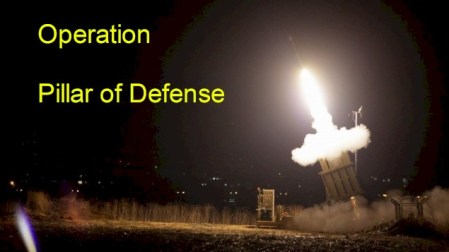
Archive for November 20, 2012

Are Gaza strikes a dress rehearsal for potential Israeli assault on Iran? | Fox News

November 20, 2012

Are Gaza strikes a dress rehearsal for potential Israeli assault on Iran? | Fox News.

Israel may be targeting more than Hamas as it escalates its bombing campaign in Gaza and tries to eliminate the threat of increasingly lethal stockpiled rockets. Israel’s real target may be Iran.

The last 6 days of fighting may in fact be a prelude to what looks like an increasingly inevitable military strike against Iran’s nuclear program.

The conventional wisdom has long been that Iran, if attacked by Israel, would strike back using proxy forces such as Hamas in Gaza and Hezbollah in Lebanon, terror groups the Iranians have been arming with longer and longer missiles in recent years.

Those missiles, which include Fajr 5 rockets with a range of 45 miles, can reach both Tel Aviv and Jerusalem from the Gaza Strip.

“Our problem is not our border with Gaza,” Israel’s Ambassador the United States Michael Oren told Fox News on Monday. “Among the rockets being fired at us are the Fajr 5 rockets, which come directly from Iran. We know that Hamas terrorists have trained with the Iranians — there’s a strong connection.”

In the past year, Hamas with Iran’s help has smuggled component parts for these longer-range rockets through tunnels from Egypt’s Sinai desert into Gaza. Those tunnels have long existed, but prior to the Arab Spring movement, then-President Hosni Mubarak of Egypt had his security forces monitor to some degree the caliber of weapons that entered Gaza.

Mubarak allowed some weapons into Gaza, but now that Egypt has a new president the flow has increased, as well as the lethality of the weapons. Yet in recent days, Iran has denied providing weapons to Hamas.

The Israeli military refers to the Fajr 5 rockets, with their longer range and 385-pound payload, as game changers.

“They are Iranian-made, and about 100 of them were imported into Gaza via Sudan, it appears,” Jonathan Schanzer, from the Foundation for Defense of Democracies, said. “When the Israelis learned of the existence of these rockets, all it took was one provocation on the part of Hamas for Israel to go in and wipe out those rockets and those launchers.”

The provocation came on Wednesday, when Hamas fired a guided anti-tank rocket at an Israeli military jeep inside Israel.

“There’s no country on earth that would tolerate missiles raining down on its citizens from outside its borders,” President Obama said on Sunday on a visit to Thailand.

Now 30,000 Israeli reserve forces have gathered on the border with Gaza and will enter the Gaza Strip if Israeli air strikes cannot destroy all of these longer-range rockets and their launch pads.

“They’ll go into Gaza if they feel they need to, to eliminate the remainder of the missiles, a lot of which are supplied to Hamas by Iran,” Sen. Joe Leiberman, I-Conn., said on “Fox News Sunday.”

The joint U.S.-Israeli “Iron Dome” anti-missile shield has shot down more than 300 incoming rockets from Gaza since Wednesday, according to figures provided by the Israeli military.

In March 2010, the Obama administration announced that it would provide $205 million to help Israel purchase up to 10 Iron Dome batteries. The House Armed Services Committee has authorized up to $680 million more to be spent on Iron Dome procurement for Israel over the next three years to protect Israeli cities.

Pentagon officials had hoped that the presence of a strong missile defense shield would give the Israelis some degree of security and deter the Israelis from striking Iran prematurely or unilaterally. Now it appears as if Israel is removing its most immediate rocket threat in the short term and testing Iran’s nearest proxy and regional alliances before deciding whether Iran’s nuclear program can be dealt a military blow.

Read more: http://www.foxnews.com/world/2012/11/19/are-gaza-strikes-dress-rehearsal-for-potential-israeli-assault-on-iran/print#ixzz2Cjr7OoWg

Israel may be targeting more than Hamas as it escalates its bombing campaign in Gaza and tries to eliminate the threat of increasingly lethal stockpiled rockets. Israel’s real target may be Iran.Read more: http://www.foxnews.com/world/2012/11/19/are-gaza-strikes-dress-rehearsal-for-potential-israeli-assault-on-iran/#ixzz2CjqxxK9M

Israel may be targeting more than Hamas as it escalates its bombing campaign in Gaza and tries to eliminate the threat of increasingly lethal stockpiled rockets. Israel’s real target may be Iran.

The last 6 days of fighting may in fact be a prelude to what looks like an increasingly inevitable military strike against Iran’s nuclear program.

The conventional wisdom has long been that Iran, if attacked by Israel, would strike back using proxy forces such as Hamas in Gaza and Hezbollah in Lebanon, terror groups the Iranians have been arming with longer and longer missiles in recent years.

Those missiles, which include Fajr 5 rockets with a range of 45 miles, can reach both Tel Aviv and Jerusalem from the Gaza Strip.

“Our problem is not our border with Gaza,” Israel’s Ambassador the United States Michael Oren told Fox News on Monday. “Among the rockets being fired at us are the Fajr 5 rockets, which come directly from Iran. We know that Hamas terrorists have trained with the Iranians — there’s a strong connection.”

In the past year, Hamas with Iran’s help has smuggled component parts for these longer-range rockets through tunnels from Egypt’s Sinai desert into Gaza. Those tunnels have long existed, but prior to the Arab Spring movement, then-President Hosni Mubarak of Egypt had his security forces monitor to some degree the caliber of weapons that entered Gaza.

Mubarak allowed some weapons into Gaza, but now that Egypt has a new president the flow has increased, as well as the lethality of the weapons. Yet in recent days, Iran has denied providing weapons to Hamas.

The Israeli military refers to the Fajr 5 rockets, with their longer range and 385-pound payload, as game changers.

“They are Iranian-made, and about 100 of them were imported into Gaza via Sudan, it appears,” Jonathan Schanzer, from the Foundation for Defense of Democracies, said. “When the Israelis learned of the existence of these rockets, all it took was one provocation on the part of Hamas for Israel to go in and wipe out those rockets and those launchers.”

The provocation came on Wednesday, when Hamas fired a guided anti-tank rocket at an Israeli military jeep inside Israel.

“There’s no country on earth that would tolerate missiles raining down on its citizens from outside its borders,” President Obama said on Sunday on a visit to Thailand.

Now 30,000 Israeli reserve forces have gathered on the border with Gaza and will enter the Gaza Strip if Israeli air strikes cannot destroy all of these longer-range rockets and their launch pads.

“They’ll go into Gaza if they feel they need to, to eliminate the remainder of the missiles, a lot of which are supplied to Hamas by Iran,” Sen. Joe Leiberman, I-Conn., said on “Fox News Sunday.”

The joint U.S.-Israeli “Iron Dome” anti-missile shield has shot down more than 300 incoming rockets from Gaza since Wednesday, according to figures provided by the Israeli military.

In March 2010, the Obama administration announced that it would provide $205 million to help Israel purchase up to 10 Iron Dome batteries. The House Armed Services Committee has authorized up to $680 million more to be spent on Iron Dome procurement for Israel over the next three years to protect Israeli cities.

Pentagon officials had hoped that the presence of a strong missile defense shield would give the Israelis some degree of security and deter the Israelis from striking Iran prematurely or unilaterally. Now it appears as if Israel is removing its most immediate rocket threat in the short term and testing Iran’s nearest proxy and regional alliances before deciding whether Iran’s nuclear program can be dealt a military blow.

Read more: http://www.foxnews.com/world/2012/11/19/are-gaza-strikes-dress-rehearsal-for-potential-israeli-assault-on-iran/#ixzz2CjqpcP4l

Israel may be targeting more than Hamas as it escalates its bombing campaign in Gaza and tries to eliminate the threat of increasingly lethal stockpiled rockets. Israel’s real target may be Iran.

The last 6 days of fighting may in fact be a prelude to what looks like an increasingly inevitable military strike against Iran’s nuclear program.

The conventional wisdom has long been that Iran, if attacked by Israel, would strike back using proxy forces such as Hamas in Gaza and Hezbollah in Lebanon, terror groups the Iranians have been arming with longer and longer missiles in recent years.

Those missiles, which include Fajr 5 rockets with a range of 45 miles, can reach both Tel Aviv and Jerusalem from the Gaza Strip.

“Our problem is not our border with Gaza,” Israel’s Ambassador the United States Michael Oren told Fox News on Monday. “Among the rockets being fired at us are the Fajr 5 rockets, which come directly from Iran. We know that Hamas terrorists have trained with the Iranians — there’s a strong connection.”

In the past year, Hamas with Iran’s help has smuggled component parts for these longer-range rockets through tunnels from Egypt’s Sinai desert into Gaza. Those tunnels have long existed, but prior to the Arab Spring movement, then-President Hosni Mubarak of Egypt had his security forces monitor to some degree the caliber of weapons that entered Gaza.

Mubarak allowed some weapons into Gaza, but now that Egypt has a new president the flow has increased, as well as the lethality of the weapons. Yet in recent days, Iran has denied providing weapons to Hamas.

The Israeli military refers to the Fajr 5 rockets, with their longer range and 385-pound payload, as game changers.

“They are Iranian-made, and about 100 of them were imported into Gaza via Sudan, it appears,” Jonathan Schanzer, from the Foundation for Defense of Democracies, said. “When the Israelis learned of the existence of these rockets, all it took was one provocation on the part of Hamas for Israel to go in and wipe out those rockets and those launchers.”

The provocation came on Wednesday, when Hamas fired a guided anti-tank rocket at an Israeli military jeep inside Israel.

“There’s no country on earth that would tolerate missiles raining down on its citizens from outside its borders,” President Obama said on Sunday on a visit to Thailand.

Now 30,000 Israeli reserve forces have gathered on the border with Gaza and will enter the Gaza Strip if Israeli air strikes cannot destroy all of these longer-range rockets and their launch pads.

“They’ll go into Gaza if they feel they need to, to eliminate the remainder of the missiles, a lot of which are supplied to Hamas by Iran,” Sen. Joe Leiberman, I-Conn., said on “Fox News Sunday.”

The joint U.S.-Israeli “Iron Dome” anti-missile shield has shot down more than 300 incoming rockets from Gaza since Wednesday, according to figures provided by the Israeli military.

In March 2010, the Obama administration announced that it would provide $205 million to help Israel purchase up to 10 Iron Dome batteries. The House Armed Services Committee has authorized up to $680 million more to be spent on Iron Dome procurement for Israel over the next three years to protect Israeli cities.

Pentagon officials had hoped that the presence of a strong missile defense shield would give the Israelis some degree of security and deter the Israelis from striking Iran prematurely or unilaterally. Now it appears as if Israel is removing its most immediate rocket threat in the short term and testing Iran’s nearest proxy and regional alliances before deciding whether Iran’s nuclear program can be dealt a military blow.

Read more: http://www.foxnews.com/world/2012/11/19/are-gaza-strikes-dress-rehearsal-for-potential-israeli-assault-on-iran/#ixzz2CjqpcP4l

BBC News – Syria Islamist fighters in Aleppo reject new opposition

November 20, 2012

BBC News – Syria Islamist fighters in Aleppo reject new opposition.

Islamist rebel groups in the Syrian city of Aleppo say they reject the new Western-backed opposition coalition.

In an internet video, they denounced what they called “the conspiratorial project” and said they intend to establish an “Islamist state” in Syria.

The EU recognised the new coalition on Monday as “legitimate representatives” of the Syrian people, but did not grant it full recognition.

France has already backed the group as “sole representative” of Syrians.

Known as the National Coalition for Syrian Revolutionary and Opposition Forces and formed in Qater on 11 November, the opposition has also been given full recognition by Turkey and the six Gulf states.

The UK may also follow suit, with Foreign Secretary William Hague due to make a parliamentary statement later on Tuesday, BBC Diplomatic Correspondent Jonathan Marcus reports.

Start Quote

I was impressed with [the coalition leaders’] objectives, with their clarity, with the breadth of their support, their determination to be inclusive in Syria of all communities and groups within Syria”

William Hague British Foreign Secretary

Mr Hague met the three main leaders of the new coalition in London last Friday, and told reporters in Brussels on Monday that he “was impressed with their objectives… their determination to be inclusive in Syria of all communities and groups within Syria”.

Respect for human rights and inclusivity were essential preconditions for UK recognition, our correspondent adds.

Recognition for the opposition grouping would open the way to additional practical and political assistance, but falls short of arming fighters on the ground.

‘Major step’

In Syria’s second city, Aleppo, Islamist rebels are unimpressed with the new grouping.

In a video posted online, an unidentified speaker sits at the head of a long table with at least 20 others, in front of a black Islamist flag. He lists some 13 armed Islamist groups who reject the opposition coalition.

“We are the representatives of the fighting formations in Aleppo and we declare our rejection of the conspiratorial project, the so-called national alliance,” he says. “We have unanimously agreed to urgently establish an Islamic state.”

The significance of the video proclamation was played down by the opposition coalition’s new leader Moaz al-Khatib, who said in Cairo: “We will keep in contact with them for more cooperation in the interest of the Syrian people”.

US State Department spokeswoman Victoria Nuland said it was “not surprising to us that those who want an extremist state, or a heavily Islamist state in Syria, have taken issue” with an opposition endorsing pluralism and tolerance.

But it will serve to increase fears among some Western nations who are already concerned that any arms sent to help the rebels in Syria could end up in the hands of extremists, observers say.

The EU’s 27 foreign ministers, meeting in Brussels, said they considered the opposition coalition “legitimate representatives of the aspirations of the Syrian people”.

Syrian refugees are seen in a refugee camp on the Syrian side of the border with Turkey, near Idlib, on 15 November 2012 Some refugees are in camps, but others are living in makeshift conditions

“This agreement represents a major step towards the necessary unity of the Syrian opposition,” they said, stopping short of offering full diplomatic recognition.

Last week, US President Barack Obama welcomed the coalition, but said the US wanted to make sure it “is committed to a democratic Syria, an inclusive Syria, a moderate Syria” before giving full recognition.

Inside Syria, nearly 100 people were killed on Monday, the UK-based Syrian Observatory for Human Rights reported.

Fighting continued on the southern outskirts of the capital Damascus, with Reuters reporting that Syrian rebels had seized the headquarters of an army battalion there.

Nato is considering a request from Turkey for ground-to-air missiles to help protect its border with Syria.

More than 38,000 people are believed to have died in the 20-month uprising against the rule of President Bashar al-Assad.

International charity Save the Children has warned that 200,000 Syrian refugee children are at serious risk from freezing temperatures, as winter begins in the Middle East.

Many families have fled across the borders to Turkey, Jordan and Lebanon to escape the conflict, and more than two million people are displaced within Syria – living without the proper shelter and clothing to survive the falling temperatures.

Rupert Murdoch, Ground Invasions, and the Downside of the Iron Dome System – Jeffrey Goldberg – The Atlantic

November 20, 2012

Rupert Murdoch, Ground Invasions, and the Downside of the Iron Dome System – Jeffrey Goldberg – The Atlantic.

Some updates, and questions answered:

1. I’m waiting for Obama’s critics on the right to acknowledge that he has backed Israel unequivocally since this mess started. And I suppose I will continue waiting.

2. A good reason why Netanyahu and Barak may not opt for a ground invasion, from Anshel Pfeffer: “Netanyahu is obsessively cautious. Barak is a fan of quick and sophisticated maneuvers. They are not disposed to a protracted, large-scale campaign and beneath the talk of “broadening the operation” is an eagerness to find a way of ending it this week still.”

3. Palestinians who hope for Israeli civilian deaths ultimately aren’t doing themselves any favors, via Khaled Abu Toameh:

There is nothing more nauseating than watching people celebrate as rockets are being fired toward Israel from the Gaza Strip. This is what happened last week when Hamas fired rockets at Jerusalem and Tel Aviv.

As soon as the sirens went off, many Palestinians took to the streets and rooftops, especially in Jerusalem’s Arab neighborhoods, to cheer Hamas. Sometimes they responded to the Hamas rockets by launching fireworks into the air as a sign of joy, and chanting, “We are all Hamas!” and, “O Jews, the army of Mohammed is coming after you!”

Scenes of jubilation over the rocket attacks on Israel were also reported in several Palestinian cities in the West Bank, including Ramallah, the center of Palestinian “pragmatism and moderation.’

4.  A friend of Goldblog who knows a great deal about the Middle East wrote in to point out a potential downside of the Iron Dome system, which is doing a very good job of protecting Israeli skies:

As I have watched the conflict, one of the things that has worried me has paradoxically been the effectiveness of the Iron Dome system.

Obviously, any weapons system that reduces civilian Israeli fatalities is a good thing. Let’s get that out of the way first and foremost: we are right to hail this marvelous new technology. But ideally, the Iron Dome would allow Israeli civilian leaders the space to make hard choices about what, exactly, they are to do with Gaza. I had the same hope for the Wall/Fence in the West Bank. Leaving aside for a moment the tricky issue of where the Wall/Fence was constructed, it nonetheless effected a stunning drop in suicide attacks in Israel proper. This, again, is a good thing. But instead of giving Israeli civilian leaders the space to make hard decisions about what to do in the West Bank, the Wall/Fence instead allowed most Israelis to forget about the West Bank and the Palestinians altogether. The Palestinians, out of sight, drifted out of mind as well.

But the problem of what to do with the people and the land Israel conquered in 1967 isn’t going away. In the near term, I very much hope Israel is able to stop the rocket attacks from Gaza. But in the long term, I hope the solution to Gaza will not be to simply build bigger and better walls — both on the ground and in the sky — while continuing to put off hard political decisions.

5.  MIchael Wolff dissects Rupert Murdoch’s very strange tweet about Jewish publishers (the one that proves the point that a philo-Semite is an anti-Semite who likes Jews):

In fair context, Murdoch comes from a generation (he’s 81) and a place (Australia) where the word Jewish was often used in a way – a way that most often had an “other” implication – that it is not used now. And in private, Murdoch remains very much an unreconstructed person from his time and place.

Indeed, there is almost always a fluttering around Murdoch by his minders in an effort to clean up his retrograde-ness. (Once, when I interviewed his now 103-year-old mother, she made a retrograde remark about her son’s Chinese wife that precipitated some serious crisis management in the company. Curiously, Murdoch’s wife Wendi often uses the word “Jewish” in an atonal context – “You Jewish, right? I know you Jewish!” – that makes Murdoch’s minders jump.) He may even become more retrograde to bedevil his minders.

But there is, among the people around, including the many Jews around him, a real and unresolved question about what Murdoch actually thinks about the Jews.

Gary Ginsberg, his long-time aide – part chief-of-staff; part PR consigliere – was often hurt and confounded by Murdoch’s jibes, insensitivities, and humor (there was the Christmas every executive desk got a crèche by order of the boss). Once, with me, Murdoch got into a riff about Jewish groups and money: how they were good at tricking him out of his dough.

6.  A Goldblog reader asks: “Your solution, to somehow engage Egypt, is no solution.To follow your reasoning, Egypt gets lucky and negotiates a cease-fire; Israel withdraws a bit and then another missile is launched, as you know it will. And another.  What then? You’ve seen what happens after Cast Lead. A brief lull and then more missiles. So….?

Is anyone under the impression that a long-term solution is in the offing? There will be a cease-fire, and that is a good thing — Hamas’s rocket supply will have been degraded, and, with any luck, Israel and Gaza can avoid a debilitating ground war. But since all the trends are negative in the conflict, we’ll be here again. There is no military solution, and there is no direct political solution. But it would be better for Israel to stop now, and it would be good for Egypt to show itself to be a responsible player. I’m not kidding myself about the long-term, though.

US warships turn around toward Israel for possible evacuation of Americans

November 20, 2012

US warships turn around toward Israel for possible evacuation of Americans.

DEBKAfile Special Report November 20, 2012, 1:08 AM (GMT+02:00)

USS Iwo Jima

The US has ordered three amphibious warships with 2,500 Marines aboard back to the eastern Mediterranean to remain on standby off Israel’s shore in case they are needed to evacuate American citizens. The USS Iwo Jima, the USS New York and the USS Gunston Hall, were sailing west of Gibraltar on their way to back to Norfolk, Virginia, when they were turned around.

debkafile: The United States have never before evacuated American citizens from Israel. The US notice does not say whether a possible evacuation would include the US forces posted in American bases in Israel. A mass evacuation would entail a Marine shore landing in order to lead the evacuees to the amphibious craft.
The Iwo Jima is a helicopter carrier, while the New York, one of the newest vessels of its kind in the US Navy, is a primary class of amphibious transport dock.
Although a decision to evacuate nationals was defined in the CNN report as a “remote contingency,” our sources stress that it is extreme enough to be taken only when a war situation is envisaged capable of endangering Americans.
This step negates the expectation articulated widely in Israel Monday, Nov. 19,  that a ceasefire with the Hamas is within reach. It rather indicates that Washington sees the situation surrounding the Gaza Strip in a far different light, more like a situation holding the threat of a general conflagration beyond the confines of the Israel-Hamas contest in Gaza.
According to the same report, the US military also maintains three to four ships off the coast of Israel that are capable of shooting down ballistic missiles. That deployment has stretched for some months in the face of a potential ballistic threat from Iran.

Pillar of Defense – Day Seven – Live Blog

November 20, 2012

https://warsclerotic.com/wp-content/uploads/2012/11/pillar31.jpg?w=450&h=504&h=504

Rocket attack in Ashkelon seriously injures Israeli civilian, according to Channel 10. Emergency response vehicles are at the scene.

17:01 – Israel announces cease fire with Hamas “within hours.”  It looks like it’s about over.  For now…

Prime Minister Benjamin Netanyahu says Israel’s “hand is extended in peace to any of our neighbors who are willing to make peace with us, while our other hand is holding a sword to confront those who want to remove us from this land.”

Netanyahu, who spoke at a memorial for Israel’s first prime minister, David Ben-Gurion, at Kibbutz Sde Boker in the central Negev, asserted that the IDF had destroyed “thousands of rockets and missiles that were pointed at Israeli citizens, including most of the long-range rockets.”

Apparently, the Egyptian intelligence chief has called a press conference about Gaza for this evening. Channel 2 News analyst Ehud Ya’ari says that he wouldn’t be addressing the press merely to announce that ceasefire talks had failed. Meanwhile, Islamic Jihad is saying a truce will go into effect at around 7 p.m.

17:11 – IDF warns residents of northern Gaza to leave for their lives.

Six rockets explode in open areas in the Eshkol border region, causing no damage or injuries, according to Ynet.

A soldier is lightly injured amid clashes with Palestinian protesters near the West Bank settlement bloc of Gush Etzion, where a rocket fired from Gaza landed earlier in the afternoon.

Islamic Jihad is announcing that a ceasefire with Israel will go into effect in three hours, Channel 2′s veteran Arab affairs analyst Ehud Ya’ari reports. There is no other confirmation yet.

Hamas prime minister Ismail Haniyeh says “Gaza won’t be broken by its confrontation with Israel.” In a meeting with the ministers of the Arab League in the Strip, Haniyeh accuses Israel of carrying out “massacres” against Palestinian families.

He adds that he welcomes “the efforts of the Arab and Islamic world” to broker a ceasefire.

Contrary to earlier reports, the IDF is saying only one rocket was fired at Jerusalem on Tuesday. The rocket fell south of the city, in a Palestinian-controlled area, and did not cause any bodily injuries.

The two cars targeted in an IAF airstrike in Gaza City in the past hour were reportedly transporting munitions, the IDF Spokesman says. Ynet reports that witnesses reported secondary explosions. Six Palestinians were reportedly killed in the blast.

Here is a picture of a badly damaged bus in Beersheba, aired by Channel 2. The passengers reportedly managed to get out and take shelter before the bus was hit.

A Beersheba bus that was damaged by rocket fire from Gaza, Tuesday (photo credit: Channel 2 screen capture)

Five soldiers are injured after a rocket fired from Gaza explodes near their position in the Eshkol border region, the IDF spokesperson reports.

15:56

Ch 2 is reporting massive aerial attacks on Gaza.  Gazans report seven killed and many wounded.

In what could portend either an imminent ground operation or — what is more probable — an Israeli move to heavier, less accurate shelling, the IDF has spread leaflets over the northern Gaza Strip, urging civilians to make their way toward Gaza City in the center of the territory, Channel 2 is reporting.

Six Palestinians accused of spying for Israel are shot in the street in Gaza City, according to Sky News correspondent Tim Marshall, which would bring the number of executions by Hamas of Israeli collaborators during Pillar of Defense to seven. BBC correspondents also tweet confirmation of the incident:

@Skytwitius

Tim Marshall

6 Palestinians accused of being Israeli spies killed in the street in Gaza City. Sky correspondent.

@WyreDavies

Wyre Davies

Local journalists in #Gaza said they saw six people executed in the street – accused of “collaborating” with #Israel

@pdanahar

Paul Danahar

Local journalists say they saw Hamas execute six people in the last half hour in #Gaza for being #Israeliinformers

Rockets fired from Gaza explode near Ashdod and Sderot. Two missiles hit the port city of Ashdod. Channel 10 reports one person lightly injured. One makes a direct hit on a corner store. Several residents are treated for shock.

The rockets fired at Sderot explode in open areas, causing no damage or injuries.

Five Palestinians were killed in an IAF airstrike in Gaza City moments earlier, Ynet cites local sources saying.

A Jewish Federation of North America delegation visits southern Israel Tuesday, the seventh day of Pillar of Defense, and gets a taste of life under fire. Members duck on the side of the road and run for cover as sirens wail throughout the day.

The two-day Emergency Solidarity Mission, comprising 12 lay and professional leaders, is spearheaded by the chair of the Board of Trustees of JFNA, Michael Siegal.

Jewish Federation of North America leaders, lay and professional, dive for cover as they tour the south (photo credit: Ron Luba)

“The ongoing crisis being faced by the people of Israel, particularly those in the south, will not be fought by the Jewish State alone,” Siegal said upon arrival in Jerusalem. “We are here to express our firm solidarity and to say that as always, when Israel is in need, we are here.”

The federation announced Friday that it will commit up to 5 million  dollars to the Israel Terror Relief Fund, which will be used for trauma counseling, financial assistance, portable bomb shelters, and transporting children out of harm’s way.

“We knew we had to come to experience firsthand what is happening on the ground so that we can best respond to whatever the needs might be,” says Jerry Silverman, president and CEO of JFNA.

A Channel 2 reporter says that residents of Bethlehem erupted with glee when they heard the “boom” caused by the rocket that was fired at Jerusalem’s capital from Gaza. According to reports, the rocket fell in a Palestinian-controlled area south of Jerusalem, near the Etzion Bloc.

A man is critically wounded from a rocket fired at the Eshkol region. He is being treated by medical personnel. Another rocket hits a building in the Eshkol region, slightly injuring five people.

Morsi makes statement that “Israeli aggression” is coming to end and positive developments are on the way, adding to indications that a ceasefire is approaching as early as Tuesday night.

The staff at Israel’s Ben and Jerry’s ice cream factory posts a picture on Facebook showing “what happens when there’s a siren during production of Toffee Crunch, and we have to run to the protected area.”

The factory is located in Be’er Tuvia, near Kiryat Malachi, one of the southern towns being hit by rockets. Some 2 million dollars was invested in the facility, which used to be a soup factory and logistics center for another food manufacturer.

There was no word as to how much ice cream was lost during the rocket attack.

(photo credit: courtesy, Ben and Jerry's Israel)

Two rockets, not one, were fired at Jerusalem from Gaza an hour ago. They landed outside the city, near Bethlehem, just moments before United Nations Secretary General Ban Ki-moon was set to arrive there.

Israeli official tells Israel Radio that the United States and Egypt will announce the signing of a ceasefire Tuesday night. German mediation reportedly helped reach the truce, the final wording of which is still being worked out.

Barzilai Hospital in Ashkelon moves its emergency room to its fortified basement after shrapnel from a rocket that was intercepted by Iron Dome lands near the hospital’s maternity ward.

The IDF is initiating an increased tempo of strikes in Gaza, especially at the location of the recent rocket launch toward the Jerusalem area, according to news reports.

British Foreign Secretary William Hague calls on Israel to obey international law and avoid civilian casualties. Hague slams Israel’s policy of illegal settlements, saying that it “risks paralyzing” negotiations “could have serious consequences for the PA.”

“There is no military solution to the conflict in Gaza, or the Israeli-Palestinian conflict,” Hague says, emphasizing that a two-state solution is needed, and “time is running out.”

 Jerusalemites scramble for cover as a siren rings out through the city and surrounding area, followed by a rocket falling somewhere near Bethlehem south of the capital. Earlier in the day, the south of country was pummeled by over 60 rockets, including several that hit homes. One soldier was moderately injured by a mortar in the Eshkol region.

Israel is still weighing whether to expand the operation into a ground war but officials said they would give diplomacy at least 24 hours to work, as US Secretary of State Hillary Clinton and UN head Ban Ki-moon head to the region. In the meantime, the IDF continued to hit targets in the Gaza Strip, and the head of Hamas’ armed wing warned Israel against a ground operation.

14:39

Three rockets land in the Eshkol region, with at least one hitting a building, reports say.

Hamas says the missile fired at Jerusalem was a M75 Iranian-made missile assembled in Gaza, according to Al Jazeera.

14;43 – Israel opens up a huge artillery attack on Gaza

Channel 2 now reporting that the rocket fell into West Bank Palestinian territory south of Jerusalem.

Channel 2 reports a rocket explodes somewhere near Jerusalem in an open area outside the city. No injuries reported.

The rocket reportedly fell somewhere near Bethlehem, south of Jerusalem.

This would put the rocket somewhere in the area of the last missile to hit  the region, which fell in the Gush Etzion settlement bloc southeast of the city Friday night.

Sirens in Jerusalem. Boom audible.

This marks the second time the capital has been targeted.

The condition of the Israeli reserve tank officer injured this morning by rocket shrapnel in Eshkol is reportedly stable.

Dr. Daniel Simon, the head of the trauma unit at the Sheba Medical Center at Tel Hashomer, praises the treatment that the wounded officer received in the field, which included having his chest drained, and says that barring any unforeseen complications, “at this stage it looks like he will not require surgery.”

14:15 – COLOR RED – Jerusalem

German Foreign Minister Guido Westerwelle tells reporters in Jerusalem that he is engaging in shuttle diplomacy in pursuit of a ceasefire, traveling to Tuesday afternoon Egypt to meet with the foreign minister in Cairo and then returning to Israel that night for talks with Defense Minister Ehud Barak.

Earlier in the day he met with Prime Minister Benjamin Netanyahu, President Shimon Peres and Palestinian Authority President Mahmoud Abbas.

Westerwelle says any truce agreement will rest on two “pillars,” stopping weapons smuggling into Gaza and finding a viable way for people in the Palestinian enclave to have normal lives, an apparent reference to an end or easing of the Israeli blockade of the Strip.

A factory in the Sdot Negev area has taken a direct hit from a rocket. No injuries are reported.

In a recorded message broadcast on Hamas’ al-Aqssa TV, Gaza military chief Mohammed Deif tells followers that Israel will “pay a heavy price” if it enters Gaza, and warns “this is only the start.”

The BBC notes that Deif is only the nominal head of the Izz al-Din al-Qassam Brigades, which was taken over by Ahmed Jabari after Deif was injured by Israeli fire in 2006.

PM Netanyahu meets with US Secretary of State Clinton (photo credit: PMO)

US Secretary of State Hillary Clinton will spend today and tomorrow in the region, according to a press release from the US State Dept.

During her visit to Jerusalem, Ramallah and Cairo, Clinton will “build on American engagement with regional leaders over the past days – including intensive engagement by President Obama with PM Netanyahu and President Morsi – to support deescalation of violence and a durable outcome that ends the rocket attacks on Israeli cities and towns and restores a broader calm.”

Clinton praised Egypt’s role in the mediation efforts and said that she will “emphasize the United States’ interest in a peaceful outcome that protects and enhances Israel’s security and regional stability; that can lead to improved conditions for the civilian residents of Gaza; and that can reopen the path to fulfill the aspirations of Palestinians and Israelis for two states living in peace and security.”

A rocket lands in Sha’ar Hanegev. No injuries are reported.

Turkish Prime Minister Recep Tayyip Erdogan, via Twitter, accuses Israel of ethnic cleansing in the Palestinian territories and of violating international law.

Two Gazans are killed and 10 more injured in two separate Israeli attacks on Tuesday afternoon, Palestinian sources say.

One strike, in the northern Gaza Strip, kills one person and injures four, according to the reports, and a second attack, on Deir Al-Balah in central Gaza, claims another person and injures six.

According to reports, since the beginning of Operation Pillar Defense last Wednesday, 116 Gazans have been killed and over 900 have been injured.

A politician closes down the Bahrain parliament earlier today by burning an Israeli flag in protest of Operation Pillar of Defense during a session.

Ynet reports that because of the burgeoning “Arab Spring” movement in the Gulf kingdom, Bahrain has banned all political demonstrations, including those in support of Gazans.

A rocket hits a house in Netivot, causing damage but no injuries. A second rocket shot at the town is intercepted by Iron Dome.

60 rockets have been launched into Israel today. Six of them landed in built-up areas, including a direct hit on a house in Beersheba. At least 20 were intercepted by Iron Dome, and the rest fell in unpopulated zones.

Military sources say that Hamas is much more involved in the rocket fire today.

“What if Berlin were Israel?” – that’s today’s main headline of B.Z., the German capital’s largest daily newspaper.

The paper’s front page shows a true-to-scale map of Berlin superimposed on a map of Israel, and a graphic shows how rocket fire would impact the different neighborhoods of the city. A rocket on Sdot Negev is equivalent to one in Potsdam, sirens in Kiryat Malachi would sound in Tiergarten, and so on.

“Life under constant rocket fire. For us in Berlin this is something unimaginable, for the people in Israel this is cruel everyday life,” the text next to the image reads. “A rocket on Sderot — as if it fell on the Kudamm.”

Kudamm is one of Berlin’s more fashionable avenues.

The IDF tweets that of the 120 trucks carrying humanitarian aid to Gaza, only 24 were able to enter before the IDF was forced to close the Kerem Shalom border crossing on Tuesday morning due to rocket fire.

The crossing has not yet been re-opened.

A rocket lands next to a house in Sderot. No injuries are reported, but there is some damage.

Two rockets are shot down by Iron Dome over Kiryat Malachi. One more missile lands in an open area near Be’er Tuvia.

The IDF reports that the person injured by shrapnel in Eshkol earlier was a reserve tank driver. He has been taken to the Sheba Medical Center in Tel Hashomer for treatment.

Israel has agreed not to launch a ground operation in Gaza for at least 24 hours, as US Secretary of State Hillary Clinton heads for the region to help broker a ceasefire between Jerusalem and Hamas.

“We have decided to give the diplomatic efforts a very serious chance,” a government official close to Prime Minister Benjamin Netanyahu tells The Times of Israel, a few hours after the country’s top nine ministers convened to discuss the further course of Operation Pillar of Defense.

“We’re giving a chance to diplomacy. We’re giving it time, but this time is not unlimited,” the official says, adding that “we’ll know in a day or two” whether Egyptian President Mohammed Morsi, Clinton and other international players currently in or traveling to Israel will be successful in achieving a ceasefire.

Prime Minister Benjamin Netanyahu sends a letter of condolence to Egyptian President Mohammed Morsi over the death of Morsi’s sister on Tuesday.

Fatima Morsi, 57, succumbed to cancer after an extended illness.

The death may affect negotiations for a ceasefire to Operation Pillar of Defense.

UN Secretary General Ban ki-Moon has canceled his scheduled meeting with Morsi and will arrive in Israel for meetings with Israeli and Palestinian officials on Tuesday afternoon, earlier than originally planned.

Iran says Palestinians in the Gaza Strip should be “equipped” to defend themselves against Israel, the Associated Press reports.

Tehran Foreign Ministry spokesman Ramin Mehmanparast refused to comment on Israeli allegations that Iran is already sending arms to Gaza.

Iran is a major supporter of terror groups such as Islamic Jihad and Hamas, which controls Gaza. On Tuesday, Israeli Strategic Affairs Minister Moshe Ya’alon tweeted that Iran was directly supporting Islamic Jihad. On Monday night, President Shimon Peres told CNN he was worried about the support Iran was giving Gazan terror groups.

Iran has previously denied it had directly supplied Hamas with Iranian-made Fajr-5 missiles that have hit near Tel Aviv.

Mehmanparast also said on Tuesday that that Israel should be put on trial for war crimes over the latest offensive.

“I prefer a diplomatic solution,” says Prime Minister Netanyahu during a meeting with visiting German Foreign Minister Guido Westerwelle. “I hope that we can find such a solution, but if not, we have the full right to defend ourselves through other means, and we will use them.”

He tells Westerwelle that he thinks Germany can play a positive role in the brokering of a long-term ceasefire and in preventing the smuggling of arms into Gaza.

“As I said, we are seeking a diplomatic solution,” Netanyahu adds, “but if the rocket attacks continue, we will be forced to resort to far-reaching steps, and we won’t hesitate to do so.”

Reports now indicate that an attacker attempted to assault the US Embassy’s security guard with an ax. The guard was slightly injured and the attacker was apprehended. Details are still blurry.

Television footage shows two ambulances leaving the scene in Tel Aviv.

A security guard at the US Embassy in Tel Aviv is injured by gunfire. Israel Radio reports that the shooter has been apprehended.

There is no word on the guard’s condition or on the circumstances surrounding the incident.

The shooting comes just after US Secretary of State Hillary Clinton announces that she will visit Israel Tuesday evening.

It’s unclear if the incident is linked to the fighting in the south and Gaza.

The Iron Dome anti-missile system shoots down rockets over Ashdod and Be’er Tuvia, and moments later two more rockets over the Hof Ashkelon region near the coast.

The south has been pounded by some 50 rockets so far Tuesday.

US Ambassador to Israel Dan Shapiro says (twice) in an Army Radio interview that there is no US administration veto on an Israeli ground operation in Gaza.

The US has sent signals in the past few days that it would be less than thrilled with Pillar of Defense expanding to include a ground operation, though the White House has defended Israel’s right to protect its citizens.

Vice Prime Minister Silvan Shalom, who is not part of the inner cabinet of nine ministers, tells Walla News that within 24 hours the government will decide whether quiet in the south can be achieved by means of a ceasefire.

“These are real war crimes,” Shalom says, referring to Hamas rockets on the south. He calls members of the terror group “criminals who shoot in order to kill civilians.”

Army Radio is interviewing a postwoman (a woman who delivers the mail, that is, not some new gender innovation) in Ashdod, trying to focus on the folks who keep the country ticking over even in times of conflict like these. As she talks about doing her best to get the mail delivered while following Home Front Command instructions about taking cover from rocket attacks, a siren sounds — obliterating her voice. The now familiar announcer’s voice breaks in to tell us all that there are “red alerts” in Ashdod and a whole host of locations across the south.

“Razi, there’s an alarm,” she says.

“Take cover,” the show’s anchor Razi Barka’i, urges her.

Not long afterwards, she’s back — telling us that she reckons the incoming rocket has been intercepted by Iron Dome. “Such experts we’re all becoming in areas about which we knew nothing a week ago,” remarks Barka’i. “What did you do, lie down on the sidewalk just now?” he asks her.

Israeli post boxes. (photo credit: CC-BY-Wikipedia/ Muhandes)

“No,” she says, “I went into the building where I had to deliver the mail, and took cover there. Now I’m back on the delivery route.”

Udi Segal, Channel 2′s reliable diplomatic correspondent, says the word from the political top brass is that Hamas’s ceasefire demands are outrageous and untenable, and that this conflict is certainly not over. He foresees ongoing air strikes and a very real possibility of the use of ground forces if there’s no diplomatic breakthrough by tomorrow evening.

Army Radio’s diplomatic reporter Ilil Shahar is making similar assessments: Israel will not agree to a lifting of the “blockade” designed to prevent Hamas rearming, is seeking a wider buffer zone at the Gaza Border, and needs to ensure conditions that would prevent recurrences of Gaza rocket rain on southern and central Israel for years to come. The current reported ceasefire parameters don’t meet those requirements. Netanyahu “is giving time” for the diplomats to work — Ban Ki-moon will be here soon, and Hillary Clinton is on her way — but the IDF is ready for ground operations.

Hamas and the Popular Front for the Liberation of Palestine, a Marxist-affiliated rival to Hamas and Fatah, have taken responsibility for this morning’s barrage of rockets on Beersheba, Maan News reports.

Palestinian fatalities in OPeration Pillar of Defense now total 112, with over 920 injured, Al Jazeera reports. the news agency quotes an ambulance worker in Gaza who says three were killed in two separate overnight strikes.

A house in Beersheba suffers a direct hit from from a rocket that got through Iron Dome. No reports of injuries.

The Kerem Shalom border crossing between Israel and Gaza has been closed by the IDF due to heavy rocket fire in the area.

The IDF spokesperson tweets that more than 120 Israel trucks with supplies for Gaza are waiting at the border crossing unable to enter.

So far this morning, 13 rockets have landed in the Eshkol region.

Senior Hamas leader Salah Bardawil dismisses reports of a possible ceasefire as an “Israeli trial balloon,” according to Ynet News.

Bardawil says that Hamas is holding in reserve many different kinds of weapons to be deployed in the event of an Israeli ground assault, and says they have “surprises for the next phase, just as we had surprises during the first phase.”

He adds that Hamas has acquired a great deal of experience in dealing with enemies inside Gaza, presumably a reference to 2008-9′s Operation Cast Lead, which saw a massive IDF ground action inside the territory.

Two more Grad rockets have been shot down by Iron Dome over Beersheba. There are also reports that two missiles struck the city, which has been targeted by over 25 Grads in the last two hours.

The IDF, meanwhile, says it hit a rocket launching crew in Gaza. Palestinians report two people killed by Israeli strikes, in Beit Lahiya and al-Mughraqa.

UN head Ban Ki-moon, speaking in Egypt, says he will urge Israel to “end the violence” when he visits here later Tuesday.

President Shimon Peres meets Tuesday morning with German Foreign Minister Guido Westerwelle to discuss Operation Pillar of Defense.

Westerwelle tells the president that “Germany stands beside its friend Israel. Israel has right to defend itself and its citizens, and it is the responsibility of Hamas to halt the rocket attacks on Israel.”

Westerwelle adds that the support of Israel in the current conflict is not only the view of Germany, “but also of the European Union as reflected in statements of EU foreign ministers in Brussels yesterday.”

Peres thanks Westerwelle for Germany’s friendship and for its “efforts to bring an end to the attacks on Israeli civilian lives and to bring hope to the region.”

UN Secretary-General Ban Ki-moon (photo credit: Nati Shohat /Flash90)

“Immediate steps” must be taken to avoid an Israeli ground operation in Gaza, UN Secretary General Ban Ki-moon warns in Cairo.

“This must stop, immediate steps are needed to avoid further escalation, including a ground operation,” he says, according to an AP report. He warns that the entire region could be endangered because of the conflict.

Ban met with Arab League chief Nabil Elaraby earlier today and is scheduled to meet with Egyptian President Morsi later this morning. He is to arrive in Israel at the end of the day to continue his efforts towards an Israel-Hamas ceasefire.

One person is reportedly seriously injured by shrapnel from a rocket that struck in the Eshkol regional. The person is being airlifted to Soroka hospital in Beersheba.

Meanwhile, Iron Dome shot down two missiles over Beersheba. More than 20 rockets have been shot at the city on Tuesday morning alone, during an especially heavy barrage.

Israeli police post on Twitter that so far this morning 37 rockets have been fired into southern Israel from Gaza.

Several direct hits were reported in Beersheba where one person was treated for light injuries.

US Secretary of State Hilary Clinton will reportedly meet with Prime Minister Benjamin Netanyahu and with Palestinian Authority officials tomorrow after she arrives in Israel late tonight.

Clinton will not meet will representatives from Hamas.

Clinton will also travel to Cairo to meet with Egyptian officials.

Five more rockets land, no injuries have been reported.

One of the rockets landed in the parking lot of a large public institution in Sha’ar Hanegev. One fell in the Bnei Shimon region and three landed in open areas in Eshkol region.

Two rockets land in open areas near Sderot and Sha’ar Hanegev. No injuries or damage have been reported.

The bank destroyed by the Israel Air Force was set up by Hamas after foreign lenders, afraid of running afoul of international terror financing laws, stopped doing business with the militant-led Gaza government, AP reports.

However the owner of the bank tells the agency that he had no involvement in politics.

The inside of the  Islamic National Bank in Gaza City was destroyed and a supply business in its basement was damaged.

The bank was one of over 100 targets hit by the IDF in Gaza overnight.

US Secretary of State Hillary Clinton is to arrive in Israel tonight on a surprise visit, Haaretz diplomatic correspondent Barak Ravid tweeted minutes ago. She is to meet Netanyahu and Abbas and work for a ceasefire.

The United Israel Appeal has raised about 1.6 million NIS (408,000 dollars) to renovate bomb shelters in the south, Israel Radio reports. Most of the money will go to the purchase of portable shelters, which cost 40,000 dollars each.

Two more rockets fred from Gaza are shot down over Ashdod. That’s now nearly 20 missiles on the south’s three largest cities in the last half hour

Two rockets are fired from Gaza at Ashkelon. Iron Dome shoots down at least one as barrage on south continues.

Television footage shows heavy damage to a parking lot and cars in Be’ersheba after three rockets fall in the city.

A picture posted on Ynet of a bus in the city damaged by rocket fire shows it with windows blown out and pocked with shrapnel marks across its front.

The front page of Ynet showing the bus damaged by rocket fire (Screenshot, bus picture by Elana Coreal)

Be’ersheba mayor Rubik Danilovich tells Channel 2 that there were no injuries from the large volley of rockets on the city.

Other media are reporting one lightly injured from shrapnel.

A group of Pakistani hackers have targeted a large group of Israeli websites, the Karachi-based Express Tribune reports. Over 30 sites of top international companies active in Israel, including Microsoft Israel, Coca-Cola, Intel and Philips are reportedly down due to what sources say are the actions of the Pakistan Cyber Army, a known hacker group. This is the second day of reported cyper-warfare against Israeli sites by groups operating out of Pakistan.

Rescue service Magen David Adom says it treated five people with light injuries overnight, and four more people suffering from shock.

Some reports now about a cease-fire announcement.  Israel Radio and Ynet report that according to the Al-Arabiya Arabic website, a ceasefire will be announced within the next few hours. Details: Both sides agree to a 24 or 48 hour period without attacks, during which time Egypt will mediate for a final agreement, which will include an easing of the Gaza blockade.

Reports are coming in that a bus was damaged by one of the rockets that managed to penetrate into Be’ersheba. One person was lightly injured by shrapnel in the strike, Channel 2 reports. Several more people are being treated for shock.

Three Grad rockets hit populated areas of Be’ersheba, initial media reports suggest, with light injuries suffered.

Another missile reportedly hits the city of Ofakim.

Sixteen rockets were shot at Be’ersheba in the last moments, with three managing to get through Iron Dome’s defensive shield, according to Channel 2′s reporter on the scene.

Security and emergency rescue forces are beginning this morning a multi-day drill in the upper Galilee (near the Golan), Walla reports. The exercise will use live fire and explosives and is expected to cause some traffic delays in the area. The drill is scheduled to run through Thursday.

Nine rockets are shot down by Iron Dome over Be’ersheba in a matter of moments.

A Grad rocket is shot down by the Iron Dome missile-defense system over Be’ersheba. The missile marks a return to fire after a short overnight lull.

Analysts note that rocket fire may ramp up ahead of a possible ceasefire, as terror groups attempt to get in last shots before being forced to lay down their arms.

The Israeli military reports that it hit some 100 targets in Gaza overnight, including rocket launchers, “terror tunnels,” Hamas weapons depots and financial institutions.

Targeted overnight in #Gaza: Underground rocket launchers, terror tunnels, #Hamas command posts & weapon storage facilities

Haaretz reports that the top government ministers have decided to give more time to diplomatic efforts before green-lighting a wider ground operation in Gaza.

The country’s top nine minister met until nearly 3 a.m. Tuesday morning, and decided that giving diplomacy a chance would give Jerusalem greater legitimacy in the eyes of the international community should they decide to expand Operation Pillar of Defense, according to the daily, citing an unnamed diplomatic official.

UN Secretary General Ban-Ki-moon is expected in Israel Tuesday, joining the corps of international envoys arriving to shepherd a truce between Israel and Hamas.

Egyptian president Mohammed Morsi is expected to present Israel with a ceasefire proposal on Tuesday, guaranteed by Cairo.

The official told the paper that Israel preferred to achieve its goals of ending rocket fire on the south via air strikes, but would launch a ground operation if needed.

Ties between the US and Egypt and Turkey are being strained by the fighting in Gaza, the Washington Post reports. Officials in both Middle Eastern countries, which have slammed Israel for Operation Pillar of Defense, have expressed displeasure with the Obama administration for backing Israel in the conflict.

The paper notes that the situation is reminiscent of Israel’s 2006 war with Lebanon, during which US President George W. Bush was at first reluctant to back a ceasefire, despite Arab lobbying.

“We don’t practice diplomacy from the podium,” State Department spokeswoman Victoria Nuland said Monday.

However, US President Barack Obama, currently on a swing through east Asia, has been playing a role behind the scenes, speaking with Israeli prime Minister Benjamin Netanyahu and Egyptian President Mohammed Morsi on Monday night. Obama asked Morsi to push Hamas to end the rocket fire on Israel, according to a White House statement.

Of the half-dozen rockets fired at southern Israel in the past hour or so, Iron Dome intercepted two of them.

As many as four airstrikes were directed at a site in Khan Younis. As yet, the target is unclear.

With reports of a ceasefire possibility taking shape some time on Tuesday, the IAF continues to strike targets in northern and central Gaza.

Palestinians report security sites are being targeted in the early hours of Tuesday morning.

Reserve soldiers who rushed to the Gaza border, leaving behind families and work or university studies, tell reporters at one of the Hebrew dailies that they’re itching for action. It would be a shame to have spent four days on edge, preparing for combat, only to be sent home in a ceasefire that may not even last, they say; and if they are sent home, they add, they will be hesitant to report for service the next time they receive emergency call-up orders.

The nine most senior government ministers recently concluded their late-night deliberations over ongoing negotiations for a ceasefire with Hamas, refusing to divulge their plans to reporters.

While some media have reported that a ceasefire agreement could be hours away, the ministers stressed that the military was prepared to continue its attacks on terrorist targets in Gaza if necessary.

Russia accused the United States of blocking a bid by the UN Security Council to condemn the escalating conflict between Israel and Palestinians in the Gaza Strip.

“One member of the Security Council, I’m sure you can guess which, indicated… they will not be prepared to go along with any reaction of the Security Council,” Reuters quoted Russia’s UN envoy as saying, making a thinly veiled reference to the United States.

UK Foreign Office Minister Alistair Burt has arrived in the Middle East to meet senior Israeli and Palestinian officials, BBC reports.

Burt is on three-day mission to try to facilitate a ceasefire.

Warning sirens sound in Kiryat Gat, Sderot, and other southern towns.

Palestinian media report “huge blasts” in the northern Gaza Strip.

Al-Arabiya is reporting that a ceasefire agreement could be reached in as little as a few hours.

Reports from the Israeli side, meanwhile, have the government willing to extend and even expand Operation Pillar of Defense if a ceasefire is not reached by Tuesday.

An Israeli airstrike in Khan Younis is reported — along with Color Red warning sirens in the southern Israeli city of Ashkelon and the surrounding areas.

Egypt is expected to present a ceasefire proposal to Israel on Tuesday, with guarantees from President Mohammed Morsi, according to Saudi reports.

Details of the proposal were not disclosed.

Israeli jets fired on the Islamic National Bank in Gaza City, according to Palestinian reports, with casualties being rushed to Shifa Hospital.

A separate airstrike on a government compound, also in Gaza City, is also reported.

US amphibious warships are on their way to the eastern Mediterranean Sea in case they are needed to evacuate American citizens from the hostilities, CNN reports.

“This is due diligence. It is better to be prepared should there be a need,” an official is quoted as saying.

Ma’an reports an Israeli airstrike on the home of Hamas military leader Raed al-Athar in Rafah, in the southern Gaza Strip.

It was not clear whether al-Athar was home at the time, or whether he was harmed.

Al-Athar had been considered a possible replacement for Ahmed Jabari, the terror chief assassinated by Israel last week.

State Department spokeswoman Victoria Nuland withstood the badgering of a very confrontational Associated Press reporter in the daily press briefing, remaining calm while Matthew Lee accuses the State Department of “being silent when people are dying left and right” in the Gaza Strip.

Matthew Lee at first criticizes Nuland and the State Department for refusing to take a stand against Israel and its airstrikes against Gazan terrorists, then seems to switch tack and try to get Nuland to publicly rebuke Turkey for its harsh language against Israel.

“I am not going to get into a public spitting match with allies on either side,” Nuland responds.

An incredulous Lee then asks Nuland whether letting Turkey’s comments slide — or, conversely, continuing to support Israel over the Palestinians — is an appropriate course of action while “hundreds of people [are] dying every day.”

The last comment is especially odd, considering that the Palestinian-reported death toll in over a week of violence is approximately 100.

Rockets fired at Beersheba and Ofakim around midnight land in open areas, no injuries or damage are reported.

Channel 2′s Ohad Hemo says Monday’s anti-Israel demonstrations in the West Bank drew thousands and were described by some participants as the biggest and angriest in 10 years.

PREAMBLE: Will Israel and Hamas rest on the seventh day, or continue to exchange fire? After six days of intense fighting, Israel’s top ministers convened Monday night to discuss whether to pursue a ceasefire or go ahead with a ground operation. Jerusalem says it is interested in a diplomatic solution, but wants Hamas to lay down its arms first. Hamas says it will keep fighting until Israel agrees to its terms.

While rocket fire out of Gaza waned slightly, to about 140 rockets shot at Israel over the day, the terror experienced by Israel’s southern residents did not. Two schools in Ashkelon took hits from missiles, and towns from Sderot to Be’ersheba were targeted by missiles. No serious injuries were suffered, though, with several people lightly wounded by rocket fire.

In Gaza, Israel hit a building where local and foreign media have offices, killing four senior members of Islamic Jihad. The death toll in the strip rose over 100, with many of them civilians.

International efforts have continued to shepherd Israel and Hamas toward a ceasefire. While Israel weighs the terms, UN Secretary General Ban Ki-moon is expected in Jerusalem Tuesday, and his visit will likely be aimed at pushing Israel away from a ground operation.

Hamas Leader Dares Israel to Invade Amid Gaza Airstrikes – NYTimes.com

November 20, 2012

Hamas Leader Dares Israel to Invade Amid Gaza Airstrikes – NYTimes.com.

GAZA CITY — The top leader of Hamas dared Israel on Monday to launch a ground invasion of Gaza and dismissed diplomatic efforts to broker a cease-fire in the six-day-old conflict, as the Israeli military conducted a new wave of deadly airstrikes on the besieged Palestinian enclave, including a second hit on a 15-story building that houses media outlets. A volley of rockets fired from Gaza into southern Israel included one that hit a vacant school.

Speaking at a news conference in Cairo, where the diplomatic efforts were under way, the Hamas leader, Khaled Meshal, suggested that the Israeli infantry mobilization on the border with Gaza was a bluff on the part of Prime Minister Benjamin Netanyahu of Israel.

“If you wanted to launch it, you would have done it,” Mr. Meshal told reporters. He accused Israel of using the invasion threat as an attempt to “dictate its own terms and force us into silence.”

Rejecting Israel’s contention that Hamas had precipitated the conflict, Mr. Meshal said the burden was on the Israelis. “The demand of the people of Gaza is meeting their legimitate demands — for Israel to be restrained from its aggression, assassinations and invasions, and for the siege over Gaza to be ended,” he said.

Mr. Netanyahu met with top ministers Monday evening and Israeli media said they discussed the next steps in the Gaza conflict, including the possibility of a truce. Israeli officials declined to comment on those reports.

The Hamas Health Ministry said Monday evening that a total of 107 people had been killed since Wednesday morning, when Israeli airstrikes began, following months of Palestinian rocket fire into Israel. A spokeswoman for the Israeli military said she believed that a majority of these were militants, though it is difficult to know because Hamas’s own fighting brigade and the other factional groups are secretive.

The Hamas ministry said that the dead included at least 26 children, 10 women and 12 men over 50, who were presumably not involved in combat. Of the remainder, at least 36 are known militants. Hamas officials said more than 860 have been wounded, 260 of them children, 140 of them women and 55 men over 50.

Three people have been killed so far in Israel, all civilians, in a rocket strike that hit an apartment house in the southern Israeli town of Kiryat Malachi on Thursday morning. The Israelis have said that at least 79 Israelis have been wounded and that Gaza rockets have reached as far north as Tel Aviv.

The latest Gaza casualties — 22 people reported killed since midnight local time — included Palestinians killed in strikes by warplanes, a drone attack on two men on a motorcycle, and a father and two toddler sons in their bombed northern Gaza home, witnesses and medical sources said. Another Israeli drone attack killed the driver of a taxi hired by journalists and displaying “Press” signs, although it was not clear which journalists had hired it, Palestinian officials said.

On Sunday, Israeli forces attacked two buildings housing local broadcasters and production companies used by foreign outlets. Israeli officials denied targeting journalists, but on Monday Israeli forces again blasted the Al Sharouk block, a multiuse building where many local broadcasters, as well as Sky News of Britain and the channel Al Arabiya, had offices.

That attack, which struck a computer shop on the third floor, sparked a blaze that sent plumes of dark smoke creeping up the sides of the building. Video footage showed clouds of smoke billowing.

An Israeli bomb pummeled a home deep into the ground here on Sunday, killing 11 people, including nine in three generations of a single family, in the deadliest single strike since the latest conflict began. Members of the family were buried Monday in a rite that turned into a gesture of defiance and became a rally supporting Gaza’s militant Hamas rulers.

A militant leader said Tel Aviv, in the Israeli heartland, would be hit “over and over” and warned Israelis that their leaders were misleading them and would “take them to hell.”

Israel says its onslaught is designed to stop Hamas from launching the rockets, but, after an apparent lull overnight, more missiles hurtled toward targets in Israel, some of them intercepted by Israel’s Iron Dome defense system. Of five rockets fired on Monday at the southern Israeli city of Ashkelon, four were intercepted but one smashed through the concrete roof at the entrance to an empty school. There were no reports of casualties. Other rockets rained on areas along the border with Gaza.

Later a second salvo struck Ashkelon. Several rockets were intercepted, but one crashed down onto a house, causing damage but no casualties.

Israeli officials said 135 rockets were fired from Gaza at Israel on Monday, of which 42 were intercepted by Iron Dome, Most of the others landed in open areas.

On Sunday, a new volley of Palestinian rockets totaled nearly 100 by nightfall, including two that soared toward Tel Aviv but were knocked out of the sky by Israeli defenses.

In a statement on Monday, the Israel Defense Forces said overnight targets included “underground rocket launchers, terror tunnels, training bases, Hamas command posts and weapon storage facilities.” But news reports said the strikes flattened two houses belonging to a single family, killing two children and two adults and injuring 42 people, while a shrapnel burst from another attack killed one child and wounded others living near the rubble of the former national security compound.

The latest exchanges offered a grim backdrop to Egyptian-led cease-fire efforts that have so far proved inconclusive. The United Nations secretary general, Ban Ki-moon, was set to join the effort in Cairo.

Brig. Gen. Yoav Mordechai, the spokesman for the Israel Defense Forces, said there had been a reduction of up to 40 percent in rocket fire from Gaza, while Israeli forces had launched 40 attacks on tunnels between Egypt and Gaza, both at the entrances and along the road leading to them, causing considerable damage.

He said six rocket launching teams and two men on motorcycles were hit, while the Israeli forces continued to intercept Palestinian radio signals to urge Gaza residents to steer clear of activists.

In the Israeli strike on Sunday morning, it took emergency workers and a Caterpillar digger more than an hour to reveal the extent of the devastation under the two-story home of Jamal Dalu, a shop owner. Mr. Dalu was at the market when the blast wiped out nearly his entire family: His sister, wife, two daughters, daughter-in-law and four grandchildren ages 2 to 6 all perished under the rubble, along with two neighbors, an 18-year-old and his grandmother.

Ismail Haniya, the prime minister of the militant Hamas faction that rules Gaza, condemned the attack as a “massacre” that “exceeded all expectations.”

General Mordechai, the spokesman for the Israeli military, said it was “examining the event.”

“The wanted target in this case was responsible for firing dozens of rockets into Israel,” he added. “I do not know what happened to him, but I do know that we are committed to the safety of the citizens of Israel.”

The Dalu family were buried Monday after an intense, chaotic two-hour funeral procession that quickly became a Hamas rally clearly aimed at least in part at sending a strong message of defiance through the scores of journalists in the crowd. Thousands thronged the streets following the bodies from the destroyed Dalu home to the Esraa Mosque and then to the Sheikh Radwan cemetery, shouting slogans of resistance as fighters fired rifles into the air and waved the green Hamas flags as well as the white ones of the armed Al Qassam Brigades.

Outside the cemetery, a Qassam leader named Mosheer Al Masri spoke not about the victims but about the enemy.

“Tel Aviv, which we hit, will be hit over and over until you stop your crimes against our civilians,” Mr. Masri said. “Your threats will not scare us, they will just make us stronger and more resistant.”

He threatened a repeat of the 2006 kidnapping of Sgt. Gilad Shalit if Israel proceeded with a ground invasion, and vowed “revenge for the killing of these children.” He offered a message to Israelis: “Your leaders are misleading you and will take you to hell.”

“Our message to Netanyahu is that we will defeat you like we defeated your ancestors,” he added. “We still have so much in our pockets and we will show you if we have to.”