Archive for November 19, 2012

Cease fire ?

November 19, 2012

It’s beginning to smell like a cease fire is happening.  Arab media is reporting it will begin in 24 hours.  Israel has said nothing.  There have been no rockets fired on Israel in 2 hours.

No agreement will prevent another go round in this war, so long as Hamas has access to weapons.  It’s the nature of the beast.

I have to believe that Netanyahu will not abandon the people of Israel.  I have to believe that whatever decision he makes is in the best interests of Israel and is not born out of fear of the enemy or the “ally.”

Nothing is settled yet.  We may go in tomorrow. 

Still, I’m getting a Gestalt of a coming cease fire. 

JW

Katyusha Missiles Aimed at Israel from Lebanon

November 19, 2012

Katyusha Missiles Aimed at Israel from Lebanon – Defense/Security – News – Israel National News.

Two Katyusha missiles aimed at Israel from Lebanon were discovered Monday. Both were set to launch.

By Chana Ya’ar

First Publish: 11/19/2012, 6:50 PM


Katyusha missile

Katyusha missile
Flash 90

Two Katyusha missiles aimed at Israel from Lebanon were “discovered” Monday in the southern region. Both were set to launch, a security source told Lebanese newspaper The Daily Star.

The rockets were found in Mazra’at Halta, near Kfat Shuba Hills. They were defused by security forces, the source said, who added that attempts to launch rockets from Lebanon at Israel occur “every time there is an aggression against Gaza.”

Rockets firings from Lebanon at Israel are often carried out as a message of solidarity with Gaza, the source told the newspaper. If launched at full power, the Katyushas that were discovered could have reached at least seven kilometers into Israel. They were placed four kilometers from the northern Israeli border.

Missile fire aimed at southern Israel from Gaza continued into the night on Monday, as it had throughout the day.

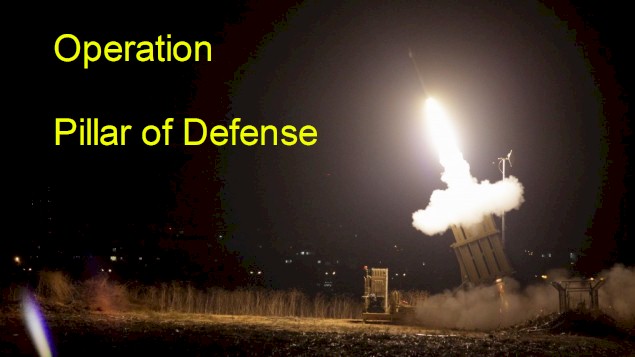
Shortly after 5 p.m., two Grad Katyusha missiles were intercepted by the Iron Dome anti-missile defense system protecting the southern city of Be’er Sheva. A third Grad Katyusha missile exploded in the Ashkelon Coastal region, but landed in an open area, where it caused no property damage. No one was physically injured.

A short-range Kassam rocket exploded in an open area on the outskirts of the town of Sderot, barely a kilometer from Gaza. No physical injuries or property damage reported.

Mortar fire was also directed at a residential area in the Eshkol Regional Council district. No physical injuries or property damage was reported.

Two rockets that were fired at the Bnei Shimon Regional Council district both exploded in open areas, with neither causing damage or physical injuries.

A chicken coop sustained a direct hit by a Qassam rocket fired from Gaza at a kibbutz in the Gaza Belt region shortly after 5:40 p.m. Human beings were not physically injured but none of the chickens survived, and the structure was destroyed.

Israel delivered an ultimatum to Gaza’s ruling Hamas terrorist organization on Monday morning, warning that it had 36 hours in which to cease the rocket fire or face an expansion of the current counter terror Operation Pillar of Defense offensive in the region.

CNN: 57% of Americans support Pillar of Defense

November 19, 2012

Jerusalem Post – Breaking News.

( Understand, CNN has been running the most biased anti-Israel coverage of US TV news. – JW )

By JPOST.COM STAFF
11/19/2012 18:29
Fifty-seven percent of Americans believe Israel is justified in taking military action against Hamas in Gaza, a CNN poll revealed Monday.The survey showed that 25% of respondents believed action was not justified, and 19% had no opinion.

During operation Cast Lead in 2009, 63% of respondents to the same question supported Israeli action, while 31% opposed and 6% had no opinion.

In general, 59% said their sympathies were with the Israelis, and only 13% with the Palestinians.

The poll, conducted from November 16-18, sampled 1,023 adults and had a margin of error of 3%.

Erdogan: Israel is a terrorist state

November 19, 2012

Erdogan: Israel is a terrorist state – Israel News, Ynetnews.

( It’s time for Israel and the US to break diplomatic relations with Turkey as long as this evil fool in in charge. – JW )

Turkish PM says ‘Those who associate Islam with terrorism close their eyes in the face of mass killing of Muslims’

Reuters

Published: 11.19.12, 15:32 / Israel News

A day before his foreign minister arrives in the Gaza Strip, Turkish Prime Minister Tayyip Erdogan continued his verbal attacks on Israelon Monday.

In a conference of the Eurasian Islamic Council in Istanbul held on Monday, the Turkish prime minister  accused Israel of carrying out “terrorist acts” in Gaza.

He further added, “those who associate Islam with terrorism close their eyes in the face of mass killing of Muslims, turn their heads from the massacre of children in Gaza”.

“For this reason, I say that Israel is a terrorist state, and its acts are terrorist acts,” he added.

On Saturday, Erdogan spoke firmly against Israel. In a speech given at Cairo University he accused Israel of “turning the region into a blood swamp. Every drop of Palestinian blood is pouring from the veins of all Muslims and every tear dropping from their eyes is our tear too.”

He also decried Israel’s airstrikes on Gaza on Friday as a pre-election stunt in which innocent people are being killed. “Before this election they (Israel) shot these innocent people in Gaza for reasons they fabricated,” he told reporters in Istanbul.

NOW Lebanon -When did Hamas become secular?

November 19, 2012

Lebanon news – NOW Lebanon -When did Hamas become secular?.

If one reviews the rhetoric of the liberal “resistance” supporters, especially after the escalation of violence in Gaza, you’d think that Hamas is a liberal or secular group, not an Islamic faction.

During the nearly two years of systematic and brutal killing by the Syrian regime of the Syrian people who are resisting tyranny, many Arabs preferred to remain silent, justifying their denial by fear of the Islamists. But suddenly, when Hamas decided to respond to the Israeli attack on Gaza, this reaction was cheered as the ultimate resistance. It didn’t matter who is resisting here and why. The Islamic nature of Hamas does not matter, only because it is against Israel.

This juvenile attitude of having one enemy, Israel, and justifying all other kinds of brutality and tyranny in the name of resistance is very common among many Lebanese and Arab leftists and liberals.

Do they ask if Hamas has been the best example of governance in Gaza, the way they question the Syrian opposition day and night? Never. At least Hamas had the chance to demonstrate what kind of state it envisions, and it has been obvious that it is not the secular, civil state the opposition is demanding in Syria.

This is not fair to the Syrian people who are trying, while dying by the hundreds every day, to prove to the world that they are not crazy fanatics. But it is also unfair for the Palestinians in Gaza. Leftist Arabs are clearly fine with an Islamist rule in Gaza but not in Syria. So the Palestinians do not deserve a secular or civil rule as the Syrians do?

These double standards mean one thing: A tyrant like Bashar al-Assad is acceptable as long as his regime speaks against Israel. It doesn’t really matter that Assad has never used his army and military capacities against the Israeli army, or that part of Syria is actually still occupied by the Israelis. All that matters is that he uses the same clichés and slogans as Hezbollah and Iran—and everyone ignores secret negotiations between Assad and the Israelis that only ended recently.

For some Arabs, there is one enemy, while our own demons can kill us, rape us and murder our dignity on a daily basis. They are excused, because they say they support a resistance that hasn’t lifted a finger against Israel for years.

Have they heard that Hamas’ offices in Syria have been closed for a while and that its leadership has moved to Cairo and Jordan? But of course this also doesn’t matter.

What really matters is that most of Hamas’ arms come from Iran. What matters is that they are being fired in the name of the resistance. And what matters is that they are overshadowing the hundreds of Syrian lives lost in the name of the same resistance. Hezbollah is happy and Iran is thrilled. That’s what really matters.

The Islamist government in Egypt is being pressured to take action and resolve the situation. The Egyptians want serious support for the Palestinians while the international community expects a mediating role, and Egypt is supposed to deliver in both directions. However, neither Hezbollah nor Iran is expected to act. On the contrary, they are requested to stick to words, especially by the supporters of the resistance in Lebanon, because the latter do not war to come to them. They’d rather cheer this time for Hamas and lament the deaths of Palestinian children but certainly not go beyond words.

The Gaza war prompted these intellectuals and activists to wake up after months of silence and absurd absence from virtual and actual scenes. They saw in Gaza a chance to pamper their anxious consciences and weary judgments and come back to the scene with the same clichés and slogans. They should at least consider changing some of these clichés, just to acknowledge the Arab awakening and what it brought to people’s lives.

Unfortunately, the Arab awakening did not eliminate these moral double standards. The Syrian opposition can resist Assad as much as they want, but their cause will not be recognized by these leftists as long as some Islamists have joined them. Meanwhile, Hamas and Hezbollah can be as Islamist as they want; they will be forgiven, as long as they resist, or say they are resisting, Israel.

Hamas has not gone secular, but the leftists have long ago lost their compass.

Hanin Ghaddar is the managing editor of NOW Lebanon

To read more: http://www.nowlebanon.com/NewsArticleDetails.aspx?ID=458240&MID=0&PID=0#ixzz2Cg0eUmQx
NOW Lebanon’s articles can make a great addition to your website, newsletter or blog. To republish material from NOW Lebanon, the following requirements are mandatory: Only 25% of a given NOW Lebanon article can be republished. Read more: http://www.no

Gaza: Iran’s proxy war against Israel.

November 19, 2012

World Jewish Congress – WJC ANALYSIS – Gaza: Iran’s proxy war against Israel.

19 November 2012

By Pinhas Inbari

The current round of hostilities between Israel and the Hamas government in Gaza is rooted in an internal struggle within Hamas. The organization is embroiled in a leadership struggle pitting the Iranian-backed Ismail Haniyeh against the Qatar and Egypt-supported Khaleed Mashal and his deputy Musa Abu Marzuq.

Signs of the internal conflict were already visible during the visit of the emir of Qatar in Gaza, where he delivered a clear message: should Hamas cease its terror operations and rocket offensive against Israel and engage in reconstruction, it would receive US$ 400 billion from the Qatari government. At the same time, Qatar attempted to convince the Hamas leadership in Gaza to forgo its ambition to serve as the organization’s official global leadership.

One of the arguments against the leadership in Gaza, exemplified by the current round of hostilities, is that it is exposed to Israeli surveillance and targeting. Hence, it is arguably better to base the leadership in remote locations such as Cairo or Doha. Ahmad Jabari’s demise served to prove Qatar’s argument.

Qatar’s visit to Gaza was viewed with suspicion in Tehran, where the Iranian government has good reason to believe that Qatar aims to undercut Gaza’s ties to the Islamic republic. While Khaleed Mashal and Musa Abu Marzuq have formally joined the Sunni Muslim Brotherhood, the Gazan leadership has remained loyal to Shiite Iran, whose presence in the Gaza Strip runs deep. It controls the military wing of the Al Qassam Brigades, leaving the civil leadership embodied by Haniyeh and Mahmoud al-Zahar no alternative but to challenge Mashal and Abu Marzuq in the struggle for regional leadership.

Though the barrage of rockets into Israel from Gaza has been ongoing, the latest round of hostilities erupted last Saturday when the pro-Iranian faction, the Popular Front, targeted an IDF jeep that was moving along the Israeli side of the border, following an unsuccessful attempt to blast a tunnel under the feet of IDF soldiers. The attacks, while physically aimed at Israel, were indirectly pointed at Qatar, sending the message that Hamas leaders in Gaza would not separate from Iran and would persevere in the quest to assume the leadership of the  movement.

Qatar’s moves in Gaza are coordinated closely with its Syrian strategy, where the country seeks to counter Iranian influence. For its part, Israel has also kept Iran in mind, specifically when it targeted and destroyed the Fajr-5 missiles capable of hitting air force bases and military installations in addition to civilian targets in Tel Aviv.

Destroying the Fajr-5 arsenal may help the IDF concentrate its might on Iran should an attack on its nuclear installation occur.  Thus, Operation Pillar of Defense, in addition to protecting Israeli civilians, is also neutralizing a possible second front in a war with Iran and is in line with the destruction of a missile factory in Sudan a few weeks ago.

Israeli official: Chances 50-50 between Gaza truce and invasion

November 19, 2012

Israeli official: Chances 50-50 between Gaza truce and invasion – Israel News | Haaretz Daily Newspaper.

Netanyahu, Lieberman, and Barak deliberating options; Egypt says negotiations ongoing, hopes results will soon be reached; Gaza-Israel conflict tops EU ministers’ agenda.

By | Nov.19, 2012 | 2:54 PM | 7

Prime Minister Benjamin Netanyhau, Defense Minister Ehud Barak, and Foreign Minister Avigdor Lieberman met till 4 A.M. on Monday to discuss an Egyptian proposal for a cease-fire between Israel and Hamas.

The three top ministers decided at the end of their meeting to allow more time for the international mediation efforts, led by Egypt.

An Israeli official said Netanyahu, Barak, and Lieberman were updated during their meeting by an Israel emissary who had just returned from hours-long talk with Egyptian general intelligence officials. “The deliberations centered on the demands made by Hamas and on the Egyptian proposals for compromise,” said the official.

The negotiations have yet to yield a breakthrough, but neither side has declared them a failure, either. Netanyahu, Barak, and Lieberman will meet again Monday night to continue their deliberations, and to receive updates on the negotiations and on the fighting in the Gaza Strip.

“The situation is now 50-50, between cease-fire and expansion of the operations,” said the official. “If there is no choice, we’ll go into Gaza. There is no other way.”

Egyptian Prime Minister Hisham Kandil said Monday that the efforts to negotiate a truce between Israel and the Palestinians in Gaza were ongoing and that a deal to stop the fighting could be close.

“Negotiations are going on as we speak and I hope we will reach something soon that will stop this violence and counter violence,” Kandil said in an interview in Cairo for the Reuters Middle East Investment Summit.

“I think we are close, but the nature of this kind of negotiation, ]means[it is very difficult to predict,” he said.

The crisis in Israel and the Gaza Strip topped the agenda of a meeting of European Union foreign and defense ministers in Brussels, as well.

European Union’s foreign policy chief Catherine Ashton expressed concern about the mounting death toll in the Gaza conflict, saying the crisis can only be resolved with a long-term solution.

Ashton also said rocket attacks from Gaza into Israel must stop: “What we have to do is to find … a solution that brings security to the region,” Ashton said.

Israeli forces are attacking Gaza in an effort to stop the militant rocket fire, and scores of Palestinians and three Israeli civilians have been killed in the conflict.

Swedish foreign minister Carl Bildt said the most important thing was to arrange an immediate cease-fire.

“Then, we must look at the wider and deeper issues,” he said. “This is the second Gaza war in a few years. We can’t wait for the third and fourth.”

Russia also urged an end to Palestinian rocket attacks, and what it called the disproportionate Israeli bombing of the Gaza Strip, saying both were unacceptable.

“Moscow considers it necessary to stop the military confrontation without delay,” the Russian Foreign Ministry said in a statement.

“We again affirm our position on the inadmissibility of firing at Israeli regions and of disproportionate strikes on Gaza,” the Russia Foreign Ministry said.

Foreign Minister Sergei Lavrov made a similar comment in a telephone conversation with his Palestinian counterpart, the Russian ministry said.

Russia is a member of the so-called Quartet of Middle East peace mediators, along with the United States, the United Nations and the European Union.

President Vladimir Putin has tried to balance ties with Arabs including the Palestinians, dating to the Soviet era, with improved relations with Israel during his 13 years in power.

Gaza Clash Escalates With Deadliest Israeli Strike – NYTimes.com

November 19, 2012

Gaza Clash Escalates With Deadliest Israeli Strike – NYTimes.com.

CAIRO — Emboldened by the rising power of Islamists around the region, the Palestinian militant group Hamas demanded new Israeli concessions to its security and autonomy before it halts its rocket attacks on Israel, even as the conflict took an increasing toll on Sunday.

After five days of punishing Israeli airstrikes on the Hamas-controlled Gaza Strip and no letup in the rocket fire in return, representatives of Israel and Hamas met separately with Egyptian officials in Cairo on Sunday for indirect talks about a truce.

The talks came as an Israeli bomb struck a house in Gaza on Sunday afternoon, killing 11 people, in the deadliest single strike since the conflict between Israel and Hamas escalated on Wednesday. The strike, along with several others that killed civilians across the Gaza Strip, signaled that Israel was broadening its range of targets on the fifth day of the campaign.

By the end of the day, Gaza health officials reported that 70 Palestinians had been killed in airstrikes since Wednesday, including 20 children, and that 600 had been wounded. Three Israelis have been killed and at least 79 wounded by unrelenting rocket fire out of Gaza into southern Israel and as far north as Tel Aviv.

Hamas, badly outgunned on the battlefield, appeared to be trying to exploit its increased political clout with its ideological allies in Egypt’s new Islamist-led government. The group’s leaders, rejecting Israel’s call for an immediate end to the rocket attacks, have instead laid down sweeping demands that would put Hamas in a stronger position than when the conflict began: an end to Israel’s five-year-old embargo of the Gaza Strip, a pledge by Israel not to attack again and multinational guarantees that Israel would abide by its commitments.

Prime Minister Benjamin Netanyahu of Israel stuck to his demand that all rocket fire cease before the air campaign lets up, and Israeli tanks and troops remained lined up outside Gaza on Sunday. Tens of thousands of reserve troops had been called up. “The army is prepared to significantly expand the operation,” Mr. Netanyahu said at the start of a cabinet meeting.

Reda Fahmy, a member of Egypt’s upper house of Parliament and of the nation’s dominant Islamist party, who is following the talks, said Hamas’s position was just as unequivocal. “Hamas has one clear and specific demand: for the siege to be completely lifted from Gaza,” he said. “It’s not reasonable that every now and then Israel decides to level Gaza to the ground, and then we decide to sit down and talk about it after it is done. On the Israeli part, they want to stop the missiles from one side. How is that?”

He added: “If they stop the aircraft from shooting, Hamas will then stop its missiles. But violence couldn’t be stopped from one side.”

Hamas’s aggressive stance in the cease-fire talks is the first test of the group’s belief that the Arab Spring and the rise in Islamist influence around the region have strengthened its political hand, both against Israel and against Hamas’s Palestinian rivals, who now control the West Bank with Western backing.

It also puts intense new pressure on President Mohamed Morsi of Egypt, a former leader of the Muslim Brotherhood who was known for his fiery speeches defending Hamas and denouncing Israel. Mr. Morsi must now balance the conflicting demands of an Egyptian public that is deeply sympathetic to Hamas and the Palestinian cause against Western pleadings to help broker a peace and Egypt’s need for regional stability to help revive its moribund economy.

Indeed, the Egyptian-led cease-fire talks illustrate the diverging paths of the Muslim Brotherhood and Hamas, a Palestinian offshoot of the original Egyptian Islamist group. Hamas has evolved into a more militant insurgency and is labeled a terrorist organization by the United States and Israel, while the Brotherhood has effectively become Egypt’s ruling party. Mr. Fahmy said in an interview in March that the Brotherhood’s new responsibilities required a step back from its ideological cousins in Hamas, and even a new push to persuade the group to compromise.

But Moussa Abu Marzouk, a senior Hamas official who was allowed to settle in Cairo after the ouster of President Hosni Mubarak, predicted a different outcome. In an interview at the same time, he said that if another conflict broke out with Israel, the moderate Islamist politicians around the region like the Egyptian Brotherhood would have to line up with the militants in Gaza.

“The position of all Islamists in the region will be that of Hamas,” Mr. Abu Marzouk said, “not the other way around.”

Israeli officials are conducting their side of the cease-fire talks through the contacts in Egyptian intelligence with whom they worked during Mr. Mubarak’s rule. Officials said their main focus was on ending the threat of rocket fire from Gaza, whether by diplomatic or military means.

Dan Meridor, the Israeli intelligence minister, said on Israeli television that the government would wait for Hamas “to stop firing” before it would negotiate a long-term cease-fire. In the meantime, he said, Israel would do “whatever it takes” to eliminate Hamas’s ability to fire rockets, potentially including an incursion into Gaza.

In his first public comments on Gaza since the latest violence broke out, President Obama said in Bangkok early Monday that he supported Israel’s right to take action in Gaza but that he was trying to defuse the conflict.

“We are actively working with all the parties in the region to see if we can end those missiles being fired without further escalation of violence in the region,” Mr. Obama said, noting that he had spoken with Mr. Netanyahu several times, as well as with Mr. Morsi and Prime Minister Recep Tayyip Erdogan of Turkey. “We’re going to have to see what kind of progress we can make in the next 24, 36, 48 hours,” Mr. Obama added.

As the conflict has intensified, so has diplomatic pressure on Israel to restrain its military campaign. William Hague, the British foreign minister, said in a television appearance on Sunday that he and Prime Minister David Cameron “stressed to our Israeli counterparts that a ground invasion of Gaza would lose Israel a lot of the international support and sympathy that they have in this situation,” The Associated Press reported.

While the Israelis talked to their longtime contacts in Egyptian intelligence, Mr. Morsi’s office worked through its own channels of communication with Hamas, and Mr. Morsi himself met on Sunday with Hamas’s top leader, Khaled Mashaal.

Mr. Fahmy, of Mr. Morsi’s Freedom and Justice Party, insisted Sunday that Israel was to blame for starting the current round of violence by killing Hamas’s top military leader, and that Israel would have to act to end it. “Now we’re exerting pressure to stop the fighting on both sides, but we can’t pressure the victim while the perpetrator isn’t even ready to settle,” he said.

Mr. Morsi, speaking Saturday night at a joint news conference with Mr. Erdogan, accused Israel of failing to abide by an earlier cease-fire with Hamas that Egypt had negotiated just a week earlier.

“There is a power imbalance,” Mr. Morsi said, noting the death tolls on each side: three Israelis killed by Hamas attacks during the five days of fighting, compared with more than 40 Palestinians killed by Israel, a figure that rose to 70 on Sunday.

“Israel is an occupying country, and international laws oblige occupiers with many things that Israel doesn’t abide by,” Mr. Morsi said. “If the situation was further escalated, or if a land invasion took place as Israelis have said, this would mean dire consequences in the region, and we could never accept that, and the free world could never accept that.”

Still, Mr. Morsi may not have a free hand. He is a new president of a country in a fragile political transition away from military-dominated rule. He must maintain good relations with Egypt’s still-powerful army and intelligence services, which are deeply wary of Hamas.

He has already shown a willingness to snub Hamas in the interest of Egyptian security, by leading a campaign to shut down the tunnels used to smuggle goods and occasionally weapons into Gaza under the Egyptian border. “We are closing them every day,” he said with evident passion in a recent interview.

Others in the Egyptian government argued that President Morsi was gaining a new perspective on Hamas, and on what officials of the Egyptian Foreign Ministry have long said was the group’s pattern of sacrificing the lives of Gazans to Israeli military campaigns for little reason other than to burnish its claim to be the champion of resistance to the Israeli occupation. That status is a key to its hold on power, and an asset in its rivalry with Fatah, the Western-backed faction that controls the West Bank.

Still, in his appearance on Saturday, Mr. Morsi publicly blamed only Israel for the violence, and warned its government that the Arab Spring had changed the Middle East. “Everyone should remember, the peoples of the region are different than before,” he said. “The leadership in the region is different.”
 

Fatah, Hamas agree to unite over Gaza crisis as death toll soars

November 19, 2012

Fatah, Hamas agree to unite over Gaza crisis as death toll soars.

Palestinians gather around a destroyed house as members of the civil defence search for victims under the rubble after an Israeli air strike in Gaza City on Nov. 18. (Reuters)

Palestinians gather around a destroyed house as members of the civil defence search for victims under the rubble after an Israeli air strike in Gaza City on Nov. 18. (Reuters)

Rival Palestinian factions Fatah and Hamas said on Monday they have decided to end years of infighting in a show of solidarity over the Gaza crisis, AFP news agency reported.

“From here, we announce with other (factional) leaders, that we are ending the division,” senior Fatah official Jibril Rajoub told a crowd of about 1,000 who gathered for a demonstration in Ramallah, the West Bank’s political capital.

Among those present at the rally were top members of Hamas’s leadership in the West Bank as well as senior officials from its smaller rival Islamic Jihad, the AFP correspondent said.

Ramallah’s Manara Square was a sea of Palestinian flags as the crowd chanted “Unity!” and “Hit, hit Tel Aviv” in an appeal to Hamas militants who have fired at least five rockets at the coastal city since Thursday.

“Whoever speaks about the division after today is a criminal,” top Hamas leader Mahmoud al-Ramahi told the crowd.

Fatah and Hamas, the two main Palestinian national factions, have been locked in a bitter dispute for years.

But the ongoing bloodshed in the Hamas-run Gaza Strip, where Israel was on Monday pressing a sixth day of a major aerial campaign which has so far killed 91 Palestinians, appears to have prompted a rethink of traditional rivalries.

Gaza’s Hamas-run government has long been at loggerheads with the rival Fatah-dominated Palestinian Authority in the West Bank and a unity deal struck between the two in April 2011, fell apart as the two bickered over the formation of a caretaker cabinet.

Deaths mount

Israeli air strikes across the Gaza Strip killed 13 people early on Monday, raising the Palestinian death toll to 90 as Israel’s relentless air campaign entered its sixth day.

In the latest incident, a missile hit a motorcycle east of Khan Yunis in southern Gaza, killing two men and critically wounding a child who was with them, a statement by Gaza’s ambulance service said.

The two were named as Abdullah Abu Khater, 30, and Mahmud Abu Khater, 32, but the relationship between them was not immediately clear.

An earlier strike on Qarara in the same area killed two farmers — Ibrahim al-Astal and Obama al-Astal, medics said.

In a strike on southern Gaza City, a car was hit, killing one man and injuring another three, officials said, naming him as 23-year-old Mohammed Shamalah.

Shortly before that, three people were killed in a strike on a car in Deir al-Balah in central Gaza, all of them from the same family: Amir Bashir, Tamal Bashir and Salah Bashir.

Very early in the day, two women and a child were among four killed in a strike on Gaza City’s eastern Zeitun neighborhood — Nisma Abu Zorr, 23, Mohammed Abu Zorr, 5, Saha Abu Zorr, 20 and Ahid al-Qatati 35,

And medics said another man had been found dead in the northern town of Beit Lahiya, naming him as Abdel Rahman al-Atar, a 50-year-old farmer.

The strike in Zeitun came after a night that saw Israeli war planes level a Gaza City police station as navy ships kept up sustained fire at the Gaza shore, AFP news agency correspondents said.

The deaths came after multiple raids on Sunday that killed 31, in the bloodiest day of Israel’s bombing campaign, medics said.

The number of injuries rose over 700, officials said.

At least 10 children, five of them babies and toddlers, and six women were among those killed on Sunday, in attacks that came even as diplomatic efforts intensified to broker an end to the bloodshed which began on Wednesday.

The violence has also cost the lives of three Israelis and injured more than 50, according to medical sources.

By far the deadliest strike was in northern Gaza City where a missile levelled a three-storey building, killing nine members of the Al-Dallu family — five of them children — and two other people, medics said.

Qudra named the dead as policeman Mohammed al-Dallu, 35, Suheila al-Dallu, 50, Samah al-Dallu, 22, and five children: Jamal and Sara, whose ages were not immediately available, five-year-old Yussef, two-year-old Ranin, and 11-month-old Ibrahim.

The body of another woman from the same family was also pulled from the rubble but her identity was not immediately clear.

The other two victims, who lived next door, were named as Amina Mattar al-Muzzana, 83, and Abdullah Mohammed al-Muzzana, 22, Qudra said.

The Israeli army had no immediate comment on the strike, only saying the air force had hit “a few targets in northern Gaza City.”

Palestinians seek urgent Arab League summit

Info-graphic: Cities of the Strip – Mapping Gaza’s cities and Israeli attacks. (Design by Farwa Rizwan/ Al Arabiya English)

The Palestinian Authority has asked for an urgent Arab League summit to discuss Israeli attacks on Gaza, the League said on Sunday.

The authority is headed by Palestinian President Mahmoud Abbas, whose secular Fatah movement was driven out of Gaza five years ago by Islamist movement Hamas which now controls the Gaza Strip.

Abbas, who is based in the West Bank, has been accused by some Palestinians of not reacting energetically enough to the Israeli air strikes against Gaza.

On Saturday, Arab foreign ministers condemned the Israeli offensive on Gaza and expressed “complete discontent” at the U.N. Security Council’s failure to bring about a ceasefire.

The Arab League was discussing with its members the Palestinian request, Egyptian state news agency MENA reported.

The head of the Arab League and a group of Arab foreign ministers will visit Gaza on Tuesday to show solidarity with Palestinians

During an emergency meeting on Saturday, Palestinian Foreign Minister Riad Malki asked the Arab League for an urgent summit and for “indefinite financial support” from Arab states.

Arab ministers backed Egyptian-led efforts to mediate a truce between Palestinians and Israelis which are yet to show results.

Israel’s declared goal is to deplete Gaza arsenals and force Hamas to stop rocket fire that has bedeviled Israeli border towns for years and is now displaying greater range, putting Tel Aviv and Jerusalem in the crosshairs.

The Israeli military said 544 rockets fired from Gaza have hit Israel since Wednesday, killing three civilians and wounding dozens. Some 302 were intercepted and 99 failed to reach Israel and landed inside the Gaza Strip.

The next Iron Dome

November 19, 2012

Israel Hayom | The next Iron Dome.

Beyond the enormous military success of the Iron Dome battery, it appears to also have real economic benefit.

The development of the system involved contentious debates and quite a few costs; Israel needed U.S. economic assistance to complete its construction. According to estimates, the potential damage of a rocket falling on a populated area that damages property, with no loss of life, would cost half a million to a million shekels (about $126,000 to $253,000). In the case of bodily damage, the costs rapidly climb even higher. The cost of one interceptor missile is about $30,000. These days, Iron Dome proves its fiscal worth right before our very eyes.

The wonder of the Iron Dome is its ability to really give an economic answer to Hamas’ rocket barrages. You could say that it boosts our national resilience because it reinforces public morale. This phenomenon is, of course, hard to quantify. It can also be argued, however, that the damage caused by anxiety is “offset” by this strong additional morale.

This is a completely new kind of war, in which computers are doing the job to provide real security to the public. In light of Israel being one of the world’s largest exporters of defensive hardware, the Iron Dome may also be a real addition to Israel’s economic reputation. In this sense, Israel will earn money from the Iron Dome. Not only due to its performance, but also from its export.

It is also important to note that Israel is proving itself with top-notch technology in the current operation against Hamas. The surgically precise damage the Israel Air Force inflicts on specific targets is impressive on a global scale, similar to the protection provided by the Iron Dome.

When Google was in its early days, one of the founders admitted they did not know exactly where their technology was heading. So they invested in large projects, even if the immediate benefit was unclear. Israel must continue to invest in technologies for potential future military scenarios, just as it did with the Iron Dome. The dangers may not be revealed as of yet, but it will prove life saving in a moment of truth. The fruits of such labors may continue for many years, well beyond their initial use.


