Archive for November 17, 2012

Israel will strike Gaza so long as Khamenei nixes talks with Obama

November 17, 2012

Israel will strike Gaza so long as Khamenei nixes talks with Obama.

DEBKAfile Exclusive Analysis November 17, 2012, 10:52 AM (GMT+02:00)


Israeli air strike in Gaza Strip

Early Saturday, Nov. 17, US President Obama, in a phone conversation with Prime Minister Binyamin Netanyahu, reiterated his support for Israel’s right to defend itself. He also spoke to Egyptian President Mohamed Morsi and urged him to persuade Hamas to accept Israel’s terms for a ceasefire.
So what happened to turn the notoriously prickly relations between President Obama and Prime Minister Netanyahu into harmonious cooperation – defying dire predictions by Israeli politicians and media that the second Obama term heralded still more jarring discord?
debkafile’s analysts attribute the change to a single cause:  Iran’s omnipotent supreme leader Ayatollah Ali Khamenei has backtracked on his earlier consent to one-on-one talks with the US on its nuclear program, after it was acclaimed by US media on Oct. 20 in the run-up to the presidential election.
Friday, Nov. 16, Henry Kissinger, foreign policy guru to a succession of US presidents, laid Obama’s dilemma out plainly in the Washington Post:  “The most urgent decision facing the president is how to stop Iran from pursuing a military nuclear program. The time available for a diplomatic outcome shrinks in direct proportion as the Iranian enrichment capacity grows and a military nuclear capacity approaches,” Kissinger wrote, adding: “We cannot afford another strategic disaster.”
While also aiming a dig at Obama’s first-term performance, Kissinger was warning him strongly that Iran is on the way to becoming a nuclear power and this must not be allowed to happen.
On Oct. 19, debkafile’s intelligence sources reported exclusively that Iran had finished installing in Fordo the last set of advanced centrifuges for enriching uranium to 20 percent purity. This would bring its program technically to a short hop before weapons grade. We also disclosed that the number of centrifuges in Natanz was being doubled to 6,000 to substantially expand its output of medium-grade enriched uranium.
Iran already has in place the technological infrastructure for quickly raising its 20-percent enriched stocks to the 90 percent bomb-making level.

American experts now estimate that this jump would take no more than two to three weeks from the moment a go-ahead order came down from Khamenei.
The advanced state of Iran’s drive for a nuclear weapon was confirmed in the latest International Atomic Energy Agency report released Friday, Nov. 16, which stated dryly that it was “unable… to conclude that all nuclear material in Iran is in peaceful activities.”
The release of this nuclear watchdog finding on Day Three of Israel’s Gaza operation against the escalating Palestinian missile war against the southern half of the country was not fortuitous. It also backed up Kissinger’s warning about the imminence of a “strategic disaster” for America if Iran was allowed to attain a nuclear capacity. There was no need to remind anyone that this disaster was even more imminent for Israel.
The implied corollary from the Kissinger proposition, that a form of pre-emptive military action has become unavoidable, leads directly to the rationale behind Obama’s support for Israel’s offensive in the Gaza Strip.
The US president has evidently concluded that confronting Khamenei’s intransigence with the calibrated application of military measures which gradually strip Iran of its strategic assets is the shortest and most effective way to make him give serious thought to sitting down with the United States for nuclear negotiations.
One such indirect measure, the Syrian uprising against Iran’s ally Bashar Assad, fell flat: Assad is still in charge and fighting after nearly two years of a bitter, bloody civil war. The Iranian-Syrian-Hizballah pact remained as robust as ever before and Khamenei as far as ever from dialogue with Obama.
But then, a new opportunity presented itself in a big mistake made three months ago by the radical Palestinian Hamas ruling the Gaza Strip.
A Hamas delegation led by Mahmoud A-Zahar and Marwan Issa traveled to Tehran and Beirut and signed military and mutual defense pacts with Iran and Hizballah. This was revealed exclusively at the time by debkafile. After Assad’s patronage had melted away in the heat of the Syrian conflict, Hamas was acting to solidify its protection from Tehran.

Khamenei seized on  the chance of enclosing the Palestinian extremists in an iron hug, welcoming it as a point scored against America.
After being assured of big-league support, Hamas proceeding to sharply escalate its war on Israel, driven hard to cross all former lines against violence by the late Ahmed Jabari, commander of the Hamas military wing (who died in an Israeli air strike on Day One of its counter-offensive).
From mid-October, Hamas gunmen and bombers started mounting cross-border attacks on Israeli military targets – not all of them successful.
On Nov. 8, they blew up by remote control a four-meter deep tunnel packed with explosives which ran under the border into Israel. The IDF spokesman reported that the blast was powerful enough to blow over heavy military vehicles stationed there. By sheer chance, those vehicles were empty and so no soldiers were hurt.
The next attack two days later was more damaging: On Nov. 10, an anti-tank guided missile fired from Sejaya struck a Givati brigade armored jeep driving past the Karni crossing and injured four soldiers and officers, one critically and two seriously.
That attack touched off a heavy barrage of Palestinian rocket fire against Israeli towns and villages. People there had begun losing patience with impotence of yet another government and military in the face of more than a decade of Palestinian on-and-off missile war.
Between the two episodes, the prime minister sent his national security adviser, Yaacov Amidror, to Washington to lay before Tom Donilon, President Obama’s close adviser and director of national security, the full picture of Hamas’s clandestine deal with Iran and Hizballah for the combined pursuit of their common objectives.

Obama thereupon gave Israel the green light for a major offensive in the Gaza Strip that would proceed in close sync with the White House.
After three days, in which hundreds of Israeli air sorties failed to stop the Palestinian missile offensive and its radius expanded to Tel Aviv and Jerusalem Thursday and Friday, Nov. 15-16, the Netanyahu government announced the operation would be broadened and 75,000 reservists called up for ground action inside the Gaza Strip.
However, the nature and scale of this next stage is not solely up to the inner Israeli cabinet of nine ministers. It will be finally determined by what passed between Obama and Netanyahu in their conversation Friday, and subsequent bilateral conversations, including the one that took place later between Defense Minister Ehud Barak and Defense Secretary Leon Panetta.

Obama has plainly decided to use Israel’s counter-terror operation against Tehran’s Palestinian ally in the Gaza Strip as a military threat to squeeze the Iranian supreme leader in to accept talks without resorting to direct American military action. Netanyahu is using this opportunity to rid Israel of a perennial terrorist peril, while also hoping it will at long last place the US president’s feet on the road to a military confrontation with Iran before it is too late.
US and Israeli interests converge in Gaza up to this point. For now, the situation is too volatile for reliable predictions about the duration and outcome of this partnership.
Iran delays planned start-up of Arak nuclear reactor

November 17, 2012

Iran delays planned start-up of … JPost – Iranian Threat – News.

By REUTERS
11/17/2012 11:59
Islamic Republic postpones planned start of heavy water reactor, an alleged research facility that could also yield bomb material.

exterior of the Arak water production facility

Photo: AP Photo/Fars News Agancy

VIENNA – Iran has postponed until 2014 the planned start-up of a research reactor which Western experts say could potentially offer the Islamic Republic a second route to produce material for a nuclear bomb, a UN report showed.

Tehran has continued to install cooling and moderator circuit piping in the heavy water plant near the town of Arak. Nuclear analysts say this type of reactor could yield plutonium for nuclear arms if the spent fuel is reprocessed, something Iran has said it has no intention of doing.

But the country has now delayed the planned timetable for bringing Arak on line by about half a year from the third quarter of 2013, according to the latest U.N. information in a confidential report submitted to member states late on Friday.

“Iran stated that the operation of the IR-40 reactor was now expected to commence in the first quarter of 2014,” the International Atomic Energy Agency (IAEA) report said. It gave no reason for the postponement.

The Arms Control Association, a Washington-based research and advocacy group, said it was questionable whether Iran would be able to meet this new target date as well, in view of “significant delays and impeded access to necessary materials”.

The West’s worries about Iran are focused largely on underground uranium enrichment plants at Natanz and Fordow, but experts say Arak is also a possible proliferation concern.

Iran, rejecting Western allegations it seeks to develop a capability to assemble atomic arms, says its nuclear program is entirely peaceful and that the reactor will produce isotopes for medical and agricultural use.

Israel, believed to be the Middle East’s only nuclear-armed state, sees Iran’s nuclear program as a serious danger and has threatened to attack its atomic sites if diplomacy fails to resolve the decade-old dispute.

If it does, the nuclear sites at Natanz, Fordow and Arak in central Iran are likely to be among the targets.

No plans for reprocessing

Friday’s quarterly IAEA report showed Iran pressing ahead with expanding its uranium enrichment program in defiance of tightening Western sanctions.

Enriched uranium can be used to fuel nuclear power plants, Iran’s stated aim, but also provide the explosive core of a nuclear weapon if refined much further. Making plutonium from spent fuel is a second way of obtaining potential bomb material.

In August, German prosecutors said police had arrested four men suspected of delivering valves for the heavy-water reactor, breaking an embargo on such exports to Iran.

If operated optimally, the heavy-water plant would produce about 9 kilograms of plutonium annually, or enough for about two nuclear bombs each year, according to the Institute for Science and International Security, a US-based think-tank.

“Before it could use any of the plutonium in a nuclear weapon, however, it would first have to separate the plutonium from the irradiated fuel,” it added on its web site.

Iran has announced it has no plans to reprocess the spent fuel, the International Institute for Strategic Studies think-tank said in a report last year.

But Mark Fitzpatrick, director of its non-proliferation and disarmament program, has said that “similarly sized reactors ostensibly built for research” have been used by India, Israel, North Korea and Pakistan to make plutonium for weapons.

Ahla hu Akbar !

November 17, 2012

Ahla hu Akbar ! – YouTube.

Indeed he is.  His real name is “Elohim.”

4:41 – Rocket over Tel Aviv was destroyed by the new, fifth Iron dome system that went into service two hours ago.

Hooray

Why Israel is fighting now…..

November 17, 2012

Pillar of Defense – YouTube.

Would YOU tolerate 600 missiles in two days?

Why should Israel?

Israel has the right to defend itself…….

Israel’s Pillar of Defense

November 17, 2012

Editor’s Notes: Israel’s Pillar o… JPost – Opinion – Columnists.


11/15/2012 21:57
The primary purpose of Operation Pillar of Defense is to restore Israel’s deterrent capability.

IDF soldiers patrol during a raid [file]

Photo: Abed Omar Qusini / Reuters

The primary purpose of Operation Pillar of Defense is to restore Israel’s deterrent capability. The message to Hamas, to the world, and ultimately to ourselves is that terrorist groups can no longer attack us with impunity. The constant firing of thousands of rockets and mortar shells at southern Israel from the Gaza Strip over the past 11 years must finally come to a halt.

It was no coincidence that the IDF chose the biblical term Amud Anan for the military operation that began on Wednesday with the targeted killing of Ahmed Jabari, the arch-terrorist who served as Hamas’s military chief.

It literally means “Pillar of Cloud,” but the army called it “Pillar of Defense” in English to convey the notion that Israel is simply exercising its right of self-defense.

A pillar of cloud served as a divine daytime compass for the Children of Israel during their exodus from Egypt.

At night, a pillar of fire provided them with light.

Jabari’s rocket crews, bombers, gunmen and kidnappers have left thousands of clouds of smoke in Israel over the years. The toll and trauma they have caused are immeasurable.

But today, when the Israel Air Force hits a terrorist target in Gaza or the Iron Dome defense system intercepts a rocket, all that remains is a pillar of cloud.

Rather than Hamas’s signature, it has become the IDF’s.

This is the time for Israelis to rally together behind our true pillar of strength – the IDF – with the support of our many friends around the globe.

It is a time to help the residents of the South under attack, and urge them to stay in sheltered rooms.

It is a time to sympathize with the families and friends of those who have been killed or wounded in rocket attacks.

It is a time to pray for the brave men and women in uniform fighting for Israel.

It is a time to put politics aside, and to stand together proudly as one nation.

And it is payback time for the Gaza terrorists who have been firing indiscriminately at southern Israel.

As the famous line from Ecclesiastes goes, there is “a time for war and a time for peace.” And this, unfortunately, is a time for war.

More than a million Israelis living in the South have suffered from rocket and mortar attacks for too long. The government has been patient for too long, hoping beyond hope that the fire would stop, and repeatedly offering Hamas “quiet for quiet.”

But this policy was not effective, and the firing continued unabated, escalating to 170 rockets in the few days before the current offensive. It was only a matter of time before Israel’s luck ran out, and the rockets exacted a fatal price.

The time had come to hit back, and hit back hard. This, after all, is the Middle East, where the lingua franca is military might.

The Arab world, led by Egypt, is charging Israel with war crimes. Yet it is Hamas, which has launched rocket attacks from civilian areas in Gaza and targeted civilians in Israel, that is doubly guilty of war crimes.

It is sadly ironic that Iran, the world’s prime sponsor of terror, and Syria, whose regime is massacring its own people, have condemned Israel for its “terrorism” and “barbarism” against the Palestinians in Gaza.

Israel, for the record, has been as careful as it can to carry out accurate air strikes against terrorists and to avoid civilian casualties.

When the US assassinated Osama bin Laden, the world applauded. When Iraq executed Saddam Hussein and Libyan rebels killed Muammar Gaddafi, no one shed a tear. But the IDF’s pinpoint strike of Ahmed Jabari has been reported by the world’s media as if Israel is the bad guy.

As UK columnist Melanie Phillips wrote, “Rocket attacks on Israelis are not news; Israeli military action to defend Israel against such attacks is.

Suddenly, media indifference has been transformed into media hyperactivity.

And in the eyes of the British media and Foreign Office, Israel is at fault; astoundingly, it is apparently Israel which is responsible for inflaming the situation, not the Palestinians.”

The international community, of course, issued its traditional appeals to both sides to prevent a further escalation of the violence. Drawing an unjustified moral equivalence between Hamas terrorist attacks and Israel’s killing of a Hamas terror chief, UN chief Ban Ki-moon voiced concern over “the alarming escalation of indiscriminate rocket fire from Gaza into Israel and the targeted killing by Israel of a Hamas military operative in Gaza.”

The US and several of Israel’s allies balanced their support for its right of self-defense by also calling for restraint.

They forget how restrained Israel has been. What other country would have gritted its teeth for so long? The response from the Carter Center in Atlanta was particularly unsympathetic.

“Both sides should cease all hostilities,” declared former US president Jimmy Carter. “Israel should end its blockade of Gaza, and Western countries should work to facilitate reconciliation between Hamas and their Palestinian rival, Fatah. As long as Gaza remains isolated, the situation in and around Gaza will remain volatile.”

One of the few sympathetic voices among world leaders was John Baird, the Canadian foreign minister, who stated clearly that “Canada condemns the Hamas terrorist organization and stands at Israel’s side.”

“We believe that Israel has the right to protect itself and its citizens from terrorist threats. Too often, the Jewish people finds itself on the front line of the war on terror,” Baird said.

In this regard, the statement put out by the Conference of Presidents of Major American Jewish Organizations is particularly pertinent.

“The international community must speak up forcefully and stand by Israel’s right to defend itself and protect its citizens,” it urged. “Israel is on the front lines of the war on terrorism, but it is a threat faced by the entire world.”

It is a message the world might bear in mind when the clouds lift and history passes judgment on Operation Pillar of Defense.

Barak calls Panetta to discuss Gaza operation

November 17, 2012

Jerusalem Post – Breaking News.


By JPOST.COM STAFF


11/17/2012 10:23


Defense Minister Ehud Barak called his American counterpart Leon Panetta on Saturday morning to give him an update on progress made in Gaza operation Pillar of Defense and of rockets intercepted by the Iron Dome.

Barak and Panetta discussed the ramifications of the operation. Barak emphasized to Panetta that Israel is determined to reach the goals of the operation.

Defense Ministry deploys 5th Iron Dome battery in Gush Dan

November 17, 2012

Jerusalem Post – Breaking News.


By JPOST.COM STAFF


LAST UPDATED: 11/17/2012 10:43


The Defense Ministry deployed a fifth Iron Dome battery in the Gush Dan area in the center of Israel on Saturday morning.

The battery, originally scheduled to be deployed in two months time, was expedited in light of the ongoing security escalations and rocket barrages striking Israel.

Iron Dome has 90% success in accurate interception of rockets.

Pillar Of Defense: Third Day Recap

November 17, 2012

Pillar Of Defense: Third Day Recap – YouTube.

Haniyeh says gov’t building bombing will ‘strengthen us’

November 17, 2012

Haniyeh says gov’t building bombing will ‘strengthen us’ – Israel News, Ynetnews.

Addressing the attack on the Hamas government building in Gaza, Prime Minister Ismail Haniyeh tweeted: “The Zionists believe their attack will weaken us, but the opposite is true. It only strengthens our determination to liberate Palestine and increase deterrence in the face of the Zionist settler until we achieve victory.”

The Palestinians said the IDF bombed a part of the main stadium in Gaza. (Yonatan Gonen and Elior Levy)

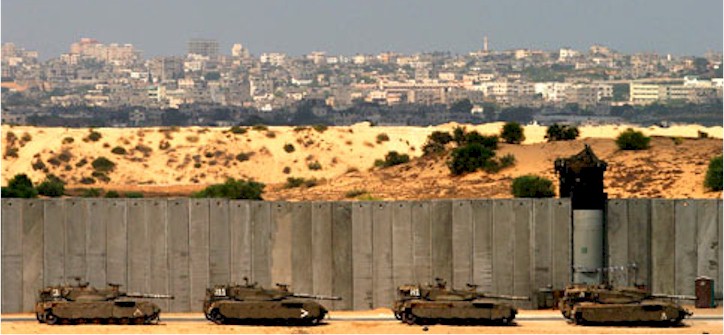
Getting ready to go in….

November 17, 2012

Waiting for the word…


