Electromagnetic Pulse – Nuclear EMP – futurescience.com.
The topic of nuclear electromagnetic pulse (EMP) is very mysterious to most people, and it is quite commonly misunderstood. It is also the subject of a large amount of misinformation. (It is a serious and persistent problem that many people want to ignore the science and make it into a political issue.) There are many additional EMP pages on this site, including separate pages on EMP personal protection, Soviet nuclear EMP tests in 1962, and on other EMP related topics including a separate page of notes and technical references. There is also a very important page about widely-believed EMP myths. Much of the information here describes the possible effects of EMP on the continental United States, but the information can be used to describe the effects on any industrialized country.
In testimony before the United States Congress House Armed Services Committee on October 7, 1999, the eminent physicist Dr. Lowell Wood, in talking about Starfish Prime and the related EMP-producing nuclear tests in 1962, stated,
| “Most fortunately, these tests took place over Johnston Island in the mid-Pacific rather than the Nevada Test Site, or electromagnetic pulse would still be indelibly imprinted in the minds of the citizenry of the western U.S., as well as in the history books. As it was, significant damage was done to both civilian and military electrical systems throughout the Hawaiian Islands, over 800 miles away from ground zero. The origin and nature of this damage was successfully obscured at the time — aided by its mysterious character and the essentially incredible truth.“ |

The Starfish Prime Nuclear Test
from nearly 900 miles away
Although nuclear EMP was known since the very first days of nuclear weapons testing (and often caused problems in the local area — especially with monitoring equipment), the magnitude of the effects of high-altitude nuclear EMP were not known until a 1962 test of a thermonuclear weapon in space called the Starfish Prime test. The Starfish Prime test knocked out some of the electrical and electronic components in Hawaii, which was 897 miles (1445 kilometers) away from the nuclear explosion. The damage was very limited compared to what it would be today because the electrical and electronic components of 1962 were much more resistant to the effects of EMP than the sensitive microelectronics of today. The magnitude of the effect of an EMP attack on the United States, or any similar advanced country, will remain unknown until one actually happens. Unless the device is very small or detonated at an insufficiently high altitude, it is likely that it would knock out the nearly the entire electrical power grid of the United States. It would destroy many other electrical and (especially) electronic devices. Larger microelectronic-based equipment, and devices that are connected to antennas or to the power grid at the time of the pulse, would be especially vulnerable.
The Starfish Prime test (a part of Operation Fishbowl) was detonated at 59 minutes and 51 seconds before midnight, Honolulu time, on the night of July 8, 1962. (Official documents give the date as July 9 because that was the date at the Greenwich meridian, known as Coordinated Universal Time.) It was considered an important scientific event, and was monitored by hundreds of scientific instruments across the Pacific and in space. Although an electromagnetic pulse was expected, an accurate measurement of the size of the pulse could not be made immediately because a respected physicist had made calculations that hugely underestimated the size of the EMP. Consequently, the amplitude of the pulse went completely off the scale at which the scientific instruments near the test site had been set. Although many of the scientific instruments malfunctioned, a large amount of data was obtained and analyzed in the following months.
When the 1.44 megaton W49 thermonuclear warhead detonated at an altitude of 250 miles (400 km), it made no sound. There was a very brief and very bright white flash in the sky that witnesses described as being like a huge flashbulb going off in the sky. The flash could be easily seen even through the overcast sky at Kwajalein Island, about 2000 km. to the west-southwest.
After the white flash, the entire sky glowed green over the mid-Pacific for a second, then a bright red glow formed at “sky zero” where the detonation had occurred. Long-range radio communication was disrupted a period of time ranging from a few minutes to several hours after the detonation (depending upon the frequency and the radio path being used).
In a phenomenon unrelated to the EMP, the radiation cloud from the Starfish Prime test subsequently destroyed at least 5 United States satellites and one Soviet satellite. The most well-known of the satellites was Telstar I, the world’s first active communications satellite. Telstar I was launched the day after the Starfish Prime test, and it did make a dramatic demonstration of the value of active communication satellites with live trans-Atlantic television broadcasts before it orbited through radiation produced by Starfish Prime (and other subsequent nuclear tests in space). Telstar I was damaged by the radiation cloud. The damage to Telstar 1 increased each time that it traveled through the belt of radiation, and it failed completely a few months later.
(For more information on this satellite problem, see the first 31 pages of Collateral Damage to Satellites from an EMP Attack, which gives a considerable amount of information about this additional problem of nuclear EMP attacks. You can also obtain the lengthy complete report from the DTIC government site. That 2010 report was originally written in support of the United States EMP Commission.)
Nuclear EMP is actually an electromagnetic multi-pulse. The EMP is usually described in terms of 3 components. The E1 pulse is a very fast pulse that can induce very high voltages in equipment and along electrical wiring and cables. E1 is the component that destroys computers and communications equipment and is too fast for ordinary lightning protectors. The E2 component of the pulse is the easiest to protect against, and has similarities in strength and timing to the electrical pulses produced by lightning. The E3 pulse is very different from the E1 and E2 pulses from an EMP. The E3 component of the pulse is a very slow pulse (so slow that most people would not use the word “pulse” to describe it), lasting tens to hundreds of seconds, that is caused by the nuclear detonation heaving the Earth’s magnetic field out of the way, followed by the restoration of the magnetic field to its natural place. The E3 component has similarities to a geomagnetic storm caused by a very severe solar flare.
In writings on the internet, there is nearly always much confusion about the very different aspects of the various components of nuclear EMP. In addition, there is much confusion in distinguishing high-altitude nuclear EMP, non-nuclear EMP weapons and solar geomagnetic storms. There are very large differences among these very different electromagnetic disturbances; although there are many similarities linking solar geomagnetic storms and the E3 component (but not the other components) of high-altitude nuclear EMP. Nearly everything written in popular articles, even in the most respectable publications, jumbles up a nearly incomprehensible mix of information confusing the effects of the E1 and E3 components of electromagnetic pulse. This has been largely responsible for the large number of widely-believed EMP Myths.
It is important to note that nuclear EMP cannot be understood without an understanding of the differences between the E1 and E3 components of nuclear EMP. Many otherwise intelligent technologists have caused an enormous amount of confusion by making statements without any clear understanding of the vastly different components generated by nuclear EMP. For a more detailed discussion of these components, see the E1-E2-E3 Page.
The E1 component of the pulse is the most commonly-discussed component. The gamma rays from a nuclear detonation in space can travel great distances. When these gamma rays hit the upper atmosphere, they knock out electrons in the atoms in the upper atmosphere, which travel in a generally downward direction at relativistic speeds. This forms what is essentially an extremely large coherent vertical burst of electrical current in the upper atmosphere over the entire affected area. This current interacts with the Earth’s magnetic field to produce a strong electromagnetic pulse, which originates a few miles overhead, even though the nuclear detonation point may be a thousand miles away or more. Since the E1 pulse is generated locally, even though the original gamma ray energy source may be in space at a great distance away, the pulse can cover extremely large areas, and with an extremely large EMP field over the entire affected area.
 Illustration above is from the United States Defense Threat Reduction Agency about the E1 component of nuclear electromagnetic pulse. The source region is the region of the upper atmosphere where gamma radiation from the weapon knocks out electrons from atoms in the atmosphere, which travel in a generally downward direction at roughly 94 percent of the speed of light, and are acted upon by the Earth’s magnetic field to generate a powerful burst of electromagnetic energy. This source region, where the EMP is actually generated, is a very large area in the middle of the stratosphere. (In the map on the right side of the illustration, HOB is the height of the nuclear burst in kilometers.) |
The magnitude of a nuclear EMP over the United States would be much larger than the tests in the Pacific would indicate. For any particular weapon, the magnitude of the all of the components of an EMP are roughly proportional to the strength of the Earth’s magnetic field. The Earth’s magnetic field over the center of the continental United States is about twice the strength as at the location of the Starfish Prime test.
See the separate article on the high-altitude nuclear tests of Operation Fishbowl.
It is important to emphasize that, although EMP attacks affecting all of the continental United States are possible, smaller regional EMP attacks, launched to lower altitudes with a smaller missile or with a high-altitude balloon are probably much more likely. These lower altitude attacks would affect a much smaller area, and would probably be of a much smaller intensity, but could still be very damaging to data centers and other facilities with a high reliance upon microelectronics.
Starfish Prime was a 1.44 megaton thermonuclear weapon, but was actually extremely inefficient at producing EMP. Much smaller nuclear fission weapons, requiring far less expertise, would be much more efficient at producing EMP, especially the very fast E1 component. In general, the simpler the nuclear weapon, the more efficient it is at producing EMP. (See the the notes on EMP page.) Thermonuclear weapons (so-called hydrogen bombs) are usually very inefficient at generating the fast-rise-time E1 pulse. (Weapons with a high energy yield are much better at generating the slower geomagnetic-storm-like E3 pulse that caused much of the damage to Kazakhstan in the Soviet test mentioned below. This E3 pulse can induce large currents even in long underground lines.)
Several countries have produced single-stage nuclear weapons with energy yields of well over 100 kilotons. These would be much more efficient at producing EMP than the Starfish Prime detonation. (The very first nuclear weapon tested by France had a yield of 70 kilotons). In the early 1950s, the United States had a stockpile of 90 bombs of a high-yield fission weapon that would have been a powerful EMP weapon. These were 500-kiloton single-stage fission bombs known as the Mark 18. Very little was known about EMP at the time that the Mark 18 was in production. The only actual test of the Mark 18 bomb was done at the Pacific Ocean test range on November 16, 1952 at an altitude of only 1480 feet (450 meters), so nothing was discovered about its possibilities for high-altitude EMP (although it appears that the actual yield was closer to 540 kilotons, which was higher than its design yield). By now, some countries undoubtedly have very advanced enhanced-EMP nuclear weapons, although these details are highly classified.
The Mark 18 bomb, tested in 1952, was also known as the super oralloy bomb. It was made of a spherical shell of very highly-enriched uranium surrounded by a sophisticated symmetrical implosion system that was 44 centimeters in thickness. Although it is often described as a very advanced device, it was designed by people who did not have computers of a power that is anything even approaching the power of computer that you are using to read this web page. More than a half-century ago, at least 90 of these bombs were built by the United States. In 1952, they were trying to conserve the highly-enriched uranium in the stockpile, so the Mark 18 was surrounded with a natural uranium tamper. Anyone making a similar weapon for EMP use could probably enhance its EMP effects by using a tamper made of enriched uranium and using a relatively thin outer casing made of an aluminum alloy. In addition, there are techniques for increasing the energy of the gamma rays beyond the levels available in first and second generation nuclear weapons. These techniques would increase the electric field of the EMP beyond the old maximum of 50,000 volts per meter, although we don’t know by how much.
Today, if just one of these 500 kiloton bombs like the Mark 18 were detonated 300 miles above the central United States, the economy of the country would be essentially destroyed instantaneously. Very little of the country’s electrical or electronic infrastructure would still be functional. This is not to say that every device would be destroyed, but the interdependence of different electrical and electronic infrastructures makes it possible to stop nearly all economic activity with only limited damage to critical infrastructures. It would likely be months or years before most of the electrical grid could be repaired because of the destruction of large numbers of transformers in the electric power grid that are no longer made in the United States. Several countries today have the ability to produce a weapon similar to this 1952 bomb, and send it to the necessary altitude. (England tested a single-stage weapon with a yield of 720 kilotons, called Orange Herald, on May 31, 1957.) The number of countries with this ability will undoubtedly be increasing in the coming years.
The instantaneous shutdown of the power grid would occur primarily because of the widespread use of solid-state SCADAs (supervisory control and data acquisition devices) in the power grid. These would be destroyed by the E1 pulse, but could probably be replaced within a few weeks. The greater problem would be in re-starting the power grid. (No procedures have ever been developed for a “black start” of the entire power grid. Starting a large power generating station actually requires electricity.) The greatest problem would be the loss of many critical large power transformers due to geomagnetically induced currents, for which no replacements could be obtained for at least a few years. The loss of many of these power transformers would greatly complicate the re-start of the parts of the grid that could be much more quickly repaired. The loss of a sufficient number of these large power transformers would effectively destroy the power grid as we now know it. We would have to just hope that there were enough small islands of local electric power to enable a basic subsistence level of economy to exist.
The consequences of the potential dangers to the electric power grid have changed dramatically over the past few decades — as the availability of electricity has changed from being a convenience to something upon which our lives now depend. This transition of electricity from a convenience to a necessity for sustaining human life has happened so gradually that most of us haven’t noticed this profound change. The knowledge and the technology of earlier times for surviving for long periods of time without electricity has been mostly lost in modern societies.
By mentioning the 1952 Mark 18 bomb, I do not want to imply that countries developing nuclear weapons would start with such an old technology. New 21st century automobile companies do not start with a Stanley Steamer or the Model T; and new radio companies do not start with Marconi circuits and Fleming valves. Modern techniques and materials, as well as advanced computing power, enable new nuclear weapons projects to leapfrog far past the Manhattan Project. A related fallacy is the belief that, because of the difficulty that the United States and the old Soviet Union had in going from basic fission weapons to thermonuclear weapons, all nations would experience similar difficulties and delays. Producing basic fission weapons requires a significant industrial capacity to produce the fissionable material. Scaling up from there to thermonuclear weapons just requires computing power and knowledge.
Many years after he left the nuclear weapons laboratories, the principal designer of the Mark 18 bomb wrote an article for Scientific American describing, in general terms, how specific effects of nuclear weapons (including EMP) can be greatly enhanced, and how such effects can be concentrated in one direction from the detonation. (See Scientific American, Theodore B. Taylor “Third-Generation Nuclear Weapons”, pages 30-39. Vol. 256, No. 4. April, 1987.)
The Soviet Union got its surprise introduction to the severity of high-altitude nuclear EMP effects over a much more heavily populated area than the Pacific Ocean. The most damaging nuclear EMP event in history (so far), much worse than the Starfish Prime test, occurred in October of 1962 over central Asia. Written documents give the time and date as 3:41 GMT/UTC on the morning of October 22, 1962. The warhead was launched from Kapustin Yar on a Soviet R-12 missile. Although the primary purpose of the test was to discover the effects of EMP on certain military systems, the large magnitude of some of the effects on the civilian infrastructure were quite unexpected.
A few hours after the sun rose in Kazakhstan on that cloudy October morning, the Soviet Union detonated a 300 kiloton thermonuclear warhead in space at an altitude of 290 kilometers (about 180 miles) over a point just west of the city of Zhezkazgan in central Kazakhstan. The test was generally known only as Test 184 (although some Soviet documents refer to it as K-3). It knocked out a major 1000-kilometer (600-mile) underground power line running from Astana (then called Aqmola), the capital city of Kazakhstan, to the city of Almaty. Some fires were reported. In the city of Karagandy, the EMP started a fire in the city’s electrical power plant, which was connected to the long underground power line.
The EMP also knocked out a major 570 kilometer long overhead telephone line by inducing currents of 1500 to 3400 amperes in the line. (The line was separated into several sub-lines connected by repeater stations.) There were numerous gas-filled overvoltage protectors and fuses along the telephone line. All of the overvoltage protectors fired, and all of the fuses on the line were blown. The EMP damaged radios at 600 kilometers (360 miles) from the test and knocked out a radar 1000 kilometers (600 miles) from the detonation. Some military diesel generators were also damaged. The repeated damage to diesel generators from the E1 component of the pulse after the series high-altitude tests was the most surprising aspect of the damage for the Soviet scientists.
Subsequent analysis has shown that the warhead used in the 1962 Soviet test was particularly ineffective at generating EMP. If the W49 warhead used in the U.S. Starfish Prime test had been used in the Soviet tests, the EMP damage over Kazakhstan would have been far greater.
Both the United States and the Soviet Union detonated EMP-generating nuclear weapons tests in space during the darkest days of the Cuban Missile Crisis, when the world was already on the brink of nuclear war.
The Soviet Union detonated additional 300 kiloton weapons over Kazakhstan on October 28 and November 1, 1962. The United States detonated a relatively small nuclear weapon (probably about 7 kilotons) in space over the Pacific on October 20, 1962, and also detonated 410 kiloton nuclear weapons in space over the Pacific on October 26 and November 1, 1962. (During the period of October 13 to November 1, 1962 there were 16 Soviet and 6 United States above-ground nuclear explosions.) Two people suffered retinal burns when they looked toward the nighttime flash of the October 26 (Bluegill Triple Prime) detonation directly overhead, which occurred at an altitude of 50 kilometers. (Due to a guidance system malfunction, the October 26 detonation occurred almost directly above Johnston Island.)
Johnston Island is now somewhat larger than it was in 1962 (due to a dredging project in 1964), and the airport is now closed. There have been at least three launch pad sites on Johnston Island for high-altitude nuclear tests. The 1958 tests (Hardtack-Teak and Hardtack-Orange) were launched from one end of the island, and the Operation Fishbowl tests, including Starfish Prime, were launched from the other end. After the Bluegill Prime launch resulted in a catastrophic explosion shortly after the successful Starfish Prime test, the destroyed launch pad was re-built, along with a spare launch pad. You can see the current (unoccupied) island in this Wikimapia satellite view of Johnston Island.
Most of the EMP data on the United States Bluegill Triple Prime, Checkmate and Kingfish high altitude tests of 1962, as well as the Hardtack-Teak and Hardtack-Orange tests of 1958 remain classified decades after the tests were completed. The secrecy regarding these tests poses a danger to the United States since it does not allow vulnerable United States citizens to fully educate themselves about the effects of weapons that could have a dramatic effect on their lives in the future.
Test 184 was launched from Russian territory about 30 miles from the Kazakhstan border. If Test 184 were to be duplicated today using the same launch and detonation points, it would probably be considered as a nuclear attack against another country. (At the time, of course, Kazakhstan was a part of the Soviet Union.)
There is a separate page with more details, including references, about the Soviet nuclear EMP tests in 1962.
This site is written by an electronics engineer who has been concerned about the possibility of an EMP attack on the United States for decades. We are entering a period of special vulnerability to EMP in the coming years as industrial civilization becomes almost totally dependent upon microelectronics. (Hopefully, the use of fiber optics will reduce the current vulnerability by the end of the decade. Also, something desparately needs to be done about the electric power grid transformer situation.) Most people who have some knowledge in this subject, and who have given some serious thought to the problem, consider the probability of an EMP attack on the United States during the next ten years at somewhere between 20 and 70 percent. The probability of a solar storm large enough to destroy hundreds of the largest transformers in the United States power grid sometime during this century is widely considered to be more than 50 percent. (My own guess is that the probability of a long-term loss of much of the world’s power grid from a solar superstorm is probably much larger than the chance of a nuclear EMP attack on the United States.)
The time that it would take to recover from a nuclear EMP attack has generally been estimated to be anywhere from two months to ten years. There would almost certainly be a time of great economic hardship. Whether this time of economic hardship is of short or long duration will depend upon the reaction of the American people after the event, and whether any preparation has been made in advance of the event. (So far, such advance preparation has been almost totally absent.) A very large factor in the recovery time would also be whether most of the damage was due to the E1 or the E3 components.
In widespread power outages of the past in the United States, people have reacted with behavior ranging from rioting and looting (as many did during the July 13, 1977 New York power outage) to patiently waiting for the crisis to be over (as has occurred with some more recent power outages such as the widespread August 14, 2003 outage in the northeastern U.S.). The Power Grid DVD from the History Channel examines the electric power grid with special emphasis on the August 14, 2003 blackout.
If the recovery period were long, and especially if electronic communication were down for a period of months, civilization in the United States could reach a tipping point where recovery would become difficult or impossible.
The electric power grid in use today has changed very little from the system devised by Nikola Tesla and implemented by Westinghouse, beginning in the 1890s, as described in the Mad Electricity DVD, which describes the power grid from the historical perspective of Tesla’s early battle against Thomas Edison for the adaption of alternating current. The adaption of alternating current made modern electrification possible, but also made the power grid very vulnerable to geomagnetically induced currents, which includes the currents induced by the E3 component of an EMP, as well as severe solar storms.
A nuclear EMP attack could come from many sources. A missile launched from the ocean near the coast of the United States, and capable of delivering a nuclear weapon at least a thousand miles inland toward the central United States, would cause problems that would be devastating for the entire country. A thin-cased 100 kiloton weapon optimized for gamma ray production (or even the relatively-primitive super oralloy bomb of more than 56 years ago) detonated 250 to 300 miles above Nebraska, might destroy just about every piece of unprotected electronic equipment in the continental United States, southern Canada and northern Mexico (except for small items not connected to any external wiring). Such a weapon would also very likely knock out 70 to 100 percent of the electrical grid in this very large area. Nearly all unprotected electronic communications systems would be knocked out. In the best of circumstances, as completely unprepared for such an event as we are now, reconstruction would take at least three years if the weapon were large enough to destroy large power grid transformers.
The more that preparations are made for an EMP attack, the less severe the long-term consequences are likely to become. In comparative terms, being ready for an EMP attack would not cost a lot, and the benefits would include a much higher reliability of the entire electrical and electronic infrastructure, even if a nuclear EMP attack never occurred. Adequate preparation and protection could keep recovery time to a month or two, but such preparations have never been made, and few people are interested in making such preparations.
Hardening the electronic and electrical infrastructure of the United States against an EMP attack is the best way to assure that such an attack does not occur. Leaving ourselves as totally vulnerable as we are now makes the United States a very tempting target for this kind of attack.
By not protecting its electrical and electronic infrastructure against nuclear EMP, the United States invites and encourages nuclear proliferation. These unprotected infrastructures allow countries that are currently without a nuclear weapons program to eventually gain the capability to effectively destroy the United States with one, or a few, relatively simple nuclear weapons.
Severe solar storms can cause current overloads on the power grid that are very similar to the slower E3 component of a nuclear electromagnetic pulse. There is good reason to believe that the past century of strong human reliance on the electrical systems has also, fortunately for us, been an unusually quiet period for solar activity. We may not always be so lucky. In 1859, a solar flare produced a geomagnetic storm that was many times greater than anything that has occurred since the modern electrical grid has been in place. We know something about the electrical disruption that the 1859 Carrington event caused because of the destruction it caused on telegraph systems in Europe and North America. Many people who have studied the 1859 event believe that if such a geomagnetic storm were to occur today, it would shut down the entire electrical grid of the United States. It is likely that such a geomagnetic storm would destroy most of the largest transformers (345 KV. and higher) in the electrical grid. Very few spares for these very large transformers are kept on hand, and they are no longer produced in the United States. Protection against nuclear EMP is also protection against many kinds of unpredictable natural phenomena that could be catastrophic.
Although it is possible that a nuclear EMP attack will never occur, a solar flare that will completely shut down the electrical grid (for a very long period of time) almost certainly will eventually occur unless adequate protections are put in place. For a comprehensive recent report on the effects of geomagnetic storms and the EMP E3 component, see Severe Space Weather Events — Understanding Societal and Economic Impacts by the National Research Council of the United States National Academies. A solar storm of the size of the 1859 event, or even a smaller geomagnetic storm that occurred on May 14-15 in 1921, could simultaneously knock out the power grids of the United States, Canada, northern Europe and Australia, with recovery times of 4 to 10 years (since the solar storm would burn up large transformers worldwide, for which very few spares exist.) The United States has no capacity for building replacements for these large transformers.
For a map of the locations of the most highly at-risk power grid transformers in the United States, see this page from the 2008 Report on Severe Space Weather Events.
There is hope that people are beginning to realize the importance of this problem. In 2010, at least one major company that makes small and medium sized power grid transformers announced plans to begin to build the capability at a United States facility to move toward the production of some of the largest transformers. (See this press release from Waukesha Electric which indicates that they have a serious interest in getting into the very large transformer business if the electric utilities show any interest in buying these critical spare parts.) In addition, in early 2011, Mitsubishi Electric announced plans to begin building the largest transformers by early 2013 in a new plant in Memphis, Tennessee.
Emprimus, a company specializing in protecting against electromagnetic disturbances, has developed the SolidGround Neutral DC blocking system for the protection of transformers in the power grid. SolidGround is a registered trademark of that company. The Emprimus SolidGround system is designed to protect large power grid transformers from solar storms and from the E3 component of nuclear EMP.
It is important to understand that severe solar storms produce only the E3 component that burns out power grid transformers and induce DC-like currents in very long electrical conductors. Solar storms do not produce the fast E1 component that can be so damaging to electronics. Some astronomical phenomena can produce a gamma ray burst that could produce an extremely large E1 pulse, but those are extremely rare and only hit the Earth on time scales of every several million to hundreds of millions of years. Solar storms can damage satellites, and therefore satellite communications, but the only direct harm to electronics equipment on the ground comes from the loss of electrical power. (The multi-year loss of electrical power means that a significant fraction of the population will die due to starvation and lack of drinkable water and the loss of modern sewage disposal.)
A page has been developed about the things that individuals can do to help protect themselves against the EMP threat — and there is much that individuals can do.
A part of the U.S. military system is protected against EMP. Nearly all of the commercial sector is not protected. Most data backups of commercial systems are protected from just about every other threat, but not protected against EMP; and most data backups are located within the area likely to be affected by the EMP attack. Computer systems and the information they contain are especially vulnerable. As Max says in the narration in the first episode of the old Dark Angel television series, ” . . . the electromagnetic pulse turned all the one and zeros into plain old zeros . . .” An EMP attack would literally send thousands of small and mid-sized businesses in the United States into bankruptcy in less than a millisecond.
Although computer hard drives would not be erased, the electronics in hard drives that are not specifically protected against EMP would probably be destroyed, making it very expensive to recover the data that was still magnetically stored on the hard drive. Also, some of the data would be corrupted on any computer hard drives that were spinning at the time of the EMP attack.
Nearly all broadcast stations, especially television stations, would go off the air. Due to the high level of computerized automation, the equipment in most radio and television studios would be so completely destroyed that most commercial stations would be damaged beyond repair. Radio studios are actually more vulnerable to permanent damage than many portable radio receivers. Very little preventive maintenance is currently being done on broadcast equipment in the United States, and nearly all broadcast stations within the United States are far more vulnerable to EMP today than they have ever been in the past.
In the current situation, broadcast television transmitters would actually be more easily repairable than studio equipment. With the transition to digital television broadcasting in the United States, the digital encoders would be the extremely weak link in the fragile digital television broadcast chain. It is likely that a few FM stations could get back on the air within a week of the EMP attack if emergency broadcasts were originated from the FM transmitter sites, but they would only be on the air until fuel for their generator ran out, and the electronic starting and control systems of many of the standby generators would be destroyed by the pulse.
A nuclear EMP attack would likely make a permanent change the structure of television broadcasting in the United States since it would not be financially feasible to re-build most local television stations (except possibly in the largest cities). The television broadcast re-build would probably be with a satellite and cable infrastructure, with local news being provided by subsidiaries of national news companies over their national freshly-EMP-hardened post-pulse infrastructure. An all-fiber-optic internet (with fiber optic cable all the way to the end-user) would assume a greatly increased importance. Making predictions about what a post-pulse world would be like is very difficult, though, since a severe EMP would cause a level of destruction to the electrical and electronic infrastructure that would make the United States (or any other similarly advanced country) incapable of supporting anything close to its present population.
Since this web site was started, the awareness of the EMP problem has increased significantly. A new emergency broadcast system in the United States known as IPAWS is currently under development (although some of the early testing of the new system has gone very badly). According to a statement of Damon Penn, a DHS official, made to a committee of the U.S. House of Representatives on July 8, 2011, a limited number of critical radio stations are being retrofitted with some EMP protection. The EMP protected stations are a few of the ones that are known as Primary Entry Point (PEP) stations:
| “The PEP system is a nationwide network of broadcast stations and other entities that is used to distribute a message from the President or designated national authorities in the event of a national emergency. The IPAWS Program Management Office continues to expand the number of PEP Stations across the U.S. In August 2009, the system originally had 36 PEP stations providing direct coverage to 67 percent of the American people. Currently, there are 49 operational PEP Stations and five PEP Stations under construction, resulting in direct coverage of 75 percent of the American people. By the end of 2012, the number of PEP Stations will increase to 77 and will directly cover over 90 percent of the American people.
“New PEP Stations use a standard configuration, saving maintenance costs and ensuring an ease of movement between stations. The stations have double-walled fuel containers with spill containment and a modern fuel management system and Electromagnetic Pulse-protected backup power and transmitters. Legacy stations are being retrofitted to meet current PEP Station resiliency standards.” |
In the old Dark Angel television series, an EMP attack is supposed to have occurred on June 1, 2009, and the vehicles appear to be mostly pre-1980 and post-2009 models. There is a good reason for this. Many conventional gasoline vehicles produced since around 1980 may not function after an EMP attack due to their dependence upon electronics. This would obviously produce a huge problem for the United States after an EMP attack. Merely moving disabled vehicles off the road would be a major undertaking. Disabled traffic lights would add to the traffic problems.
In one episode of the FutureWeapons Season 1 DVD Set, which was broadcast in 2006, a Ford Taurus driven on to a nuclear EMP simulator in New Mexico and pulsed. You can buy the DVD from the Discovery Channel, but you have to buy the entire 2006 FutureWeapons series (which does include more information on EMP), or you can see what happened to the Ford Taurus in this video excerpt on YouTube.
See the page on EMP and motor vehicles.
Many of the effects of nuclear EMP are very difficult to predict on the 21st century United States. Many vehicles that one would expect to be disabled by an EMP due to their dependence on sensitive electronics might be shielded well enough to continue to operate. Automotive electronic ignition systems in general are much better shielded and protected against EMP than other electronics. (After all, the purpose of an electronic ignition is to make high-voltage sparks.) Circuits in the automobile outside of the electronic ignition are actually the most vulnerable. Actual tests on vehicles in simulators have been very inconsistent. Even if only ten percent of the automobiles on the highways during the day were abruptly disabled, the resultant traffic jams would be nearly incomprehensible. (Having ten percent of the cars suddenly disabled might actually be more chaotic than having nearly all of them suddenly disabled.) Of course, there is no practical way to do a real nuclear EMP test. Even a nuclear test in space over the Pacific would likely do billions of dollars in damage to today’s electrical and electronic infrastructure in the Pacific region. Such a test would also cause enormous damage to satellites in low earth orbit.
Tests done on 37 automobiles (that used electronic ignition systems) by the United States EMP Commission showed that all of the tested cars would still run after a simulated EMP, although most sustained some (mostly nuisance) electronic damage. Individuals associated with the EMP Commission have stated that their tests on vehicles were somewhat misleading since the EMP simulator pulses were started at low levels and repeated until the vehicle experienced some sort of electronic upset. After that point was reached, the vehicle was not tested at higher levels since the vehicles were borrowed, and the Commission was liable for any damage to the vehicles. So we don’t know at what point the automobiles would have been permanently damaged.
Additional tests were done on 18 trucks, ranging from light pickup trucks to large diesel trucks. Results were generally similar to the tests on automobiles, although one pickup could not be re-started at all after the simulated EMP and had to be towed to a garage for repairs.
Only about one in every ten million civilian automobiles and light trucks in use today have been tested in an EMP simulator. That is a very tiny sample size. Many cars that would run after an actual EMP would probably have to be started in an unconventional manner (such as temporarily jumpering wires under the hood) due to damage of control circuits.
Reports about the effects of the 1962 Starfish Prime test that have been declassified in recent years state that some of the automobiles in Hawaii had their old non-electronic ignition systems damaged by the EMP, so automobile damage may be much higher that we previously thought. Those reports, however, were based upon unconfirmed verbal reports made years after the incident. Automobile ignition problems were much more common in those days, and most of the people whose cars were damaged by the Starfish Prime test probably never related their car ignition problems to the nuclear test. The damage to diesel generators in the 1962 Soviet nuclear EMP tests indicates that some of the electrical damage doesn’t show up right away. Although many people would like to know exactly which vehicles would continue to function after an EMP, the number of variables are enormous, and include the orientation of the vehicle with respect to the detonation point at the particular time that the device is detonated.
Even for vehicles that are not disabled by an EMP attack, some very bizarre things might happen. I have had the experience myself of getting locked out of my vehicle at a mountaintop broadcast transmitter site by RF fields. In that case, RF electromagnetic energy from several nearby high-power transmitters caused the doors to lock while the keys were in the ignition and the engine was running. Of course, this occurred during one of the few times that I didn’t have an extra set of keys with me. I have also heard of windshield wipers suddenly coming on in recent-model vehicles when driven near high-power radio transmitters.
In addition to the large-area (nearly continent-wide) effect of nuclear EMP attacks, there is an imminent threat from much smaller electromagnetic weapons that could do only localized damage. Many of these are relatively easy to construct and are very likely to be used in coming years in the U.S. by terrorists, as well as by ordinary vandals. An electromagnetic truck bomb in a small truck or van would not necessarily destroy the truck, which might be able to drive away, but could do millions of dollars in damage to the computer systems inside a building. (See my page on non-nuclear means of EMP generation.)
An example of a non-nuclear EMP device is the one being marketed by Eureka Aerospace, which is described, with a video, at the Physorg site. These devices are designed to destroy the vital electronics in automobiles. Although these devices can be beneficial in many cases, in the wrong hands they could cause enormous destruction at the rate of millions of dollars in damage per hour.
A nuclear EMP attack that is sufficiently large would knock out most, if not all, of the electric power grid. The extent of the electrical grid damage would depend upon the size of the bomb. Full repair of the power grid would take anywhere from two months to three years or more. Many components such as large transformers, which are normally resistant to large voltage transients, would be destroyed by the DC-like current induced by the E3 component of the pulse when they are connected to very long copper wires. The design life of the larger transformers in the United States power grid is typically 40 years, but the average age of these transformers is already more than 42 years. If power companies were to keep adequate spare parts on hand, the repair time could be kept closer to the two-month time frame. Adequate parts are not currently being kept on hand, and, in most cases, there are very long lead times for replacement parts for the electrical grid if the parts are not kept on hand by the electrical utility. There is currently no United States manufacturing capability for the large power transformers in its power grid. All of these extremely heavy transformers have to be manufactured and imported from other countries. The current delivery time for these transformers is 3 years from the time that the order is placed, but widespread destruction of these transformers would completely overwhelm the very limited worldwide production capacity.
The problem of spare parts affects more than just the power grid. There has been an overall trend during the past decade toward all commercial enterprises keeping fewer and fewer critical spare parts on hand.
Electrical and communications lines carried on overhead poles would be most susceptible to EMP. Although fiber optic lines will not pick up EMP-induced currents, as the Soviet Union learned in 1962, underground telephone and electrical lines would not be completely immune.
A big problem in the United States would be the electronic communications systems. The threat of an EMP attack is well known to the people who could do something about it. In one major study (in 2004) by the U.S. federal government stated:
| Several potential adversaries have or can acquire the capability to attack the United States with a high-altitude nuclear weapon-generated electromagnetic pulse (EMP). A determined adversary can achieve an EMP attack capability without having a high level of sophistication.
EMP is one of a small number of threats that can hold our society at risk of catastrophic consequences. EMP will cover the wide geographic region within line of sight to the nuclear weapon. It has the capability to produce significant damage to critical infrastructures and thus to the very fabric of US society, as well as to the ability of the United States and Western nations to project influence and military power. The common element that can produce such an impact from EMP is primarily electronics, so pervasive in all aspects of our society and military, coupled through critical infrastructures. Our vulnerability is increasing daily as our use of and dependence on electronics continues to grow. The impact of EMP is asymmetric in relation to potential protagonists who are not as dependent on modern electronics. The current vulnerability of our critical infrastructures can both invite and reward attack if not corrected. Correction is feasible and well within the Nation’s means and resources to accomplish. |
In 2008, a study was issued by the United States EMP Commission that has turned out to be the most comprehensive and valuable analysis of the current EMP threat written so far. This highly-recommended report is available at:
Note: (This is a 200-page report, which is 7 megabytes in size, and could take a half-hour or more to download if you are on a slow dial-up connection.)
The original source for the report is at:
Click to access A2473-EMP_Commission-7MB.pdf
This report is a PDF that requires the free Adobe Acrobat PDF reader. The report of about 200 pages is somewhat technical in some areas, but it is a very objective and comprehensive report.
As the above report points out, even if power grid transformers survive an EMP attack, the power grid is extremely vulnerable to EMP and other attacks because of control and monitoring devices called SCADAs, which would be easily knocked out even with a relatively small weapon.
For a shorter summary, the comments of the chairman of the EMP Commission, made when the report above was delivered to the U.S. Congress, are summarized here in 7 pages.
For a large amount of additional information about EMP, including many eyewitness accounts of nuclear EMP detonations, see:
Effects of Nuclear Weapons Tests: Scientific Facts
Another good report on the nuclear EMP problem is this report on Electromagnetic Pulse Threats in 2010 released by the United States Air Force (originally released in 2005).
For more information about the retinal burn problem and other technical aspects of EMP-producing nuclear explosions, see:
http://www.fas.org/sgp/othergov/doe/lanl/docs1/00322994.pdf
A book was released in March 2009 about a fictional EMP attack on the United States. It is called One Second After by William R. Forstchen, a best-selling author who has a Ph.D. in military history from Purdue University. The book covers the period of time from the afternoon of the pulse attack until exactly one year after the attack. A trade paperback edition of the book, edited by the author, was released in November 2009. (At the time that the trade paperback was released, the hardcover edition still had all of the numerous original editing mistakes that were corrected in the trade paperback edition.) There are several other fictional EMP books that have been released in the past few years, but One Second After is the only one that has made it into the major bestseller lists.
Dr. Forstchen’s book is quite technically accurate, although it greatly oversimplifies many EMP effects, especially the EMP effect on automobiles. In his defense, though, Dr. Forstchen didn’t have access to the latest EMP-automobile simulator test information when he wrote the book. (The contract for the book was actually completed in early 2006). Most of the earlier EMP-automobile data was much more dismal, and there are still a great many uncertainties about the EMP effect on automobiles because of the very small number of vehicles that have actually been tested. The 1962 Soviet experience with the repeated burnout of military diesel generators using no solid state electronics is a warning not to rely too heavily on simulator testing. It is important to remember that the last time an automobile was actually tested against a real nuclear EMP was in 1962. Actual electromagnetic damage in the real world is far messier than any simulations would indicate.
The EMP Commission’s testing of automobiles was only done up to a level of 50,000 volts per meter, and in most cases, the EMP levels were not even taken up nearly that high. The EMP Commission did not take the level up to see at what level the automobiles would fail to run. From everything that is published in open (non-classified) English-language scientific papers, 50,000 volts per meter is about the maximum electric field strength that can be produced by first and second generation nuclear weapons of any size. However, EMP Commission staff members have stated in sworn testimony before the U.S. Congress that “super-EMP” weapons have been developed (by more than one country) that are capable of generating up to 200,000 volts per meter below the detonation, and 100,000 volts per meter at the horizon. (It is impossible to confirm the accuracy of these claims.)
For a discussion of some of the problems in correlating the results of EMP simulator testing to the actual results seen in the 1962 high altitude nuclear tests, see this transcript of a House Armed Services Committee discussion between congressmen and physicists.
For more information about super-EMP weapons, see the Super-EMP page.
One Second After postulates an EMP from a missile launched from an offshore container ship. Although such an attack would be difficult to accomplish successfully, if anyone thinks that this is an unrealistic scenario, take a look at this advertisement from a Russian company, with an included Youtube video that looks like it could be a scene out of the One Second After movie:
The Club-K Container Missile System in its advertised version is designed for launching six cruise missiles, but it could obviously be converted for a long-range ballistic missile. A Scud-D ballistic missile would fit quite easily into this container. Scuds are very primitive missiles, though. Producing an intermediate range ballistic missile is not a project of any major difficulty.
By re-stating the often-mentioned idea of an EMP attack from a container-ship missile system, I do not want to imply that I think that this is in any way a likely event. There are many additional, and much more clever, possible methods of executing an EMP attack, and many other ways that the perpetrator could avoid forensic identification.
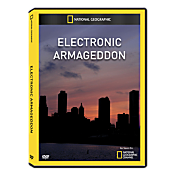
An hour-long television documentary program on EMP was Electronic Armageddon, an episode of National Geographic Explorer on the National Geographic Channel. It was shown four times in June 2010. It was an excellent program with very few factual errors. An Electronic Armageddon DVD-R can be purchased at the National Geographic Video Store.
The Electronic Armageddon documentary was repeated on the National Geographic Channel in the United States in October, 2010; and may be repeated occasionally in the future.
The first of several planned programs on EMP for law enforcement and public safety personnel are now available on Law Enforcement and Public Safety TV on the web.
In September, 2010, Oak Ridge National Laboratory published a series of reports for the Federal Energy Regulatory Commission, the Department of Energy and the Department of Homeland Security on the effects of electromagnetic disturbances on the United States electric power grid. The reports were written by the Metatech Corporation, and they provide an updated and comprehensive view of how electromagnetic disturbances such as nuclear EMP are likely to affect the United States electrical power grid. Many people will only be interested in the Executive Summary. Some of the other reports are hundreds of pages long.
- Executive Summary
- Meta-R-319: Geomagnetic Storms and Their Impacts on the U.S. Power Grid by John Kappenman
- Meta-R-320: The Early-Time (E1) High-Altitude Electromagnetic Pulse (HEMP) and Its Impact on the U.S. Power Grid by Edward Savage, James Gilbert and William Radasky
- Meta-R-321: The Late-Time (E3) High-Altitude Electromagnetic Pulse (HEMP) and Its Impact on the U.S. Power Grid by James Gilbert, John Kappenman, William Radasky and Edward Savage
- Meta-R-322: Low-Frequency Protection Concepts for the Electric Power Grid: Geomagnetically Induced Current (GIC) and E3 HEMP Mitigation by John Kappenman
- Meta-R-323: Intentional Electromagnetic Interference (IEMI) and Its Impact on the U.S. Power Grid by William Radasky and Edward Savage
- Meta-R-324: High-Frequency Protection Concepts for the Electric Power Grid by William Radasky and Edward Savage
For an organization with a considerable amount of additional information on EMP, especially as it relates to current events, visit the EMPact America web site.
EMPact America has a periodic internet radio program on topics related to electromagnetic pulse. The programs are archived, and may be listened to at any time by going to EMPact America Blogtalk Radio web site. In September 2011, the EMPact America radio programs included a special daily series on general emergency preparedness, with an emphasis on electromagnetic events. Those programs are also available free at the EMPact America Radio web site.
This web site has enough additional scientific references and more notes about nuclear EMP to keep you occupied for many days:
- Notes and Technical References on Nuclear Electromagnetic Pulse (and on solar storms)
- Also see the EMP personal protection page.
- There is a comprehensive and well-referenced page at this site with extensive details about the 1962 Soviet nuclear EMP tests over Kazakhstan, which resulted in extensive damage to the electrical and communications infrastructure.
- There is a separate page with additional details about EMP effects on motor vehicles.
- Also see my article about the Operation Fishbowl series of high-altitude nuclear tests
by the United States in 1962 over the mid-Pacific. This article includes extensive references. - There is also a heavily-referenced page about General EMP History, including details on the balloon-launched Hardtack-Yucca nuclear test. A link to the video of the helium-balloon-launched nuclear weapon is included. (A regional EMP attack could be launched today with a large helium balloon, although it would probably be launched at night. There is a separate page about the possibility of Balloon-Launched EMP Attacks).
- Another page on EMP explains the critical difference between the E1, E2 and E3 components of nuclear EMP.
- Also at this site, there is a very important page on common EMP Myths, which cause an enormous amount of confusion.
The SUMMA Foundation at the University of New Mexico now has a 44-minute documentary movie online about the (now mothballed) world’s largest EMP simulator called TRESTLE: Landmark of the Cold War. Dr. Carl E. Baum, the senior scientist/engineer who conceived the Trestle EMP simulator, and also maintained the most valuable concentration of documents on EMP at the SUMMA Foundation, died on December 2, 2010, at the age of 70, after suffering a stroke. The SUMMA Foundation is affiliated with the University of New Mexico.









 anneinpt
 artaxes
 danmillerinpanama
 davidking1530
 Peter Hofman
 Joseph Wouk
 Peter
Peter Louisiana Steve
 WarSclerotic
Recent Comments