Never again !!
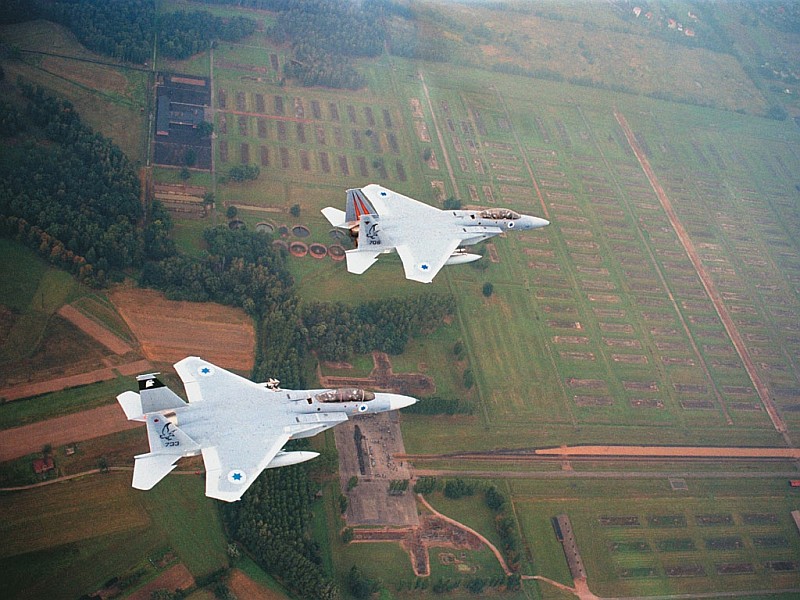
(Forgive my lack of journalistic balance. It’s my people, my country and my life. – JW)
(Forgive my lack of journalistic balance. It’s my people, my country and my life. – JW)
News Desk: Iran, Israel, and the Bomb : The New Yorker.
(This is the best written article I’ve read proposing ‘containment” rather than military action. It fails on its face, but there are many out there who agree with it. – JW)
Later this week, the International Atomic Energy Agency, the nuclear watchdog outfit, will issue a report to its member states on Iran’s nuclear program. According to various press accounts, Western diplomats who have been briefed describe the report as finding, more explicitly than before, that Iran, despite its own denials and despite international sanctions, has been developing capabilities that appear intended for the production of a nuclear weapon. The I.A.E.A.’s evidence, the BBC reported, will include “intelligence that Iran made computer models of a nuclear warhead,” and satellite images of a steel container that could potentially be used to test explosives “related to nuclear arms.” The Guardian’s account of developing events, by Julian Borger, is truly alarming.
The details will emerge—and they, inevitably, will be denied in Tehran. At a group interview that I attended in New York two months ago, Iranian leader Mahmoud Ahmadinejad insisted yet again that Iran’s nuclear program was solely for civilian purposes, and, in advance of the new I.A.E.A. report, Iranian officials have declared the evidence that has leaked false, part of an overall fabrication.
An important article by Seymour M. Hersh published in The New Yorker last June, “Iran and the Bomb,” has made plain the complexity—and the potential perils—of trying to assess the nature and the pace of Iran’s nuclear program. Hersh quoted Mohamed ElBaradei, the former head of the I.A.E.A., as saying, “I don’t believe Iran is a clear and present danger. All I see is the hype about the threat posed by Iran.” The article, while taking into account the contradictions in Iranian statements and the nature of the regime (including its vicious crackdown on dissidents last year), began by reminding the reader of where hasty, exaggerated, and even manipulated intelligence led the Bush Administration, and the country, in 2003. (In that spirit, we should wait to read the I.A.E.A. report itself before coming to premature conclusions via diplomatic leaks. ElBaradei’s successor is less sanguine about evidence of Iranian intentions.)
From talking to American officials, I get the clear sense that President Barack Obama is deeply concerned about the I.A.E.A. report and the Iranian situation in general, but is hardly eager to lead, or even sanction, a military strike on Tehran. Hawks like Dick Cheney say that this is because Obama is weak and allergic to the use of military strength—a Republican talking point rendered ridiculous, time and again, by the President’s actions, from the killing of Osama bin Laden and other al Qaeda leaders to the use of drones in Pakistan and Yemen to his actions in Libya. In Cannes this week, Obama discussed with Nicolas Sarkozy of France and others ways to further isolate Iran in the U.N. and tighten sanctions, possibly making moves on Iranian financial institutions, including its central bank. On a trip to Asia later this week, Obama will try to persuade the Russians and Chinese, who are slower to act against Iran, to cooperate. The tension here is marked: The I.A.E.A. report comes not long after the United States accused Iran of hatching a plot to murder Saudi Arabia’s ambassador to Washington.
What has most heightened the sense of anxiety, in diplomatic circles and beyond, is a series of leaked reports coming from Israel that Prime Minister Benjamin Netanyahu, Defense Secretary Ehud Barak, and other members of the seven-person security cabinet have grown increasingly determined to launch a unilateral attack on Iranian nuclear facilities—with or without Obama’s assent.
The country’s most influential columnist, Nahum Barnea, wrote a front-page commentary in Yediot Ahronoth recently called “Atomic Pressure,” slamming Netanyahu and Barak for acting dangerously and without a thorough public discussion. Barnea, who is as connected a journalist as I have ever met, tried to describe Netanyahu’s thinking: “Ahmadinejad is Hitler; if he isn’t stopped in time, there will be another Holocaust.” He continued, “There are those who describe Netanyahu’s attitude on the matter as an obsession: All his life he dreamed of being Churchill; Iran gives him the opportunity.”
Barnea is right: Netanyahu is obsessed with the Second World War parallels, real or imagined, and even used them to justify his opposition to the peace process with the Palestinians in the nineties. Netanyahu is deeply influenced not only by his hundred-year-old father’s right-wing Revisionist ideology, but also by a profound sense of himself as Israel’s post-Holocaust protector. Heroic imagery, like the F-15s flying over the rail tracks to Auschwitz, is no small part of what drives him. Five years ago, he said of the Iranian nuclear issue, “The year is 1938 and Iran is Germany.”
Ehud Barak has a far more dovish image than Netanyahu, at least among many Americans, because of his overtures to the Palestinians in the last months and days of the Clinton Administration. But Barak carries with him a bitterness about those failed negotiations; he has said that they showed the Palestinian leadership’s “true face.” And on the Iranian issue he is far more hawkish. Indeed, he is said to be in agreement with Netanyahu on the need to act against Iran before it is, in their terms, too late.
Polls show deep division in Israel over a military strike on Iranian nuclear sites. To no one’s surprise, Haaretz, the paper read by the country’s liberal elite, has also published many editorials and columns denouncing a military strike or, at the very least, urging caution and public discussion.
Ari Shavit, a centrist by the paper’s standards, and a well-informed writer who has hardly been dismissive of the dangers of a potential Iranian bomb, wrote this week, “The strategic decision regarding Iran is the decision of our generation. Israel has not faced such an important and difficult decision since it decided to build the Dimona facility”—the nuclear complex in the Negev desert, which became active in the sixties. “If Israel acts against Iran prematurely, the implications could be dramatic. An eternal war with Tehran, an intermediate war with Hamas and Hezbollah, tens of thousands of missiles on dozens of cities in Israel.” Shavit did not stop there. “If Israel is late to act in Iran,” he wrote, “the implications could be critical to our survival. A nuclear bomb in the hands of fanatic Muslims could change our life entirely and could shorten our life span.”
The debate in Israel over Iran has not exactly been a secret, nor has it been limited to leaks from the government and columns in Yediot and Haaretz. (When is there ever a secret conversation in Israel? It may have the noisiest political culture in the world.) Many of Israel’s leading former intelligence and military leaders agree with Nahum Barnea (and are also, quite likely, among his sources). But not all do. Meir Dagan, who led Israel’s Mossad spy agency until last January, has said publicly that an attack on Iran would be “a stupid idea….The regional challenge that Israel would face would be impossible.” (Dagan also faulted the government for not proposing a peace initiative with the Palestinians.) On Iran, Dagan has been joined in his caution not only by political voices on the left, but also by the former chief of general staff, Gabi Ashkenazi, and former head of the Shin Bet security agency, Yuval Diskin, as well as by leading non-liberals in the government such as Benny Begin (the son of Menachem Begin) and Dan Meridor.
“I decided to speak out because, when I was in office, Diskin, Ashkenazi and I could block any dangerous adventure,” Dagan said earlier this year. “Now I am afraid that there is no one to stop Bibi and Barak.”
American officials, led by Secretary of Defense Leon Panetta, have met with Netanyahu and Barak, both in Israel and in Washington, and they discussed Iran at length. According to a report in Sunday’s edition of Haaretz, Panetta failed to extract a promise from the Israelis that they would not carry out a raid on Iran without coordinating it with the United States.
According to State Department cables obtained by WikiLeaks, some Arab states, particularly in the Gulf, including Saudi Arabia, might object in public to an Israeli raid but would actually be delighted to see it happen. As the Arab Spring has transformed the region, the Iranians and the Saudis are engaged in a none-too-subtle battle for geo-strategic influence. The Saudis hardly see an Iranian bomb as a threat solely to Israel.
At the same time, the potential dangers of a strike are clear: a prolonged and bloody regional war; attacks on Israel from Gaza and Lebanon; the closing of the Strait of Hormuz, a main world oil transport lane; a sharp rise in energy prices with disastrous effects on the world economy.
It does not require an Iranian official to point out that Israel, despite its policy of “ambiguity,” possesses somewhere around a hundred nuclear weapons. It developed those weapons in defiance of international law as a means of protection, a counterbalance to its overwhelming strategic disadvantages. Iran with a nuclear weapon, Israelis argue—and here there is near-unanimous agreement—is something else entirely: an aggressive theocratic dictatorship whose leaders routinely express everything from a desire to remove “the Zionist entity” to a denial of the Holocaust itself will, with nuclear capability, be a dangerously destabilizing force in an already unstable region.
If one assumes that there remains serious doubt about the details of Iran’s nuclear program—its progress, its timing—there can be no wishing away the seriousness of the issue or the nature of the regime. The attempts to stymie Iran so far—not only through sanctions, but through covert means, including assassinations of nuclear scientists and the Stuxnet computer worm—have, according to an analysis by David Sanger in Sunday’s Times, “slowed Iran’s nuclear progress by one or two years.” Sanger writes that a new computer worm, a “Stuxnet 2.0 may be in the works for Iran.”
The reports coming from Israel this week may be a kind of tactical noise. For at least the past five years, the Israeli leadership has made threatening sounds about absolute deadlines. It may be trying to heighten the sense of crisis in order to insure that the United States, Britain, and other Western powers will go to great lengths to intensify sanctions and exert maximum pressure on Iran in the wake of the new I.A.E.A. report.
A unilateral attack from Israel, however, would be a grave mistake for all the reasons made plain by Meir Dagan and so many others. It is terrible enough to imagine what might happen if Iran came to possess a bomb; but an attack now would almost certainly lead to a tide of blood in the region. The Middle East today is in a state of fragile possibility, full of peril, to be sure, but also pregnant with promise. A premature unilateral attack could upend everything and one result of many would be an Israel under fire, under attack, and more deeply isolated than ever before.
“For Israel,” a columnist from Ynet, Yediot’s English-language Web site concluded, “the way to cope with the Iranian nuclear threat is to adopt indirect routes, by supporting tougher sanctions against Iran and also by securing an agreement with the Palestinian Authority that would minimize regional tensions.” This route—call it the route of rigorous containment—is the right one.
Containment, as Louis Menand’s excellent essay on George Kennan (out Monday in The New Yorker) makes plain, is a complicated and costly form of vigilance—politically, diplomatically, and militarily. But it worked beyond anyone’s expectations during the Cold War. So much so that it avoided a headlong confrontation even as it sapped the strength of the Soviet regime. In the case of Iran, that kind of containment, however expensive in many ways, is immensely preferable to a heedless attack that risks the whirlwind.
The Israelis have immense confidence in their capacity to check proliferation through military means. (Ask the Iraqis and the Syrians.) But even the senior officer at the Hatzor air base, where pilots were training for a possible mission to Tehran, was clear about the costs. The officer there told me that he and the rest of the Israeli military establishment knew that such a mission would not be nearly as simple as its strike, in 1981, on Iraq’s nuclear facility at Osirak. Not only does Iran have far more varied and well-protected facilities, he said, but, “It’s a huge issue—because of the day after. If and when it will happen, the whole region will be different.” That is a rare moment of understatement in the Middle East.
The Associated Press: Israel’s warnings on Iran get quiet nods in Gulf.
DUBAI, United Arab Emirates (AP) — Among the many alliances of convenience in the Middle East, one is so unusual that the partners can barely hint about it publicly: Israel and the Gulf Arab states linked by shared fears over Iran’s nuclear program.
While their deeper disputes on the Palestinians effectively block any strategic breakthroughs, the recent warnings from Israel and the West about military options against Iran invariably draw in the Gulf and its rare meeting of minds with Jerusalem.
The Gulf states — a cornerstone for U.S. diplomatic and military pressure on Iran — are indispensable parts of any effort to confront Tehran’s nuclear ambitions. And even Israel, which has no direct diplomatic outreach to the Gulf, is likely brought into the Gulf-centric policymaking with U.S. envoys acting as go-betweens, experts say.
“I would be surprised if there is no knowledge about the Saudi positions (in Israel) or knowledge in Saudi of the Israeli positions,” said David Menashri, director of the Center for Iranian Studies at Tel Aviv University.
It’s part of a complicated mix of mutual worries and divergent risks — the Gulf, unlike Israel, has critical commercial and diplomatic ties with Iran — that puts Washington in the middle as the common ally and chief Western architect of pressure tactics on Iran.
The next moves are expected after the U.N. nuclear watchdog agency releases an intelligence report Tuesday to its 35 board members.
Early leaks from diplomats suggest the document will indicate Iran has made computer models of a nuclear warhead and conducted other weapons-related work, which would strongly reinforce suspicions that Iran is working toward atomic weapons. Iran denies it seeks to develop nuclear arms and claims its program, including uranium enrichment labs, is only for energy and research.
In response to the reports last week, Foreign Minister Ali Akbar Salehi accused the International Atomic Energy Agency of giving in to U.S. pressure to level the accusations, which he said were based on fabricated intelligence.
“Iran has already responded to the alleged studies in 117 pages. We’ve said time and again that these are forgeries similar to faked notes,” Salehi told reporters in Tehran.
For the moment, the speculation of an increased threat of military strikes is based on tougher comments by Israel and the West in advance of the IAEA report.
In the latest statement, Israeli President Shimon Peres said “the possibility of a military strike on Iran is more likely to be realized than the diplomatic option.”
Peres told the Yisrael Hayom newspaper that Israel must carefully weight all alternatives. “I do not think there has already been a decision on the matter, but it appears that Iran is getting closer to obtaining nuclear weapons,” he said in comments published Sunday.
There is no apparent build up or operational changes at bases in the region, which for the U.S. include air wings scattered across the Gulf and the 5th Fleet naval hub in Bahrain. U.S. military planners say they could shift at least 4,000 soldiers to Kuwait after next month’s withdrawal from Iraq as part of efforts to boost the Pentagon’s already strong presence in the Gulf.
The upcoming IAEA report also must run its course. The U.S. and others hope it will persuade the IAEA board to refer the findings to the U.N. Security Council for possible tougher sanctions on Iran or — as an alternative — a deadline for greater cooperation with the nuclear agency’s investigators.
Any scenario, however, will likely shed greater light on common ground between Israel and the Gulf states over how to further isolate and intimidate Iran.
“I would put it this way: The Gulf states, some of them, would like Israel to be more active against Iran, though they would never say it publicly,” said Meir Litvak, a regional expert at the Dayan Center think tank at Tel Aviv University.
For many in Israel, the possibility of a nuclear-armed Iran is framed in the starkest terms.
Israel is widely believed to have the only nuclear weapons arsenal in the Mideast — although it refuses to either confirm or deny that — and an Iranian bomb would sharply reorder the balance of power and be seen as a direct challenge to Israel’s survival.
In a BBC interview aired Sunday, Israeli Defense Minister Ehud Barak said Iran’s actions could open “major nuclear arms race” in the region and give Tehran increased leverage over Mideast affairs. Barak said that “paralyzing” sanctions could be enough to pressure Iran, but that “no option should be removed from the table.”
“We live in a tough neighborhood,” he said. “No mercy for the weak.”
The Gulf’s views on Iran are generally shaped by decades-old perceptions that the Shiite-led Islamic Republic seeks to weaken the Sunni monarchs and sheiks ruling from Kuwait to Oman. But the levels of worry vary greatly.
Oman maintains close ties with Iran as co-overseers of the Strait of Hormouz at the mouth of the Gulf, which is the passageway for about 40 percent of the world’s oil tanker traffic. Energy-rich Qatar, meanwhile, seeks to build more commercial links with Iran, including a deal last week that could allow state-run Qatar Airways to operate flights within Iran alongside the sanctions-battered Iranian passenger fleet.
Saudi Arabia, the Gulf’s main power center, appears most eager to tighten the pressure on Iran.
Its leaders have repeatedly accused Iran of trying to destabilize the Gulf Arab states, including claims of encouraging Shiite-led protests for greater rights in strategic Bahrain. Saudi officials also have not tried to publicly counter the U.S. claims that Iranian agents were linked to a foiled plot to assassinate the Saudi ambassador in Washington.
In one of the most repeated snippets from leaked U.S. diplomatic cables, Saudi’s King Abdullah in 2008 urged a U.S.-led attack against Iran to “cut off the head of the snake” and halt Tehran’s nuclear program.
Saudi and Israeli policies also have crossed paths at times in the Arab Spring, with each shaken by the fall of Egypt’s Hosni Mubarak and hoping the Syrian protests against Bashar Assad’s regime weaken the Iranian influence in the country.
Still, some analysts remain highly skeptical whether Saudi Arabia and its allies would give a nod to an Israeli attack, which could open a wider conflict in the Gulf and possibly choke off crucial oil exports.
“Yes, the Arab and Persian mutual antipathy is legendary. But the question is whether any Gulf state would go to the extreme of supporting an Israeli attack on Iran,” said Ehsan Ahrari, a political analyst based in Virginia who taught security studies at the National Defense University. “The Gulf sheikdoms have to think very hard on this issue.”
Associated Press writer Amy Teibel in Jerusalem contributed to this report.
(I do not believe this is the Anonymous hacker group, whom I have always supported. They have never been ideological. I hope this is a false flag cover. However, there was an attack… _ JW)
Attack follows threat by hacking group Anonymous in response to interception of Gaza flotilla; websites of IDF, Mossad and government ministries among crashed websites.
By Anshel Pfeffer and Oded Yaron
Several Israeli government websites crashed on Sunday in what appeared to be cyber-attack by hackers. The websites of the IDF, Mossad and the Shin Bet security services were among the sites that went down, as well as several government portals and ministries.
The apparent attack comes after the international cabal of hackers known as Anonymous threatened a cyber-attack on the Israeli government’s computers in response to its interception of a Gaza-bound flotilla on Friday.
 |
Anonymous hackers group logo. |
The IDf and Shin Bet said they were investigating the reason for the malfunction. Security officials stressed that only the external government sites crashed, and that the internal computer networks were unharmed.
In a video that was uploaded to YouTube, Anonymous warns that if the siege on Gaza is maintained, it will have no choice but to go on the attack.
Anonymous said that if the siege continues and Israeli forces intercept additional flotillas, or if they conduct additional operations such as the commandeering of the Mavi Marmara, it will have no alternative but to launch repeated cyber-attacks on Israeli computer systems until the siege ends.
Anonymous has succeeded in the past in bringing about the temporary disabling of many websites, including credit card companies that refused to transfer donations to the WikiLeaks organization.
Several months ago, Anonymous announced that they have the code for Stuxnet, which was distributed on the internet. Security experts usually do not see them as a strategic threat, as they do programmers who are responsible for this type of malicious software.
Anonymous threatened to disable the Knesset website a few months ago, but even if hacking did occur then, the website continued to function and did not suffer any apparent damage.
Last May, Israel established a national taskforce to prevent cyber “terror attacks” by foreign countries on its strategic computer networks. The national cybernetic taskforce was set up in order to protect Israel from possible harm to its defense systems and infrastructure networks.
DEBKAfile, Political Analysis, Espionage, Terrorism, Security.
DEBKAfile Exclusive Report November 6, 2011, 5:47 PM (GMT+02:00)

The Iranian Revolutionary Guards Corps (IRGC) new agency Fars headlined a threat Sunday, Nov. 6: Four Iranian missiles can destroy tiny Israel, said the paper in Tehran’s first reaction to the flood of conflicting reports about a possible Israel attack on Iran’s nuclear sites. However, Iran’s leaders are divided on how to assess the seriousness of an Israeli or American threat to their nuclear program and this is reflected in their various media.
The writer of the Fars story is identified by debkafile‘s Iranian sources as Saad-allah Zarey, its senior military commentator and a crony of Supreme Leader Ayatollah Ali Khamenei. He stressed that the four missiles capable of causing the Zionist entity a million casualties would be conventional.
According to those sources point that the experiences of the Gulf war show that this number of ordinary missiles could not cause anything like the damage calculated by the writer. What Zarey may be referring to are the stubborn rumors going around Western intelligence circles since early 2005 that during the breakup of the Soviet Union, Tehran laid hands on black market nuclear cruise missiles form the Ukraine and 3 to 5 more from Belarus.
debkafile cites a BBC report of March 18, 2005:
Ukrainian arms dealers smuggled 18 nuclear-capable cruise missiles to Iran and China in 1999-2001, Ukraine’s prosecutor-general has said. The Soviet-era Kh-55 missiles – also known as X-55s – have a maximum range of 2,500km. They are launched by long-range bombers. The Kh-55, known in the West as the AS-15, is designed to carry a nuclear warhead with a 200-kiloton yield.
Our military sources add that with these missiles in hand, Iranian warplanes could bombard Israel 1,200 kilometers away without leaving their own air space.
The Ukrainian prosecutor-generalclaimed at the time that the missiles were not exported with nuclear warheads.
However our sources cite Western intelligence as suspecting that Tehran obtained those warheads from Belarus or from unconventional arms traffickers based in the Muslim Republics which were part of the USSR up until the 1990s. And indeed the Fars report did not specify what warheads the “conventional” missiles would carry.
Saad-allah Zarey described Israel as so small and vulnerable that even 100 Israeli bombs would not substantially damage Iran which is 80 times larger in area, whereas in a missile war Israel would not have enough time to rally its defenses. Therefore, he concludes, the chances of Israel or the US launching a military operation against Iran are slight.
Iran’s most radical publication Kayhan finds in its Sunday editorial that Israel is too weak and America to exhausted to do much harm to Iran. Past experience has consistently shown that outside pressure makes Iran stronger, this paper says. Iran will come out on top of threats and sanctions compared with “Israel’s defeat in its 33-day war against Hizballah,” and America’s “defeats in Iraq and Afghanistan.”
However, another state-controlled paper, Tehran Emrooz, takes the opposite tack. Its editorial writer advises against underestimating the chances of an American military assault. According to this publication, Washington is preparing a “shock and awe” strike on Iran while at the same time stepping up sanctions.
Another editorial in Sharq agrees that “enemy plans” to attack Iran should not be taken lightly.
While all these comments reflect the debate underway among the various factions in the Iranian regime on the likelihood of an attack, no Iranian official has so far stepped forward with a definitive position.
Sunday, Ayatollah Khamenei sent a message of greeting to the Iranian pilgrims in Mecca, but made no mention of the nuclear issue except for a warning of the “perils and enemies” in wait for the Islamic Republic. And Defense Minister Ahmad Vahidi likewise held his tongue on the issue in a speech he made Sunday in Tehran.
IAEA report on Iran set to raise Middle East tension | Reuters.
VIENNA |
VIENNA (Reuters) – The U.N. nuclear watchdog is expected this week to issue its most detailed report yet on research in Iran seen as geared to developing atomic bombs, heightening international suspicions of Tehran’s agenda and stoking Middle East tensions.
Western powers are likely to seize on the International Atomic Energy Agency document, which has been preceded by media speculation in Israel of military strikes against Iranian nuclear sites, to press for more sanctions on the oil producer.
But Russia and China fear the publication now of the IAEA’s findings could hurt any chance of diplomacy resolving the long-running nuclear row and they have lobbied against it, signaling opposition to any new punitive U.N. measures against Iran.
Iran rejects allegations of atomic weapons ambitions, saying its nuclear program is aimed at producing electricity.
The report is tentatively scheduled to be submitted to IAEA member states on November 9 before a quarterly meeting the following week of the agency’s 35-nation board of governors in Vienna.
It “will be followed by a U.S.-European Union push for harsher sanctions against Iran at the U.N. Security Council, where Western powers will meet stiff resistance from Russia and China,” said Trita Parsi, an expert on U.S.-Iran relations.
The document is expected to give fresh evidence of research and other activities with little other application than atomic bomb-making, including studies linked to the development of an atom bomb trigger and computer modeling of a nuclear weapon.
Sources briefed on the report also say it will include information from both before and after 2003 — the year in which U.S. spy services estimated, in a controversial 2007 assessment, that Iran had halted outright “weaponization” work.
Many conservative experts criticized the 2007 findings as inaccurate and naive, and U.S. intelligence agencies now believe Iranian leaders have resumed closed-door debates over the last four years about whether to build a nuclear bomb.
“The primary new information is likely to be any work that Iran has engaged in after 2003 … Iran is understood to have continued or restarted some research and development since then,” said Peter Crail of the Arms Control Association, a U.S.-based advocacy group.
The sources familiar with the document said that among other things it would support allegations that Iran built a large steel container for the purpose of carrying out tests with high explosives applicable to nuclear weapons.
“This is not a country that is sitting down just doing some theoretical stuff on a computer,” a Western official said about the IAEA’s body of evidence, which is based on Western intelligence as well as the agency’s own investigations.
“Saber RATTLING”
The report will flesh out and expand on concerns voiced by the IAEA for several years over allegations that Iran had a linked program of projects to process uranium, test high explosives and modify a missile cone to take a nuclear payload.
It is not believed to contain an explicit assessment that Iran is developing a nuclear weapons capability. “The IAEA’s report will not likely contain any smoking guns,” said Mark Hibbs of the Carnegie Endowment for International Peace.
But Western diplomats say the dossier will be incriminating for the Islamic Republic and present a compelling case that it is carrying out weapons-relevant work.
Iran says the accusations of military nuclear activity are forged and baseless, showing no sign of backing down in the face of intensified international pressure.
Iranian Foreign Minister Ali Akbar Salehi said he did not fear possible revelations, saying on Saturday:
“They are claiming that they are going to publish new documents. We know what the truth is — let them publish them and we’ll see what happens. Will they not be called into question as an agency that is under pressure by foreign powers?”
But Iran’s history of concealing sensitive nuclear activity and its refusal to suspend work that can potentially yield atomic bombs have already been punished by four rounds of U.N. sanctions, and separate U.S. and European punitive steps.
In the run-up to the report there has been an escalation of rhetoric on both sides.
A senior U.S. military official said Friday Iran had become the biggest threat to the United States and Israel’s president said the military option to prevent Iran obtaining nuclear weapons was nearer.
Ayatollah Mahmoud Alavi, a senior Iranian cleric, Sunday dismissed talk of a military strike by Israel as empty propaganda, taunting the Jewish state for screaming “like a cornered cat” rather than roaring like a lion.
Alavi, a member of the Assembly of Experts, a body that appoints and supervises Iran’s supreme leader, said Israel would not dare attack Iran. “If they make such a mistake they will receive a crushing response from the Islamic Republic,” he told the official IRNA news agency.
Israel bombed an Iraqi nuclear reactor in 1981 and launched a similar strike against Syria in 2007 — precedents lending weight to its veiled threats to take similar action against Iran if foreign pressure fails to curb its atomic activities.
But many independent analysts see any such mission as too much for Israel to take on alone. Israel lacks long-range bombers that could inflict lasting damage on Iran’s widely dispersed and fortified facilities.
Parsi said U.S. officials tended to view Israeli threats of military action as a pressure tactic to get Washington and Europe to adopt tougher sanctions against Iran.
But he said it would be dangerous to dismiss Israel’s “saber-rattling” out of hand.
“How much longer can this game of brinkmanship … be pursued before it turns into a self-fulfilling prophecy?” Parsi wrote in an article posted on the website of CNN.
UN watchdog focuses attention on tackling Iran’s nuclear ambitions –
But publication of a report on Iran’s programme this week by the International Atomic Energy Agency, the UN watchdog, will focus minds once more on how and when the Iranian conundrum will be resolved. Reuters over the weekend reported that the latest IAEA report will support allegations that Iran has built a nuclear weapons testing facility and some western diplomats expect it to be a “game changer.”
As they examine the possible outcomes to the standoff on Iran, western leaders know two would be appalling. If Iran were to test a nuclear bomb, Israel would believe it faced an existential threat from a sworn enemy. A successful Iranian atomic test would begin the next wave of nuclear weapons proliferation in the world as Gulf Arab states acquired their own atomic capability.
The US and Israel know the bombing of Iran’s facilities by Israel and/or the US would also be fraught with risk. Iran is capable of severe retaliation, launching ballistic missile attacks on Israeli cities. Moreover, it is unclear whether a US/Israeli attack on Iran’s heavily fortified nuclear sites could do more than delay the programme for a few years.
In the meantime, the third possible denouement – a diplomatic solution – is as far away as ever. Two years ago, Iran suggested it might do a serious deal on its programme that would prove it was peaceful. But a marathon round of talks in various capitals ended in stalemate.
At the start of this year, western leaders were prepared to live with that stalemate for a while. Several factors suggested Iran was still some way from testing a nuclear weapon. The global sanctions drive made it difficult for Iran to acquire key industrial parts. More significantly, Iran’s nuclear programme was sabotaged by Stuxnet, an internet worm almost certainly launched by Israel and which damaged its uranium enrichment facilities.
But the damage done by Stuxnet was no more than temporary. The US and its allies approach the end of the year with concern about the Iranian programme now rising on two fronts.
First, western diplomats believe this week’s IAEA report into Iran’s nuclear activities will be as close as we get to proof that Tehran wants a bomb. Those who have seen the report say there is no killer fact that points definitively to the construction of a weapon. But it details work on individual technologies essential for designing and detonating a nuclear device, including how to turn uranium into bomb fuel and how to cast conventional explosives in a shape that can set off a nuclear blast.
Secondly, Iran is increasing its ability to enrich uranium, a key component of a nuclear weapon. One worry is that Iran has recently started enriching uranium at concentrations that are very close to weapons grade. Also of concern is what is happening at a heavily fortified mountain site near the holy city of Qom. Iran announced four months ago that it is moving its most sensitive nuclear fuel production to this site which would be difficult to attack from the air.
The concerns are not yet at a stage to make a full-blown crisis imminent. The consensus among western experts is that Iran is still two years away from testing a bomb. The west’s next step will therefore be to ratchet up UN sanctions, forcing Tehran to the negotiating table.
But there is no guarantee that sanctions will succeed. Instead, what worries western diplomats is that after the delays and uncertainties of recent years, Iran now seems utterly determined to press ahead with its nuclear programme. There is still no telling which of the three denouements will end this story.
IAEA: Iran had model of nuclear warhead – The National.
VIENNA // The UN atomic agency plans to reveal intelligence this week suggesting Iran made computer models of a nuclear warhead and other previously undisclosed details on alleged secret work by Tehran on nuclear arms.
Other new confidential information the International Atomic Energy Agency (IAEA) plans to share with its 35 board members will include satellite imagery of what it believes is a large steel container used for nuclear arms-related high-explosives tests, diplomats recently told the Associated Press.
The IAEA has previously listed activities it said indicated possible secret nuclear weapons work by Iran, which has been under IAEA perusal for nearly a decade over suspicions that it might be interested in develop such arms.
But the newest compilation of suspected weapons-related work is significant in substance and scope.
The diplomats said they would reveal suspicions that have not been previously made public and greatly expand on alleged weapons-related experiments that have been published in previous reports on Iran’s nuclear activities.
The news also came as the drumbeat of reports about possible military action against Iran’s nuclear facilities intensified.
The Israeli president, Shimon Peres, said on Friday that the international community was closer to pursuing a military solution to the stand-off over Iran’s nuclear programme than a diplomatic one.
The comments, from a known dove, assumed added significance because they followed unsubstantiated reports that the Israeli prime minister, Benjamin Netanyahu, was seeking his government’s support for a strike against Tehran.
British media have separately cited unnamed British officials as saying that the UK was prepared to offer military support to any US strike on Iran’s nuclear facilities.
In Vienna, the diplomats – from IAEA member nations – asked for anonymity because their information was privileged. One of them said the material drawn up by the IAEA chief, Yukiya Amano, will be in an annex and attached to the latest of a regular series of agency reports on Iran’s nuclear enrichment programme and other activities that could be used to arm nuclear missiles.
Significantly, said the diplomats, these alleged experiments took place after 2003 – the year that Iran was believed to have stopped secret work on nuclear weapons, according to a 2007 US intelligence assessment.
The annex will also say that more than 10 nations have supplied intelligence suggesting Iran is secretly developing components of a nuclear arms programme – among them an implosion-type warhead that it wants to mount on a ballistic missile.
One of the diplomats said that Iran was given a copy of the annex earlier this week, giving a chance for comment that would be included when the report is shared with board members.
While Iran initially refused to accept a copy of the report, the Iranian foreign minister, Ali Akbar Salehi, yesterday said the evidence was a fabrication.
He told a news conference in Tehran that the IAEA had given in to US pressure to level accusations against Tehran.
“The Americans raised documents like this in the past: the Niger scandal”, he said, in reference to claims made prior to the 2003 Iraq war, based on a forgery, that Baghdad had sought uranium from Niger.
The upcoming report is meant to ratchet up pressure on the Islamic republic to stop four years of stonewalling of IAEA experts seeking to follow up intelligence of such secret weapons-related experiments.
Iran denies such activities, asserting that they were based on intelligence fabricated by Washington.
It also denies that its uranium enrichment programme – under UN Security Council sanctions because it could manufacture fissile warhead material – was meant for anything else but making nuclear fuel.
The US and its western allies on the Security Council hope the upcoming report will be strong enough to persuade the IAEA board at its mid-November meeting to report it anew to the council.
It was the board that first referred Iran to the Security Council in 2006 – a move that led to a series of sanctions punishing Tehran for its nuclear defiance.
If that fails, they would like a board resolution setting a deadline of only a few months for Iran to start co-operating with the agency’s investigation – or face the prospect of renewed Security Council referral at the next board meeting in March.
Iran: The Impression That No One Is In Charge.
November 6, 2011: For the last few weeks the government has been doing damage control on a UN IAEA (International Atomic Energy Agency) report that accuses Iran of having a nuclear weapons program, and providing lots of details. The report is supposed to be made public before the middle of the month. Russia, China and other Iran allies are trying to block release, but without much success. Meanwhile, many details have already been leaked, making it appear that the IAEA had help from more than the few inspectors it is allowed to put inside Iran. The report describes a nuclear weapons research facility outside Tehran, and the use of computer simulation to guide the nuclear weapon design process. IAEA believes Iran now has enough enriched (to weapons grade) uranium for three nuclear weapons, but is still encountering technical problems in producing a workable weapon.
UN investigators don’t get much access to Iranian nuclear facilities these days, but the IAEA has a lot of data, and contacts inside Iran, and information (like satellite photos and agent reports) passed on by Western intelligence agencies. Thus IAEA estimates are taken seriously. Iran fears the report will result in stronger economic and military sanctions. While the Iranian military is largely an illusion (because of decades of sanctions), the impact on the economy is a more serious problem. The corrupt religious dictatorship in Iran fears a popular uprising, and what enrages Iranians the most is poverty amidst all the oil wealth. The senior clerics, their families and key associates grab a disproportionate share of the oil money, and do what they want. The Islamic conservatives have a good thing going, but the more Iranians they anger, the closer they come to another revolution. Things like the IAEA report don’t help (although building nukes for Iran is popular with most Iranians.)
The Iranians are also concerned about an Israeli air raid early next year. That’s because of the IAEA report, and the expiration of a 2008 U.S./Iraq treaty that obliged the United States to keep unauthorized (by Iraq) warplanes out of Iraqi air space. With the withdrawal of American troops at the end of the year, Iraq has no one to protect their air space. The shortest air route between Israel and Iran goes through Iraq.
While Iran’s clerical rulers are hailing the American withdrawal from Iraq as an Iranian victory, it isn’t. Now it will be obvious how much the Iraqi Shia Arabs dislike the Iranians (who are largely Indo-European or Turkic, and openly disdainful of Arabs in general). And that attitude is reciprocated throughout the Arab world. For example, Bahrain is claiming that Iran is seeking to seize the tiny Arab Gulf state, and most Arabs believe this. Iran would also like to forget that it was the hated United States that removed the hated (especially in Iran) Saddam Hussein and crushed the Iraqi Sunni Arabs that created Saddam. Another Iranian embarrassment is the 2001 overthrow of the Taliban in Afghanistan. The Taliban persecuted Afghan Shia, killing thousands of them, and Iran could do nothing. The U.S. did, and Iran would rather not be reminded of that.
Israel set to attack over Iran nuclear risk | The Australian.
ISRAELI President Shimon Peres has warned that an attack on Iran was “more and more likely,” ahead of tomorrow’s release of a report by the UN nuclear watchdog, which is expected to say Tehran has tested nuclear triggering technology and modified ballistic missiles to carry nuclear warheads.
Mr Peres told Israeli television’s second channel: “The intelligence services of the different countries that are keeping an eye on (Iran) are worried and putting pressure on their leaders to warn that Iran is ready to obtain the nuclear weapon.”
“We must turn to these countries to ensure that they keep their commitments . . . this must be done, and there is a long list of options,” Mr Peres declared.
In the past week, Israel has test-launched a nuclear-capable Jericho 3 missile, which can reach Iran. On Thursday, it completed a major civil defence drill in the Tel Aviv region aimed at simulating a response to conventional and non-conventional missile attacks. The drill fuelled speculation that Prime Minister Benjamin Netanyahu was pressing his military for a decision about when and how to strike Iran.
Such a strike, say Israeli sources, would have to involve air, sea and even land forces on a devastating scale as there would be the opportunity for only one “hit”. Even so, there is fear of retaliation by Iran’s conventional, long-range Shihab missiles.
On Wednesday, Haaretz newspaper reported that Mr Netanyahu and Defence Minister Ehud Barak were seeking to win cabinet support for a strike. Haaretz said no decision had yet been taken on any military strike, and a report from the International Atomic Energy Agency nuclear watchdog to be released tomorrow would have a “decisive effect” on the decision-making process.
Previous IAEA assessments have centred on Iran’s efforts to produce fissile material — uranium and plutonium — that can be for power generation and other peaceful uses, and also in a nuclear bomb.
The update will focus on Iran’s alleged efforts to put the radioactive material in a warhead and to develop missiles to carry them to a target.
Israeli experts have described the Iranian program as “alarming,” and Foreign Minister Avigdor Lieberman has said the report would prove “beyond doubt” its military aims. He hoped Iran would be targeted by a new series of international sanctions.
Israeli sources said their latest evidence amounted to “a smoking gun” that Iran’s nuclear program was designed to produce weapons rather than for civil purposes, as Tehran claims. The report is expected to signal a change in attitude by the IAEA, an independent body charged with monitoring nuclear programs and preventing proliferation that reports to the UN.
President Barack Obama, has said that the US and its allies would maintain “unprecedented pressure” on Tehran to prevent it acquiring weapons. President Nicolas Sarkozy said before last week’s G20 summit that France would not stand idly by if Israel’s existence were threatened.
Since the departure of the previous head of the IAEA, Mohamed ElBaradei, the institution is said to have collected intelligence from agencies including the US British, Israeli, German and French services.
“It’s obvious the IAEA has no capability to challenge the cunning way the Iranians are concealing their nuclear program without the help of Western intelligence services,” said an Israeli source.
Iran says its program is for peaceful purposes. Its Foreign Minister Ali Akbar Salehi said yesterday the IAEA report was based on “counterfeit” claims. “One can counterfeit money, but it remains counterfeit. These documents are like that.”
AFP, The Times




 WarSclerotic
Recent Comments