Archive for April 2011

EU members to explore ‘all options’ on Syria sanctions

April 27, 2011

EU members to explore ‘all options’ on Syria sanctions.


Report: US Treasury to release names of officials to be targeted by sanctions, including Assad’s brother; 453 reported dead in clashes between army and anti-gov’t protesters; UNHRC to hold special session on Syria.

BRUSSELS – European Union governments will discuss the possibility of imposing sanctions against Syria on Friday, with various measures being explored, a spokesman for the EU executive said on Wednesday.

“There will be a meeting on Friday … All options are on the table,” foreign affairs spokesman Michael Mann told reporters at a European Commission briefing.

If agreed, EU sanctions would likely start with asset freezes and travel restrictions against key officials, diplomats have said.

Also on Wednesday, The Syrian Observatory for Human Rights said it had collected the names of at least 453 civilians killed during almost six weeks of pro-democracy protests in Syria.

Berlin announced that it is in favor of European Union sanctions against Syria’s leadership and wants Damascus to hold to account those responsible for violence against demonstrators.

“The possibility of enacting EU sanctions against the Syrian leadership will be examined, we will strongly support such sanctions,” German government spokesman Steffen Seibert told a regular news conference.

“Such sanctions would entail possible travel restrictions for Syrian political leaders, asset freezes, and the freezing of the economic aid that flows from Europe to Syria,” he added.

Seibert also said that Germany wanted Syrian President Bashar al-Assad’s government to release the many Syrians who had been arbitrarily arrested after troops and tanks were deployed to crush the uprising.

“We call on President Assad to enter into dialogue with his citizens instead of shooting them, and to come to an accommodation,” Seibert added.

‘Assad’s brother tops list of Syrians hit by US sanctions’

Maher Assad, brother of Syrian President Bashar Assad is likely to top the list of Syrian targets of US economic sanctions, Al Arabiya reported on Wednesday.

The sanctions, which Washington is considering, would freeze assets of Syrian officials in American banks, according to Al Arabiya. The US Treasury Department reportedly plans to release the list of officials to be hit by sanctions before Friday.

Assad’s brother, commander of the Syrian Army’s Fourth Division, is considered the second most powerful man in Syria.

In addition, the UN Human Rights Council will hold a special session on the deteriorating situation in Syria on Friday, after enough states backed a US request, a UN statement said on Wednesday.

The US request to convene an urgent session of the 47-member Geneva forum was endorsed by 16 member states including Britain, France, and the United States, it said. No Arab countries were among those requesting the session, which requires one-third of the forum’s membership to hold.

Witnesses report seeing tanks, sniper fire

Witnesses said they saw at least 30 Syrian Army tanks on tank carriers seen moving on the Damacus Circular Highway on Wednesday.

Snipers intermittently shot into Deraa, a witness told CNN, adding that the situation is “worsening day after day.”

Syrian opposition group the National Initiative for Change called for democracy that will “safeguard the nation from falling into a period of violence, chaos and civil war.” The group said that its “massive grassroots revolution” will break Syrian President Bashar Assad’s regime, unless he makes democratic reforms, AP reported.

Without reform, the group reportedly said, “there is no alternative left for Syrians except to move forward along the same path as did the Tunisians, Egyptians and Libyans before them.”

Syrian opposition vows to ‘break the regime’

April 27, 2011

Syrian opposition vows to ‘break the regime’ – Middle East – Al Jazeera English.

Libya, Syria and Obama’s Double Standards

April 27, 2011

Libya, Syria and Obama’s Double Standards | FrontPage Magazine.

(Truly sickening…  Obama’s going to let Assad butcher to his heart’s content? – JW )

Syria is an avowed enemy of the West, a strong candidate for membership in the Axis of Evil. Closely aligned with Iran, it is inherently hostile to Israeli and American interests, funds terror and is now slaughtering its own civilians. And yet, in the Obama White House, the ongoing chaos in Syria has been treated with limited interest. There is certainly none of the apparent umbrage that was directed at former Egyptian leader (and longtime U.S.-ally) Hosni Mubarak in his final days in power, and there is little worry that President Bashar Assad’s government will share the same fate as Gaddafi’s regime, which is being bombed by NATO for committing crimes very similar to the ones currently taking place in cities and towns across Syria.

If one were to use Libya as the standard for when Western intervention is warranted, Syria would certainly qualify. The military crackdown against anti-government protesters continues. Military forces loyal to President Assad have killed more than 400 civilians since March, with more than 100 of those occurring in the last week alone. Syrians have braved gunfire from soldiers to collect the bodies from the streets and to ensure they receive proper burials. The latter, especially, has proven dangerous: On Saturday, military snipers opened fire on a funeral procession for those killed by government forces, adding a reported nine more to the death toll.

Such use of military force against civilians is despicable, but not exactly out of character for the regime. Syria has been classified as a state sponsor of terrorism by the State Department since 1979, and has continued to support anti-Western groups active in Iraq and the Palestinian territories. It is also deeply involved in the destabilization of Lebanon, which Syria has long hoped to control. Assad’s regime, for example, is widely suspected of involvement, as is Hezbollah, in the assassination of Lebanese prime minister Rafic Hariri in 2005. Hariri had been critical of Syria’s influence in Lebanon, and was killed by a suicide bomber.

Syria has also dabbled in acquiring weapons of mass destruction. In 2007, there was a strange series of news reports detailing Israeli aircraft violating Syrian airspace and firing munitions into an empty field. Before too long, it became public knowledge that what Syria hoped people thought was an empty field was actually a nuclear facility that the regime was secretly constructing with the help of the North Koreans. Once Israel and the United States became aware of its existence, the Israeli Air Force destroyed the facility in a surprise air attack. Syria denied that the facility had a military purpose and then refused to cooperate with the international inspectors sent to examine the rubble.

In short, Syria is just as devious and dangerous a regime as Libya, arguably more so, particularly insofar as Israel is concerned. And yet the West has decided to sit this one out.

President Obama has, of course, condemned the violence. On Saturday, he called for a halt on the use of force against unarmed protesters (the UN and some European countries have made similar statements). But beyond such boilerplate, there has been little said or done in response to the violence. Compare that to Libya, where a similarly unpleasant dictator, after ordering the use of force against protesting civilians, spent his Saturday dodging NATO missiles fired into his leadership compound, while the U.S. agreed to deploy armed unmanned drones to the country. There has been speculation that these American drones might be used specifically to locate and eliminate Muammar Gaddafi.

Aaron David Miller, a retired State Department advisor, correctly identified President Obama’s strategy in the Middle East as being akin to a game of whackamole — the administration is confronted by a series of problems popping up all over the region, and does its best to address each of them in turn, with no overarching strategy guiding the decisions. This has been frustrating to both critics outside the Obama administration and to doves within it. The United States has gone easy on Syria and Bahrain, demanded ally Mubarak step down in Egypt after several embarrassing missteps, and bombed Libya. Perhaps the simplest explanation is the one suggested by Foreign Policy magazine: The administration itself doesn’t know what to do, and its response to each emerging crisis depends largely on whichever internal faction won the debate that day.

On the other hand, the answer to why the administration’s foreign policy decisions appear so crudely ad hoc may be much more straightforward: Obama has always been eager to follow a different path than George W. Bush, especially with Iran. While Bush did not hesitate to criticize Iran and argue for democracy across the Middle East, Obama has preferred instead to reach out to hostile regimes in an effort to cultivate diplomatic ties. Iran and Syria are joined at the hip — there has even been evidence that Iranian security forces are assisting Syrian troops in their crackdown against protesters. Tehran is clearly worried that it might lose one of its primary allies in the Middle East, and with it, easy access to its Hamas and Hezbollah proxies. Strong American action against Syria would enrage Iran — something Obama has already shown himself hesitant to do.

Thus, the Obama administration has opted to employ a clear double standard in its response to the Syria crisis — one that is so jarring, that even many of the president’s liberal supporters have been unable to withhold their criticism. Token sanctions and the odd public statement condemning the violence are the least Obama can do to retain his pro-human rights credibility. His decision to do no more might be one of the few things that Syria, Iran and Obama could all agree on.


Matt Gurney is a columnist and editor at Canada’s National Post. He can be reached on Twitter @mattgurney.

The Ice Melts In Iran’s Cold War With Egypt

April 27, 2011

The Ice Melts In Iran’s Cold War With Egypt – Radio Free Europe / Radio Liberty © 2011.

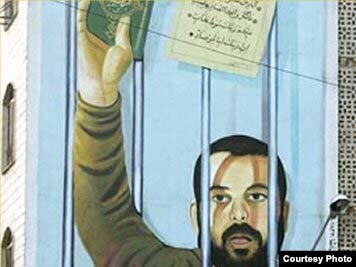
The ghost of Sadat assassin Khalid Islambouli -- seen here on a giant mural in central Tehran -- is close to being laid to rest.

The ghost of Sadat assassin Khalid Islambouli — seen here on a giant mural in central Tehran — is close to being laid to rest.

April 27, 2011
By Robert Tait
The 2,400 kilometers or so separating Cairo from Tehran might have been enough to keep relations at arm’s length. But for the past three decades, the realities of geography dividing Egypt and Iran have been stretched into a yawning chasm by the shadow of one Khalid Islambouli.

The Islamist army officer who assassinated Egyptian President Anwar Sadat in 1981 in revenge for signing the Camp David Accords with Israel has long stood as a symbol of the political and ideological divide between the two countries. Executed along with three co-conspirators for the crime the following year, Islambouli acquired pariah status in Egypt — an embodiment of the perils lurking behind Islamic radicalism.

In Iran, by contrast, he is renowned as a hero and a martyr, a privilege reflected in a massive mural painting in central Tehran. One of the capital’s most prestigious streets also bears his name, in what Egyptian officials have regarded as a provocation and a block to restoring long-severed diplomatic ties.

Now, however, the ghost of Islambouli is close to being laid to rest.

‘Expansion Of Ties’

In what may be a blow to the interests of Israel and the United States, Egypt has declared itself ready to re-establish links with Tehran in the wake of February’s overthrow of former President Hosni Mubarak, who saw Iran’s Islamic regime as a bitter foe.

The new Egyptian foreign minister, Nabil Al-Arabi, signaled a thaw on March 30 when he voiced hopes for an “expansion of ties” with Iran.  His comments came a month after Egypt — in the wake of Mubarak’s departure — set Western alarm bells ringing by allowing Iranian naval ships to sail through the Suez Canal for the first time in 30 years.

Reasons to be wary were compounded this month by the Egyptian Foreign Ministry’s spokesman, Mehna Bakhoum, who declared: “We are prepared to take a different view of Iran. The former regime used to see Iran as an enemy, but we don’t.”

The warm words have been reciprocated by Tehran, where the Foreign Ministry has confirmed it is preparing to appoint its first ambassador to Cairo since links were cut in 1979.

The contrast could hardly be greater with the tone set by Mubarak who, according to a U.S. diplomatic cable released by WikiLeaks, told Senator John Kerry that the Iranians “are big fat liars and justify their lies because they believe it is for a higher purpose.”

Stuff Of Nightmares

For the United States and Israel especially, the prospect of glacial relations between Iran and Egypt being replaced by a close alliance is the stuff of nightmares.

Even the prospect of an Iranian embassy in Cairo is enough to set Israeli teeth on edge, according to Meir Javedanfar, an Iranian-born commentator based in Israel with the Middle East Economic and Political Analysis Company.

“For Israel, any country in this region, especially one that has borders with it, having a relationship with Iran is not good,” Javedanfar says. “Any extra Iranian boots on the ground is a sign of concern for Israel because, as far as the Israeli government sees it, perhaps they could use their influence to encourage the public to turn even more against Israel, or perhaps to use the territory of that country to gather intelligence against Israel or even, in the case of an attack against Iran’s nuclear installations, perhaps that territory could be used to attack Israeli targets.”

Egyptian Foreign Minister Nabil Al-Arabi: “An expansion of ties” with Iran

A more specific Israeli grievance is Arabi’s stated intention to repair Mubarak’s hostile relations with Hamas, the Islamist organization that runs Gaza and which has strong backing from Iran.

Yet, says Javedanfar, such a move is likely to develop into a new source of competition between Iran and Egypt as the Egyptian leadership tries to wean Hamas off its dependence on Tehran.

“I think Egypt is going to change its attitude and its relationship with Hamas. There’s going to be an improvement,” Javedanfar says. “That will, of course, please the Iranians. However, I don’t see the Egyptians backing Iran’s line when it comes to Hamas because that could damage the relationship with the United States, which is also important for them.

“And I think somewhere along the line, the Egyptians are going to also compete with Iran because having influence over Hamas gives them leverage. And I don’t see the Egyptians handing over that leverage to the Islamic Republic of Iran.”

Western Umbrella

Moreover, analysts say, fears of a new Iranian-Egyptian alliance are unfounded.

Mustafa al-Labbad, director of the Cairo-based Center for Regional and Strategic Studies, says “opening a new page” with Iran would not alter Egypt’s other relationships, particularly those with Arab Gulf states such as Saudi Arabia, which are highly suspicious of Tehran’s intentions.

Nor are renewed ties likely to result in a strategic alliance.

“No, the political systems in both countries are very much different,” Labbad says. “Egypt is under the Western umbrella and [with] Iran, this is not the case. There is contradiction in the national interests between Egypt and Iran in Iraq and in the Persian Gulf. So it would be a normal relationship at the maximum, but not a strategic alliance. A strategic alliance needs more from both parties, and I don’t think the circumstances are allowing for such a strategic alliance.”

Egypt’s commitment to the Camp David Accords, the lynchpin of its ties with the West, is also unlikely to be challenged, Labbad says, despite Iran’s unflinching hostility toward the Jewish state.

“I don’t think relations between Israel and Egypt will be affected. Nobody in Egypt is questioning the Camp David treaty and nobody in Egypt is willing to have tension with Israel,” Labbad says. “Even the Muslim Brothers, if they will come to be a majority in the next Egyptian parliament, they are not capable and they are not willing even to challenge this treaty.”

Yet whatever the limitations, a new relationship would be a real gain for Iran’s theocratic system, which would stand to gain more than the new regime in Cairo, Javedanfar says.

“If you look at the profit-and-loss accounts of both countries — what are the profit and losses for Iran to form relations with Egypt; what are the profit and losses for Egypt to form relations with Iran? The country that comes up with the healthier balance sheet is Iran, especially because now Iran is more isolated in the region, so improvement in relations with Egypt will come at a very crucial time for Iran.

“In terms of Iran’s efforts to flex its muscles in the region, having an embassy in Cairo, plus sending warships through the Suez Canal, will help its ambitions to project its power in the region.”

‘Assad’s brother tops list of Syrians hit by US sanctions’

April 27, 2011

‘Assad’s brother tops list of Syrians hit by US sanctions’.


Report: US Treasury to release names of officials to be targeted by US sanctions; Germany announces support for EU sanctions on Syria; 453 reported dead in clashes between army and anti-government protesters.

Maher Assad, brother of Syrian President Bashar Assad is likely to top the list of Syrian targets of US economic sanctions, Al Arabiya reported on Wednesday.

Also on Wednesday, The Syrian Observatory for Human Rights said it had collected the names of at least 453 civilians killed during almost six weeks of pro-democracy protests in Syria.

The sanctions, which Washington is considering, would freeze assets of Syrian officials in American banks, according to Al Arabiya. The US Treasury Department reportedly plans to release the list of officials to be hit by sanctions before Friday.

Assad’s brother, commander of the Syrian Army’s Fourth Division, is considered the second most powerful man in Syria.

Germany announced on Wednesday that it is in favor of European Union sanctions against Syria’s leadership, government spokesman Steffen Seibert said on Wednesday.

“The possibility of enacting EU sanctions against the Syrian leadership will be examined, we will strongly support such sanctions,” he told a regular news conference.

Witnesses said they saw at least 30 Syrian Army tanks on tank carriers seen moving on the Damacus Circular Highway on Wednesday.

Snipers intermittently shot into Deraa, a witness told CNN, adding that the situation is “worsening day after day.”

Syrian opposition group the National Initiative for Change called for democracy that will “safeguard the nation from falling into a period of violence, chaos and civil war.” The group said that its “massive grassroots revolution” will break Syrian President Bashar Assad’s regime, unless he makes democratic reforms, AP reported.

Without reform, the group reportedly said, “there is no alternative left for Syrians except to move forward along the same path as did the Tunisians, Egyptians and Libyans before them.”

On Tuesday, Syria’s envoy to the UN said that his country is perfectly capable of conducting its own transparent inquiry into the deaths of anti-government demonstrators and needs no outside assistance.

“Syria has a government, has a state,” Ambassador Bashar Ja’afari told reporters who asked about a call by UN chief Ban Ki-moon for an investigation. “We can undertake any investigation by our own selves with full transparency.”

“We have nothing to hide,” he said outside the UN Security Council chambers, where members failed to agree on a statement condemning Syria’s government.

“We regret what’s going on, but you should also acknowledge the fact that this unrest and riots, in some of their aspects, have hidden agendas,” he said, adding that some foreign governments were trying to destabilize Syria.

Asked by reporters to name the countries that Damascus believes are behind the unrest, Ja’afari said it was “too early” to provide details.

Ja’afari was speaking as Syrian President Bashar Assad poured troops into a suburb of the capital overnight while his tanks pounded Deraa to crush resistance in the southern city where the revolt against his autocratic rule began on March 18.

White buses brought in hundreds of soldiers in full combat gear into the northern Damascus suburb of Douma, a witness told Reuters on Wednesday, from where pro-democracy protesters have tried to march into centre of the capital in the last two weeks but were met with bullets.

Syrian human rights organization Sawasiah said security forces have killed at least 35 civilians since they entered Deraa at dawn on Monday.

The organization, founded by jailed human rights lawyer Mohannad al-Hassani, said electricity, water and telecommunications remained cut in Deraa and tanks kept firing at residential buildings, with supplies blood at hospitals starting to run low.

At least 400 civilians have been killed by security forces in their campaign to crush the protests, Sawasiah said, adding that the United Nations Security Council must convene to start proceedings against Syrian officials in the International Criminal Court and “rein in the security apparatus”.

The UN secretary-general has called for an independent inquiry into the deaths of people he has described as peaceful demonstrators.

Ja’afari said Assad had instructed the government “to establish a national commission of inquiry and investigation about all the casualties among civilians.”

“We don’t need help from anybody,” he said.

Syria opposition: We will break Assad’s regime if it fails to deliver democracy – Haaretz Daily Newspaper | Israel News

April 27, 2011

Syria opposition: We will break Assad’s regime if it fails to deliver democracy – Haaretz Daily Newspaper | Israel News.

Statement from an umbrella group of opposition activists urges Syrian President to follow the same path as the people of Tunisia, Egypt, and Libya.

By The Associated Press

Syrian opposition figures said Wednesday their massive grassroots revolution will break the regime unless President Bashar Assad leads a transition to democracy, even as authorities intensified their crackdown on the country’s uprising.

The statement from an umbrella group of opposition activists in Syria and abroad called the National Initiative for Change said a democratic transition will “safeguard the nation from falling into a period of violence, chaos and civil war.”

Syria protest - AP - April 25, 2011 Syrian women carrying a banner in Arabic that reads “the women of Daraya want an end to the siege,” southwest of Damascus, Syria, April 25, 2011.
Photo by: AP

“If the Syrian president does not wish to be recorded in history as a leader of this transition period, there is no alternative left for Syrians except to move forward along the same path as did the Tunisians, Egyptians and Libyans before them,” the statement said.

The opposition is getting more organized as the uprising gains momentum, but it is still largely a grassroots operation. There are no credible opposition leaders who havS risen to the level of being considered as a possible successor to Assad.

A relentless crackdown since mid-March has killed more than 400 people across Syria, with 120 dead over the weekend. That has only emboldened protesters who started their revolt with calls for modest reforms but are now increasingly demanding Assad’s downfall.

On Monday, the army sent tanks into Daraa, 130 kilometers south of Damascus, and there have been reports of shooting and raids there and in areas across the country ever since. Daraa is where the uprising began last month.

On Wednesday, witnesses and human rights activists said the army also deployed tanks around the Damascus suburb of Douma and the coastal city of Banias, where there have been large demonstrations in recent weeks.

One Douma resident said security agents were going house-to-house, carrying lists of wanted people and conducting raids. If the agents did not find the person they were looking for, they took his relatives into custody, the resident said.

Two funerals were planned Wednesday, he said.

In Banias, a witness said the army redeployed tanks and armored personnel carriers near the main highway leading into the city.

Residents contacted by the AP spoke on condition of anonymity out of fear for their safety.

Syria has banned nearly all foreign media and restricted access to trouble spots since the uprising began, making it almost impossible to verify the dramatic events shaking one of the most authoritarian regimes in the Arab world.

Amnesty International said the UN Security Council must refer the situation in
Syria to the International Criminal Court.

“The Syrian government is clearly trying to shatter the will of those peacefully expressing dissent by shelling them, firing on them and locking them up,” said Salil Shetty, Amnesty International’s Secretary General.

US: Assad no longer potential peace partner for Israel

April 27, 2011

US: Assad no longer potential peace partner for Israel.

Syrian President Bashar Assad

  WASHINGTON – After two years of pushing Israel to reach a peace agreement with Syria, a top US State Department official indicated Tuesday the Obama administration is no longer looking at the current regime as a partner for such a deal.

“It’s hard for us to stand by and see [President Bashar] Assad and his government engage in the kind of things they’re doing against their own people and to then think easily about how to pursue other diplomatic missions,” Jacob Sullivan, director of policy planning at the State Department, told reporters.

At the same time, he said that the US continues to believe it is important to engage with Syria in order to clearly communicate the US position on the actions Syria is taking in putting down opposition protests.

Sullivan said at this point there are no plans to withdraw the newly installed US Ambassador to Syria Robert Ford or otherwise cut off contacts. He noted that the Syrian ambassador in Washington had been summoned to the State Department after the most recent attacks on civilians, and that Ford had held several conversations with top Syrian officials in recent days.

But Sullivan said the US is also looking at the possibility of imposing sanctions on Syrian leaders and is consulting with international partners on this and other potential steps to halt the bloody crackdown Assad has ordered on opposition protesters.

“President Assad is on the wrong track,” Sullivan said, condemning the civilian deaths.

He added, though, that the US is focused on “diplomatic and financial” initiatives aimed at the Syrian regime rather than military intervention as has taken place in Libya.

He also repeatedly declined to label Assad an illegitimate ruler or call for him to go, as the US did in Libya with Muammar Gaddafi once the Libyan leader began to shoot at protesters rather than accede to their demands for reform.

“Ultimately, the future of Syria is up to the people of Syria,” Sullivan said.

In Syria, the army’s loyalty to Assad runs deep

April 27, 2011

In Syria, the army’s loyalty to Assad runs deep – Haaretz Daily Newspaper | Israel News.

Assad is still able to rely on the army, the same one that his father took care to nurture over decades – an army whose senior ranks are an inseparable part of the economic elite.

By Zvi Bar’el

The regime in Syria has not yet collapsed. Like Muammar Gadhafi in Libya, Bashar Assad has adopted the slogan, “The regime wants to topple the people.” Assad is sure that even if the Syrian army cannot deal with an external enemy like Israel it can deal with the enemy at home. The Fourth Division and the Presidential Guards that are under the command of his brother, Maher Assad, are killing protesters in Dar’aa while other loyal battalions are taking action against the demonstrators in Homs and Ladakiya.

Assad is still able to rely on the army or at least most of it. It is the same army that his father, Hafez Assad, took care to nurture over decades – an army whose senior ranks are an inseparable part of the economic elite. Both father and son bent laws and regulations on behalf of the army to ensure that its loyalty to the family would be at least as deep as its loyalty to the fatherland.

Bashar Assad - AP Asma Assad and her husband, Syrian President Bashar Assad, right, during a welcoming ceremony in Bucharest, Romania last November.
Photo by: AP

For example, in the ’90s Hafez Assad banned the import of tobacco to the country so that the commanders who smuggled tobacco into Syria could enjoy a total monopoly. Officers were also permitted to buy dollars at the official exchange rate and to sell them at a “civilian” rate which was a great deal higher. Had a regular citizen done that, it would have been considered a crime.

The system of monopolies for army officers was handed down as an inheritance to the younger Assad who, unlike his father, was already born into the rich and ruling elite. His cousin, Rami Makhlouf, holds a huge slice of the oil, gas and tourism industries. But not only family members and heads of the Alawite community enjoyed, and still enjoy, the proximity to the rulers. It is enough to mention the former defense minister, Moustafa Tlass, or the chief of staff, Hikmat Shihabi, both Sunni Muslims, whose families still enjoy franchises that bring in huge sums. One of Tlass’ sons, for example, is Syria’s “sugar tycoon.” Another owns a chain of hotels, one of them in the town of Hama where Assad’s troops killed thousands of civilians in 1982.

Assad’s attractive wife, Asma, is also a Sunni and belongs to Syria’s economic elite through the family of her father, Fuaz Ahras. Many friends of Bashar Assad also enjoy a generous standard of living as a result of import licenses granted to them by the president and his aides. Some of them are known as “the five percent people” on account of the cut they take for deals which they arrange for foreign investors with the regime.

It would therefore be inaccurate to state that the struggle in Syria is between the Alawites and the Sunnis, between the minority that represents 12 percent of the population of 21 million Syrian citizens, and the Sunni majority that is oppressed and poverty stricken. Among the Alawite tribes there are also many who wish to see Assad and his regime toppled. In March, even before the mass protests began, the heads of four large Alawite clans published a manifesto in which they disavowed themselves of the Assad regime and of “all connections that were forcibly imposed on us during the period of President Hafez and his son, Bashar.” Heads of large Alawite clans made it clear to representatives of the government that they would not agree to another massacre of the kind that took place in Hama in 1982.

The chasm with the Sunni population is naturally even wider. Assad, the son, had to pull Tlass out of the storeroom and send him to his birthplace, Homs, in order to calm the citizens. Tlass went there last week with a group of senior Syrian security officers to hear the complaints of the citizens against the regime. In the good old days, these citizens would have been charged in court or would have disappeared in the dungeons of a prison, but Tlass was now seen making copious notes of their complaints and ensuring them that he would raise them with the president.

The disagreements within the ruling family have also surfaced again with the uncle, Rifat Assad, and especially his son, Ribal, who warn of a civil war and have published interesting new facts about the Hama massacre. Ribal is now taking pains to clear his father’s name of involvement in the massacre and placing the blame entirely on the late president, Hafez Assad, and on Tlass who was his defense minister.

Are these differences likely to develop into an internal revolt against the regime? So far the army has shown complete loyalty to the regime. But the army ranks are also filled with soldiers from different ethnic groups, with junior and mid-ranking officers whose loyalty to their families and home towns is now being put to the test. In contrast to 1982, the revolt now is taking place all over the country and the security forces’ gunfire does not distinguish between families and social classes. Blogs by Syrian opposition members talk of exchanges of letters and telephone calls with these commanders that are aimed at persuading them not to shoot if they are ordered to fire at civilians.

It is likely that the army’s top brass will conclude that it no longer needs the Assad family to continue to manage the army or to get various benefits. In that case, Assad and his family, as well as the Baath party, are likely to become the army’s scapegoats. Since there is no “alternative army”, the opposition will be forced to conduct its affairs vis a vis the heads of the army and perhaps to make do with the not inconsiderable achievement of overthrowing the Assad family.

Meanwhile Iran is keeping mum and Iranian media have been prohibited from reporting on the events in Syria. Hezbullah too is keeping its mouth shut on the subject. While it is reporting the developments in Libya, Yemen and Egypt, it has “forgotten” Syria. The fall of Assad could constitute a significant change for these players, but it is not certain that Damascus would in fact change its policies toward them.

Syrian protesters gain anti-tank guns. Iranian officers direct Assad’s troops

April 27, 2011

DEBKAfile, Political Analysis, Espionage, Terrorism, Security.

DEBKAfile Exclusive Report April 27, 2011, 8:54 AM (GMT+02:00)


Syrian T-72 tank

For the first time in the anti-Assad uprising, elements of Syria’s popular protest movement are turning to armed revolt on lines similar to those marking the Libyan conflict. Wednesday, April 27, armed civilians were seen for the first time, some openly carrying anti-tank weapons, in the Daraa district of the South and Banias and Jableh on the coast, the primary targets of the regime’s armored-backed offensive on the six-week old protest movement.

debkafile‘s military sources report that these dissidents resorted openly to arms after discovering that Iranian Revolutionary Guards (IRGC) officers were masterminding the brutal crackdown against them, lending the Assad regime the experience they had gained in crushing the 2009 anti-regime opposition in Tehran.
At the UN Security Council Tuesday night, US ambassador Susan Rice directly accused President Bashar Assad of mustering Iranian assistance to repress Syrian citizens “through the same brutal tactics that have been used by the Iranian regime.”
Our Washington sources report that the US, Britain, France and other European countries are not waiting for the Security Council to condemn Syria. As an American official put it, “in the near future,” the US plans to issue a series of sanctions against heads of the Assad regime and its security agencies. There is also talk of war crimes charges against the president’s brother Maher Assad who is in command of the military assault on the protesters.
In Syria meanwhile, Western military sources predict that the next stage of the Syrian crisis will see protesters-turned-rebels shooting at the military tanks and armored vehicles spearheading the assaults by commando units on foot inn the towns under siege, while snipers pick off demonstrators or ordinary passers-by from the rooftops.

In the first two days of the military operation, the tanks have been rolling through the streets sowing panic and fear in targeted cities and providing cover for the soldiers shooting civilians at random. Disabling the tanks, the protesters believe, will disarm that tactic, which has been directed first against the million inhabitants of Daraa and its outlying towns in the Horon province Tuesday, April 26.
There, under tank cover, small elements of the 132nd Brigade of the Fourth Division commanded by Mahar Asasad are holding Daraa under virtual lockdown, having cut off essential supplies of food and water, electricity and external communications.

Still, the town refuses to be broken or starved into submission.
Tuesday night, small units of foot soldiers protected by tanks were on standby night outside Banias and Jableh and Wednesday morning, elements of the 47th Brigade of the Fourth Division were poised to follow a tank charge into Hama.
If Assad loses his tanks, he will need to deploy many more soldiers to shoot the protesters off the streets and carry out mass arrests and so increase the hazards of defections, mutiny and the army’s breakup.
For Damascus, the Syrian ruler is pursuing a different tactic. To conceal the massive military involvement in the crackdown from the capital’s population, thousands of undercover soldiers were told to remove their uniforms and issued with black coveralls without insignia for raids on the Damascus suburb of Duma and protest centers elsewhere in the capital. They are intended to look like policemen.

War of words and expulsions notch Up Iranian-Gulf tensions

April 27, 2011

War of words and expulsions notch Up Iranian-Gulf tensions.

The hardening rhetoric towards Iran constitutes a bid to influence developments in Bahrain and elsewhere in the Gulf.(File photo)

The hardening rhetoric towards Iran constitutes a bid to influence developments in Bahrain and elsewhere in the Gulf.(File photo)

Bahrain’s expulsion of an Iranian diplomat coupled with rising Saudi concerns about the safety of the kingdom’s diplomats in Iran as well as soccer players scheduled to visit the Islamic republic in May threatens to sharply escalate tensions in the Gulf.

The expulsions alongside the soccer friction ratchet up the friction between Iran and the Saudi-led Gulf Cooperation Council (GCC)—which groups Kuwait, Bahrain, Oman, Qatar and the United Arab Emirates alongside the kingdom— over alleged Iranian instigation of anti-government protests in Bahrain and plots to overthrow the governments of Bahrain and Kuwait. The tension is complicating Gulf relations with Iraq, which is emerging as a wildcard in the region.

The hardening rhetoric constitutes a bid to influence developments in Bahrain and elsewhere in the Gulf. Kuwaiti parliamentarian Muhammad Hayif recently called on the GCC to liberate the UAE’s Tums and Abu Mussa islands in the Gulf that Iran has been occupying for years. Mr. Hayif also demanded that the Gulf States promote cessation of the predominantly Arab province of Khuzestan from Iran. Iraqi President Saddam Hussein’s 1980 invasion of Iran was ostensibly to support greater freedom for Khuzestan.

Mr. Hayif’s remarks came in response to Iranian denunciations of the deployment of GCC troops in Bahrain following widespread protests on the island. The Iranian parliament warned the GCC that it was “playing with fire.” Conservative parliamentarian Ruhollah Hosseinian said Iran should take a tougher position against the Saudi-led military presence. “There must be no hesitation on the part of Iran for military preparation,” he said, “when the Saudi government has driven its troops into another country.”

A senior Gulf official, speaking to Al Hayat, retorted that the GCC is “ready to enter war with Iran and even with Iraq in defense of Bahrain. Every state of the Gulf Cooperation Council is a red line. All are the same and we are ready to enter war to defend ourselves,” the official said.

The flames of Iranian-Gulf tension were further fanned when Kuwait last month uncovered an alleged Iranian spy ring. Three members of the ring—two Iranians and a Kuwaiti—were condemned to death by a Kuwaiti court in late March. Kuwait went on to expel three Iranian diplomats. Iran in response told three Kuwaiti representatives to leave the Islamic republic. The Iranian diplomat expelled by Bahrain is believed to be linked to the Kuwaiti spy ring.

In a potential escalation of the diplomatic tit-for-tat, Saudi Arabia has threatened to withdraw its diplomats from Iran if the Islamic republic failed to accord them proper protection after demonstrators in Iranian cities protested in front of Saudi diplomatic missions against the GCC military presence in Bahrain.

Saudi Deputy Foreign Minister Prince Turki bin Saud al-Kabeer called on Iran to protect its diplomats. “We hope that these continuous violations will not lead us to take other positions,” Prince Turki was quoted by Al Watan as saying.

The flames spread this week beyond the realm of diplomacy with the Saudi Football Federation expressing concern in a letter to the Asian Football Confederation (AFC) about the security of four Saudi teams scheduled to play Asian championship matches in Iran in May. Soccer tensions first erupted in early March when Saudi immigration authorities demanded that Tehran’s Persepolis FC soccer team, Asia’s most popular club, be fingerprinted and iris scanned upon its arrival at Jeddah airport for an Asian championship match against Al Ittihad. The Persepolis team refused what is standard procedure for all visitors to the kingdom, and was held at the airport for eight hours.

Tension between the Gulf and Iran has been simmering since long before anti-government protests began sweeping the Middle East and North Africa in mid-December. Saudi Arabia believes that Iran has long been bent on countering its influence in the Muslim world and has charged that Iran was behind a Shiite revolt in northern Yemen that ended last year.

A plan by the GCC to end the crisis in Yemen and pave the way for President Ali Abdullah Saleh’s departure briefly stalled this week over the opposition’s reluctance to agree to the terms of the plan, which would grant the Yemeni president and his family immunity from prosecution; in the event, the opposition agreed, but reluctantly.

Nevertheless, the arrest in Egypt of former President Hosni Mubarak as his former interior minister, Habib al-Adly, faces possible sentencing to death on charges that he was responsible for the death of protesters who ultimately in February forced the Egyptian leader from office has strengthened Yemeni resolve to see their leader brought to trial.

Further complicating issues is predominantly Shiite Iraq’s apparent siding with Iran in the escalating war of words. Gulf leaders worry that Iraq could emerge as an Iranian bridgehead on their side of the waterway after Iraqi political and religious leaders held rallies in support of their Bahrain brethren and against the GCC military intervention.

What started in early March as a soccer storm in a teacup has escalated into a mounting crisis that is spooking regional stock exchanges and contributing to oil price hikes. If not managed properly, Iranian attempts at exploiting tension in the Gulf and Gulf fears that Iran could destabilize the region risk backfiring with the cold war turning hot and erupting into open hostilities.

(James M. Dorsey, formerly of The Wall Street Journal, is a senior researcher at the National University of Singapore’s Middle East Institute and the author of the blog, The Turbulent World of Middle East Soccer. He can be reached via email at: questfze@gmail.com)


