Obama, anatomy of a failure
Obama, anatomy of a failure, Israel Hayom, Prof. Abraham Ben-Zvi, March 7, 2014
(President Obama has held office for just over five years. He appears to have learned little about foreign policy or the dangers of relying on the “good faith” of foreign adversaries. There is no apparent reason to assume that he will learn significantly more during the next three years. President Truman became wiser during his presidency, increasingly so after the “unexpected” North Korean invasion of South Korea in June of 1950 –for which we were grossly unprepared due in large part to defense cuts “to the bone and through the bone.” We are doing it again. — DM)
However the Ukraine crisis is resolved, it will no longer be possible to rehabilitate American credibility • Given this situation, how much stock should Israel put in promises made by Washington?
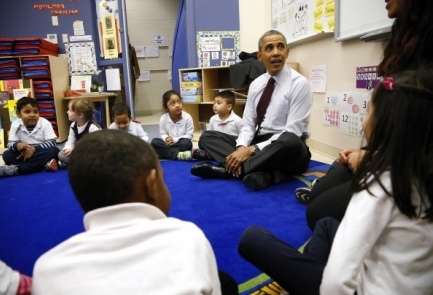 The Obama administration refuses to recognize the violent, cruel, and belligerent nature of the international system | Photo credit: Reuters
On April 12, 1945, President Franklin Delano Roosevelt died. Eleven days later, on April 23, his successor, Harry S. Truman, welcomed Soviet Foreign Minister Vyacheslav Molotov to the White House. To Molotov’s astonishment, Truman bitterly assailed him over the USSR’s violation of the Yalta Agreement, which was signed two months earlier by Roosevelt, British Prime Minister Winston Churchill, and their totalitarian partner in victory Joseph Stalin.
According to the agreement, the Soviet Union committed itself to holding free, democratic elections in Poland (a country which Moscow essentially controlled through its puppet government in Warsaw). Molotov, who was shocked at the ferocity of Truman’s tirade, responded by saying that he had never been spoken to in such a manner.
The president’s blistering verbal attack failed to have any effect on Moscow’s aggressive, belligerent actions in Poland and the rest of eastern Europe. Nonetheless, it did illustrate the naivete demonstrated by a number of American leaders who mistakenly believed that the Russian bear — with its hostile aggression and its determination to exploit any opportunity to widen its sphere of influence and bolster its power — would honor basic norms of behavior and fairness and abide fully by agreements.
Indeed, one major hallmark of American diplomacy during the Cold War was the excessive reliance on written agreements. Truman’s protestations regarding Moscow’s violation of Yalta was akin to a legal dispute over breach of contract. The debate even descended to semantics, with Truman insisting on a “reorganization” as it pertains to the future structure of the Polish government.
In practice, despite the legal obligations supposedly taken by the Kremlin in upholding the independence and democratic future of Poland, what played the decisive factor was a confluence of the political interests of the USSR and not some signed document. Specifically, given its history of being invaded from the west, Stalin was determined to make sure that in the space separating the superpower which he kept in his iron grip and Germany would lie a docile, satellite Polish state that would seamlessly integrate with the new empire that he built after 1945.
After it became apparent that the American leadership’s initial thinking regarding the importance placed in the written word and signed documents was so disconnected from the cruel dynamic that was beginning to take shape in East-West relations, one would have been forgiven for expecting the American superpower’s leadership to commit itself to a process of divorcing itself from fantasy and delusions.
Going back in time
Here we are, seven decades after that tumultuous meeting between Truman and Molotov, we have Barack Obama’s America going back in time, straight to those distant days in which the U.S. made a hesitant, clumsy, error-filled transition from isolationist to reluctant leader of the free world, which was facing a challenge posed to it by the Stalinist USSR.
Not only has the 44th president learned nothing from Truman’s resounding failures in attempting to dissuade Stalin through legalese and court-styled appeals, but he has managed to bring upon himself more ridicule by going overboard in the same direction. Just two weeks ago, when the “Ukrainian crisis” was teeming, the U.S. president declared during a speech he delivered in Mexico that it was wrong to attribute the disagreements with Russian President Vladimir Putin on issues like Syria and Ukraine to a revival of “inter-power rivalry” similar to the one waged during the Cold War.
Even after Obama’s efforts to minimize the disagreements with the Kremlin led directly to the Russian invasion of the Crimean peninsula, the U.S. president has yet to come back to reality. Indeed, during his lengthy phone conversation with Putin, it sounded as if Obama was channeling Truman himself. In the phone call, Obama took on the role of jurist (or a professor of law at the University of Chicago, a position that is much more suited to him than his current occupation) who is calling to order someone who is guilty of breaching a contract.
A short synopsis of the conversation would lead one to the conclusion that the Russian leader was reprimanded for violating the Budapest memorandum of 1994, a document in which Moscow undertook to respect the sovereignty and territorial integrity of Ukraine. As if he were giving an introductory course in international law, Obama reiterated his well-reasoned argument that the occupation of the Crimean peninsula stands in contradiction to the memorandum and hence a violation of basic norms and principles that are supposed to guide the international community.
It’s hard to believe that such legal rhetoric had an effect on Putin since it was nothing more than a naïve application of American legal and business practices onto the rules of the game on the chaotic international stage. While these norms may be accepted codes of behavior within the United States, they are irrelevant when facing the cynical, shrewd, tough rival from Moscow (which just a few hours later would send thousands of Russian soldiers into the Crimean peninsula).
By the same token, it’s hard to believe that the nonchalant threats made by Obama and his indefatigable secretary of state, John Kerry, this past week regarding the price that Russia supposedly will pay for its aggression — including diplomatic and economic isolation that is the surcharge of Moscow’s blatant disregard for international law — hardly perturbed the Russian president.
On the contrary, particularly in regard to Kerry. Observers clearly recall Kerry’s blustery, dramatic appearances filled with theatrical pathos. The secretary took on the role of prophet of doom — a role played to perfection during the “chemical crisis” in Syria — by warning Bashar Assad of what was to come as a consequence of Damascus’ crimes. His performance was so convincing that Kerry deserves to be nominated for an Oscar. It seems that the more belligerent and threatening his statements, the less chance they will be translated into concrete action.
Indeed, while the president himself proved once again that his legal skills are above reproach in dusting off the forgotten Budapest memorandum, his secretary of state comes across as a marvelous orator whose passion-filled speeches on every available platform would make him a worthy star in Hollywood or on Broadway.
Unfortunately, this is American foreign policy, and not the theater of the absurd. In this vein, we are reminded of a famous phrase uttered by one of America’s greatest presidents, Theodore Roosevelt. Over a century ago, the president counseled that whenever dealing with rivals, it is best to speak softly but at the same time carry a big stick. The stick was to be used for deterrence and, if need be, to mete out punishment.
Judging by the present-day reality, Roosevelt’s statement has undergone a metamorphosis. Kerry, for one, continues with his fire-and-brimstone rhetoric, yet in his toolbox one would be hard-pressed to find even the smallest stick with which to provide credibility and substance to his apocalyptic threats.
In this regard, “all of Obama’s men” come across as completely disengaged from the international arena and its geo-strategic components. From a psychological aspect, it seems as if they have returned to the days of isolationism while refusing to recognize the violent, cruel, and belligerent nature of the international system.
Had they not taken the path of unilateral disengagement — or outright, hasty retreat from points of conflict and war zones — Obama and Kerry would have realized that flowery statements devoid of all meaningful content and empty promises lead to a dramatic erosion in credibility of the country that was supposed to be the guarantor of global stability and order.
The White House’s determination to completely abandon military force as a strategic option in favor of turning inward toward the continental U.S. has brought about a situation where it stands helpless where clearly defined red lines (as in the Syrian case) are crossed in such a blatant manner. Time and again, observers in Moscow and Beijing have become increasingly convinced they are seeing an eagle that has turned vegetarian and is in desperate need of rehabilitation.
The bitter irony of this situation is that if Uncle Sam does eventually awaken from his coma and decides to take determined action (with far-reaching economic measures) against Russian aggression, nobody will believe his threats (just like Hitler didn’t believe Britain would fulfill its promise to Poland in 1939 to wage war against Nazi Germany if Warsaw were to come under attack).
Indeed, just like President Jimmy Carter, who in 1977 prematurely declared an end to the Cold War and the rivalry with the Soviet Union only to be proved wrong two years later with the Soviet invasion of Afghanistan, this week Obama was left standing helpless as he watched his foreign policy go bankrupt.
There’s no need to rehash his failure on the Syrian front. The fact that Obama refrained from taking action even when conditions were ripe for it — and after the U.S. boastfully and ostentatiously declared before the world that it would indeed take military action — was the final indicator of the collapse of the president’s doctrine.
To make matters worse, by shying away from using (minimal) military force, Obama passed the baton and abdicated the leadership role in the crisis in favor of Putin. The Russian leader ostensibly jumped on the chance and midwifed the agreement that quickly bolstered his grip and prestige in the region and throughout the world.
As for Iran, here, too, it is clear that the superpower-in-decline is eagerly rushing toward a final-status agreement on the nuclear issue, irrespective of the price and the repercussions for stability and security in the Middle East.
As if that weren’t enough, in the last three years the Obama administration has abandoned its vegetarian policy of “leading from behind” when it comes to military campaigns involving allies (behind whom the Americans hide). From this standpoint, we have witnessed the end of the “Libyan option,” which entails limited, controlled military operations that are called upon when faced with regional challenges (obviously this option would not be considered in the Crimea or Ukraine).
All of these developments transpired against the backdrop of massive, steep cuts in the Pentagon’s budget which were announced last week. Although one can interpret this as a move intended to do away with excess bureaucracy and wasteful spending in favor of building a more versatile, flexible, hi-tech army, it is in fact a drastic reduction in American might. The U.S. military may soon be trimmed down to a fighting force that would comprise an incomprehensible 400,000 soldiers. This could bring the U.S. back to 1940.
As we all remember, 1940 was a time during which the U.S. was ensconced in its isolationist phase. This was just before it began to marshal its resources and capabilities toward preparing for the coming conflict with Germany, Italy, and Japan. The shrinking of its military is thus perceived as yet another manifestation of its decline and weakened position, a harbinger of yet another era of American non-interventionism.
Yes, the U.S. doesn’t have many tools to work with in Ukraine, which is right in the Russian bear’s backyard and well within its traditional sphere of influence. Still, the option of extending a generous financial aid package to Ukraine (in the spirit of the Truman Doctrine, which called for military aid to Greece and Turkey) would do well in signaling an American commitment to Ukraine’s future, particularly if it included other Western powers.
From this standpoint, it would be unwise to underestimate the package of loan guarantees totaling $1 billion, which was announced by Kerry upon his arrival in Kiev. Given the turmoil engulfing the country, the move does represent a legitimate gambit that indicates Washington’s desire to strengthen the Ukrainian government’s position as it tries to fend off the pressure coming from Moscow.
In any event, with Russia occupying the Crimean peninsula and the West unconvincingly rattling its sabers, the only concrete moves made by Washington thus far beside the loan guarantees, are the de-facto boycott of the G8 meeting due to be held in Sochi, and the thin set of military sanctions, including the freeze of all security cooperation with Russia (similar to what took place under President George W. Bush, who suspended cooperation with Russia after its invasion of South Ossetia in 2008).
What about us?
One must not ignore the Israeli angle in this story. In the past, loan and security guarantees were a major part of American policy because they helped formulate defense and diplomatic agreements between Israel and the Palestinian Authority and the Arab world.
On more than one occasion, the most glaring example being the 1975 Sinai interim agreement, which was achieved after a year of painstaking diplomacy by then-Secretary of State Henry Kissinger, the Americans have violated a few promises they made to the Israeli government. Nonetheless, Washington has managed to maintain its standing as an honest broker.
Today, given the fact that American credibility is in tatters in the neighborhoods of Damascus as well as in other points of friction, it would be wise to wonder whether Israel should put stock in promises made by Washington to compensate Israel for concessions that it will be asked to make.
However the Ukraine crisis is resolved, even if the regime in Kiev withstands Russian brutality it will no longer be possible to rehabilitate American credibility. The rumors of the impending death of the American era were, therefore, hardly premature.
Explore posts in the same categories: Uncategorized WarSclerotic
March 7, 2014 at 7:45 PM
כל הכבוד
(All the honor)
Superb analysis !
March 7, 2014 at 8:11 PM
CNN’s Simon Tisdoll essentially agrees with this.
http://edition.cnn.com/2014/03/07/opinion/putin-western-hypocrosy/index.html?hpt=hp_c1
March 7, 2014 at 8:17 PM
I don’t how Miller is privy to a White House phone call to Putin. I read with amazement of his inside knowledge of that conversation. He must have great connections or a hidden microphone inside the Oval Office.
March 7, 2014 at 8:27 PM
I am not, do not and did not mention the Obama-Putin phone call. The author of the re-published article, Abraham Ben-Zivi did that.
March 7, 2014 at 8:50 PM
This time next month this will all be off the front pages!!
March 7, 2014 at 9:54 PM
Only one problem with that Obama is not calling the shots the GOP is,he knows if he fucks this up its impeachment or even worse`
March 7, 2014 at 9:59 PM
GOP? Kind of disagree here buddy. Just doesn’t seem probable. The GOP as it stands today will not take a stand against Obama via impeachment, among many other things, and Obama rarely meets with the GOP party leaders.
March 7, 2014 at 11:09 PM
i will explain Obama does not have the policy advisers he needs all the cold war warriors are GOP true,he had to go cap in hand and there is now the necessary votes to impeach him,whats holding them back is the prospect of a race war,i have a lot of politician friends and analysts
March 7, 2014 at 11:15 PM
LS, is it me or is this off his nut?
March 7, 2014 at 11:20 PM
LS, is it me or is this guy off his nut?
March 7, 2014 at 11:55 PM
Draft dodger i love pissing you off,go play with your Marxist friends
March 8, 2014 at 12:35 AM
Sorry, was working. I’m stumped JP. There’s a Justice I enjoy conversing with and then, it’s as if there are 2 Justices. Can’t figure it out.