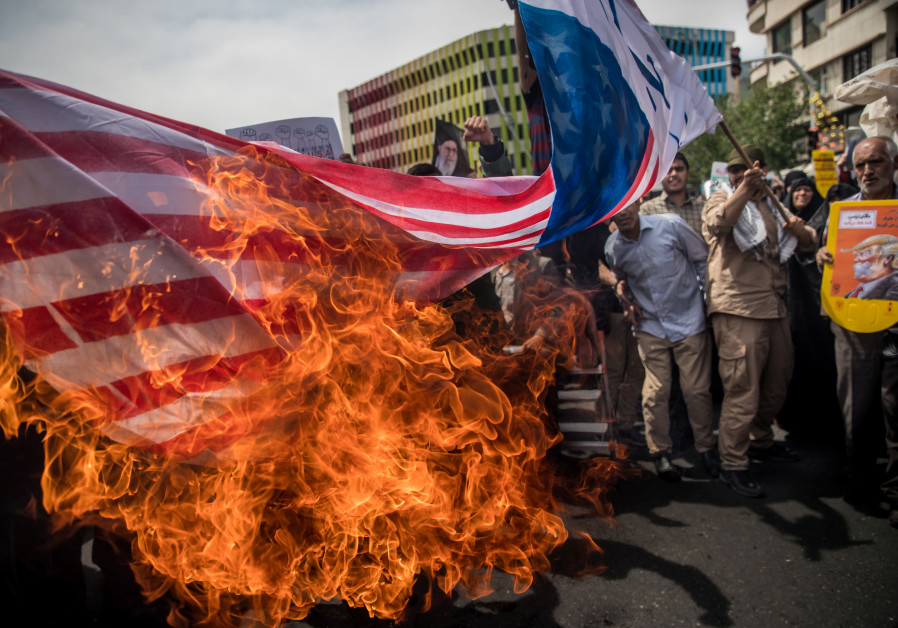
The comments came during meetings at a US-backed conference in Warsaw designed to further Middle East security. Israel, the US and foreign ministers from up to 60 countries gathered in the Polish capital, but much of the focus has been on comments regarding Iran.
“These are real threats, you can’t get peace in the Middle East without pushing back against Iran,” he said.
In August 2018, the State Department named Brian Hook as a special envoy to coordinate Iran policy. At the time, both National Security Advisor John Bolton and officials at the State Department and Pentagon had indicated the US would remain in eastern Syria. The administration said that Iran should leave Syria.
In November, the US said it would stay in Syria until Iranian “commanded forces” leave. However, US President Donald Trump reversed that policy in December 2018, deciding to withdraw from Syria. He indicated that the US would keep a close watch on Iran from Iraq.
Hezbollah has representatives in Lebanon’s government and controls the powerful Health Ministry after a deal in late January. Hezbollah is at a peak of power in Lebanon. The US seeks to counter that by providing support for the Lebanese armed forces, including $16 million worth of precision rockets delivered this week. However, there is no evidence that the Lebanese army will ever confront Hezbollah, if anything it is a partner of Hezbollah. Lebanon didn’t even attend the Warsaw gathering and instead hosted Iran’s foreign minister Javad Zarif. Lebanon for all intents and purposes is in the Iranian camp, not the US camp.
The US doesn’t seem to have any plan for confronting this challenge.
Reports indicate that the US might keep soldiers at a lonely desert base at Tanf in southern Syria near Jordan’s border. Some see that base as a way to interdict Iran’s “road to the sea,” a network of Iranian influence that stretches across Iraq into Syria and Lebanon. But it is not entirely clear that the Tanf base actually performs that function or that Iran cares about the presence of the base.
Kuwait, Egypt, Bahrain, the UAE, Jordan and Saudi Arabia gathered at the Dead Sea in late January to talk regional security. Some of these countries are in Warsaw to discuss the same issues, but they don’t appear to be willing to formulate a plan for confronting Iran or working with Israel to do so.
That they share common interests with Israel regarding Iran’s threats is possible, but when it comes to confrontation and push back the US appears to lack substantive models and goals of how it envisions rolling back Iran in any of the countries Pompeo mentioned.
 WarSclerotic
Leave a comment