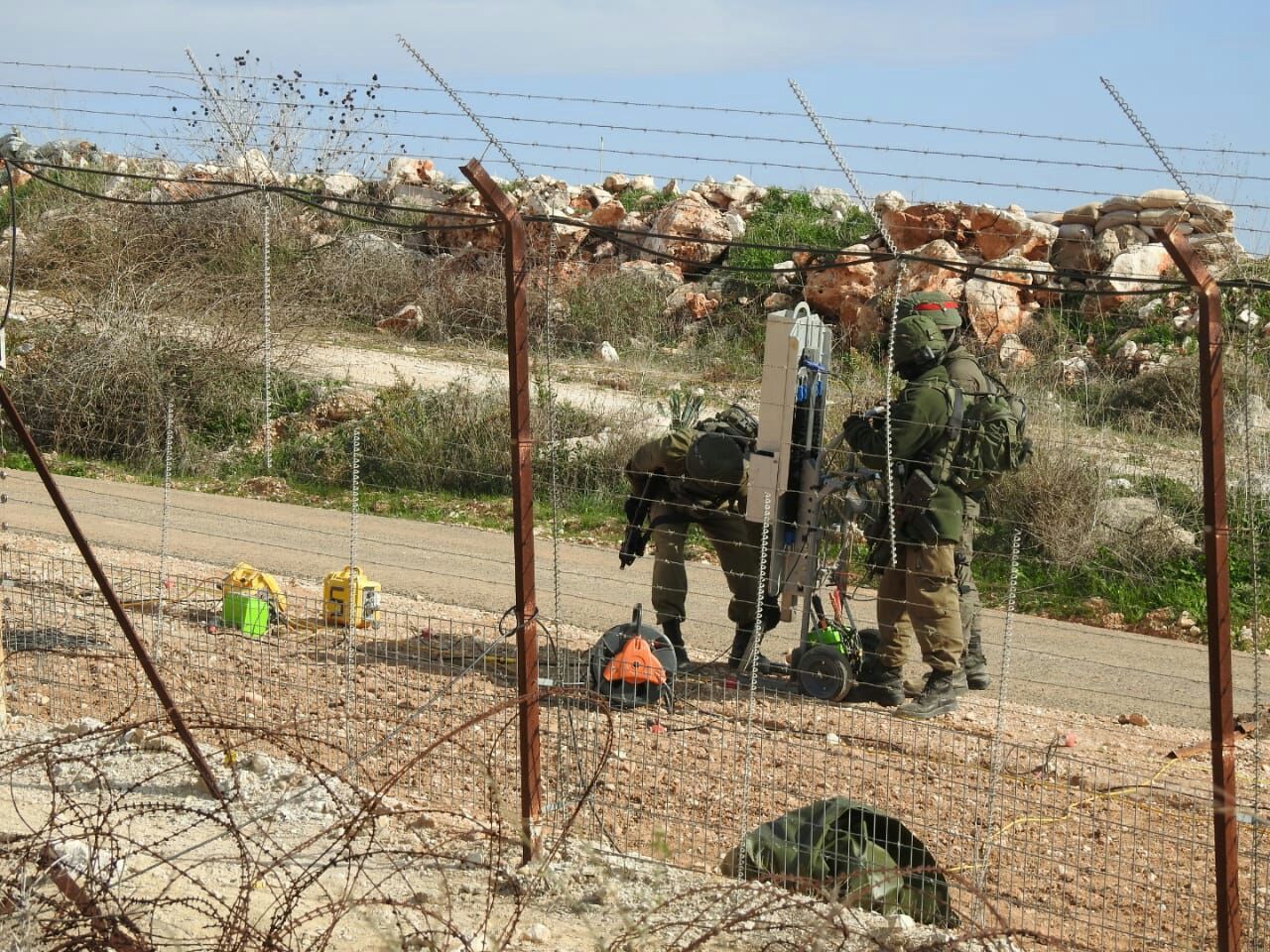
Since the launch of Israel’s operation to find and destroy Hezbollah’s cross-border attack tunnels on Tuesday, the Lebanese terror group has been dutifully tracking the Israel Defense Forces’ activities along the border and publicizing them.
The apparent message that Hezbollah is seeking to convey to the Israeli military is that it is unfazed — it knows exactly what the IDF is up to, is keeping an eye on things, is tracking soldiers’ movements.
That the terror group is looking closely should come as no surprise to the IDF, which has for years watched Hezbollah operatives watching its soldiers from across the border and, indeed, has been known to supply Hezbollah with disinformation in order to confuse and mislead. All of which makes reports from Lebanon and from Israel based solely on the naked eye potentially unreliable.
Israel would like to keep its observers surprised. With its work so close to a border that is heavily monitored — not just by Hezbollah, but also by the Lebanese Armed Forces, and UN peacekeeping force UNIFIL — the IDF will likely be forced, in addition to the tunnel-busting operation, to put on other such shows to keep Hezbollah guessing. Many analysts believe that tackling the tunnels is a precursor to tackling the threat of Hezbollah’s precision-guided missile program, as detailed by Prime Minister Benjamin Netanyahu in his speech to the UN General Assembly in September.
According to a senior officer in the IDF Northern Command, the army believes Hezbollah was “surprised” that Israel had learned of its tunnel project and was struggling to determine what Israel knew, which also accounts for its close monitoring of the border — specifically where the IDF is, and isn’t, digging and searching.
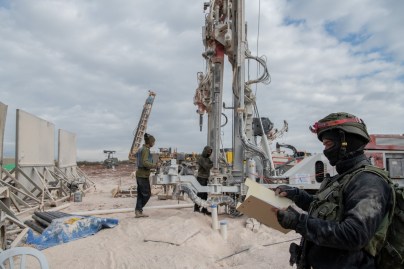
“At this point, it seems to be trying to understand what we know and what we don’t, but I think that Hezbollah has not figured out how much we know about its tunnel project, and it will be even more surprised going forward,” he said, speaking on condition of anonymity.
According to the Iran-backed group, the Israeli military is currently operating at three locations along the border — only one of which the IDF has publicly acknowledged, east of the Lebanese village of Kafr Kila, where the army said it discovered a first tunnel on Tuesday. The IDF has not formally acknowledged this, and many aspects of Operation Northern Shield remain subject to Israeli military censorship.
In addition to the area east of Kafr Kila, Hezbollah has also taken and shared photographs of the army’s operations at Ramiya, which lies north of the Israeli community of Zarit, and Meiss al-Jabal, west of the town of Kfar Blum.
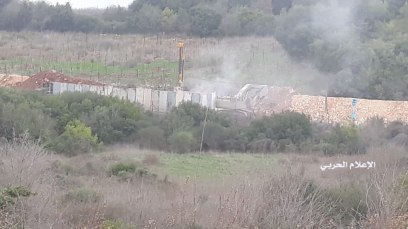
Hadashot TV said Wednesday that the IDF first tackled the tunnel from Kafr Kila, which was heading toward the Israeli town Metulla, because it was being dug toward a residential area.
The army said that tunnel, and all the others, was at least several months away from being operational and did not present an immediate threat to residents of the area.
“None of the tunnels was ready for war tomorrow. In some cases, it was a matter of months and in other it was a matter of years before they’d be operationally ready,” a senior officer from the Northern Command said Wednesday, speaking on condition of anonymity.
And the IDF will be hoping to avoid receiving any surprises of its own.
While the IDF believes it has fully mapped out Hezbollah’s tunnel infrastructure, the senior officer allowed for potential “surprises,” but said that chances of that were low.
“There are some places we know more about, and some that we know less about. But we have the means to see through the operation to the end — to find and destroy them all,” the senior officer said.
The officer said the tunnels were discovered using seismic sensors, which were buried underground.
“Using audio systems, [troops] are able to listen to the ground and identify suspicious activities,” he said.
According to the Israeli military, Operation Northern Shield is expected to last several weeks and is being led by the head of the IDF Northern Command Maj. Gen. Yoel Strick.
According to the officer, the IDF believes Hezbollah was planning to use that first tunnel to cut off Metulla, which lies in the upper tip of the Galilee, from the rest of Israel as part of a surprise attack in the opening salvo of a future war.
Approximately seven years ago, Hezbollah created a special forces unit — known as the Radwan Unit — specifically tasked with crossing into Israel and causing as much mayhem and destruction as possible both for the sake of the damage to Israel itself and for the symbolic victory of having troops carry out attacks inside Israel.
Israel’s last major confrontation with Hezbollah, 2006’s Second Lebanon War, was sparked when the terror group managed to infiltrate just over the border, kill several soldiers and capture two of their bodies.
The senior officer, citing military assessments, said Hezbollah intended to use the tunnels as part of a wider operation to conquer parts of the panhandle in Israel’s Galilee in a future conflict.
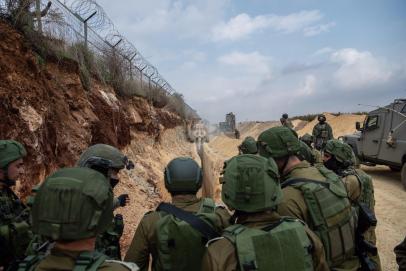
On Tuesday night, Prime Minister Benjamin Netanyahu made a similar claim, saying the tunnels were part of a wider effort to “inflict great damage” to Israel and Israeli citizens.
“Capturing parts of the Galilee by Hezbollah is a concrete threat,” he said. “It is also part of a regional and global terror effort led by Iran.”
The one tunnel the army says it has uncovered so far reached 40 meters (130 feet) into Israeli territory outside Metulla, and was two meters (six feet) high by two meters (six feet) wide. It’s unclear how many fighters Hezbollah could have sent through the tunnel before being detected and if they would be enough to capture or hold significant swaths of Israeli territory. TV reports indicated that Hezbollah intended to send in gunmen through the tunnels and above ground.
Chief of Staff Gadi Eisenkot said Tuesday that the army “is in possession of” Hezbollah’s tunnel plan.
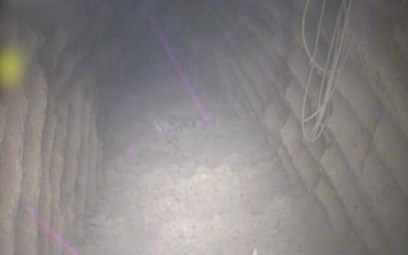
Hezbollah operatives were still working in the tunnel uncovered on Tuesday right up until it was exposed by the IDF, according to footage released by the Israeli military.
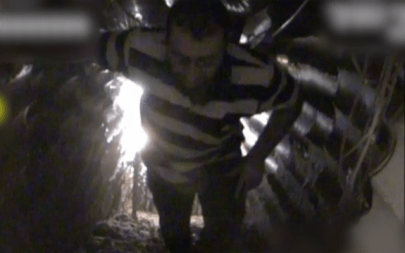
The video, filmed by a robot sent into the tunnel on Tuesday morning, shows two men entering the tunnel and approaching the camera before the robot triggers a small explosive device, scaring the men away.
 WarSclerotic
Leave a comment