Hamas evened the score and rushed to ask for a truce
Source: Hamas evened the score and rushed to ask for a truce
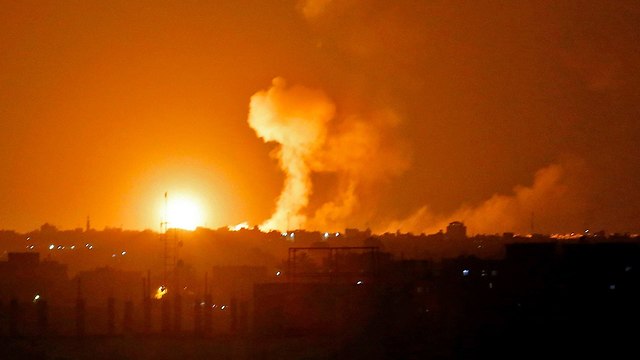
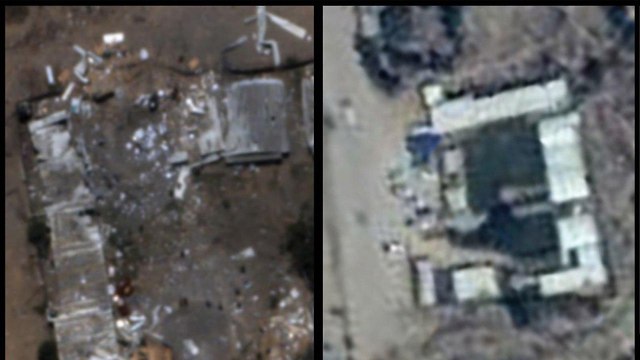
But not all factions, including Hamas’s political leadership, considered the death of an IDF soldier to be an achievement that would allow them to ask for a quick ceasefire without humiliation. Still, Hamas had at least two other considerable reasons to ask for a ceasefire. One, the IDF attacks on Friday were the biggest since Operation Protective Edge, and destroyed three battalion command headquarters, which joined another one destroyed in an Israeli bombing two weeks ago. The damage to the military infrastructure—including the weapons Hamas had planned to use to surprise Israel in the next big round of fighting—alongside the loss of lives Hamas suffered, must have been too hard to bear. The terror group must have also been worried that if Israel continued with these strikes, it could stand to lose a considerable part of its military infrastructure.
The second reason that led Hamas to seek a quick ceasefire is the real fear of both Hamas’s political and military wings of an IDF incursion into Gaza as part of a large-scale military campaign. Hamas believes that Israel is serious in its intentions to overthrow its regime if the IDF enters the strip for another big operation. This is something Hamas wants to prevent at all costs, and this is the strategic reason to its rush to reach a ceasefire. Hamas prefers to leave the negotiating table with at least one card up its sleeve, rather than lose all of its cards in a single round of fighting.
Furthermore, the sniper fire and the ongoing arson terrorism greatly angered both the Egyptians and Mladenov, and they were the ones to contact Hamas, accusing the terror group of deceiving them. Hamas realized it had gone too far, and agreed to the terms of the ceasefire.
Prime Minister Benjamin Netanyahu and Defense Minister Avigdor Lieberman accepted the recommendation of the IDF to stop the strikes for two main reasons. One, because the IDF’s bombings on Friday were able to cause great damage to Hamas’s military infrastructure. Furthermore, despite the fatalities it suffered in these strikes, Hamas hardly retaliated with fire and was quick to ask for a ceasefire.

This means that the “equation of terror” Hamas has been trying to implement on the ground no longer exists. Israel attacked relentlessly, and there was only one Code Red siren on the Gaza border. Therefore, Hamas has stopped acting based on the principle of fire being met with fire.
The restraint recently shown by Israel and the IDF was perceived on the other side as weakness and caused partial erosion of the IDF’s deterrence. Friday’s strikes appeared to have at least partially restored the lost deterrence.
Another reason that led Israel to agree to a ceasefire as soon as Hamas proposed it was the terror group’s commitment to Egypt to stop the arson terrorism and the terrorism on the border fence. According to a senior diplomatic official, Egypt will guarantee that Hamas keeps its word. And so far, it appears Hamas is indeed trying to stop the incendiary kites and balloons from Gaza.

No rockets were fired Saturday, and there are signs we’re heading towards a temporary truce. However, on the long term, the story is not yet over. The basic situation in the Gaza Strip, and the relationship between the Palestinian Authority and Hamas, remains the same.
The Egyptians and Mladenov may be able to mediate ceasefires, but they are unable to uproot the reasons behind the escalations that erupt from time to time. This is why the residents of southern Israel will continue living under threat, and the residents of Gaza will continue drinking dirty water and getting four hours of electricity a day. And we all know what comes next.
 WarSclerotic
Leave a comment