U.S. airstrike in Mosul underscores military questions ahead in dealing with Iraqi cities
U.S. airstrike in Mosul underscores military questions ahead in dealing with Iraqi cities, Washington Post, Dan Lamothem October 9, 2014
(Will the IDF be asked for advice on limiting civilian casualties as it did, successfully, in Gaza? Probably not. Soliciting and following it would be politically inconvenient. — DM)
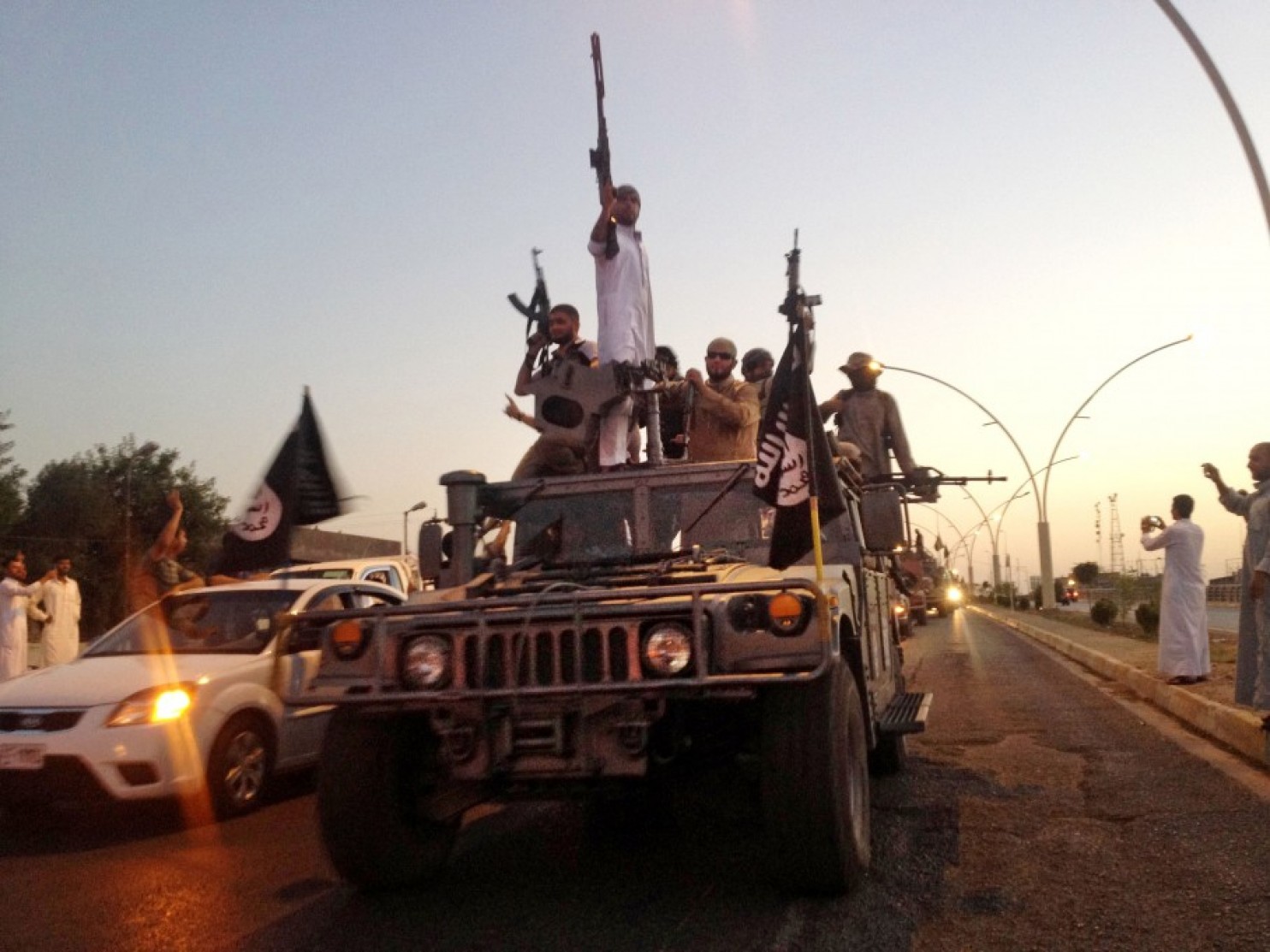 Militants from the Islamic State parade down a main street in Mosul, Iraq, in June in a Humvee they commandeered from Iraqi troops. (AP Photo, File)
[T]he planning, along with the U.S. launching its first airstrike inside Mosul on Wednesday, raises questions about how the United States and its partners will be able to assist in an urban military campaign if their mission is restricted to an air campaign and advising Iraqi forces.
***************
Shortly after retired U.S. Gen. John Allen arrived in Baghdad as the new U.S. envoy to the coalition against the Islamic State, he made it perfectly clear what part of the plan against the Islamic State militant group included: taking back Mosul.
The city, Iraq’s second most populous, fell to Islamist fighters in June, as they captured broad sections of the country’s north. Mosul has remained under their control since, with religious shrines destroyed, women forced into marriage and human rights activists and others murdered after publicly disagreeing with the Islamic State.
Plans to retake Mosul already are underway. Kurdish militia troops are preparing for a complex battle to retake the city, according to a Los Angeles Times report. And Allen said Iraqi forces will launch operations to retake Mosul within the next year. [Emphasis added. — DM]
“It’s not a single battle,” he said, according to the New York Times. “It’s a campaign.”]
But the planning, along with the U.S. launching its first airstrike inside Mosul on Wednesday, raises questions about how the United States and its partners will be able to assist in an urban military campaign if their mission is restricted to an air campaign and advising Iraqi forces.
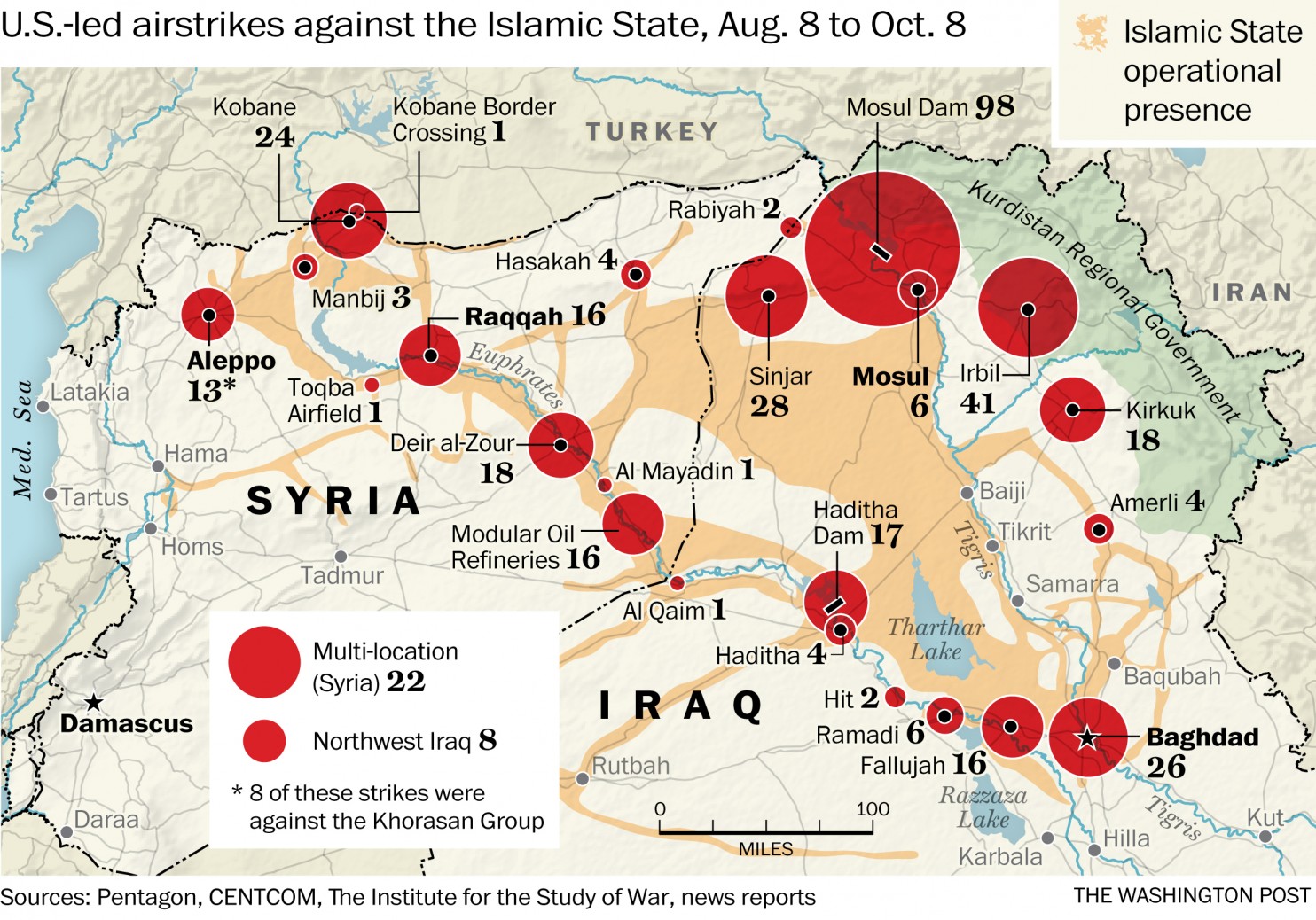
The U.S. has launched hundreds of airstrikes in Iraq and Syria in the last two months against the Islamic State, but until Wednesday they all had been carried out outside population centers. The primary targets have been militant training camps and groups of fighters who have massed in vehicles or on foot, making them obvious marks for U.S. aircraft.
As the U.S. and its partners intensified their airstrikes against the militant group in recent days, they hit a variety of targets around many of Iraq’s other major cities, including Baghdad, Irbil, Fallujah and Ramadi. Some of the strikes have been designed to keep militants out of areas they do not control, but Fallujah fell to the Islamic State months ago, and Ramadi, the capital of Anbar province, remains heavily contested.
Officials in Anbar told the Wall Street Journal this week that they are concerned the entire province could fall in coming days. They also raised concerns that too much attention has been devoted to Kobane, a Syrian town on the Turkish border that is under assault by the Islamic State and also is in danger of falling.
Explore posts in the same categories: Air strikes, Gaza, Hamas, Iraq, Islamic State, Israel, Palestinians, Syria, Urban areas
Tags: Airstrikes, Iraq, Islamic State, Mosul, Syria, Urban areas
You can skip to the end and leave a response. Pinging is currently not allowed. WarSclerotic
Leave a comment