Extension likely for Iran nuclear talks
Extension likely for Iran nuclear talks, Al Jazeera, July 13, 2014
July 20 target date seems unrealistic for pact meant to curb programmes that could be used for making atomic weapons.
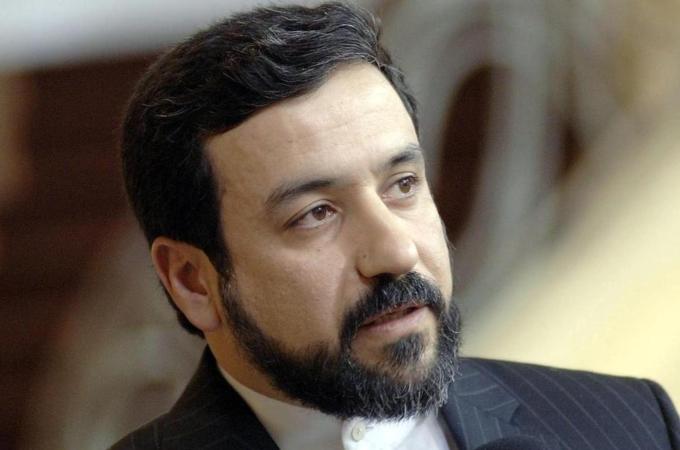 Araghchi spoke of ‘huge and deep’ differences in the positions of Iran and the Western powers [AP]
Nuclear talks between Iran and six world powers appear likely to be extended past their target end date of July 20 because of deep differences separating the two sides, officials with knowledge of the talks say.
John Kerry, US secretary of state, and fellow foreign ministers are meeting in Vienna, Austria, to try and advance the troubled talks with Iran, with a target date only a week away for a pact meant to curb programmes that Iran could turn to for making atomic weapons.
An extension of the talks would give more time to negotiate a deal that would limit the scope of such programmes in exchange for a full lifting of nuclear-related sanctions imposed on Iran.
“Obviously we have some very significant gaps still, so we need to see if we can make some progress,” Kerry said before a meeting with Catherine Ashton, European Union foreign policy chief , who is convening the talks.
“It is vital to make certain that Iran is not going to develop nuclear weapons, that their programme is peaceful. That’s what we are here trying to achieve.”
Laurent Fabius, the French foreign minister, said “positions are still far apart,” and the ministers had come to “try and narrow differences”.
Britain and Germany also sent their foreign ministers to Vienna for talks over the next few days, as has Iran.
But the top diplomats from China and Russia are sending lower-ranking officials instead. That may reflect their view that an extension is unavoidable.
Still, the most important disputes over how deeply Iran must cut its nuclear programme are between the US and Iran, so Kerry’s presence is crucial.
He will be able to talk directly to Mohammad Javad Zarif, Iran’s foreign minister, who is at the Vienna negotiations.
Concessions opposed
Abbas Araghchi, Iran’s deputy foreign minister, spoke on Saturday of “huge and deep” differences. But he told Iranian TV that “if no breakthrough is achieved, it doesn’t mean that [the] talks have failed”.
Discussions centre on imposing long-term restrictions on Iran’s uranium enrichment and against plutonium production materials usable in nuclear warheads. In exchange, the US and other powers would cancel a series of trade and oil sanctions against Iran.
Al Jazeera’s James Bays, reporting from Vienna, said there had been some progress made since an interim deal was made in November, despite the parties’ differences.
“Both sides are saying they’d rather get a deal now and the Iranian deputy foreign minister says that if there was an extension he only wants a matter of days,” Bays said.
In Iran, many powerful politicians oppose almost any concession by President Hassan Rouhani’s government.
And in the US, Republicans and Democrats have threatened to scuttle any emerging agreement because it would allow Iran to maintain some enrichment capacity.
Outside the negotiations, regional rivals of Iran including Israel and Saudi Arabia are sceptical of any arrangement that would, in their view, allow Iran to escape international pressure while moving closer to the nuclear club.
Iran says its programme is solely for peaceful energy production and medical research purposes, though much of the world fears it’s a covert effort toward nuclear weapons capability.
An interim deal in January effectively froze Iran’s programme, with world powers providing sanctions relief to Iran of about $7bn. They two sides also agreed to a six-month extension past July 20 for negotiations to reach a comprehensive deal if necessary.
With many issues left unresolved, officials with knowledge of the talks said an extension was seen as the most likely result.
Explore posts in the same categories: Uncategorized WarSclerotic
Leave a comment