U.S. Doesn’t Know Who to Hit in Iraq
U.S. Doesn’t Know Who to Hit in Iraq, Daily Beast, Eli Lake, June 16, 2014
(Perhaps Iran will provide hints at the U.S. – Iran meeting on Iraq. Surely, information provided by Iran would be as trustworthy as usual.– DM)
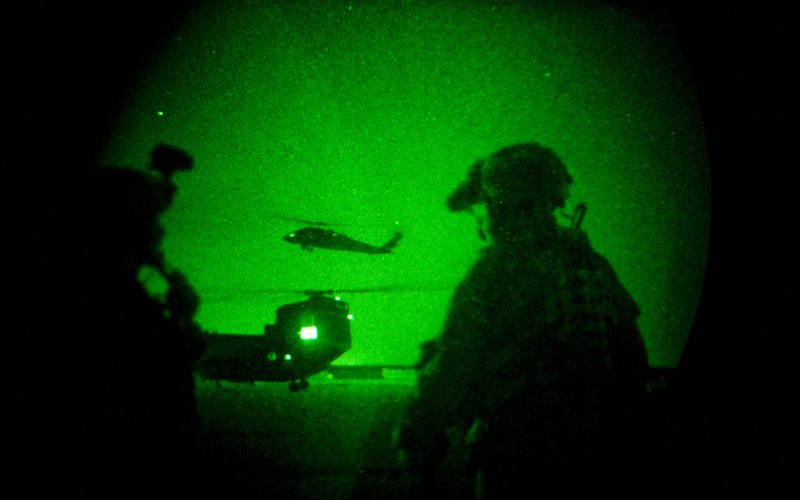 Benjamin Lowy/Getty
[T]he American intelligence community is only now scrambling to draw up a potential target list in Iraq, and possibly Syria—even though the threat of ISIS has been visibly growing for years. And while the analysts are trying to figure out who they should zero in on, Obama administration lawyers are wrestling with what legal authorities the president might have to carry out an attack.
The U.S. military has the capability to conduct air strikes over Iraq within hours. The problem is they don’t know exactly who they are supposed to be targeting.
President Obama is repositioning military assets closer to Iraq, in case he wants to strike at the terrorists that are threatening to tear the country apart. The problem is, the U.S. doesn’t know who it’s supposed to hit.
Current and retired American defense and intelligence officials tell The Daily Beast that the CIA and the Pentagon are not certain who exactly makes up the forces that have taken so much of Iraq. Moreover, these intelligence and defense officials says that they believe that some of the people fighting with Islamic State of Iraq and al-Sham (ISIS) are former U.S. allies who could be turned against the hard-core fanatics—if they can be identified.
We don’t have boots on ground providing intelligence and we don’t have confidence in information that the Iraqi government provides, because they’ve [been] so heavy-handed in the use of force against Sunni villages,” said Rep. Adam Schiff, D-Calif., a senior member of the House Intelligence Committee.
In other words, the American intelligence community is only now scrambling to draw up a potential target list in Iraq, and possibly Syria—even though the threat of ISIS has been visibly growing for years. And while the analysts are trying to figure out who they should zero in on, Obama administration lawyers are wrestling with what legal authorities the president might have to carry out an attack.
While ISIS is taking over cities like Mosul and Tikrit—acquiring the equipment of a modern army in the process—a strike on ISIS wouldn’t be as simple as, say, attacking one of Saddam’s tank columns during the last Iraq war. It requires a different kind of intelligence. The prime objective is to detain or kill individuals who are indispensable to the networks used by terrorists to conduct their attacks. This model means that the drone strike is the last piece of a long process to identify, locate and verify where an individual target resides. And while that work has been enhanced by high-tech gadgets that can intercept cellphone traffic, it still requires the basic tradecraft of human spying.
But the United States lost much of its visibility into the foreign fighter network in Iraq when it withdrew forces from Iraq in 2011 and pulled its intelligence officers—CIA and defense—inside the U.S. embassy in Baghdad, according to a former senior U.S. official who had been stationed there during the process.
“We don’t have boots on the ground providing intelligence and we don’t have confidence in information that the Iraqi government provides.”
Because the State Department was unable to secure any agreement to use bases inside Iraq after the end of 2011, most U.S. aerial surveillance of Iraq is flown out of bases in Turkey and Qatar.
The U.S. intelligence community’s ability to gather information on Islamic militant fighter networks narrowed further when the U.S. shut down its embassy in Damascus, which housed an interagency group of CIA, Pentagon and other officers devoted to tracking militants, according to two former U.S. officials.
All the officials spoke on condition of anonymity because they were not authorized to discuss intelligence matters publicly.
The U.S. wasn’t completely left in the dark. The Defense Intelligence Agency was still able to monitor violent incidents and write up weekly reports on the rise in terrorism in 2012 and 2013. Heather Akers Healy, an independent researcher, shared Sunday some of those reports that she obtained through the Freedom of Information Act.
But nonetheless many inside the U.S. government acknowledge that American intelligence gathering is not what it was before U.S. troops withdrew from the country at the end of 2011.
Complicating that task is that ISIS has taken refuge in urban areas, making striking them without striking civilians near to impossible, Schiff said. “It’s hard to imagine how we could do something that would produce…even the most modest tactical advantage,” he added Sunday.
Determining the enemy’s identity is key to figuring out what legal authority the White House could use to target Iraq’s enemies—something administration lawyers are grappling with as military planners try to come up with a target list, according to the senior administration official, who was briefed on the issue.
Explore posts in the same categories: Uncategorized WarSclerotic
Leave a comment