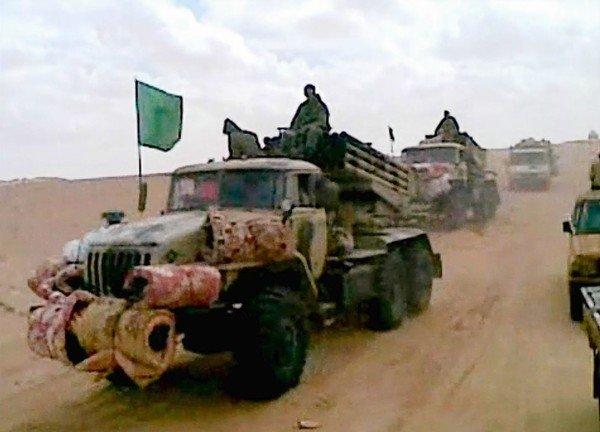
WASHINGTON — The widening war in Mali has opened divisions between the White House and the Pentagon over the danger posed by a mix of Islamist militant groups, some with murky ties to Al Qaeda, that are creating havoc in West Africa.
Although no one is suggesting that the groups pose an imminent threat to the United States, the French military intervention in Mali and a terrorist attack against an international gas complex in neighboring Algeria have prompted sharp Obama administration debate over whether the militants present enough of a risk to U.S. allies or interests to warrant a military response.
Some top Pentagon officials and military officers warn that without more aggressive U.S. action, Mali could become a haven for extremists, akin to Afghanistan before the terrorist attacks of Sept. 11, 2001.
Militants in Mali, “if left unaddressed, … will obtain capability to match their intent — that being to extend their reach and control and to attack American interests,” Army Gen. Carter Ham, head of the U.S. Africa Command, said in an interview.
But many of Obama’s top aides say it is unclear whether the Mali insurgents, who include members of the group Al Qaeda in the Islamic Maghreb, or AQIM, threaten the U.S.
Those aides also worry about being drawn into a messy and possibly long-running conflict against an elusive enemy in Mali, a vast landlocked country abutting the Sahara desert, just as U.S. forces are withdrawing from Afghanistan.
“No one here is questioning the threat that AQIM poses regionally,” said an administration official who spoke on condition of anonymity when discussing internal deliberations. “The question we all need to ask is, what threat do they pose to the U.S. homeland? The answer so far has been none.”
Another U.S. official, who is regularly briefed on such intelligence, said the groups’ goals were often hard to distinguish.
“AQIM and its allies have opportunistic criminals and smugglers in their midst, but they also have some die-hard terrorists with more grandiose visions,” the official said. “In some cases, the roles may overlap.”
The internal debate is one reason for a delay in U.S. support for the French, who airlifted hundreds of troops into Mali last weekend and launched airstrikes in an effort to halt the militants from pushing out of their northern stronghold toward Bamako, the Malian capital.
The Pentagon is planning to begin ferrying additional French troops and equipment to Mali in coming days aboard U.S. Air Force C-17 cargo jets, according to Air Force Maj. Robert Firman, a Pentagon spokesman.
Military planners are still studying the airport runways in Bamako to determine whether they can handle the huge C-17s. If not, they will land elsewhere and the French troops will be flown into Mali on smaller aircraft. French officials have asked the U.S. to transport an armored infantry battalion of 500 to 600 soldiers, plus vehicles and other equipment.
The U.S. is also providing France with surveillance and other intelligence on the militants.
But the administration has so far balked at a French request for tanker aircraft to provide in-air refueling of French fighter jets because the White House does not yet want to get directly involved in supporting French combat operations, officials said.
U.S. officials have ruled out putting troops on the ground, except in small numbers and only to support the French.
“I think the U.S. ambivalence about moving into Mali is very understandable,” said Richard Barrett, a former British diplomat who serves as United Nations counter-terrorism coordinator. Noting the instances where U.S. forces have been drawn into conflict with Islamic militants, he said, “Why would they want another one, for God’s sake? It’s such a difficult area to operate in.”
After 2001, Washington tried to tamp down Islamic extremism in Mali under a counter-terrorism initiative that combined anti-poverty programs with training for the military. The U.S. aid was halted, however, when military officers overthrew the government last March in a violent coup.
Gen. Ham has warned for months that AQIM was growing stronger and intended to carry out attacks in the region and elsewhere. To combat the threat, some officers favor building closer ties with governments in the region and boosting intelligence-gathering and special operations.
But other administration officials question the need for a bigger U.S. effort.
Johnnie Carson, who heads the Africa bureau at the State Department, told Congress in June that AQIM “has not demonstrated the capability to threaten U.S. interests outside of West or North Africa, and it has not threatened to attack the U.S. homeland.”
 WarSclerotic
January 19, 2013 at 4:44 PM
There needs to be an ever increasing split between the White House and the Pentagon. As Obummer moves away from the constitution, the military needs to stand for it and protect our freedoms and rights in these United States. Unfortunately, high ranking military who disagree with Obunghole are ‘retired’ or appointed to some post they should avoid in the first place.
January 19, 2013 at 5:52 PM
Steve, Obummer is putting Hagell in charge of the Pentagon, remember?
Until there is evidence to the contrary, it would appear that this administration is planning for and executing a self destructive retreat into isolationism visa vie Radical Islam. The French and the Brits are doing more than the US, for God’s sake!
My hope and prayer is that Netanyahu is aware of what is happening and is preparing…
January 19, 2013 at 8:36 PM
The uk has always done more than the usa,the usa betrayed and bankrupted us then did not even say thank you and rubbed salt in the wound the uk wont forget,Cameron will become a thorn in the usa side,it was obongo who did this,he even removed the statue of Churchill from the oval office,who need allies like the usa our enemy’s have treated us with more respect
January 20, 2013 at 12:57 AM
Yes, obavez’ isolationism is dangerous.
But I can also see a positve side to it.
Many of my fellow Europeans are still thinking, that the war against islamic terrorism is mainly a US thing and that if we all respect the islamic religion and the bad, bad US pulls out of those islamic countries there will be peace and we will be singing kumbaya.
That perception is beginning to shift now, even in leftist media like “Deutsche Welle” the shift in how they report is noticable.
The reason is, that there are neither US-troops in North Africa and neither are there European colonies.
Most important, up to now, this is a mainly European operation.
So the usual narratives do not work here.
And so we could find ourselves in the same position the US were before us.
Hopefully the current events in Mali will cause more Europeans to finally wake up. If this happens it will also change the attitude of these people towards Israel.
January 19, 2013 at 4:52 PM
I am wondering if obamby uses a telepromter when hes in bed with his wife?